
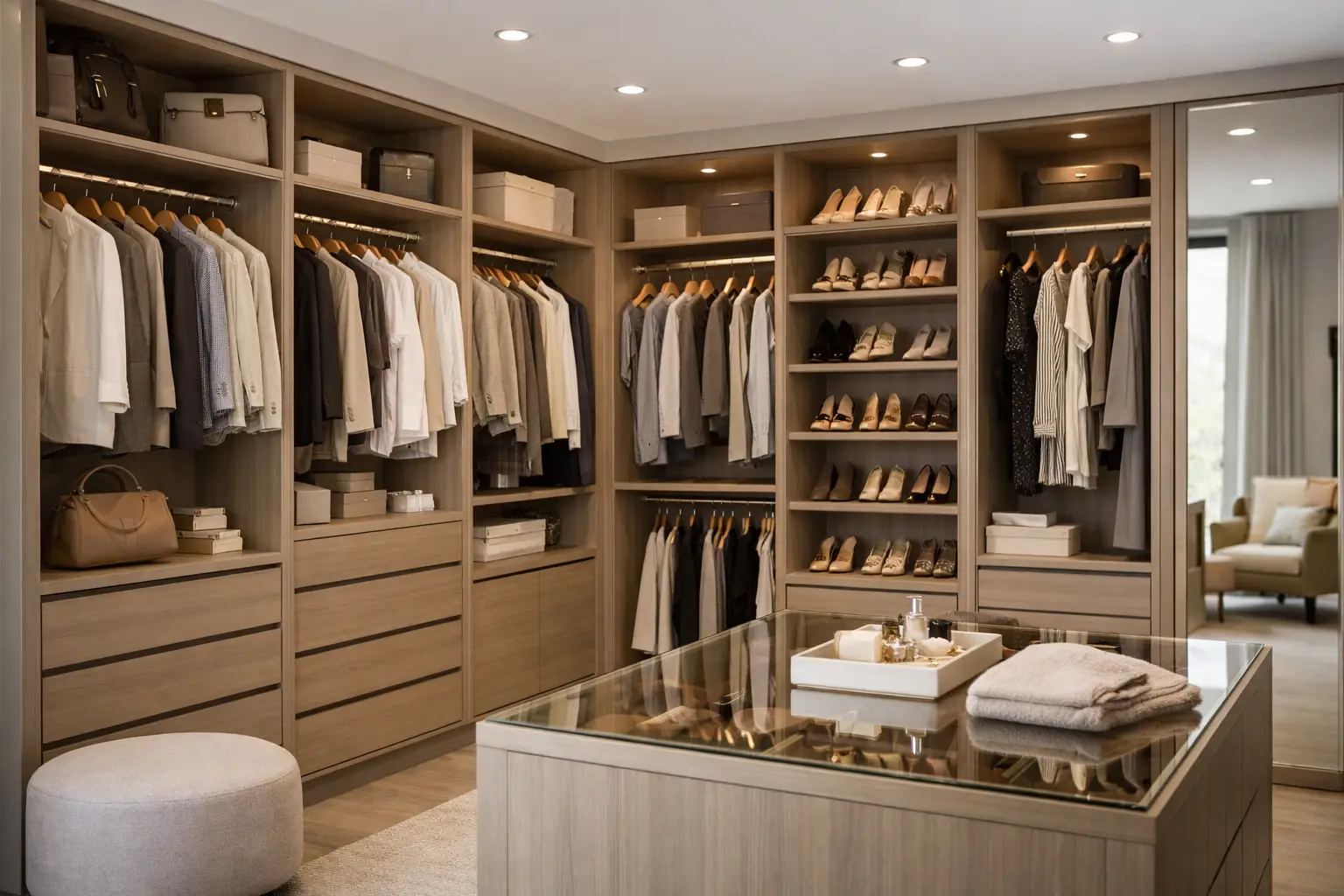
A walk-in closet can look impressive in photos and still be frustrating to use every morning. The difference usually comes down to walk-in wardrobe design – not just how it looks, but how well it reflects your routine, your room, and the way you actually store clothes.
The best spaces feel calm the moment you step inside. Everything has a place. Awkward corners are handled intelligently. Long dresses are not crushed, shoes are visible, and lighting helps rather than flatters badly. Good design is less about adding more and more storage, and more about creating the right storage in the right proportions.
What makes walk-in wardrobe design successful
A successful walk-in wardrobe does two jobs at once. It needs to feel beautifully finished, but it also needs to support daily use without effort. That means the layout should let you move comfortably, see what you own, and reach what you need without digging through stacked shelves or overfilled rails.
This is where bespoke design changes the result. Freestanding units and off-the-shelf systems often leave dead space above, below, or in corners. In a walk-in layout, those missed inches matter. Custom fitted furniture can use the full height of the room, work around sloped ceilings or uneven walls, and create a more integrated finish that feels part of the home rather than simply placed inside it.
Just as importantly, good design starts with what you own. Someone with tailored suits, long coats, and boxed accessories needs a very different interior from a household storing casualwear, seasonal items, and shared linens. The most effective wardrobes are planned around categories, quantities, and habits rather than generic assumptions.
Start with the room, not the furniture
One of the most common mistakes in walk-in wardrobe design is choosing features before understanding the room itself. A center island may look luxurious, but if it narrows circulation too much, the space will feel cramped. Open shelving can appear airy, but in a room with limited natural light, it may create visual clutter instead of elegance.
The room sets the rules. Width, ceiling height, door position, window placement, and access points all influence what is practical. In a narrower room, a single-wall layout with a clear walkway may work better than storage on both sides. In a squarer room, wrapping cabinetry around multiple walls can create a more balanced and efficient plan.
Lighting matters early in the process too. If the room lacks natural light, finishes and internal illumination become more important. A darker wood finish can be beautiful, but in a compact room it may feel heavy unless balanced by thoughtful lighting and clean detailing. Lighter finishes often help a wardrobe feel larger, though they may show marks more easily in high-touch areas. It depends on the look you want and how the space will be used.
Planning storage around real life
The most elegant walk-in wardrobes feel effortless because the storage has been edited carefully. That usually means a mix of hanging, shelving, drawers, and specialist compartments, with each one sized for a purpose.
Double hanging works well for shirts, jackets, and folded pants, especially when ceiling height is limited. Long hanging is essential for dresses, coats, or anything that creases easily. Drawers are ideal for smaller items that can make open shelving look untidy, while shelves are useful for knitwear, handbags, and display pieces you want in view.
Shoes are another area where design choices matter more than people expect. Deep shelves can waste space if pairs disappear at the back, while angled display shelves look smart but reduce capacity. If your priority is access and visibility, shallow shelves or pull-out options tend to be more practical. If the wardrobe is meant to feel boutique-like, display may matter more than density.
There is also the question of what should stay hidden. Open storage can create a polished, curated look when the contents are consistent and neatly arranged. Closed cabinetry offers a calmer visual finish and is often the better choice for mixed-use storage, seasonal overflow, or households that do not want every item on show. Neither is automatically better. The right balance depends on how disciplined you want the room to feel and how much daily maintenance you are willing to do.
Walk-in wardrobe design ideas that improve the space
Some features add genuine value, while others are more about style than function. The strongest walk-in wardrobe design ideas usually do both.
An island can work beautifully in a large enough room, especially when it adds drawer storage, a display surface, or a place to pack and organize outfits. But it should never be included just because the room technically fits it. Comfortable movement around all sides matters more than making the space look expensive.
Full-height cabinetry is often worth considering because it takes advantage of vertical space and creates a more architectural finish. Higher sections can hold less-used items such as luggage, occasionwear, or seasonal bedding. This is especially effective in homes where storage needs to work hard across multiple rooms.
Integrated lighting is another feature that earns its place. It improves visibility, highlights finishes, and gives the wardrobe a more refined feel. The key is placement. Lighting should illuminate shelves, rails, and drawer interiors rather than simply casting shadows from above.
Mirrors are practical, but they also influence the feel of the room. A full-length mirror can make a smaller walk-in feel more open, while mirrored panels may bounce light effectively in darker spaces. The trade-off is maintenance. Larger mirrored surfaces require more frequent cleaning if you want the room to stay looking polished.
Materials and finishes set the mood
Once the layout is right, finishes shape the experience. This is where design becomes personal.
Soft neutrals remain popular because they create a clean, timeless backdrop for clothing and accessories. Warm wood tones bring depth and a more furniture-led feel. Matte finishes tend to look understated and contemporary, while wood grain adds texture and character. If the wardrobe connects directly to a bedroom, it often helps to coordinate finishes with the wider room so the transition feels intentional.
Hardware also has more impact than expected. Handles, edge profiles, and drawer detailing can shift the overall impression from classic to minimal very quickly. If you prefer a quieter, more architectural look, integrated or handleless styles may suit the space. If you want more decorative presence, metal hardware can introduce contrast and definition.
Durability should stay part of the conversation. A finish might look beautiful in a showroom but prove less forgiving in a busy household. This is where bespoke design has an advantage. You are not just choosing a look. You are choosing a combination of materials, usage, and craftsmanship that should continue to feel good years later.
Why fitted design often outperforms freestanding options
For walk-in spaces, fitted furniture usually delivers a cleaner result because it is made around the room rather than forced into it. That matters in older homes, loft conversions, and properties with uneven walls, alcoves, or sloped ceilings. These are exactly the spaces where standard furniture leaves gaps, collects dust, and wastes potential.
A fitted approach also creates consistency. Sightlines feel calmer, storage can be planned more precisely, and the room has a finished quality that loose pieces struggle to match. For homeowners investing in long-term improvements, this is often the difference between a room that looks better for now and one that genuinely elevates the home.
At Finest Furniture Studio, that is why bespoke fitted wardrobes and walk-in interiors are approached as part of the room itself, not as separate items placed inside it. The goal is not just more storage. It is a more organized, more elegant way to live with your belongings every day.
Design for the morning routine, not just the reveal
A walk-in wardrobe should still feel impressive after the first week. That means thinking beyond the reveal moment and planning for repeated use.
What do you reach for first? What gets worn most often? Which items need folding space nearby, and which should be stored higher up? If two people share the room, where will zones overlap and where should they stay separate? These questions often shape better results than chasing trends.
The best wardrobes are the ones that feel intuitive. You should not need to rethink where things go or fight the layout to get dressed. When the design is right, the room supports your routine quietly. It gives everything a proper place, makes the space feel considered, and brings a sense of order that extends well beyond storage.
If you are planning a walk-in wardrobe, aim for something more thoughtful than extra rails and shelves. Aim for a room that fits your home, your habits, and your standards – because that is what turns storage into a genuine upgrade.


One Response