
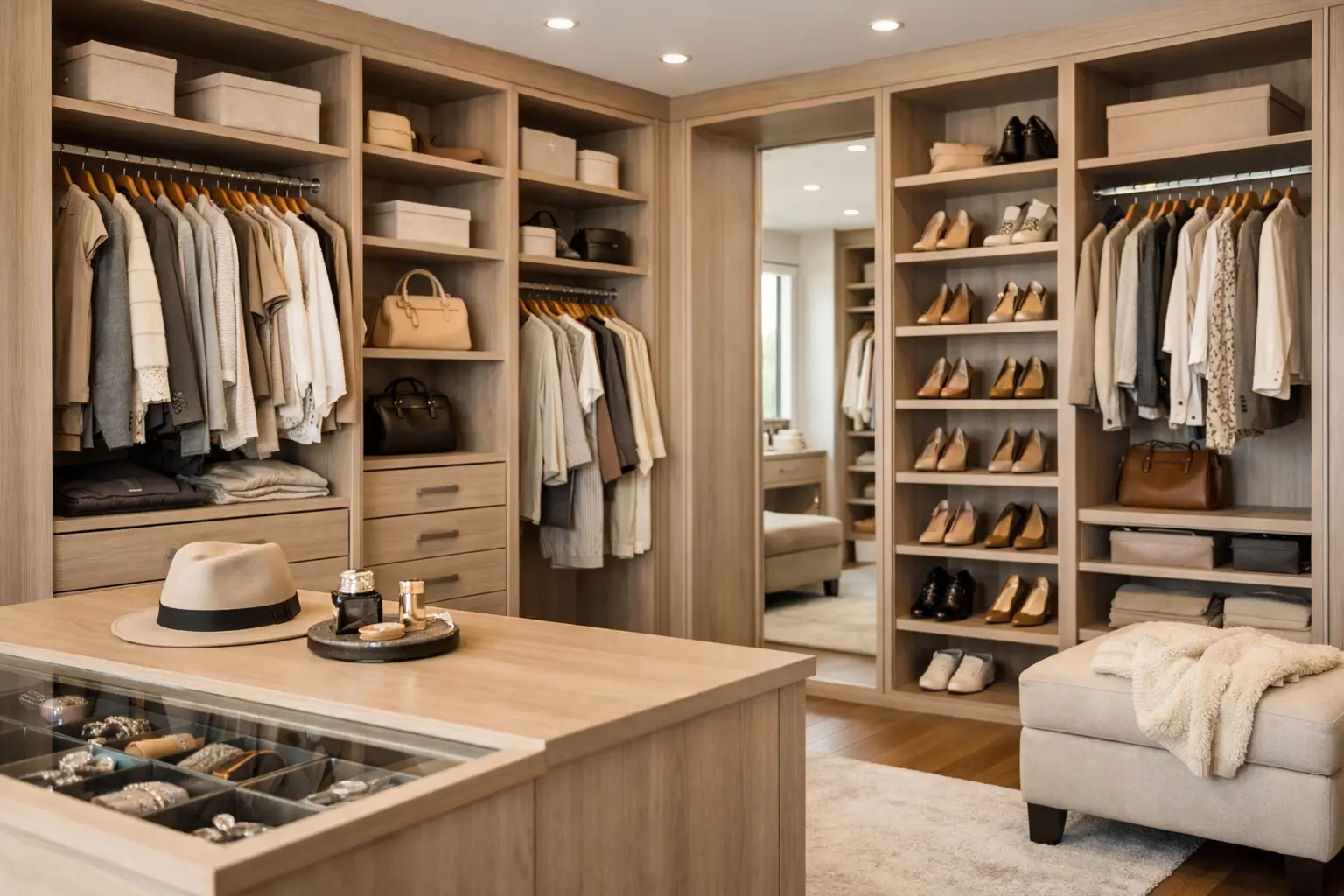
A walk-in closet can look generous on paper and still feel frustrating every morning if the layout is wrong. The difference is rarely the square footage alone. It is how well the space is planned around your clothes, your routine, and the shape of the room. If you are figuring out how to design walk in closet layout that feels elegant and genuinely useful, the smartest place to start is not finishes or accessories. It is function.
A well-planned walk-in should make daily life easier. You should be able to see what you own, reach what you use most, and move through the room without squeezing past drawers or awkward corners. When the layout is tailored properly, the closet stops being a storage zone and starts feeling like part of the home.
How to design walk in closet layout around the room
Before choosing rails, drawers, or shelving, look closely at the room itself. Every walk-in has fixed conditions that shape the design, including door position, ceiling height, window placement, natural light, and the clear path needed to move comfortably through the space. These details matter more than many homeowners expect.
A long narrow room often works best with storage along one side and the end wall, or along both sides if there is enough clearance in the center. A more square room can accommodate a U-shaped arrangement, which usually offers the best balance of capacity and visibility. If the room is compact, trying to force too much cabinetry onto every wall can make it feel cramped. In that case, a simpler layout with fewer but better-planned storage zones often performs better.
This is where bespoke design has a clear advantage. Walk-in spaces are rarely perfectly proportioned, and awkward dimensions can waste valuable storage if treated with standard furniture. Fitted solutions can be designed around alcoves, sloping ceilings, reduced depths, or uneven walls so the layout feels intentional rather than improvised.
Start with what you actually need to store
The most effective closet layouts are built from inventory, not guesswork. It helps to think in categories: long hanging, double hanging, folded items, shoes, bags, accessories, jewelry, seasonal pieces, and anything else you want to keep within the space.
If you own more dresses, coats, or formalwear, long hanging sections deserve real priority. If your wardrobe leans heavily toward shirts, jackets, and trousers, double hanging can dramatically increase capacity. Drawers are ideal for smaller items that tend to create visual clutter, while open shelving can work beautifully for knitwear, handbags, or display-worthy pieces if you are comfortable maintaining a tidy look.
There is always a trade-off between openness and concealment. Open shelves make items easy to see, but they require more discipline to keep the room looking calm. Drawers and closed compartments create a cleaner finish, though they can hide things too well if overused. The right balance depends on how you live.
Choose the layout type that suits the space
Single-wall walk-in layouts
A single-wall layout is often the right answer for smaller dressing rooms or converted box rooms. It keeps circulation simple and can still feel luxurious when the storage is carefully zoned. This approach works especially well when paired with full-height cabinetry, integrated drawers, and a mix of hanging and shelving.
Galley walk-in layouts
A galley layout places storage on both sides, creating a corridor through the middle. It is highly efficient, but the center clearance needs to be comfortable. If the walkway is too tight, drawers become awkward to open and the room can lose its sense of ease. Done properly, though, this is one of the most space-efficient options available.
U-shaped walk-in layouts
For rooms with enough width, a U-shaped configuration is often the strongest choice. It wraps storage around three sides and naturally creates zones for different categories of clothing. It also tends to feel more immersive and tailored, especially when the back wall is used for a focal feature such as drawers, shelving, or a statement dressing section.
Build the layout in layers
A beautiful closet works best when it is designed vertically as well as horizontally. The most frequently used items should sit at the easiest reach level. Less-used items can go higher or lower, while premium access should be reserved for the pieces you handle every day.
The uppermost sections are ideal for occasional storage, luggage, or seasonal items. Mid-level zones should carry the practical weight of the room, with hanging rails, shelves, and drawers positioned for daily access. Lower sections are usually best for shoes, additional drawers, or pull-out storage.
This layered approach prevents the common mistake of treating every wall section the same. Uniformity can look neat in a plan, but in practice it often wastes space. Different belongings need different dimensions, and a more customized arrangement nearly always performs better.
Make circulation part of the design
One of the easiest ways to spoil a walk-in closet is to focus entirely on storage and forget movement. A room can be technically full of capacity and still feel inconvenient if the circulation has not been considered.
You need enough room to step in, turn comfortably, open drawers fully, and browse clothing without obstruction. If two people will use the closet, this becomes even more important. Shared walk-ins need a little breathing room, or the experience quickly shifts from luxurious to irritating.
Good circulation also affects how calm the room feels. A layout that leaves intentional open space can make a modest walk-in feel much more refined than an overfilled room with nowhere to stand.
Lighting changes how the layout works
Even a well-designed closet can disappoint if the lighting is poor. Deep shelving, dark corners, and shadowed rails make it harder to find what you need and can flatten the overall look of the room.
Natural light is a benefit, but it should be managed carefully if delicate fabrics or darker garments are involved. Artificial lighting is what makes the layout truly usable. Integrated shelf lighting, wardrobe lighting, and well-placed overhead fixtures can help every zone feel visible and considered.
Lighting also helps define focal points. A central bank of drawers, a handbag display, or a shoe wall can feel far more elevated when illuminated properly. In a bespoke walk-in, these details are not decorative extras. They are part of how the space performs.
Include the details that support your routine
When homeowners think about layout, they often focus on the biggest storage elements first. That makes sense, but the smaller details are usually what make the room pleasant to use over time.
A mirror needs to be positioned where there is enough space to stand back. A dressing stool or ottoman is lovely if the room allows for it, but not if it disrupts circulation. Pull-out trays, jewelry inserts, tie storage, and valet rails can all improve everyday convenience, but only when they fit naturally into the broader plan.
This is where a tailored approach matters. A walk-in closet should reflect not just what you own, but how you get ready. Some homeowners want a boutique-style display. Others want a calm, concealed interior that keeps everything tucked away. Neither is more correct. The best layout is the one that supports your habits without making the room harder to maintain.
How to design walk in closet layout for long-term value
A walk-in closet should solve today’s storage problems, but it should also stay relevant as life changes. That means thinking beyond your current wardrobe and allowing some flexibility in the design.
Adjustable shelving can be useful in selected areas, though fully bespoke fixed interiors often look cleaner and more integrated. Extra top storage can help future-proof the room for luggage or occasional items. Drawer capacity is almost always appreciated later, even if it does not seem essential at the start.
It is also worth considering the broader value a fitted walk-in brings to the home. Well-designed storage enhances more than organization. It improves the visual quality of the room, makes awkward areas work harder, and can add a level of polish that freestanding pieces rarely achieve. For many homeowners, that blend of beauty and practicality is exactly what justifies investing in a bespoke solution.
At Finest Furniture Studio, that is often where the transformation happens: not by adding more furniture, but by designing the room so every inch works harder and looks better doing it.
The best walk-in closet layouts feel calm, effortless, and personal. When the proportions are right and the storage reflects real daily habits, the room becomes easier to live with from the first day. Start with the shape of the space, be honest about what you need to store, and let the layout serve your routine rather than forcing your routine to fit the room.