
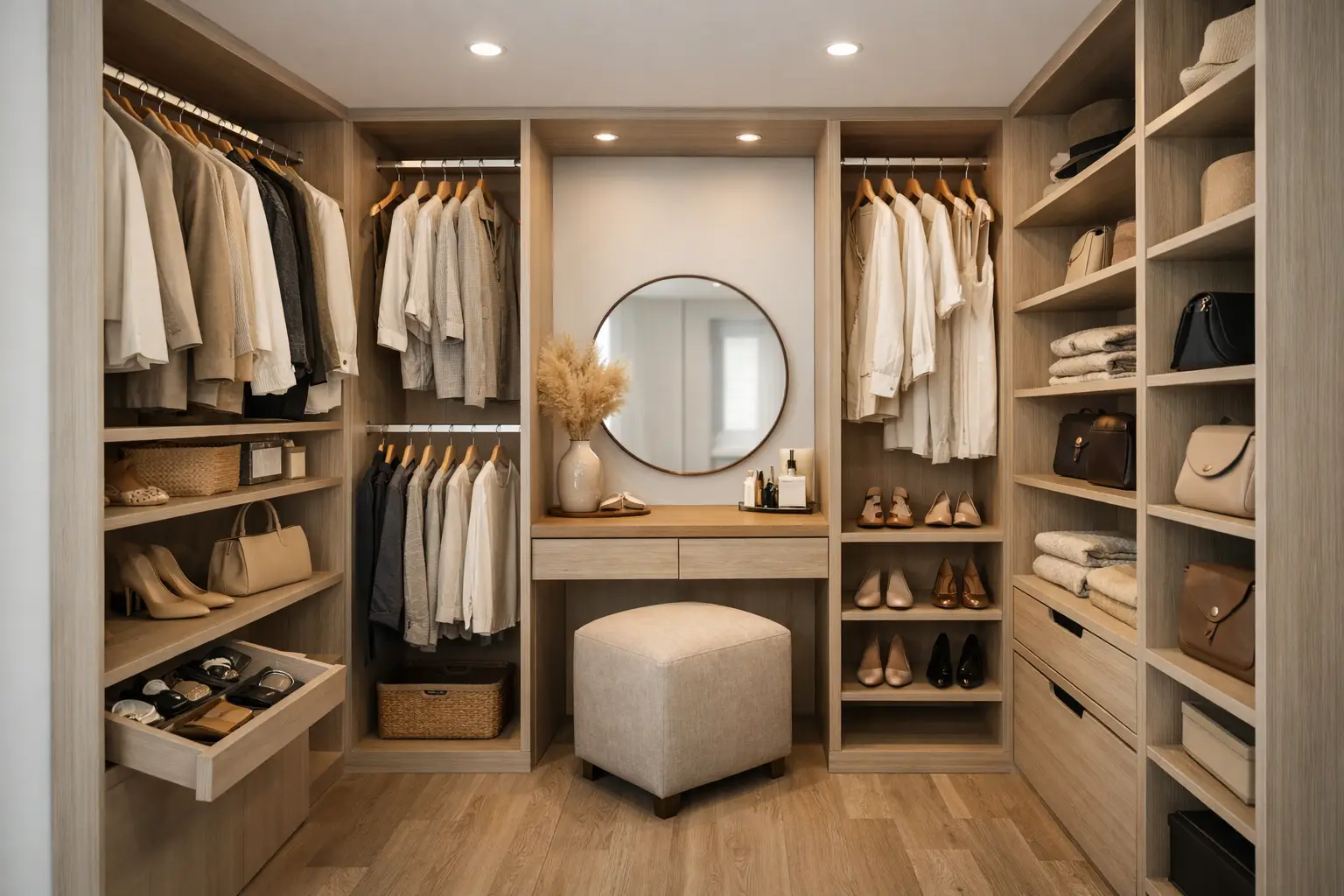
A small walk-in wardrobe can feel either brilliantly efficient or frustratingly cramped, and the difference usually comes down to design rather than square footage. The best small walk in wardrobe design makes every inch work harder while still feeling calm, polished, and easy to use day after day.
For most homeowners, the challenge is not simply fitting in more storage. It is creating a layout that suits real routines, awkward room shapes, and the mix of long hanging, shelving, shoes, bags, and folded items that tend to compete for space. When done well, a compact walk-in becomes one of the most satisfying parts of the home – organized, elegant, and tailored to the way you live.
What makes the best small walk in wardrobe design?
The strongest designs start with restraint. In a smaller footprint, success is not about cramming every wall with shelves. It is about balancing storage density with comfort, visibility, and flow. If the space feels difficult to enter, too dark to use, or cluttered the moment clothes are put away, the layout is not doing its job.
A good small walk-in should let you move naturally, reach daily essentials without stretching, and see what you own at a glance. That often means planning around your habits first. Someone with businesswear and long coats needs a different arrangement from someone with mostly folded knitwear, sneakers, and accessories. A family home may also need shared storage with clearly defined zones, while a primary suite may benefit more from a boutique-style layout with display shelving and drawers.
This is where bespoke design stands apart from off-the-shelf systems. Smaller rooms rarely have generous proportions or perfectly straight walls. Sloped ceilings, alcoves, corners, bulkheads, and narrow passages can all waste valuable storage if left untreated. Made-to-measure cabinetry turns those limitations into useful storage rather than dead space.
Start with the right layout
The best small walk in wardrobe design usually begins with one of three layouts: single-sided, double-sided, or L-shaped. The right choice depends on clearance as much as storage needs.
A single-sided layout works well in very narrow spaces. Storage runs along one wall only, which keeps the walkway open and prevents the room from feeling boxed in. This can be a smart solution where the wardrobe is more of a dressing corridor than a square room.
A double-sided layout offers more capacity, but only if there is enough room to move comfortably between both runs. It is tempting to reduce aisle width to gain storage, yet this often backfires. If doors, drawers, or hanging clothes interfere with movement, the room becomes inconvenient quickly.
An L-shaped arrangement is often the most flexible option in smaller walk-ins. It uses a corner efficiently while avoiding the tunnel effect of storage on both long walls. It also creates natural zoning, with one side dedicated to hanging and the other to drawers, shoes, or accessories.
The trade-off is that every layout asks for something different. More hanging space may mean fewer open shelves. Deeper cabinetry may reduce circulation. There is no single perfect formula, which is why planning around the room and the wardrobe contents matters so much.
Use vertical space without making the room feel crowded
In a compact walk-in, the upper portion of the room is often underused. Tall cabinetry, top shelves, and overhead compartments can dramatically increase capacity, especially for out-of-season items, luggage, spare bedding, or occasionwear.
That said, not everything should be stored high up. Daily-use pieces should sit at eye level or within easy reach, while occasional items can occupy the top sections. This keeps the wardrobe practical rather than visually overwhelming.
Floor-to-ceiling fitted furniture also gives the room a cleaner, more architectural finish. Instead of leaving awkward gaps above units where dust gathers and space goes unused, the entire height works as part of the design. In smaller rooms, that built-in look often makes the space feel more refined and intentional.
Mix storage types instead of repeating the same units
One of the most common mistakes in small wardrobe planning is overcommitting to a single storage type. Too many shelves create messy stacks. Too much hanging space leaves shoes and accessories homeless. Too many drawers can make the room feel heavy and enclosed.
A better approach is to combine storage with purpose. Double hanging rails can be ideal for shirts, blouses, skirts, and folded trousers. A section of full-height hanging is still important for dresses, coats, and longer garments. Drawers keep smaller items tidy and protected. Open shelving works well for knitwear, handbags, or display pieces, provided it is not so open that the room always looks busy.
Shoe storage deserves particular attention in a small walk-in. If shoes end up piled on the floor, the room instantly loses its sense of order. Angled shelves, low open cubbies, or dedicated pull-out racks can solve that problem neatly without taking over the entire design.
Light, finish, and color matter more in compact spaces
Small walk-ins benefit from finishes that help the room feel brighter and more spacious. Lighter tones, warm neutrals, soft wood grains, and subtle textures tend to create a calm backdrop that lets clothing and accessories stand out without visual clutter.
This does not mean every small wardrobe must be white. Richer finishes can look striking, especially when the room has good lighting and a more luxurious brief. The key is control. A dark finish paired with poor lighting and too many open compartments can make a compact room feel smaller than it is.
Lighting is often underestimated, yet it has a major impact on both function and mood. Integrated LED lighting inside shelving, around hanging sections, or beneath upper cabinets makes the wardrobe easier to use and adds a polished custom feel. Good lighting also helps with color accuracy when choosing outfits, which is especially useful in windowless dressing areas.
Mirrors can help visually expand the space, but they should be placed thoughtfully. A full-length mirror on one wall or a mirrored panel on a door can increase the sense of depth without making the room feel overly reflective or busy.
Design around awkward architecture
Many of the most successful compact wardrobes are created in spaces that looked difficult at first glance. Sloped ceilings, recesses, boxed-in pipework, and uneven corners may seem restrictive, but they are often exactly where custom design proves its worth.
Lower areas beneath eaves can become drawers, shoe storage, or shelving for folded items. Narrow alcoves can house vertical compartments for accessories or pull-out rails. Corners that would be wasted with freestanding furniture can be shaped into practical storage that feels integrated rather than improvised.
This is especially valuable in older homes or converted spaces where standard furniture leaves gaps and compromises the layout. A fitted approach uses the full footprint, which can be the difference between a room that merely stores clothing and one that genuinely improves daily life.
Make it easy to keep organized
A wardrobe only stays beautiful if it is easy to maintain. That is why the best small walk in wardrobe design supports simple habits rather than demanding constant effort.
Drawers with internal dividers, labeled zones, pull-out accessories trays, and designated places for bags, belts, and jewelry all help reduce everyday clutter. Even small choices, like setting aside one shelf for tomorrow’s outfit or building in a laundry section, can improve how the space functions.
Visibility matters too. If everything is hidden behind deep piles or packed into unreachable corners, items get forgotten. A good design helps you see enough without exposing every belonging. That balance between display and concealment is what gives a compact walk-in its calm, tailored feel.
Why custom design often delivers the best result
For small walk-ins, precision matters. A few inches gained in the right place can improve circulation, create room for an extra drawer stack, or make space for long hanging where there was none before. That is difficult to achieve with generic furniture designed for standard room shapes.
A bespoke approach allows the wardrobe to be designed around your inventory, your architecture, and your preferences rather than forcing compromise at every step. At Finest Furniture Studio, that is exactly where thoughtful fitted design adds value – turning compact or awkward areas into storage that feels elegant, purposeful, and fully integrated with the home.
The goal is not simply to fit more in. It is to create a room that feels composed each morning, easy to put away each evening, and satisfying to live with for years.
If you are planning a small walk-in, think less about how much you can squeeze into the space and more about how you want the room to function. The right design makes a modest footprint feel generous, and that is where a compact wardrobe starts to feel like a luxury.