








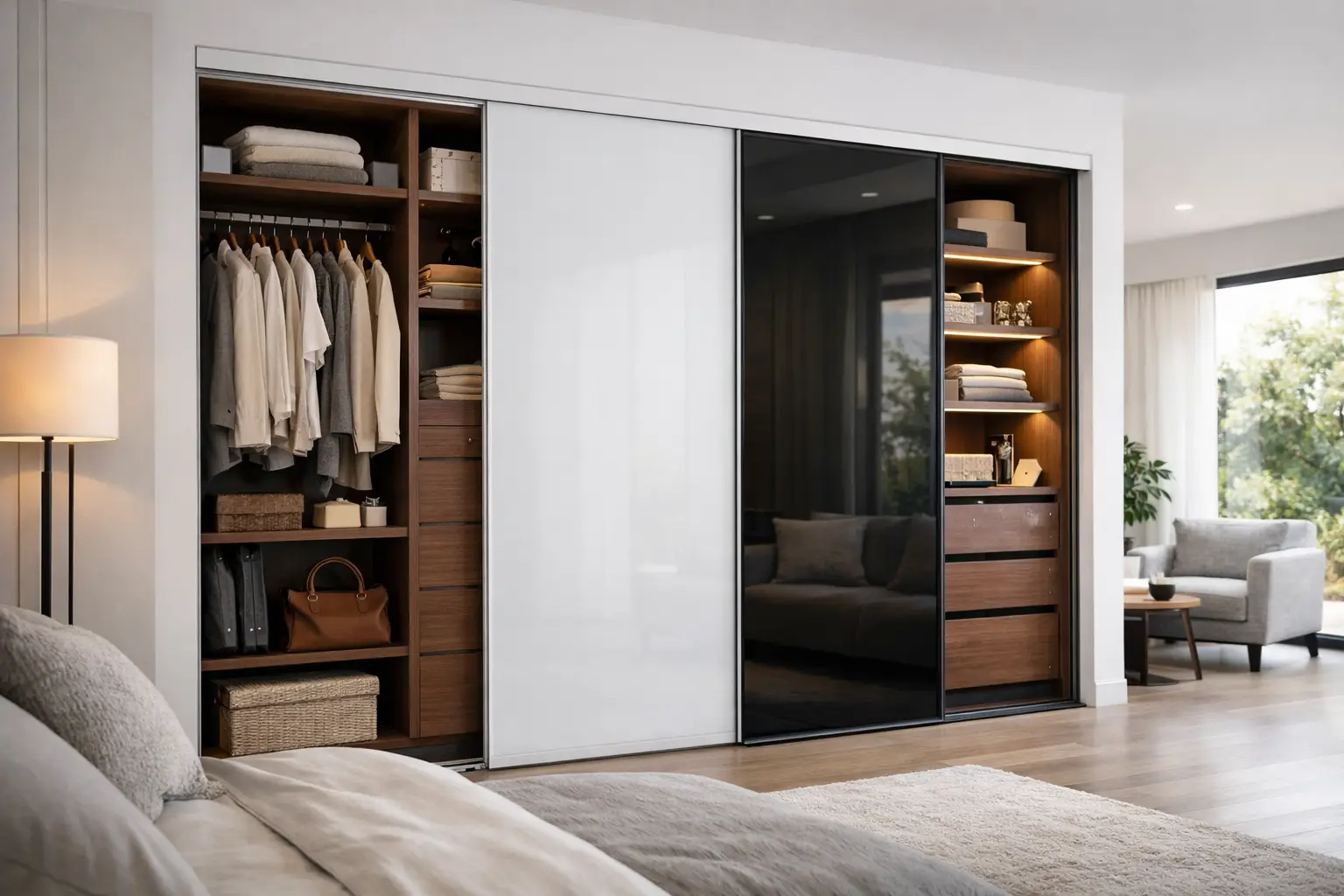
A hinged wardrobe door that clips the bed every morning is more than a minor annoyance. It is a sign the room is working against you. Bespoke sliding doors solve that problem neatly, but their value goes well beyond saving swing space. Done properly, they can sharpen the look of a bedroom, hide visual clutter and make an awkward layout feel considered rather than compromised.
For homeowners investing in fitted storage, sliding doors are often the detail that changes everything. They create a calmer frontage, especially in rooms where every centimetre matters, and they lend themselves beautifully to made-to-measure design. That matters in real homes, where chimney breasts, sloping ceilings, uneven alcoves and tight walkways rarely suit off-the-shelf solutions.
Why bespoke sliding doors work so well
The appeal starts with space efficiency. Because the doors glide rather than open outwards, you do not need clearance in front of the wardrobe. In compact bedrooms, loft conversions or rooms where the bed sits close to the storage, that makes day-to-day use much easier.
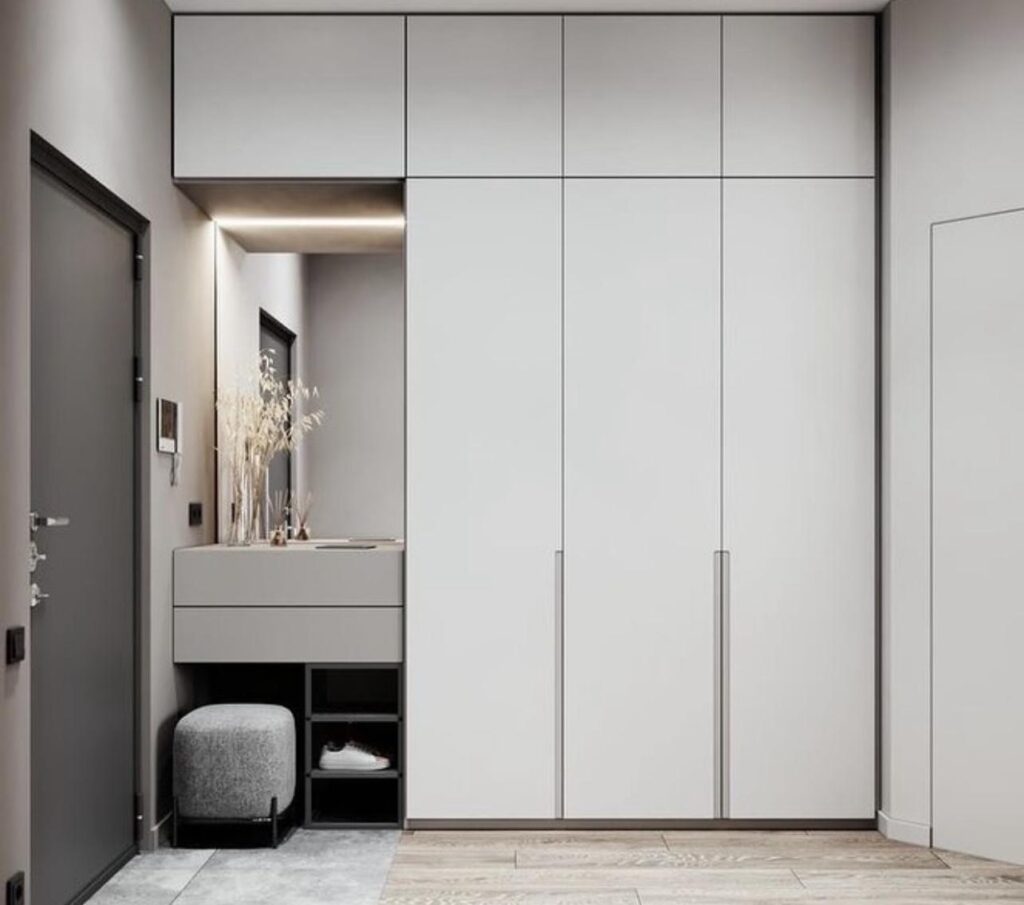
But the practical gain is only half the story. Bespoke sliding doors also change the visual weight of furniture. A fitted wardrobe with carefully proportioned sliding panels can look quieter and more architectural than a run of hinged doors. Instead of feeling like an added piece of furniture, it reads as part of the room itself.
That integrated look is especially valuable when you want storage to improve the room rather than dominate it. With the right finish, sliding doors can reflect light, soften a dark corner or create a clean backdrop that makes the rest of the scheme feel more intentional.
The difference between bespoke and made-to-fit in theory
Many products are marketed as custom when they are really modular systems with limited adjustment. True bespoke sliding doors are designed around the room, the storage behind them and the way you use the space.
That means the dimensions are not squeezed into standard increments. The panel widths, track layout, interior access and finish choices are considered together. If your ceiling slopes, your walls are uneven or the opening spans a full wall, the design should respond to that rather than force a compromise.
This is where professional design matters. A beautiful door front is not enough if the wardrobe behind it is awkward to use. Sliding doors need to be planned alongside the internal layout so that shelves, hanging sections and drawers are accessible and balanced across the opening.
Bespoke sliding doors in awkward spaces
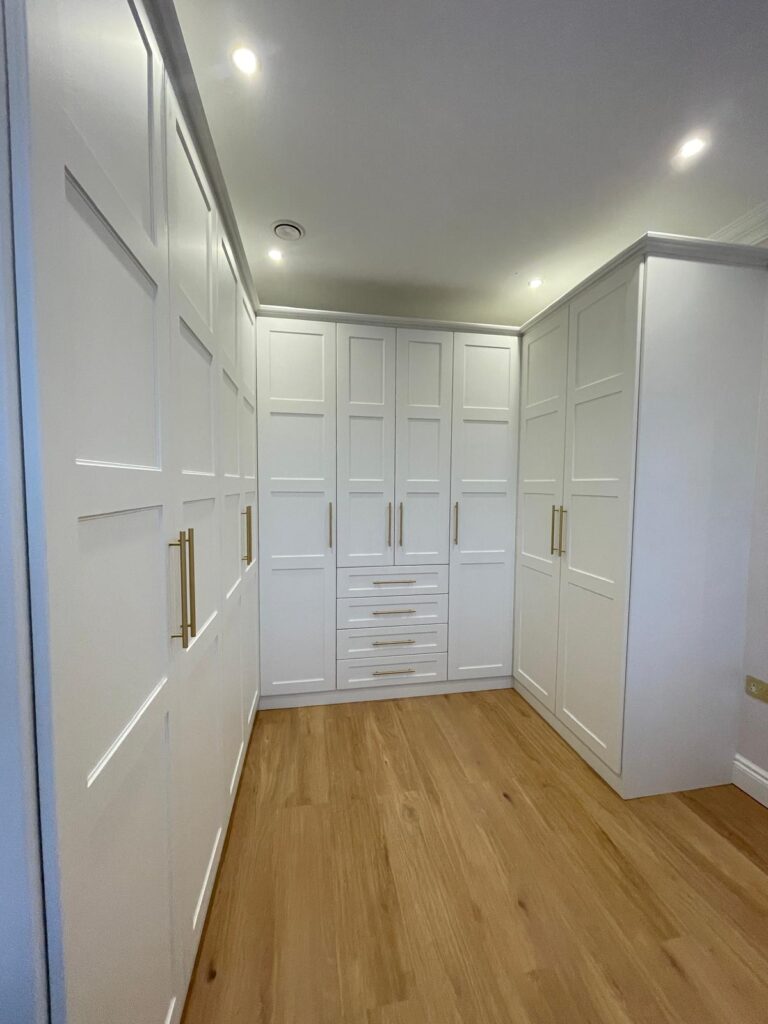
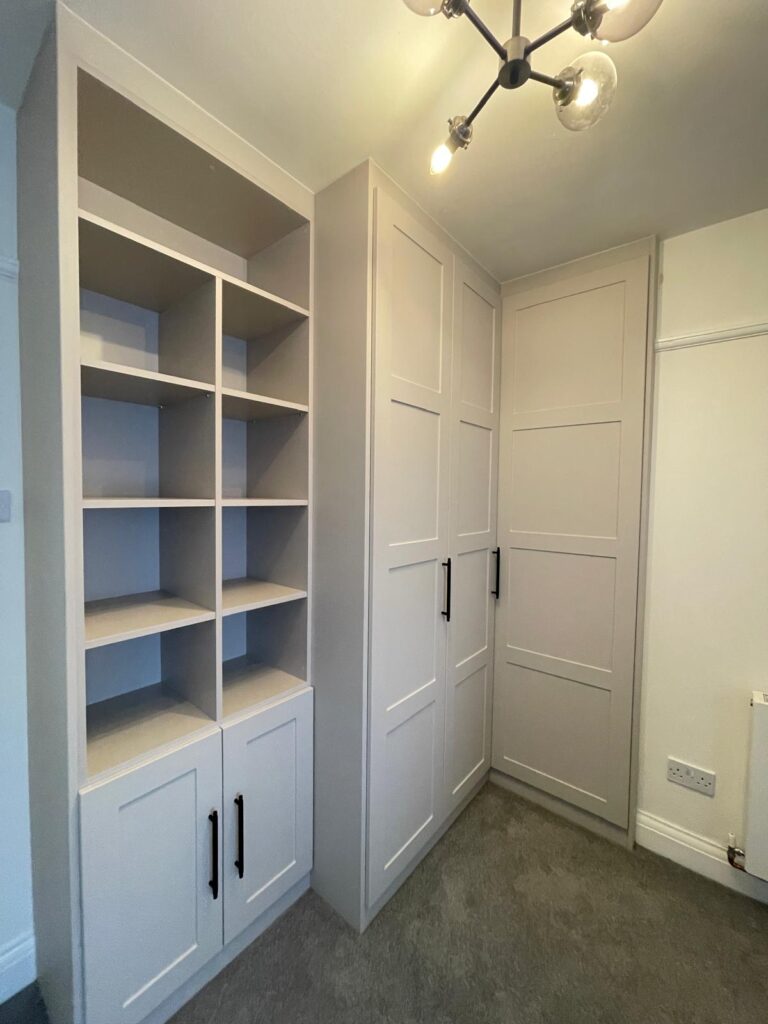
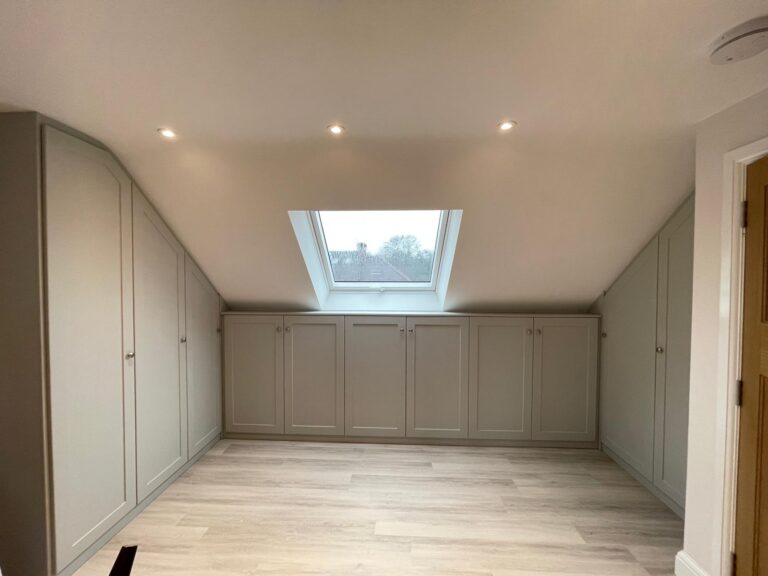
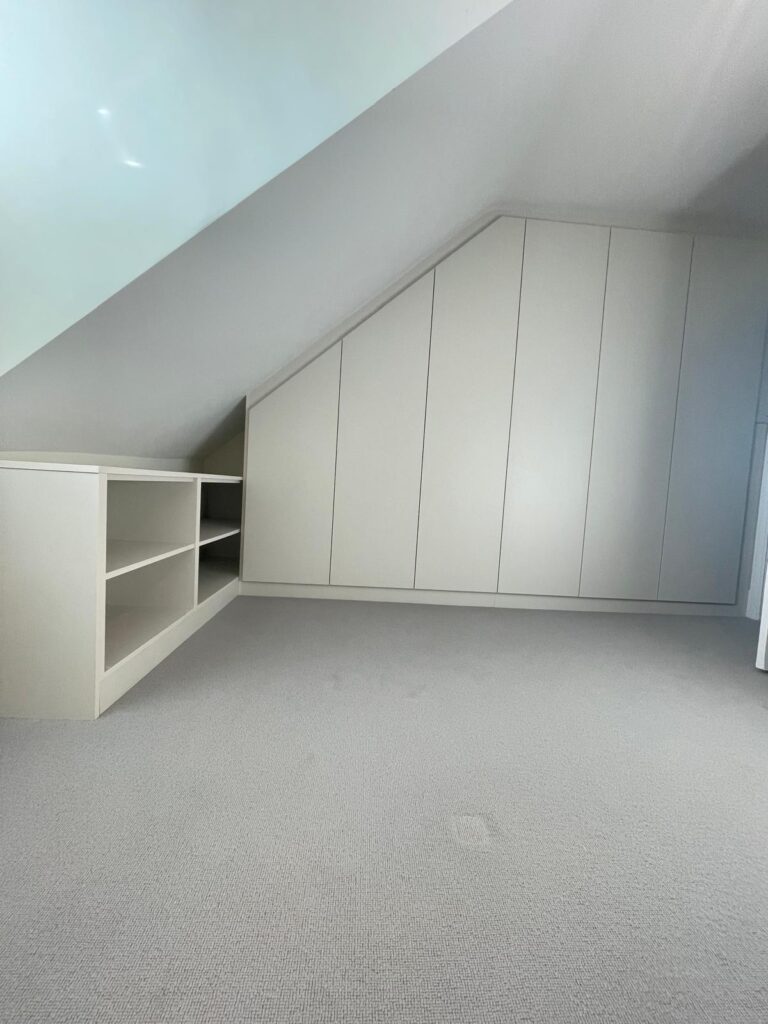
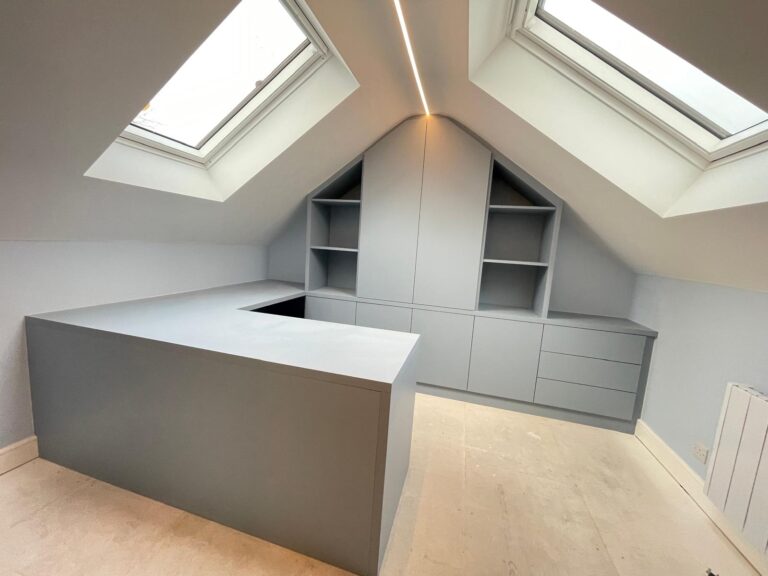
Some of the best results happen in rooms that seem difficult at first glance. Alcoves can be enclosed without wasting depth. A loft bedroom with reduced head height can still accommodate full-width storage. A wall with a chimney breast can be turned into a composed feature rather than a patchwork of dead space.
In areas such as Richmond, Wimbledon and Putney, where period homes often come with charming but irregular proportions, bespoke design is particularly useful. Standard wardrobes tend to leave filler gaps, wasted corners or clumsy overhangs. A made-to-measure approach gives the room a more settled, polished finish.
Choosing the right style for your room
Sliding doors are not one look. Their character depends heavily on proportion, materials and frame detailing. The same basic mechanism can suit a crisp contemporary bedroom or a softer, more classic interior.
Mirrored doors remain popular for good reason. They reflect natural light, help smaller bedrooms feel more open and remove the need to find wall space for a separate full-length mirror. They are especially effective where the room feels narrow or where you want the wardrobe frontage to recede visually.
Glass-effect or coloured panels create a more decorative finish without becoming fussy. Soft neutrals tend to age well and sit comfortably within a wider scheme, while darker tones can look striking in larger rooms with good light. If you prefer warmth, woodgrain or textured finishes can make fitted storage feel less clinical and more like furniture.
Framing also matters. Slim profiles often suit modern interiors, while chunkier divisions can create stronger visual rhythm across a long wall. There is no single right answer here. It depends on ceiling height, room width and how prominent you want the wardrobe to feel.
What sits behind the doors matters just as much
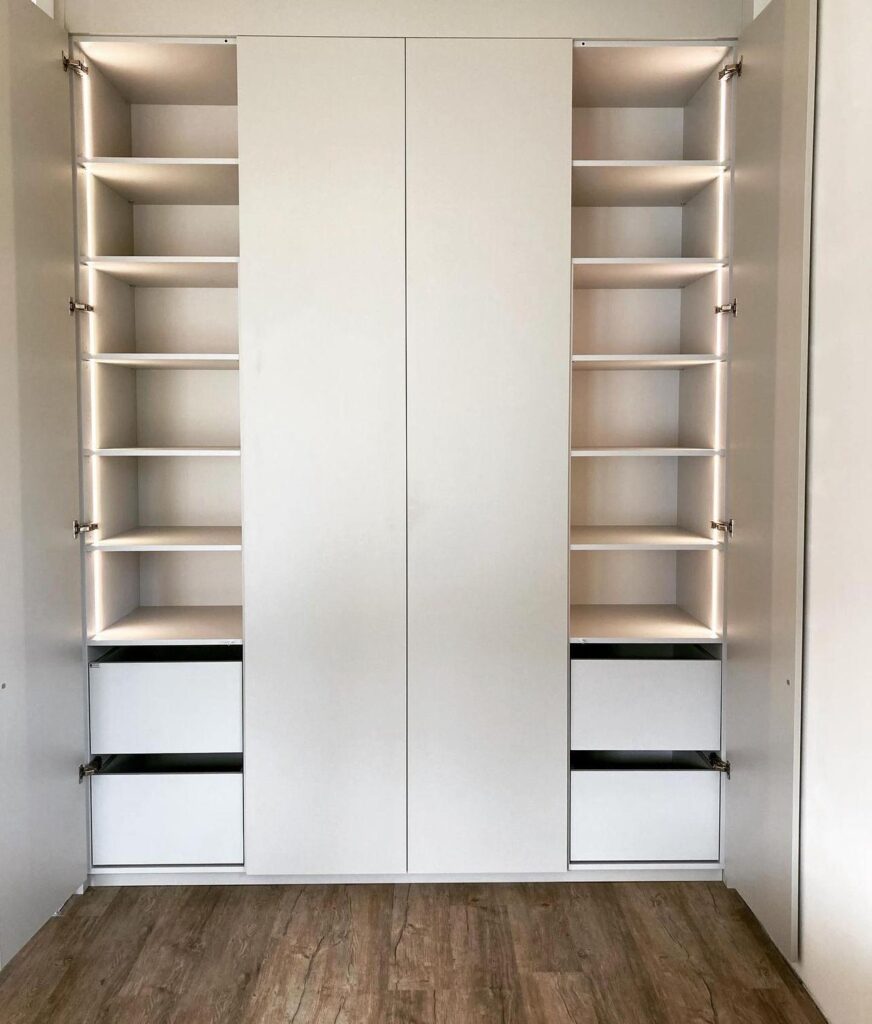
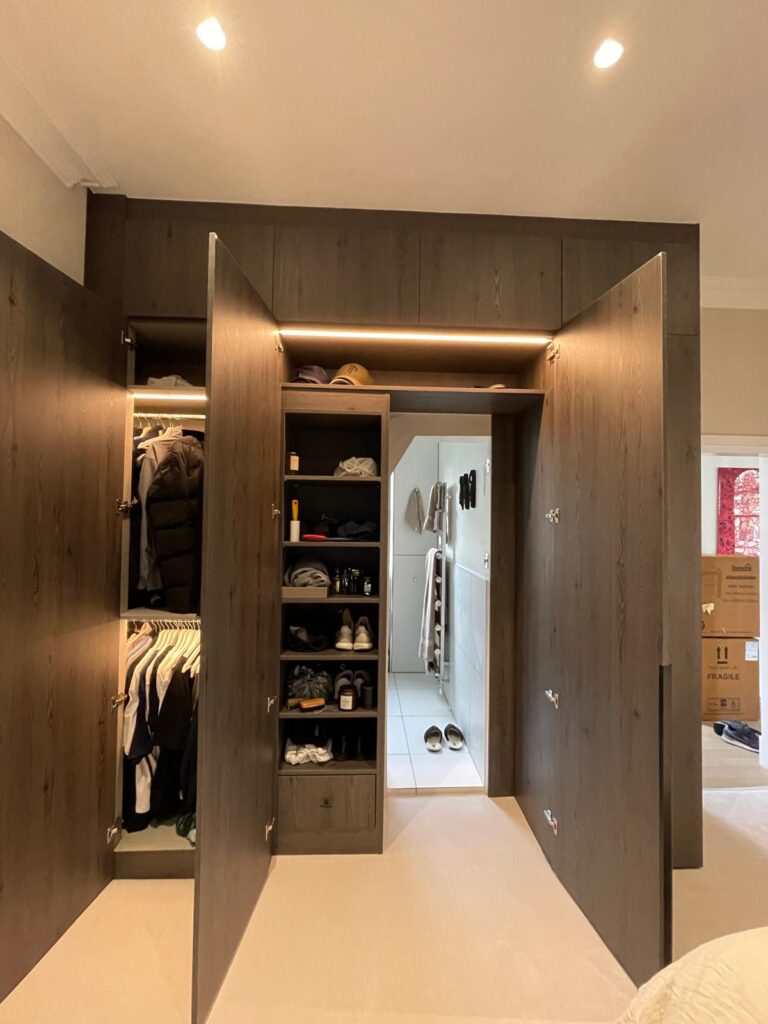
A sliding wardrobe should not only look elegant when closed. It should make daily routines easier when open. That means the internal storage needs to be tailored to what you actually own, not an assumed template.
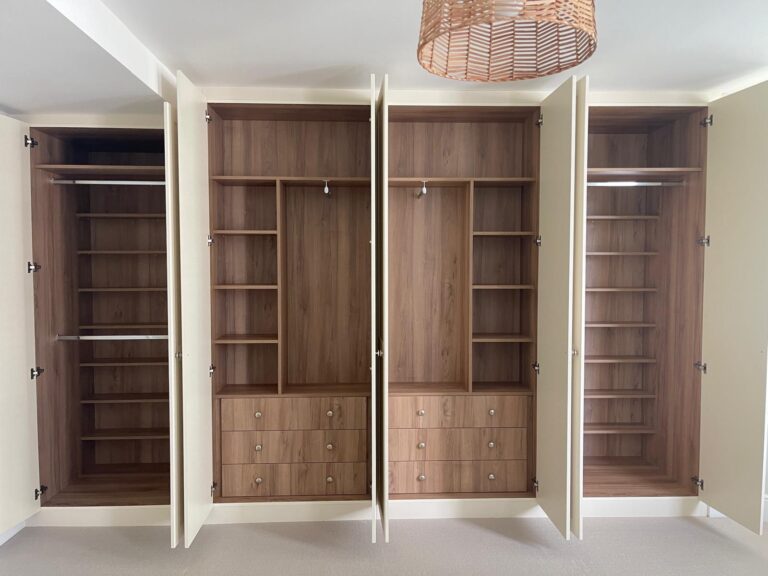
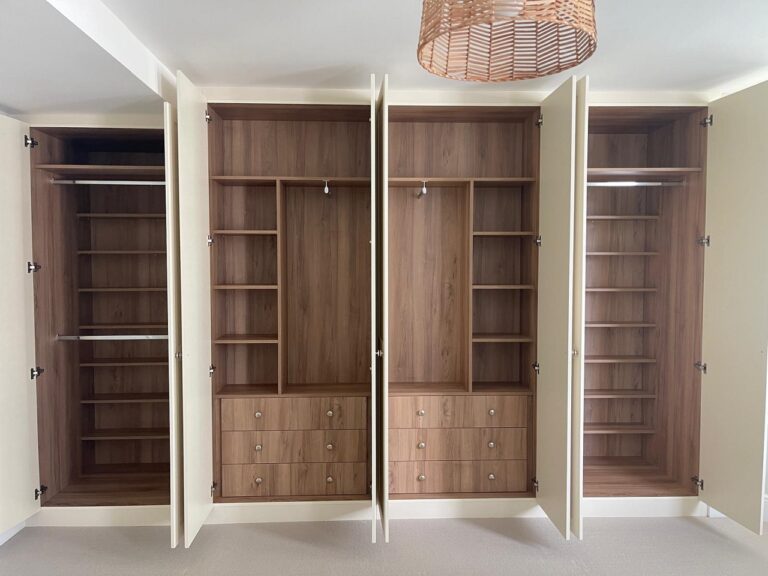
For some households, long hanging is the priority. For others, it is drawers for folded clothes, compartments for bags, shoe shelves or a combination of double hanging and overhead storage. If two people are sharing the wardrobe, the layout needs to accommodate different habits without creating friction.
This is often where bespoke design proves its worth. A standard interior might be serviceable, but it rarely feels effortless. A well-planned fitted interior can reduce visual noise, make it easier to keep everything organised and help the room stay calm even during a busy week.
Practical trade-offs to consider
Sliding doors are an excellent solution, but they are not automatically better in every situation. Because one panel slides in front of another, you never have the entire wardrobe open at once. For some layouts, especially very narrow wardrobes with many small compartments, hinged doors may offer easier full access.
Sliding systems also depend on quality hardware and precise installation. Poorly fitted tracks or lightweight panels can feel disappointing very quickly. This is one reason bespoke work tends to outperform budget alternatives over time. The movement should feel controlled, quiet and dependable, not flimsy.
Another consideration is finish choice. Mirror can brighten a room beautifully, but some homeowners prefer a softer, less reflective surface. Darker panels can look sophisticated, yet in a room with limited light they may feel heavier than expected. The best choice usually comes from balancing appearance with how the room behaves throughout the day.
How bespoke sliding doors improve the whole room
The strongest fitted designs do more than store belongings. They improve how the room functions and how it feels to spend time in it. Sliding wardrobes often achieve this by reducing visual interruption.
Without protruding handles or open door swings, the room can feel calmer and easier to move through. In bedrooms, that can be a real quality-of-life upgrade. In dressing areas or multi-use spaces, it helps create a more composed atmosphere.
There is also a property appeal angle. Buyers and homeowners alike recognise the value of integrated storage that looks purposeful rather than improvised. Well-designed fitted furniture suggests care, permanence and efficient use of space, all of which support a home’s overall impression.
What to expect from a bespoke process
The best results usually begin with a proper design conversation, not a product catalogue. Measurements are only part of it. You also need to consider what the room lacks, what frustrates you now and how you want the finished space to feel.
From there, the design should bring together door style, internal layout, finishes and fitting details in one coherent plan. Transparent pricing is important at this stage because it allows you to understand where the value sits and make informed choices. Sometimes a simpler finish with a better internal specification is the smarter investment. Sometimes the visual finish is what will transform the room most.
Installation should also be treated as part of the design quality, not an afterthought. Precise fitting is what gives bespoke sliding doors their clean lines and reliable movement. A fast turnaround is useful, but only if it comes with care and consistency. Homeowners want minimal disruption, but they also want the confidence that the furniture will look right and perform well for years.
For companies such as Finest Furniture Studio, that balance of design, practicality and efficient installation is exactly where bespoke work earns its place.
Are bespoke sliding doors worth it?
If your room is straightforward, spacious and already works well, a freestanding solution may be enough. But many homes are not like that. They have wasted corners, restricted walkways, uneven walls or simply too much visible clutter.
In those cases, bespoke sliding doors are not a cosmetic extra. They are a design decision that can make the room easier to use every single day. The gain is measured in better movement, better storage and a more refined finish that feels right for the space rather than imposed upon it.
The most satisfying interiors are rarely the ones with the most furniture. They are the ones where everything has been thought through. If your bedroom or dressing area feels cramped, untidy or visually unresolved, sliding doors made specifically for your home can be the detail that brings order and elegance into proper alignment.
A well-designed room should quietly support your routine from morning to night. When storage does that beautifully, you feel the difference without having to think about it.