


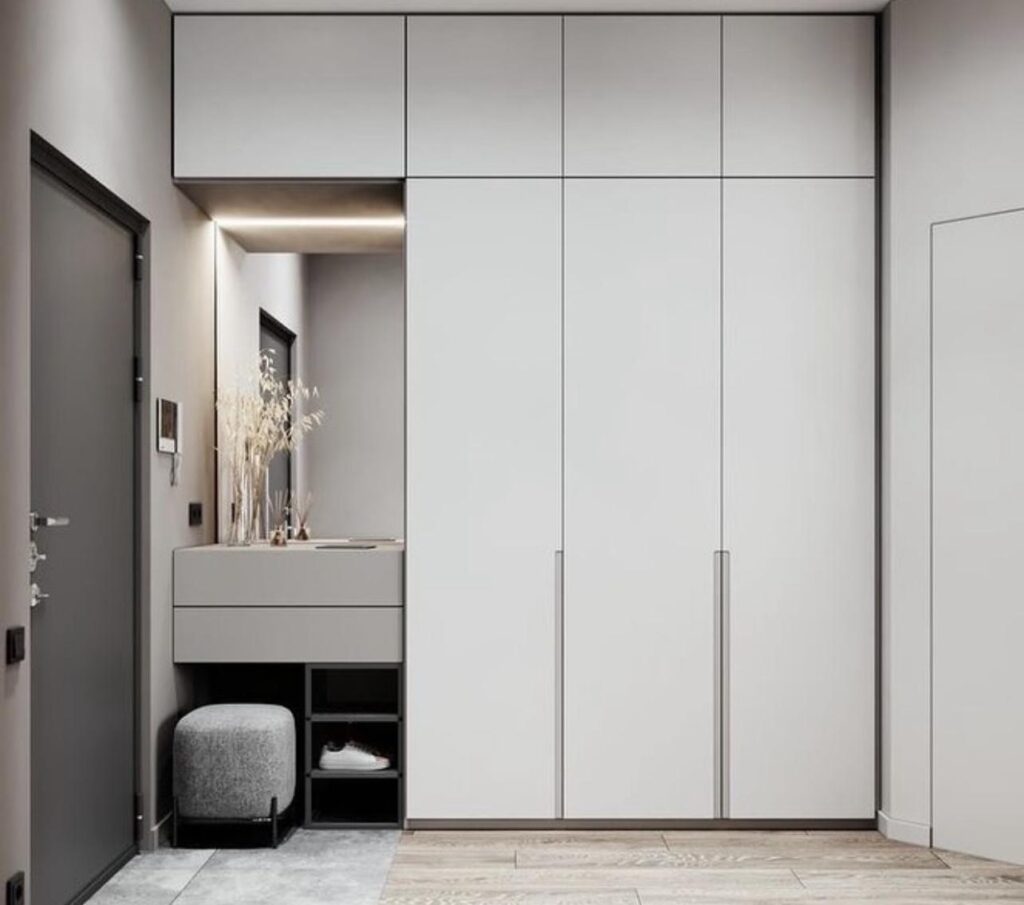
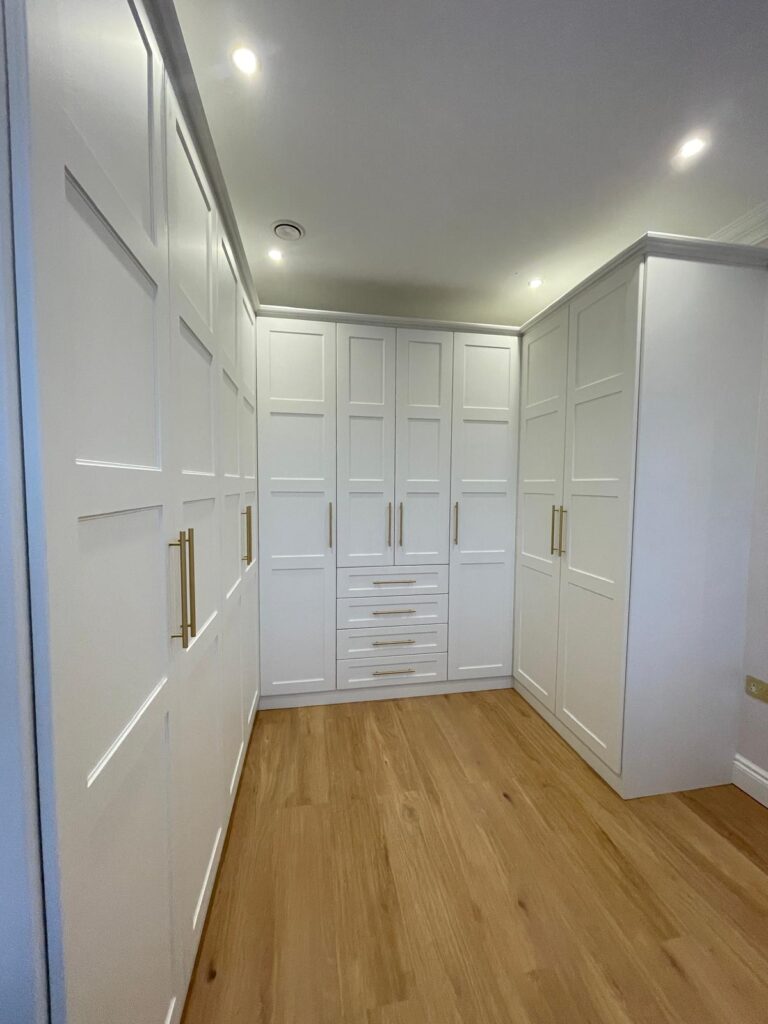
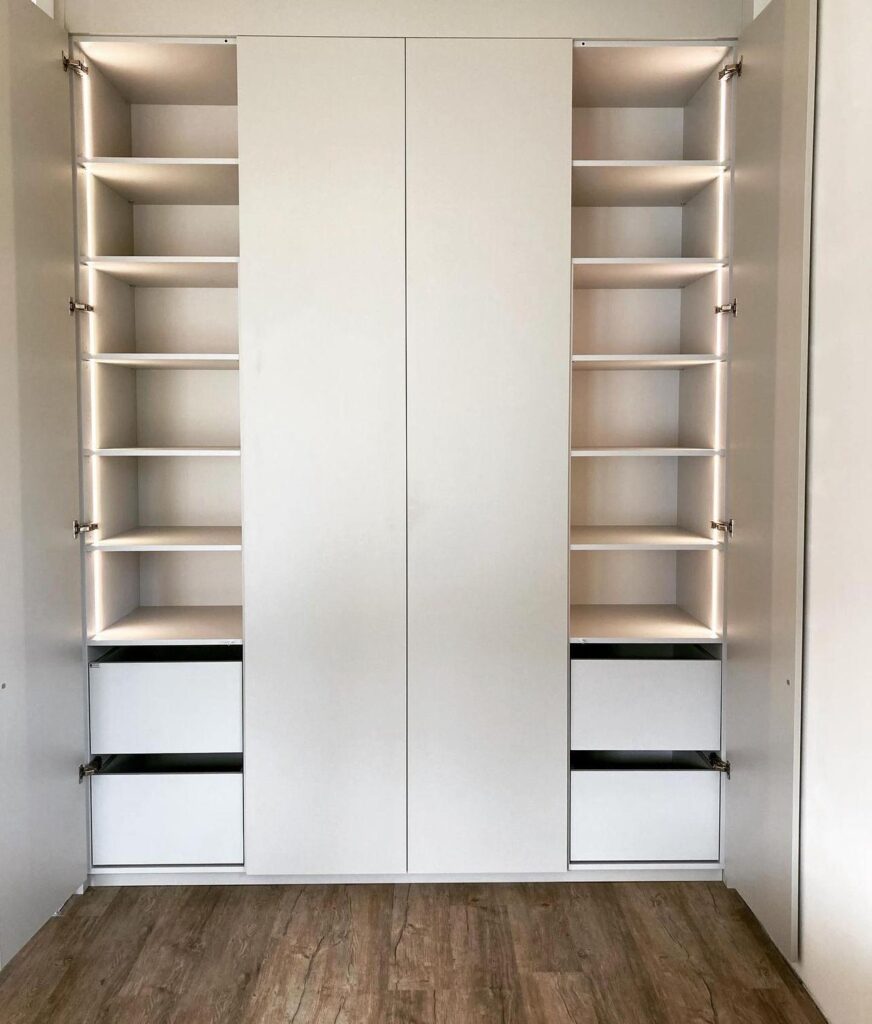

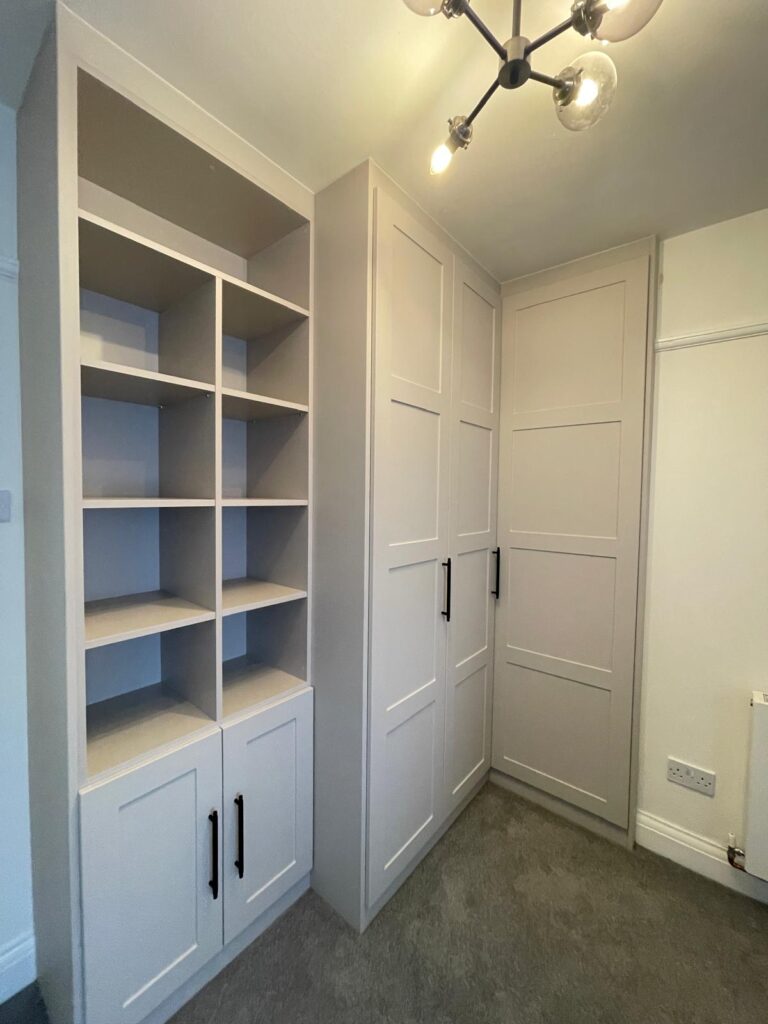





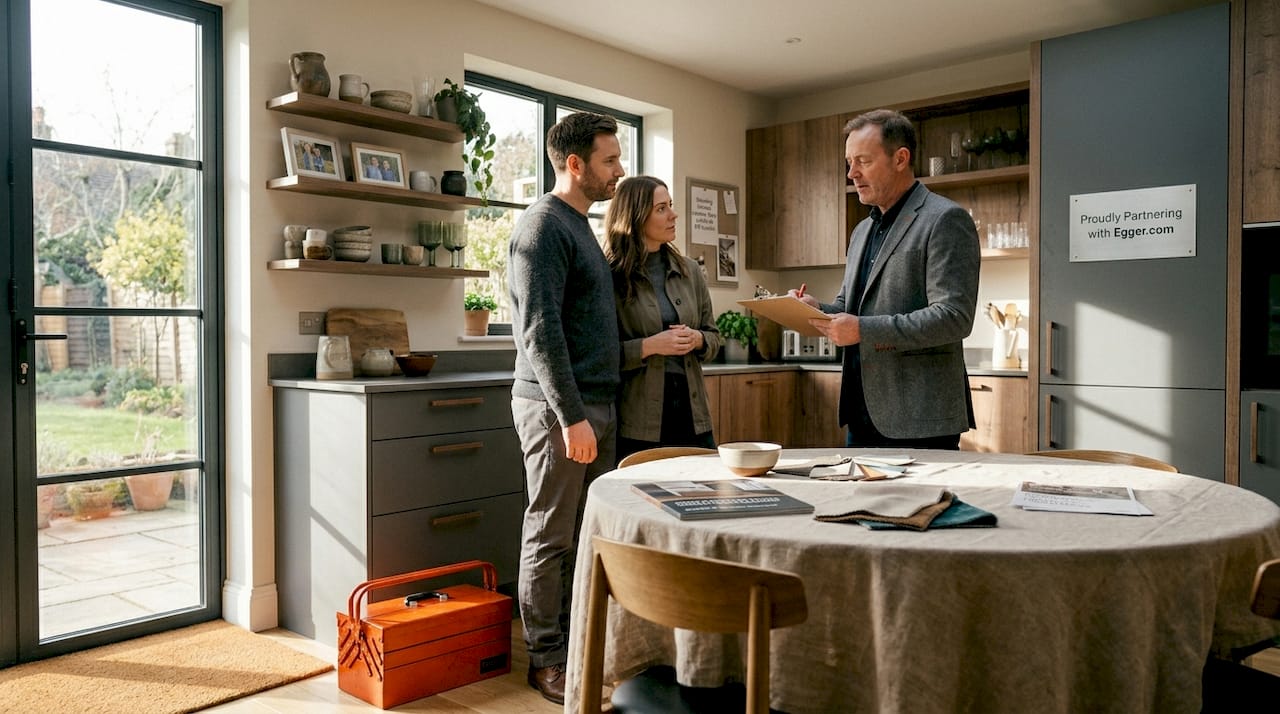
Most people assume that personalised furniture design means choosing a different fabric or swapping out a leg colour. That misconception costs homeowners dearly, because what they end up with is a mass-produced piece dressed in a different outfit. What is personalised furniture design, really? It is the practice of creating furniture built precisely around your space, your daily habits, and your personal sense of style. Not adapted from a catalogue. Not compromised to fit a standard size. Designed from the ground up, or modified so thoroughly that it functions as if it always belonged there.
Table of Contents
- Key takeaways
- What is personalised furniture design: definitions and core components
- Benefits of personalised furniture design
- The personalised furniture design process
- Cost considerations and planning
- Practical advice for designing personalised furniture
- My perspective on personalised furniture design
- Transform your space with Finest Furniture Studio
- FAQ
Key takeaways
| Point | Details |
|---|---|
| Beyond colour and fabric | Personalised furniture design covers dimensions, materials, functionality, and layout fit, not just surface finishes. |
| Fits awkward spaces exactly | Tailored measurements eliminate wasted gaps and allow for features like hidden storage and fold-away elements. |
| Timelines require planning | Standard bespoke pieces take 9 to 14 weeks; larger structural commissions can run 14 to 16 weeks or more. |
| Cost reflects craft | Pricing depends on size, materials, complexity, and installation; quality craftsmanship delivers long-term value. |
| Design tools have improved | Digital 3D configurators and AI-assisted tools allow you to preview and refine designs before production begins. |
What is personalised furniture design: definitions and core components
Personalised furniture design means creating pieces tailored to an individual’s space, style, and functional requirements rather than selecting from a fixed catalogue. It covers a broad spectrum of choices: the exact dimensions of a piece, the depth of a shelf, the firmness of a seat, the finish of a panel, and the internal configuration of a wardrobe. Every one of those decisions is yours to make.
It helps to understand the key terms before going further, because they are not interchangeable.
- Bespoke furniture is designed and built entirely from scratch for one client. No pre-existing template exists. The piece begins as a brief and ends as something unique to your home.
- Custom furniture typically starts from a maker’s existing design framework but allows for significant adjustments to dimensions, materials, and features. It is the most common form of custom furniture design commissioned by homeowners.
- Made-to-order furniture usually means selecting from a defined range of options. Personalisation is limited to finishes, sizes within set parameters, and perhaps hardware choices.
Understanding where on that spectrum your project sits will shape your budget, your timeline, and your expectations.
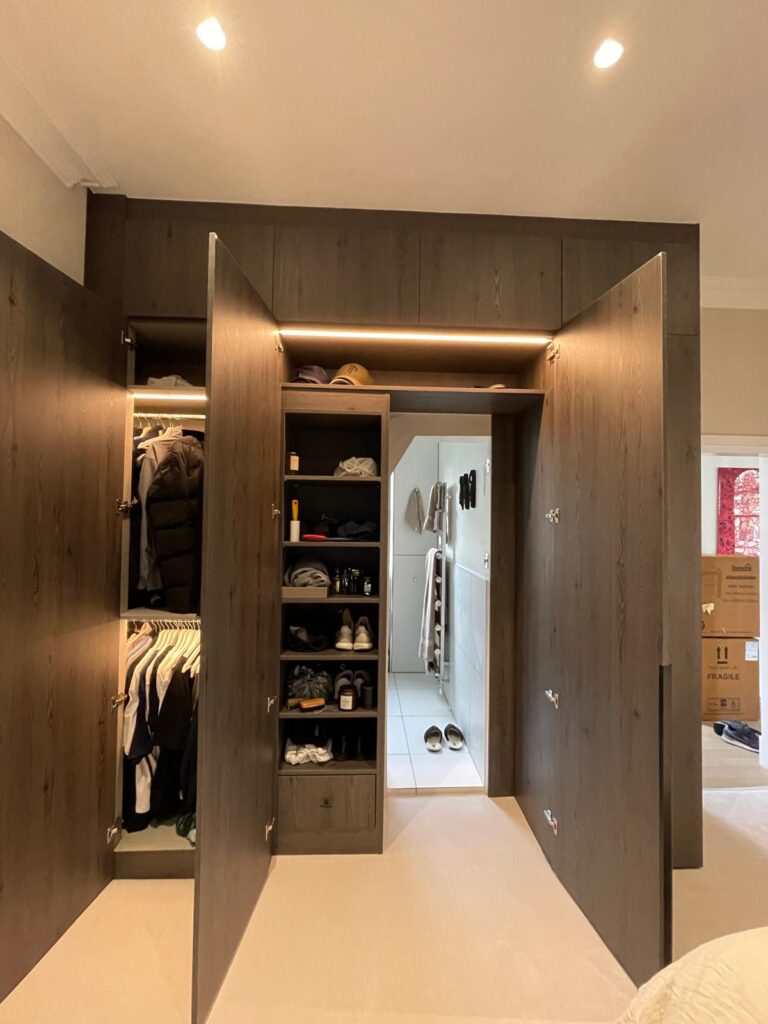
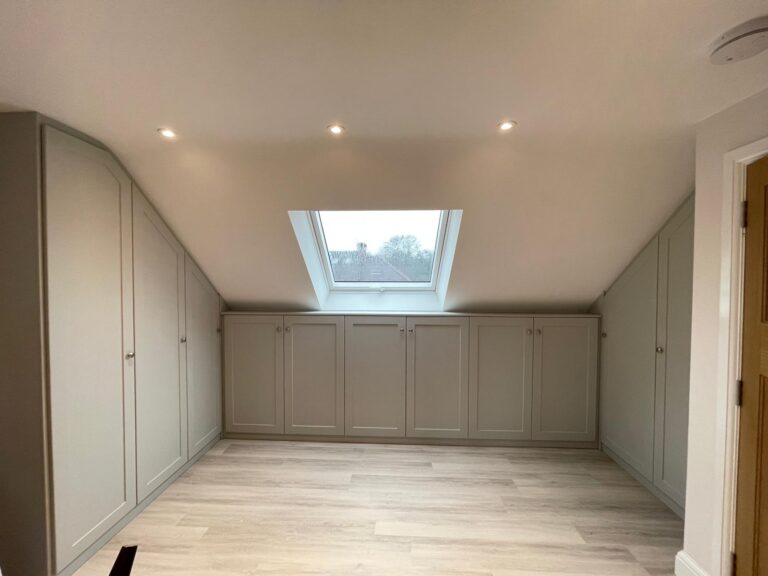
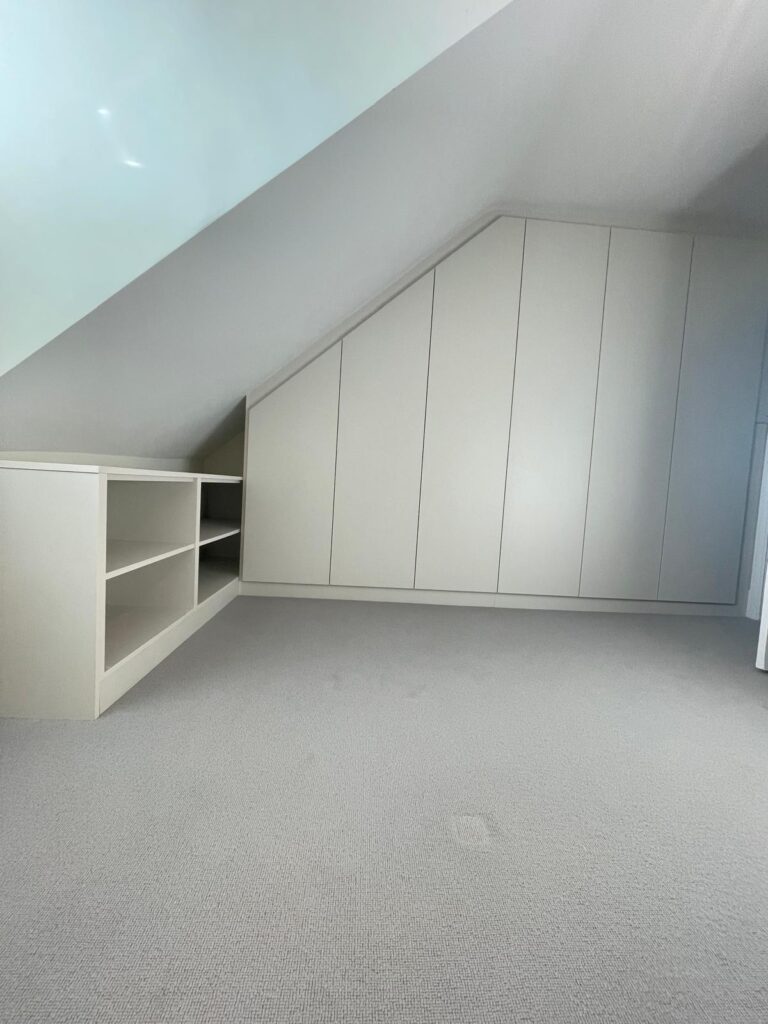
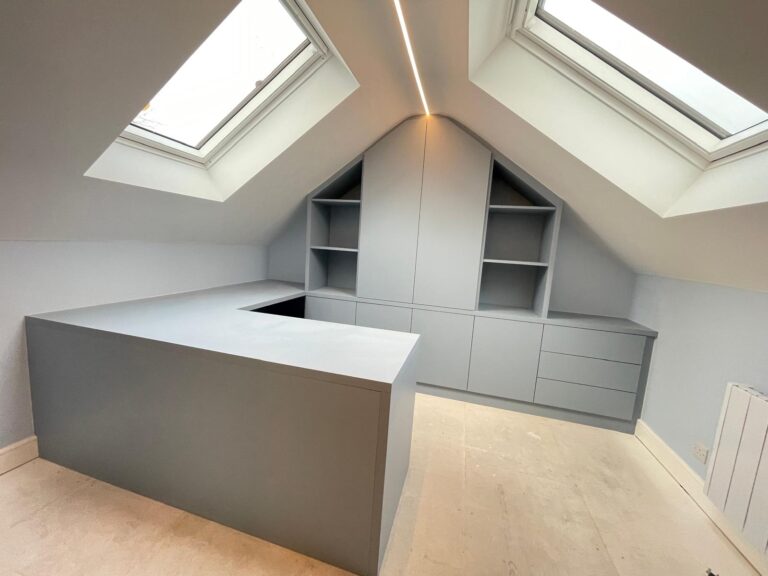
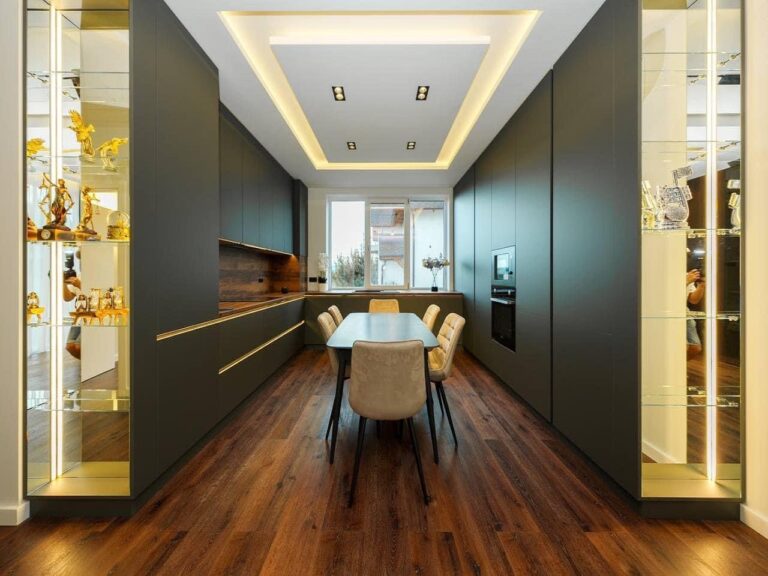
Personalisation can be as minor as specifying a non-standard width on a fitted unit, or as involved as commissioning a fully bespoke furniture solution designed to fill an awkward alcove, integrate concealed lighting, and accommodate a specific collection of items. Adjusting width, depth, and length ensures furniture fits a room layout precisely rather than forcing you to work around standard sizes.
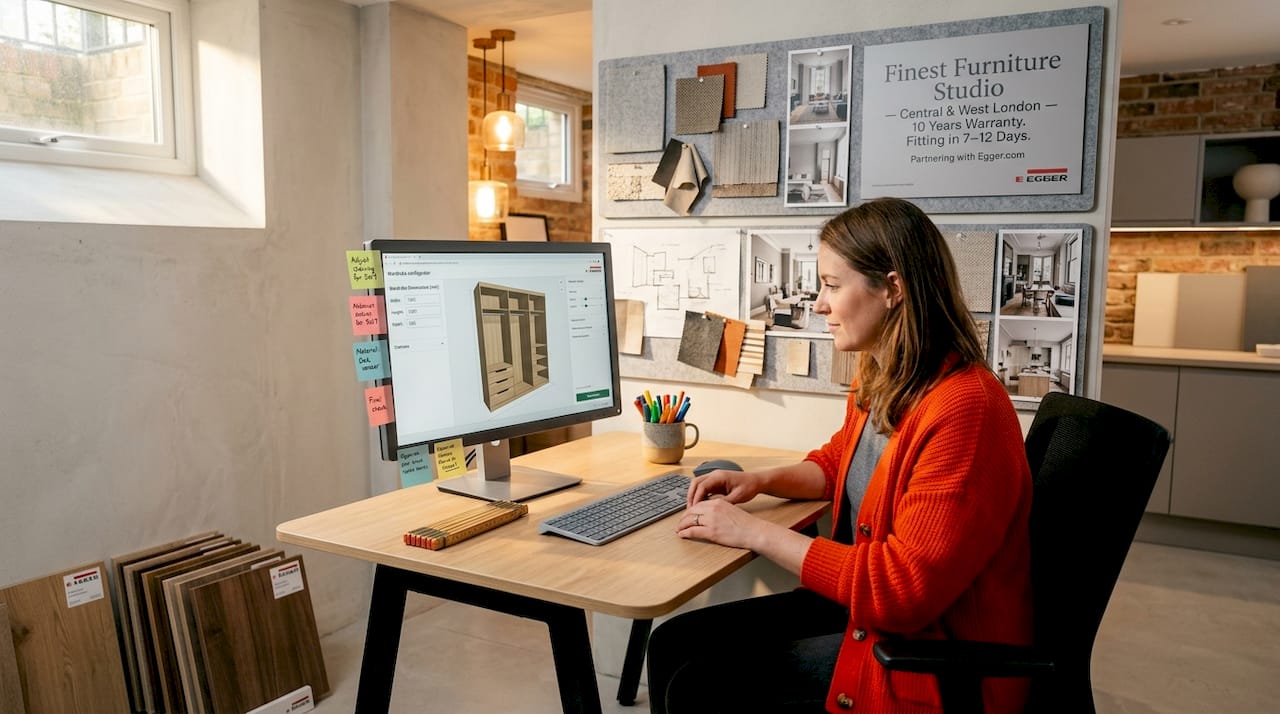
Digital tools have expanded what is possible during the design phase. Parametric design logic in digital configurators enforces build constraints and updates designs dynamically, which means the option you select on screen is guaranteed to be buildable in the workshop. More advanced platforms now use AI alongside 3D visualisation to let you upload a photograph of your room and receive a workable design plan rapidly, complete with a prioritised list of what to commission or change.
Pro Tip: Before your first design consultation, photograph your space from multiple angles and note down every awkward dimension: ceiling heights, alcove depths, radiator positions, and skirting board protrusions. Designers can only solve problems they know about.
Benefits of personalised furniture design
The advantages of choosing personalised furniture extend well beyond good looks. They are practical, emotional, and surprisingly durable.
-
Perfect spatial fit. Detailed measurements help avoid wasted gaps and allow features such as hidden storage compartments and fold-away tables. In a Victorian terrace in Putney or a modern flat in Fulham, where no two rooms are truly square, this matters enormously.
-
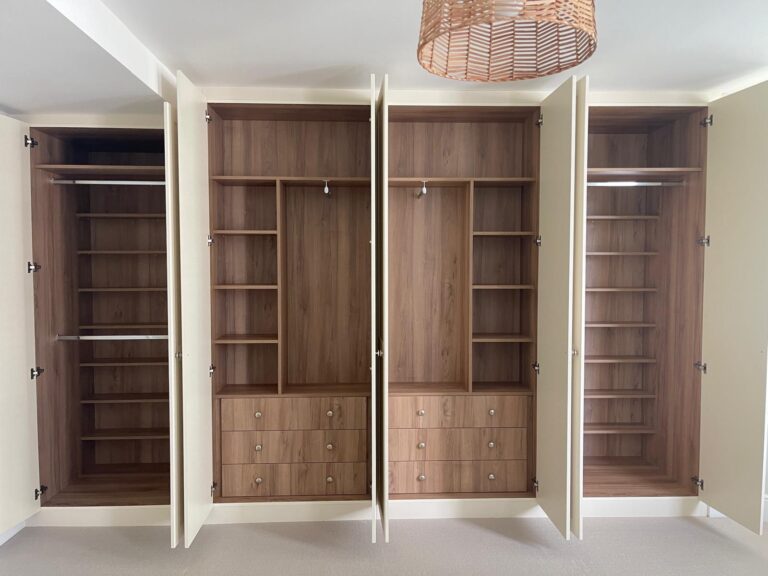
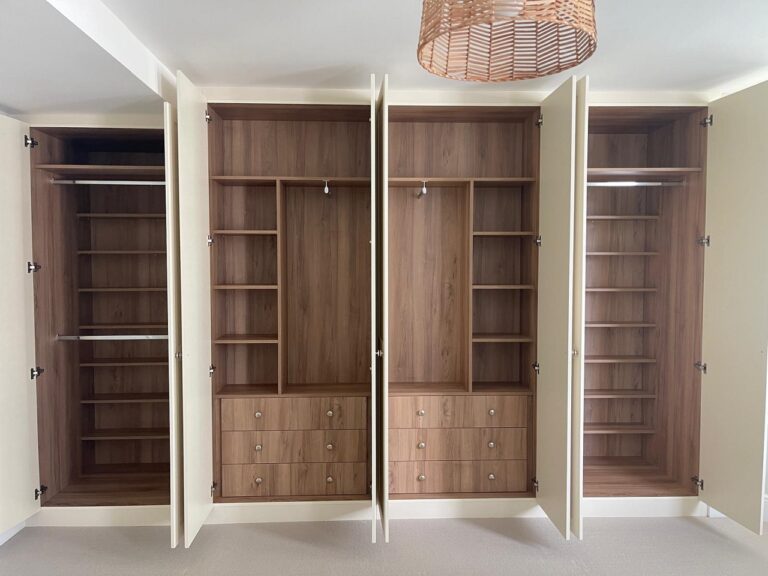
Enhanced functionality. A standard wardrobe offers hanging rails and a couple of shelves. A personalised wardrobe offers exactly the rail lengths you need, the drawer depths that suit your folded clothing, and the shoe storage configuration that matches your actual collection. The difference in daily usability is significant.
-
Emotional ownership. Customisation is often described as functional luxury, an experience that enhances personal expression and deepens your connection to your home. When a piece of furniture is made for you, you notice it differently. There is a satisfaction in knowing it exists nowhere else. The parallel holds true for other bespoke investments: the emotional value of bespoke creations is consistently cited as one of the primary motivations behind commissioning them.
-
Durability and sustainability. Personalised furniture is almost always made with better materials and greater attention to construction than its mass-produced equivalent. A piece built to exact specifications by skilled craftspeople tends to last decades, not years. That longevity makes it a more sustainable choice over time.
-
Confidence through collaboration. Working with a designer through multiple iterations means the final piece reflects your vision, not a compromise forced by stock limitations. Interactive personalisation improves user satisfaction by addressing comfort, convenience, and safety needs from the outset.
“Personalised furniture design means owning pieces that work precisely for your life, not the average life a manufacturer imagined.”
Pro Tip: When reviewing design proposals, ask your designer to walk you through the internal configurations, not just the external appearance. The inside of a wardrobe or media unit is where you will feel the benefit of personalisation every single day.
The personalised furniture design process
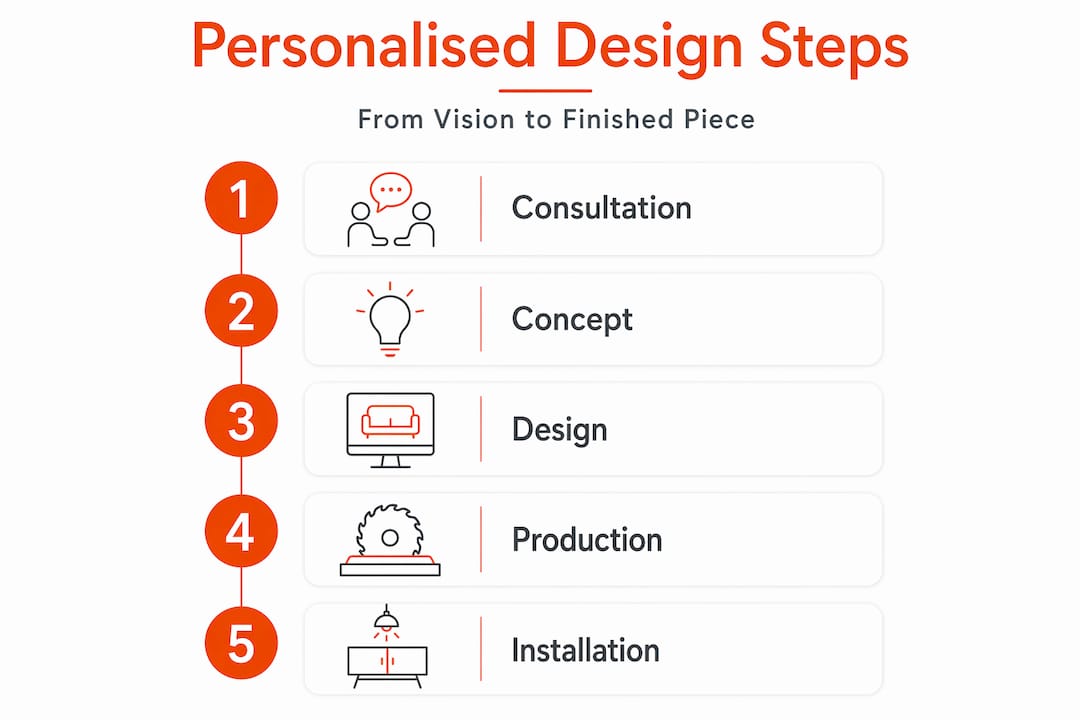
Understanding how the process works removes anxiety and helps you make better decisions. Here is what a typical commission looks like from first conversation to finished installation.
-
Initial consultation. A designer visits your space, takes detailed measurements, and asks about your storage habits, aesthetic preferences, and any specific functional requirements. This stage is about listening more than proposing.
-
Concept and visualisation. Based on the consultation, your designer produces initial drawings or a 3D render. You review, give feedback, and request changes. Digital tools mean you can see exactly how a piece will look in your room before any material is ordered.
-
Material selection. You choose finishes, hardware, internal fittings, and any specialist features such as soft-close mechanisms, integrated lighting, or pull-out rails. Samples are usually provided at this stage.
-
Design sign-off and production. Once you approve the final design, the piece goes into production. This is the point where timelines become fixed.
-
Delivery and installation. The finished piece is installed by the maker’s team, fitted precisely to the measurements taken at step one.
The table below shows realistic timelines based on piece complexity.
| Furniture type | Typical production timeline |
|---|---|
| Simple fitted shelving or small units | 6 to 9 weeks |
| Standard bespoke wardrobes | 9 to 14 weeks |
| Large structural pieces or full fitted rooms | 14 to 16 weeks or more |
Standard pieces typically take 9 to 14 weeks, while larger structural commissions extend to 14 weeks and beyond. Planning your commission well in advance is not optional. It is the difference between a smooth project and a stressful one.
For a more detailed walkthrough of each stage, the West London design process guide covers timelines and client expectations from first contact to final fitting.
Cost considerations and planning
Pricing for personalised furniture reflects a genuinely different way of making things. You are not paying a premium for a brand name. You are paying for the time, skill, and materials required to build something that has never existed before.
The main factors that drive cost upwards include:
- Size and scale. Larger pieces require more material and more installation time. A full fitted bedroom costs more than a single wardrobe unit.
- Material choice. Premium hardwoods, painted lacquer finishes, and specialist veneers increase both material costs and production time. MDF-based painted finishes offer a cost-effective alternative without sacrificing appearance.
- Design complexity. Unusual angles, curved panels, integrated lighting channels, and concealed compartments all add to production complexity and labour time.
- Functional features. Pull-out trouser racks, built-in safe drawers, and motorised mirrors are available, but each adds to the total.
- Installation and removal. Professional installation is non-negotiable for fitted furniture. Factor it into your budget from the start. Some studios, including Finest Furniture Studio, include removal and disposal of existing furniture as part of the service.
Custom furniture pricing is influenced by size, materials, and features, with functional additions carrying their own labour fees. In London, bespoke wardrobe solutions typically begin from around £1,600 for a walk-in design and £1,800 for a hinged door wardrobe, rising depending on internal specification and room size.
Mass-produced furniture appears cheaper at point of purchase but rarely delivers the same lifespan or spatial efficiency. A bespoke fitted wardrobe that uses every centimetre of available space often replaces two or three standard wardrobes, which changes the cost comparison entirely.
Pro Tip: Prioritise the functional specification over the finish. A simpler paint finish with a well-designed interior will serve you better than an impressive exterior with poorly thought-out storage inside.
Practical advice for designing personalised furniture
Knowing what personalised furniture design offers is only useful if you can translate that knowledge into good decisions. These points will help you avoid the most common mistakes homeowners make during a commission.
- Measure thoroughly and honestly. Include ceiling height variations, the position of light switches and sockets, any pipe boxing, and the depth of skirting boards. Overlooking a single dimension can force a compromise late in the project.
- Consider how the room flows. A wardrobe door that swings into a narrow walkway, or a media unit positioned so it catches glare from a window, will frustrate you regardless of how well made it is. Think about daily movement patterns before committing to a layout.
- Choose finishes that complement your existing décor. Personalised interior design works best when the new piece feels like it was always part of the room. Bring paint swatches, flooring samples, and photographs of existing furniture to your design consultation.
- Think about maintenance. Gloss finishes show fingerprints. Light-coloured fabrics mark easily. Integrated lighting requires occasional bulb access. Factor in the reality of daily use when selecting materials and features.
- Use digital visualisation tools. Most reputable studios offer 3D renders before production begins. Use them thoroughly. Move through different viewing angles, check proportions, and confirm that internal configurations match your actual storage habits.
- Avoid underestimating room flow. Sliding door wardrobes, for example, are excellent in rooms where hinged doors would obstruct movement. The functional case for integrated wardrobes often comes down to exactly this kind of spatial thinking.
The difference between a disappointing commission and a transformative one almost always comes down to the quality of the brief. The more clearly you articulate your needs and your space, the better the outcome.
My perspective on personalised furniture design
I’ve watched the furniture industry shift considerably over the years, and what strikes me most is how long it took for personalised design to move from a luxury reserved for period homes and high-end renovations into something accessible to everyday homeowners. That shift has genuinely changed what is possible for most people.
What I’ve learned from seeing hundreds of commissions come together is that clients who treat the brief as seriously as the budget almost always end up happiest. The ones who arrive with clear photographs, honest descriptions of how they live, and realistic expectations about timing get results that genuinely transform how their homes feel to be in. The ones who leave those decisions vague tend to find themselves accepting compromises they didn’t plan for.
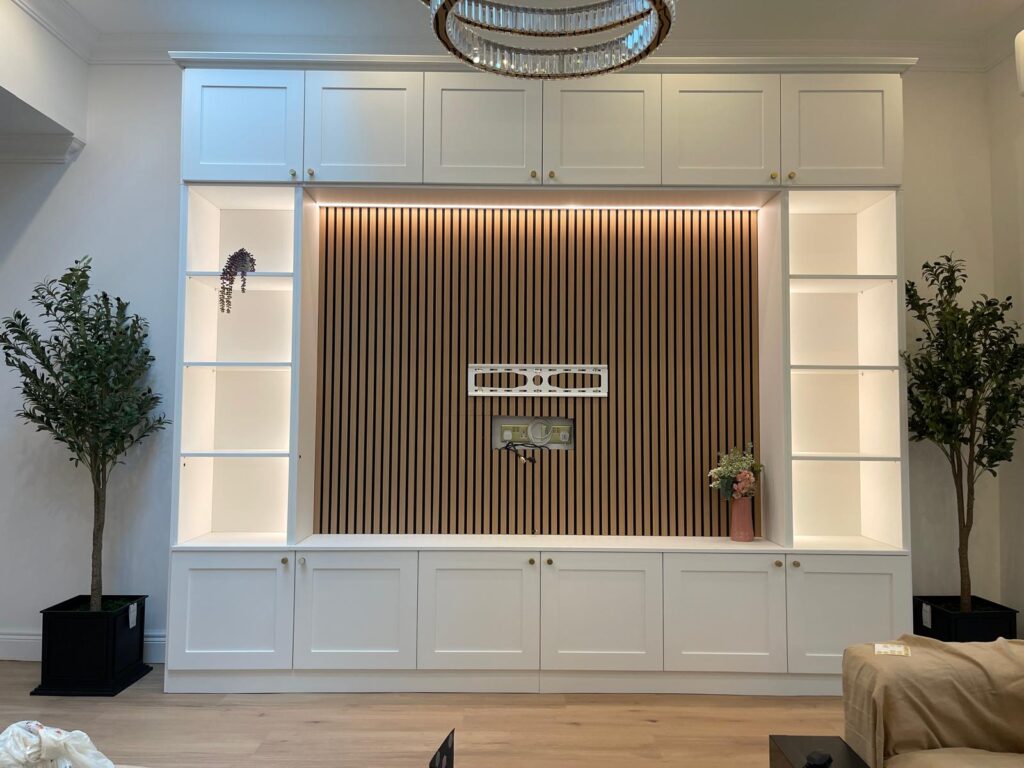
I also think the emotional dimension of personalised furniture is undervalued in most conversations about it. There is something specific and satisfying about a piece of furniture that fits your life exactly. It is not sentiment for its own sake. It is the practical payoff of having made considered decisions. A wardrobe that holds your actual wardrobe. A media unit that accommodates your actual equipment. These things reduce friction in daily life in ways that are easy to underestimate until you experience them.
The digital tools available now, particularly parametric configurators and room visualisation platforms, have removed a lot of the uncertainty that once made bespoke commissions feel risky. You can see the result before committing to production. That is a meaningful change.
My honest advice: do not treat personalised furniture as a treat to consider once everything else is settled. Treat it as a foundational decision about how your space works. The rooms that feel most considered are almost always the ones where someone took the time to design furniture around the life actually lived in them.
— Aureliu
Transform your space with Finest Furniture Studio
If you are ready to move from browsing ideas to commissioning something that genuinely fits your home, Finest Furniture Studio offers personalised consultation, design, and installation across West London and the surrounding areas, including Wimbledon, Richmond, Kingston, Putney, Chiswick, Chelsea, Fulham, Barnes, and Twickenham, as well as further afield in Reading, Guildford, and Woking.
We specialise in bespoke wardrobes for West London homes, fitted bedrooms, media wall units, and storage solutions designed to fit your exact space and lifestyle. Every commission includes a free design visit, a detailed 3D visualisation before production begins, and professional installation typically completed within 7 to 12 days. We also remove and dispose of your existing furniture as part of the service, so the transition is as straightforward as possible. All our work carries a 10-year guarantee.
To book your free design visit, call or WhatsApp us on ** 07468 150807**, or contact us through our website. Our office is based at 124 City Road, Kemp House, London, EC1V 2NX.
FAQ
What does personalised furniture design actually include?
Personalised furniture design covers dimensions, materials, internal configurations, functional features, and finishes, not just surface choices like colour or fabric. Customisation includes dimension choices and usage preferences such as seat firmness and specific room-fit measurements.
How long does bespoke furniture take to make?
Standard bespoke pieces typically take 9 to 14 weeks from design sign-off to installation; larger or more complex structural commissions can take 14 to 16 weeks or longer. Planning well in advance is advisable.
Is personalised furniture more expensive than buying from a shop?
Personalised furniture carries a higher upfront cost, but it typically lasts longer and delivers better spatial efficiency than mass-produced alternatives. Cost is influenced by size, materials, and functional features, and the long-term value often justifies the initial investment.
What is the difference between bespoke and custom furniture?
Bespoke furniture is designed entirely from scratch for one client with no pre-existing template, while custom furniture adapts an existing design framework to your specific dimensions and preferences. Made-to-order furniture offers the most limited personalisation within a predefined range.
How do I start the process of designing personalised furniture?
Begin with a consultation where a designer assesses your space, takes measurements, and discusses your functional needs and aesthetic preferences. Most reputable studios follow this with a 3D visualisation stage before any production begins, so you can review and refine the design with confidence.