








Your bedroom should be the most personal room in the house, yet most people settle for standard furniture that ignores the room’s actual shape, character, and their own lifestyle. Custom bedroom design ideas give you the means to work with your space rather than against it, whether that means fitting wardrobes into a sloping loft ceiling in Richmond or creating a multi-functional layout in a compact Fulham flat. This article walks you through the criteria, styles, timelines, and practical inspiration you need to design a bedroom that genuinely reflects who you are.
Table of Contents
- Key takeaways
- 1. Key criteria for planning custom bedroom design ideas
- 2. Bespoke fitted wardrobes tailored to every architectural quirk
- 3. Multi-purpose furniture for compact and irregular bedrooms
- 4. Using contrasting textures and layered lighting to set the atmosphere
- 5. Statement bespoke pieces: headboards, cabinetry, and unique finishes
- 6. Comparing popular custom bedroom styles and layouts
- 7. Timeline and budget for a custom bedroom design project
- 8. How to personalise bedroom decor once the furniture is in place
- My honest take on bespoke bedroom design
- How Finest Furniture Studio can help with your bespoke bedroom
- FAQ
Key takeaways
| Point | Details |
|---|---|
| Start with architecture | Assess alcoves, ceiling heights, and chimney breasts before selecting any furniture or finishes. |
| Plan storage early | Bespoke fitted wardrobes tailored to your exact needs prevent wasted space above and around units. |
| Allow realistic lead times | Custom cabinetry fabrication typically takes 8 to 12 weeks, so begin the process well in advance. |
| Layer decor after furniture | Once bespoke pieces are installed, textiles, lighting, and art complete the personalised look. |
| Budget for quality | Bespoke bedroom furniture costs more upfront but outlasts and outperforms off-the-shelf alternatives significantly. |
1. Key criteria for planning custom bedroom design ideas
Before you look at a single material sample or choose a paint colour, you need to assess the room itself. Bespoke bedroom design is a fully tailored approach where furniture is made to measure for a specific space, which means the room’s quirks become the brief rather than the problem.
Start by mapping the architecture. Note the following:
- Ceiling height and any variations caused by sloping rafters or loft conversions
- The position of alcoves, chimney breasts, and recesses
- Window placement and how natural light travels through the day
- Door swing clearances and radiator positions
- Any period features worth preserving, such as cornicing or exposed beams
Once you know what you are working with, define the mood and atmosphere you want. Designers consistently recommend deciding the mood first, then building lighting, furniture, and textiles around that intention. A minimalist brief calls for handleless cabinetry and ultra-matt finishes. A cosy, layered look calls for warm timber tones, upholstered panels, and soft lighting.
Lighting deserves a full plan of its own. Think in layers: ambient overhead lighting, task lighting beside the bed, and accent lighting within wardrobes or along shelving. Furniture layout follows from the lighting plan, not the other way around.
Pro Tip: When measuring for custom furniture, always measure the ceiling height in at least three places across the wall. Older London properties in areas like Chelsea and Barnes frequently have walls that are not perfectly plumb, and a few centimetres of variation can affect how bespoke units are fabricated.
Storage planning should reflect how you actually live, not an idealised version of it. If you own a large shoe collection, specify that. If you work from home and need a dedicated space, plan for it. The more honestly you brief a designer, the better the outcome.
2. Bespoke fitted wardrobes tailored to every architectural quirk
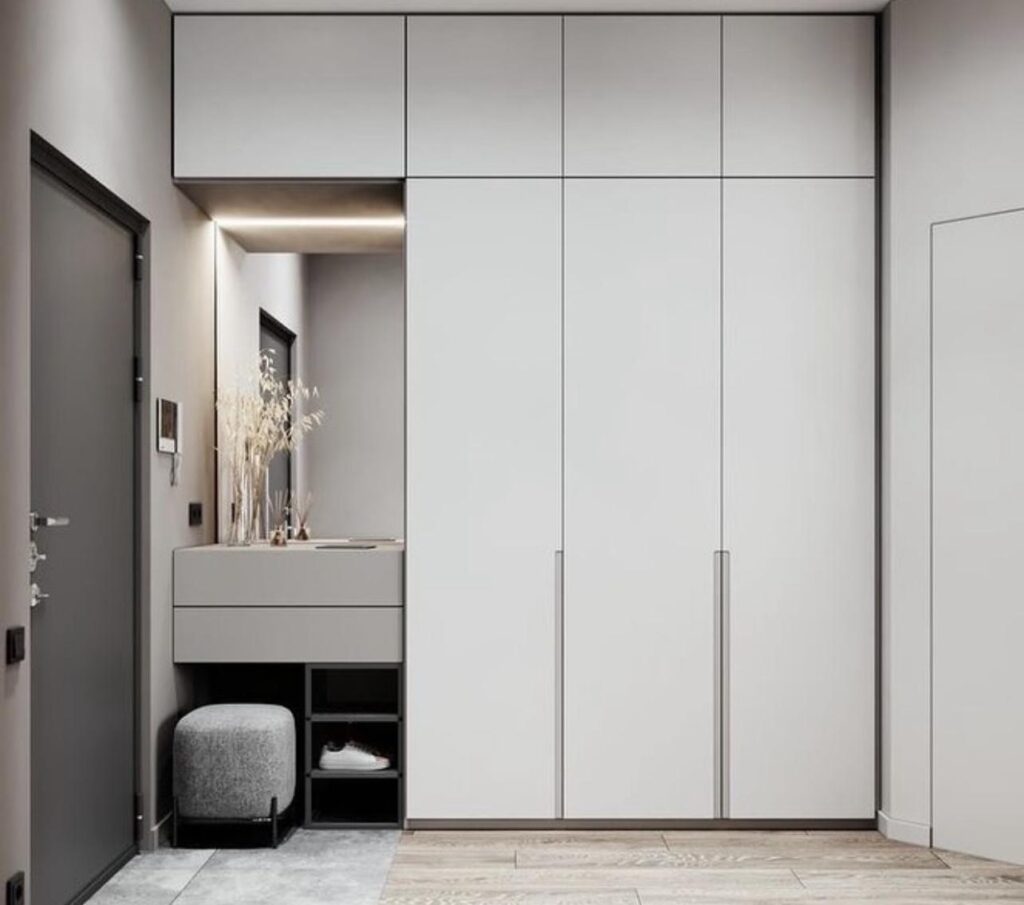
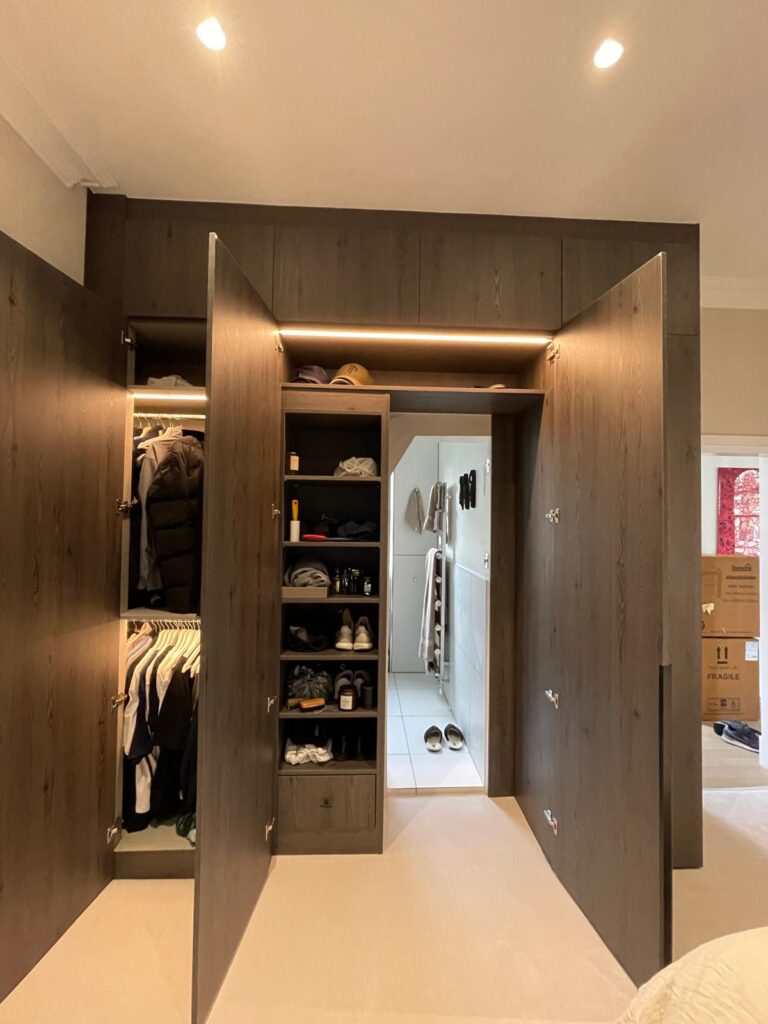
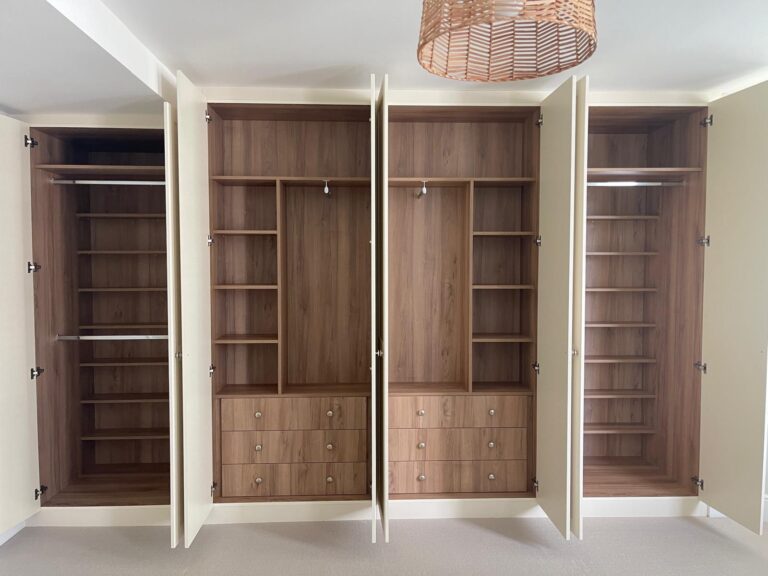
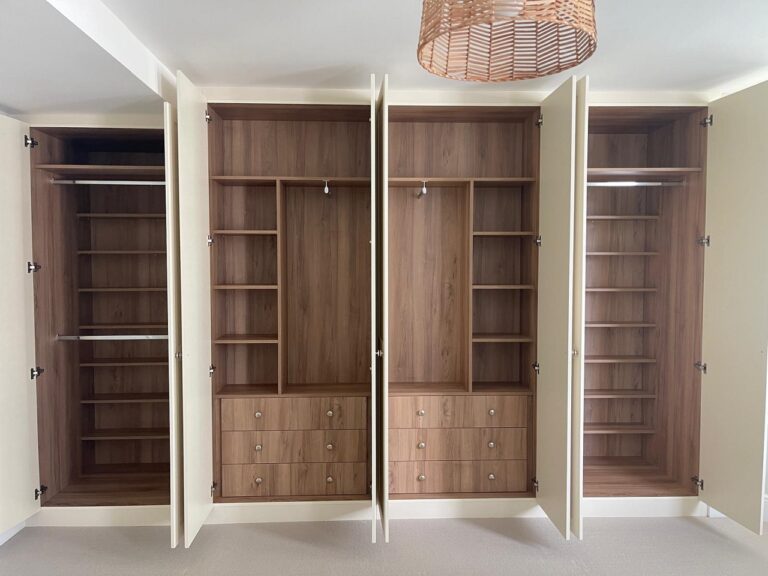
The single most transformative custom bedroom design idea for most homes is a fitted wardrobe that uses every centimetre of available space. Fitted wardrobes in London can extend wall to wall and floor to ceiling, incorporating drawers, shelves, shoe racks, hanging rails, and concealed technology features in a single, coherent unit.
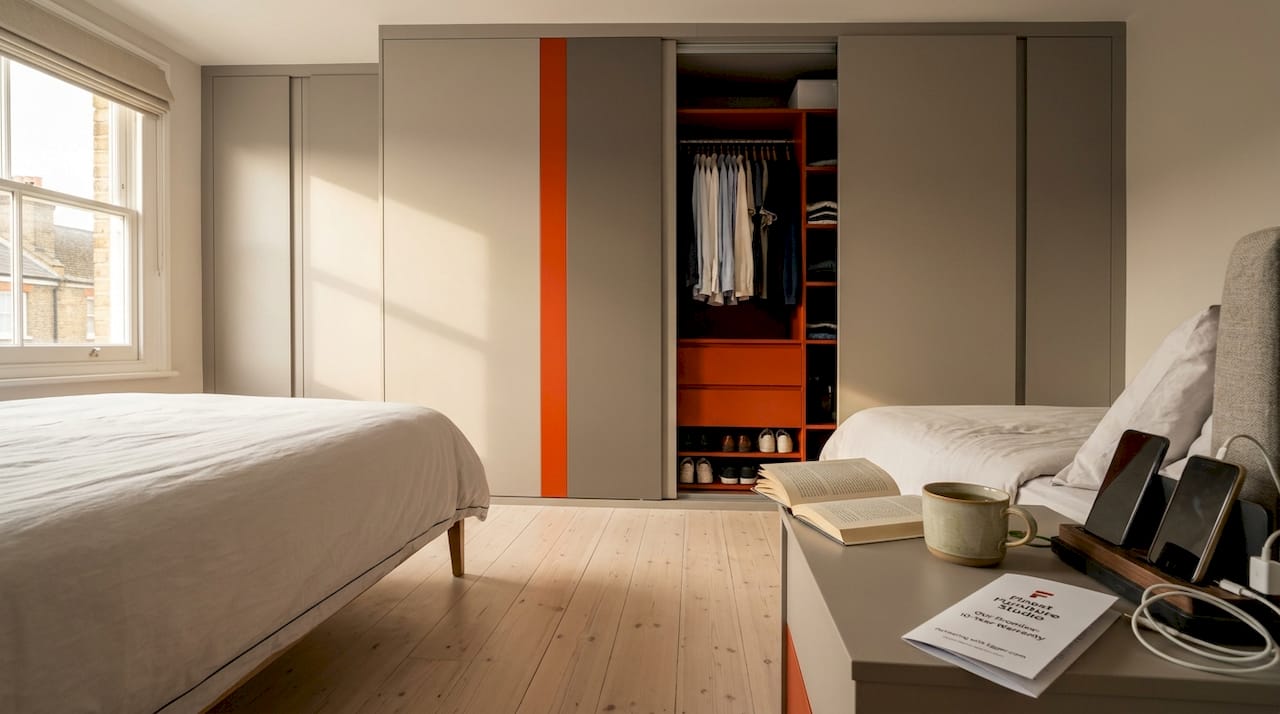
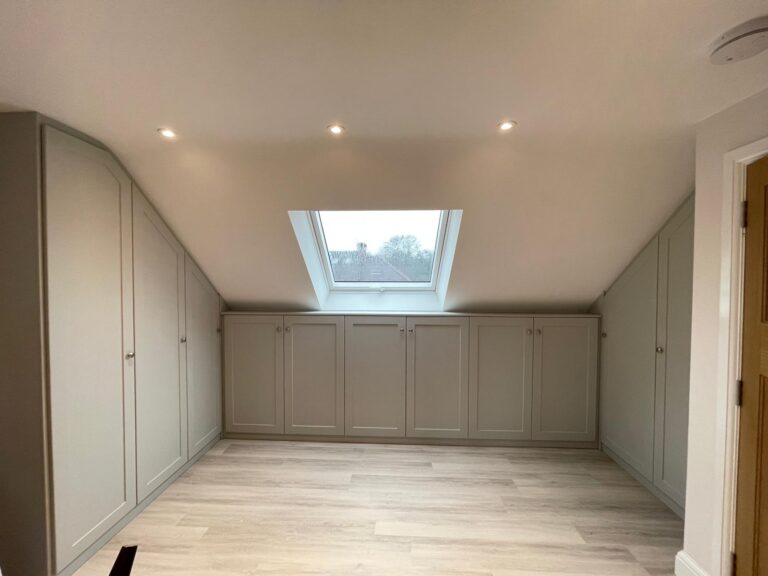
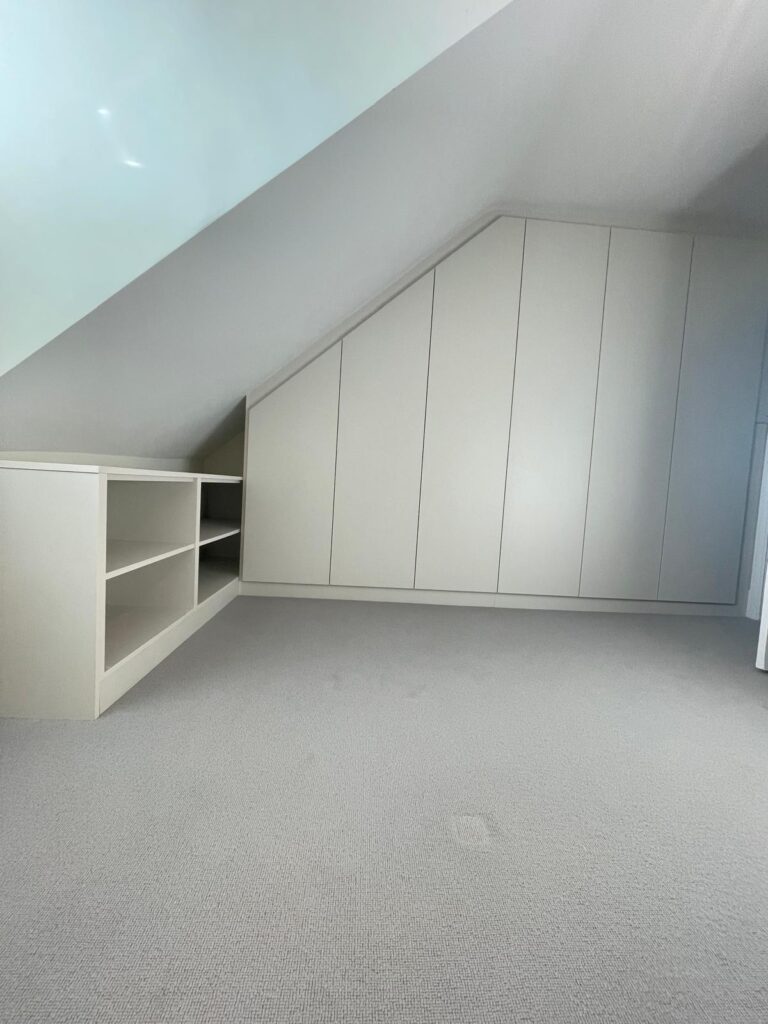
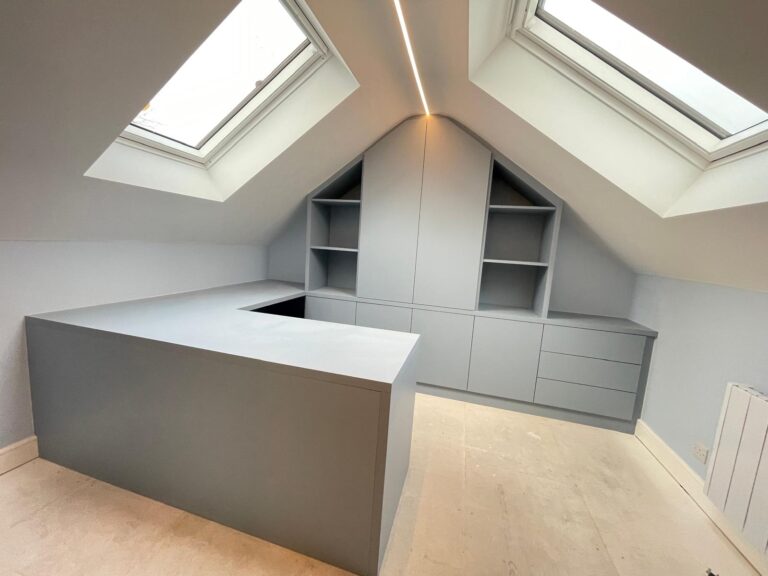
Off-the-shelf wardrobes leave dead space above them and rarely align with alcove widths. Bespoke units address this directly. A chimney breast alcove in a Victorian terrace in Wimbledon or Putney, for example, becomes a perfectly fitted pair of wardrobes rather than an awkward void. Sloping loft ceilings in converted attics in Twickenham or Ealing can be matched exactly with custom-angled units that a standard flat-pack product simply cannot achieve.
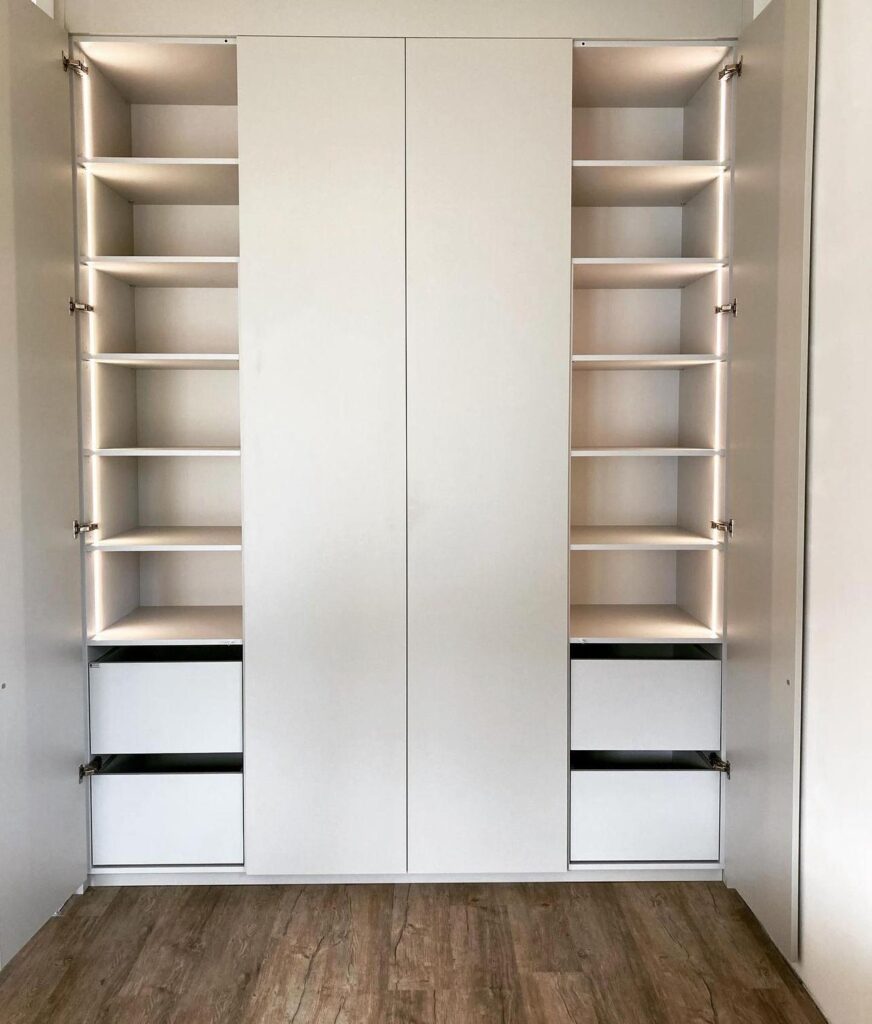
The interior layout of a bespoke wardrobe matters as much as the external appearance. Consider:
- Long-hang sections for full-length coats and dresses
- Short-hang sections doubled up to maximise hanging capacity
- Pull-out trouser racks and belt drawers
- Integrated mirrors on internal or external door panels
- Soft-close hinges and internal LED lighting
For a truly polished result, sliding door wardrobes work particularly well in smaller rooms where a hinged door would reduce usable floor space. Mirrored sliding panels also make compact rooms feel noticeably larger and brighter.
3. Multi-purpose furniture for compact and irregular bedrooms
Small bedrooms need to work harder, and multi-purpose furniture is the most effective way to achieve this. Combining multiple functions into one architectural element, such as a Murphy bed with an integrated desk and wall cabinetry, optimises a limited footprint while maintaining clean aesthetics.
A Murphy bed is far more sophisticated than its traditional reputation suggests. Contemporary versions integrate flush-front cabinetry around the folded bed frame, so the unit reads as a wall of storage during the day. Add a fold-down desk panel and you have a guest room, home office, and bedroom in one space.
The principle extends beyond Murphy beds. A platform bed with deep drawers underneath eliminates the need for a separate chest of drawers. A window seat with lift-up storage turns a bay window into a functional focal point. Bedside tables with integrated wireless charging and cable channels keep surfaces clear without sacrificing utility.
Pro Tip: For small bedrooms in properties across Brixton, New Malden, or Walton-on-Thames, prioritise vertical space. Tall bespoke cabinetry that reaches the ceiling stores far more than a standard unit and draws the eye upward, making the room feel taller in the process.
4. Using contrasting textures and layered lighting to set the atmosphere
Customisation is not just about matching furniture pieces but about how elements relate spatially and atmospherically to create a cohesive bedroom mood. Texture and lighting are the two most underused tools in personalised bedroom decor.
Textural contrast works by placing materials with different tactile and visual qualities next to one another. A matt lacquer wardrobe door gains depth when placed alongside a linen upholstered headboard. A polished concrete effect floor becomes warm and inviting with a thick wool rug layered over it. The contrast creates interest without requiring bold colour or pattern.
Lighting layers require planning before any walls are plastered. Recessed ceiling spots provide ambient light. A pair of wall-mounted reading lights free up the bedside table surface. Internal wardrobe lighting makes the space feel boutique-like rather than purely functional. Dimmer switches on every circuit give you control over mood at any time of day.
For rooms with high ceilings, such as those found in Hammersmith or Chelsea period conversions, a pendant light above the bed adds drama and draws the ceiling proportions into focus. It is a detail that makes a room feel designed rather than furnished.
5. Statement bespoke pieces: headboards, cabinetry, and unique finishes
Standard bedroom furniture rarely includes a truly memorable statement piece. Bespoke design changes that. A custom-upholstered headboard, for example, can be made to any height, width, and fabric specification. Floor-to-ceiling upholstered panels behind the bed create an effect that is genuinely unique and impossible to replicate with off-the-shelf products.
Cabinetry finishes offer another avenue for personalisation. Consider:
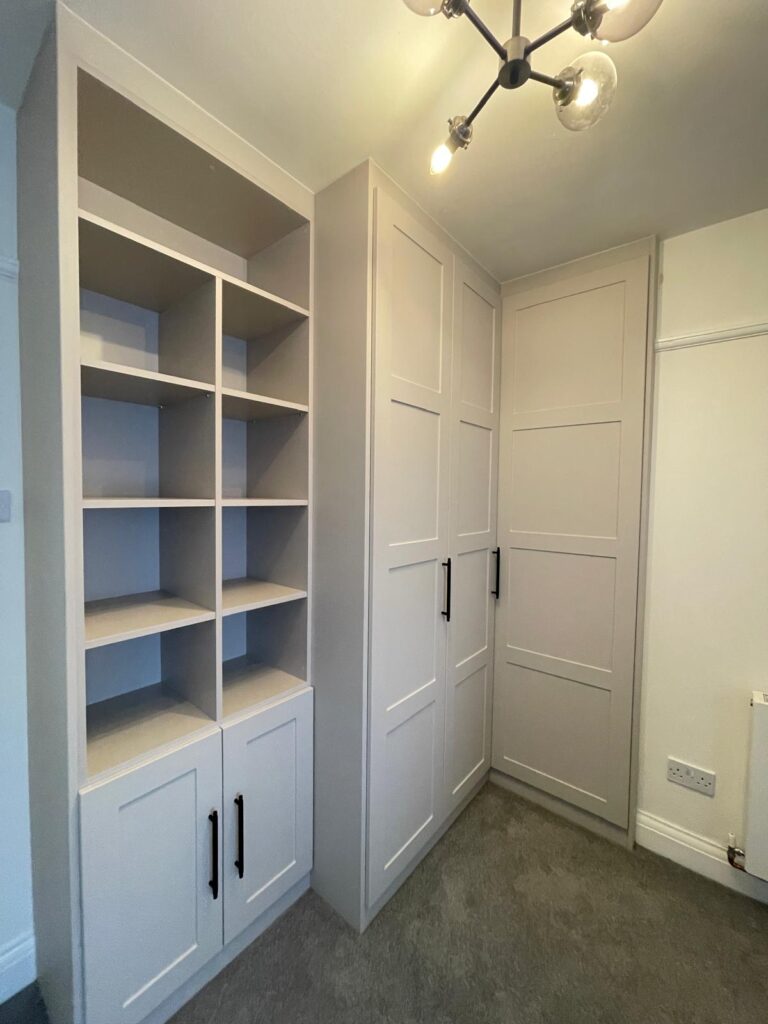
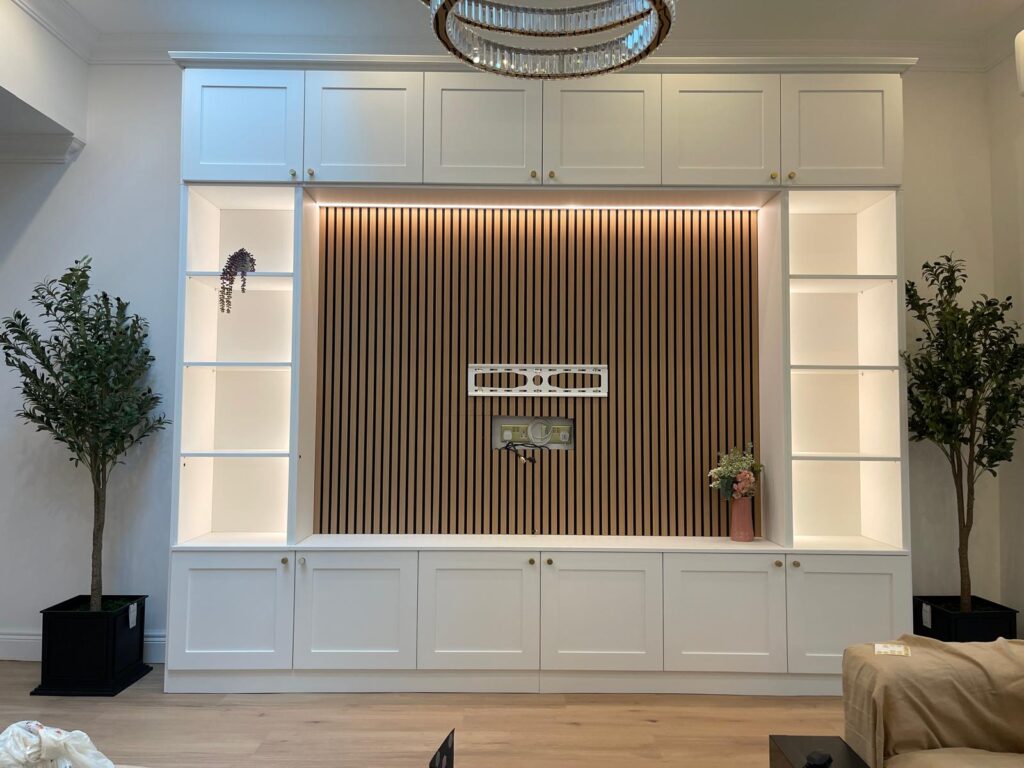
- Painted shaker doors in a custom colour matched to your exact palette
- Wood veneer panels with book-matched grain patterns for a natural, organic feel
- High-gloss lacquer in deep jewel tones for a maximalist or contemporary look
- Fluted glass inserts on wardrobe doors for a tactile, light-diffusing detail
- Brass, satin nickel, or matte black hardware to complement the overall design direction
The finish on cabinetry has the biggest visual impact in a bedroom and is often where the investment pays off most clearly. A premium paint finish on shaker doors in a Richmond or Kingston home adds perceived value that a standard white melamine unit simply cannot match.
Hidden cable management is a detail that separates truly bespoke interiors from those that are merely well-furnished. Planning channels for phone chargers, lamps, and technology within the cabinetry keeps surfaces clean and the overall look intentional.
6. Comparing popular custom bedroom styles and layouts
Choosing a design direction is easier when you understand what each style actually involves in practice. The table below compares the most popular custom bedroom styles to help you identify which suits your space and preferences.
| Style | Best suited to | Key features | Typical cost range |
|---|---|---|---|
| Traditional bespoke | Period properties, larger rooms | Shaker doors, painted finishes, classic hardware | £1,850 upward for fitted bedroom |
| Modern minimalist | Contemporary flats, clean-lined spaces | Handleless wardrobes, matt finishes, recessed lighting | £2,000 upward for sliding wardrobes |
| Maximalist layered | Confident decorators, larger rooms | Bold colour, mixed textures, statement cabinetry | Variable, higher due to material complexity |
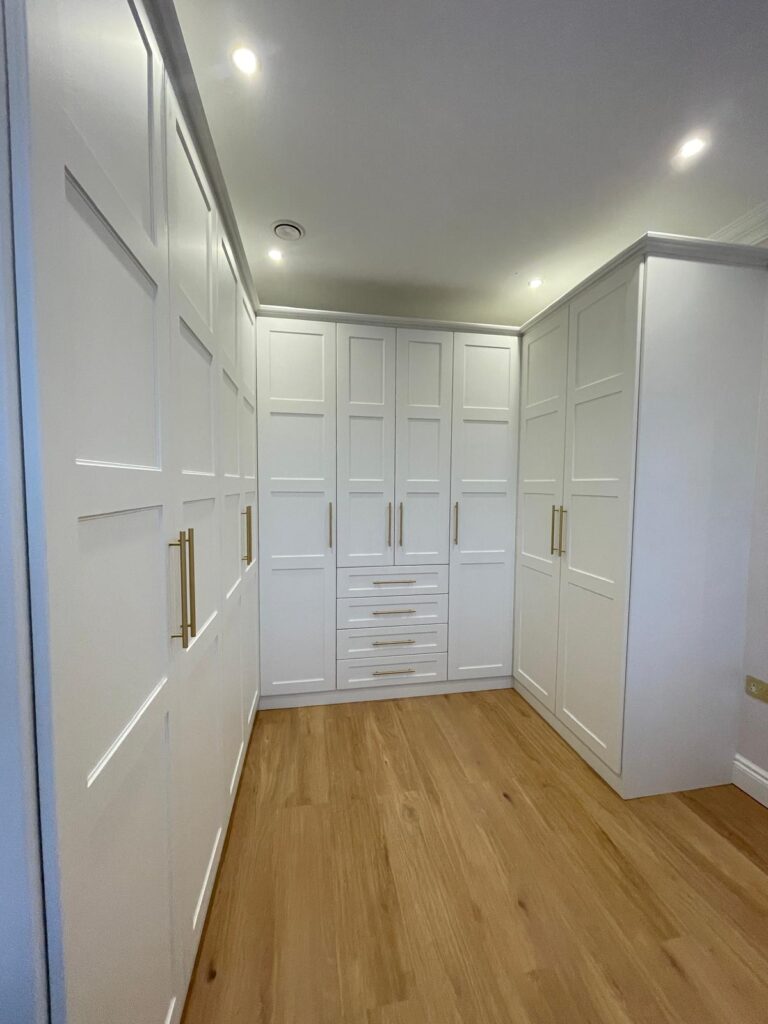
| Walk-in wardrobe suite | Large master bedrooms, en-suite layouts | Full dressing room, island unit, integrated lighting | £1,600 upward for walk-in wardrobe |
| Small-room optimised | Studio flats, compact secondary bedrooms | Murphy beds, fold-away desks, floor-to-ceiling storage | £1,800 upward for hinged wardrobe |
The traditional bespoke bedroom suits the Victorian and Edwardian properties common across Barnes, Chiswick, and Fulham. Painted shaker cabinetry in a period-appropriate colour integrates beautifully with original cornicing and timber floors.
Modern minimalist designs work best in new-build or recently renovated properties in central London and areas like Woking or Reading where contemporary architecture is more common. The key is consistency: every detail, from the door gap to the handle recess, must be precisely executed.
Walk-in wardrobe suites are the most aspirational category and also among the most practical. A dedicated walk-in wardrobe transforms a master bedroom into a genuinely luxurious space, particularly in homes where a secondary bedroom or box room can be converted for the purpose.
7. Timeline and budget for a custom bedroom design project
Understanding the timeline prevents the most common frustration in bespoke design projects: underestimating how long fabrication takes. Custom bedroom furniture typically takes 3 to 4 months from initial consultation to installation, with luxury projects requiring 12 to 16 weeks.
The typical breakdown looks like this:
| Phase | Duration |
|---|---|
| Initial consultation and design development | 2 to 3 weeks |
| Material and finish selection | 2 to 3 weeks |
| Fabrication and procurement | 8 to 12 weeks |
| Installation | Approximately 7 days |
Custom cabinetry should be ordered early because fabrication lead times drive the entire project schedule. A design freeze, where all choices are finalised before production begins, is critical. Changes made after fabrication starts introduce cost and delay.
Budget is influenced by four factors: the materials chosen, the complexity of the design, the total square metreage of cabinetry, and the level of interior detailing. Painted finishes cost more than foil wraps but last considerably longer. Solid timber carcasses outperform flat-pack equivalents by decades. The quality of the hardware, from drawer runners to hinge mechanisms, also reflects in the daily experience of using the furniture.
Pro Tip: If your renovation involves other trades such as electricians, plasterers, or decorators, schedule the custom furniture installation as the final stage. This protects finished surfaces from damage and allows cable management to be built in correctly the first time.
Virtual design packages are an option for homeowners who prefer to manage implementation themselves. Online interior design services for bedrooms typically include mood boards, floor plans, and curated shopping lists for those who want professional direction with a more flexible budget.
8. How to personalise bedroom decor once the furniture is in place
Custom furniture sets the framework. Textiles, art, and accessories complete the picture. Layering textures in bedding including velvet upholstery, silk-blend throws, and plush cushions adds warmth and dimension to both minimalist and maximalist bedrooms.
A useful approach to personalised decor:
- Choose bedding in two to three complementary tones and at least two different textures. A linen duvet cover pairs well with a velvet cushion and a knitted throw.
- Select wall art that responds to the dominant colour in the room rather than competing with it. A single large-format print creates more impact than several small frames.
- Use bedding to anchor the design mood: a bold geometric pattern makes a minimalist room feel less austere, while a neutral linen palette softens a maximalist space.
- Add asymmetry deliberately. A single sculptural bedside lamp on one side creates more visual interest than matching lamps on both sides.
- Blackout lined curtains or roller blinds are a practical necessity that can also be decorative. Floor-length curtains in a statement fabric add height and drama.
Artwork and wall coverings deserve more investment than most homeowners give them. A well-chosen piece of art or a bespoke hand-painted mural on the wall behind the bed becomes the focal point of the entire room.
My honest take on bespoke bedroom design
I’ve worked with homeowners across London long enough to know the single biggest mistake they make: they treat bespoke design as an upgrade rather than a starting point.
In my experience, the homeowners who get the most from their bespoke bedrooms are the ones who treat the architectural constraints as the brief. An awkward alcove in a Hammersmith terrace is not a problem. It is precisely the kind of space where a fitted unit creates something a standard room simply cannot offer.
What I’ve also learned is that aesthetics without utility fails within months. A beautiful room that doesn’t serve your actual lifestyle becomes frustrating. The bedroom that works is the one where the wardrobe holds everything you own, the lighting is right for reading and for sleeping, and every surface has a purpose.
The other thing I would say plainly: don’t rush the design stage to speed up fabrication. I’ve seen clients make finish decisions in an afternoon that they regretted within a year. The two to three weeks spent on material selection are the most important in the whole project. Get that right and everything that follows reflects it.
Partnering with a designer who asks about how you live, not just what you like, makes the difference between a room that looks like a catalogue and one that genuinely feels like yours.
— Aureliu
How Finest Furniture Studio can help with your bespoke bedroom
At Finest Furniture Studio, we specialise in bespoke fitted wardrobes and bedroom furniture tailored to London homes of every shape, style, and period. From Victorian alcoves in Richmond and Wimbledon to contemporary flats in Chelsea and Ealing, we design and install fitted wardrobes, walk-in dressing rooms, and full fitted bedrooms that make the most of every inch.
We offer a free design visit where we measure your space, discuss your needs, and produce detailed CAD visuals before any commitment is made. Every piece comes with a 10-year guarantee, and most installations are completed within 7 to 12 days. We also remove and dispose of your existing wardrobe at no extra charge. Fitted bedrooms start from £1,850, and walk-in wardrobes from £1,600.
Call us on 07468 150807 or visit us at 124 City Road, Kemp House, London, EC1V 2NX to book your free design visit today.
FAQ
What makes a bedroom design truly bespoke?
A truly bespoke bedroom is one where every piece of furniture is made to measure for the specific room, accounting for ceiling heights, alcoves, and the homeowner’s exact storage and lifestyle needs rather than adapting standard units to fit.
How long does a custom bedroom design project take?
Most custom bedroom projects take between 3 and 4 months from the initial consultation to installation, with the fabrication phase alone typically running 8 to 12 weeks depending on the complexity of the cabinetry.
What is the best custom bedroom style for a small room?
Floor-to-ceiling fitted wardrobes, sliding door panels, and multi-functional furniture such as platform beds with under-bed storage are the most effective choices for small bedrooms, as they maximise vertical space and keep the floor area clear.
How do I choose between a walk-in wardrobe and fitted wardrobes?
If you have a large master bedroom or a spare room that can be converted, a walk-in wardrobe offers a superior storage and dressing experience. Fitted wardrobes are the better choice when space is limited, as they use every centimetre of wall area efficiently.
How much does a fitted bedroom cost in London?
Fitted bedrooms from Finest Furniture Studio start from £1,850, with walk-in wardrobes from £1,600 and sliding door wardrobes from £2,000. The final cost depends on the materials, size, and complexity of the design.