




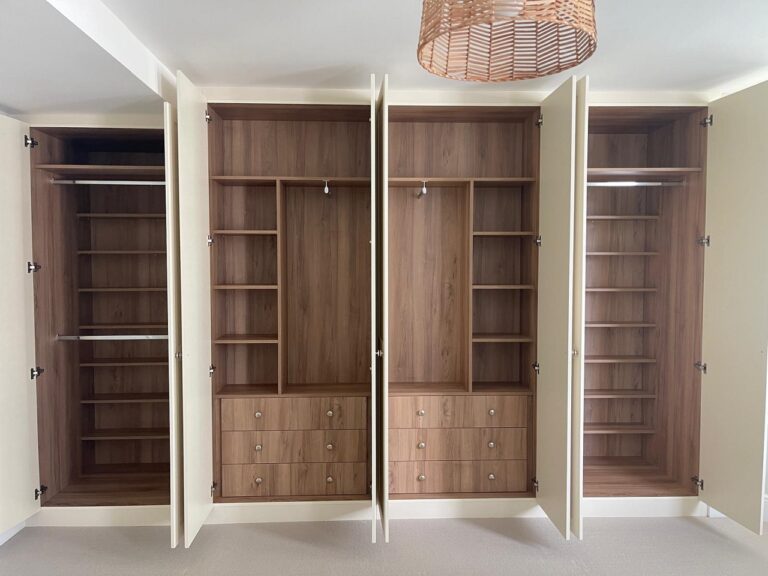


What changes when you choose bespoke wardrobes Cardiff
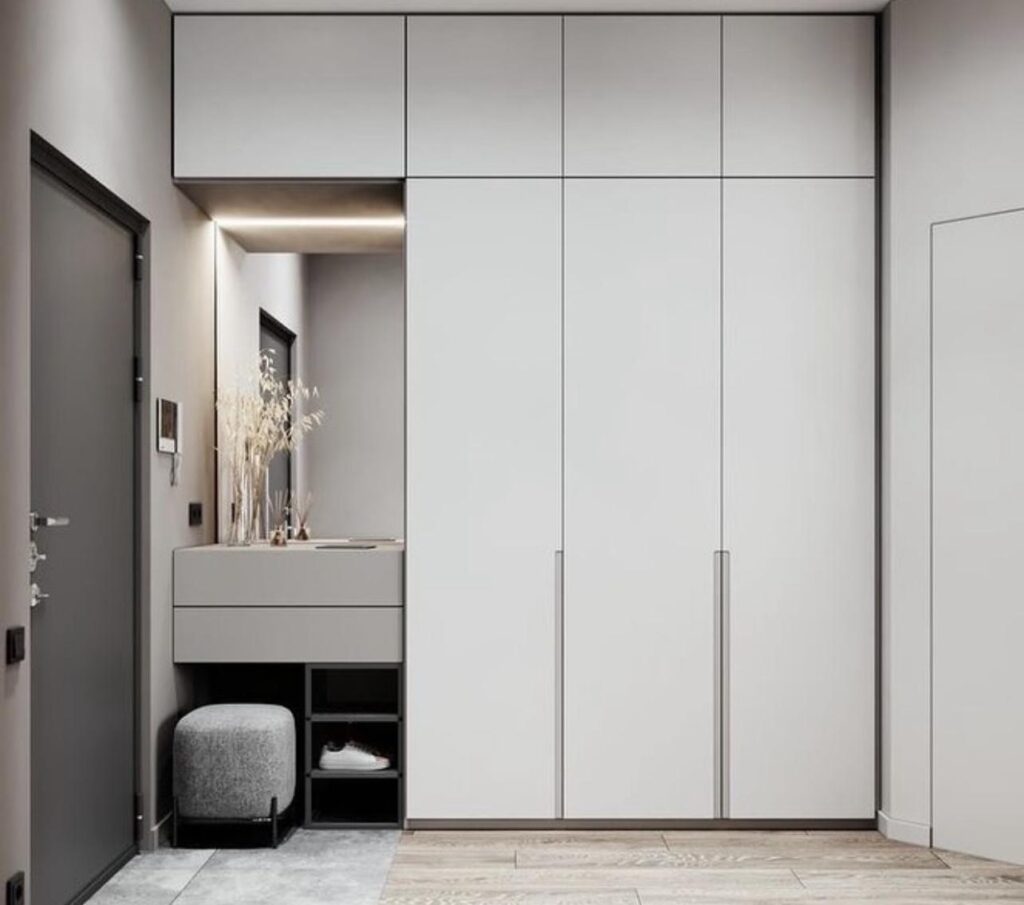
Bespoke wardrobes Cardiff is a search term with a clear intent: people want storage that fits a room, not the other way around. That usually means awkward alcoves, sloped ceilings, tight door swings, or a layout that standard furniture cannot handle. The practical goal is to turn measured space into usable storage without wasting depth, light, or access. If you are comparing options, the real question is not whether a wardrobe looks good in a showroom, but whether it solves the room you actually have.
Why search intent matters before you design
Most people typing bespoke wardrobes Cardiff are already past the inspiration stage. They are usually weighing fitted wardrobes against freestanding pieces, or trying to understand whether a bespoke build is worth the extra planning. That makes search intent important, because the right article should answer fit, finish, lead time, and installation trade-offs, not just style ideas.
The main options you are really comparing
When people look at bespoke wardrobes Cardiff, they are usually comparing three routes: off-the-shelf wardrobes, semi-custom systems, and fully bespoke fitted wardrobes. The first is quickest, but it leaves gaps and compromises. The second gives you more flexibility, but still depends on standard module sizes. Fully bespoke furniture is the best fit for difficult rooms because it is measured to the wall, ceiling, and floor, which matters when a room is not square.
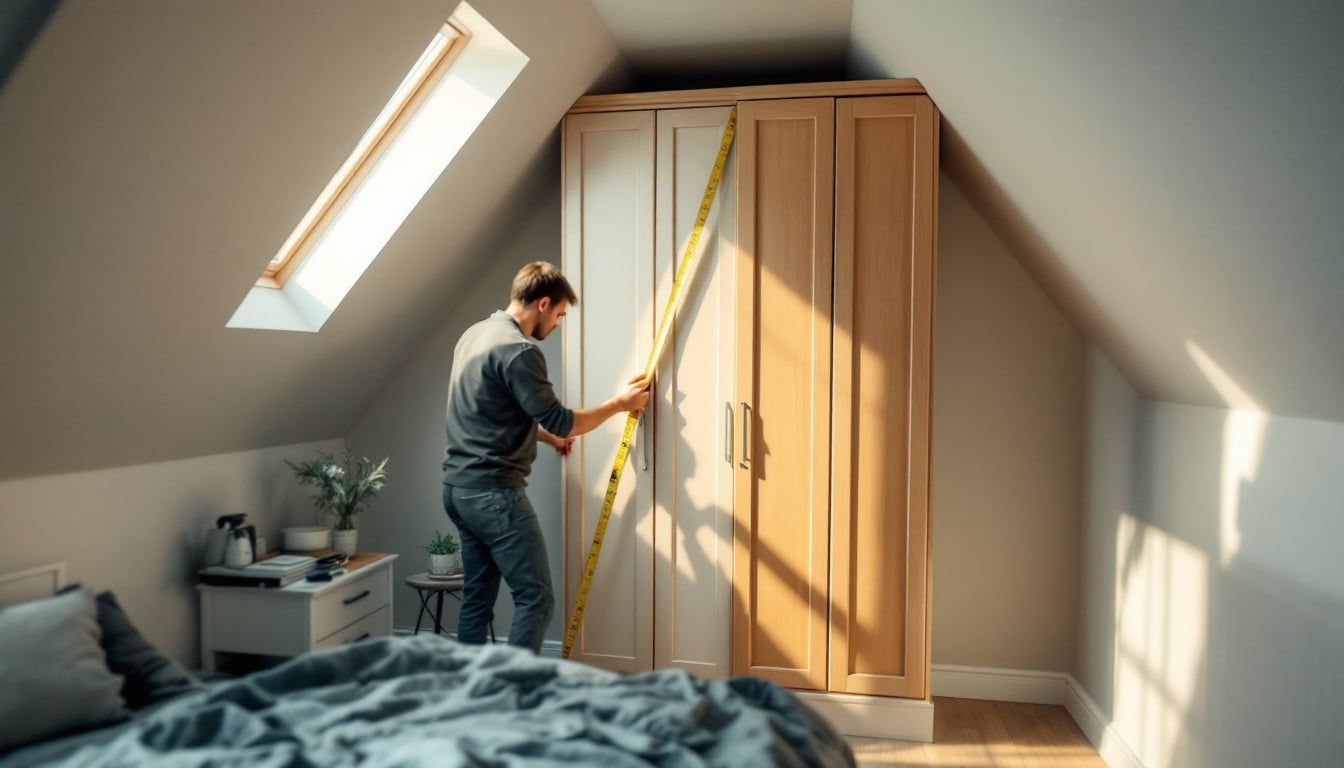
How to measure the room properly
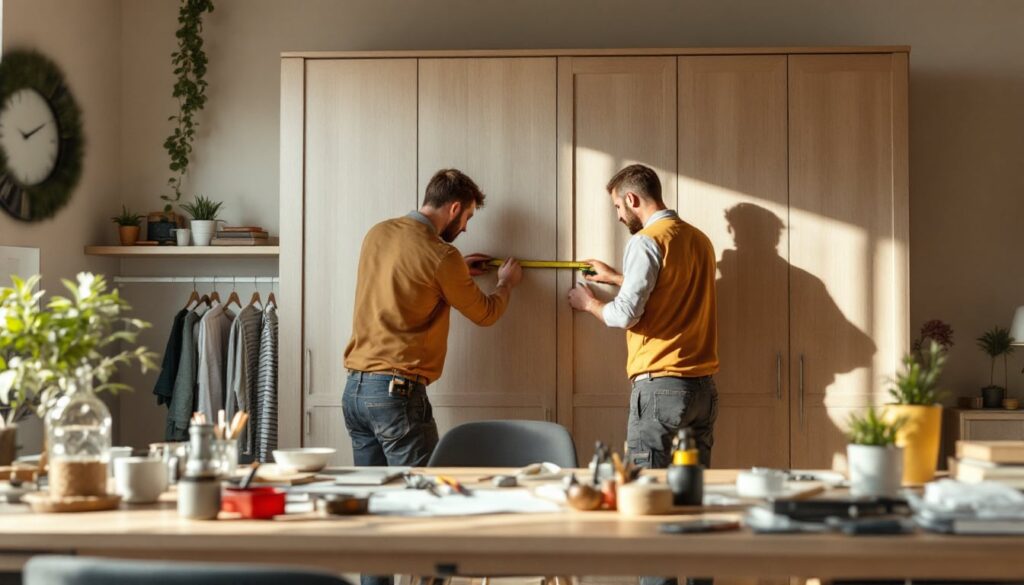
A good measuring guide starts with three checks: wall-to-wall width at the top, middle, and bottom; floor-to-ceiling height at multiple points; and any obstructions such as skirting, sockets, radiators, or window reveals. Small differences matter, especially in older homes where walls can lean or floors can slope. For bespoke wardrobes Cardiff, the mistake to avoid is measuring only once across the widest point and assuming the room is square.
What to photograph before a survey
Before a designer visits, take clear photos of each wall, the ceiling line, and the floor area from several angles. Include anything that may affect the build, such as alcove depth, door clearance, or sloping ceilings. Those pictures help the design conversation stay practical, especially when discussing bespoke fitted wardrobes or built wardrobes for a room with unusual geometry. The aim is not to replace a survey, but to speed up the early decisions so you are not guessing from memory.
The most common measurement mistakes
The biggest mistake is measuring the wardrobe opening without checking for the usable depth behind doors or handles. Another is ignoring uneven floors, which can create visible gaps at the base if they are not accounted for in the build. A third is forgetting that access matters as much as capacity. If a wardrobe fills a wall but blocks a bedroom door or bedside movement, the design has failed even if it looks neat on paper. Bespoke wardrobes Cardiff work best when measurements are tied to daily use, not just dimensions.
Choose door style based on room behavior
Door choice changes how the room feels every day. Hinged doors are simple and give full access to the interior, but they need swing space. Sliding doors save floor clearance and can suit narrower rooms, though they limit simultaneous access to the full wardrobe. Mirrored doors can help brighten a darker room, but they show fingerprints and need more frequent cleaning. For bespoke wardrobes Cardiff, the best choice depends on traffic patterns, not just appearance. If two people use the wardrobe at once, hinged doors may be easier. If the room is tight, sliding doors or a mixed layout may be the smarter trade-off.
When sliding doors make more sense
Sliding doors are worth considering when the bed is close to the wardrobe face, or when the room cannot afford door swing. They also work well for long runs of storage where access is more important than opening the entire front at once. The limitation is obvious: you can only access part of the wardrobe at a time. If you use large items, such as suitcases or seasonal storage, plan the internal layout so those zones sit behind the most accessible panel.
When hinged doors are the better fit
Hinged doors are usually the better option when you want a simpler mechanism and better visibility into the full interior. They are easier to live with if you often rearrange clothing or need wide access to drawers and shelves. The trade-off is clearance, which can be a problem in compact rooms. For bespoke wardrobes Cardiff, hinged doors often work best in wider bedrooms, dressing areas, or rooms where the wardrobe sits opposite a wall with enough open space.
Internal layout decides whether the wardrobe works
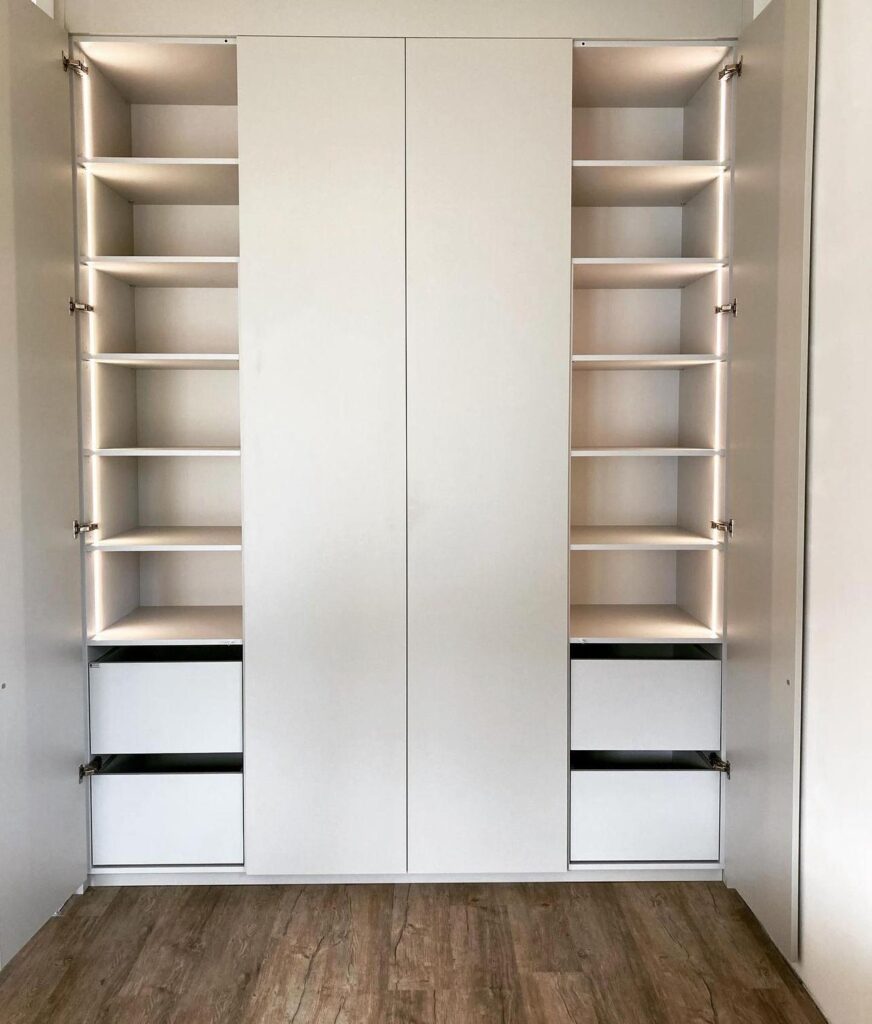
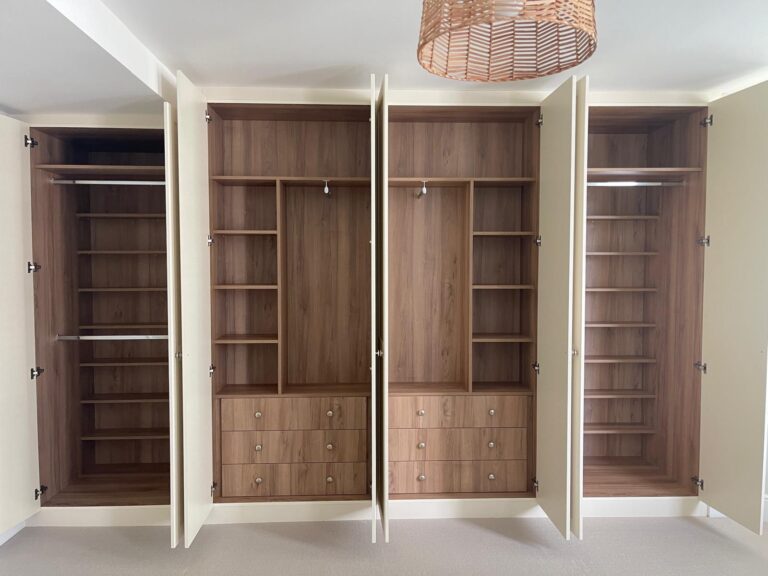
A bespoke wardrobe is only as useful as the internal layout. Hanging height, shelf spacing, drawer depth, and accessory placement matter more than decorative details once the doors close. The practical approach is to list what you actually store, then assign each item a zone. For example, long coats need full-height hanging, folded knitwear needs shelves with manageable stack depth, and accessories often need shallow drawers rather than deep compartments. When planning bespoke wardrobes Cardiff, design around real storage habits, not an idealized Pinterest version of the room. That usually leads to better long-term use and fewer wasted shelves.
A simple layout framework
Use a three-zone rule. Put the most frequently used items at eye level, seasonal items higher up, and bulky or rarely used items lower down or in higher cupboards. If two people share the wardrobe, split the layout by use pattern rather than by symmetry alone. A 50-50 visual split may look neat, but it often performs worse than a layout that gives one side more hanging space and the other more drawers or shelves.
Hidden details that improve daily use
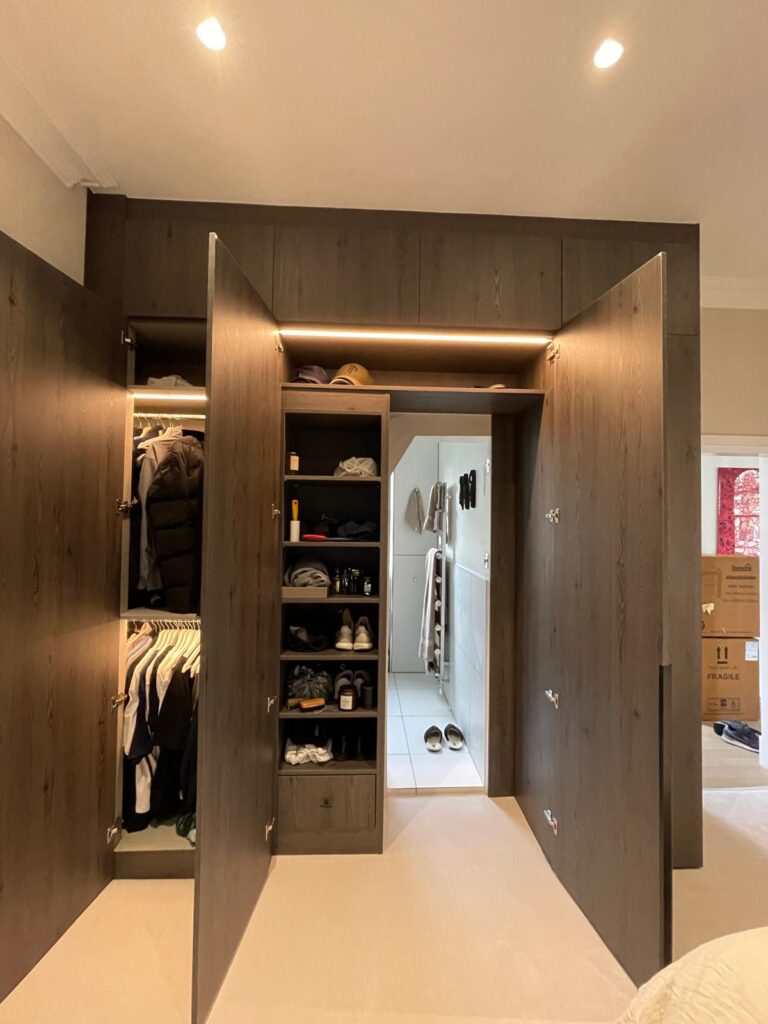
Soft-close hinges, internal lighting, and pull-out accessories are not just luxury extras. They reduce friction when you are using the wardrobe every day, especially in deep or dark rooms. The key is restraint. Add features only where they solve a real problem, because too many moving parts increase cost and maintenance. If you are comparing bespoke fitted wardrobes options, ask whether each internal feature saves time, improves access, or simply adds visual complexity.
Materials and finishes affect durability more than style
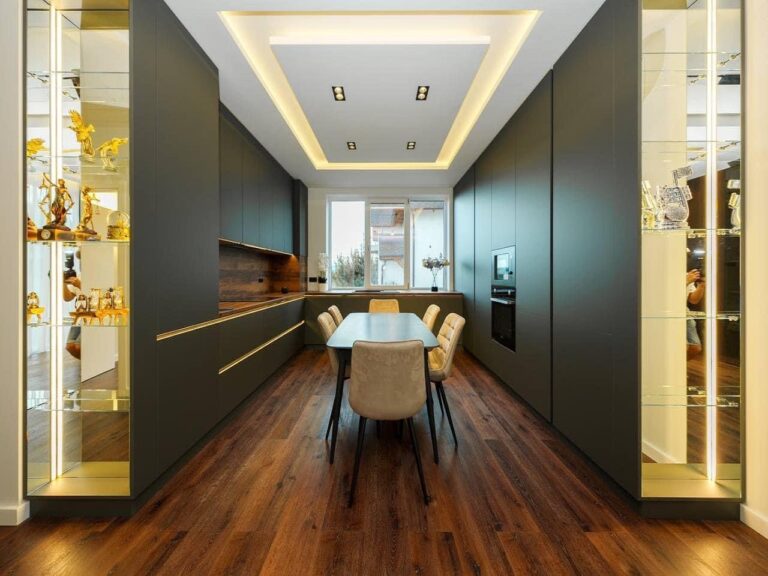
A wardrobe finish should be judged on wear, cleaning, and light reflection, not only on color. Matte surfaces hide fingerprints better, while gloss can make a small room feel brighter but may show marks more easily. Timber-look finishes offer warmth and are often easier to coordinate with existing interiors. For bespoke wardrobes Cardiff, the useful question is how the finish will age after daily contact, vacuuming, and changing light. If the room gets strong sunlight, consider how the surface will handle fading or glare. If the room is small and dark, a lighter finish can improve visibility without changing the footprint.
The trade-off between cost and resilience
Cheaper boards may look fine at installation, but edge wear and hinge stress become visible faster in busy rooms. Better hardware and stable materials usually cost more up front, but they reduce the chance of doors dropping out of alignment or drawers racking over time. If the wardrobe will be used heavily, especially in a family home, prioritize structural quality before decorative extras. That is a more reliable way to compare bespoke furniture than focusing only on the initial quote.
Finish choices for different rooms
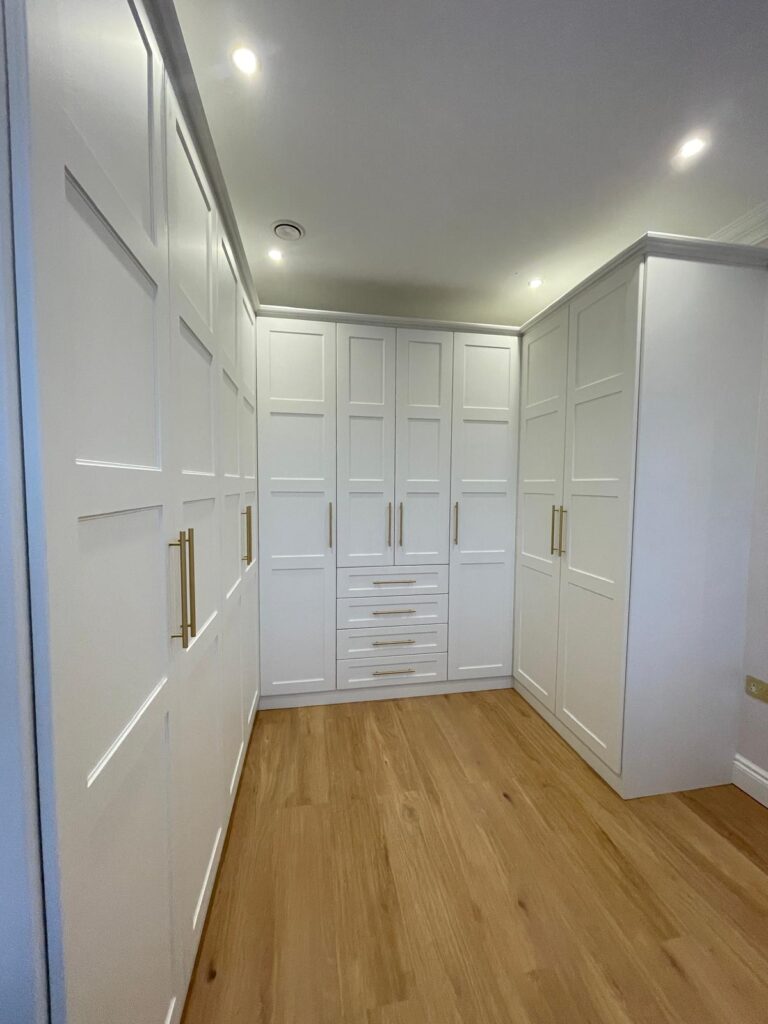
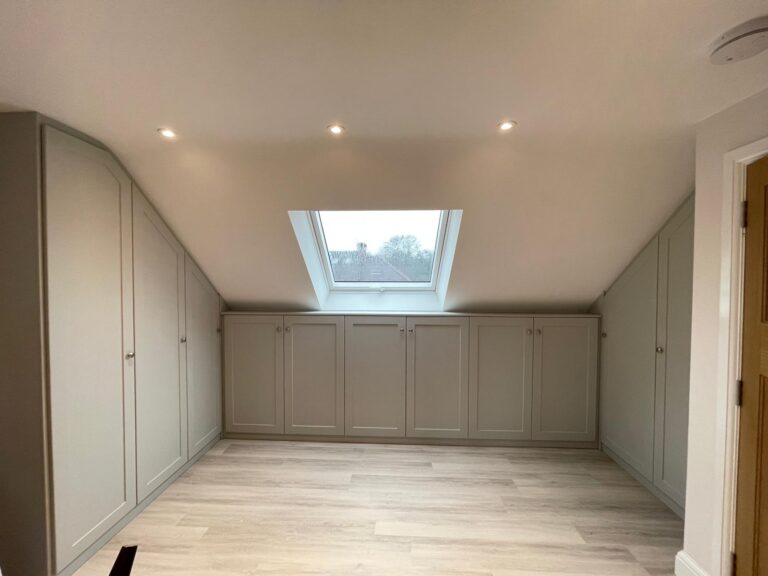
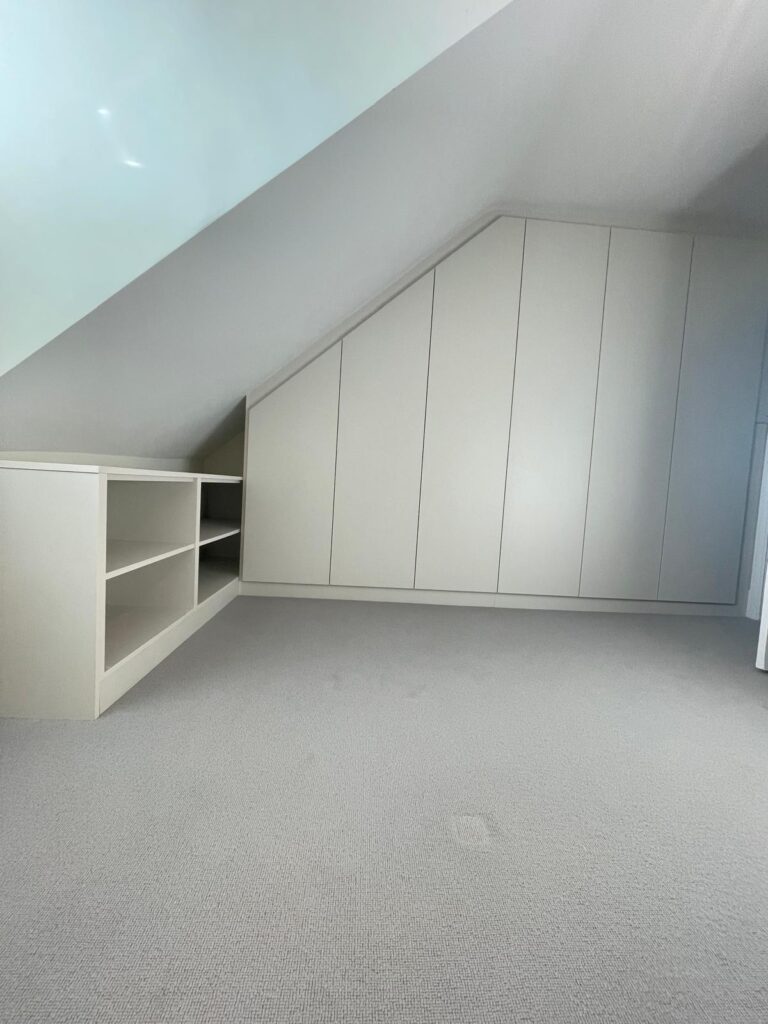
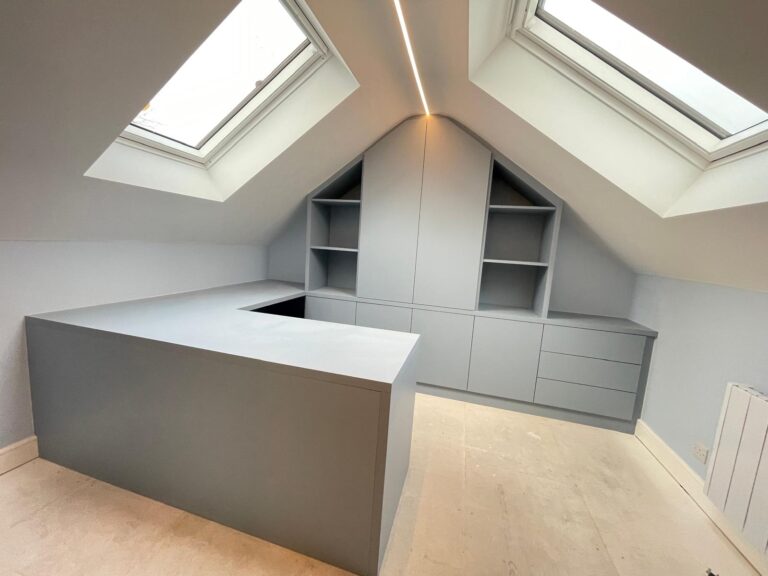
A bedroom with plenty of daylight can handle darker fronts or contrast panels without feeling closed in. A small loft room often benefits from lighter finishes and simpler lines, because visual clutter makes slopes feel more pronounced. If you are also considering walk wardrobes or custom wardrobes London-style layouts with a premium feel, the safest path is to match the finish to the room’s light and proportion rather than to a trend image.
Planning around awkward spaces, not against them
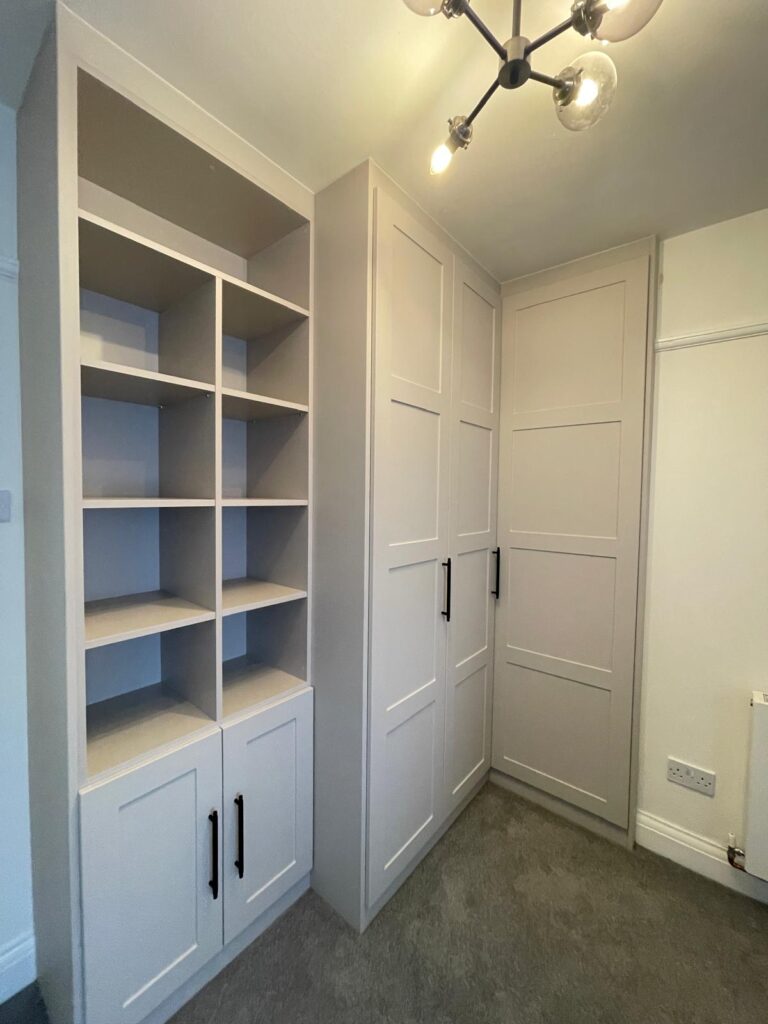
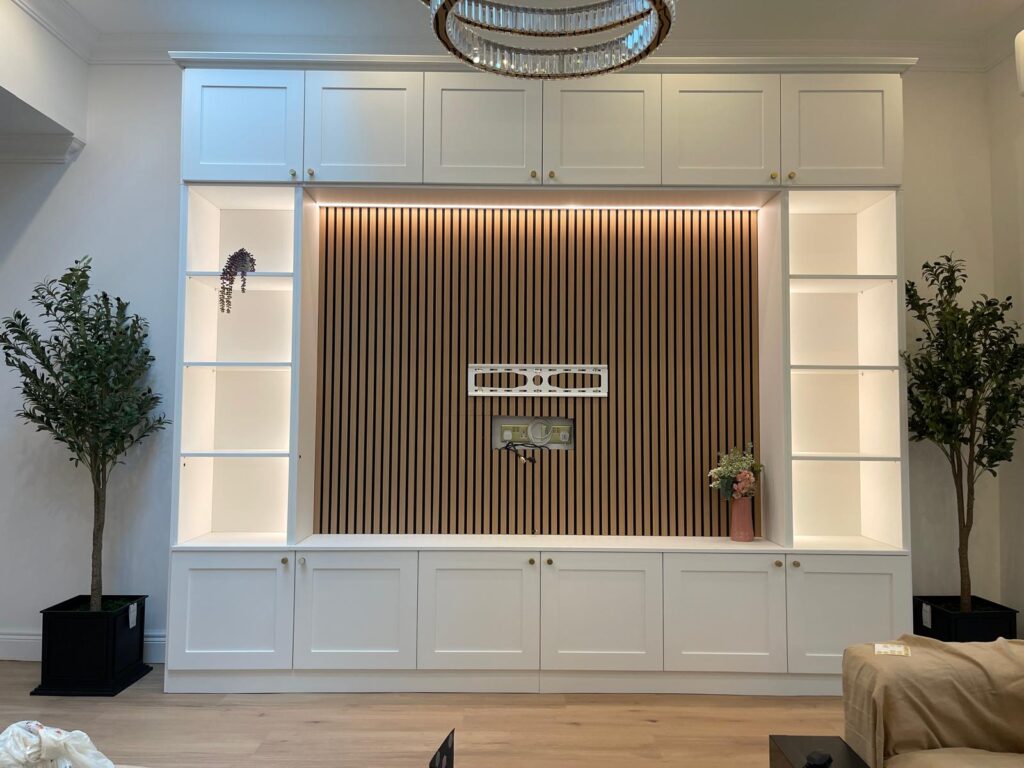
The biggest advantage of bespoke wardrobes Cardiff is that awkward space becomes usable space. Alcoves, sloped ceilings, chimney breasts, and corner returns are exactly where bespoke work earns its keep. The design rule is to treat the room’s constraints as the brief. A sloped ceiling can carry shorter hanging rails or top storage, while an alcove can become a full-height fitted run. If you are comparing bespoke interior doors, loft wardrobes, or alcove cupboards, think in terms of shape first and style second. A good layout uses the room’s geometry instead of fighting it.
Where bespoke solves problems standard furniture cannot
Standard wardrobes struggle when ceiling height changes across the room or when a wall is not straight. In those cases, fillers create dead space, and the wardrobe still looks “placed” rather than built in. Bespoke fitted wardrobes eliminate that wasted margin. They also allow you to build around sockets, existing joinery, or hidden services without losing the whole wall to compromise.
Common constraints and how to handle them
Radiators, window sills, and uneven skirting often force last-minute adjustments. The fix is to identify them early and decide whether the wardrobe should bridge, avoid, or incorporate each obstacle. That decision affects both cost and appearance. If a wardrobe must pass over a radiator or wrap around a bulkhead, ask how ventilation, access, and serviceability will be handled before you approve the design.
Lead time and fitting should be part of the decision
A smooth bespoke project is not only about design quality. It also depends on how long you can wait, how the fitting is scheduled, and how much disruption you can tolerate. If a site mentions fitting in 7-10 days, that is useful context, but it should still be verified against your project scope. Complex runs, unusual rooms, or extra finishes can change the schedule. For bespoke wardrobes Cardiff, the practical question is whether the fitting timeline matches your move-in date, renovation sequence, or room availability. A faster fitting window is helpful only if the survey, manufacturing, and installation stages are equally well managed.
What to confirm before you book
Ask whether the quoted timeline includes survey, design approval, manufacturing, delivery, and final fitting. Many delays happen because one of those stages is assumed rather than confirmed. It also helps to ask what happens if final measurements reveal a problem during installation. A clear change process protects you from avoidable rework and keeps the project predictable.
Warranty tells you something useful
A warranty is not just paperwork. It reflects how confident the supplier is about the build, the hardware, and the fitting. A 10-year warranty, where offered, signals a stronger commitment to durability than a vague short-term promise. Still, check what is actually covered, because hardware, finish, and fitting may be treated differently. For bespoke wardrobes Cardiff, warranty terms are most useful when they are tied to real wear points such as hinges, runners, and alignment.
How to compare quotes without getting lost
The easiest mistake is comparing only the total price. That hides differences in board quality, internal fittings, design time, and installation scope. A better method is to compare like for like: dimensions, finish, door type, hardware, internal configuration, and aftercare. If one quote is significantly lower, ask what has been removed rather than assuming it is a bargain. This matters for bespoke wardrobes Cardiff because the cheapest version often trims the very details that affect daily use. A practical quote review should end with one question: will this design still feel right after three years of opening and closing it every day?
A short quote-check workflow
Write down the room size, the storage needs, and the must-have features before you review any proposal. Then check whether each quote covers the same scope. If one includes internal drawers, lighting, or scribing and another does not, the prices are not directly comparable. That simple discipline prevents false savings and makes the final decision much cleaner.
Key Points
Bespoke wardrobes Cardiff work best when the room problem is clear before the design starts. Measure at multiple points, not just once, and account for slopes, skirting, sockets, and door clearance. Choose sliding or hinged doors based on how the room is used, not just on style. Build the internal layout around real storage habits, with the most-used items at eye level. Prioritize material quality and hardware if the wardrobe will be used heavily. Confirm lead time, fitting scope, and warranty terms before you approve a quote. Compare proposals on scope, not just price, so you can judge long-term value accurately.
Conclusion
If you are weighing bespoke wardrobes Cardiff, the best result comes from making the room easier to live with, not just nicer to look at. The strongest designs start with accurate measurements, honest storage needs, and a clear decision about doors, layout, and finish. Once those basics are right, the rest becomes much easier to compare. You can then judge quotes by scope, not just by price, and choose the version that fits the room, the timeline, and everyday use.
Frequently Asked Questions
What are bespoke wardrobes Cardiff best used for?
Bespoke wardrobes Cardiff are best for rooms with awkward dimensions, sloped ceilings, alcoves, or limited floor space. They let you build a storage layout around the room instead of forcing standard furniture into it.
How do I measure for bespoke wardrobes Cardiff?
Use a measuring guide that checks width, height, and depth at several points, not just once. Record skirting, sockets, radiators, and any slope in the ceiling or floor, because those details affect the final fit.
Are bespoke wardrobes Cardiff better than fitted wardrobes?
Bespoke wardrobes Cardiff are usually the better choice when the room is irregular or when you want to use every usable inch. Fitted wardrobes can still work well, but bespoke design gives more control over internal layout, doors, and finish.
How long does fitting usually take for bespoke wardrobes Cardiff?
Fitting can be quick once the wardrobe is built, and some sites mention fitting in 7-10 days. The total project time still depends on survey, design approval, manufacturing, and installation scheduling, so confirm the full timeline before you book.
What should I check in a quote for bespoke wardrobes Cardiff?
Compare the quote scope, not just the price. Look for door type, hardware, internal drawers, finish, scribing, and aftercare so you can judge whether the bespoke wardrobes Cardiff proposal is complete or missing key items.
Do bespoke wardrobes Cardiff come with a warranty?
Many suppliers include a warranty, and some mention a 10-year warranty on fitting or product coverage. Check exactly what is covered, because hinges, runners, finish, and installation may be handled separately.
Can bespoke wardrobes Cardiff work in small bedrooms?
Yes, they often work very well in small bedrooms because the design can use wall height, awkward corners, and shallow areas more efficiently. Sliding doors, lighter finishes, and a simple internal layout usually help the room feel less crowded.