
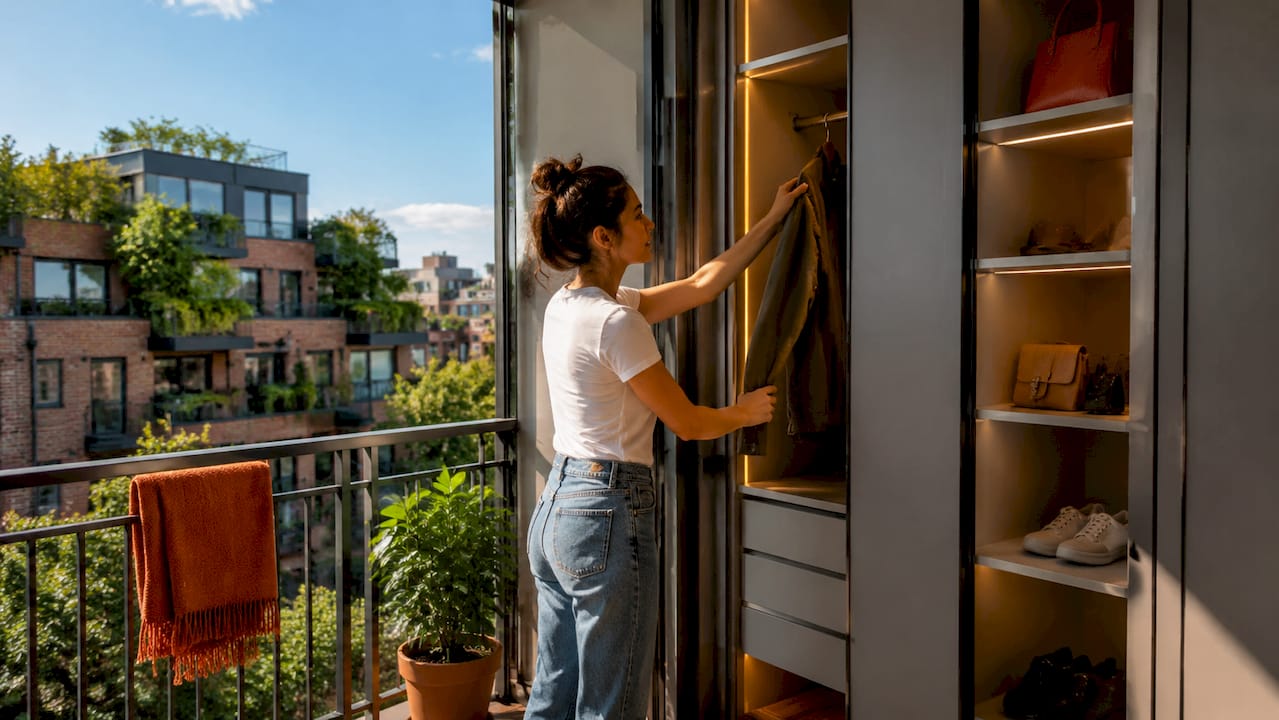
Modern wardrobe design is defined as the practice of combining functional storage engineering with considered aesthetics to create fitted furniture that serves daily life without cluttering a room. The best examples of modern wardrobe designs go well beyond a rail and a shelf. They incorporate sliding door mechanisms, integrated LED lighting, tiered handbag nooks, and floor-to-ceiling cabinetry that turns every centimetre of wall space into purposeful storage. At Finest Furniture Studio, we work with homeowners across Richmond, Wimbledon, Chelsea, and Fulham to translate these principles into bespoke fitted wardrobes built around real rooms and real lives. This guide walks you through the designs that actually work.
1. What are the standout contemporary wardrobe design examples?
The most effective contemporary wardrobe styles share one quality: every internal centimetre is planned before a single panel is cut. Sliding doors and full-height cabinetry can increase storage capacity by 30–40% compared to standard freestanding wardrobes. That figure matters most in London bedrooms where floor area is at a premium.
The standout design examples we see requested most often include:
- Sliding door wardrobes with handle-free fronts in matt white, grey, or wood-effect finishes, fitted wall to wall to eliminate dead corner space.
- Full-height built-in cabinetry that runs from floor to ceiling, using the vertical space most wardrobes waste entirely.
- Illuminated glass shelving for displaying handbags, folded knitwear, or accessories in a boutique-like atmosphere.
- Pull-out hampers recessed into the base of the wardrobe, keeping laundry contained without a separate basket on the floor.
- Tiered handbag nooks with individual compartments that prevent bag deformation and reduce visual clutter on shelves.
- Integrated desks or dressing tables built flush into the wardrobe run, common in master bedrooms in Chiswick and Putney where space serves multiple functions.
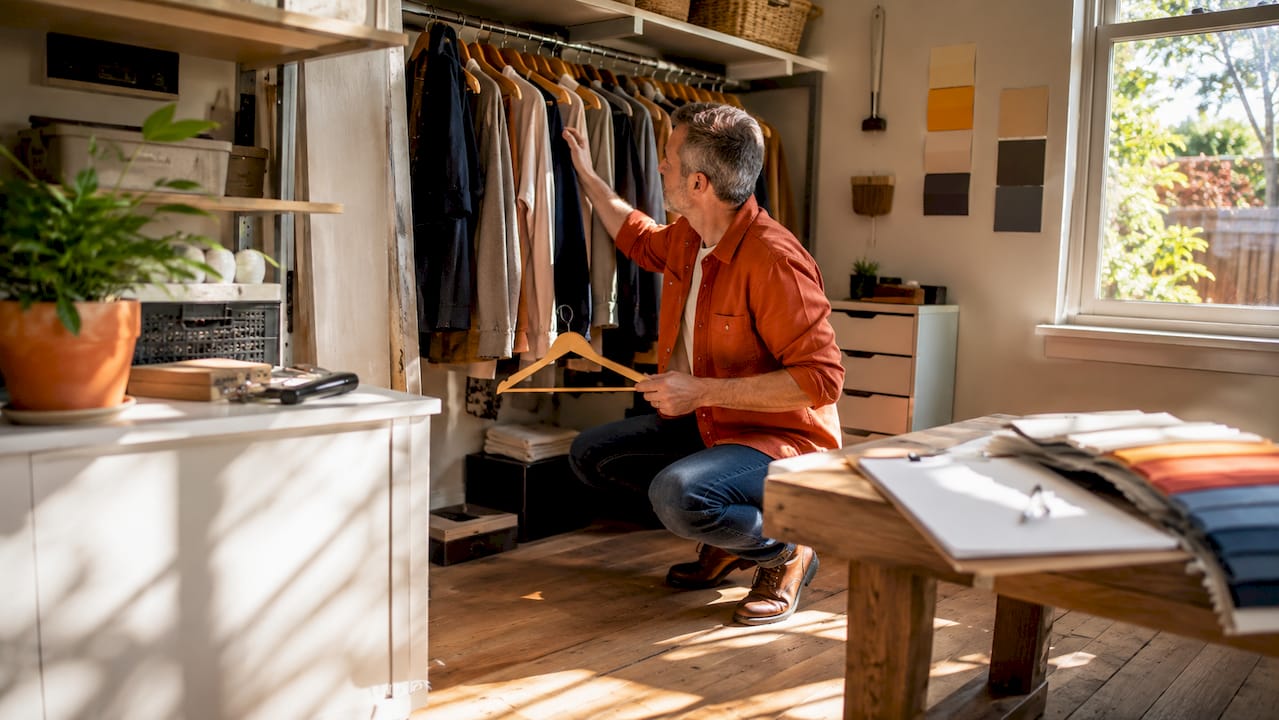
Pro Tip: Before choosing any finish or door style, conduct a personal inventory audit. Count your hanging garments, folded items, shoes, and accessories. That count dictates your internal layout far more reliably than any mood board.
The table below compares the core features of the most popular modern closet ideas by use case.
| Design type | Best for | Key feature | Space saving |
|---|---|---|---|
| Sliding door, full-height | Small to medium bedrooms | No swing clearance needed | High |
| Walk-in with open shelving | Large bedrooms, loft conversions | Maximum accessibility | Medium |
| Hinged door, floor-to-ceiling | Period homes with high ceilings | Classic aesthetic, deep storage | High |
| Alcove fitted wardrobe | Chimney breast recesses | Uses awkward space | Very high |
| Shaker-style fitted wardrobe | Traditional and transitional interiors | Timeless panel detailing | High |
2. How do sliding doors compare to hinged doors in modern wardrobes?
The choice between sliding and hinged doors is the single most consequential decision in any wardrobe project. It affects how much floor space you need, how you access your clothes, and how the room feels when the wardrobe is open. You can read a full breakdown in our sliding vs hinged wardrobes comparison, but the key points are below.
Sliding doors
- No swing clearance required. Sliding doors sit on a track and move parallel to the wardrobe face. A bedroom with a bed opposite the wardrobe gains nothing from hinged doors; the door would hit the bed frame before it fully opens.
- Continuous visual plane. A floor-to-ceiling sliding panel reads as a single surface, making rooms appear larger and brighter.
- Handle-free options. Push-to-open mechanisms and mitered edge pulls create a completely flush front. Push-to-open systems look exceptional but can accumulate finger marks on frequently used doors, so mitered pulls often prove more practical day to day.
- Track maintenance. Sliding door tracks require occasional cleaning to prevent sticking. Soft-close mechanisms reduce wear significantly.
- Partial access. One panel always obscures part of the wardrobe interior. This is rarely a problem with good internal zoning but worth planning for.
Hinged doors
- Full-width access. Open both doors and the entire interior is visible at once. This suits walk-in wardrobes and small walk-in designs where you step inside rather than reach in.
- Deeper storage. Hinged doors allow shelves to extend closer to the door opening without obstruction from a sliding panel overlap.
- Period-appropriate aesthetics. Shaker-panel hinged doors suit Victorian and Edwardian homes in Barnes, Twickenham, and Hammersmith where sliding panels can feel out of character.
- Space requirement. You need clearance equal to the door width in front of the wardrobe. In a room under 3 metres wide, this is often prohibitive.
| Feature | Sliding doors | Hinged doors |
|---|---|---|
| Floor space needed | Minimal | Equal to door width |
| Full interior access | Partial | Full |
| Aesthetic | Contemporary, flush | Classic or contemporary |
| Maintenance | Track cleaning | Hinge adjustment |
| Best room size | Small to medium | Medium to large |
3. Which internal organisation features deliver the best functionality?
The interior of a wardrobe determines whether it stays tidy for years or descends into chaos within weeks. Starting with an inventory audit before finalising any layout is the single most effective step a homeowner can take. Categorising garments by length and frequency of use informs zoning decisions that no amount of retrospective reorganisation can fix.
The internal features that deliver the most consistent results are:
- Custom hanging zones. Short hanging for shirts and jackets, long hanging for dresses and coats. The recommended baseline for long hanging rods is approximately 60 inches, but bespoke wardrobes benefit from measuring your actual longest garment before setting rod height.
- Adjustable shelving. Fixed shelves become redundant as wardrobes evolve. Adjustable pin-shelf systems allow you to reconfigure as your storage needs change.
- Dedicated accessory drawers. Shallow drawers lined with felt or velvet protect jewellery, watches, and sunglasses. Deep drawers with dividers handle folded knitwear without compression marks.
- Illuminated glass shelving. Integrated LED lighting prevents modern wardrobes from feeling monolithic and adds warmth. Warm-toned strip lighting inside shelving units transforms a functional cabinet into a display worth showing off.
- Pull-out hampers. A recessed laundry hamper built into the base of the wardrobe removes the need for a freestanding basket entirely. This is particularly valued in smaller bedrooms in Ealing and Kingston where floor space is limited.
- Shoe racks and angled shelving. Angled shelves display shoes at a slight tilt, making pairs easier to identify and retrieve without disturbing adjacent pairs.
Pro Tip: Minimalist wardrobe designs require stricter internal organisation than open, flexible interiors. Dedicated zones for every category prevent the chaotic accumulation that undermines a clean aesthetic. If you want the wardrobe to look minimal, the interior must be highly structured.
4. How can bespoke wardrobes be tailored to different homes and spaces?
Bespoke fitted wardrobes are defined by their ability to work within the exact dimensions and character of a specific room. A standard flat-pack unit cannot address a sloped ceiling in a loft conversion, a chimney breast alcove in a Victorian terrace, or a room with a 3-metre ceiling height. A bespoke wardrobe can address all three.
Small bedrooms
A small bedroom wardrobe benefits most from sliding doors, full-height cabinetry, and a carefully zoned interior that eliminates the need for any additional furniture. Mirrored sliding panels double the perceived depth of the room. Built-in bedside units integrated into the wardrobe run remove the need for separate bedside tables, freeing floor space entirely.
Loft conversions
Loft wardrobes present the most challenging geometry in residential design. Sloped ceilings, knee walls, and irregular floor plans demand fully custom solutions. At Finest Furniture Studio, we design loft wardrobe solutions that follow the roofline precisely, using the full depth of the eaves for hanging and the taller central section for shelving and drawers. Homeowners in Wimbledon, Putney, and Brixton with loft conversions regularly find that a bespoke fitted wardrobe reclaims space that would otherwise sit empty.
High-ceiling rooms
Rooms with ceiling heights above 2.7 metres offer a significant storage opportunity that most homeowners underuse. Custom wardrobes for high ceilings use the upper section for seasonal storage, luggage, and rarely accessed items, while keeping everyday clothing at eye level and below. A library-style pull-out ladder integrated into the wardrobe run adds a considered design detail that is both functional and visually striking.
Material and finish selection
Contemporary wardrobes favour durable materials and quality finishes chosen for longevity rather than trend. Matt lacquer, wood-effect foil, and real veneer finishes each offer a distinct character. Matt surfaces resist fingerprints and suit handle-free designs. Wood-effect finishes bring warmth to all-white interiors without the cost of solid timber. The right finish for your wardrobe doors affects both the daily experience and the long-term durability of the piece. Homeowners are increasingly treating wardrobes as foundational furniture rather than disposable fixtures, which shifts the decision firmly towards quality materials built to last.
Balancing open and closed storage
Open shelving creates a boutique atmosphere but demands consistent tidiness. Closed cabinetry hides clutter but can feel heavy if it dominates an entire wall. The most successful bespoke designs combine both: closed doors for hanging and folded items, open shelving or glass-fronted sections for display. This balance suits the lifestyle of most homeowners in Chelsea, Fulham, and Richmond who want a wardrobe that looks as good as it functions.
Key takeaways
The most effective modern wardrobe designs combine bespoke internal zoning, quality materials, and the right door system for the specific room, producing storage that stays functional and looks exceptional for years.
| Point | Details |
|---|---|
| Start with an inventory audit | Count garments by category before finalising any internal layout or zone allocation. |
| Match door type to room size | Sliding doors suit small rooms; hinged doors suit larger spaces with full-width access needs. |
| Use full vertical height | Floor-to-ceiling cabinetry increases storage capacity significantly compared to standard-height units. |
| Integrate lighting | Warm LED strip lighting inside shelving prevents visual monotony and adds a sense of luxury. |
| Choose materials for longevity | Matt lacquer and quality veneer finishes outlast trend-driven choices and suit handle-free designs. |
What I have learned designing wardrobes for London homes
After working on bespoke wardrobe projects across Richmond, Wimbledon, Chelsea, Ealing, and Hammersmith, one pattern stands out clearly. Homeowners almost always underestimate how much the interior layout matters compared to the exterior finish. They spend weeks choosing a door colour and then accept whatever internal configuration comes standard. That is the wrong order of priorities.
The inventory audit is not a formality. I have seen clients discover they own three times more folded knitwear than hanging garments, which completely changes the ratio of shelving to rails. A wardrobe designed around the wrong assumptions fails within six months, regardless of how beautiful the doors look.
The other misconception I encounter regularly is that minimalism means fewer compartments. The opposite is true. A genuinely tidy wardrobe has a dedicated place for every single item. The wardrobes that stay neat are the ones with the most considered internal structure, not the most open space.
Lighting is the detail that separates a good wardrobe from a great one. Clients who initially consider it an unnecessary addition almost always mention it first when describing the finished result. Warm LED lighting inside a wardrobe changes how you interact with it every morning. It makes the space feel considered rather than purely functional.
Finally, the choice of materials deserves more attention than it typically receives. A wardrobe built from quality board with a durable finish will look the same in ten years as it does on installation day. A wardrobe built to a lower specification will show wear at the hinges, edges, and door faces within a few years. At Finest Furniture Studio, we back every installation with a 10-year guarantee because we build to a standard that makes that guarantee straightforward to honour.
— Aureliu
Explore bespoke fitted wardrobes for your London home
Finest Furniture Studio designs and installs bespoke fitted wardrobes, walk-in closets, loft wardrobes, and TV media walls across London and the surrounding areas, including Richmond, Wimbledon, Putney, Kingston, Chiswick, Fulham, Chelsea, Ealing, Twickenham, Barnes, and Hammersmith.
Every project begins with a free design visit. We take precise measurements, discuss your storage needs, and produce a detailed design before any commitment is made. Installation is completed within 7–12 days, and we remove and dispose of your old wardrobe at no additional charge. Our bespoke wardrobes in West London guide covers the full process in detail. Every installation carries a 10-year quality guarantee.
Call us on 07468 150807, message us on WhatsApp, or visit us at 124 City Road, Kemp House, London, EC1V 2NX to arrange your free design consultation.
FAQ
What makes a wardrobe design “modern”?
A modern wardrobe design combines functional storage engineering with clean aesthetics, typically featuring sliding or handle-free doors, integrated lighting, and bespoke internal zoning tailored to the owner’s actual wardrobe inventory.
How much space do sliding wardrobe doors save?
Sliding doors eliminate the swing clearance required by hinged doors, which equals the full width of each door panel. In a small bedroom, this can reclaim a significant strip of usable floor space directly in front of the wardrobe.
What internal features are worth prioritising in a bespoke wardrobe?
Custom hanging zones, adjustable shelving, dedicated accessory drawers, and integrated LED lighting deliver the most consistent improvement to daily usability. Pull-out hampers and tiered handbag nooks add further organisation for those with larger wardrobes.
Can a bespoke wardrobe work in a loft conversion?
A bespoke fitted wardrobe is the only practical solution for a loft conversion. Sloped ceilings and irregular floor plans require fully custom cabinetry that follows the roofline precisely, which no standard unit can achieve.
How long does a fitted wardrobe installation take?
At Finest Furniture Studio, fitted wardrobe installation is completed within 7–12 days from the agreed start date. The team also removes and disposes of any existing wardrobe as part of the service.