
Why Survey and Fit Changes the Outcome
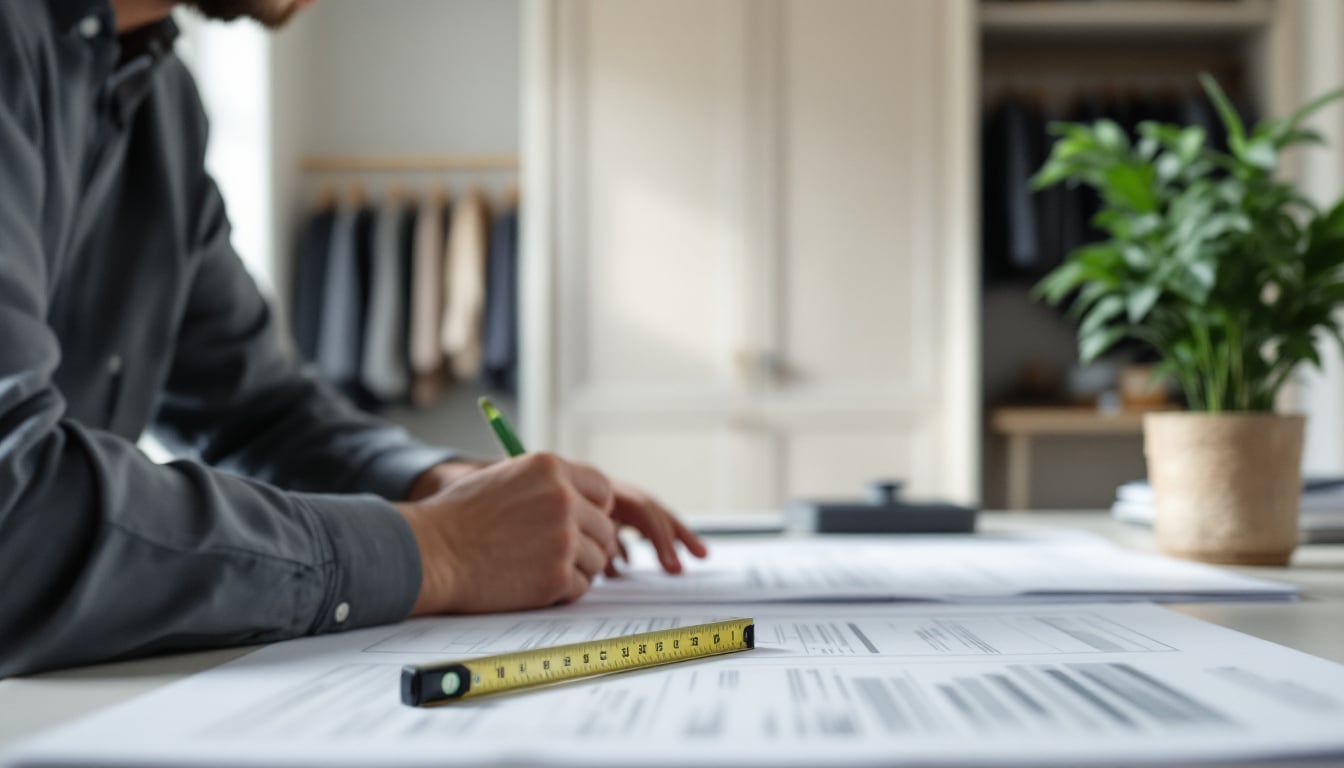
Survey and fit is the step that turns a rough idea into a wardrobe that actually works in the room. It combines a site survey with a fitting plan, so measurements are checked against walls, floors, ceilings, skirting, sockets, slopes, and door swing before anything is built. If you are comparing fitted wardrobe options, this is where the difference between a neat result and a frustrating return visit usually appears. A good survey and fit process reduces avoidable rework, protects clearances, and makes sure the final storage layout suits the space instead of fighting it.
What Survey and Fit Really Covers
A proper survey and fit is more than measuring width, height, and depth. It includes checking the room at multiple points, confirming the true finished sizes, and noting anything that affects installation, such as uneven floors, bowed walls, radiators, coving, or sloped ceilings. For wardrobe measurements, the most useful habit is to measure at several points, not just one. A wall that looks straight can easily vary by 10 to 20 mm, and that gap decides whether doors run cleanly or bind once the frame is in place.
Survey Before You Design
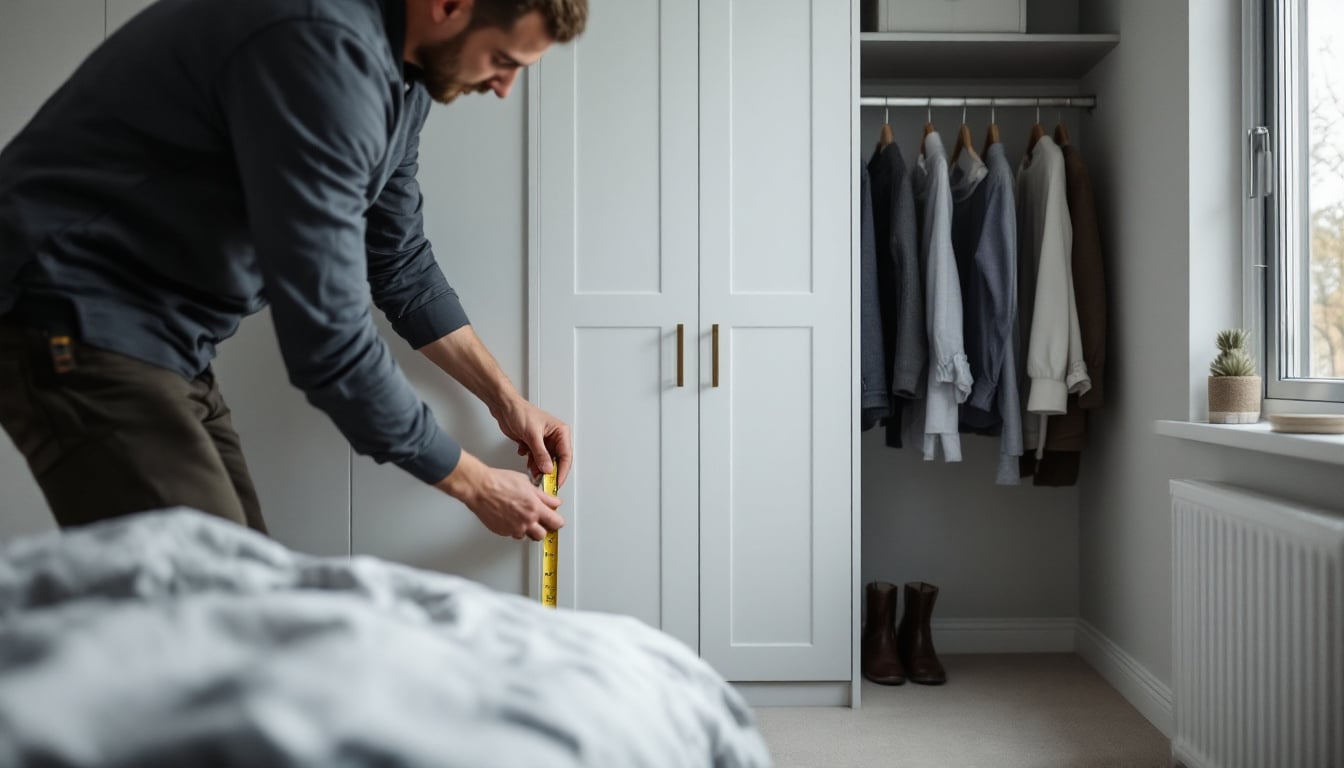
The design should follow the room, not the other way round. Start with the survey and fit process first, then shape the internal storage around the real dimensions. That sequence matters because hanging rail positions, shelf spacing, and sliding door tracks all depend on usable depth and clearance. A common mistake is designing to the nominal size of a wall and only later discovering that skirting or plaster build-out steals the space needed for opening doors. A measured survey avoids that problem early, when changes are still cheap.
How to Measure a Room the Right Way
The simplest workflow is to measure width at the top, middle, and bottom, then do the same for height at both ends and at the centre. If the smallest and largest readings differ, use the tightest usable dimension and allow for finishing tolerances. This is the practical side of survey and fit: it is not about finding the prettiest number, it is about the safest one. For wardrobe measurements, a 5 mm error may seem minor, but across a full run of fitted furniture it can create visible gaps or expensive trimming.
What to Check Beyond the Tape Measure
The room tells you more than the tape measure does. Check where sockets, switches, vents, and light fittings sit, because those details can change the carcass layout or the door style. If the floor is out of level, the fitter may need to scribe panels or adjust plinths so the wardrobe looks square even when the room is not. This is where survey and fit improves wardrobe measurements in a way DIY measuring often misses, because it captures the installation conditions, not just the empty shell of the room.
Signs Your Room Needs a Deeper Survey
Some spaces need extra attention straight away. Loft bedrooms, alcoves, chimney breasts, and older homes often have angled ceilings, uneven plaster, or walls that are not parallel. In those cases, survey and fit should include diagonal checks and photo notes, not just straight dimensions. If you are planning loft wardrobes or sloped cupboards, the usable height can change dramatically from one side to the other. That affects both access and internal storage, so the survey has to account for the lowest point as well as the tallest.
How Survey and Fit Improves Wardrobe Measurements
The main benefit is accuracy that survives installation day. Survey and fit improves wardrobe measurements by converting room variation into build decisions, such as adjusting panel widths, changing door type, or shifting internal divisions. It also helps avoid the classic mismatch where a design looks perfect on paper but leaves awkward filler strips or clashes with skirting once installed. For fitted wardrobes, that means fewer compromises at the end and a cleaner result at the front, where you notice alignment every day.
Why Small Errors Become Big Problems
Wardrobe systems are unforgiving because several tolerances stack up at once. If the room is 8 mm out, the carcass is 4 mm off, and the door clearance is another 3 mm tight, the total issue can become obvious fast. That is why survey and fit is not just a quality extra, it is part of the measurement itself. A good rule is to treat any room variation over 5 mm as design-relevant, especially on long runs, sliding doors wardrobes, or full-height fitted furniture where alignment is immediately visible.
Survey and Fit for Different Wardrobe Types
Different wardrobe styles respond differently to imperfect rooms. Hinged doors can forgive a little more variation, while sliding doors need a straighter line and more careful track alignment. Bespoke wardrobes also give you more room to adapt the interior, but only if the survey captures enough detail to use that flexibility properly. For example, a built-in cupboard in an alcove may need a deeper left side than right side, while an all bespoke layout can absorb that difference with a custom end panel instead of a filler.
Choosing the Right Clearances
Clearance is one of the most overlooked parts of survey and fit. A wardrobe may fit the wall perfectly and still fail if the doors hit a bedside table, a radiator valve, or a bedroom door. The practical decision rule is simple: measure the installed space and the space needed to use it. That means checking swing radius, access to handles, and the opening path to drawers. If the layout is tight, sliding doors or narrower door leaves can be a better choice than forcing a hinged system into a cramped gap.
Common Measurement Mistakes to Avoid
The most common mistake is relying on one central measurement and ignoring the ends. Another is measuring before flooring, plastering, or decorating is finished, then discovering the final space has changed. Survey and fit should happen after the room is in its final condition, or at least after the key surfaces are fixed. A third mistake is forgetting projection, such as skirting depth or architrave. These small details do not show up in a simple width reading, but they can decide whether wardrobe doors open cleanly.
How a Fitter Uses the Survey
A fitter uses the survey to plan the actual build order. That usually means marking level lines, confirming fixing points, checking whether panels need scribing, and deciding where to start the installation to keep visible edges neat. This is where survey and fit saves time, because the fitter does not have to make judgment calls on the spot with incomplete information. In practical terms, that often means fewer return visits, less filler, and a cleaner final finish along ceilings and side walls.
When a Custom Design Is Worth It
If your room has more than one awkward feature, a custom design is usually the better route. Bespoke wardrobe solutions are useful when you need to work around sloped ceilings, chimney breasts, alcoves, or restricted access. Survey and fit makes custom design valuable because it gives the designer the real constraints, not an approximate room shape. If the goal is a fitted wardrobe that looks built in rather than adapted, the survey should guide the proportions, not just the outer size.
A Practical Checklist Before You Order
Before you commit, confirm the room is ready, the measurement points are recorded, and the layout works with daily use. Check the smallest width, the tallest height, and the tightest clearance around doors and drawers. Make sure the survey includes photos of any awkward areas, because a visual note can prevent a wrong assumption later. If you are comparing providers, ask how they handle uneven floors, sloped ceilings, and final installation tolerances, since that tells you whether survey and fit is part of their process or just a quick measure.
How Survey and Fit Supports Better Material Choices
Measurement accuracy also affects material choice. A precise survey may reveal that a slimmer carcass, different door style, or altered internal layout will suit the room better. For example, if depth is tight, full-size hanging rails may not work as planned and you may need a shallower storage layout. Survey and fit improves wardrobe measurements by making those trade-offs visible before the build starts, which is far easier than trying to correct them after installation has already begun.
What Good Survey and Fit Looks Like in Practice
You should expect a process that feels structured, not rushed. Good survey and fit means checking dimensions in more than one place, noting installation constraints, and translating those findings into a plan that still leaves room for real-life use. If a provider also offers guidance on wardrobe doors design or interior layout options, that is a sign they are looking at fit as a system rather than treating measurement as a standalone task. The best results usually come from that joined-up approach.
Quick Takeaways
Survey and fit improves wardrobe measurements because it checks the room as it really is, not as a drawing suggests. The best results come from measuring several points, noting uneven floors or sloped ceilings, and designing to the tightest usable dimensions. Small gaps matter, especially with sliding doors wardrobes and full-height fitted furniture. Clearances around doors, radiators, and handles should be checked before ordering. If the room has alcoves, chimney breasts, or loft angles, a deeper survey is worth the extra time. The right survey reduces installation surprises and gives you a cleaner final finish.
When to Ask for a Site Visit
If your room has any awkward geometry, a site visit is usually the sensible next step. That applies to loft wardrobes, built-in cupboard projects, sloped cupboards, or any bedroom where one wall is clearly not straight. A site visit lets the fitter confirm what the tape measure cannot show, such as wall plumb, floor level, and access for installation. In a service-led UK market, that can matter as much as the design itself because it determines whether the final wardrobe is fitted cleanly and on time.
Frequently Asked Questions
What is survey and fit in wardrobe measurements?
Survey and fit is the process of checking a room carefully before the wardrobe is made and installed. It covers true dimensions, clearances, uneven surfaces, and anything that could affect the final fit. For survey and fit wardrobe measurements, this reduces the chance of gaps, clashes, or awkward filler panels.
How does survey and fit improve wardrobe measurements?
Survey and fit improves wardrobe measurements by capturing real room conditions instead of relying on one quick width and height reading. It helps identify sloped ceilings, skirting depth, and uneven floors before the design is finalised. That means the wardrobe can be built around the room’s actual constraints, not an ideal version of the room.
Do I need survey and fit for fitted wardrobes?
Yes, especially if the room is not perfectly square. Fitted wardrobes depend on accurate dimensions and clearance checks, so survey and fit is often the step that prevents installation problems. It is particularly useful for bespoke wardrobe solutions, alcoves, and loft spaces.
What should be checked during a survey and fit visit?
A proper survey and fit visit should check width, height, depth, wall straightness, floor level, skirting, sockets, and door swing. It should also note any obstacles that affect installation or everyday use. For wardrobe measurements, those details are often more important than the basic room size.
Can survey and fit help with sloped ceilings and loft wardrobes?
Yes, and it is one of the main reasons the process exists. Sloped ceilings and loft wardrobes need diagonal checks, low-point measurements, and careful planning for usable storage height. Without that, the wardrobe may fit the wall but fail to work properly inside the room.
How accurate do wardrobe measurements need to be?
Wardrobe measurements need to be accurate enough to account for real construction tolerances, not just approximate room size. In practice, small differences of 5 to 10 mm can matter once panels, doors, and fixings are added. Survey and fit helps turn those differences into a workable installation plan.
When should I book survey and fit for a custom wardrobe?
Book survey and fit once the room is in its final condition, or as close to it as possible. If flooring, plastering, or decorating is still pending, the dimensions can change. That timing is especially important for custom wardrobe design, because the final measurements determine whether the build fits cleanly.