
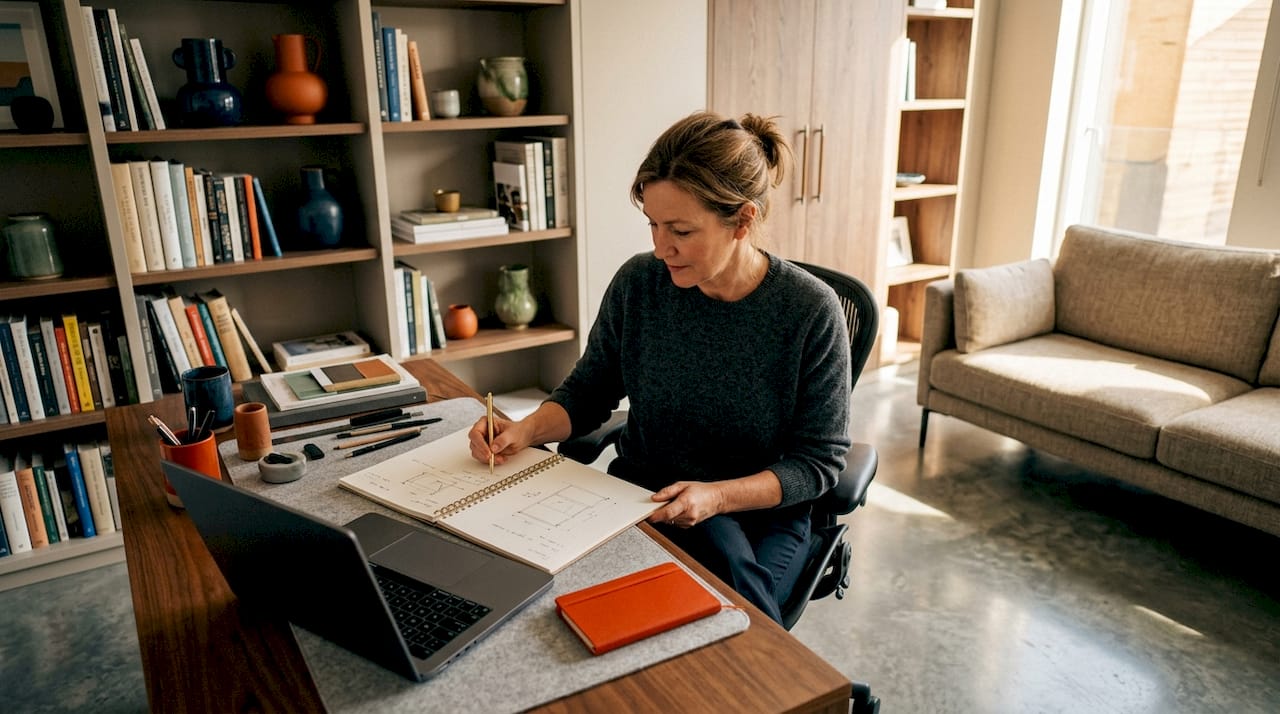
A luxury furniture checklist is a curated set of essential criteria that ensures every high-end piece you select perfectly complements your living space in both form and function. Without one, even the most discerning buyers risk purchasing pieces from brands like Poltrona Frau or Minotti that look stunning in a showroom yet clash with their home’s proportions, palette, or architecture. This guide walks you through each critical checkpoint, from accurate space measurement to bespoke fitted wardrobes and media walls, so your investment delivers lasting elegance rather than costly regret. Whether you are furnishing a Chelsea townhouse or a Richmond family home, these principles apply equally.
1. Why your luxury furniture checklist starts with precise measurements
Accurate measurements prevent rooms from feeling overwhelmed by oversized pieces or underwhelmed by furniture that disappears into the space. Before you visit a single showroom, document every wall length, ceiling height, window placement, and doorway width in the room you are furnishing. Record walkway clearances too. A sofa that seats eight looks magnificent in isolation but can block natural light and restrict movement in a room with a bay window and two doorways.
Use a laser measure for accuracy rather than a fabric tape, which can sag and introduce error. Note the position of radiators, sockets, and light switches, as these all affect where furniture can realistically sit.
- Wall lengths and ceiling heights for each room
- Doorway and corridor widths (for delivery access)
- Window sill heights and radiator positions
- Minimum walkway clearances (typically 90 centimetres for primary routes)
- Alcove depths and chimney breast projections
Pro Tip: Use a free design visualisation tool such as RoomSketcher or SketchUp to place scaled furniture models into your room plan before committing to any purchase. Seeing a piece at true scale on screen saves expensive mistakes.
2. How to define a cohesive design vision before you shop
Defining your design style before shopping is the single most effective way to avoid a room that looks expensive but feels incoherent. Choose one overarching style, whether minimalist, contemporary, classic Georgian, or mid-century modern, and commit to it as your filter for every purchase decision. Every piece you consider should pass through that filter before it reaches your shortlist.
Align furniture scale, pattern density, and colour temperature with your chosen vision. A warm walnut dining table pairs naturally with linen upholstery and aged brass hardware. The same table placed alongside cool grey lacquered cabinetry and chrome fittings creates visual tension that no amount of styling will resolve.
- Choose one primary style and one secondary influence at most
- Set a colour palette of three to five tones before shopping
- Decide on a dominant material (wood, marble, metal, or fabric) to anchor the scheme
- Confirm that pattern scales across textiles are varied but harmonious
“Prioritise scale, pattern, and colour in that order. Get the scale wrong and nothing else can save the room.” — Hudson Furniture design team
Pro Tip: Create a physical or digital mood board using Pinterest or Canva before your first showroom visit. Share it with any designer or supplier you consult so they understand your vision from the outset.
3. Evaluating material quality: what genuinely premium looks like
Premium materials justify the investment through durability, repairability, and the way they age. Solid hardwoods such as oak, walnut, and mahogany develop character over decades. They can be refinished, repaired, and restored in ways that engineered alternatives cannot. High-grade veneers applied over solid wood substrates are a legitimate choice in fine furniture, but thin veneers over MDF or particleboard will chip, swell, and delaminate within years.
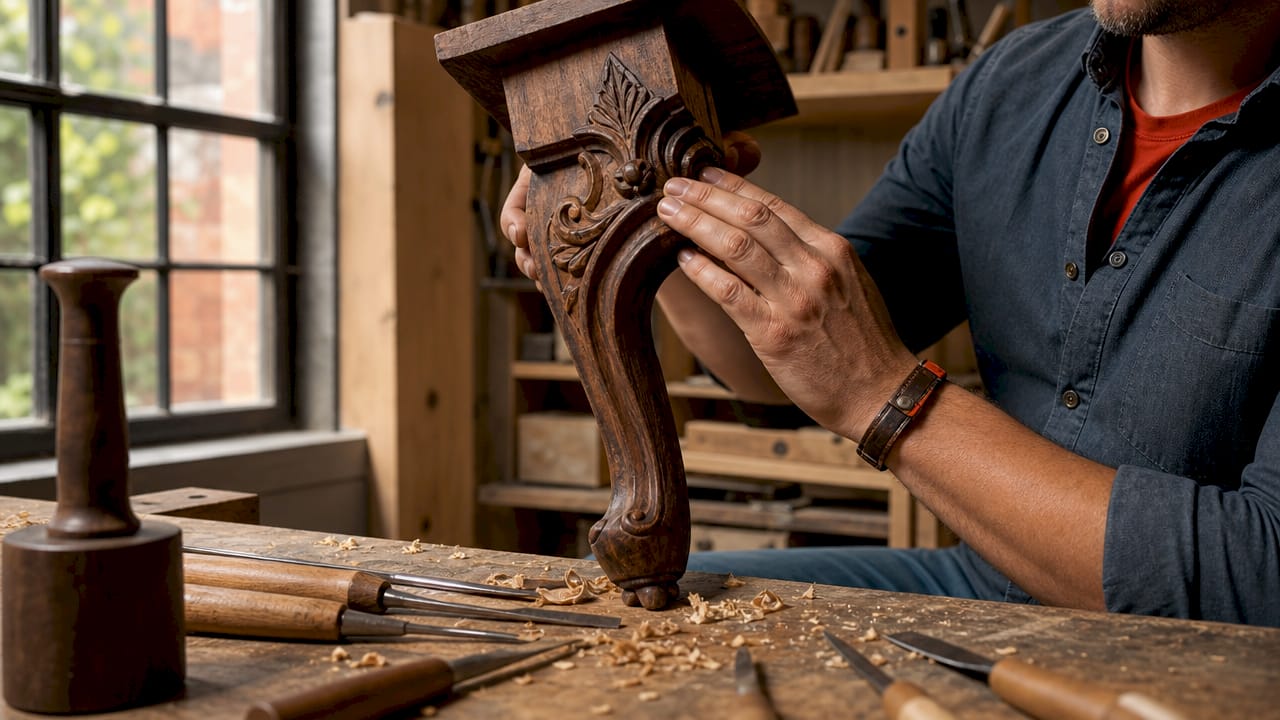
Upholstery tells its own story. Genuine full-grain leather develops a patina that improves with age, whereas bonded leather peels within a few years of regular use. Look for tight, even stitching with no puckering at seams. Cushion fill matters too: high-density foam wrapped in feather or fibre gives both support and a luxurious appearance, while cheap foam compresses and loses shape quickly.
| Feature | Premium quality | Poor quality |
|---|---|---|
| Frame material | Solid hardwood or kiln-dried timber | Particleboard or hollow MDF |
| Joinery | Dovetail or mortise-and-tenon joints | Staples, nails, or glue only |
| Upholstery | Full-grain leather or high-thread-count fabric | Bonded leather or low-grade polyester |
| Veneer substrate | Solid wood or quality plywood | Thin MDF or chipboard |
| Frame weight | Dense and heavy when lifted | Light or hollow-feeling |
Craftsmanship indicators such as dovetail joints and heavy frame weight signal structural integrity that mass-market pieces cannot replicate. A piece that feels lightweight or hollow when lifted almost certainly has subpar framing. This is not a minor detail. It determines whether the furniture lasts five years or fifty.
Pro Tip: When buying luxury furniture online, always request detailed photographs of the underside of tables, the back of case goods, and the frame construction of sofas. Reputable suppliers will provide them without hesitation.
4. The role of craftsmanship in a premium furniture selection
Strong joinery such as mortise-and-tenon joints is the hallmark of quality furniture frames, compared to the staples and glue used in mass-market production. This distinction matters most in seating, where joints bear repeated stress from daily use. A dining chair with glued butt joints will loosen within a year of regular use. The same chair built with mortise-and-tenon construction will remain solid for generations.
Examine the finishing details as carefully as the primary materials. Drawer runners should glide smoothly and close softly. Cabinet doors should hang perfectly level with consistent gaps. Paint or lacquer finishes should show no brush marks, drips, or uneven sheen. These details are not cosmetic. They reflect the discipline and skill of the maker throughout the entire production process.
The role of materials in bespoke furniture extends beyond aesthetics to structural performance. A piece built from kiln-dried hardwood with hand-finished surfaces will resist warping, cracking, and fading far longer than its factory-produced equivalent. When you invest at the premium end of the market, you are paying for that discipline as much as for the design.
5. Balancing aesthetics with lifestyle when selecting high-end furniture
Lifestyle needs must balance with aesthetics to avoid purchasing impressive but impractical statement pieces. A cream bouclé sofa is a genuinely beautiful object. In a home with young children or dogs, it becomes a source of daily anxiety rather than daily pleasure. The most successful luxury interiors are ones where every piece works as hard as it looks.
Room flow and architectural scale should dictate furniture choice more than individual piece aesthetics alone. A dining table that seats twelve in a room designed for eight creates congestion and makes the space feel smaller, not grander. Scale is the discipline that separates a well-furnished room from a showroom floor.
- Match upholstery materials to your household’s activity level
- Choose lacquered or oiled wood finishes over waxed ones in high-traffic areas
- Select dining chairs with removable, washable seat pads if you entertain frequently
- Avoid statement pieces that require professional cleaning for routine maintenance
- Consider how natural light at different times of day will affect fabric and finish colours
Pro Tip: Think five years ahead when selecting upholstery and finishes. A family expecting children, or homeowners planning to adopt a pet, should factor those changes into material choices now rather than replacing furniture prematurely.
6. Why bespoke fitted furniture belongs on every luxury checklist
Bespoke fitted wardrobes and media walls integrate with room architecture in ways that freestanding furniture cannot. They use every centimetre of available height, fill awkward alcoves, and create a visual continuity that makes rooms feel considered and complete. In London homes, where rooms often feature period details such as chimney breasts, sloped ceilings, and irregular wall angles, bespoke fitting is not a luxury add-on. It is the only solution that works properly.
Luxury is defined by material intelligence, proportion, and restraint rather than brand name or price alone. A bespoke fitted wardrobe in a Wimbledon master bedroom, finished in hand-painted shaker panels with internal LED lighting and pull-out shoe storage, delivers more functional luxury than a freestanding designer wardrobe that wastes the space above and beside it.
Finest Furniture Studio designs and installs bespoke fitted wardrobes, loft wardrobes, and TV media walls across Richmond, Wimbledon, Putney, Fulham, Chelsea, Chiswick, Kingston, Ealing, Twickenham, Barnes, and Hammersmith, as well as Central London and surrounding areas including Walton-on-Thames, Woking, and Guildford.
- Fitted wardrobes maximise storage from floor to ceiling with no wasted space
- Loft wardrobes address sloped ceilings and awkward angles that freestanding units cannot
- TV media walls integrate storage, display, and technology into one cohesive unit
- Bespoke finishes match existing joinery, flooring, and colour schemes precisely
- Alcove wardrobes and under-stair storage turn dead space into functional elegance
Finest Furniture Studio completes all fittings within 7–12 days and backs every installation with a 10-year quality guarantee. The team also removes and disposes of any existing wardrobe as part of the service.
7. How to verify quality when buying luxury furniture online
Online luxury furniture shopping requires diligence about frame quality and joinery that goes well beyond photographic appeal. A beautifully lit product image reveals nothing about cushion fill density, fabric thread count, or whether the frame uses solid wood or engineered board. Always request a full specification sheet before purchasing.
Ask suppliers directly about their joinery methods, frame materials, and cushion construction. Reputable brands will answer in detail. Vague responses about “premium materials” without specifics are a warning sign. Request fabric or leather swatches so you can assess weight, texture, and colour accuracy under your home’s lighting conditions before committing.
Check the returns policy carefully. A supplier confident in their quality will offer a meaningful returns window and clear guidance on what constitutes a manufacturing defect. Short returns windows or policies that exclude “change of mind” returns on bespoke items are standard, but any supplier unwilling to address genuine quality concerns in writing warrants caution.
8. Layering textures and mixing periods for timeless depth
Designers recommend layering textures and mixing old with new to add depth without compromising timeless elegance. A room furnished entirely in one material, whether all marble, all linen, or all lacquer, reads as flat regardless of the quality of individual pieces. Contrast is what gives a luxury interior its sense of richness and intention.
Pair a contemporary sofa in a textured weave with an antique side table and a hand-knotted wool rug. The contrast between periods and textures creates visual interest that a matched suite cannot achieve. This approach also future-proofs your interior. Individual pieces can be updated or replaced without the entire room feeling dated.
The luxury furniture buying guide principle here is restraint. Add one unexpected element per room, whether a vintage mirror, a sculptural lamp, or a piece of original art, and let it do the work of creating character. Resist the urge to layer so many contrasts that the room loses its coherence.
Key takeaways
A luxury furniture checklist works because it forces you to evaluate space, design vision, material quality, craftsmanship, and lifestyle fit before any purchase, protecting both your investment and your interior’s long-term coherence.
| Point | Details |
|---|---|
| Measure before you shop | Document wall lengths, ceiling heights, and walkway clearances before visiting any showroom. |
| Define your design vision first | Choose one style and a colour palette of three to five tones to filter every purchase decision. |
| Prioritise craftsmanship over appearance | Look for solid hardwoods, dovetail joints, and full-grain leather as markers of genuine quality. |
| Match materials to your lifestyle | Select finishes and upholstery that suit your household’s daily activity level and future needs. |
| Consider bespoke fitted furniture | Fitted wardrobes and media walls integrate with architecture and deliver superior functional luxury. |
What I have learned from years of luxury furniture decisions
The checklist is not a constraint. It is a confidence tool.
The most common mistake I see affluent homeowners make is buying on emotion in a showroom and rationalising the decision afterwards. A beautiful piece catches the eye, the salesperson confirms it is the finest available, and the purchase is made before anyone has checked whether it fits the room, suits the family’s lifestyle, or aligns with the existing scheme. The result is a home full of individually impressive pieces that do not speak to one another.
Prioritising scale, pattern, and colour creates interiors that remain elegant over decades rather than following fleeting trends. I have seen this principle proven repeatedly. The rooms that age best are not the ones with the most expensive individual pieces. They are the ones where proportion was respected, where the architecture was honoured, and where restraint was exercised at the point of purchase.
Bespoke fitted furniture is where I see the greatest gap between expectation and reality in the luxury market. Homeowners often treat fitted wardrobes and media walls as functional afterthoughts, spending their budget on freestanding statement pieces and then fitting whatever is left into storage. The rooms that genuinely impress, in Richmond, Fulham, Chelsea, and Wimbledon alike, are the ones where the fitted elements were designed first and the freestanding pieces were chosen to complement them. That sequence changes everything.
My honest advice: buy fewer pieces, buy better, and invest in bespoke fitted furniture that works with your home’s architecture from the start. A custom furniture design process grounded in your specific room dimensions and lifestyle will always outperform a collection of showroom purchases assembled without a plan.
— Aureliu
Bespoke fitted furniture from Finest Furniture Studio
Finest Furniture Studio designs and installs bespoke fitted wardrobes, loft wardrobes, and TV media walls for homeowners across West London and the surrounding areas. Every project begins with a free design visit, where we assess your space, discuss your requirements, and produce a tailored design that works with your room’s architecture rather than against it.
Our bespoke wardrobes in West London are built to your exact specifications, finished in your chosen materials, and installed within 7–12 days. Every installation carries a 10-year quality guarantee, and we remove and dispose of your existing wardrobe at no additional charge. For homeowners considering a media wall with storage, we integrate television, shelving, and concealed storage into one cohesive unit that elevates the entire room.
Contact us for a free design visit. Call or WhatsApp us on 07468 150807, or visit us at 124 City Road, Kemp House, London, EC1V 2NX.
FAQ
What is a luxury furniture checklist?
A luxury furniture checklist is a structured set of criteria covering space measurement, design vision, material quality, craftsmanship, and lifestyle fit that guides high-end furniture purchases. It ensures every piece selected complements the home’s architecture and delivers lasting value.
How do I identify genuine quality in luxury furniture?
Look for solid hardwood frames, dovetail or mortise-and-tenon joinery, full-grain leather upholstery, and dense frame weight. A piece that feels light or hollow when lifted almost certainly uses subpar framing materials.
Should bespoke fitted wardrobes be part of a luxury furniture plan?
Bespoke fitted wardrobes and media walls integrate with room architecture and maximise every centimetre of available space, making them a superior choice for luxury homes compared to freestanding alternatives. They are particularly effective in London properties with period features, loft conversions, or irregular room shapes.
How do I balance aesthetics with practicality in premium furniture selection?
Choose materials and finishes that suit your household’s daily activity level. Durable lacquered finishes, performance fabrics, and oiled hardwoods maintain their appearance under regular use, whereas delicate materials require professional maintenance that adds long-term cost.
What is the most common mistake when buying high-end furniture?
Buying on visual impact alone without checking room proportions, lifestyle fit, or design coherence is the most frequent error. Room flow and scale should always take priority over the appeal of an individual piece in isolation.