
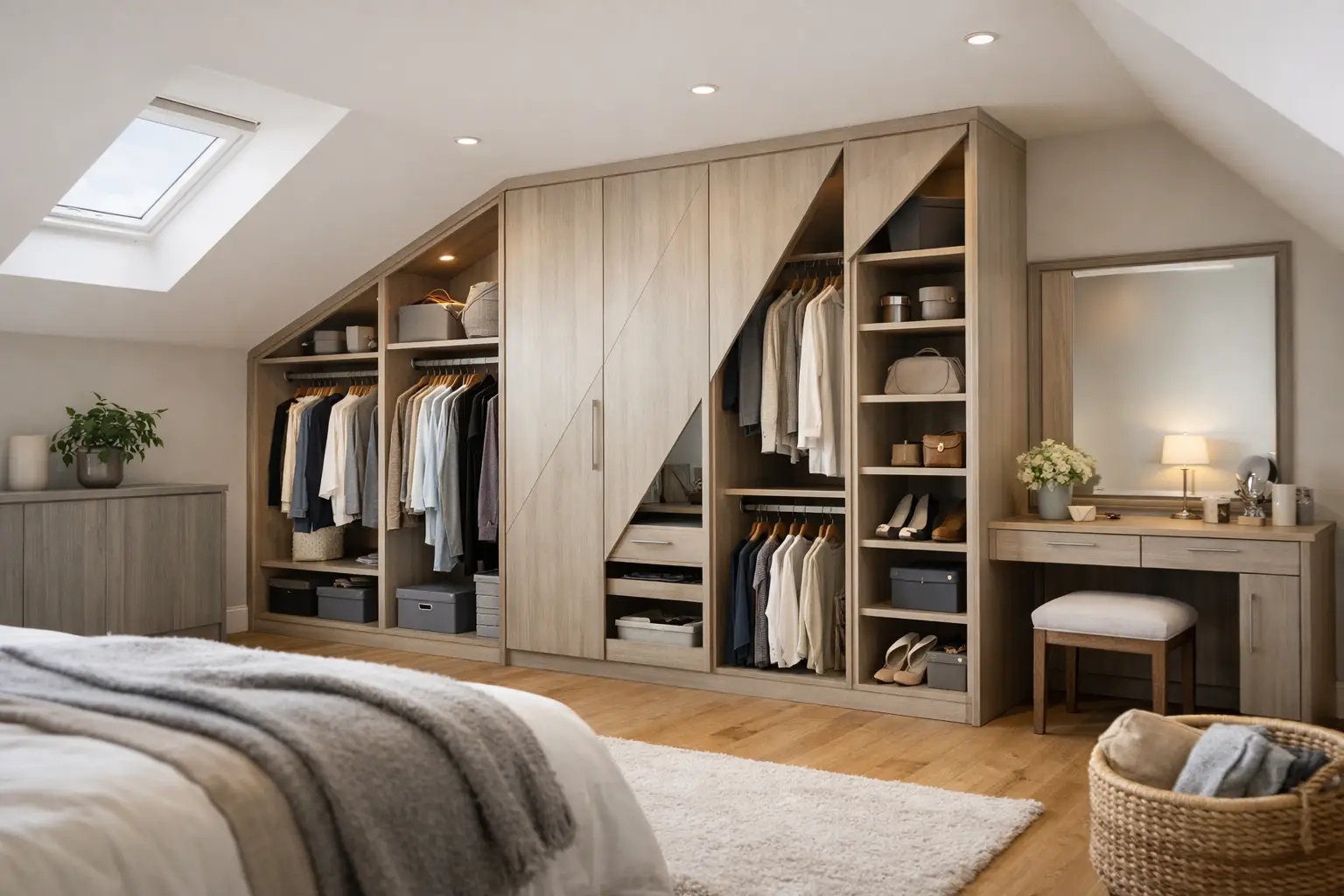
That low eaves corner often becomes a holding area for suitcases, Christmas boxes and the clothes you cannot quite reach. The best sloping loft wardrobe ideas do the opposite – they turn the most awkward part of the room into storage that feels intentional, elegant and easy to use every day.
A loft bedroom can be one of the most characterful rooms in the house, but it rarely behaves like a standard bedroom. Ceiling angles cut into wall height, alcoves appear where you least expect them, and furniture that looked sensible on paper suddenly leaves dead space behind it. This is where fitted design earns its place. Rather than forcing freestanding wardrobes into an irregular shell, bespoke cabinetry follows the shape of the room and gives every centimetre a purpose.
Why sloping loft wardrobe ideas need a fitted approach
The challenge with a loft is not simply limited height. It is the combination of changing ceiling lines, restricted floor area and access points such as dormer windows, chimney breasts or boxed-in steels. A wardrobe that works beautifully on one wall may be useless on another.
Made-to-measure wardrobes solve that by treating the ceiling slope as part of the design rather than an obstacle. You can run storage right into the eaves, keep higher sections for hanging, and use the lower zones for drawers, pull-out rails or closed shelving. The result tends to look calmer too, because the room feels built around its architecture instead of fighting against it.
There is also a practical difference in day-to-day use. In a loft room, every door opening and walkway matters. Choosing the right wardrobe layout can make the room feel larger, brighter and easier to move around.
1. Full-height wardrobes where the ceiling allows
Most lofts have at least one wall or partial section with enough height for full hanging storage. This is the best place for your longest garments, luggage shelves and the items you use most often. If you have a dormer extension, this vertical face is usually the prime wardrobe zone.
Keeping the tallest units together creates visual order. It also allows the lower eaves areas to work harder in a supporting role instead of trying to do everything at once.
Best for everyday hanging space
If you wear shirts, dresses, coats or suits regularly, prioritise a proper full-height section first. It is tempting to spread storage evenly around the room, but function comes before symmetry in a loft.
2. Low-level eaves cupboards with drawers inside
The shallow, low part under a sloping ceiling is often wasted because standard wardrobes cannot access it cleanly. One of the most useful sloping loft wardrobe ideas is to fit low cupboards or drawer banks directly into the eaves.
This works especially well for folded knitwear, shoes, handbags, spare bedding and seasonal clothing. Drawers are often more practical than deep shelves here, because they bring the contents out towards you. With shelves alone, the back section can become a forgotten storage void.
A neat run of painted fronts can make the whole wall feel tailored and quiet, particularly in smaller loft bedrooms where visual clutter builds quickly.
3. A combination of hanging, shelving and closed storage
The most successful loft wardrobes rarely rely on one storage type. Sloping ceilings create areas of different heights, so the internal layout should respond to that. Short hanging for jackets and shirts can sit under a slightly lower pitch, while shelves and drawers occupy the tightest sections.
This kind of zoning matters. If everything becomes hanging space, you may end up with rails that are awkward to reach. If everything becomes shelving, getting dressed each morning can feel less convenient than it should. Good design starts with how you actually live – how many long items you own, whether you prefer folded or hung clothes, and how much concealed storage you need to keep the room feeling restful.
4. Sliding doors for tighter loft bedrooms
Door choice has a bigger impact in a loft than in a standard room. Hinged doors need swing space, which can be frustrating if the ceiling drops in front of the wardrobe or the bed sits nearby. Sliding doors remove that issue and keep movement lines clearer.
They also suit more contemporary interiors, especially in loft conversions with clean plaster lines and rooflights. Mirror panels can help bounce light around, though this depends on the look you want. In some homes, a softer painted or wood-effect finish feels more in keeping with the property.
The trade-off is internal access. With sliding wardrobes, one section is always covered by a door, so very wide runs need careful planning. For some clients, hinged doors still make more sense on selected sections, particularly where full visibility matters.
5. Shaker-style doors to soften awkward architecture
Not every loft room suits a glossy, modern finish. In Victorian and Edwardian homes, sloping ceilings can look especially elegant when paired with classic fitted joinery. Shaker-style wardrobe fronts bring structure to uneven walls without feeling heavy.
This is a good option if you want the wardrobes to feel like part of the house rather than an obvious add-on. Soft neutrals, warm whites and muted greys tend to work well, particularly when the room has period details elsewhere. A simple door style can also stop a compact loft bedroom from feeling over-designed.
6. Built-in wardrobes around a dormer window
A dormer often gives you the luxury of extra head height and natural light, but it can also interrupt the obvious wardrobe wall. Instead of treating the window as a break in the design, build around it.
Low storage below the window can become a window seat, drawer unit or blanket cupboard, while taller wardrobes sit either side. This creates a more balanced composition and makes the room feel considered from wall to wall.
If the loft is used as a principal bedroom, this kind of arrangement can add a boutique feel without sacrificing practicality.
7. Open shelving in the hardest-to-reach corners
Some corners in a loft are simply too shallow or low for doors to be worthwhile. Open shelving can be the smarter answer, especially for books, display pieces, baskets or neatly folded accessories.
The key is restraint. Too much open storage can make a bedroom feel busy, and loft rooms are rarely generous enough to absorb that. Usually, a small open section works best when balanced with mostly closed wardrobes.
8. Fitted wardrobes with a dressing table or desk built in
In many loft conversions, floor area is limited enough that every item of furniture needs to justify itself. Combining wardrobes with a dressing table, bedside niche or compact desk can be a very efficient move.
This is particularly useful in guest rooms, teenage bedrooms or loft spaces that double as home offices. A built-in arrangement keeps the room feeling streamlined and avoids the chopped-up look that comes from mixing several freestanding pieces.
It does require careful proportioning. A desk under a low slope may sound clever, but if the seat position feels cramped, it will not get used. The same applies to dressing tables with poor mirror placement due to roof angles. Good fitted furniture should make the room easier to live in, not simply fill it.
9. Light finishes to keep the loft feeling open
Colour and finish matter more than many people expect. Loft rooms often have strong daylight from roof windows, but they can also have dark corners and shortened wall heights. Pale painted finishes, soft wood tones and subtle textures help the room feel more open.
That does not mean every loft wardrobe should be white. Richer tones can look superb in larger lofts or rooms with plenty of natural light. The point is balance. If the ceiling line already makes the room feel enclosed, very dark cabinetry across every wall may make it feel smaller still.
This is one reason bespoke design is so valuable. Materials, handles and internal lighting can all be tailored to suit the room rather than copied from a showroom setting.
10. Interior lighting and smart wardrobe organisation
The best sloping loft wardrobe ideas are not only about what you see from the outside. The inside matters just as much, especially in lower sections where visibility can be poorer.
Integrated lighting helps with deeper shelves and hanging areas, while practical wardrobe interiors make daily routines easier. Pull-down rails can be useful in higher compartments, soft-close drawers add comfort, and dedicated sections for shoes, jewellery or laundry stop the wardrobe becoming a catch-all.
This is where bespoke storage often proves its value over time. A beautifully fitted exterior is only half the story. If the interior has been planned around your clothing, habits and household needs, the wardrobe stays tidy more easily and works harder for longer.
Choosing the right sloping loft wardrobe design for your room
There is no single best answer for every loft. A narrow room with steep eaves may benefit from low fitted cupboards and one full-height section, while a wide dormer conversion may suit a full wall of wardrobes with mixed internals. Door style, finish and layout all depend on ceiling height, natural light, room use and the amount of storage you genuinely need.
For homeowners investing in a loft bedroom, the aim is usually not to squeeze in the maximum number of cabinets. It is to create a room that feels generous, calm and tailored to the house. That is why measured design, careful installation and honest planning matter so much. A well-made fitted wardrobe can make a difficult loft feel like one of the best rooms in the home.
At Finest Furniture Studio, we often find that the most successful loft projects begin with a simple shift in thinking: stop seeing the slopes as the problem, and start treating them as the shape that gives the room its best storage opportunities.