
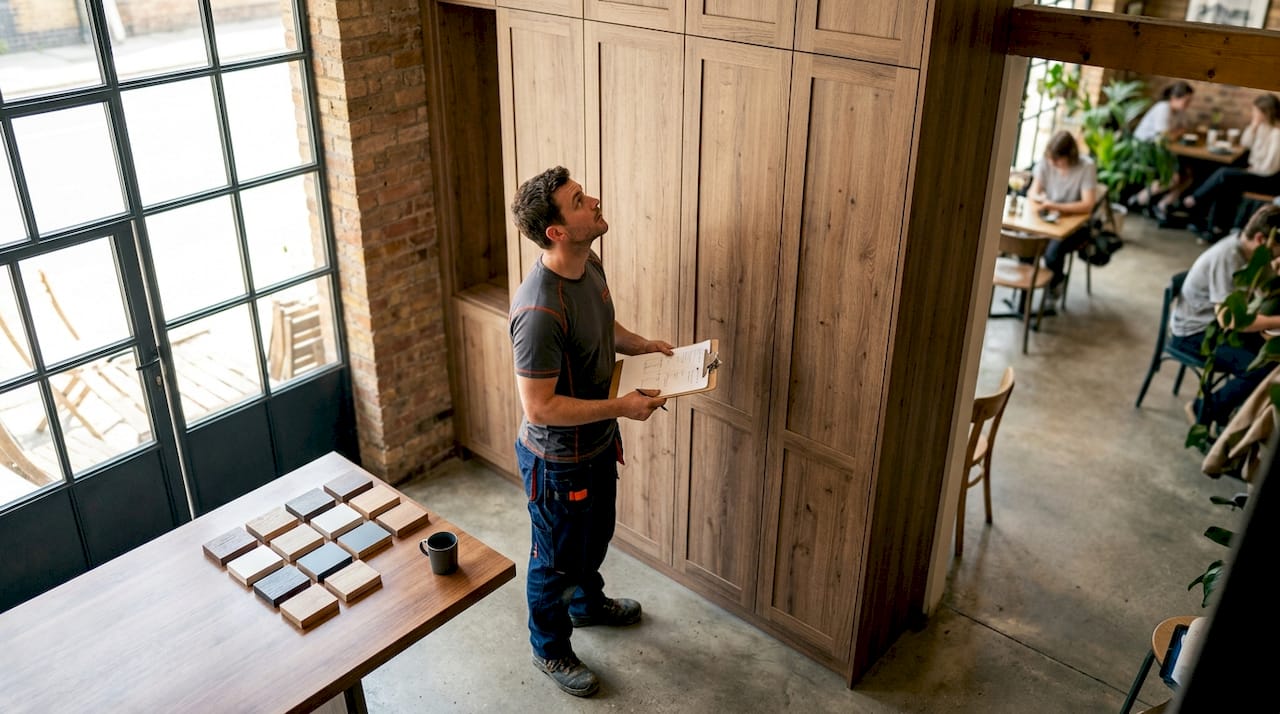
Living space optimisation is the process of designing and organising your home to maximise usable space, improve functionality, and create a visually open environment. Whether you rent a flat in Fulham or own a house in Richmond, the same principles apply: use every cubic metre deliberately, choose furniture that earns its place, and build habits that keep clutter from creeping back. Bespoke fitted wardrobes, TV media walls, and floor-to-ceiling cabinetry are among the most effective tools available to London homeowners in 2026. This guide covers the practical living space optimisation ideas that actually work, from multi-functional furniture choices to lighting tricks and weekly maintenance routines.
1. What are the best multi-functional furniture types for small spaces?
Multi-functional furniture is the single most effective category for compact living. Each piece must serve at least two purposes, or it is taking up space it has not earned.
The strongest performers in this category include:
- Storage ottomans that double as seating and hide blankets, cables, or seasonal items inside
- Sofa beds that convert a living room into a guest room without a permanent footprint
- Foldable dining tables that collapse flat against a wall when not in use
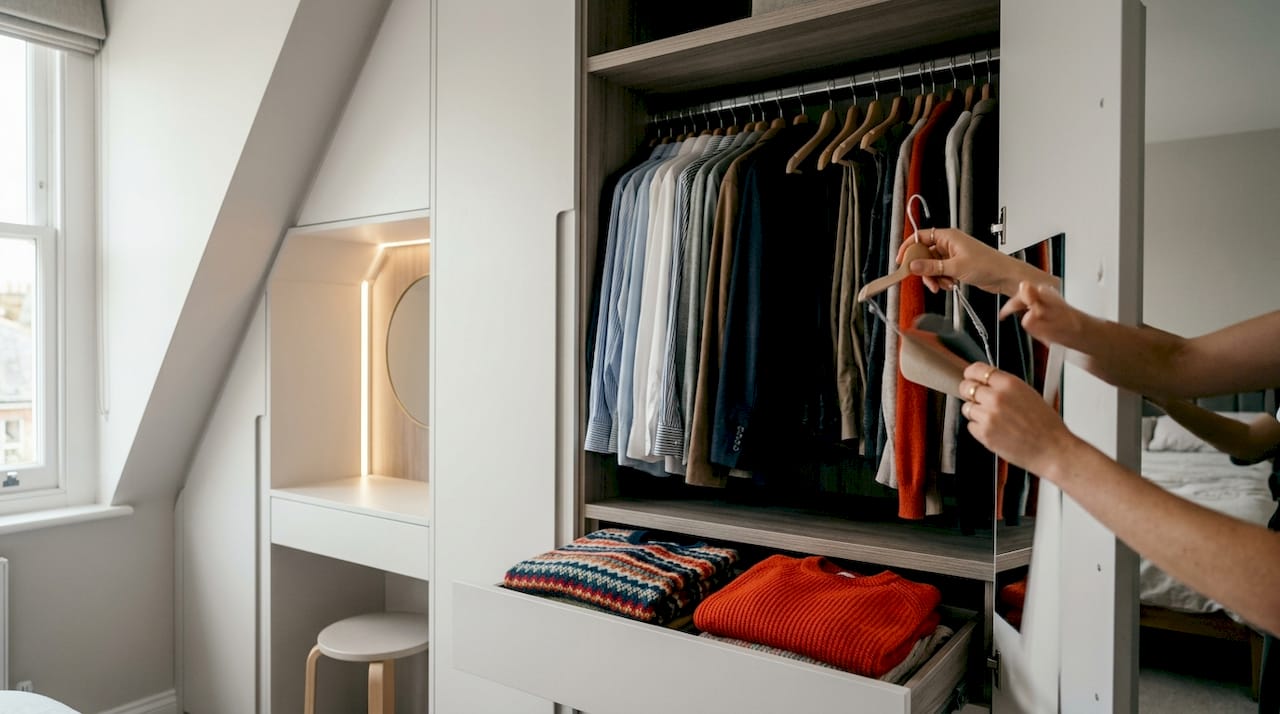
- Bespoke fitted wardrobes that combine hanging rails, shelving, drawers, and even a dressing table within a single floor-to-ceiling unit
- TV media walls that integrate storage, cable management, and display space into one built-in structure
Bespoke fitted wardrobes deserve particular attention here. A standard freestanding wardrobe leaves gaps above, below, and at the sides. A fitted wardrobe uses every millimetre from floor to ceiling and wall to wall, which is why the storage gain is so significant in rooms where floor space is limited.
Furniture lifted off the floor on visible legs prevents the visual weight of solid bases from making a room feel smaller and cramped. This is a detail that separates well-designed small rooms from ones that feel suffocating despite being tidy.
Pro Tip: Choose sofas, beds, and side tables with slender, visible legs wherever possible. The floor space you can see beneath a piece of furniture reads as usable space to the eye, making the room feel larger even when the footprint is identical.
2. How can vertical storage solutions enhance space efficiency?
Most homeowners think horizontally. The ceiling is where the real opportunity lies. Floor-to-ceiling shelving draws the eye upward, creating a sense of volume and height that makes narrow rooms feel significantly larger. That visual effect is not a trick. It is a well-documented principle in residential design.
Vertical storage options worth considering include:
- Floor-to-ceiling fitted wardrobes in bedrooms, hallways, and loft conversions
- Wall-mounted cabinets in kitchens and bathrooms that free up worktop and floor space
- Over-door organisers for shoes, cleaning supplies, or pantry items
- Tall, narrow shelving units in living rooms for books, plants, and display items
- Custom wardrobes designed for high ceilings, which are common in Victorian and Edwardian properties across Chelsea, Wimbledon, and Chiswick
In London homes specifically, ceiling heights in period properties often reach 2.7 metres or higher. A standard wardrobe wastes the top 40–60 centimetres of that height. A custom wardrobe for high ceilings captures that space for seasonal storage, bedding, or luggage, which removes those items from under beds and from the backs of chairs.
Small bathrooms present a particular challenge. Bathrooms in compact flats average only 35–45 square feet, which makes floor-based storage almost impossible. Vertical wall storage and over-door organisers are not optional in these rooms. They are the only workable solution.
For renters who cannot fix permanent shelving to walls, freestanding tall bookcases and tension-rod over-door systems provide the same vertical benefit without requiring a landlord’s permission.
Pro Tip: If you are renting in Putney, Ealing, or Hammersmith and cannot install fixed shelving, use a tall freestanding bookcase pushed flush against the wall. Add museum putty to the base for stability. You get the vertical storage benefit without a single screw in the plaster.
3. What zoning strategies work best for open-plan living?
Zoning is the practice of dividing a single open space into distinct functional areas without building walls. It is the defining skill of open-plan living, and most homeowners do it poorly by default.
The most reliable zoning methods are:
- Rugs placed to define a seating area, a dining area, or a workspace within the same room
- Lighting used at different heights and intensities to signal different zones (a pendant over a dining table, a floor lamp beside a reading chair)
- Furniture placement that creates natural boundaries, such as a sofa facing away from a kitchen to signal the end of the cooking zone
- Bespoke media walls that act as a visual anchor for the living area and separate it from an adjacent dining or workspace
Zoning using rugs or lighting to divide open-plan areas helps maintain flow while defining activity zones like work or socialising. The key is that each zone feels intentional rather than accidental.
Pathway width is a practical constraint that most homeowners overlook. Designers recommend keeping internal pathways between 30 and 36 inches wide to maintain clear movement and prevent bottlenecks. That measurement should be your first check before placing any large piece of furniture. If a sofa or cabinet narrows a corridor below 30 inches, the room will feel cramped regardless of how well it is decorated.
A bespoke media wall serves a dual purpose in open-plan spaces. It provides a focal point for the living zone and integrates storage that would otherwise require additional freestanding units. In homes across Fulham, Barnes, and Twickenham, we see media walls used to separate living areas from home offices without sacrificing light or airflow.
Pro Tip: Use a rug that is large enough for all four legs of your sofa to sit on it. A rug that is too small floats in the middle of the room and makes the space feel disjointed rather than defined.
4. What organisational habits support long-term space optimisation?
Good furniture and clever zoning only hold their value if you maintain them. Clutter creep is the gradual accumulation of items that individually seem harmless but collectively overwhelm a space within weeks.
The most effective habits for preventing clutter creep are:
- A weekly 10-minute reset, which is the most effective frequency for preventing gradual accumulation in small living spaces. Ten minutes is short enough to do consistently and long enough to catch problems before they compound.
- The three-pile system when editing possessions: keep, donate, and evaluate. The evaluate box is the critical one. If it remains unopened after 90 days, donate the contents without opening it. Emotional attachment to items you have not touched in three months is the primary driver of unnecessary clutter.
- The one-in-one-out rule, which states that every new item entering the home requires one item to leave. This rule only works when paired with a designated exit point for discarded items, such as a bag by the front door labelled for charity. Without a physical exit point, the discarded item simply migrates to another shelf.
The three-pile system works because it removes the pressure of making a permanent decision in the moment. You are not deciding to throw something away. You are deciding to evaluate it later. The 90-day rule then makes the final decision for you based on actual behaviour rather than intention.
“Before buying any storage products, edit your possessions down to what you use weekly. Storage products bought before decluttering simply give clutter a more organised home.”
This sequence matters. Buying more storage before decluttering is the most common mistake homeowners make. The correct order is always: edit first, then store.
5. How can lighting and surface choices create the illusion of more space?
Lighting is the most underused tool in residential space design. Most homeowners rely on a single overhead light source, which flattens a room and makes it feel smaller than it is.
Layered lighting at multiple heights, including table lamps, floor lamps, and wall sconces, visually expands small rooms and improves atmosphere. Each light source creates a pocket of warmth that draws the eye to different parts of the room, making the space feel varied and larger. A room lit only from above has no depth.
Surface choices reinforce the effect. Mirrors and glossy finishes bounce light around and double the perceived space. A large mirror positioned opposite a window reflects natural light back into the room throughout the day. Glossy cabinet fronts in a fitted wardrobe or media wall serve the same function on a smaller scale.
Practical surface and lighting choices that work:
- Position mirrors opposite windows, not beside them, to maximise the reflection of natural light
- Choose light-coloured or neutral fabrics for sofas and curtains to avoid absorbing light
- Avoid dark matte paint on walls in small rooms. It absorbs light and compresses the visual boundary of the space
- Use warm white bulbs (2700K–3000K) in living areas for a welcoming atmosphere that reads as spacious rather than clinical
- Select glossy or satin finishes for fitted furniture fronts to reflect light rather than absorb it
The combination of layered lighting and reflective surfaces works particularly well in the north-facing rooms common in London terraced houses, where natural light is limited for much of the year. A well-placed mirror and a floor lamp can make a north-facing bedroom in Kingston or New Malden feel genuinely bright rather than perpetually dim.
Key takeaways
Bespoke fitted wardrobes, vertical storage, and deliberate zoning are the three most effective living space optimisation ideas for London homeowners and renters in 2026.
| Point | Details |
|---|---|
| Vertical storage is the biggest win | Floor-to-ceiling fitted wardrobes and shelving reclaim space that standard furniture ignores. |
| Multi-functional furniture earns its place | Every piece should serve at least two purposes; bespoke media walls and fitted wardrobes lead this category. |
| Zoning defines function without walls | Rugs, lighting, and furniture placement create distinct areas while keeping open-plan spaces feeling open. |
| Declutter before you buy storage | Edit possessions using the three-pile system before purchasing any organisational products. |
| Lighting and surfaces change perception | Layered lighting and reflective surfaces make rooms feel larger without changing their dimensions. |
What I have learned from fitting wardrobes in London homes
Working with homeowners across Richmond, Wimbledon, Chelsea, and Putney has taught me one thing above all else: the biggest space problems are almost never caused by a lack of square footage. They are caused by furniture that does not fit the room properly.
A Victorian terrace in Barnes with 2.8-metre ceilings and a standard 1.9-metre wardrobe is wasting nearly a metre of vertical space in the most used room of the house. That metre, when captured by a bespoke fitted wardrobe, typically holds two suitcases, a set of bedding, and a season’s worth of clothing that would otherwise live in bags under the bed or on top of the wardrobe in precarious stacks.
Media walls are the other area where I see the greatest transformation. Homeowners in Chiswick and Hammersmith often come to us with a television on a freestanding unit surrounded by cables, a separate bookcase, and a console table that serves no clear purpose. A single bespoke media wall replaces all three, integrates the cables, and frees up a metre of floor space on either side. The room does not get bigger. It just stops fighting itself.
My honest recommendation for anyone in a London borough with awkward proportions, a loft conversion, or an under-stairs alcove: do not buy off-the-shelf storage and hope it fits. The gaps it leaves are where clutter lives. A bespoke solution designed to your exact dimensions costs more upfront but pays back in usable space and daily ease within the first month.
— Aureliu
Bespoke fitted wardrobes and media walls from Finest Furniture Studio
Finest Furniture Studio designs and installs bespoke fitted wardrobes and TV media walls for homeowners and renters across Richmond, Wimbledon, Chelsea, Putney, Fulham, Chiswick, Ealing, Twickenham, Barnes, Hammersmith, and surrounding London districts. Every piece is built to your exact room dimensions, including loft conversions, under-stairs alcoves, and high-ceiling Victorian properties.
Fitting is completed within 7–12 days, and every installation carries a 10-year quality guarantee. We also remove and dispose of your old wardrobe at no extra charge. Our media wall with storage solutions integrate cable management, shelving, and display space into a single built-in unit that replaces multiple freestanding pieces. Contact us for a free design visit. Call or WhatsApp 07468 150807, or visit us at 124 City Road, Kemp House, London, EC1V 2NX.
FAQ
What is living space optimisation?
Living space optimisation is the practice of designing and organising a home to maximise usable area, improve functionality, and create a visually open environment. It combines furniture selection, storage planning, and maintenance habits.
How do fitted wardrobes help optimise a small bedroom?
Fitted wardrobes use the full height and width of a wall, eliminating the wasted space above and beside freestanding units. They provide significantly more wardrobe storage within the same footprint.
What is the best way to declutter a small home?
Use the three-pile system: keep, donate, and evaluate. Place items in the evaluate pile and donate anything that remains untouched after 90 days. Always declutter before buying new storage products.
How wide should pathways be in a living room?
Designers recommend keeping internal pathways between 30 and 36 inches wide. Narrower corridors create bottlenecks and make a room feel cramped regardless of its actual size.
Can renters use vertical storage without damaging walls?
Yes. Freestanding tall bookcases, tension-rod over-door organisers, and modular shelving units provide the same vertical storage benefit without requiring wall fixings. These are practical small space organisation tips for anyone in rented accommodation.