
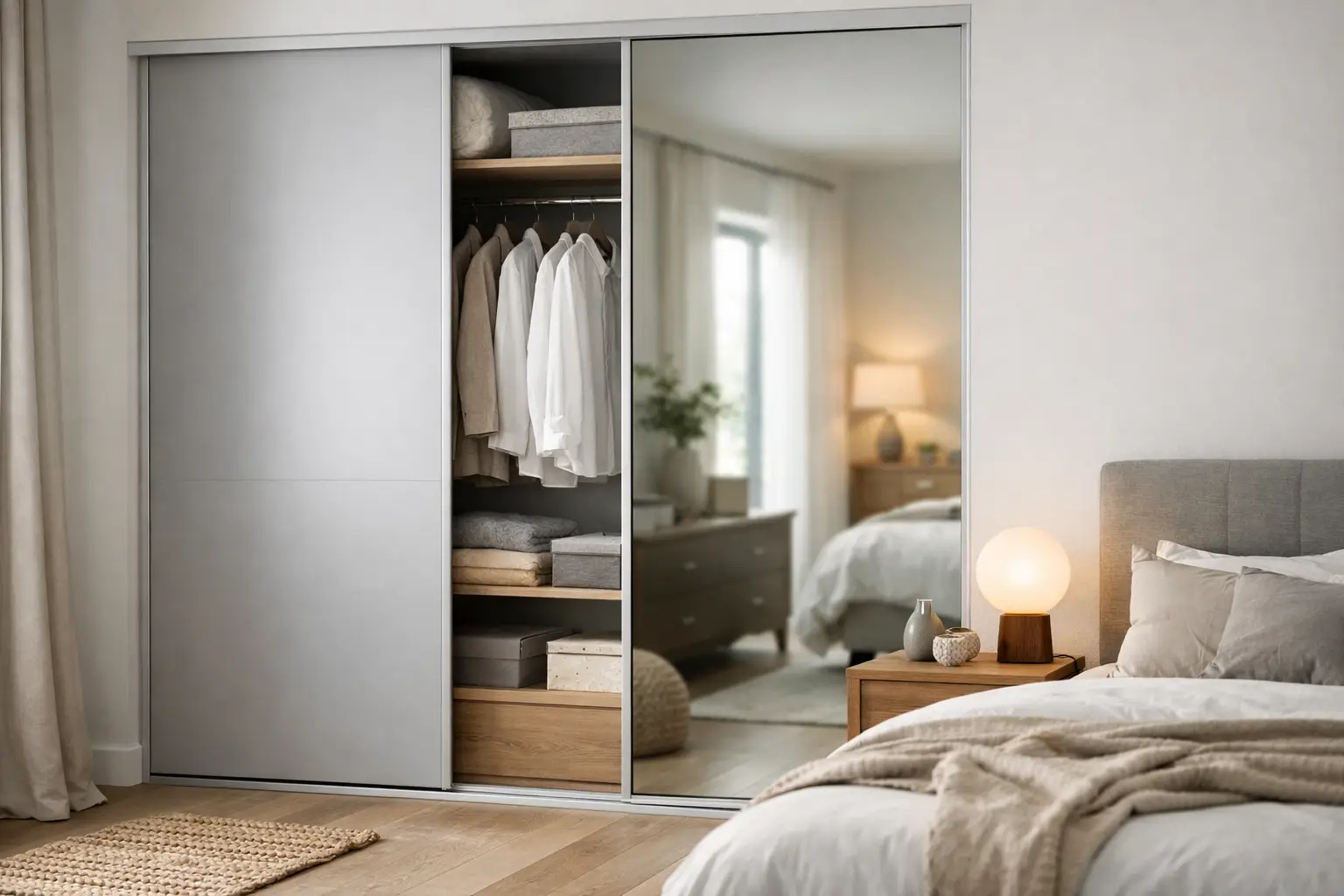
A bedroom can look generous on a floor plan, then feel unexpectedly tight once a bed, bedside tables and a wardrobe are in place. The question, do sliding wardrobes save space, matters most where every clear walkway counts – from a Victorian bedroom in Wimbledon to a compact London new-build. The short answer is yes, but the real benefit comes from a well-designed fitted wardrobe rather than sliding doors alone.
Sliding doors remove the need for a door to swing into the room. Combined with a made-to-measure interior that uses the full height and width of a wall, they can turn an awkward storage area into a calm, considered feature of the bedroom.
Do sliding wardrobes save space compared with hinged doors?
The clearest saving is at the front of the wardrobe. A hinged wardrobe door needs a clear arc in which to open, usually taking up around 50 to 60cm of floor space in front of the unit. This can make furniture placement difficult in a narrow bedroom, particularly when the wardrobe sits opposite the bed.
Sliding doors move sideways along their track instead. You can position a bed, chest of drawers or dressing table closer to the wardrobe while retaining comfortable access to clothing. That reclaimed floor area is not always dramatic in square metres, but it often makes the difference between a room that feels constrained and one that works naturally every day.
There is a second, less obvious advantage. A fitted sliding wardrobe can run from wall to wall and floor to ceiling, avoiding the wasted strips of space around a freestanding piece. Those gaps tend to collect dust, hide clutter and interrupt the visual line of the room. A tailored installation makes the storage look intentional while putting every available centimetre to work.
The space saving is about access, not a smaller wardrobe
Sliding wardrobes do not make the wardrobe itself shallower. In fact, a practical hanging section still needs sufficient depth for clothes to sit without being crushed by the doors. For most garments, this means allowing approximately 60cm internally, with overall depth adjusted for the door system and finish.
What sliding doors save is the clearance required in front of the wardrobe. If the room is so narrow that opening doors would block the route around the bed, sliding panels are usually the smarter choice. In a large principal bedroom with generous circulation, hinged doors may be equally practical and can offer a wider view of the entire wardrobe interior at once.
Where sliding wardrobes make the biggest difference
They are particularly effective in bedrooms where the layout has already been dictated by windows, radiators, chimney breasts or an ensuite door. Many period homes across London have characterful proportions but limited uninterrupted wall space. A bespoke wardrobe can be designed around these features rather than forcing the room to accommodate standard furniture.
In a loft conversion, sliding doors can also work beautifully beneath a sloping ceiling. The wardrobe is shaped to follow the roofline, making use of the lower area for drawers, shelving or seasonal storage. Rather than leaving an impractical void, the furniture gives the space a clear purpose.
For compact bedrooms, mirror or light-toned sliding doors can enhance the sense of openness as well. This is not a substitute for good planning, but it is a useful design tool. Large uninterrupted panels create a quieter visual finish than multiple handles and open door lines, helping the room feel less busy.
A fitted interior saves more space than the doors
The finest space-saving wardrobes are organised around the people using them. Doors are only the exterior. Behind them, the internal layout decides whether clothing is easy to find or simply packed into a larger cupboard.
A bespoke design can combine long hanging for dresses and coats with double hanging for shirts, blouses and trousers. Drawers keep smaller items contained, while adjustable shelves accommodate knitwear, bags and linen. Upper cupboards are ideal for suitcases, spare bedding and items used only occasionally.
This tailored approach can reduce the need for extra bedroom furniture. If jewellery, accessories, laundry, shoes and folded clothes each have a planned home within the wardrobe, you may no longer need a separate chest of drawers or bulky storage boxes under the bed. That is where a fitted solution can create a genuinely more spacious room.
It is worth thinking honestly about how you get dressed. A shared wardrobe often needs divided zones so that each person has a reliable area, not a collection of shelves claimed by whoever arrives first. A family bedroom may need lower drawers for children, or a combination of everyday hanging and accessible school-uniform storage. Good design reflects real routines, not just a neat showroom display.
The trade-offs to consider before choosing sliding doors
Sliding wardrobes are not automatically the best answer for every bedroom. Because one panel sits in front of another, you can normally access only part of the wardrobe at a time. This is rarely a problem with a thoughtfully divided interior, but it is worth considering if you want a fully open view while choosing outfits.
The track system also needs quality engineering and accurate installation. Poorly fitted doors can feel heavy, misalign over time or collect debris in the lower track. A well-made system should glide smoothly, close neatly and remain dependable with daily use. This is one area where materials, fittings and professional installation matter far more than a low headline price.
Door style affects the result too. Full-height mirrored panels are excellent for reflecting light and avoiding the need for a separate mirror, but they may not suit every interior. Matt lacquer, wood-effect finishes, tinted glass, fluted details and framed designs can create a warmer or more architectural look. The best choice should complement the bedroom, rather than dominate it.
Planning a sliding wardrobe for a smaller bedroom
Start with the room’s circulation rather than the wardrobe alone. Consider where the bedroom door opens, where you stand to make the bed, and how much room is needed to access drawers or an ensuite. A wardrobe that fits the wall but blocks daily movement is not a space-saving solution.
Next, decide what must live inside it. Count hanging clothes, shoes, bags and folded items before specifying shelves. This avoids a common mistake: choosing a beautiful exterior, then discovering that the interior is short of hanging space. Deep shelving can also become inefficient if it is not planned for bulky items, as smaller belongings disappear at the back.
Finally, use height properly. High-level storage is valuable in London homes, especially where bedrooms cannot accommodate extra cabinetry. Keep everyday clothes at comfortable reach and reserve the top section for seasonal pieces. Integrated lighting can be a worthwhile addition in darker rooms or deeper wardrobes, making the contents easier to see without adding a freestanding lamp.
When a sliding wardrobe will not be the right fit
If your priority is full, immediate access to every section of the wardrobe, hinged doors may suit you better. They are also a strong option for shallow alcoves where the additional depth of sliding tracks would compromise hanging space. In some traditional interiors, painted shaker-style hinged doors may better match existing joinery and architectural details.
Likewise, a walk-in wardrobe can be more effective where a separate dressing area is available. It offers generous visibility and can create a luxurious daily routine, although it requires sufficient room to justify the footprint. The right choice depends on the architecture of the home, the volume of belongings and the atmosphere you want to create.
For many homeowners, however, a bespoke sliding wardrobe offers the best balance of elegance, capacity and clear floor space. At Finest Furniture Studio, each design is shaped around the room and the way it will be used, with details considered before manufacturing begins. A free design visit can turn an awkward wall or overcrowded bedroom into storage that feels quietly effortless – and leaves more room to enjoy the home around it.