








Table of Contents
- What Defines Modern Fitted Wardrobe Styles in 2026
- 1. Warm Neutral Colour Palettes and Earthy Tones
- 2. Fluted Door Designs and Textured Finishes
- 3. Seamless Wall-to-Wall and Floor-to-Ceiling Integration
- Sliding vs Hinged Wardrobe Doors: Which Suits Your Space
- Fitted Wardrobe Interior Layout Ideas for Maximum Storage
- Fitted Wardrobe Cost UK 2026: Budget Planning and Value
- Eco-Friendly Materials and Sustainable Sourcing
Last Updated: August 5, 2026
What Defines Modern Fitted Wardrobe Styles in 2026
Modern fitted wardrobe styles in 2026 represent a shift toward quiet luxury and bespoke functionality. These are architectural elements that define how your bedroom functions and feels. The difference between a fitted wardrobe and furniture is precision: every millimetre matters, from floor-to-ceiling integration to internal configuration that transforms chaos into order.
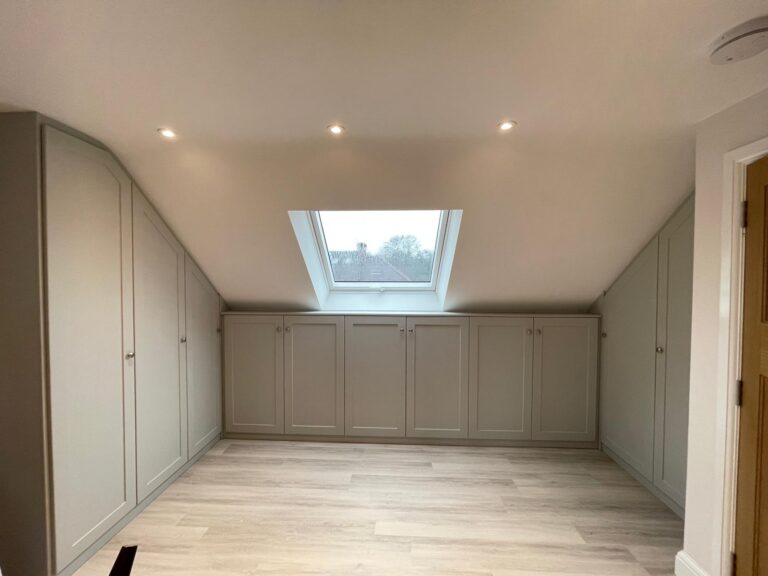
Today’s homeowners reject one-size-fits-all approaches. They want wardrobes solving specific problems, awkward alcoves, sloping ceilings, understairs storage, while delivering luxury hotel bedroom aesthetics. This means soft-close hinges, handle-less push-to-open mechanisms, and layouts engineered around how you actually live.
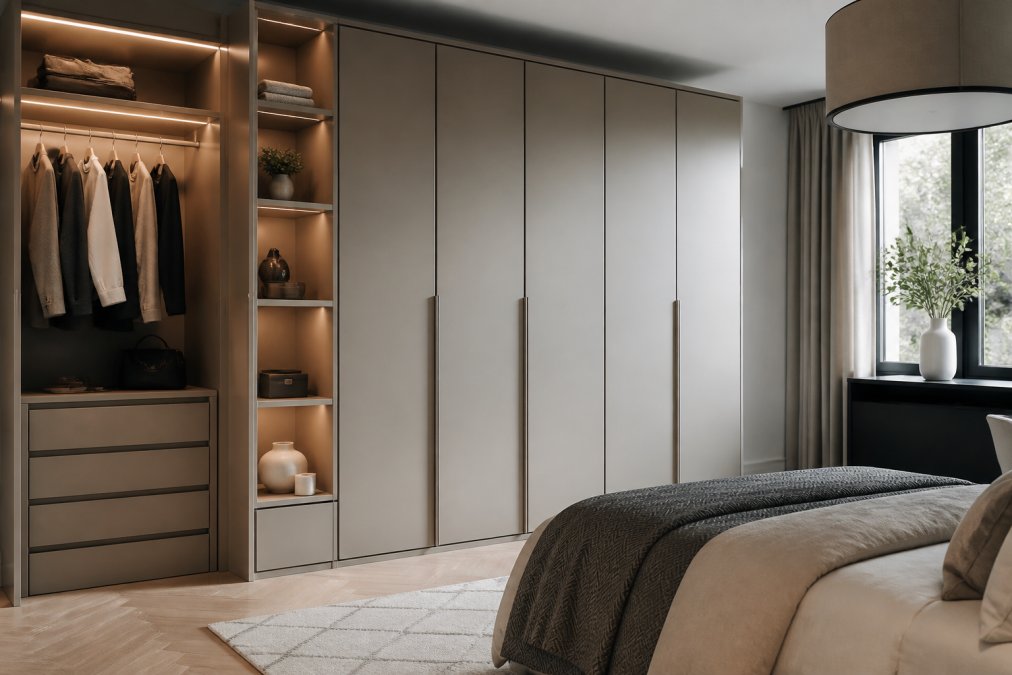
The 2026 aesthetic leans into minimalist design with tactile materials. Matte finishes dominate. Fluted panels and subtle textures replace bland surfaces. Warm neutrals, greige, soft taupe, and warm grey create timeless backdrops. Modern fitted wardrobes prioritize seamless integration: the wardrobe should feel like part of the room’s architecture, not an afterthought.
This guide covers seven defining trends reshaping bedroom storage in 2026, from material choices to door mechanisms to cost-conscious design. Whether maximizing a compact London flat or transforming an underutilized alcove, understanding these trends helps you make decisions that add genuine value.
1. Warm Neutral Colour Palettes and Earthy Tones
The colour palette for modern fitted wardrobes has shifted decisively away from stark whites and blacks. Warm neutrals, greige, soft taupe, warm grey, and soft sage dominate 2026 bedroom design.
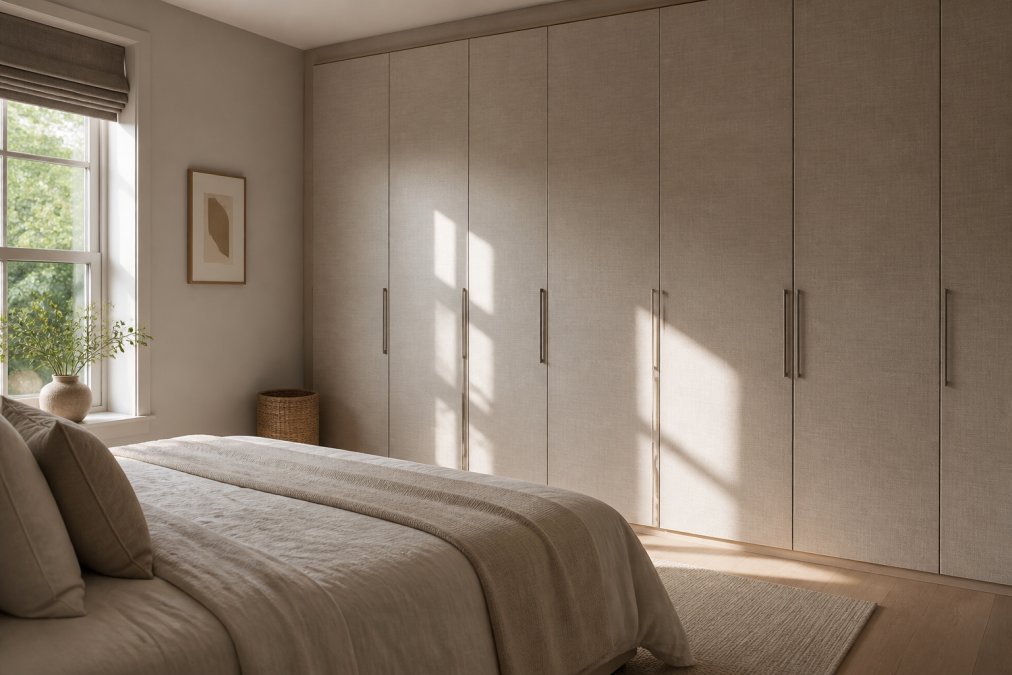
Warm neutrals create visual continuity with bedroom walls, making the wardrobe feel integrated rather than imposed. They also hide dust and fingerprints better than white, reducing maintenance. Greige wardrobes paired with white walls create the illusion of more space, the wardrobe recedes visually while remaining functional.
Earthy tones extend to internal finishes. Natural wood tones, walnut, oak, warm-toned veneer, are visible when doors open, creating sensory warmth. Heritage colours like soft sage, dusty blue, and warm terracotta appeal to homeowners in period properties wanting modern functionality without sacrificing character.
Warm neutrals age gracefully. A greige wardrobe looks sophisticated in 2035 as it does today, whereas trend-driven colours risk feeling dated within five years. This matters for a 10+ year investment in bespoke joinery.
2. Fluted Door Designs and Textured Finishes
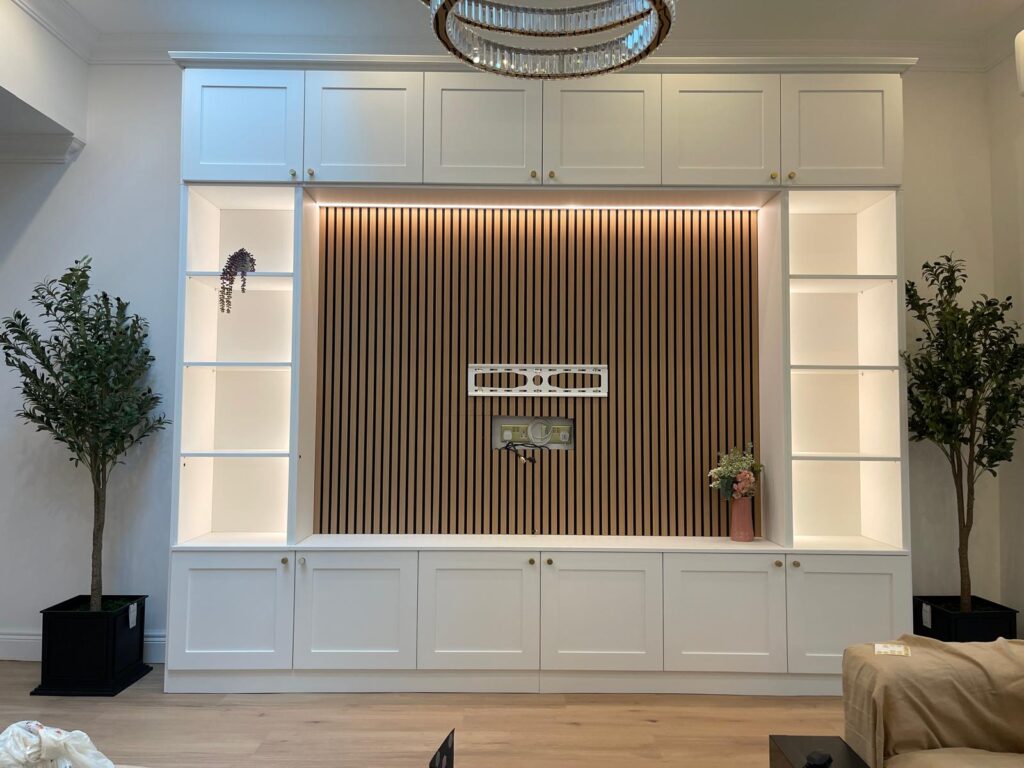
Fluted panels represent the biggest visual shift in fitted wardrobe design for 2026. Rather than smooth, flat surfaces, modern doors feature subtle vertical grooves that catch light and create depth. This supports the contemporary push-to-open mechanism trend by making handles unnecessary.
Fluted designs vary in depth and spacing. Fine fluting maintains minimalist aesthetics while adding tactile interest. Wider fluting creates bolder visual impact in larger bedrooms. Proportion matters: fluting depth should relate to room scale and ceiling height.
Beyond fluting, textured finishes gain momentum. Soft-touch matte paint creates a velvety surface that feels premium and resists fingerprints. Lacquered finishes offer depth and durability. Veneer with natural wood grain provides warmth, particularly in contemporary heritage interpretations.
Texture humanizes flat surfaces that can feel cold and institutional. It also affects how light moves through the room, fluted panels create subtle shadow lines adding visual interest as natural light shifts throughout the day.
Maintenance differs by finish. Matte finishes require gentle cleaning to avoid streaking. Lacquered finishes are more forgiving but show dust visibly. Veneer demands care around moisture and temperature fluctuations, particularly in London’s variable climate.
3. Seamless Wall-to-Wall and Floor-to-Ceiling Integration
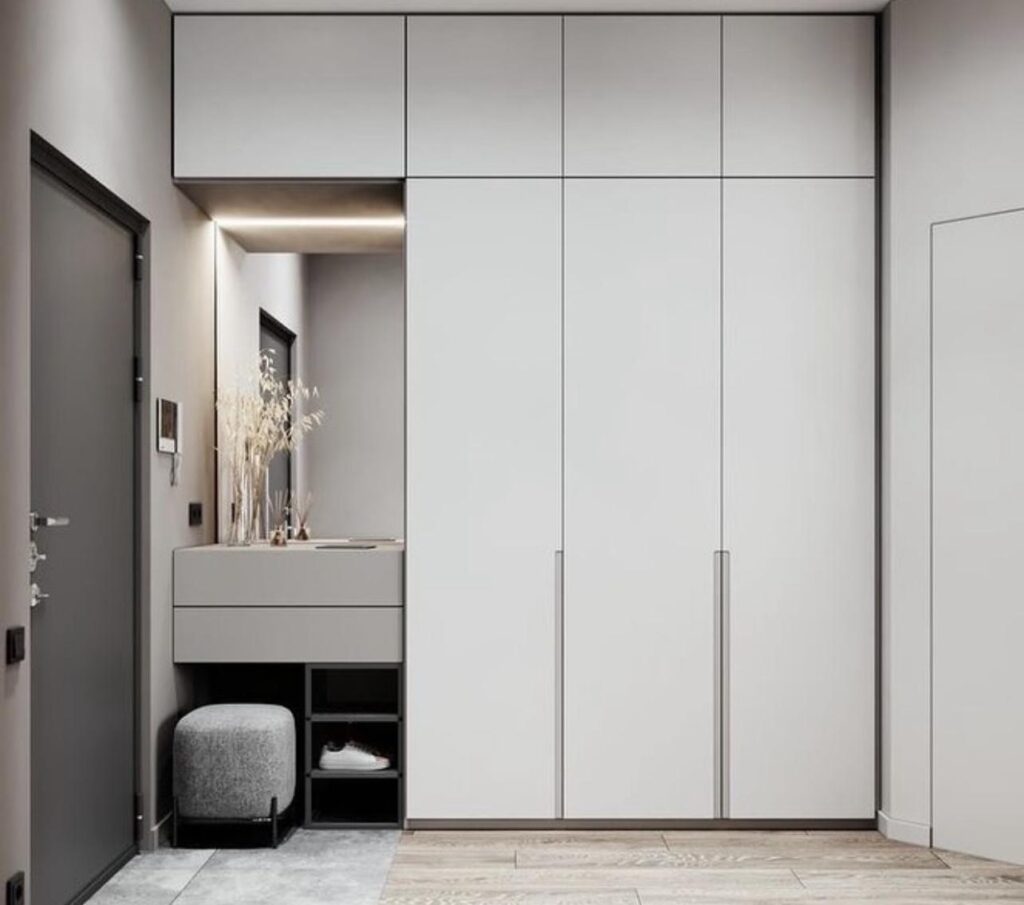
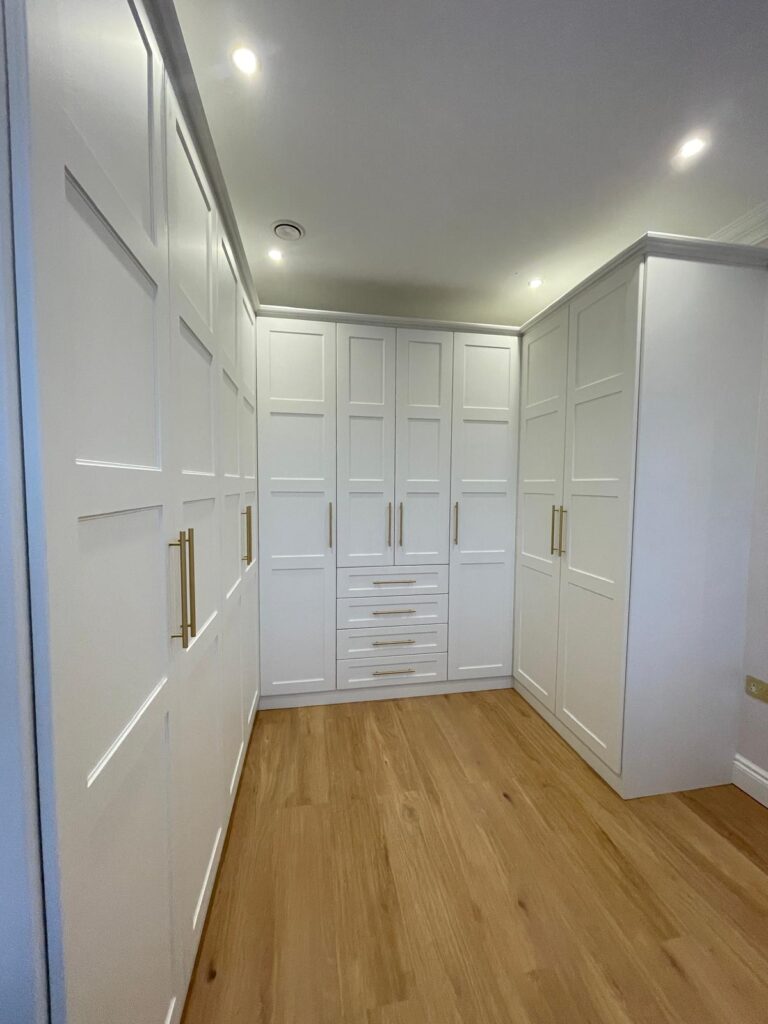
The defining characteristic of luxury fitted wardrobes in 2026 is invisibility. The wardrobe should integrate completely with the room’s architecture, feeling like part of the structure rather than a separate element. This means floor-to-ceiling height, wall-to-wall width, and seamless transition with surrounding surfaces.
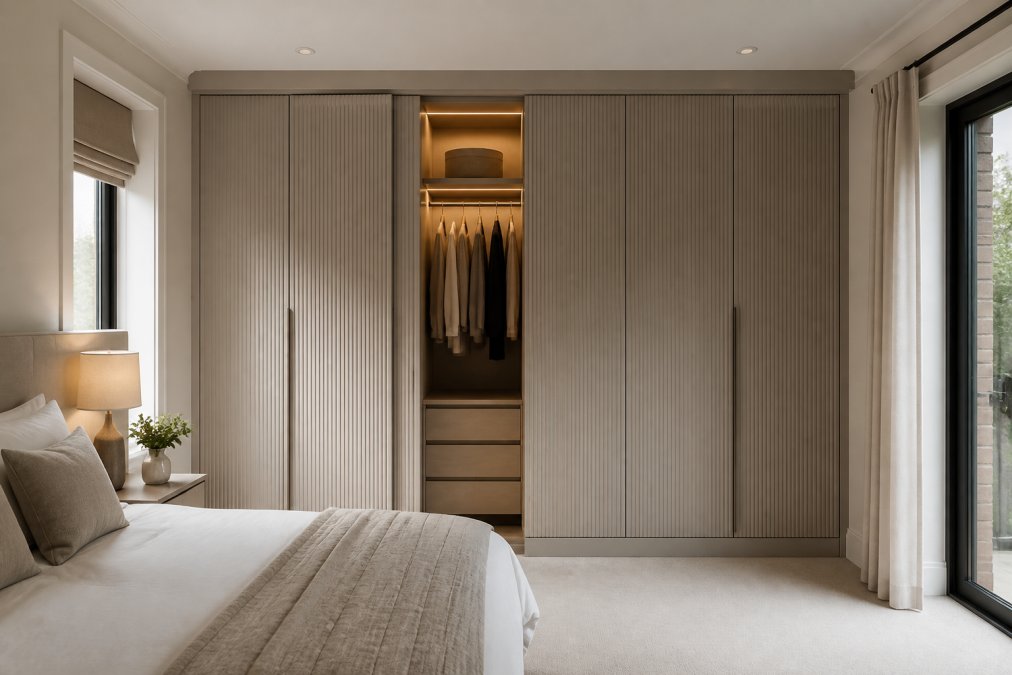
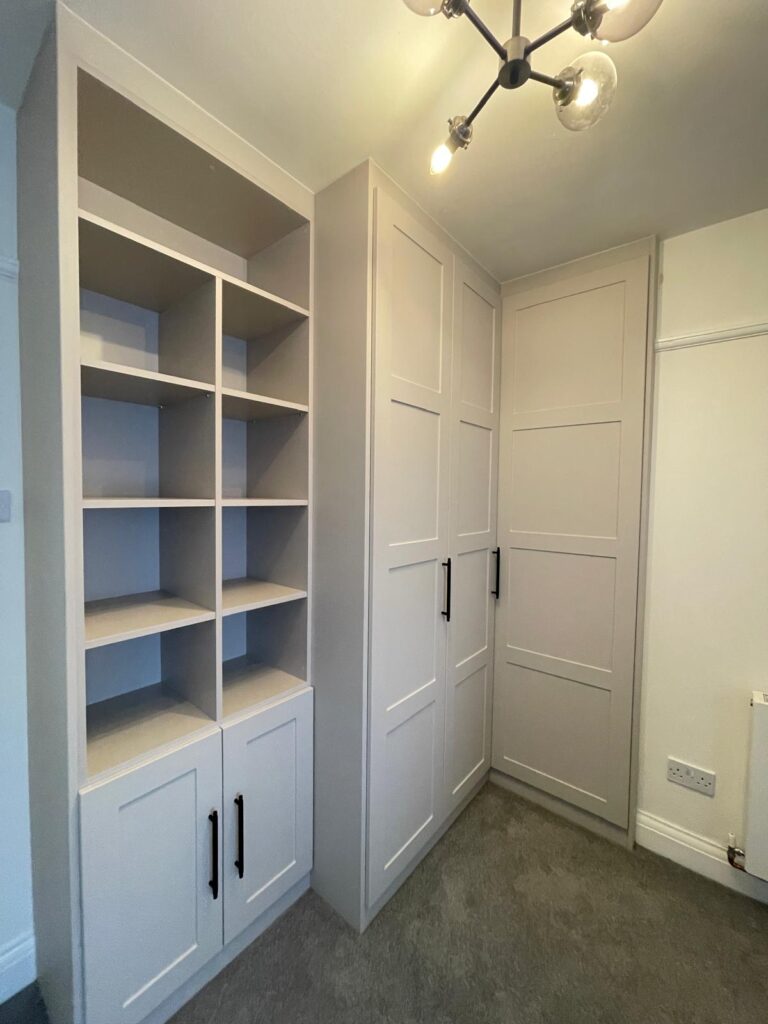
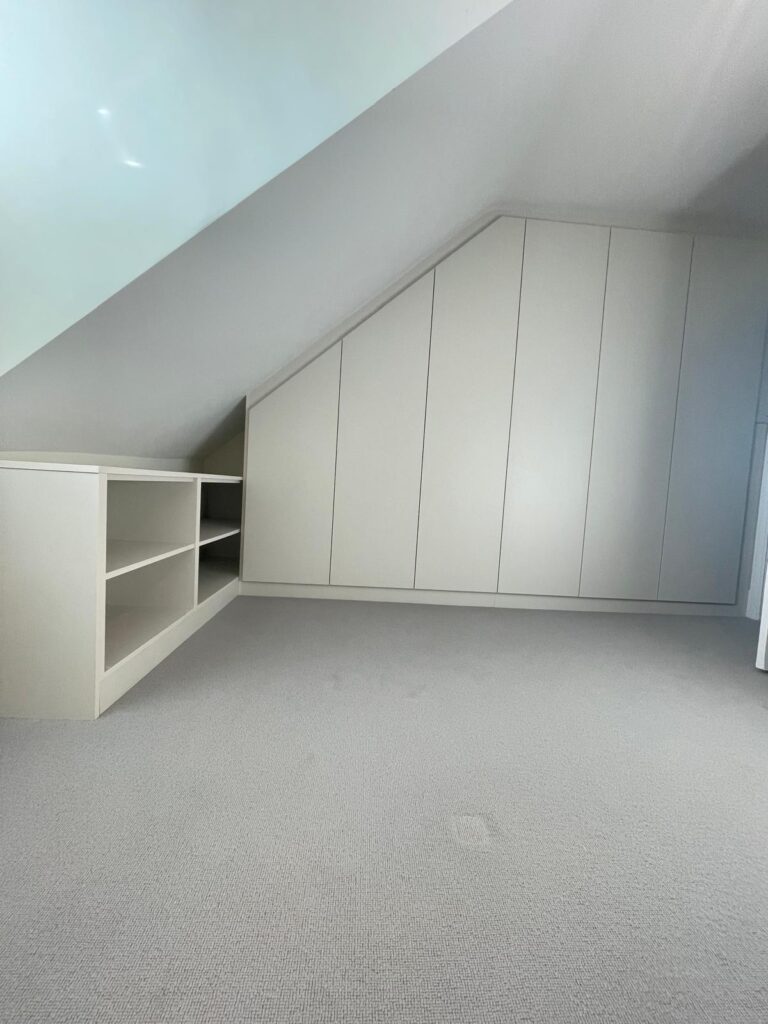
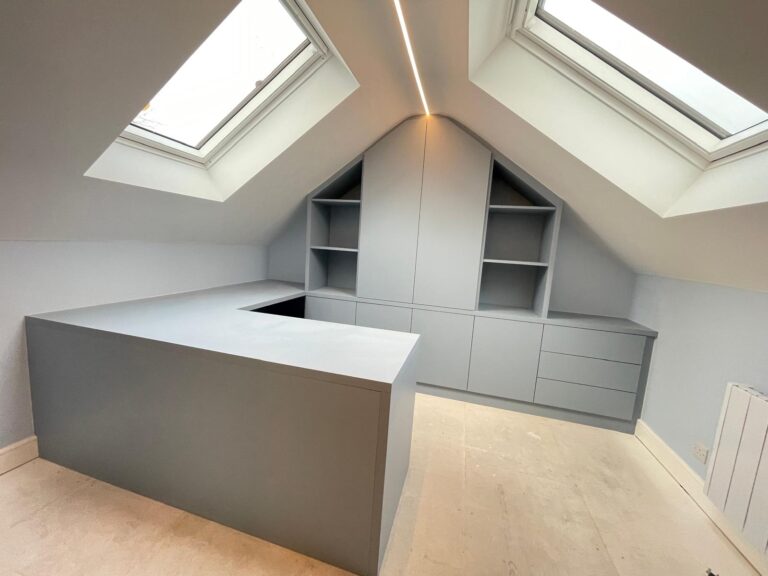
Achieving seamless integration requires precision. The wardrobe carcass must be custom-built to match exact room dimensions, accounting for sloping ceilings, uneven walls, and architectural irregularities. Most rooms aren’t perfectly rectangular; bespoke joinery accommodates these realities.
Skirting board integration is critical. Rather than leaving a gap between wardrobe base and floor, modern designs either incorporate matching skirting or eliminate it entirely, creating clean lines from floor to ceiling.
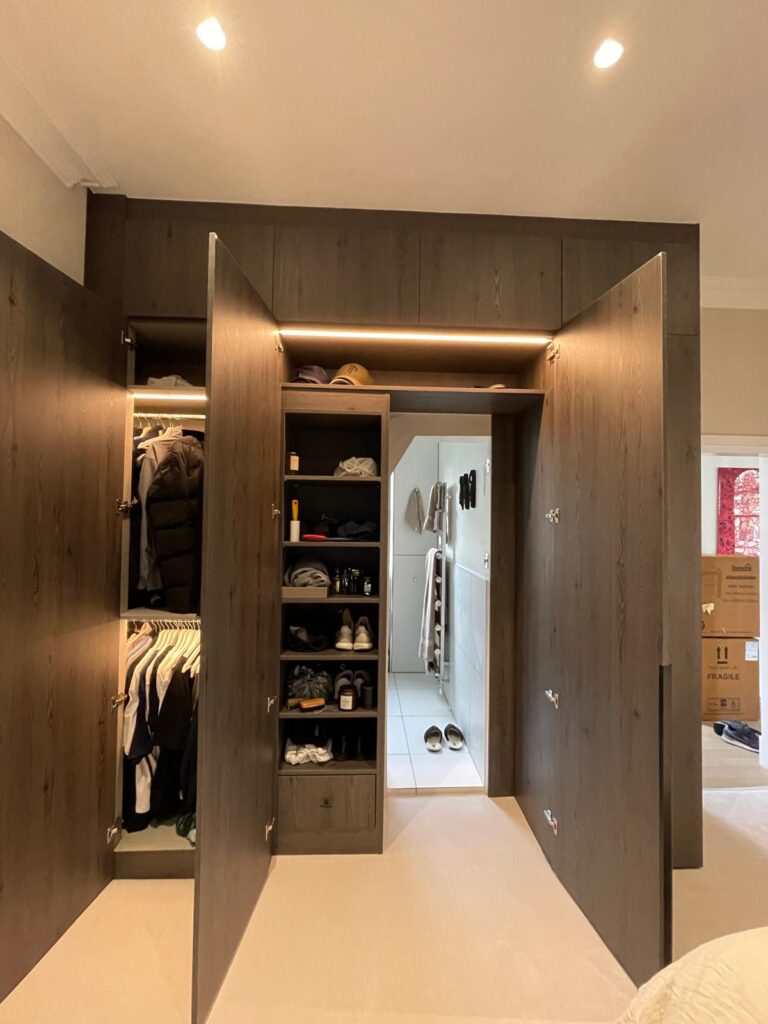
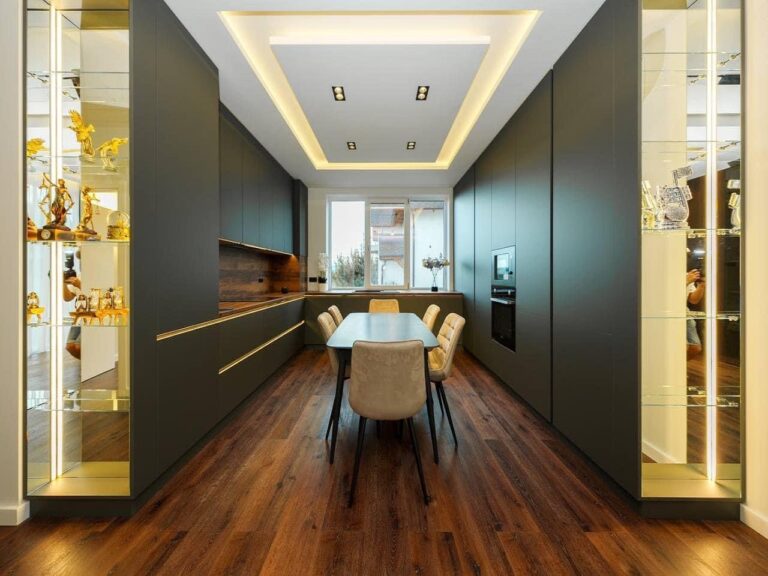
Lighting integration elevates the experience from functional to luxurious. Sensor-activated ambient lighting inside the wardrobe enables clear visibility without switching bedroom lights. LED strips hidden along shelving or above hanging rails provide soft illumination that’s practical and atmospheric.
Seamless integration optimizes space. A wall-to-wall wardrobe eliminates wasted corner space and creates visual continuity. In London’s compact properties, this is invaluable.
Sliding vs Hinged Wardrobe Doors: Which Suits Your Space
The door mechanism fundamentally affects how your bedroom functions. This isn’t purely aesthetic; it’s about daily usability, space efficiency, and long-term satisfaction.
Sliding doors save floor space, ideal for compact bedrooms or limited clearance. They operate on a track system requiring no swing radius, so furniture can position directly in front without obstruction. This matters in London flats where every square metre counts. Sliding doors create sleek, contemporary aesthetics aligning with 2026 minimalist trends.
The trade-off: sliding doors require track maintenance. Dust accumulates over time, and soft-close mechanisms need periodic adjustment. The visible track becomes part of the aesthetic.
Hinged doors offer traditional functionality and operate silently with quality soft-close hinges. They integrate seamlessly without visible hardware and feel more tactile and premium. However, they demand swing space, typically 60-90 centimetres of clear floor area.
In awkward spaces, understairs storage, alcoves, or rooms with furniture constraints, hinged doors prove impractical. Sliding doors become the only viable option. In spacious bedrooms with flexible arrangements, hinged doors offer superior functionality and durability.
Consider your daily routine. How often do you fully open the wardrobe? Do you need simultaneous access to both sides? In master bedrooms where both partners dress, sliding doors eliminate conflict. In single-occupancy rooms, hinged doors often feel more intuitive.
Quality matters enormously. Budget sliding door systems develop tracking issues within 2-3 years. Premium soft-close hinges last 15+ years. Invest in better hardware; cost differences translate directly to longevity.
Fitted Wardrobe Interior Layout Ideas for Maximum Storage
The wardrobe interior matters as much as the exterior. Modern fitted wardrobe styles prioritize internal configuration solving actual storage problems rather than following generic templates.
Start by auditing what you own. How many garments hang versus fold? How many shoes? Do you need jewellery storage, accessory trays, or tie racks? The wardrobe should be configured around your possessions and lifestyle.
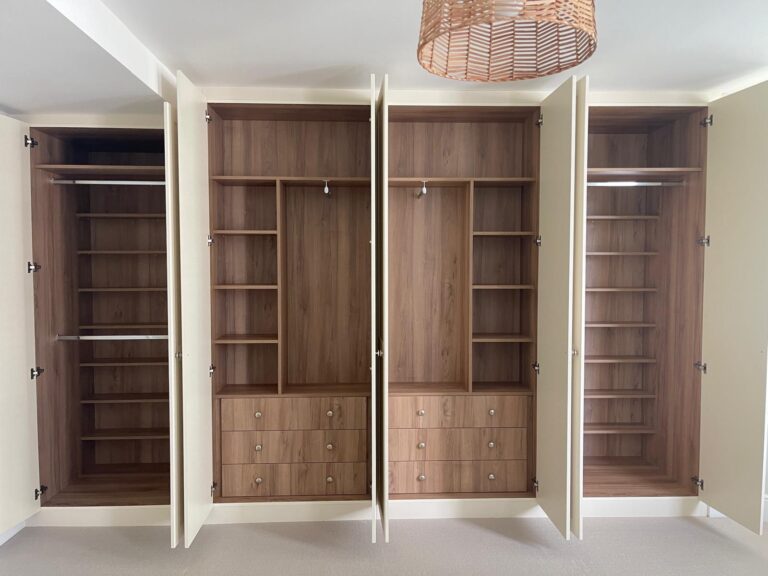
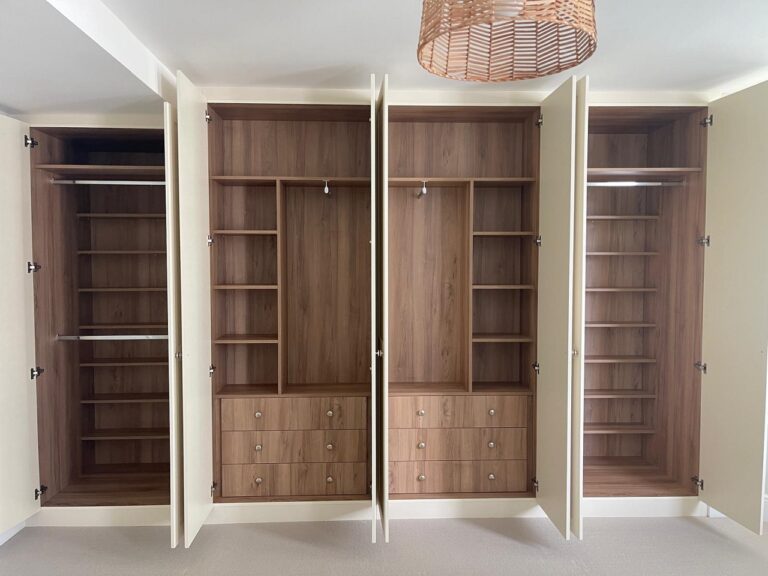
Hanging space typically occupies 40-60% of wardrobe volume. Divide into two zones: full-length for dresses and coats, and double-hanging for shirts and trousers. Height-adjustable rails allow reconfiguration as needs change. Some designs incorporate pull-down rails that lower to comfortable shoulder height, then retract.
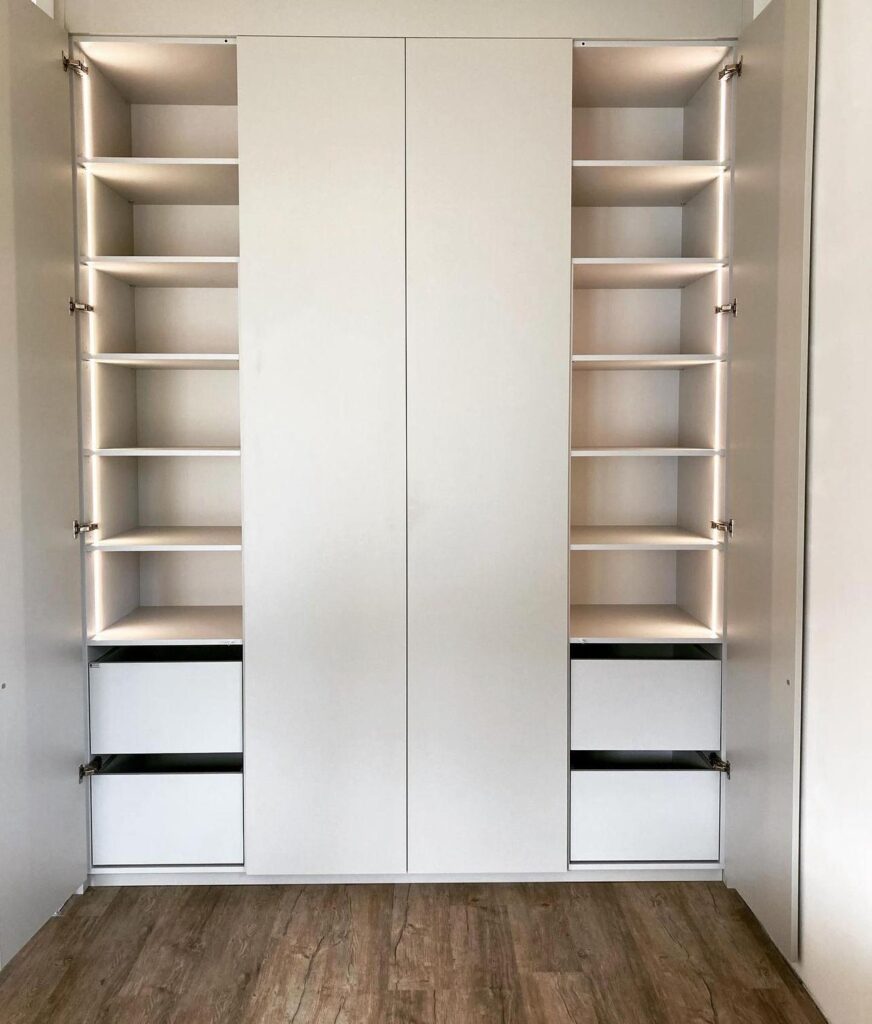
Shelving should be adjustable. Fixed shelves waste space because folded items vary in height. Adjustable shelving accommodates sweaters, jeans, and accessories with minimal wasted space. Open shelving at eye level creates visual interest and makes frequently-worn items immediately accessible.
Drawer configuration is where bespoke design proves its worth. Rather than generic drawer banks, modern wardrobes feature partitioned drawers with dividers for socks, underwear, and accessories. Some include pull-out trays for jewellery and watches. Soft-close drawer mechanisms are standard.
Shoe storage deserves attention. Dedicated shoe racks, pull-out shelves, or carousel systems maximize accessibility. Sloped shelves prevent sliding, and spacing accommodates everything from flats to boots.
Lighting inside the wardrobe is essential. Sensor-activated LED strips activate when you open the door, eliminating the need to locate items by feel. This transforms the morning routine, particularly in winter.
A well-organized internal space reduces daily decision fatigue and makes getting dressed feel intentional rather than chaotic.
| Storage Element | Best Practice | Why It Matters |
|---|---|---|
| Hanging space | Divide into full-length and double zones | Maximizes vertical space and prevents wrinkles |
| Shelving | Adjustable, not fixed | Accommodates varying folded item heights |
| Drawers | Partitioned with soft-close | Organizes small items and prevents damage |
| Shoe storage | Dedicated racks or carousels | Prevents shoe damage and improves accessibility |
| Lighting | Sensor-activated LED strips | Enables quick visual access and reduces clutter |
| Accessories | Dedicated trays and hooks | Keeps jewellery, scarves, and belts organized |
Fitted Wardrobe Cost UK 2026: Budget Planning and Value
Several factors drive cost. Size is primary: a floor-to-ceiling, wall-to-wall wardrobe costs considerably more than a single-wall solution. Material choice matters, solid wood veneer costs more than painted MDF, and premium finishes exceed standard options. Internal configuration adds cost; each additional shelf, drawer, or specialized storage element increases price. Installation complexity also factors in: accessing awkward spaces or fitting into listed properties increases labour costs.
The budget-friendly approach involves prioritizing ruthlessly. A painted MDF wardrobe in warm neutral finish with straightforward internal layout and hinged doors costs less than walnut-veneered designs with integrated lighting and sliding doors. Both solve storage problems; they differ in longevity and aesthetic refinement.
Mid-range options balance cost and quality. Premium painted finishes, adjustable shelving, soft-close mechanisms, and professional installation fall into this category. Most homeowners find this tier offers genuine value; the wardrobe functions flawlessly for 10-15 years.
Premium options incorporate luxury details: integrated lighting, bespoke hardware, rare wood veneers, and complex internal configurations. These wardrobes feel like home investments and tend to retain value better if you sell.
Consider the timeline. Bespoke wardrobes take 8-12 weeks from design to installation. Budget options install faster but may require replacement within 5-7 years. A more expensive wardrobe installed once beats cheaper replacements twice.
Warranty matters more than upfront price. A 10-year warranty indicates manufacturer confidence in durability. If the wardrobe fails within that period, the manufacturer replaces components at no cost.
A well-designed fitted wardrobe adds 3-5% to property value in London’s market. Beyond resale, daily benefits, getting dressed faster, reducing clutter, maximizing awkward spaces, justify investment for most homeowners.
Eco-Friendly Materials and Sustainable Sourcing
Sustainability in fitted wardrobes has moved from niche concern to mainstream expectation. Homeowners increasingly ask where materials originate and whether manufacturing practices align with environmental values.
FSC-certified timber represents the baseline for responsible sourcing. FSC (Forest Stewardship Council) certification ensures timber comes from sustainably managed forests where harvesting doesn’t exceed growth rates.
UK-sourced timber is gaining popularity. British woodland, oak, ash, walnut, provides high-quality material while reducing transportation emissions. Some bespoke wardrobe makers partner directly with UK woodland owners, creating transparent supply chains.
Water-based paints contain lower volatile organic compounds (VOCs) than solvent-based alternatives, reducing air pollution. Natural oil finishes on wood veneers are increasingly available and provide excellent durability with minimal chemical content.
MDF (medium-density fibreboard) presents a sustainability paradox. It’s manufactured from wood waste and sawdust, recycling discarded materials. However, binding agents typically include formaldehyde-based resins. Low-formaldehyde or formaldehyde-free MDF exists but costs more.
The practical sustainability question: how long will the wardrobe last? A cheap wardrobe replaced every 5 years generates more waste than an expensive one lasting 20 years. Investing in quality bespoke joinery is often more sustainable than repeatedly replacing budget alternatives.
Transportation and installation factor into environmental impact. Local manufacturing and installation reduce carbon emissions. Bespoke makers based in London or the South East eliminate long-distance transport.
Modern fitted wardrobe styles in 2026 represent a convergence of aesthetic refinement, functional intelligence, and sustainable thinking. The best wardrobes are designed precisely for how you live, built to last decades, and integrated seamlessly into your home.
If you’re considering a fitted wardrobe for an awkward space, complete bedroom transformation, or a move requiring maximum storage efficiency, the right design partner matters. Finest Furniture Studio specializes in custom solutions maximizing organization and style, even in challenging spaces like understairs storage and sloping ceilings. With a 10-year warranty on wardrobes, transparent pricing with no hidden fees, and a complimentary design visit, you can explore options without commitment. Book a free design visit to discuss your specific space and requirements.
Frequently Asked Questions
What are the fitted wardrobe trends for 2026?
Modern fitted wardrobe styles in 2026 focus on warm neutral colour palettes, earthy tones, fluted door designs, and seamless wall-to-wall integration. Quiet luxury aesthetics dominate, with emphasis on minimalist handle-less push-to-open mechanisms, integrated ambient and sensor-activated lighting, and multifunctional storage solutions. Contemporary designs prioritise space optimisation and bespoke joinery that adapts to awkward spaces like alcoves and sloping ceilings.
How much do modern fitted wardrobes cost in the UK?
Fitted wardrobe pricing in the UK varies significantly based on size, materials, internal configuration, and installation complexity. Budget-friendly options start from a few hundred pounds for made-to-measure flat-pack solutions, while premium bespoke designs can cost considerably more. For an accurate quote tailored to your space and requirements, contact Finest Furniture Studio for a free design visit with transparent, upfront pricing and no hidden fees.
Should I choose sliding or hinged wardrobe doors?
Sliding doors save floor space and suit smaller bedrooms or contemporary aesthetics, creating a sleek, seamless look. Hinged doors offer easier access to the full wardrobe depth and work well in spacious rooms. Consider your room layout: sliding doors are ideal for tight spaces near beds or desks, while hinged doors maximise usable storage depth. Both options can feature soft-close mechanisms for durability and quiet operation.
What fitted wardrobe interior layout ideas maximise storage in small spaces?
Maximise small spaces with custom internal configurations: use adjustable shelving to adapt to different item heights, install pull-out shoe racks and jewellery trays to access items easily, and incorporate hanging rails at varying heights for different garment types. Consider modular storage units and dividers to organise items efficiently. Alcove storage and under-eaves solutions utilise otherwise wasted space, whilst sensor-activated lighting helps you locate items quickly without opening doors fully.
Are fitted wardrobes worth the investment?
Yes. Fitted wardrobes add genuine long-term value to your property, maximise every millimetre of space, and provide durability lasting 10+ years with proper maintenance. Unlike flat-pack alternatives, bespoke solutions adapt to your exact room dimensions and lifestyle needs, reducing clutter and improving daily functionality. Quality materials, soft-close hinges, and professional installation ensure they remain functional and aesthetically pleasing for decades, making them a worthwhile investment for homeowners seeking lasting solutions.
This article was written using GrandRanker