
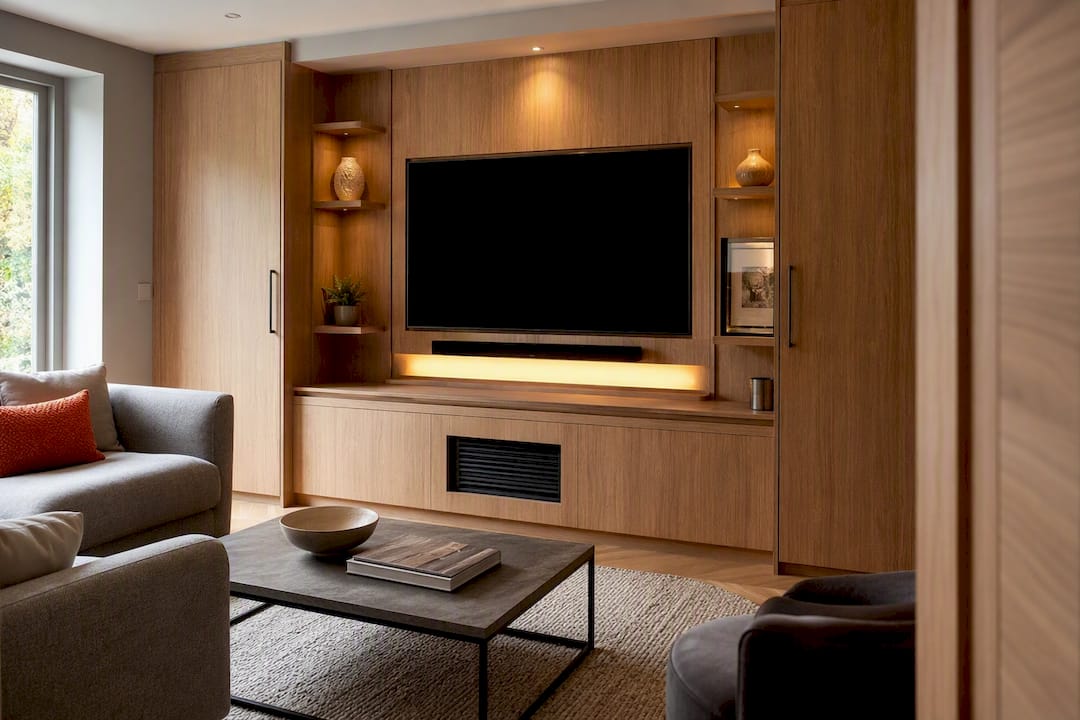
Six ideas do most of the work in a genuinely luxurious home: quiet luxury materials, bespoke joinery, tactile finishes, layered lighting planned like architecture, biophilic touches, and hospitality-inspired social spaces. Together they replace anything shiny or logo-led with quality you feel underfoot and in the hand of a wardrobe door.
- Quiet luxury — restraint and material honesty over branding or trend-chasing.
- Bespoke joinery — wardrobes, media walls and shelving built for your exact walls, not a showroom.
- Tactile materials — brushed oak, honed stone, linen, hand-finished plaster.
- Layered lighting — treated as architecture, not an afterthought.
- Biophilic touches — natural materials and greenery that support wellbeing.
- Hospitality-inspired layouts — social, flexible zones rather than formal rooms kept for show.
Pro Tip: Before you call a joiner, measure the wall you want filled and note its lowest ceiling point and any pipework behind it. A bespoke wardrobe or media wall brief that starts with real dimensions saves at least one redesign round.
Key Takeaways
Luxury interior design in 2026 rewards material honesty and bespoke joinery over branding, and a genuine 10-year guarantee separates makers who build for permanence from those who don’t.
| Point | Details |
|---|---|
| Quiet luxury leads 2026 | Prioritise brushed oak, honed stone and linen over branded or trend-led pieces. |
| Bespoke beats off-the-shelf | Irregular walls, sloped ceilings and alcoves need joinery built to the millimetre. |
| Lighting is architecture | Plan ambient, task and accent lighting at design stage, not as an afterthought. |
| Warranty signals confidence | A genuine 10-year guarantee shows a maker trusts their own materials to last. |
| Budget in bands | Fix joinery costs early and leave contingency for finish upgrades chosen mid-project. |
Table of Contents
- What does luxury interior design mean in 2026?
- 12 luxury interior design ideas you can commission now
- How do these ideas work room by room?
- How do you commission bespoke furniture or fitted joinery?
- Why does sustainability matter to a luxury interior?
- What should you budget for luxury interior design?
- How should you work with an interior designer?
- Ready to commission your own luxury interior?
- An editorial take on commission-ready luxury
- Sources
- FAQ
What does luxury interior design mean in 2026?
Luxury interior design in 2026 means construction quality, tactile materials and considered proportion, not visible branding or fast-changing trends. Quiet luxury favours brushed oak, linen and honed stone, and it rewards craftsmanship you notice only on close inspection, according to Homes & Gardens.
London clients are asking for personalisation, longevity and wellbeing over short-lived aesthetics, with bespoke joinery and warm minimalism among the most repeated briefs, per Amit Dixit Design. That shift changes what you should ask a maker for: durable, well-provenanced materials, joinery scaled correctly to the room, and finishes chosen to age well rather than simply photograph well.
For anyone commissioning work this year, the practical implication is straightforward:
- Prioritise material provenance over price per square metre.
- Insist on proportion checks before any cabinetry is built.
- Choose bespoke over off-the-shelf wherever a wall is irregular or a ceiling slopes.
The custom furniture market is reportedly growing by around 15% annually, a sign that “luxury” is increasingly defined by what is made for you, not what is bought off a shelf.
12 luxury interior design ideas you can commission now
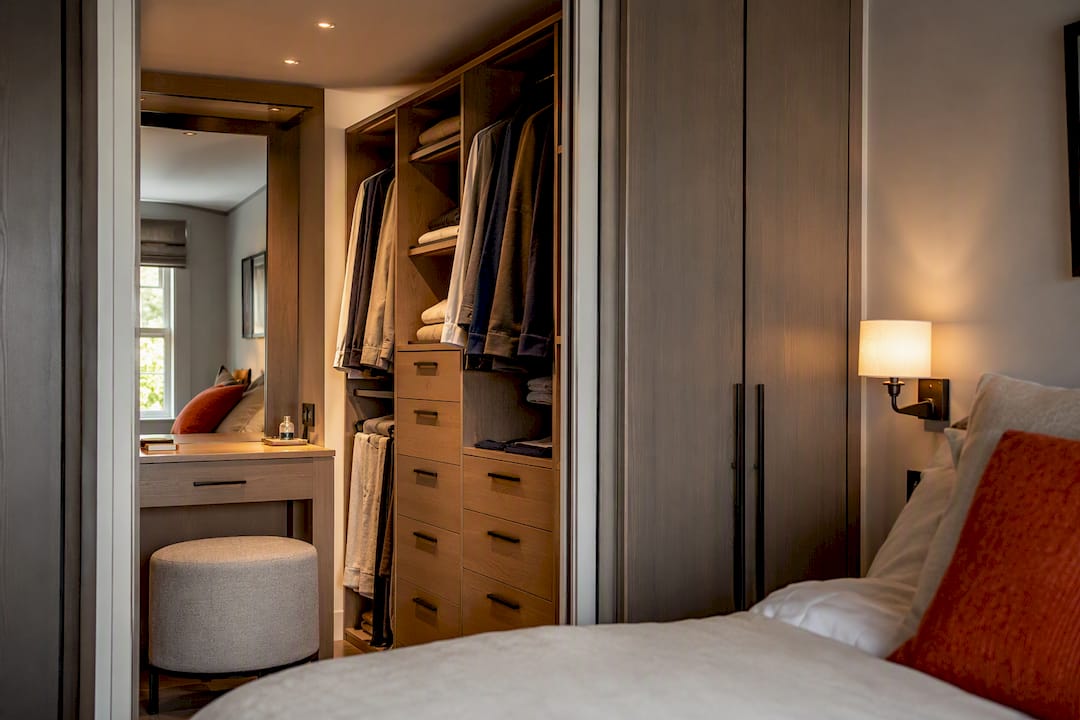
- Bespoke fitted wardrobes. A wardrobe built to the exact height and depth of an alcove reads as architecture, not furniture. Ask for internal LED strips and soft-close hardware as standard.
- A TV or media wall as an architectural focus. Full-height joinery around the screen, with concealed cabling and a stone or timber surround, turns the television from clutter into a feature.
- Sculptural coffee tables. Solid, weighty forms are being designed as anchors in a room rather than incidental furniture, reflecting the shift toward natural wood veneers and asymmetry.
- Layered lighting planned as architecture. Specify three layers (ambient, task, accent) at the design stage, not after the plasterers leave.
- Tactile walls and hand-finished plaster. Lime plaster or micro-cement gives a room depth that flat paint cannot.
- Warm mid-tones and timber. Darker, warmer timbers are replacing the cool greys of the last decade, per Selusso.
- Statement stone. Honed marble or travertine on a single wall or worktop delivers impact without covering the whole room.
- Curved seating. Organic, rounded forms soften a space and photograph beautifully against straight joinery lines.
- Integrated “quiet technology.” Speakers, chargers and lighting controls disappear into cabinetry so nothing looks like a gadget.
- Biophilic anchors. One well-placed indoor tree or a green wall does more for a room’s atmosphere than several smaller plants scattered about.
- Hospitality-style circulation. Open sightlines between kitchen, dining and living zones, borrowed from boutique hotel layouts, make entertaining easier.
- Commissioned artwork and longevity-first materials. Choose pieces and finishes that will still look right in a decade, not just this season.
Pro Tip: When briefing a maker for joinery, specify the finish sample you want (not a colour swatch) and ask for a written lead time before signing anything. A vague “matte wood finish” brief is the most common cause of disappointing wardrobe installs.
How do these ideas work room by room?
A living room usually needs one dominant architectural gesture. A bespoke media wall with concealed storage either side, paired with a sculptural coffee table and three-layer lighting, does that without crowding the space.
In the kitchen, warm timber cabinetry and a single stone splashback read as considered rather than showy. Hide small appliances behind a pantry door rather than lining a worktop with them.
Bedrooms benefit most from fitted wardrobes built into the actual wall line, not standing units that eat floor space. A walk-in version with internal lighting and soft-close drawers behaves like a small dressing room rather than a cupboard.
Bathrooms respond well to honed stone, brass fittings and a single biophilic touch, such as a small planted recess, echoing the move toward authentic natural surfaces over synthetic finishes.
For storage generally, awkward corners, sloped lofts, and under-stair voids are where a bespoke brief earns its keep. If a space is irregular, that is your signal a fitted solution will outperform anything bought ready-made.
- Keep wardrobe depths above 60cm internally for full hanging rails.
- Leave at least 45cm clearance in front of any wardrobe door swing.
Pro Tip: For fitted storage in an awkward alcove, ask your designer for a scaled drawing before manufacture, not after. It is the single cheapest way to avoid a wardrobe that looks slightly wrong once installed.
Pro Tip: Route all media wall cabling through the wall cavity at first-fix stage, before plastering. Retrofitting cable routes into finished joinery is expensive and rarely invisible.
How do you commission bespoke furniture or fitted joinery?
Commissioning a bespoke wardrobe or media wall requires a clear brief, an accurate site survey, design approval on paper, and a written contract before manufacture begins. Skip any one of those steps and the project usually slips on time or budget.
- Book a design visit and let the maker survey the actual room, not just photographs.
- Agree a written brief covering finish, hardware and internal layout.
- Approve material samples in the room’s own light before production starts.
- Confirm lead times in writing, including manufacture and install dates.
- Ask what happens to your old wardrobe on installation day.
Questions worth asking any maker or designer:
- What guarantee covers the finished piece, and for how long?
- What is the realistic timeline from design approval to installation?
- Will the team remove and dispose of existing furniture?
A well-run bespoke wardrobe project typically moves from design to finished fitted wardrobes installation within 7 to 12 days once samples are approved. That speed, backed by a genuine 10-year guarantee, is still rare in a trade where six-week waits are common.
Why does sustainability matter to a luxury interior?
Sustainability has become part of the definition of luxury, not a separate consideration bolted onto it. A cheap wardrobe that warps within three years is not a bargain; it is waste with a lower price tag.
Choosing solid timber, honest veneers and hand-finished plaster over synthetic laminates costs more initially but avoids the replacement cycle that mass-market furniture assumes. Studios working across London and the South East report a decisive move away from synthetic perfection toward authentic natural surfaces precisely because they age with more character, not less.
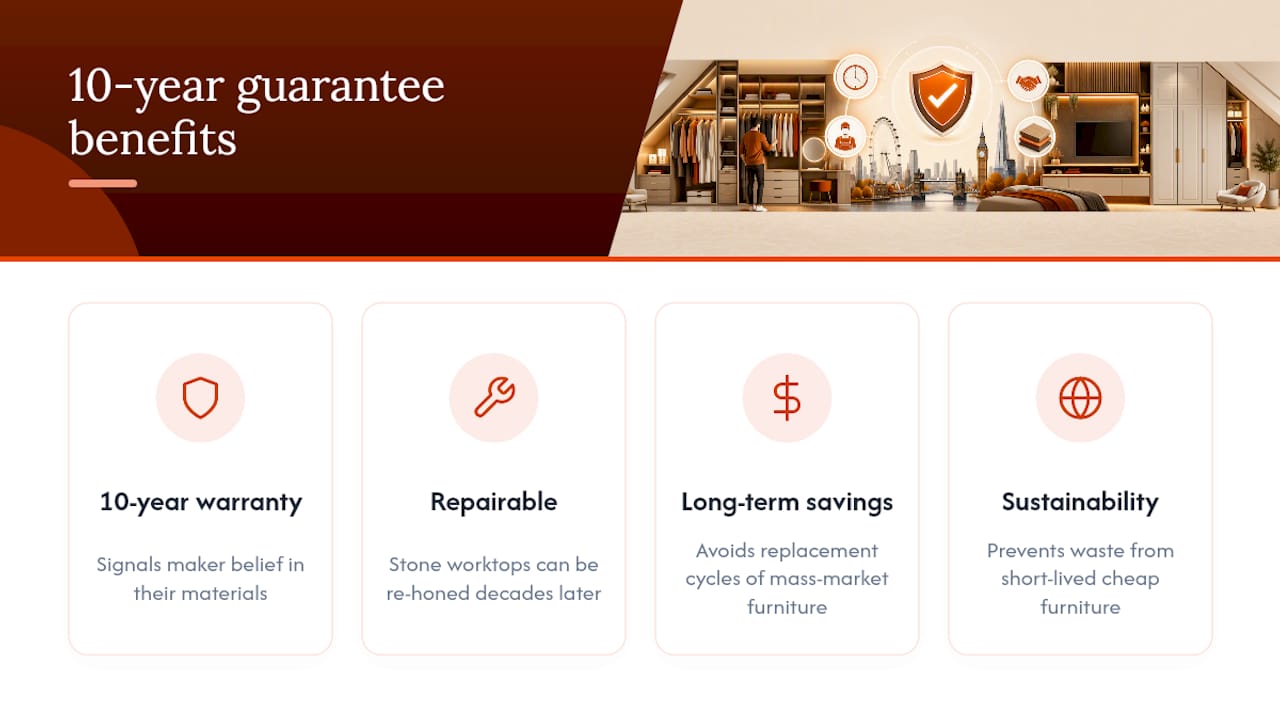
There is a practical commissioning angle here too. Ask any maker how a material weathers, not just how it looks on delivery day. Brushed oak develops a patina; painted MDF chips. A stone worktop can be re-honed decades later; a synthetic surface generally cannot be repaired at all.
A genuine warranty is the clearest signal a maker believes in their own materials. A 10-year guarantee on fitted wardrobes and joinery only makes commercial sense if the underlying materials are built to last that long, which is why it is worth asking every maker you interview whether they offer one and what it actually covers.
What should you budget for luxury interior design?
Budgeting for a luxury interior means separating cost per item from cost per year of use. A bespoke wardrobe costs more upfront than a flat-pack equivalent, but it is built to the exact millimetre of your alcove and typically outlasts several cheaper replacements.
Set three budget bands before you start: a fixed figure for bespoke joinery (wardrobes, media walls, built-in storage), a flexible figure for furniture and lighting, and a smaller contingency for finishes such as stone or plaster that can vary once samples arrive. Most overspend on luxury projects comes from finish upgrades chosen mid-project, not from the original joinery quote.
Ask for itemised quotes that separate design, materials, manufacture and installation. A single lump sum makes it hard to spot where money is actually going, and harder still to compare one maker against another fairly.
Realistic expectations help too. A single well-built fitted wardrobe wall will usually cost more than a run of freestanding units, but it will not need replacing, resizing or working around for a decade or more. That difference in lifetime cost is worth putting in writing before you sign anything, especially for larger walk-in or L-shaped commissions.
How should you work with an interior designer?
Choosing the right designer starts with matching their portfolio to your actual taste, not their reputation alone. Ask to see three completed projects similar in scale to yours, and speak to a past client if possible.
Communication works best when you give a designer constraints, not just inspiration. Tell them your budget bands, your must-keep pieces, and any structural limits (a load-bearing wall, a sloped ceiling) before the first concept sketch, rather than after.
Designers who specialise in warm minimalism and multi-functional zones tend to ask more questions about how you actually live in a room before proposing anything. That is a good sign. A designer who jumps straight to mood boards without asking how you use a space is often designing for a photograph, not for you.
Agree a review process upfront, ideally three fixed checkpoints (concept, materials, final sign-off) rather than open-ended feedback rounds. That keeps a project moving and avoids the scope creep that inflates both budget and timeline on bespoke commissions.
If your project includes fitted joinery, involve your maker in the designer conversation early. A bespoke furniture specialist can flag structural constraints a designer’s concept drawing might miss.
Ready to commission your own luxury interior?
Everything above points to the same conclusion: the highest-impact luxury interventions in a home are the ones built for it specifically, not bought off a shelf. That is precisely where Finest Furniture Studio works. We design and install bespoke fitted wardrobes, walk-in closets and TV media walls across Richmond, Wimbledon, Putney, Kingston, Chiswick, Fulham, Chelsea, Ealing, Twickenham, Barnes, Hammersmith and central London, with typical installation completed within 7 to 12 days and backed by a 10-year guarantee.
We also take away and dispose of your old wardrobe as part of the installation, so there is no separate clearance to arrange. If you are planning a bedroom, dressing room or media wall project, our custom made wardrobes guide for West London covers pricing expectations and finish options in more detail.
Book a free design visit by calling or messaging 07468 150807, or reach us on WhatsApp. Our studio is based at 124 City Road, Kemp House, London, EC1V 2NX.
An editorial take on commission-ready luxury
The gap between glossy trend lists and what actually improves a home is bespoke joinery, and most articles underplay it. Quiet luxury as a colour palette is easy to imitate with paint. A wardrobe built precisely to your alcove, with the correct depth for hanging rail and drawer clearance, cannot be faked with a catalogue purchase.
Conventional advice tends to treat furniture and lighting as equally important line items on a mood board. In practice, one well-briefed piece of fitted joinery, whether a media wall or a walk-in wardrobe, does more to make a room feel considered than five smaller furniture decisions combined. That is where budget should go first.
If there is one thing worth prioritising above everything else in this list, it is the brief itself. A precise brief, accurate site measurements and a written warranty separate a genuinely luxurious result from an expensive disappointment. Everything else, the finishes, the lighting layers, the artwork, works far better once that foundation is right.
Sources
- Interior design trends London 2026: what our clients are asking for | Amit Dixit Design
- Bespoke furniture defines true luxury interiors | The Prestige Edit
- The art of custom furniture: key trends, benefits & inspiration for 2026 | Petra Madalena
- Key luxury interior design trends for 2026: the UK perspective | Selusso
- Luxury interior design trends 2026 | BD Interiors
FAQ
What is the 3-5-7 rule in interior design?
It’s a proportion guideline suggesting furniture and decor groupings work best at 3, 5, or 7 items, since odd numbers tend to look more visually balanced than even ones in a room.
What are the latest luxury interior design trends for 2026?
Quiet luxury, warm minimalism, tactile natural materials and “quiet technology” that hides devices inside cabinetry are the defining trends, alongside a stronger focus on biophilic design and bespoke joinery.
What is luxury interior design style?
Luxury interior design style prioritises construction quality, honest materials such as timber and stone, and considered proportion over branding or fast-changing trends, according to Homes & Gardens.
What colour makes a house look expensive?
Warm mid-tones, such as deep taupe, terracotta and rich timber browns, read as more expensive than stark white or cool grey, reflecting the shift away from clinical minimalism noted by Selusso.
How long does a bespoke wardrobe installation take?
A well-planned bespoke wardrobe project typically completes within 7 to 12 days once design and material samples are approved, followed by removal of any old furniture on installation day.