

Quick Summary
To budget for custom fitted furniture, first define the full scope of your project, room by room, including the pieces and their approximate sizes. Then build an itemised worksheet covering design, materials, hardware, delivery, installation and making good, and compare quotes like for like.
- List every room and the furniture you want before requesting any quotes.
- Ask each supplier for a unit-by-unit schedule with materials, hardware and warranty stated in writing.
- Read the exclusions section first, since removal, making good and electrical work often sit outside the headline price.
- Set aside a contingency reserve for design changes and site surprises before work starts.
Table of Contents
- Why Custom Fitted Furniture Needs a Different Budget
- Step 1: Define the Scope of Your Project
- Step 2: Understand What Drives Custom Fitted Furniture Cost
- Step 3: Build an Itemised Budget Worksheet
- Step 4: Use a Fitted Furniture Quote Checklist
- Step 5: Learn How to Compare Furniture Quotes Like for Like
- Step 6: Plan for Contingency, Hidden Costs and Changes
- Booking Your Free Design Visit to Firm Up Your Budget
- Frequently Asked Questions
7 Steps to Budget for Custom Fitted Furniture
Last Updated: October 29, 2026
Why Custom Fitted Furniture Needs a Different Budget
Custom fitted furniture is priced differently from the flat-pack or off-the-shelf pieces most people buy. Every unit is measured, designed and built for one specific room, so the final bill depends on the space, the materials and the level of detail you choose.
That is why a simple “what can I afford” figure often falls apart halfway through a project. A common pattern is homeowners who plan around a single headline price and then get caught by extras they did not expect.
This guide walks through seven steps to build a realistic budget for custom fitted furniture. You will learn how to define your project, understand what drives cost, build an itemised worksheet and compare quotes fairly. Each step is short and practical, so you can work through it at your own pace.
Step 1: Define the Scope of Your Project
Before you ask anyone for a price, decide exactly what you want built. A clear scope is the foundation of every accurate budget.
Start by listing the rooms and the type of furniture for each one. A fitted wardrobe, a home office unit and a set of alcove shelves each carry different costs.
- Write down each room and the furniture you want in it
- Note the approximate size of each space, including any sloping ceilings
- Decide which pieces are essential and which are nice to have
- Set a clear end date so you can plan around your household
A common mistake is leaving the scope vague. When the brief keeps changing, the quote keeps changing too. Settle the plan first, then ask for prices.
Step 2: Understand What Drives Custom Fitted Furniture Cost
Custom work is priced by the choices you make. Knowing which choices move the price helps you spend where it matters most.
Materials, finishes and hardware
The material and finish you pick have a direct effect on cost. Solid timber, veneered panels and painted finishes sit at different price points. Hardware such as soft-close runners, handles and internal fittings adds up across a full run of units.
Ask for a breakdown of materials in each quote. This shows you exactly where the money goes and where you could adjust without losing quality.
Design complexity and awkward spaces
Awkward rooms take more time to design and build. Understairs storage, alcoves, sloping ceilings and uneven walls all need careful measuring and custom cutting.
These spaces are often the best value for custom work, because they hold storage that off-the-shelf furniture cannot fit. Still, expect the design and build time to be higher, and budget for it accordingly. Careful planning during the initial phases remains the most effective way to avoid renovation budget overruns while ensuring that every custom element integrates seamlessly into your home.
Step 3: Build an Itemised Budget Worksheet
Once you know your scope and cost drivers, write them down in a simple worksheet. Listing every item stops small costs from quietly piling up, and it gives you a single place to record each supplier’s figures as they arrive.
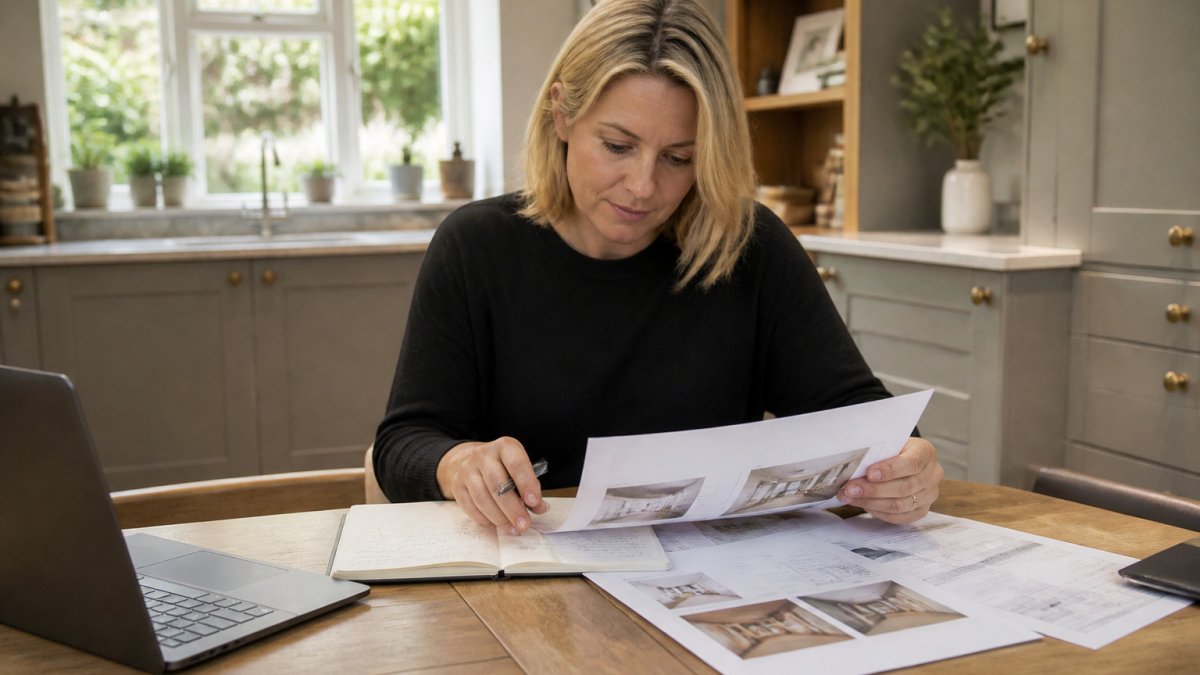
The worksheet below is built for fitted furniture generally, not just wardrobes. Copy it into a spreadsheet and add a row for every unit in your project, a run of bespoke fitted wardrobes in one bedroom, an alcove unit in the living room, a bespoke home office desk and shelving wall, or a media wall with concealed cable routes.
| Cost line | What to record | How to estimate it |
|---|---|---|
| Design and measuring | Whether the design visit and technical survey are chargeable, and whether the fee is credited against the order | Ask each supplier in writing before booking |
| Carcasses and doors | Unit count, dimensions, door style and finish | Take the per-unit figure from your quote and multiply by the number of units |
| Internal fittings | Drawers, rails, shelves, shoe racks, pull-out trays, lighting | Price each fitting as a line, not as a lump sum |
| Hardware | Hinges, runners, handles, soft-close mechanisms | Confirm the brand and grade specified in the quote |
| Worktop or surface | Material, thickness, edge profile, cut-outs | Quote separately if the unit includes a desk or media surface |
| Delivery | Whether delivery is included, and any access or congestion charges | Check the quote’s exclusions section |
| Installation | Labour, number of fitters, number of days | Confirm whether fitting is included or quoted separately |
| Making good and decorating | Plastering, filling, painting, skirting and cornice adjustments | Ask the fitter what is excluded |
| Electrical work | Sockets, spurs, LED lighting, cable routing for media walls | Get a separate electrician’s quote if not in scope |
| Removal of old furniture | Dismantling and disposal of existing units | Ask whether this is included |
| Contingency | A reserve for changes and site surprises | Set it as a percentage of the subtotal (see Step 6) |
Fill in the figures from your quotes as they come in. Keep the worksheet updated so you always know where you stand, and mark each line as ‘included’, ‘excluded’ or ‘to confirm’ so nothing slips through.
Build the worksheet before you request quotes, not after. Suppliers who see a structured brief tend to quote against the same specification, which makes the comparison in Step 5 far easier.
Step 4: Use a Fitted Furniture Quote Checklist
Every quote should answer the same core questions. A checklist makes sure you are comparing like with like and not discovering gaps after you sign.
Check that each quote states:
- The full list of units, with dimensions and layout
- The materials, finishes and hardware used
- Whether design, delivery and installation are included
- Any making good, plastering or electrical work needed
- The payment schedule and deposit amount
- The warranty length and what it covers
- The expected timeline from design to fitting
If a detail is missing, ask for it in writing. A quote that leaves gaps is hard to trust later.
Step 5: Learn How to Compare Furniture Quotes Like for Like
Two quotes can look very different even when they describe similar work. Comparing them properly means lining up the details before you look at the total, and that starts with asking every supplier for the same written specification.
What to request from every supplier
Send the same brief to each supplier and ask for a quote that states, in writing:
- A unit-by-unit schedule with dimensions, layout and door style
- The carcass material, door material and finish, named by grade rather than described as ‘premium’
- The hardware brand and grade for hinges, runners and handles
- Whether design, delivery, installation and making good are included or excluded
- The warranty length, what it covers and whether it is parts-only or parts and labour
- The payment schedule, deposit amount and any stage payments
- The expected timeline from survey to fitting, including lead times for materials
A quote that cannot answer these points is not comparable, however competitive the headline figure looks.
How to spot exclusions
Read the exclusions section before the price. Common exclusions on fitted furniture quotes include:
- Removal and disposal of existing units
- Plastering, filling and decorating after fitting
- Electrical work for internal lighting or media walls
- Adjustments needed if walls or floors are out of level
- Access charges where parking or lift access is restricted
List every exclusion against the same line in your worksheet. Two quotes only become comparable once the exclusions are priced in.
How to weight materials, warranties and installation
Once the scope matches, compare on three axes:
- Materials and hardware. A quote using a named board grade and branded soft-close runners is not the same product as one using unbranded equivalents, even if the units look identical in a photograph.
- Warranty. Compare length, what is covered and whether labour is included. A longer warranty that covers labour is worth more than a longer warranty that covers parts only.
- Installation. A quote that includes fitting, making good and a post-installation snagging visit carries less risk than one that leaves you to arrange trades separately.
A quote that costs more but includes installation, named materials and a labour-inclusive warranty may be the better value. Compare the total cost of the finished, fitted result, not the headline unit price.
Once the scope, exclusions and weightings match, the price comparison becomes meaningful. Until then, you are comparing different projects.
Step 6: Plan for Contingency, Hidden Costs and Changes
Even a careful plan can change once work starts. Building in a contingency protects your budget from surprises.
Set aside a reserve for small changes, unexpected site issues or extra making good.
Watch for these common extras:
- Changes to the design after the order is confirmed
- Wall or floor issues that appear once units are removed or fitted
- Additional electrical or lighting work for internal fittings
- Decorating or flooring repairs after installation
Ask your supplier how changes are priced before the build starts. Clear terms now save arguments later.
Booking Your Free Design Visit to Firm Up Your Budget
The most reliable way to firm up your budget is to get your space measured and designed. At Finest Furniture Studio, we offer a complimentary design visit, so you can see how your room will work before committing to anything. Book a free design visit to talk through your scope, your materials and your budget, and receive a written quote you can compare line by line.
Frequently Asked Questions
How do I budget for custom fitted furniture?
Start by defining the scope: which rooms, which storage types and whether you need design work. Then price each element separately, including materials, hardware, fitting and making good. Add a contingency of around 10 to 15 per cent for measurement surprises and changes. Ask Finest Furniture Studio for a written quote based on your specification, as pricing depends on the design, finishes and site conditions. Keeping a running worksheet lets you see where the money goes before you commit.
Is custom fitted furniture more expensive than freestanding furniture?
Custom work is made to the exact dimensions of your room, including sloping ceilings and alcoves. Freestanding furniture is cheaper upfront but can waste awkward space and need replacing sooner. Comparing the cost per year of use, rather than the purchase price alone, gives a fairer picture. Finest Furniture Studio can show you current pricing on its website or through a free design visit.
Should I budget for installation separately?
Yes. Fitting is a distinct cost from the furniture itself, and a good quote shows it as a separate line. Installation covers delivery, fixing, adjustment and clearing the site, and its cost depends on access, the number of units and any making good of walls or flooring. Asking for installation to be itemised makes like-for-like comparison easier and avoids surprises at the end of the project.
How much contingency should I allow for a fitted furniture project?
A contingency reserve is a sensible starting point for most homeowners. It covers unforeseen issues such as wall irregularities, electrical work or design changes you decide on mid-project. Projects with older properties or unusual layouts may justify a higher figure. Agree in advance how changes will be priced so the contingency is used deliberately rather than absorbed by surprises.
Watch out: Do not accept a quote that leaves out installation or making good. These costs often appear later and can add a significant amount to the final bill.


