
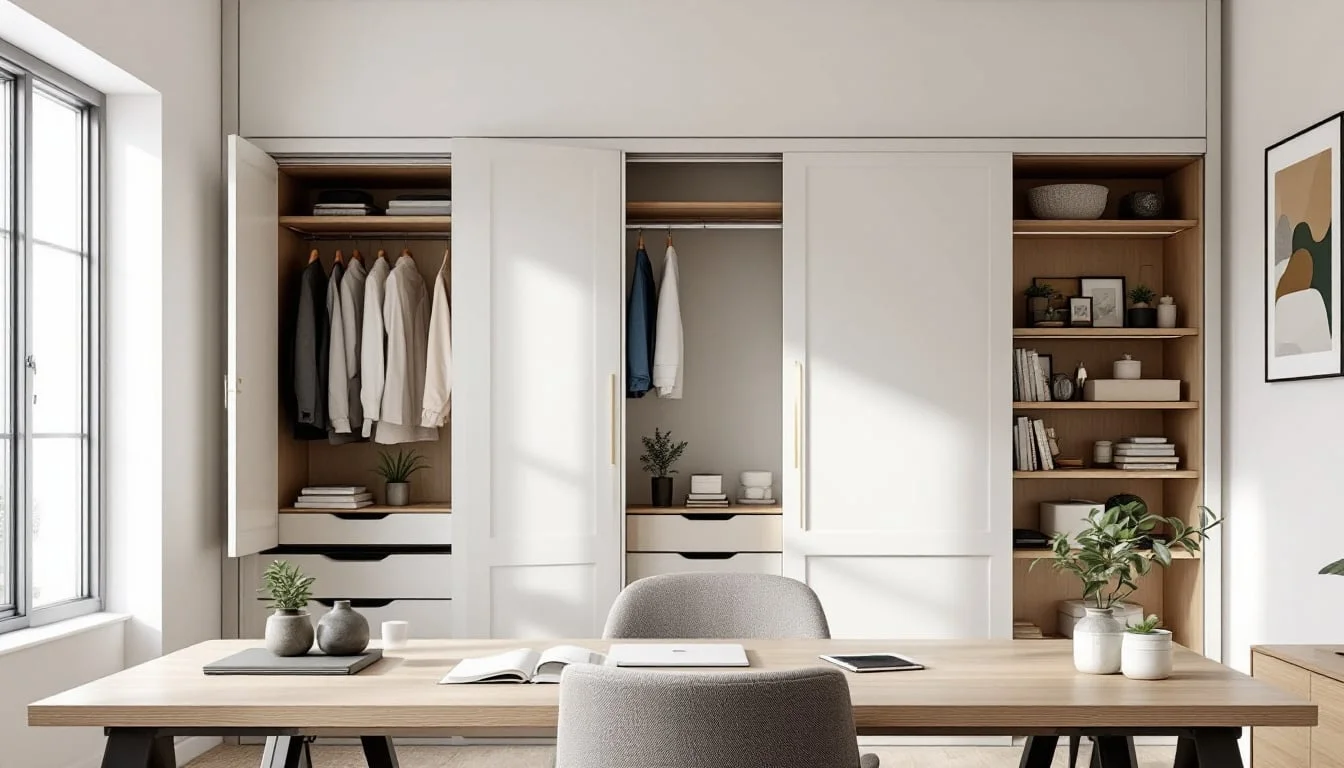
Why wardrobe planning matters in Surrey homes
If you are searching for wardrobe Surrey UK ideas, you are probably trying to solve a real space problem, not just pick a finish. In many Surrey homes, bedrooms, loft rooms, and alcoves come with awkward corners, sloped ceilings, or narrow wall runs, so off-the-shelf furniture often leaves wasted gaps. The best approach is to treat the wardrobe as part of the room layout, not an isolated unit. That shift alone can recover usable storage, improve access, and reduce the daily friction of digging through overfilled shelves.
Start with the room shape, not the wardrobe style
Before comparing door styles or colours, measure the room properly. Record wall-to-wall width, ceiling height, skirting depth, radiator positions, sockets, and any slope or chimney breast. A practical rule is to leave at least 60 cm of clear opening space in front of a hinged wardrobe, or consider sliding doors where circulation is tight. This is the first filter in wardrobe Surrey UK planning, because the room shape decides what will actually work.

Use full-height fitted wardrobes to reclaim vertical space
One of the most effective wardrobe Surrey UK ideas is to build upward. Full-height fitted wardrobes reduce the dust-collecting gap above the unit and turn dead air into storage for seasonal items, spare bedding, or occasional luggage. In rooms with standard ceilings, that extra top section often makes the difference between cluttered overflow and a clean storage system. The trade-off is access, so keep the highest shelves for low-use items and not daily essentials.
Add a top box for low-use storage
A top box works well when you need visual simplicity but still want practical capacity. It is especially useful in older Surrey properties where ceiling lines are not perfectly level, because a bespoke top section can follow the room rather than forcing the room to follow the wardrobe. If you store winter blankets or suitcases there, use labelled fabric boxes so items stay organised and easy to rotate through the year.
Choose sliding doors when floor space is tight
Sliding doors are one of the strongest wardrobe Surrey UK options for compact bedrooms, box rooms, and loft conversions. Because the doors do not swing out into the room, you save circulation space and keep bedside furniture from feeling cramped. The trade-off is partial access, since you can only open part of the wardrobe at a time. That makes internal planning more important, so the most used items should sit in the central or most accessible zones.
When hinged doors still make sense
Hinged doors are often better if you want full visibility and easy access to the entire wardrobe at once. They can work well in wider bedrooms where the door arc will not interfere with the bed or windows. A useful test is to stand where the wardrobe will go and open an imaginary 45 to 60 cm swing path. If that path causes a conflict, sliding doors or bi-fold options are usually the safer choice.
Build the internal layout around how you actually dress
A wardrobe Surrey UK project becomes much more effective when the inside is planned around daily routine. If you wear work clothes, long dresses, or folded knitwear differently from one season to the next, the internal split should reflect that. A strong baseline is to divide storage into hanging, folded, drawer, and top shelf zones, then adjust the balance based on what you reach for most. This avoids the common mistake of creating lots of generic space that does not fit any real use pattern.
Mix hanging, shelving, and drawers in one layout
A good working mix is often 50 percent hanging, 30 percent shelves, and 20 percent drawers, but that ratio should flex by wardrobe use. Long-hang sections suit coats and dresses, while double-hang rails work for shirts, jackets, and shorter garments. Drawers are best for small items, because they reduce visual noise and stop socks, belts, and accessories from spreading across shelves. The key is not perfection, but reducing the number of places where things can get lost.
Make awkward spaces earn their keep
Surrey homes often include alcoves, eaves, chimney breasts, and sloped ceilings, and these are exactly the areas where bespoke furniture pays off. Instead of trying to force standard modules into odd gaps, use made-to-measure sections that follow the room’s geometry. This can create extra storage without making the bedroom feel narrower. The main pitfall is poor access in deep corners, so include pull-out trays or narrower compartments where full-depth shelves would be awkward.
Use alcoves and chimney breast recesses carefully
When a wardrobe sits beside a chimney breast or inside an alcove, make the depth consistent so the finished run looks intentional. One useful design move is to align the wardrobe front with the most prominent wall line, then let internal carcasses step back where needed. That gives you a cleaner visual finish. If you are comparing wardrobe doors design options, this is the point where simple panel styles often work better than highly detailed fronts.
Select materials and finishes that work with the room
The finish matters because wardrobe Surrey UK projects are usually part storage, part room design. Gloss surfaces can reflect light in smaller rooms, while matte finishes hide fingerprints and feel calmer in larger bedrooms. Light colours tend to make fitted furniture recede visually, which is useful in narrow spaces. Darker finishes can look premium, but they need stronger lighting and more disciplined room styling to avoid feeling heavy.
Match door design to the rest of the interior
If the room already has strong flooring, busy wallpaper, or textured soft furnishings, keep the wardrobe doors simpler so the storage wall does not compete with everything else. Flat-front wardrobes usually create the cleanest result for modern interiors. More decorative door profiles can still work, but they suit rooms with enough visual breathing room. If you are exploring wardrobe doors design collections such as Aldridge, Ashford, Austin, Buxton, Cambridge, Carlton, Carrick, Chester, Elland, Euroline, or Harlem, treat them as a finish decision after the layout is solved.
Use lighting to make storage easier to live with
A wardrobe that looks good on paper can still fail at night if the inside is poorly lit. Integrated LED strips, motion-sensor lighting, or spot lighting inside tall compartments make it easier to find items quickly and put them away properly. The practical benefit is simple: better visibility lowers the chance of overstuffed shelves and misplaced items. For a wardrobe Surrey UK install, lighting should be planned early so cables, sensors, and access points do not become an afterthought.
Keep the inside visible without overcomplicating it
The most useful lighting is usually the one you notice least. Warm-white LEDs help keep colours readable without feeling harsh first thing in the morning. If you prefer a clean system, place the brightest light near hanging sections and a softer strip over shelves or drawers. This gives the wardrobe a clear structure, which matters more than decorative lighting effects. In compact rooms, lighting can also make deep cabinetry feel less enclosed.
Think in zones, not just in square footage
A clever wardrobe Surrey UK layout is about zones. Put the items you use daily between waist and eye level, occasional items higher up, and seasonal storage in the hardest-to-reach areas. This simple hierarchy prevents the most common problem in fitted wardrobes, where everyone stores everything in the easiest available spot and then struggles later. A good check is whether you can get dressed without moving more than two or three things out of the way.
Create a weekly-use zone
The weekly-use zone should hold the items you rotate most often, such as workwear, schoolwear, gym clothes, or outer layers. Keep this zone close to the wardrobe opening and avoid putting it behind sliding panels that only open partially. If you share the wardrobe, split the zone by person or by category so both users can find things without reshuffling the whole unit. That small design choice often improves day-to-day usability more than adding more shelves.
Plan for growth, not just today’s clutter
A wardrobe Surrey UK solution should still make sense if your storage needs change in a year or two. The best fitted systems leave some flexibility through adjustable shelves, removable rails, and a spare drawer bay or open section that can absorb future needs. That is especially useful if you are combining wardrobes with a home office, nursery, or guest room function. Overfilling every available inch usually creates a more fragile system, not a more efficient one.
Leave one adaptable section
A small adaptable section is often more useful than squeezing in another fixed shelf. It gives you room for changing clothing sizes, changing routines, or seasonal items that do not fit neatly elsewhere. If you are comparing suppliers, ask how easy it is to adjust internal fittings after installation. This is a sensible test because a rigid design can look impressive on day one but become difficult to live with when needs shift.
Key Points
The smartest wardrobe Surrey UK ideas start with the room shape, not the finish. Full-height fitted wardrobes recover vertical storage that standard units leave unused. Sliding doors are useful in tight rooms, while hinged doors suit wider spaces with room to swing open. Internal planning matters as much as external style, especially if you use your wardrobe daily. Awkward spaces like alcoves and sloped ceilings can become storage assets with bespoke joinery. Lighting and zoning make the wardrobe easier to use, not just easier to admire. Leaving one adaptable section helps the design stay useful as your needs change.
How to choose a wardrobe supplier with fewer regrets
If you are comparing wardrobe Surrey UK providers, focus on process as much as product. Ask how they measure, how they handle uneven walls, what fitting timeline they work to, and whether the finish can be tailored to your room. A useful comparison point is whether they discuss access, circulation, and internal layout before discussing colours. That usually signals a more practical approach. In service-led projects, good planning prevents most installation problems.
What to check before you book a survey
Before booking, gather photos of the room, rough measurements, and a list of what you need to store. This short preparation speeds up the design conversation and reduces the risk of ordering the wrong internal layout. If a provider mentions a 7 to 10 day fitting window or a long warranty, use that as one data point, not the only one. The more important question is whether the design solves your storage problem cleanly and fits the room without compromise.
A practical way to turn ideas into a final design
The easiest way to move from inspiration to decision is to rank the seven wardrobe Surrey UK ideas by impact. Start with the room constraints, then decide whether you need sliding or hinged doors, then define the internal zones, and only after that choose finish details. If you are still unsure, look at a fitted furniture specialist such as Finest Furniture Studio and compare the layout advice, not just the style gallery. That approach keeps the project grounded in function and helps you end up with storage that actually works.
Frequently Asked Questions
What should I look for in wardrobe Surrey UK designs?
Look first at fit, access, and internal layout rather than just the door finish. The best wardrobe Surrey UK designs use the room shape efficiently, provide enough hanging and shelf space, and leave clear access to the items you use most.
Are fitted wardrobes better than freestanding ones in Surrey homes?
In many cases, yes, because fitted wardrobes can use full height, awkward corners, and alcoves more efficiently. They are especially useful in loft rooms, older homes, and bedrooms with limited floor space, where made-to-measure wardrobe storage can reduce wasted gaps.
Should I choose sliding or hinged doors for a wardrobe Surrey UK project?
Choose sliding doors if floor space is tight or the wardrobe sits close to a bed. Choose hinged doors if you want full access to the interior at once and have enough clearance for the door swing. The right choice usually depends on circulation space, not just style.
How do I maximise storage space inside a fitted wardrobe?
Use a clear zoning plan with hanging, shelving, drawers, and seasonal storage placed in the right order of access. A practical wardrobe storage solution also keeps daily-use items at eye level and reserves high shelves for items you do not need every week.
Can wardrobe Surrey UK designs work in loft rooms and sloped ceilings?
Yes, and that is one of the main reasons people choose bespoke furniture. Sloped ceilings, eaves, and angled walls can be measured and built around so the wardrobe fits the room properly, often creating storage space that standard furniture cannot use.
How long does wardrobe fitting usually take?
Timelines vary by project size, but some suppliers mention fitting in 7 to 10 days. The exact time depends on the design complexity, room preparation, and whether the wardrobe is fully bespoke or partly modular.
What warranty should I expect with wardrobe Surrey UK furniture?
Warranty terms vary, but a long warranty is a sign that the provider stands behind the fitting and materials. Before ordering, check what is covered, how long it lasts, and whether it applies to both the product and the installation.

