
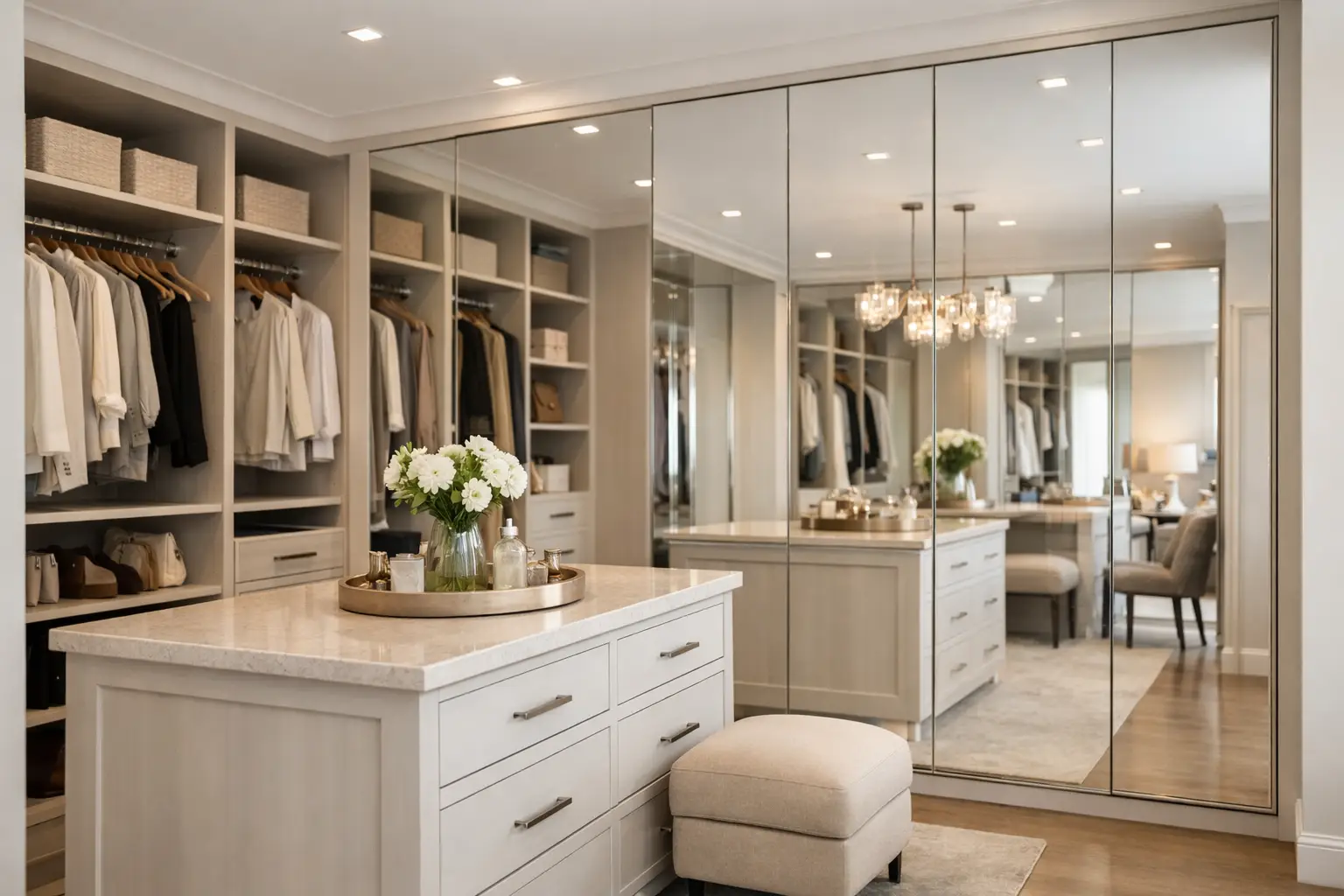
A mirror can change how a walk-in wardrobe feels almost instantly. In the best walk in wardrobe design with mirror, it does far more than reflect an outfit – it adds light, helps the room feel larger, and turns a storage area into a polished dressing space that feels considered from every angle.
That is why mirrors deserve a place in the design conversation early, not as an afterthought once shelving, drawers, and hanging rails are already fixed. In a bespoke walk-in wardrobe, the mirror should work with the layout, lighting, and daily routine. Get that balance right, and the whole room becomes more practical and more refined.
Why walk in wardrobe design with mirror works so well
A walk-in wardrobe has two jobs. It needs to store a lot, and it needs to make that storage easy to use every day. Mirrors support both.
From a practical point of view, a full-length mirror gives you a proper dressing area without needing to step back into the bedroom. That matters more than many homeowners expect, especially in homes where mornings are busy and shared spaces are in demand. You can dress, check proportions, and make quick decisions in one place.
From a design point of view, mirrors help soften cabinetry. Fitted wardrobes, however beautiful, bring strong lines and solid surfaces into a room. A mirror breaks that up. It reflects finishes, lighting, and floor space, which can make even a compact walk-in feel more open.
There is a trade-off, though. Too much mirrored surface can make a wardrobe feel cold or overly formal, particularly if the room already has glossy finishes. The best results usually come from balance – one or two purposeful mirror placements, supported by warm materials, good lighting, and a layout that still feels calm.
Where to place mirrors in a walk-in wardrobe
Mirror placement is where design starts to become personal. The right position depends on the size of the room, the shape of the cabinetry, and how you move through the space.
Full-length mirror at the end of a run
This is one of the most effective solutions in narrow walk-ins. Placing a full-length mirror at the end wall draws the eye forward and gives the room more visual depth. It can make a corridor-style wardrobe feel less enclosed, especially when paired with soft overhead or vertical lighting.
It also creates a natural destination point. Instead of the wardrobe feeling like a passage lined with storage, it gains a defined dressing moment at the end.
Mirrored wardrobe doors
If space is limited, mirrored doors can be a smart way to combine functions. This approach works particularly well in fitted layouts where every panel needs to earn its place. You gain reflection without giving up wall space for a separate mirror.
That said, this solution is not always the most elegant for every home. Full mirrored doors can feel visually busy if there are too many panel lines, handles, or frame details. In more classic interiors, a single integrated mirror panel often looks more tailored than mirroring every door.
Mirror beside a dressing table or drawer section
In a larger walk-in wardrobe, a mirror placed above or beside a drawer bank can create a dedicated getting-ready zone. This works well if the wardrobe includes space for jewelry, grooming tools, or accessories. It adds function without making the room feel like it is built entirely around reflection.
For homeowners who want the wardrobe to feel more like a private dressing room, this is often the most luxurious approach. It supports a routine rather than simply filling a wall.
Using mirrors to improve light and space
One of the biggest advantages of a walk in wardrobe design with mirror is its ability to work with light. Many walk-in wardrobes have limited natural light, and some have none at all. A mirror helps bounce light around the room, but only if the surrounding lighting is planned properly.
A mirror opposite a light source can brighten the room noticeably. If there is a window nearby, reflecting that daylight into the wardrobe can make finishes look truer and clothing colors easier to judge. If the room relies on artificial light, the mirror should reflect layered lighting rather than a single harsh ceiling fitting.
This is where bespoke design matters. LED lighting inside shelving, under shelves, or along vertical panels can create a softer and more flattering effect when reflected. That makes the wardrobe easier to use and more pleasant to spend time in. It also avoids one common mistake: bright lighting above and a mirror below, which can cast unhelpful shadows across the face and outfit.
Materials and mirror styles that feel built in
Not every mirror suits every wardrobe. The frame, edge detail, and proportion all affect whether the result feels integrated or simply added on.
In contemporary spaces, slim-framed or flush-fitted mirrors tend to work best. They keep the lines clean and allow the cabinetry to remain the main feature. In more traditional or decorative interiors, a framed mirror can add softness and character, especially when paired with painted finishes, warm wood tones, or more detailed drawer fronts.
Tinted mirrors are another option, but they need care. Bronze or smoked finishes can look striking, yet they slightly alter reflection and reduce brightness. For some clients, that moody effect feels luxurious. For others, it compromises everyday practicality. If the mirror is being used for dressing rather than atmosphere alone, clarity should usually come first.
Scale matters too. A mirror should feel proportionate to the cabinetry around it. One narrow mirror in a large wardrobe can look accidental, while oversized mirrored panels in a small room can dominate. Good fitted design solves this by treating the mirror as part of the overall composition, not a separate accessory.
Planning the layout around daily routines
The best walk-in wardrobes are not designed around storage volumes alone. They are designed around habits. A mirror helps reveal what those habits actually are.
If you like to lay out outfits in advance, the mirror should sit near drawer storage and open surface space. If two people share the wardrobe, it helps to place the mirror where one person can use it without blocking the other from accessing shelves or hanging sections. If the wardrobe is used for both dressing and grooming, the mirror needs supportive lighting and enough clearance to stand back properly.
This is one reason fitted furniture consistently outperforms freestanding pieces in awkward rooms. Sloped ceilings, alcoves, and uneven walls often create dead areas that are difficult to use well with off-the-shelf storage. A bespoke wardrobe can integrate mirrors in a way that supports movement through the room rather than fighting against it.
For homeowners investing in premium storage, that difference is worth paying attention to. The wardrobe should not just hold everything. It should make everyday use feel easier and more composed.
Mistakes to avoid with mirrored walk-in wardrobes
The biggest mistake is treating the mirror as a decorative extra. If it is placed where there is not enough standing room, where lighting is poor, or where reflected clutter becomes the main view, it will not improve the space.
Another issue is overuse. Mirrored panels on every door, plus a dressing mirror, plus reflective finishes elsewhere can make the room feel hard rather than calm. Most walk-in wardrobes benefit from a focal mirror and a restrained supporting palette.
It is also worth thinking about maintenance. Mirrors show fingerprints, dust, and streaks quickly, especially in family homes or high-use dressing areas. That does not mean they should be avoided, only that the design should suit the household. In some homes, a single well-placed full-length mirror is a better long-term choice than multiple mirrored doors.
Finally, do not ignore what the mirror reflects. A mirror that doubles the view of beautiful cabinetry and balanced lighting is an asset. A mirror that reflects the back of open shelves stuffed with mismatched items will make the space feel less organized, not more.
When bespoke design makes the difference
A well-designed walk-in wardrobe should feel calm, useful, and unmistakably tailored to the home. Mirrors play a real part in that, but only when they are integrated into the design from the start. That means considering room proportions, storage needs, lighting positions, and how the space will be used every day.
For homeowners who want fitted storage to feel as good as it functions, that level of planning matters. It is what turns a wardrobe into a space that supports the rhythm of daily life while adding something quietly luxurious to the home. Finest Furniture Studio approaches bespoke wardrobes in exactly that way – as a balance of beauty, usability, and precise fit.
If you are planning a walk-in wardrobe, think about the mirror early. The right one will not just help you get dressed. It will help the whole room feel finished.