
Why shoe storage affects decision quality
Good shoe storage does more than hide trainers and boots. It changes how people behave in a space, which is why it can improve decision quality for design teams and homeowners alike. When shoes have a fixed place, the room looks calmer, traffic paths stay clear, and it becomes easier to judge whether a layout actually works. That matters in fitted interiors, where small visual cues drive large design decisions. If a hallway feels cluttered, teams often over-specify storage. If it feels orderly, they can make cleaner calls on capacity, access, and finish.
What ranking pages usually cover
The strongest pages on shoe storage tend to cluster around three intents: space-saving ideas, product comparisons, and room-by-room storage solutions. Most cover under-stair units, hallway cabinets, bench storage, and made-to-measure options, then layer in buying guidance such as measurements, materials, and door styles. The gap is usually decision-making. Few pages explain how shoe storage reduces design ambiguity, shortens revision cycles, or helps teams choose between open, closed, and hybrid storage based on real use patterns.
A practical outline for this topic
A focused structure works better than a broad catalog. For this article, the best flow is: start with the link between shoe storage and decision quality, then explain the everyday design signals it creates, move into the layout choices that matter most, and finish with measurement rules, common mistakes, and a simple decision framework. That approach fits search intent for shoe storage ideas, bespoke shoe storage, hallway shoe storage, and fitted shoe cabinets without drifting into generic home organisation advice.
Related long-tail keywords to use naturally
Useful long-tail terms include bespoke shoe storage, hallway shoe storage ideas, fitted shoe cabinet, under stair shoe storage, built in shoe storage, slim shoe storage for small hallways, concealed shoe storage, custom wardrobe storage, home storage design, shoe rack alternatives, and space-saving storage for shoes. LSI terms that fit the topic include fitted furniture, clutter control, circulation space, measured design, joinery finish, and storage capacity. Used well, these phrases support the main keyword without sounding forced.
How shoe storage changes the room
Shoe storage changes how a room is read within seconds. A pair of shoes on the floor creates visual noise, and visual noise tends to push teams toward conservative decisions such as larger cupboards or extra landing zones. Once shoes are contained, the same room often supports narrower runs, cleaner sightlines, and more accurate judgments on how much furniture is really needed. In practice, that can mean a hallway cabinet that is 150 mm shallower than the first draft, which is a meaningful saving in tight circulation areas.
The decision signals it gives you
When shoe storage is properly planned, it tells you three things fast. First, how many pairs need daily access versus seasonal storage. Second, whether the household prefers open visibility or concealed storage. Third, whether the room can absorb a built-in solution without blocking movement. Those signals help design teams decide if a fitted shoe cabinet, a boot bench, or a full bespoke wardrobe bay is the better fit. The trade-off is simple: easy access usually needs more visual openness, while tidiness usually needs doors.
Mini-case: a hallway layout with fewer revisions
A residential project team working on a narrow entrance hall started with an oversized storage concept because the floor looked messy during the first visit. After the household was asked to sort shoes into daily, weekly, and occasional use, the real demand was smaller than expected. The final design kept the same footprint but switched to concealed shoe storage with one open shelf for current pairs. The result, based on the team’s own assumption-led review, was one fewer revision round and a better circulation gap at the door.
Which shoe storage types guide better choices
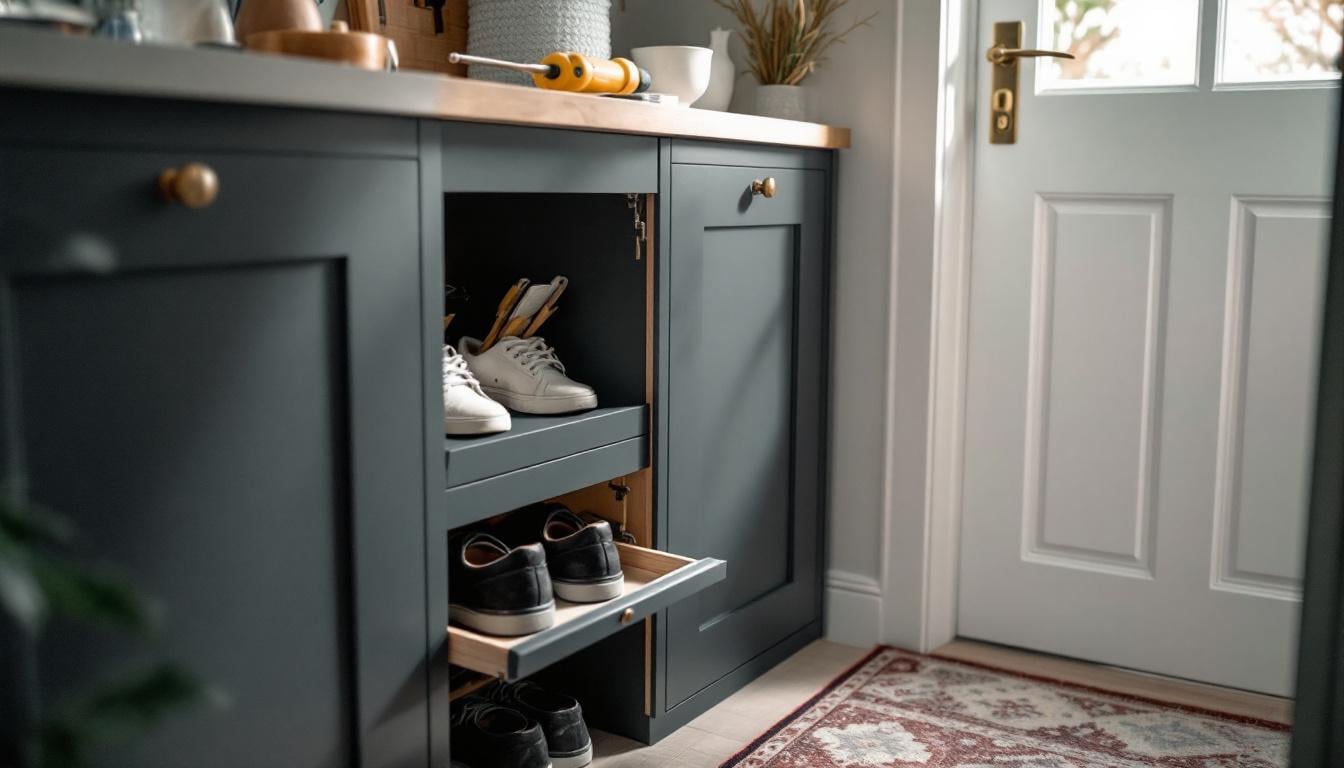
Different shoe storage types solve different problems, so the right choice depends on what decision you need to make. Open shelves are useful when speed matters and the household rotates shoes often. Closed cabinets are better when the goal is visual calm and a premium finish. Under stair shoe storage is ideal when dead space needs a purpose. Built in shoe storage tends to work best when the brief includes a broader fitted furniture scheme and the storage must align with wardrobes or alcove units.
Open, closed, and hybrid systems
Open systems make it easy to see what is available, which helps with daily routines and quick access. The drawback is obvious: dust, visual clutter, and a less refined look. Closed systems hide the mess but need careful hinge or drawer planning so pairs do not get buried. Hybrid systems, where one zone is visible and the rest is concealed, often give the best balance. For most homes, a hybrid setup reduces decision friction because it separates everyday use from longer-term storage.
Under-stair and hallway trade-offs
Under stair shoe storage can be highly efficient, but only if the angle and depth are measured properly. If the compartment is too shallow, tall boots tip forward and the space becomes awkward. Hallway shoe storage needs a different rule: keep the front edge clear enough to avoid bottlenecks at peak times such as school runs or guests arriving. A good practical threshold is to preserve comfortable walking space first, then fit the storage around it, not the other way around.
How teams should measure shoe storage needs
The fastest way to make a better decision is to measure real usage, not assumed usage. Start by counting the number of pairs used in a normal week, then separate those into daily, occasional, and seasonal groups. Next, measure the deepest pair, not the average pair, because boots and high-tops usually set the space requirement. Finally, note the route from the door to the main storage point. If that route is congested, shoe storage should be designed to reduce movement, not add another stop.
A simple 3-step sizing method
Begin with quantity, then dimension, then access. Quantity tells you capacity, dimension tells you cabinet depth, and access tells you whether shelves, drawers, or pull-outs make sense. This method avoids the common mistake of overbuilding storage based on total household size. For example, a five-person home may only need high-access shoe storage for 8 to 12 daily pairs if the rest can sit in a loft wardrobe or seasonal cupboard.
Mini-case: fewer storage errors after sorting by use
One B2B design team supporting a fitted interior project assumed the client needed a large bank of drawers for footwear. After a simple sort, the household had many pairs but only a limited daily rotation. The team shifted to slimmer closed shoe storage plus a separate seasonal zone. The practical outcome was a cleaner proposal and less wasted interior volume. The important lesson was not about capacity alone, but about separating access frequency from total ownership.
What teams often get wrong
The biggest mistake is treating shoe storage as a standalone item rather than part of the room’s circulation plan. Another common error is ignoring cleaning access, which leads to cabinets that look good on day one but are hard to maintain. A third issue is using a single shoe storage format for every pair, even though sandals, trainers, and boots need different clearances. The fix is to design from the objects outward, then check the room clearances, then confirm the finish.
Pitfalls that slow decisions
Overestimating capacity is a frequent cause of delay because it pushes teams toward larger units and more material choices. Underestimating depth is another, especially with winter footwear. The best fix is a quick reality check: place the biggest pair in the proposed space before final sign-off, then test how easily the door opens, the drawer slides, or the shelf clears. If any of those actions feel awkward, the design is not ready.
How shoe storage supports fitted furniture briefs
In fitted furniture projects, shoe storage is often the first sign of whether the brief is practical or aspirational. If the storage works at the entrance, it usually indicates the rest of the scheme can stay disciplined too. If it fails, the project often starts drifting into unnecessary extras. That is why bespoke shoe storage is a useful anchor point for wider decisions about wardrobes, alcove cupboards, and built-in cupboard runs. It sets the standard for how the whole room should behave.
Where bespoke design earns its keep
Bespoke design is worth considering when the room has awkward angles, when the household owns more than one footwear type, or when the client wants a finish that matches existing joinery. It also helps when the storage must serve more than one function, such as a hallway bench with hidden shoe compartments. Compared with off-the-shelf storage, bespoke units reduce compromise, but they require clearer decisions early on because changes later are more expensive.
Why the finish matters
The finish affects whether the storage feels like furniture or clutter control. In premium homes, a smooth painted front, integrated handle detail, or matching timber tone helps shoe storage disappear into the architecture. That improves decision confidence because the room is easier to judge as a complete scheme, not a collection of separate items. When teams compare finishes, they should look at maintenance, fingerprints, and how the surface handles daily contact, not only the visual sample.
A decision framework for the right solution
The most reliable decision framework is to ask four questions in order. How many pairs need daily access? Where will people enter and remove shoes? How much circulation space can the room afford? Which finish best matches the rest of the interior? If the answer to the first two questions is high frequency and high traffic, prioritise fast access. If the answer to the last two is tight space and a polished scheme, prioritise concealed shoe storage or a fitted shoe cabinet.
When to choose each format
Choose open storage when speed and visibility matter more than visual calm. Choose closed storage when the hallway doubles as a reception space. Choose a hybrid solution when the home needs daily convenience without sacrificing presentation. Choose under stair shoe storage when dead space is available and the angle allows sensible access. This simple decision tree is useful because it prevents teams from starting with aesthetics alone, which is often where avoidable mistakes begin.
How this applies to UK homes
UK homes often need compact, high-performing storage because hallways, landings, and under-stair zones are limited. That makes shoe storage especially valuable for homeowners who want cleaner entrances without losing usable floor area. It also explains why fitted solutions are so effective in the UK market: they turn awkward space into capacity while preserving circulation. For design teams, the lesson is to treat shoe storage as a planning tool, not an afterthought. The better the storage plan, the easier it is to make the rest of the interior decisions.
How Finest Furniture Studio fits the brief
For homeowners exploring bespoke wardrobe solutions and fitted furniture, Finest Furniture Studio is relevant because its focus aligns with tailored storage, including shoe storage, wardrobe interiors, and space-led joinery. The site also mentions fitting in 7-10 days and a 10-year warranty, which are useful decision cues for buyers comparing service speed and long-term confidence. If you are researching hallway shoe storage ideas or a fitted shoe cabinet as part of a larger interior plan, it is worth visiting Finest Furniture Studio to see how a bespoke approach could fit the room.
Quick Takeaways
Shoe storage improves decisions because it reduces visual noise and makes room layouts easier to judge. The best choice depends on use frequency, room size, and circulation space, not just total shoe count. Open, closed, hybrid, and under stair shoe storage each solve different problems, so match the format to the brief. Measuring real usage is more reliable than guessing from household size. In fitted furniture projects, shoe storage is often the first test of whether the whole scheme is practical. For UK homes, bespoke shoe storage is especially useful where hallways and under-stair areas are tight.
Conclusion
Shoe storage may look like a small design detail, but it has a direct effect on how teams make decisions. It reveals how people move, what they actually use, and how much space a room can handle without feeling crowded. That is why the best projects do not start with a decorative idea. They start with measured use, clear circulation, and a storage format that matches the home. Whether the answer is open shelving, a fitted shoe cabinet, or bespoke shoe storage under the stairs, the right choice should make the room easier to live with and easier to sign off.
Frequently Asked Questions
Below are the most common questions about shoe storage and how it supports better design decisions.
Frequently Asked Questions
What does Finest Furniture Studio provide for shoe storage?
It designs and supplies bespoke wardrobe solutions and fitted furniture, which can include shoe storage as part of a wider storage plan. For homeowners comparing custom shoe storage solutions, the benefit is that the shoe area can be matched to the rest of the fitted interior.
How does shoe storage help teams make better decisions?
Shoe storage gives teams a visible signal of real usage, traffic flow, and storage demand. When you measure hallway shoe storage needs properly, it becomes easier to choose between open shelves, closed cabinets, and under stair shoe storage without overbuilding.
What is the best shoe storage for small hallways?
Slim shoe storage for small hallways usually works best when circulation space is protected first. In many cases, a fitted shoe cabinet or concealed shoe storage solution is more effective than a wide open rack because it keeps the entrance tidy without blocking movement.
Is bespoke shoe storage worth it?
Bespoke shoe storage is usually worth it when the room has awkward dimensions, a busy entrance, or a need for a premium finish. It gives you custom shoe storage solutions that fit the exact pair count, access pattern, and joinery style instead of forcing a standard unit into a tight space.
How should I measure shoe storage capacity?
Start by counting the daily pairs, then separate occasional and seasonal shoes. A practical shoe storage size guide should also account for the deepest footwear, such as boots, because that measurement often determines whether a built in shoe storage unit will work.
What are the most common shoe storage mistakes?
The most common mistakes are overestimating capacity, ignoring depth, and forgetting cleaning access. When teams skip these checks, hallway shoe storage ideas look good on paper but fail in real use, especially in narrow UK homes.
How quickly can fitted shoe storage be installed?
Timelines vary by project, but the site mentions fitting in 7-10 days. For buyers comparing fitted shoe cabinet options, that speed can be an important decision factor if the room needs to be usable quickly.