



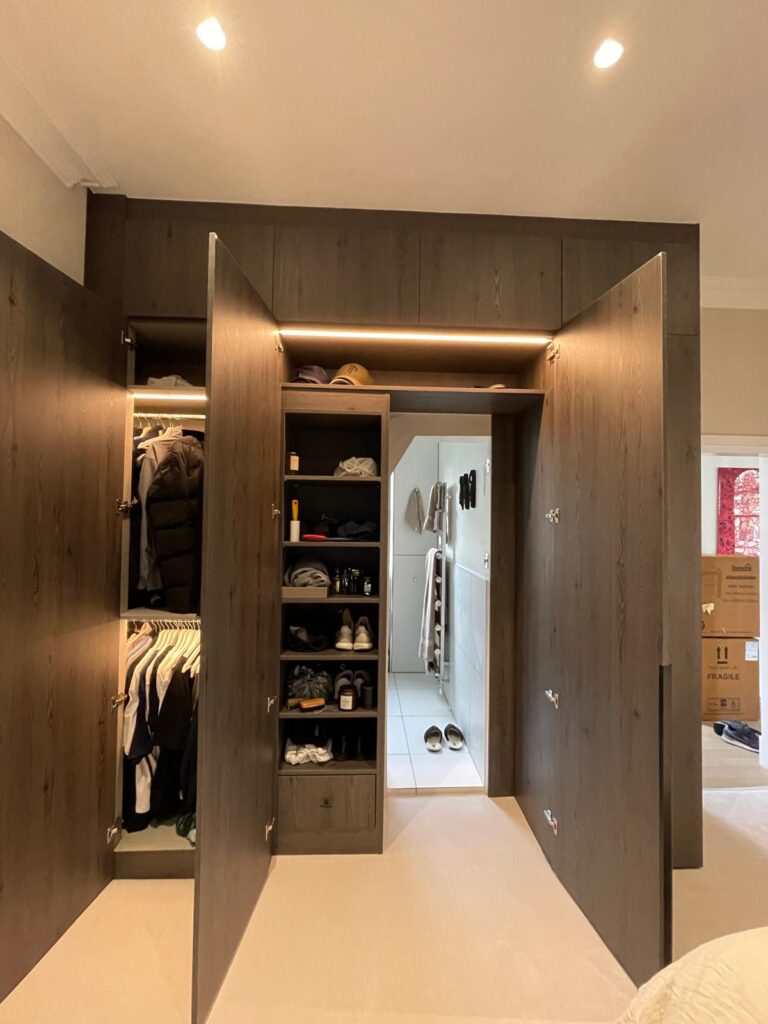

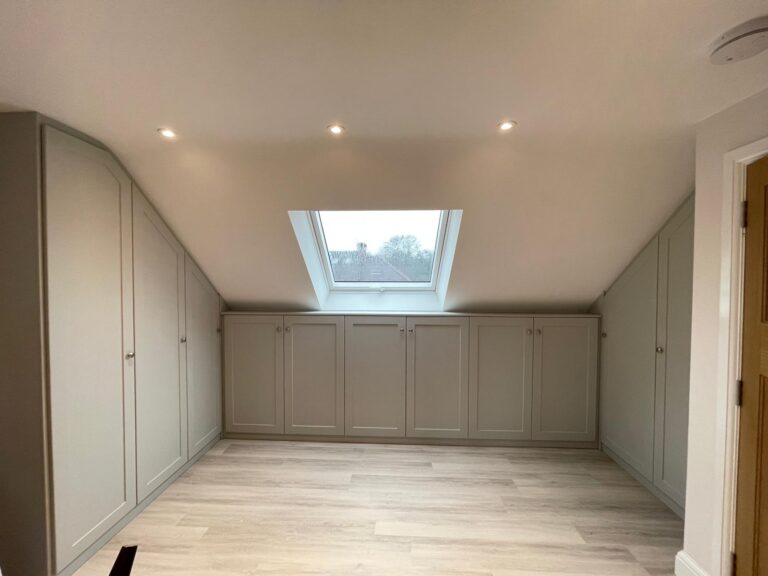

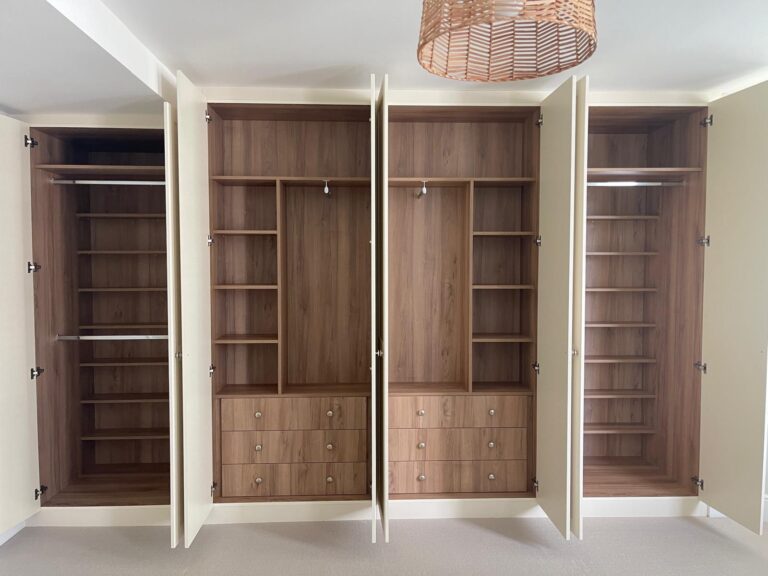
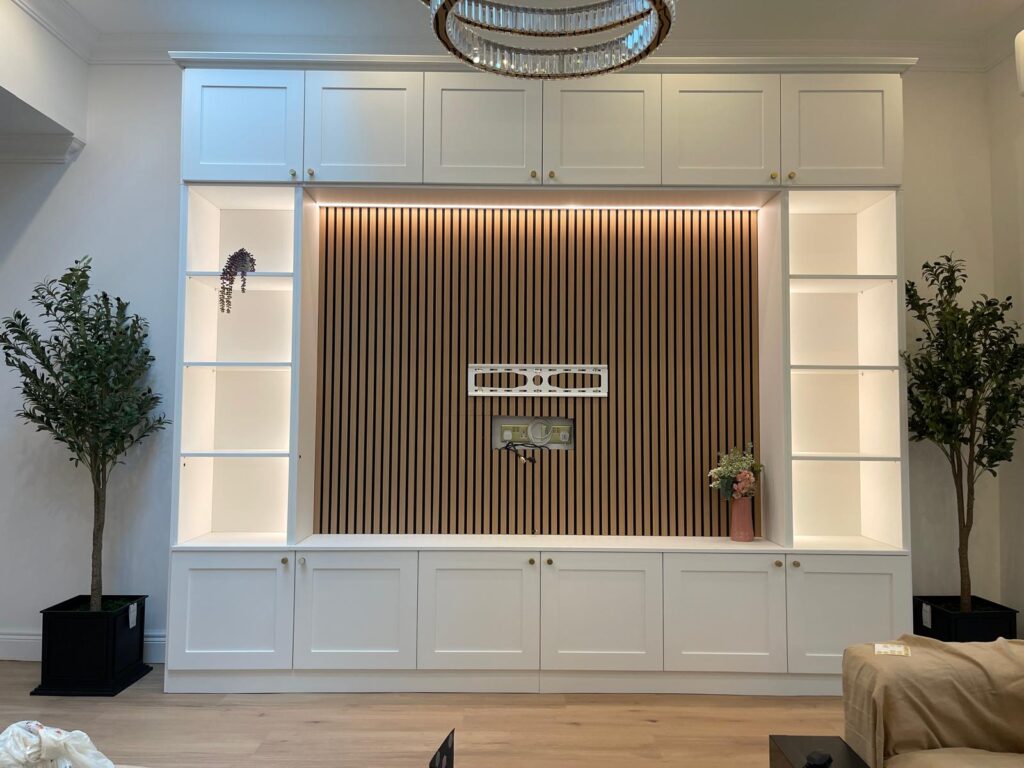



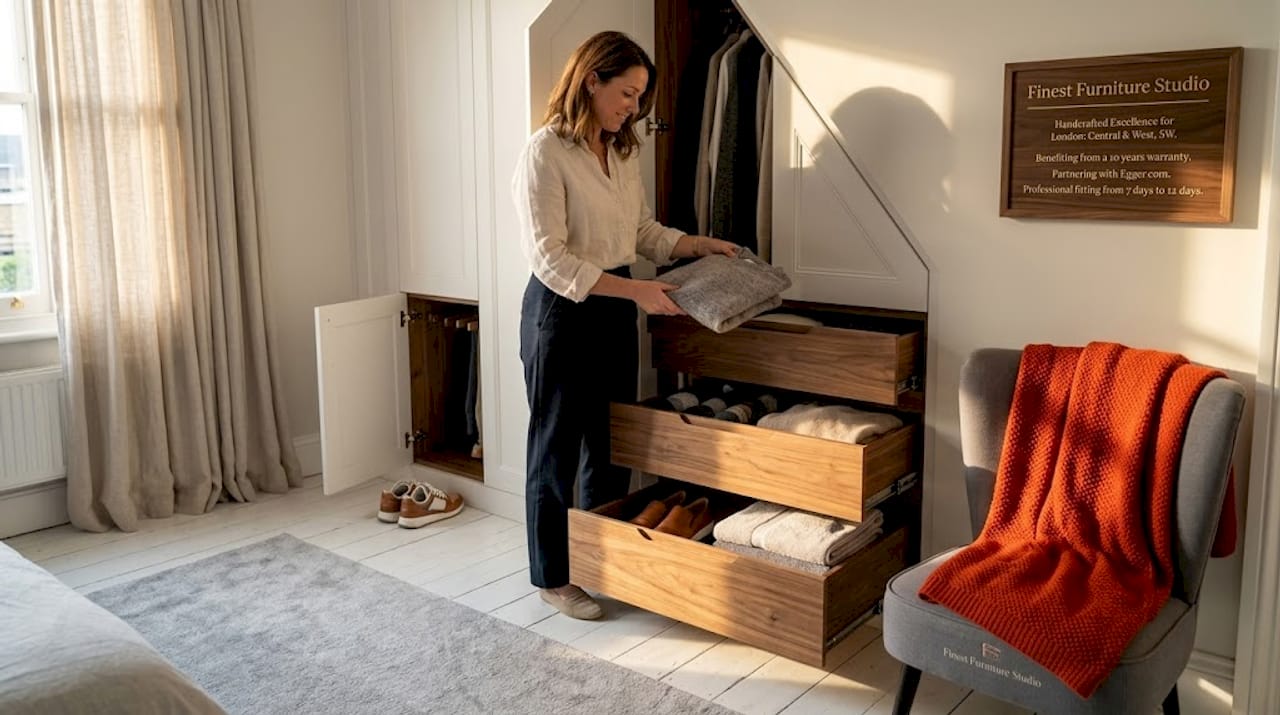
Most wardrobes have the same flaw. There is plenty of hanging space, a shelf or two at the top, and then a chaotic pile of folded clothes, accessories, and miscellaneous items at the bottom. Drawers inside fitted wardrobes solve this directly. They give every category of clothing a defined home, reduce morning frustration, and make the interior of your wardrobe feel genuinely considered rather than cobbled together. This guide walks you through everything from assessing your space and choosing the right drawer depths to planning layouts and selecting finishes that last.
Table of Contents
- Key takeaways
- Assessing your wardrobe space before adding drawers
- Choosing the right drawer depths and types
- Planning drawer layout and placement for daily use
- Drawer styles, finishes, and design details
- Installation, common mistakes, and maintenance
- My perspective on drawers as the heart of wardrobe design
- How Finest Furniture Studio can help you get it right
- FAQ
Key takeaways
| Point | Details |
|---|---|
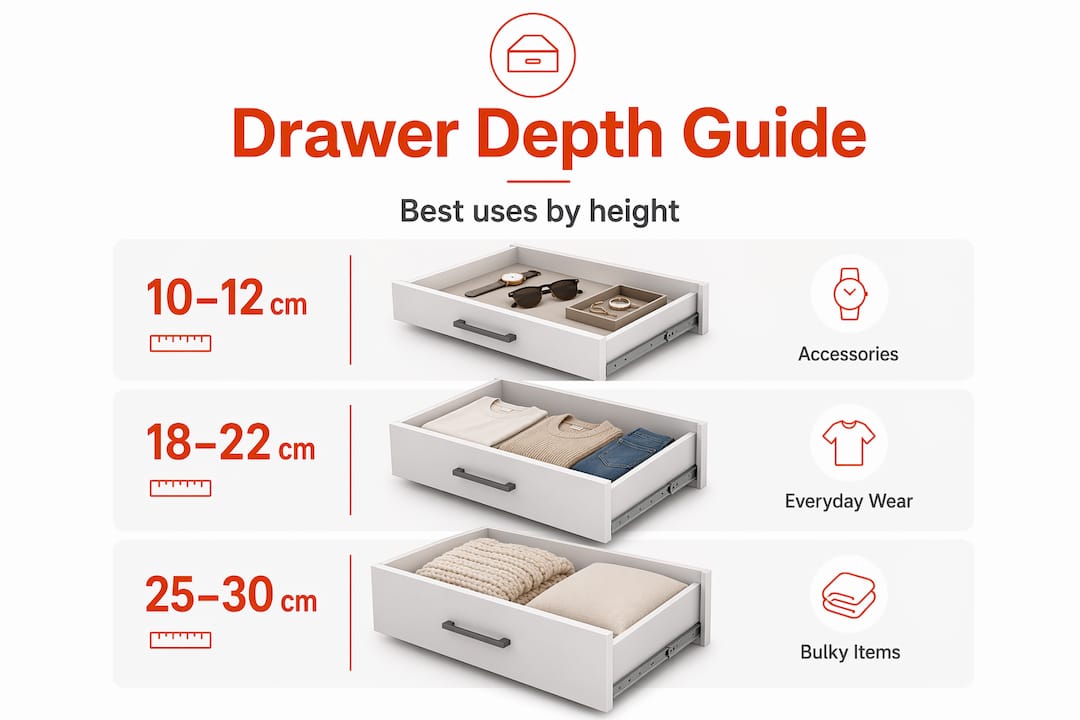
| Match drawer depth to clothing type | Use 10–12 cm for accessories, 18–22 cm for folded clothes, and 25–30 cm for bulky knitwear. |
| Plan placement ergonomically | Position most-used drawers between hip and shoulder height for comfortable daily access. |
| Avoid uniform drawer layouts | A varied drawer configuration tailored to specific items outperforms identical drawer sizes every time. |
| Use dividers to maintain order | Drawers without dividers quickly become cluttered; dividers preserve organisation over the long term. |
| Choose bespoke over off-the-shelf | Bespoke built-in wardrobe drawers offer better construction, soft-close runners, and a fit that standard units cannot match. |
Assessing your wardrobe space before adding drawers
Before you commit to a drawer layout, you need to understand what you actually own and how you use it. This step is the one most homeowners skip, and it is the reason so many fitted wardrobes end up with the wrong number of drawers in the wrong places.
Start with a clothing inventory. Sort everything into categories: items that hang, items that fold, and accessories. Within the folded category, separate everyday pieces from seasonal storage. This tells you immediately how much drawer space you genuinely need versus how much hanging rail you should preserve.
Next, measure your wardrobe interior carefully. Note the total width, height from floor to ceiling, and the depth from front to back. Most fitted wardrobes have an internal depth of around 55 to 60 cm, which is sufficient for standard drawer configurations. However, if you are working with a shallower alcove, you will need to adjust drawer depths accordingly.
Consider these factors when evaluating your wardrobe drawer space:
- Frequency of use. Items you reach for daily should be in the most accessible drawers, positioned between hip and shoulder height.
- Garment bulk. Thick knitwear and denim take up far more vertical drawer space than underwear or socks.
- Accessory volume. Jewellery, belts, ties, and scarves each benefit from dedicated shallow drawers rather than sharing space with clothing.
- Seasonal rotation. Seasonal items can occupy lower or higher drawers that are less convenient to access daily.
Pro Tip: Before finalising any drawer plan, spend one week noting which items you reach for every morning. This simple exercise reveals your true access priorities far more accurately than guessing.
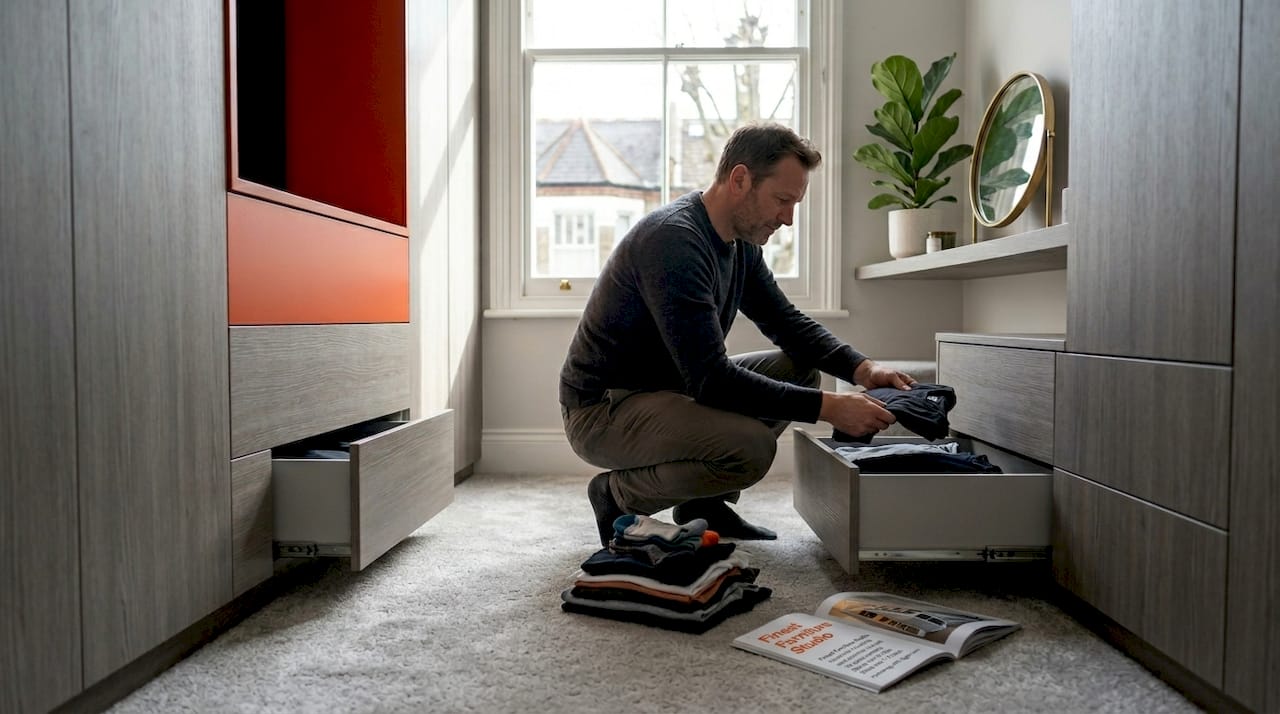
Ergonomics matter more than most people realise. Drawer placement reflects natural body movement and access frequency, which directly affects how comfortable your wardrobe feels to use each day. A beautifully designed wardrobe that requires you to crouch for your most-used items is a design failure, regardless of how it looks.
Choosing the right drawer depths and types
Not all drawers are equal, and choosing the wrong depth is one of the most common and costly planning errors. The good news is that optimal drawer depths are well established and straightforward to apply.
Shallow drawers: 10 to 12 cm
These are ideal for jewellery, accessories, ties, belts, socks, and underwear. At this depth, items stay visible and accessible without being buried under each other. Shallow drawers are also where drawer dividers make the biggest difference, allowing you to create dedicated zones for different accessory types within a single drawer.
Medium drawers: 18 to 22 cm
This is the workhorse depth for most fitted wardrobe storage. T-shirts, folded shirts, shorts, and lightweight knitwear all sit comfortably at this depth. You can stack two or three folded items without the drawer becoming difficult to close or the contents becoming impossible to find.
Deep drawers: 25 to 30 cm
Reserve these for bulkier garments: thick jumpers, denim, gym wear, and heavier folded trousers. Deep drawers are also useful for storing folded bed linen if your wardrobe doubles as bedroom storage. The key is not to overfill them, as a deep drawer packed too tightly defeats its own purpose.
| Drawer depth | Best use | Recommended dividers |
|---|---|---|
| 10–12 cm | Jewellery, accessories, socks, underwear | Yes, always |
| 18–22 cm | T-shirts, shirts, lightweight knitwear | Optional |
| 25–30 cm | Jeans, thick jumpers, gym wear | Rarely needed |
The combination of all three depths within a single fitted wardrobe creates a genuinely functional interior. A varied configuration tailored to specific items consistently outperforms a layout built around identical drawer sizes.
Quality construction matters just as much as depth. Bespoke wardrobe drawers feature soft-close runners, dovetail joints, and stronger materials than standard off-the-shelf units. Soft-close runners in particular make a noticeable difference to daily use, preventing slamming and extending the life of the hardware considerably.
Pro Tip: If you are unsure how many drawers you need, err on the side of more rather than fewer. Clients frequently underestimate drawer count and overestimate how much shelf space they actually need.
Planning drawer layout and placement for daily use
Getting the drawer layout right is where fitted wardrobe organisation moves from good to genuinely excellent. The goal is a wardrobe interior where everything you need is exactly where your hand reaches naturally.
Here is a practical framework for planning your drawer placement from top to bottom:
-
Upper zone (above shoulder height). Use this area for adjustable wardrobe shelves rather than drawers. Shelves here work well for bags, boxes, and items you access infrequently. Drawers at this height are awkward to open and difficult to see into.
-
Mid-upper zone (shoulder to chest height). This is a good position for medium-depth drawers holding everyday folded clothing. You can see into the drawer clearly and reach items without bending.
-
Prime zone (chest to hip height). Reserve this for your most-used drawers. Whether that is the shallow accessories drawer you open every morning or the medium drawer holding your daily T-shirts, this zone should contain whatever you reach for first.
-
Lower zone (hip to knee height). Deep drawers for bulkier items work well here. You are bending slightly to access them, which is fine for items you use less frequently, such as seasonal knitwear or gym wear.
-
Floor level. Avoid placing drawers at floor level if possible. They are uncomfortable to use and often become dumping grounds for rarely accessed items.
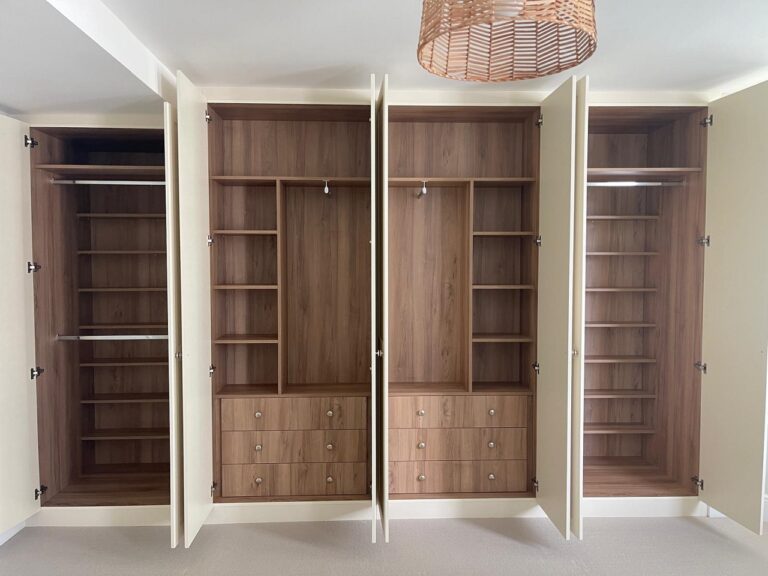
Integrating drawers with hanging rails and shelving requires careful thought. A typical layout might place a double hanging section on one side, a single hanging section above a bank of drawers on the other, and a central island of mid-height drawers flanked by shelving. This balance gives you maximum storage solutions without sacrificing the hanging space your clothing actually requires.
Drawer dividers for wardrobes are not optional extras. Drawers without dividers quickly become disorganised, with items migrating across the space and creating the same chaos you were trying to avoid. Fitted dividers, whether fixed or adjustable, keep each category of item in its designated zone.
Pro Tip: When planning your layout, photograph your current wardrobe contents laid out on the bed. This visual map makes it far easier to allocate drawer zones accurately during the design consultation.
Drawer styles, finishes, and design details
The interior of a fitted wardrobe is not just functional. It is a space you open every day, and the design details contribute directly to how pleasant that experience feels.
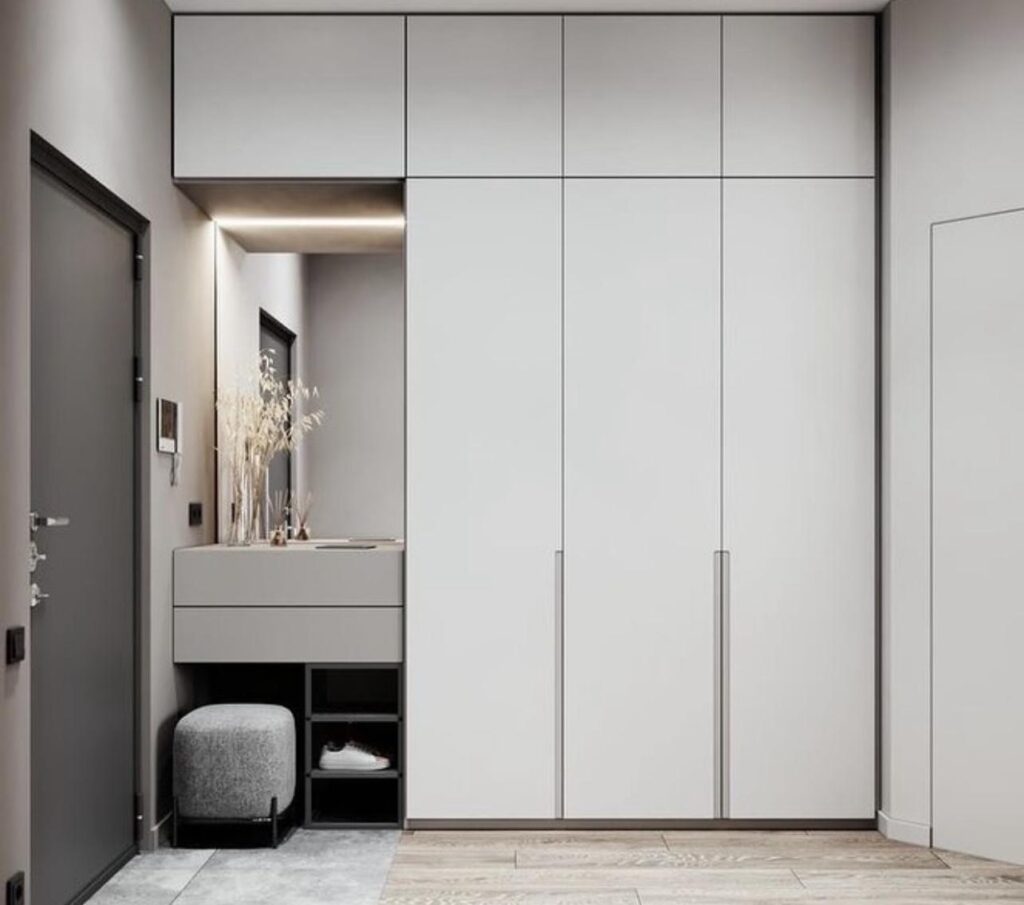
Matching drawer fronts to wardrobe doors creates architectural integrity throughout the piece. When the drawer fronts share the same finish, grain, or colour as the exterior doors, the wardrobe reads as a single coherent design rather than a collection of components. This is particularly important in custom wardrobe designs where the piece is meant to complement the wider room.
Key design considerations for drawer interiors and exteriors include:
- Integrated versus exposed handles. Push-to-open mechanisms and recessed finger pulls give a cleaner, more contemporary look. Traditional bar handles or knobs suit period properties and more classic interior styles.
- Interior lining materials. Suede or felt lining inside drawers protects jewellery and delicate garments from scratches. It also adds a tactile quality that elevates the overall feel of the wardrobe.
- Drawer front finishes. Options include painted MDF, real wood veneer, lacquered surfaces, and textured foil wraps. Each has different durability characteristics and maintenance requirements.
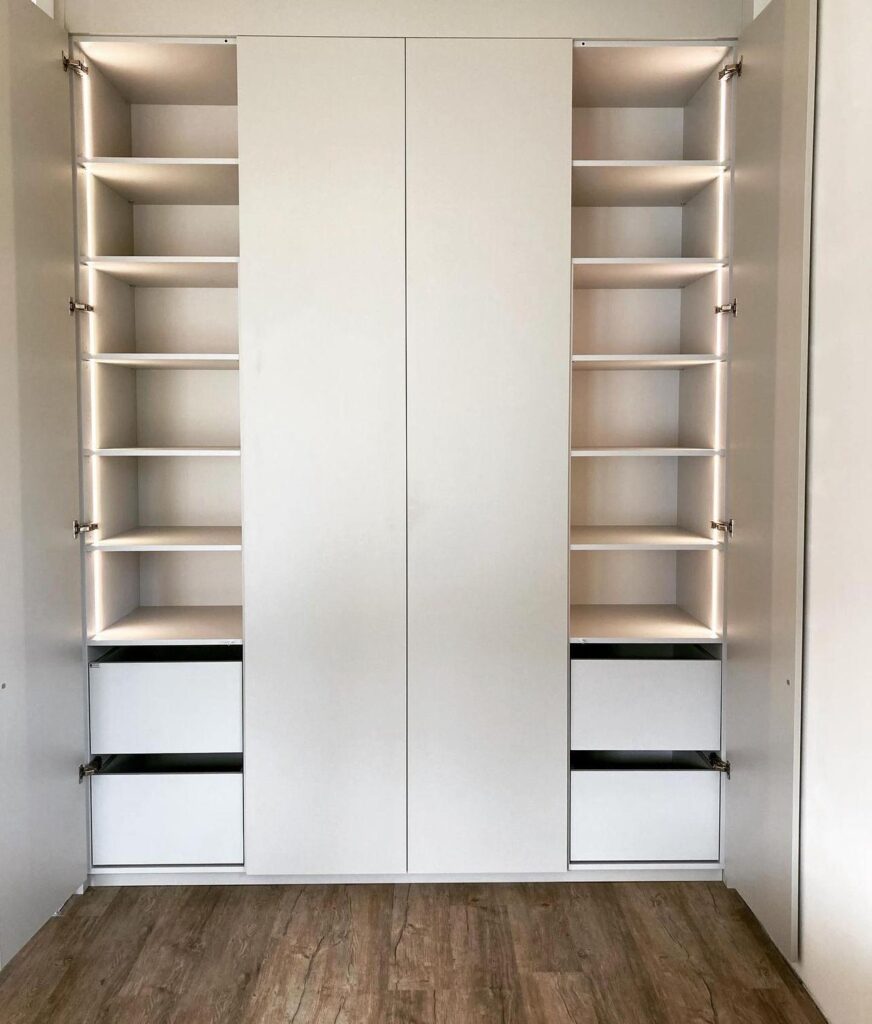
- Motion-activated lighting. Interior lighting near drawers significantly improves usability, particularly in larger wardrobes or rooms with limited natural light. LED strip lights fitted inside drawers or along the wardrobe interior activate when you open the door, making it easy to find items at any time of day.
- Construction quality. Dovetail joints indicate solid craftsmanship and are a reliable sign that the drawer box will hold its shape over years of use. Solid wood drawer boxes outlast engineered wood alternatives, particularly in humid environments.
For a reference on creative wardrobe storage organisation, combining the right finishes with smart internal layouts makes a measurable difference to how long your wardrobe stays organised.
Installation, common mistakes, and maintenance
Understanding what to expect during installation and how to avoid the most common planning errors will save you time, money, and frustration.
The most significant mistake homeowners make is prioritising the exterior appearance of their wardrobe over the internal drawer layout. Poor internal planning directly undermines functionality, regardless of how attractive the doors look from the outside. The interior is where you interact with the wardrobe every day. It deserves as much design attention as the exterior.
Here are the most common errors to avoid during the planning stage:
-
Using uniform drawer depths throughout. As covered earlier, identical drawer sizes waste space and force you to store items in ways that do not suit them.
-
Neglecting ergonomic placement. Placing your most-used drawers at floor level or above shoulder height creates daily inconvenience that compounds over time.
-
Underestimating drawer count. Most homeowners need more drawers than they initially plan for. A bespoke consultation helps you arrive at the right number based on your actual clothing inventory.
-
Skipping drawer dividers. Even the best drawer layout deteriorates quickly without dividers. Plan for them from the start rather than adding them as an afterthought.
-
Choosing standard units over bespoke fitting. Off-the-shelf drawer units rarely fit wardrobe interiors precisely. Gaps, awkward proportions, and mismatched finishes are common results.
“The difference between a wardrobe that works and one that frustrates you daily comes down almost entirely to how well the internal drawer layout was planned before a single piece of wood was cut.”
For maintenance, soft-close drawer runners benefit from occasional cleaning to remove dust and debris from the track. Wipe interior lining materials with a dry cloth rather than damp ones to preserve the texture. Hardware such as handles and pulls can be tightened periodically as fixings naturally loosen with regular use.
If your needs change over time, bespoke fitted wardrobes with adjustable wardrobe shelves and modular drawer configurations can be reconfigured without replacing the entire unit. This adaptability is one of the strongest arguments for investing in quality from the outset.
My perspective on drawers as the heart of wardrobe design
I have worked on fitted wardrobe projects across London for a number of years now, and the pattern I see repeatedly is this: homeowners spend a great deal of time choosing door styles and finishes, then treat the internal drawer layout as a secondary decision. It is almost always the wrong way round.
In my experience, the drawers are where the wardrobe either succeeds or fails. A beautiful exterior with a poorly planned interior is a wardrobe you will tolerate rather than enjoy. The opposite, a simpler exterior with a genuinely well-thought-out drawer configuration, is a wardrobe that improves your morning routine in ways you notice every single day.
What I have found works best is treating the drawer layout as the starting point of the design, not the finishing touch. You begin with the clothing inventory, work out the drawer depths and counts you actually need, position them ergonomically, and then build the rest of the wardrobe around that core. The exterior follows the interior logic, not the other way around.
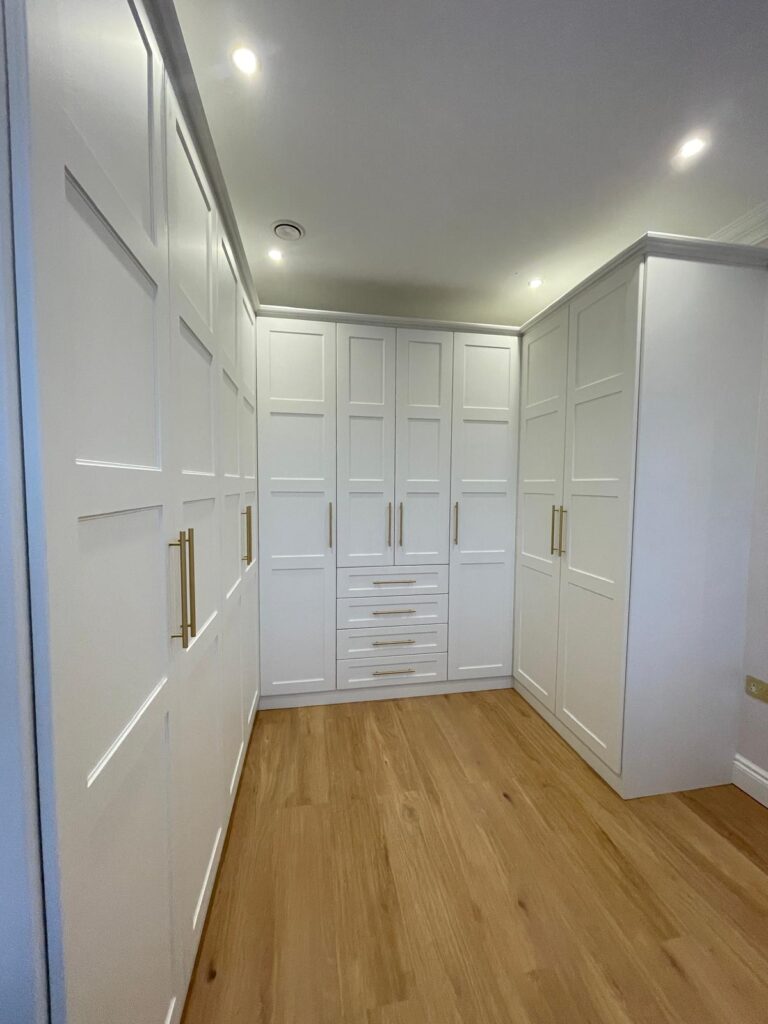
I have also noticed that clients who invest in walk-in wardrobe design with properly planned drawer zones report a qualitative change in how they feel about getting dressed. That might sound like an overstatement, but a well-organised space genuinely reduces cognitive load. When everything has a place and you can find it without searching, the start of your day is simply calmer.
The lesson I keep coming back to is straightforward: drawers are not an add-on to a fitted wardrobe. They are its functional core.
— Aureliu
How Finest Furniture Studio can help you get it right
If this guide has made one thing clear, it is that getting drawers inside fitted wardrobes right requires planning, precision, and materials that are built to last. That is exactly what we do at Finest Furniture Studio.
We design and install bespoke fitted wardrobes across West London, including Richmond, Wimbledon, Putney, Kingston, Chiswick, Fulham, Chelsea, Ealing, Twickenham, Barnes, and Hammersmith. Every project begins with a free design visit at your home, where we assess your space, discuss your storage needs, and create a drawer configuration tailored to your actual wardrobe contents.
Our installations are completed within 7 to 12 days, and every wardrobe we fit comes with a 10-year guarantee. We also remove and dispose of your old wardrobe as part of the service, so the transition is as straightforward as possible.
For homeowners in West London looking for custom wardrobe solutions that genuinely work, we would love to hear from you. Contact us for a free design visit or call us directly on 📞 07468 150807. You can also reach us on WhatsApp or visit us at 124 City Road, Kemp House, London, EC1V 2NX.
FAQ
What are the best drawer depths for a fitted wardrobe?
The three recommended depths are 10 to 12 cm for accessories and jewellery, 18 to 22 cm for folded everyday clothing, and 25 to 30 cm for bulkier garments such as knitwear and denim. Using a mix of all three gives you the most functional fitted wardrobe storage.
How many drawers should a fitted wardrobe have?
There is no fixed number, but most homeowners need more drawers than they initially plan for. A bespoke design consultation based on your actual clothing inventory is the most reliable way to arrive at the right count.
Where should drawers be positioned inside a fitted wardrobe?
Position your most-used drawers between hip and shoulder height for the most comfortable daily access. Reserve lower zones for bulkier seasonal items and upper zones for shelving rather than drawers.
Do drawer dividers really make a difference?
Yes. Drawers without dividers quickly become disorganised as items shift around with use. Fitted dividers maintain order and make it far easier to find specific items quickly.
Is bespoke better than off-the-shelf for wardrobe drawers?
Bespoke built-in wardrobe drawers offer a precise fit, higher-quality construction with soft-close runners, and finishes that match your wardrobe exterior. Standard units rarely achieve the same level of integration or durability within a fitted wardrobe interior.