
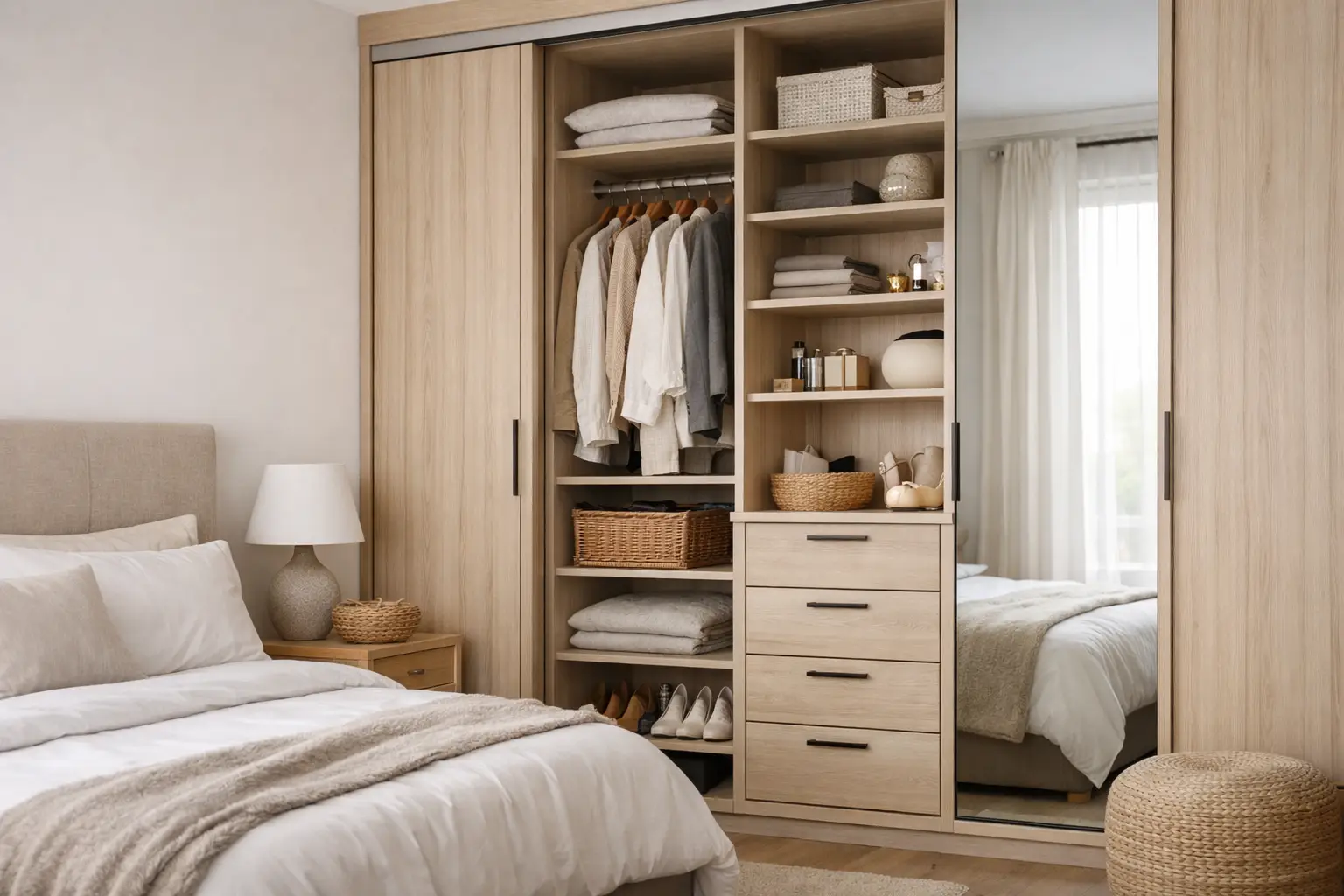
A small bedroom rarely feels short on potential – it feels short on breathing room. When the wardrobe is too bulky, too shallow, or simply in the wrong place, the whole bedroom starts working harder than it should. This small bedroom wardrobe makeover example shows how thoughtful fitted design can change not just storage, but the way the room feels to live in every day.
The most common issue in compact bedrooms is not a lack of floor area alone. It is the way standard furniture leaves awkward gaps, steals light, blocks movement and forces clothing into overflow storage elsewhere in the house. A wardrobe that is supposedly practical can end up creating visual noise, dead space above, and a layout that never feels settled.
That is why a wardrobe makeover in a small bedroom works best when it begins with the room itself, not with a ready-made unit. Ceiling height, door swing, chimney breasts, window position and even where you naturally stand to get dressed all shape the right solution. In smaller rooms, every detail earns its place.
A real small bedroom wardrobe makeover example
Imagine a typical London bedroom measuring just over three metres by three and a half, with one double bed, a narrow bedside table and a freestanding wardrobe placed along the shortest wall. On paper, that might sound workable. In practice, the wardrobe doors only half open because of the bed, the top shelf is hard to reach, and there is a wasted gap between the wardrobe and ceiling collecting dust.
The homeowner’s brief is simple – create more storage without making the room feel boxed in. They want hanging space for workwear, shelves for knitwear, a place for shoes and bags, and a cleaner overall look that suits a calm, grown-up interior.
The makeover starts by removing the freestanding piece and replacing it with a fitted wardrobe designed wall to wall and floor to ceiling. Instantly, the room gains storage in the vertical space that had been lost before. Rather than one deep void at the top, the new design includes upper cabinets for less-used items such as spare bedding and seasonal clothing.
Instead of hinged doors pushing into the room, slim sliding doors are chosen to improve circulation. This is one of those details that really depends on the room. Hinged doors can give easier access to the full wardrobe interior, but in a tight bedroom they often need more clearance than the layout can spare. Sliding doors reduce that conflict and make daily use simpler.
A pale painted finish helps the wardrobe sit quietly within the room rather than dominating it. If the room has limited natural light, this matters. Dark finishes can look dramatic, but they also have more visual weight. In a compact bedroom, lighter colours usually keep things feeling open, though a richer tone can work beautifully if the rest of the scheme is restrained.
What changed in the layout
The biggest improvement is not always the extra shelves. It is the sense of order. By fitting the wardrobe precisely to the available wall, the bed can be positioned with more confidence and the sightlines across the room become cleaner. Nothing juts out, nothing leans, and there are no unusable corners left behind.
In this small bedroom wardrobe makeover example, the internal layout is split into practical zones. One section includes a double hanging rail for shorter items. Another has a single full-height rail for dresses and coats. A central bank of drawers deals with smaller items that would otherwise end up in baskets or on surfaces. Open shelving above keeps occasional-use storage neatly contained behind closed doors.
This kind of arrangement often gives more usable capacity than a larger freestanding wardrobe because the interior is planned around the owner’s routine. That is the real difference with bespoke fitted furniture. It is not only about filling space. It is about using it properly.
Why fitted wardrobes outperform freestanding pieces in small rooms
Freestanding wardrobes suit some bedrooms very well, particularly where flexibility matters more than efficiency. If you move home often or want to reconfigure a room regularly, they can be the practical choice. But in a smaller bedroom with a fixed layout, they usually ask the room to compromise.
They leave gaps at the side, wasted space above, and they rarely align neatly with skirting boards, coving or uneven walls. Fitted wardrobes solve those issues by working with the architecture instead of ignoring it. In older homes around areas such as Richmond, Wimbledon or Putney, where alcoves and irregular walls are common, that precision can make a dramatic difference.
There is also the visual advantage. When storage looks integrated, a room tends to feel calmer. That does not mean every wardrobe must disappear into the background. It simply means the proportions, finish and detailing should feel intentional rather than temporary.
Design decisions that matter most
Good wardrobe makeovers are won or lost on details that seem small at first. Depth is a perfect example. Standard hanging space often needs around 55 to 60 cm internally, but not every wall can comfortably take that without affecting movement around the bed. In some rooms, a combination of full-depth hanging with shallower shelving gives a better result than forcing one oversized unit across the whole wall.
Door style is another key decision. Mirrored doors can help bounce light and are useful where there is no room for a separate full-length mirror. The trade-off is that they create a more reflective, sometimes busier look. Solid painted doors feel softer and more architectural. For many homeowners, the right answer comes down to whether the priority is light, minimalism, or decorative character.
Interior lighting is worth considering too. In a small bedroom, overhead lighting often casts shadows inside wardrobes. Integrated lighting can improve visibility and make the wardrobe feel more luxurious, but it should support the design rather than become a gimmick. If the budget is being balanced carefully, internal organisation usually delivers greater day-to-day value than extra features.
The balance between storage and spaciousness
One mistake in compact rooms is assuming more storage is always better. It is possible to overbuild. A wardrobe that stretches too aggressively into the room may solve one problem while creating another, especially if it narrows the walkway or crowds the bed.
The best makeover respects proportion. Sometimes that means keeping one section shallower, introducing lighter finishes, or using fewer door divisions to create a cleaner frontage. A fitted wardrobe should make the room feel more composed, not merely more packed.
This is where expert design guidance matters. A well-made wardrobe is not just cabinetry. It is part of the room’s architecture and should support how the bedroom is actually used, from getting ready in the morning to storing items seasonally and keeping surfaces clear.
What homeowners usually notice after the makeover
The first comment is often that the room feels bigger, even when the wardrobe itself is larger than the piece it replaced. That sounds contradictory, but it is easy to explain. Clutter shrinks a room faster than fitted furniture does. Once everything has a place and the lines of the room are simplified, the space feels easier to occupy.
The second change is convenience. Clothes are easier to find, drawers glide properly, and there is less need for secondary storage elsewhere. That has a knock-on effect beyond the bedroom. Hall cupboards are freed up, spare rooms stay tidier, and the whole home works better.
For homeowners investing in quality interiors, there is also the long-term value of a wardrobe that looks built for the property. Bespoke fitted furniture tends to feel more considered and more durable than pieced-together alternatives. When made well and installed properly, it becomes part of the home rather than another item to replace later.
Is this kind of makeover right for every small bedroom?
Not automatically. If the room is temporary, the budget is very limited, or the layout may change significantly in the near future, bespoke fitted wardrobes may not be the first step. In those cases, improving decluttering systems or replacing a badly sized freestanding unit with a better one can still help.
But if the frustration is ongoing and the bedroom is part of a home you want to improve properly, a fitted wardrobe makeover is often one of the most effective upgrades you can make. It deals with storage, appearance and usability all at once.
The strongest small bedroom wardrobe makeover example is never about squeezing in as much cabinetry as possible. It is about creating a room that feels easier, lighter and more beautifully resolved. When every inch is designed with purpose, even a compact bedroom can feel remarkably generous.
If your current wardrobe makes the room feel tighter than it needs to, that is usually a sign the furniture is dictating the layout instead of supporting it. The right bespoke solution turns that around – and once it does, the bedroom often becomes one of the calmest, hardest-working spaces in the home.

