








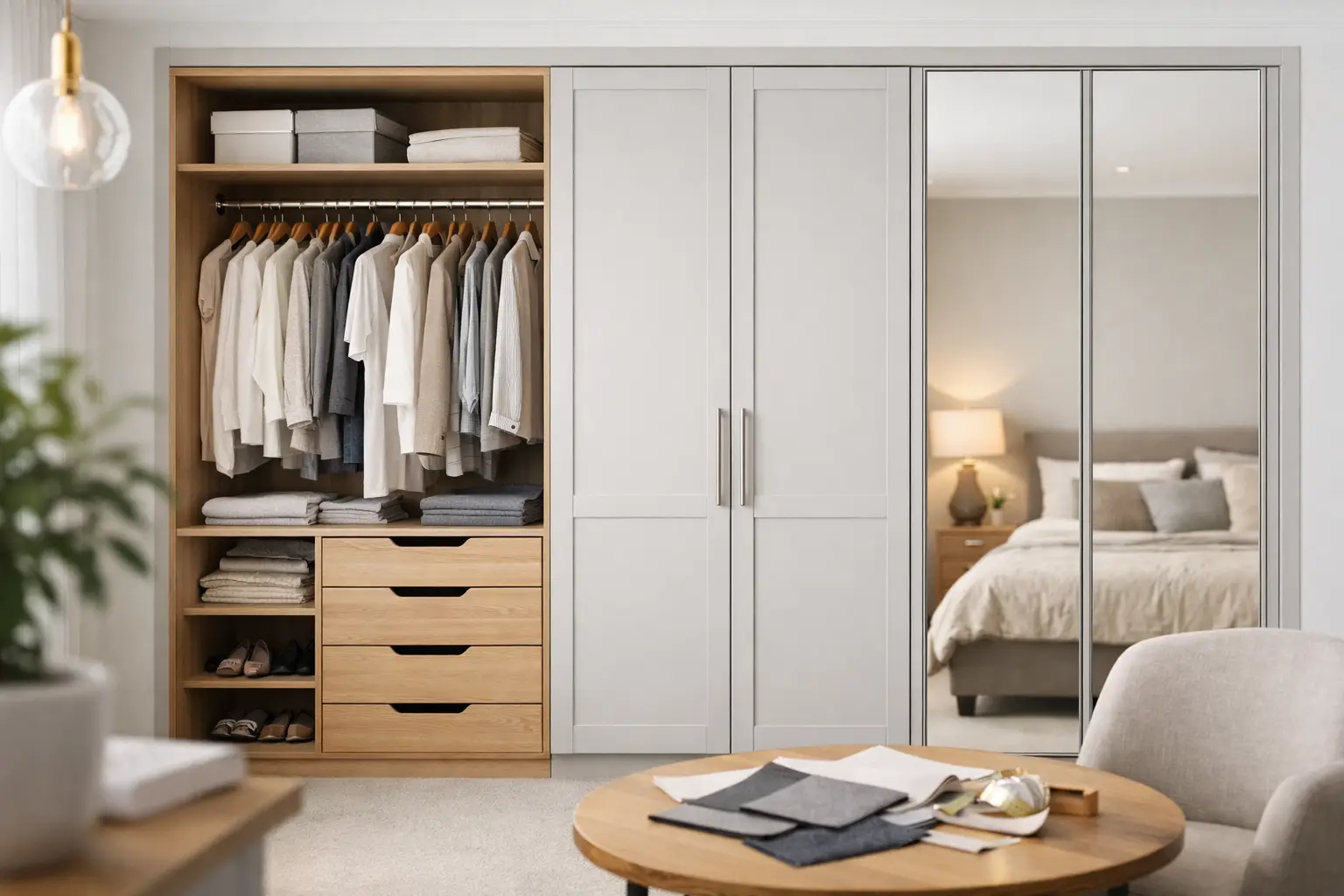
A wardrobe can look perfect in a showroom and still be wrong for your room. The issue is rarely colour or door style alone – it is whether the design works with the way you live, the shape of the space and the amount of storage you actually need. That is why a fitted wardrobe buying guide matters before you commit. A well-planned fitted wardrobe should feel effortless to use every day, while making the whole room calmer, cleaner and better resolved.
What a fitted wardrobe should do well
A fitted wardrobe is not simply a larger version of a freestanding one. It is a made-to-measure piece of furniture designed around your walls, ceiling height, alcoves or awkward angles, so it uses space that would otherwise sit empty. In period homes, loft rooms and modern flats alike, that difference is often what turns a cluttered bedroom into one that feels considered.
The best designs balance three things at once: storage capacity, visual proportion and ease of use. If one of those is ignored, the wardrobe may still look attractive, but it will not perform as well as it should. For example, a wall of doors can appear sleek, yet become frustrating if hanging rails are too high, drawers are too shallow or access is awkward around the bed.
Start with the room, not the wardrobe
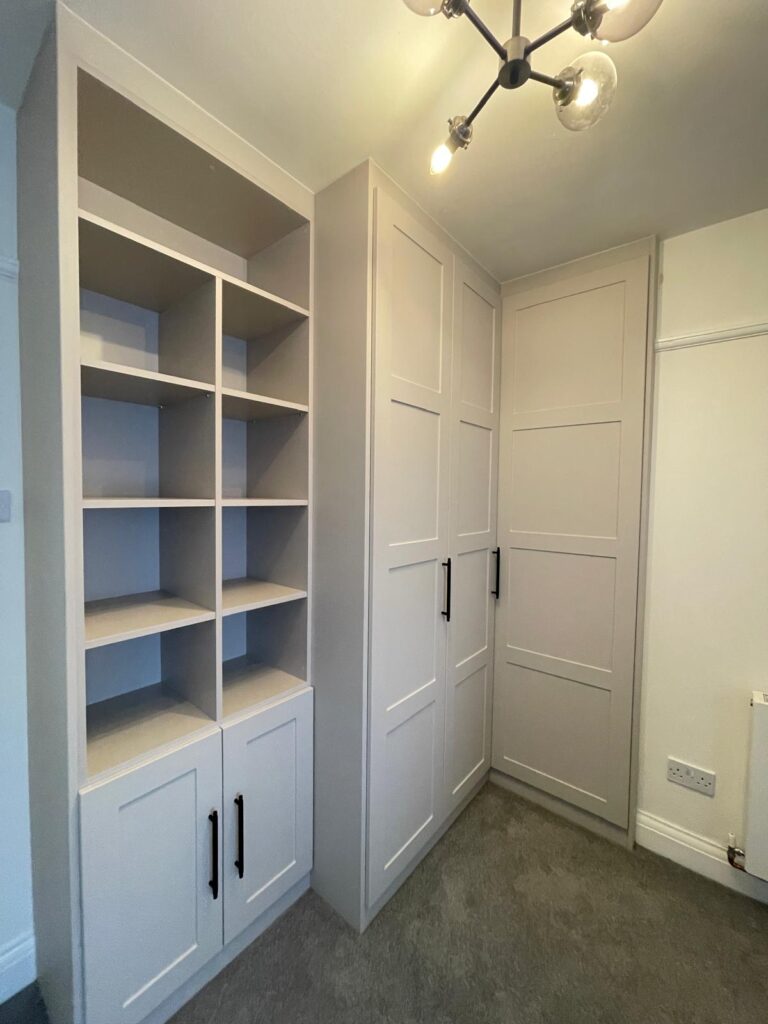
The most common mistake is choosing a style too early. Before looking at finishes, think about the room itself. Ceiling height, chimney breasts, alcoves, windows, radiators and door swings all affect what is possible. A fitted design should respond to the architecture rather than fight it.
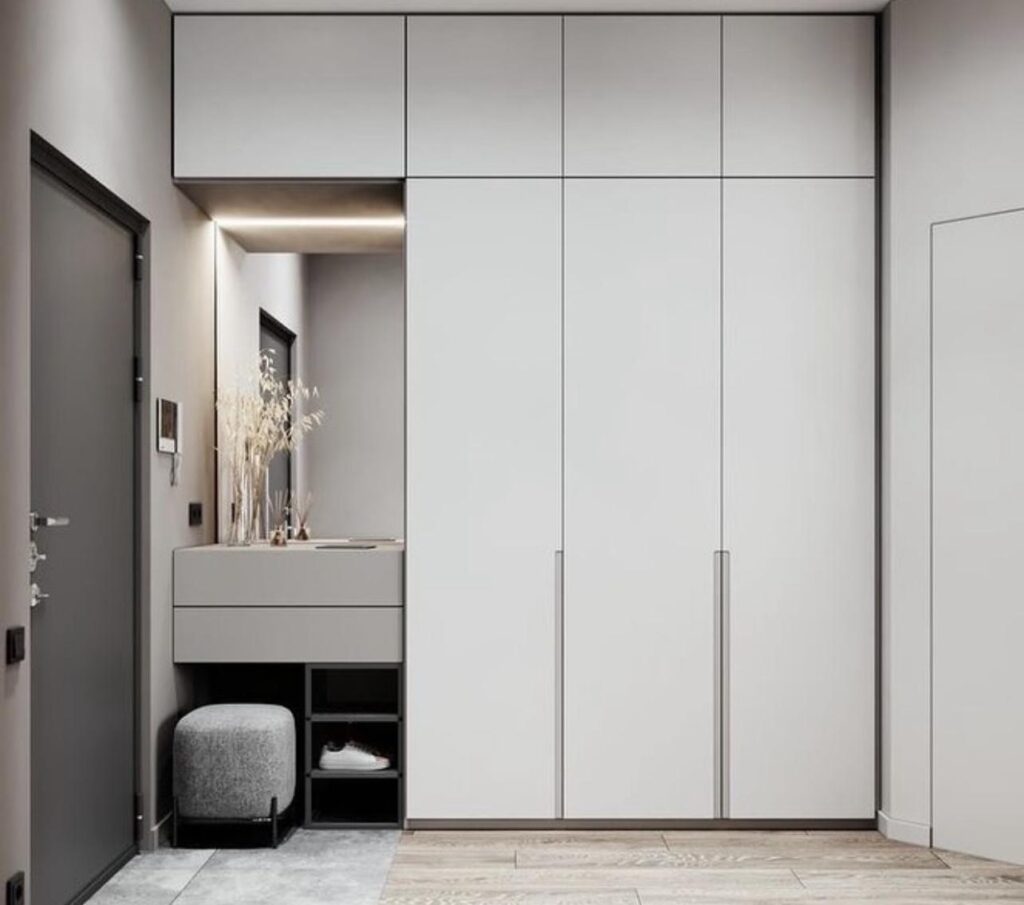
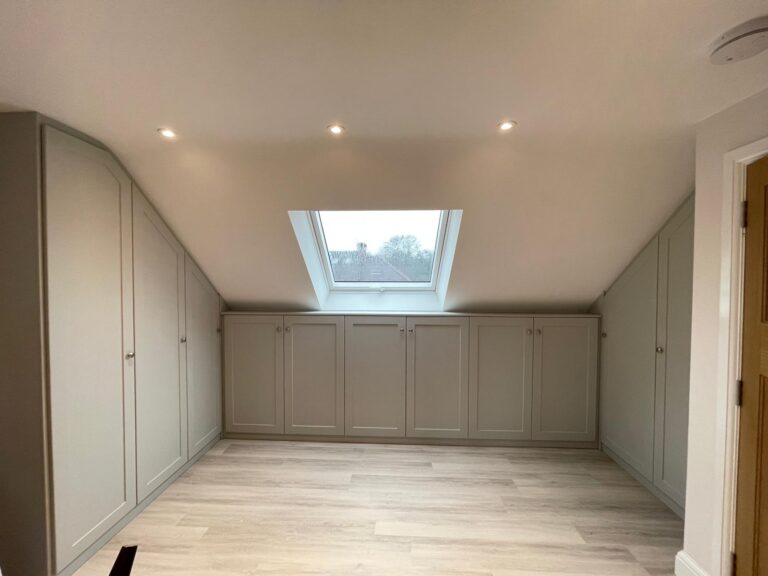
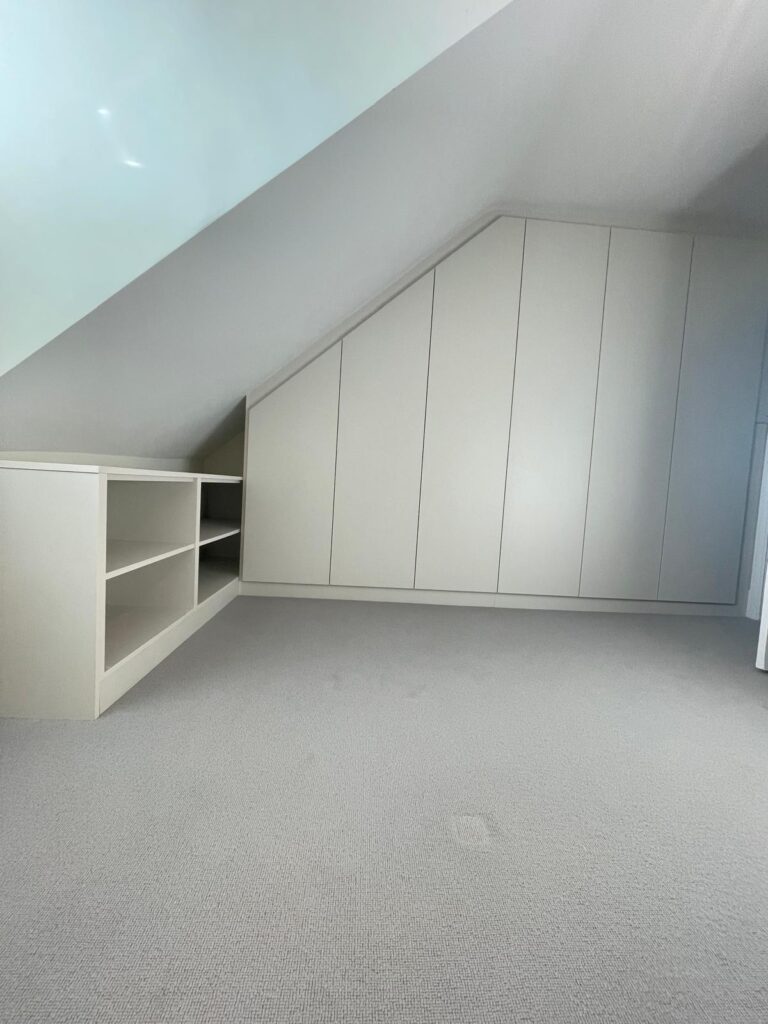
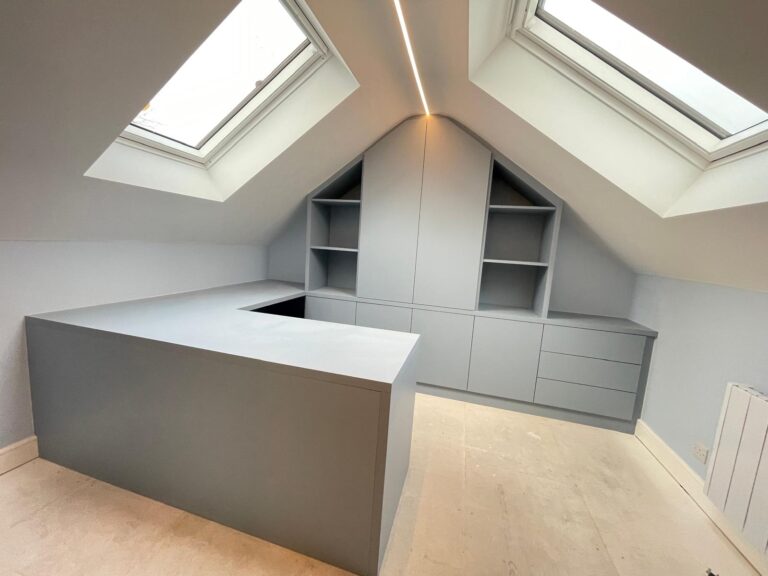
In smaller bedrooms, floor-to-ceiling cabinetry often works harder than wide, low units because it captures vertical space and reduces visual gaps where dust and clutter gather. In loft conversions, sloping ceilings can still become useful storage with carefully planned rails, shelving and drawers. If your room has limited clearance, sliding doors may make more sense than hinged ones, but that depends on how you prefer to access your clothes.
This is where bespoke design earns its value. Instead of trying to make standard sizes fit, the furniture is shaped around the room and your routine.
A fitted wardrobe buying guide to door styles
Door style affects more than appearance. It changes how the room feels and how practical the wardrobe is in daily use.
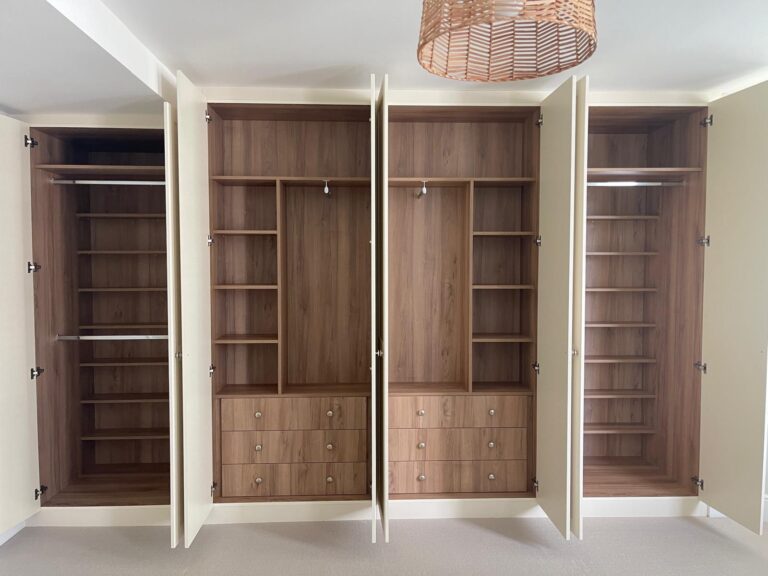
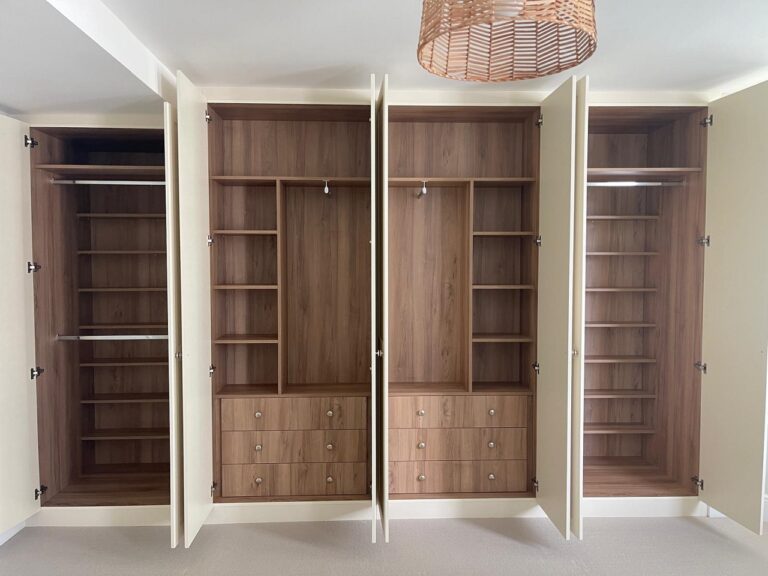
Hinged doors suit many bedrooms because they offer full access to the interior at once. If you like to see everything clearly while dressing, they are often the most convenient option. They also suit classic and shaker-style designs particularly well. The trade-off is clearance. In a tighter room, open doors can interrupt movement around the bed or bedside tables.
Sliding doors are ideal where space is restricted or a cleaner, more contemporary look is preferred. Mirrors or glass panels can make a room feel larger and brighter, which is especially useful in compact London bedrooms. The compromise is that you only access one side at a time, so the internal layout needs more thought.
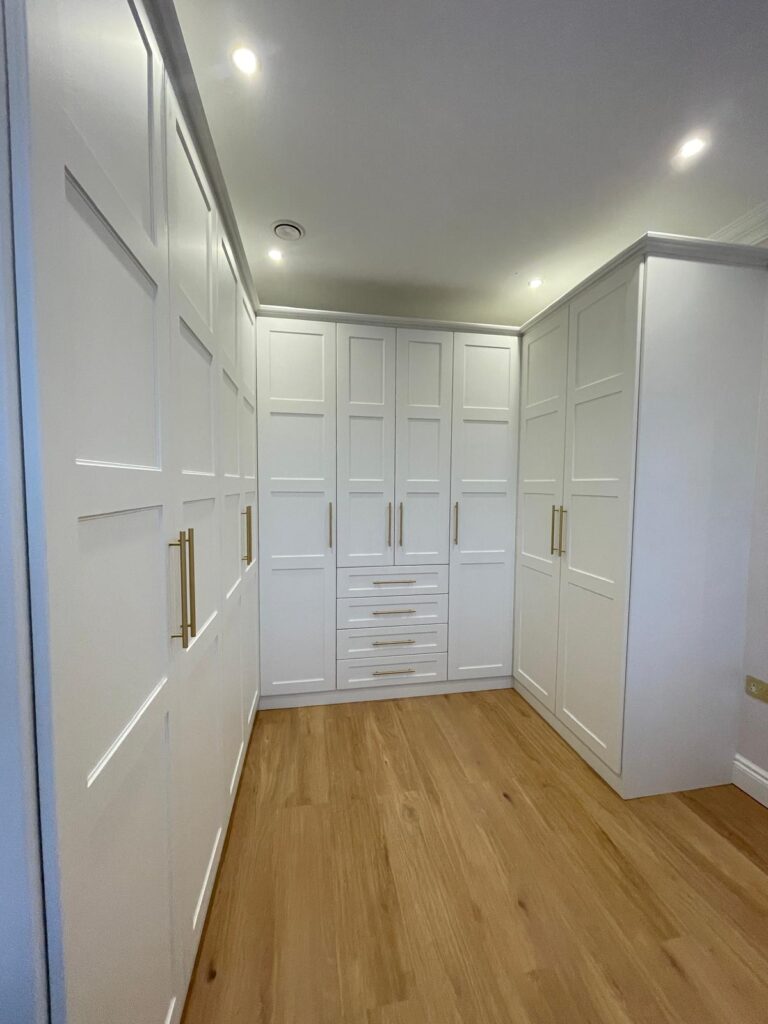
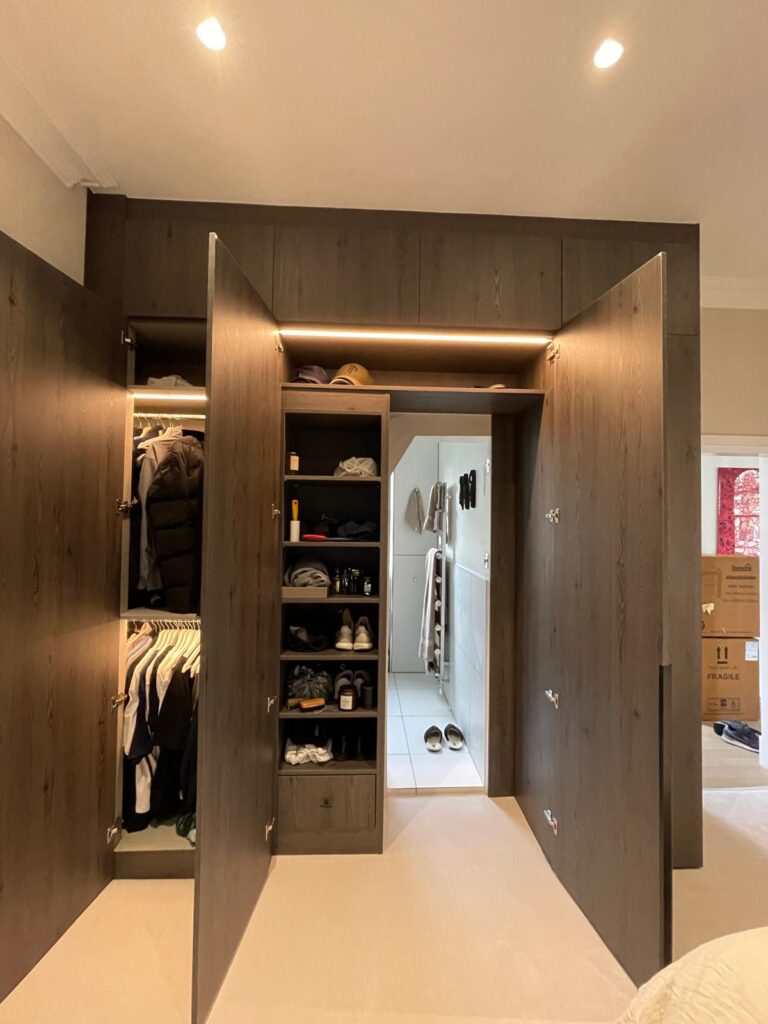
Walk-in wardrobe layouts offer a different experience altogether. They are less about concealing storage and more about creating a dressing zone. If you have a spare room, a generous main bedroom or an underused corner, this can be a beautiful solution. But it still needs discipline in the planning. A walk-in that lacks proper lighting, drawer space or display balance can feel more chaotic than luxurious.
Think harder about the inside than the outside
Most buyers spend too long choosing finishes and not enough time on the internal arrangement. Yet the interior is what determines whether the wardrobe genuinely improves daily life.
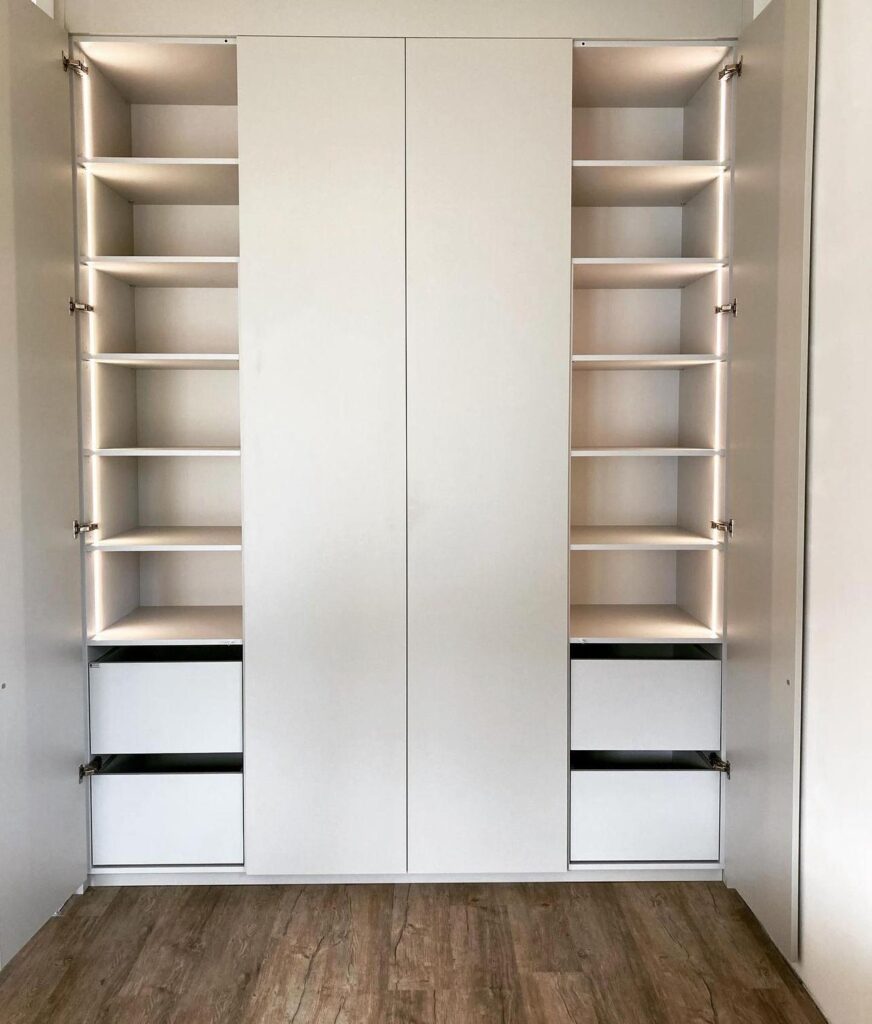
Start with your clothing rather than a generic storage plan. Long dresses, shirts, folded knitwear, shoes, handbags, bedding and accessories all need different proportions. Double hanging can dramatically increase capacity for shorter items, while full-length sections remain essential for coats and dresses. Drawers are better for smaller items that disappear on open shelves. Adjustable shelving gives flexibility, but too much of it can leave the interior feeling messy rather than tailored.
A good design should also account for who is using the wardrobe. A shared wardrobe for a couple needs a clear division of space. A child’s room may need lower rails now, but adaptability later. In family homes, extra top storage for suitcases or spare duvets can be as important as everyday hanging.
Materials, finishes and why quality shows over time
A fitted wardrobe is a permanent feature of the room, so quality becomes visible quite quickly. It shows in the smoothness of door alignment, the strength of drawer runners, the consistency of finishes and how well edges and joints are handled.
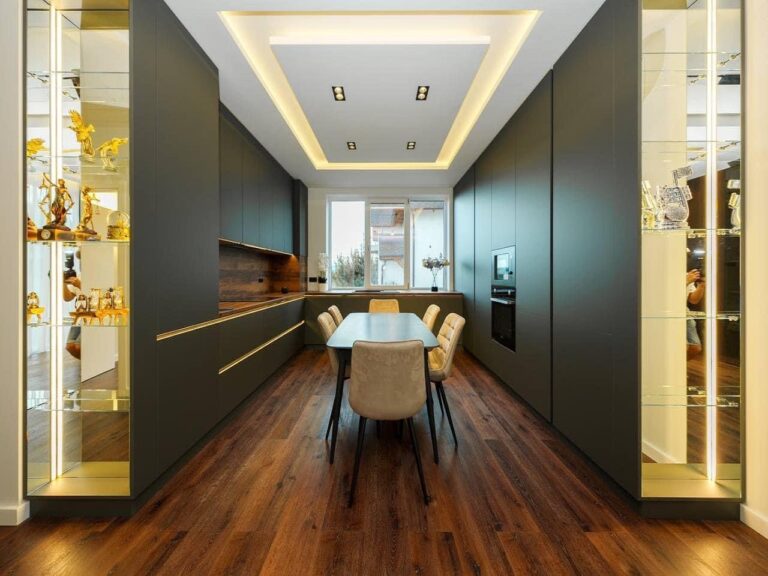
Matt painted finishes offer a refined, architectural look and work beautifully in calm bedroom schemes. Woodgrain effects add warmth and can soften more contemporary spaces. Mirrored panels can increase light and create a sense of space, though they are not for everyone if you prefer a quieter, more understated feel.
Ask how the wardrobe will wear over time, not just how it looks on day one. Fingerprints, scratches, warped panels and cheap fittings are where lower-grade furniture tends to reveal itself. A bespoke wardrobe should feel reassuringly solid and remain that way.
Price matters, but so does what is included
Cost is a practical part of any fitted wardrobe buying guide, and it helps to look beyond the starting figure. Pricing depends on size, materials, internal features, door type and the complexity of the room. Awkward spaces are often more labour-intensive, but they are also where fitted furniture delivers the most value.
Transparent pricing matters because homeowners should be able to understand what they are paying for. A lower quote may exclude interior drawers, premium finishes, fitting or design revisions. A more complete quote can be better value if it includes careful planning, professional installation and a meaningful guarantee.
For many buyers, the better question is not simply what the wardrobe costs, but what problem it solves. If it replaces multiple mismatched units, clears visual clutter and makes the room function properly, its value is easier to see.
Installation and lead times are part of the purchase
A wardrobe can be beautifully designed and still become stressful if the fitting process is poorly managed. Ask what happens from survey to installation, how long the project is likely to take and whether there is a clear point of contact throughout.
Professional installation is especially important in older properties where walls and floors are not perfectly straight. Bespoke furniture needs precise fitting if it is going to look integrated rather than simply squeezed into place. If a company offers a realistic fitting timeframe and stands behind the result with a proper guarantee, that adds genuine peace of mind.
At Finest Furniture Studio, many homeowners value this part of the service just as much as the finished design – especially when they want a premium result without a drawn-out process.
Questions worth asking before you buy
It is sensible to ask how the design will make use of dead space, whether the interior is tailored to your wardrobe habits and what can be adjusted later if your needs change. You should also ask what finish options suit your room’s light levels, whether accessories such as drawers and shoe storage are included, and how the installation team handles uneven walls or difficult corners.
These questions are not about being difficult. They are how you tell the difference between a standard sales pitch and a genuinely thoughtful design service.
The right wardrobe should feel designed for your life
The most successful fitted wardrobes do not shout for attention, even when they are visually striking. They simply make the room work better. They create order, soften awkward architecture and give everything a proper place without making the space feel crowded.
If you are choosing carefully, trust the design that answers your daily needs as well as your taste. A beautiful finish matters, but so does the ease of opening a drawer, finding what you need and keeping the room looking composed without effort. That is usually the difference between furniture you merely buy and furniture you are still pleased you chose years later.