








Most homeowners assume bespoke joinery is simply expensive cabinetry. It is not. The role of bespoke joinery goes far deeper than storage: it functions as interior architecture, shaping how a room feels, flows, and works for the people living in it. A well-designed fitted bookcase does not just hold books. It defines a wall, creates rhythm, and makes a room feel considered rather than assembled. This article explores what genuine bespoke joinery involves, how it enhances your space beyond aesthetics, why it holds long-term value, and what to look for when commissioning it for your home in London or the surrounding areas.
Table of Contents
- Key takeaways
- What the role of bespoke joinery actually means
- Joinery as interior architecture
- Practical benefits: storage, function, and everyday life
- Long-term value and sustainability
- Planning and commissioning bespoke joinery
- My take on what makes bespoke joinery genuinely worthwhile
- Bespoke joinery solutions for London homes
- FAQ
Key takeaways
| Point | Details |
|---|---|
| Bespoke is not custom sizing | True bespoke joinery involves iterative design, collaboration, and pieces non-transferable to any other space. |
| Joinery shapes space, not just storage | Well-integrated joinery defines sightlines, proportions, and room atmosphere as much as any architectural feature. |
| Durability justifies the investment | Bespoke pieces last decades with minimal maintenance, unlike flat-pack alternatives needing replacement within 5 to 10 years. |
| Early planning is critical | Commissioning joinery at the design stage prevents costly coordination errors and produces far better results. |
| Material selection drives longevity | Quality timber and hardware selection directly affects how a piece ages, repairs, and contributes to property value. |
What the role of bespoke joinery actually means
There is a great deal of confusion around the word “bespoke.” Retailers apply it to anything that can be ordered in a choice of three colours. Clients use it interchangeably with “made to measure.” Neither is accurate.
True bespoke joinery is a slow, iterative process requiring months of design development, multiple revisions, physical testing, and close collaboration between the client, designer, and maker. A genuinely bespoke piece is non-transferable. It could not be lifted from your Wimbledon sitting room and placed in another home without looking wrong, because it was shaped entirely by your space, your habits, and your preferences.
The distinction between bespoke and custom joinery matters practically. Custom joinery gives you a choice of dimensions and finishes from a catalogue of components. Bespoke carpentry and joinery starts from nothing: the room’s architectural quirks, the client’s daily routines, the quality of light at different times of day, and the long-term aspirations for the space.
This distinction shapes the craftsmanship involved. Key factors that define genuine bespoke joinery include:
- Material selection: Timber species, veneers, lacquers, and hardware are chosen for specific performance and aesthetic outcomes, not pulled from a standard parts list.
- Precision fitting: Every angle, return, and reveal is measured to the room’s actual geometry, including walls that are not perfectly square and ceilings that are not perfectly level.
- Design integration: The joinery is designed in dialogue with the room’s existing architecture, lighting scheme, and floor treatment.
- Iterative refinement: Drawings are revised, prototypes or mock-ups may be produced, and the design evolves until it is correct, not merely acceptable.
Pro Tip: Before agreeing to any brief described as “bespoke,” ask the maker whether the piece could be installed in a different property without modification. If the answer is yes, it is custom at best.
The close design-fabrication feedback loop that true bespoke joinery depends on is why proximity to your maker matters. Remote or rushed processes almost always produce custom pieces rather than genuinely bespoke ones.
Joinery as interior architecture
Here is something most articles on this subject overlook: the most valuable thing a bespoke joiner does is not make storage. It is make space feel better.
Bespoke joinery is designed starting from a room’s overall scheme to enhance proportions, sightlines, and function. This means a skilled designer begins not with “where should the cupboard go?” but with “how should this room feel, and what role can joinery play in achieving that?” The difference in outcome is substantial.
Consider a Richmond sitting room with an awkward chimney breast flanked by unequal alcoves. Off-the-shelf shelving makes the asymmetry visible. A bespoke fitted unit, designed to visually balance the breast by treating the entire wall as a single composition, resolves the problem entirely. The room looks architecturally coherent because the joinery was conceived as part of the architecture.
“Joinery design should start with the room, not the product, to achieve coherence and improve daily living.” — Kate Parslow Interiors
The ways bespoke joinery functions as interior architecture include:
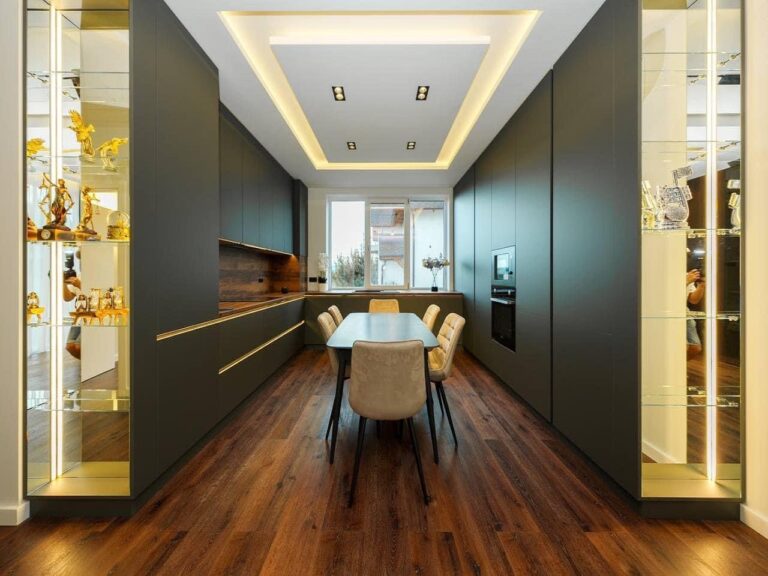
- Controlling sightlines: A floor-to-ceiling media unit in a Fulham open-plan home can define the boundary between living and dining without a partition wall.
- Improving circulation: Carefully considered joinery profiles and depths keep corridors clear and rooms navigable without sacrificing storage capacity.
- Managing light: Joinery designed with open-shelf sections, integrated lighting, or reflective finishes at specific heights can make rooms appear brighter and larger than their actual footprint.
- Establishing visual rhythm: Repeated panel proportions, reveal depths, and handle details create a visual order that makes a space feel calm and resolved.
The value lies in integration with architecture, improving spatial flow and circulation. In areas such as Chelsea and Chiswick, where period properties often have generously proportioned but architecturally complex rooms, this is not a luxury detail. It is the difference between a room that works and one that merely contains furniture.
Bespoke joinery also contributes to atmosphere in ways that are difficult to quantify but immediately felt. A panelled study in a Barnes townhouse, fitted with library shelving that steps to follow the staircase behind, creates a sense of permanence and intention. The room has a character that no amount of loose furniture placement could achieve.
Practical benefits: storage, function, and everyday life
Beyond aesthetics and architecture, the practical custom joinery benefits for daily living are considerable.
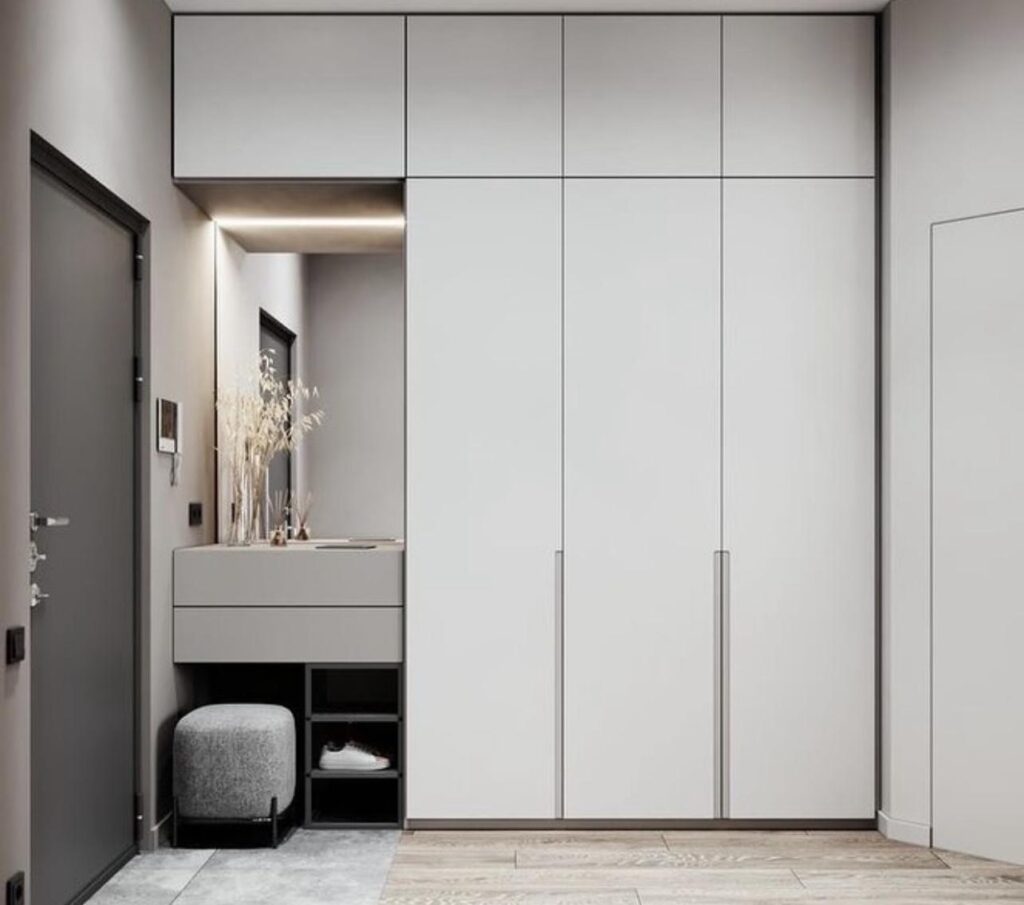
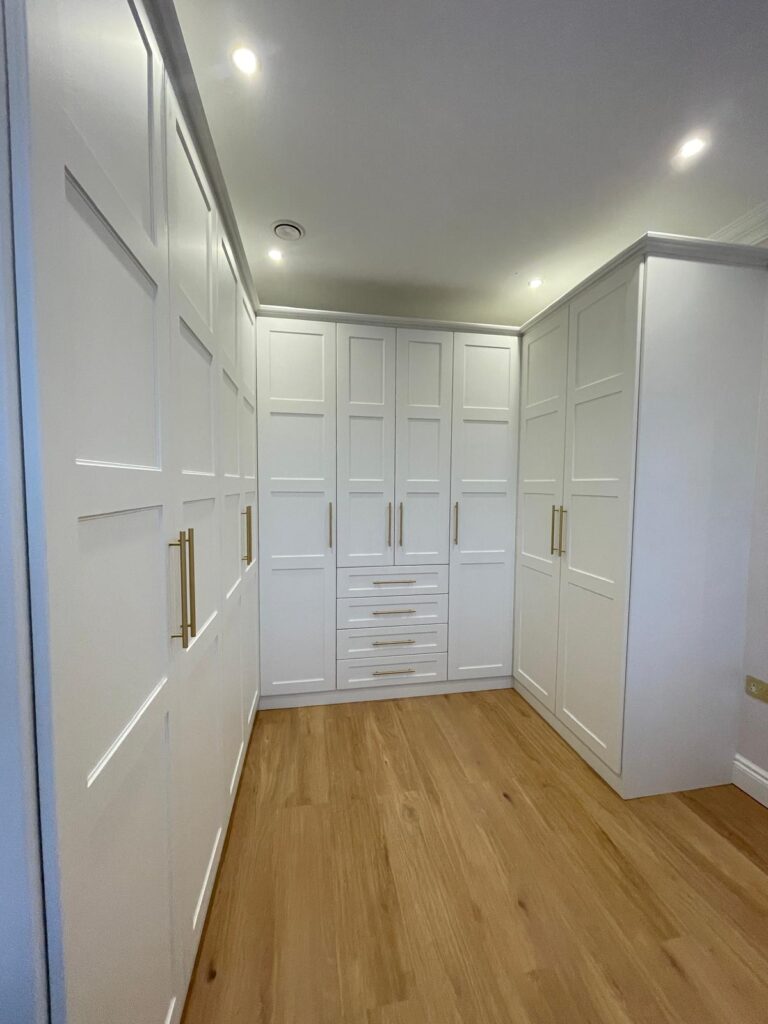
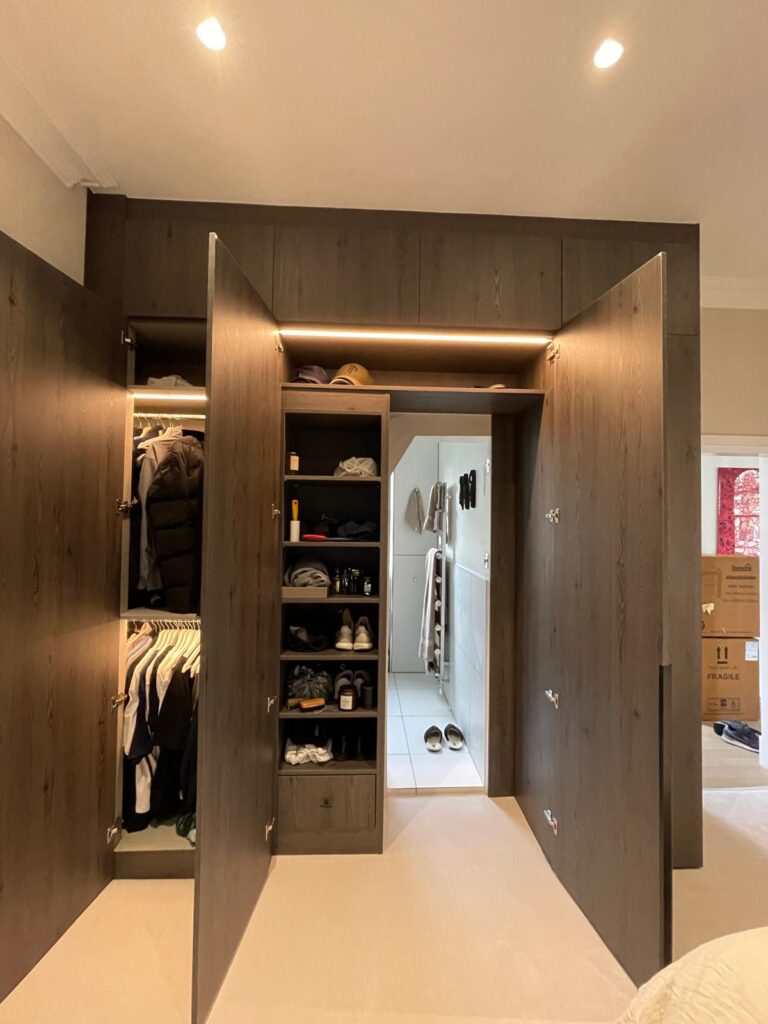
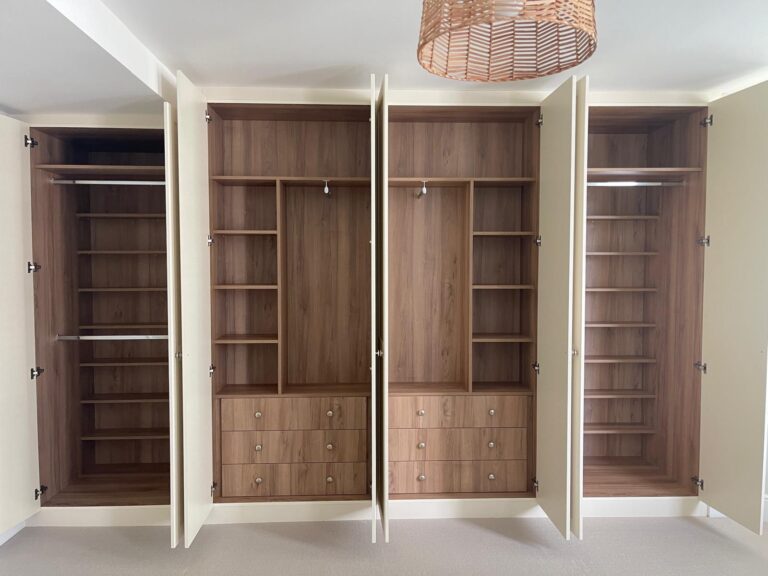
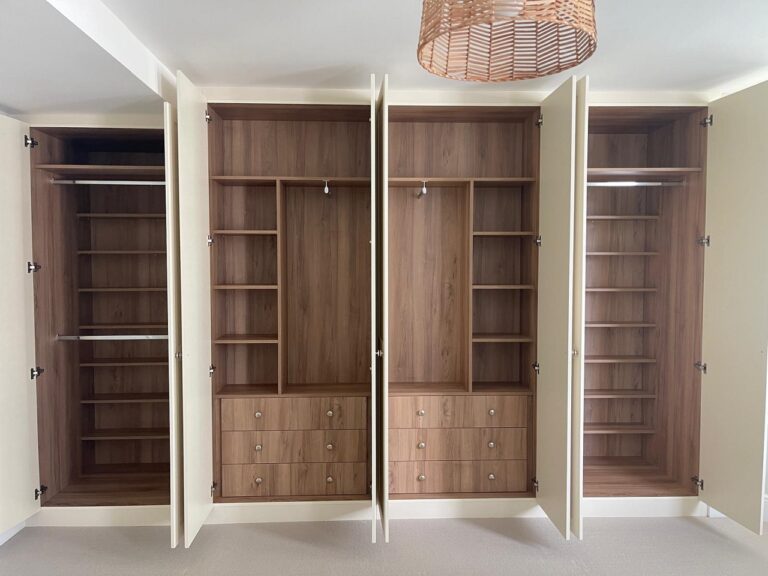
The most immediate is the precision fit. Standard units are designed to the nearest 100 millimetres and rely on filler panels and plinths to deal with what remains. A bespoke fitted wardrobe in a Putney bedroom uses every available millimetre from floor to ceiling and wall to wall. The result is not just more storage. It is more usable storage, because the internal layout was designed around what you actually own and how you actually organise your life.
Here are the five most significant functional advantages homeowners gain from bespoke joinery:
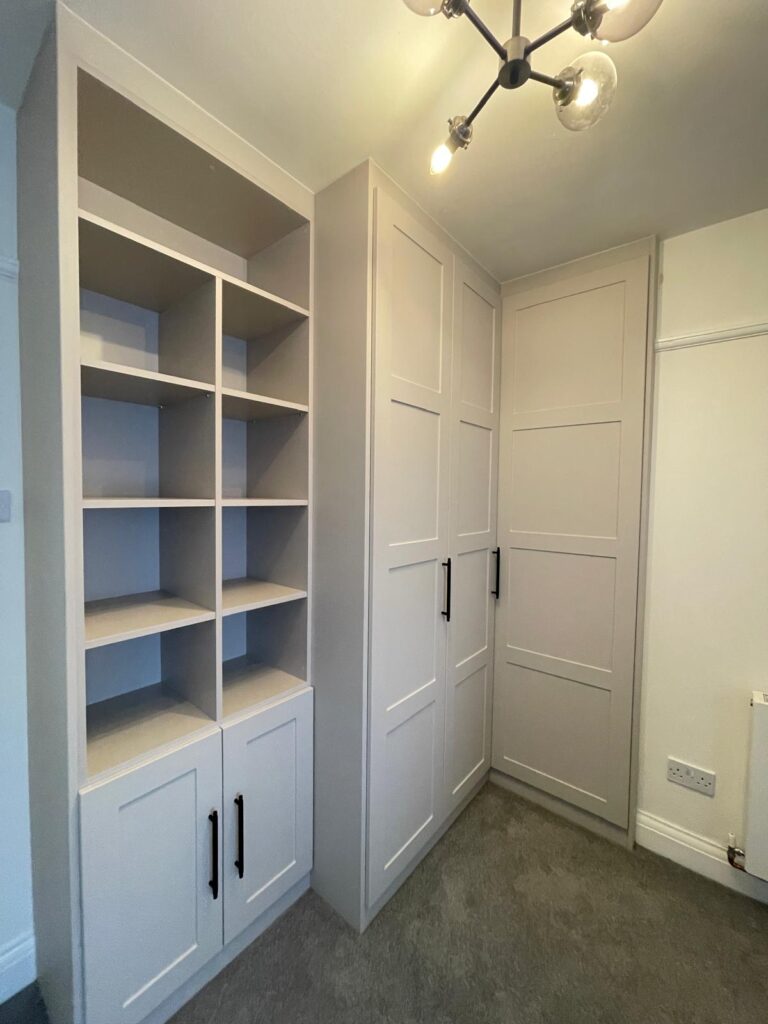
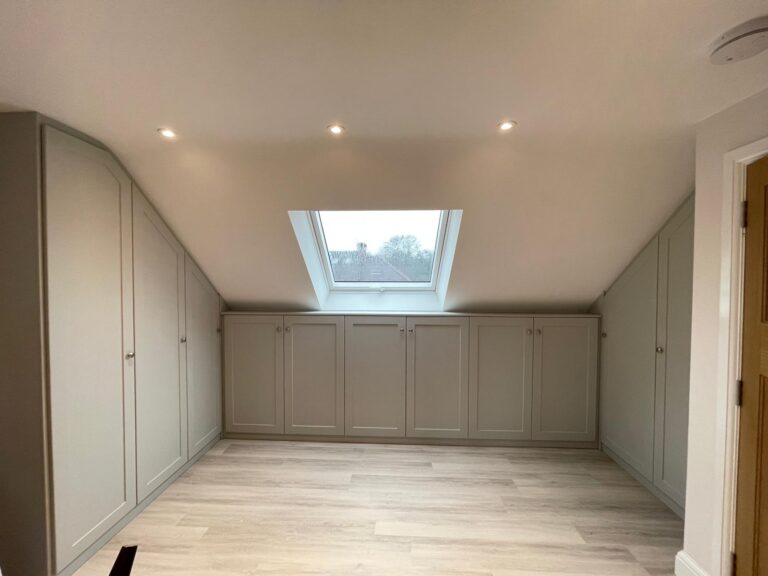
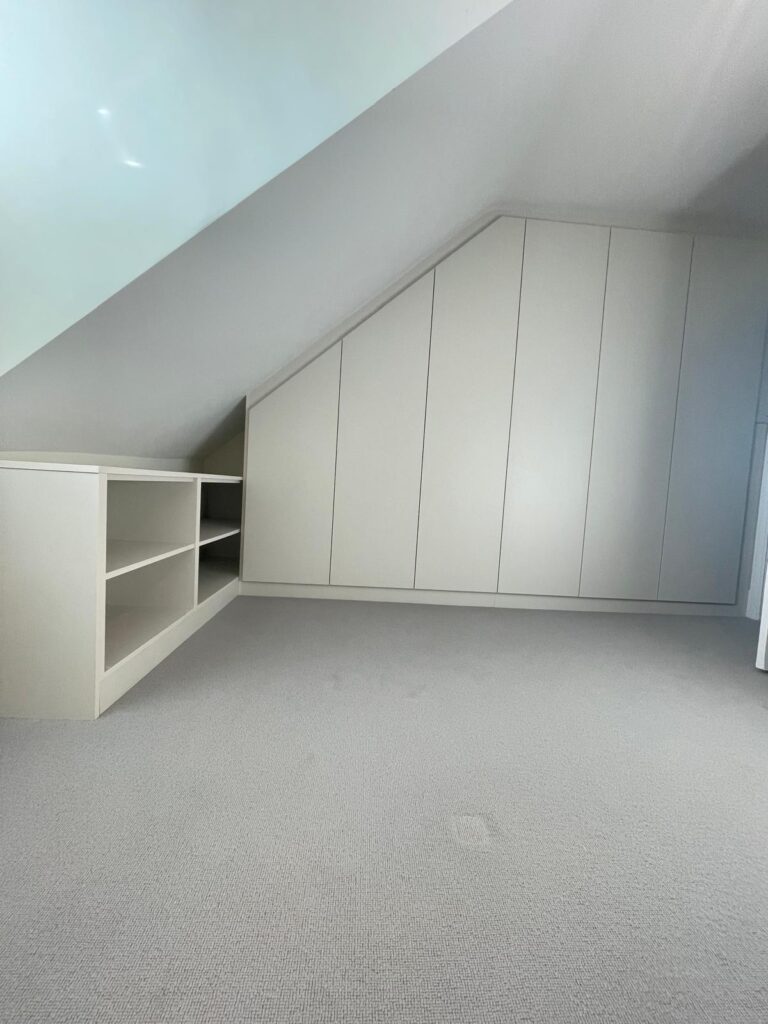
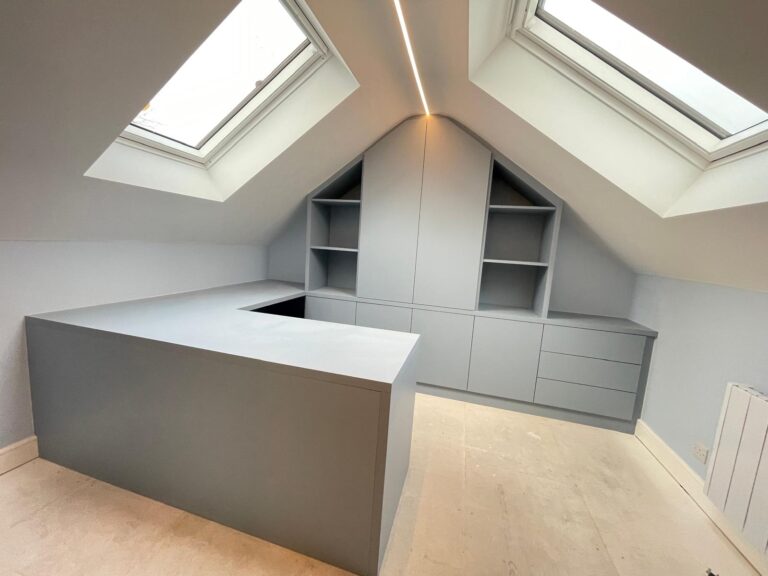
- Maximised space utilisation: Every awkward corner, sloped ceiling, or irregular recess becomes usable. Loft conversions in Twickenham and Ealing, where ceiling heights vary sharply, are a strong example of where bespoke is the only practical solution.
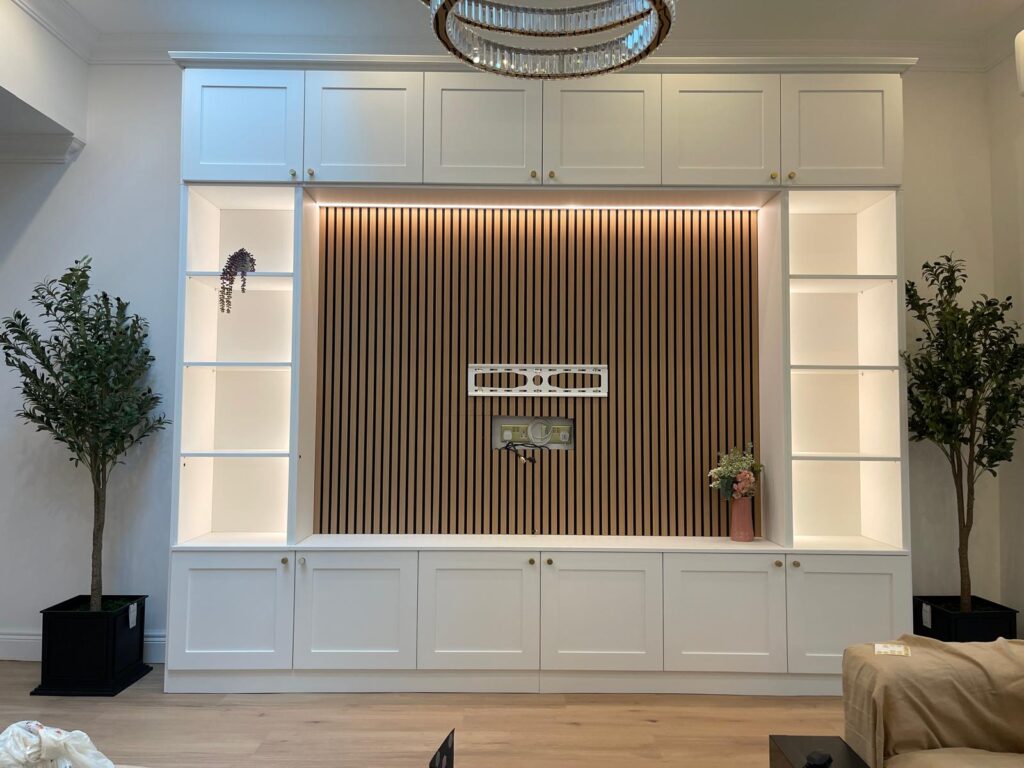
- Multi-functional design: Custom cabinetry can simultaneously address design challenges, zone spaces, display objects, and conceal AV equipment without interrupting sightlines. A single media wall unit can house a television, hide cables and routers, offer concealed seating storage, and incorporate a drinks cabinet.
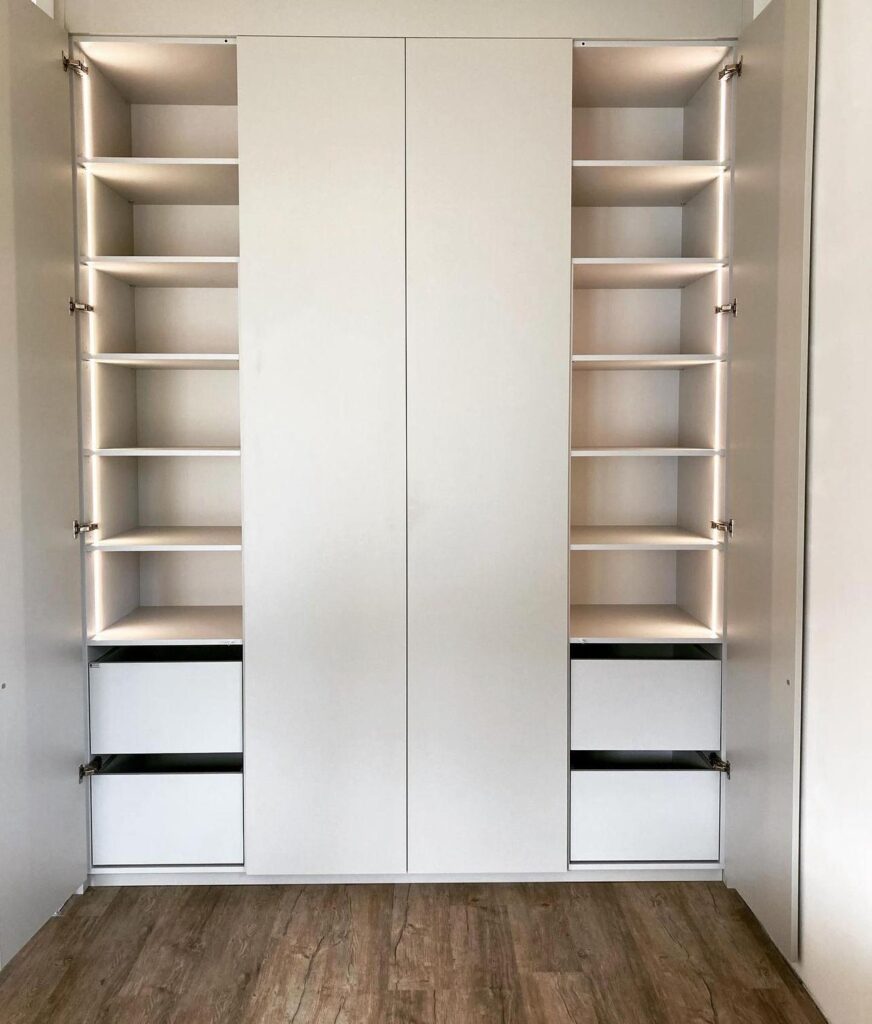
- Tailored internal organisation: Drawer depths, shelf heights, hanging rail positions, and pull-out accessories are all specified to your wardrobe contents, not a manufacturer’s average. Shoes, folded knitwear, long dresses, and accessories each get the space they require.
- Concealed services: Integrated joinery can hide meters, boilers, ironing stations, and home office equipment, keeping living spaces visually clean without losing access to those services.
- Hardware chosen for use: Soft-close mechanisms, push-to-open systems, motorised lifts for overhead storage, and pull-out wardrobe rails are specified to suit the user’s physical needs and daily frequency of use.
Pro Tip: When briefing a joiner on a home office, list every piece of equipment you use daily alongside its dimensions before the design begins. This single step prevents the most common complaint: beautiful joinery with not enough power sockets.
The importance of tailored joinery becomes most apparent in homes that are lived in rather than staged. A Kingston family home with five people sharing two bathrooms needs towel storage, airing space, and medicine cabinets designed for volume. A Hammersmith apartment used by a single professional needs a home office that disappears into the wall when the working day ends. Neither need is met by a standard product.
Long-term value and sustainability
One of the strongest arguments for investing in bespoke joinery is how it performs over time relative to the alternatives.
Bespoke joinery lasts decades with minimal maintenance and is treated as a permanent property improvement. Flat-pack and mass-produced units, by contrast, have a realistic lifespan of 5 to 10 years before joints fail, surfaces chip, and components become unavailable for repair. Over a twenty-year period, a homeowner in Wimbledon who replaces standard flat-pack wardrobes twice will almost certainly spend more in total than the original cost of a bespoke fitted alternative.
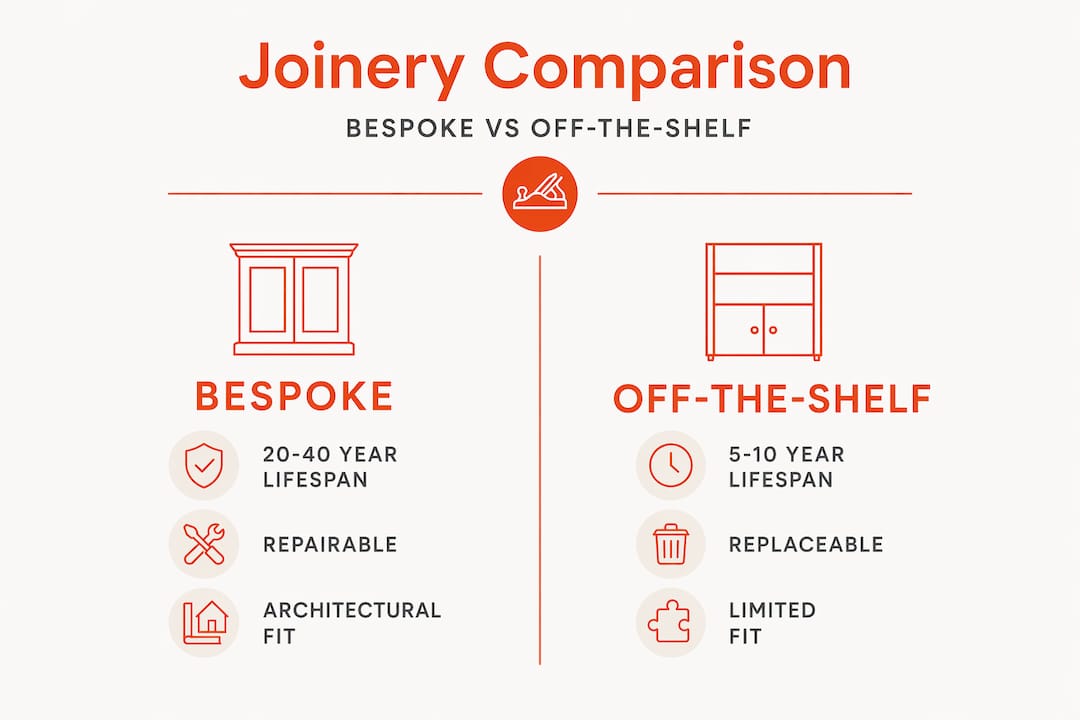
The table below summarises how bespoke joinery compares to off-the-shelf alternatives across the key measures homeowners care about.
| Factor | Bespoke joinery | Off-the-shelf units |
|---|---|---|
| Lifespan | 20 to 40 years with repairs | 5 to 10 years before replacement |
| Fit to space | Precise, wall to wall, floor to ceiling | Approximate, reliant on fillers |
| Repairability | Joiners can repair or modify individual sections | Discontinued components make repair impractical |
| Property value impact | Perceived as permanent improvement by buyers | Usually excluded from property valuations |
| Environmental impact | Less waste over lifecycle; repairable | Frequent disposal contributes to landfill |
| Material quality | Specified by client and designer | Standardised to price point |
Bespoke joinery is a sustainable choice precisely because durable, repairable pieces reduce waste compared to replaceable flat-pack furniture. Long-lasting timber joinery lessens environmental impact by avoiding the cycle of disposal and replacement. For homeowners in areas such as Richmond and Barnes, where planning and conservation considerations add another layer of complexity, this durability is particularly relevant.
The role of materials in bespoke furniture is central to how a piece ages. Solid timber, quality MDF with real veneer faces, and precision-cut dovetail jointing all contribute to a piece that, twenty years from now, needs only refinishing rather than replacement. The material decisions made at the design stage have a direct bearing on whether a piece becomes a permanent asset or a dated fixture.
Property buyers in Fulham, Chelsea, and Kingston increasingly recognise the difference. Buyers perceive well-integrated joinery as a sign of quality, even when they cannot articulate exactly why. A home with bespoke fitted joinery throughout feels finished in a way that loose furniture never quite achieves.
Planning and commissioning bespoke joinery
Knowing what to expect from the commissioning process is the difference between a result you love and a result you tolerate. Here is what the process genuinely involves, and what to do at each stage.
The single most costly mistake homeowners make is commissioning joinery too late. Treating joinery as interior architecture, designed early and integrated with structural elements, supports thermal performance and long-term durability. When joinery on an external wall is specified after plastering is complete, for example, the opportunity to coordinate insulation and prevent thermal bridging is gone.
Key steps for a successful bespoke joinery commission:
- Engage early in the design phase: Brief your joiner or designer at the same time as your architect or interior designer, not after the building works are finished. This allows for full coordination.
- Commission a detailed survey: A thorough measured survey of the room, including ceiling heights, skirting profiles, existing architrave details, and any structural irregularities, forms the foundation of accurate drawings.
- Request CAD drawings and elevations: Detailed drawings allow you to review proportions and internal layouts before manufacture begins. Changes at drawing stage cost very little. Changes after manufacture cost a great deal.
- Understand the iterative process: A genuine bespoke commission involves at least two or three rounds of drawing revisions. Treat this as part of the process, not a sign that something has gone wrong.
- Coordinate with other trades: Electricians, AV installers, and plasterers all need to know where joinery will sit before they complete their work. Your joiner should provide a clear schedule of preparatory requirements.
- Agree on a programme before manufacture begins: Know when site preparation is required, when delivery and installation will take place, and what your role is in keeping the programme on track.
The custom furniture design process for West London homes routinely involves close coordination with period property constraints: cornicing that must be matched, parquet floors that cannot be touched during installation, and listed building considerations that affect paint finishes and fixings. Understanding these requirements upfront prevents delays and additional costs.
My take on what makes bespoke joinery genuinely worthwhile
I have seen many homes in which beautifully made joinery fails to deliver its potential because it was treated as furniture rather than architecture. A client in Chiswick spent a considerable sum on a handmade library, only to have it feel disconnected from the room because it was specified in isolation, with no consideration for the skirting height, the ceiling cornice, or the door positions. It looked like expensive flat-pack. That is a painful outcome for everyone involved.
In my experience, the homeowners who get the most from bespoke joinery are those who resist the urge to make decisions quickly. True bespoke requires patience. It requires willingness to revise a brief when a better solution emerges during the drawing process. It requires proximity to your maker, not just a mood board sent by email.
What I find most common is that clients confuse true bespoke with custom-sized off-the-shelf units. The difference is felt rather than seen. A genuinely bespoke piece transforms a room. A custom-sized piece fills a gap in it.
I also think the sustainability argument is underused. When you commission a piece of joinery designed to last forty years, finished in materials that can be repaired and refreshed, you are making a genuinely responsible choice. That argument is worth making clearly to clients who hesitate over the initial investment.
My advice to any homeowner considering bespoke joinery is this: start with the room, not the product. Ask what the room needs to feel right before you ask what you need to store. The best bespoke work begins with a clear understanding of how a space should be experienced.
— Aureliu
Bespoke joinery solutions for London homes
At Finest Furniture Studio, we work with homeowners across Richmond, Wimbledon, Fulham, Chelsea, Putney, Chiswick, Kingston, Ealing, Twickenham, Barnes, Hammersmith, and across Central London to deliver bespoke fitted joinery that genuinely transforms living spaces. From walk-in wardrobes and sliding door wardrobes to media wall units, loft wardrobes, and fully fitted bedrooms, every piece is designed through personalised consultation and crafted to fit your specific home layout.
We offer a free design visit so you can explore possibilities without commitment. Our installation takes between 7 and 12 days, and every piece we fit carries a 10-year guarantee. We also remove and dispose of your existing wardrobe or furniture as part of the service.
If you are ready to see what properly designed bespoke joinery can do for your home, explore our bespoke wardrobes West London range or call us on 07468 150807. You can also visit us at 124 City Road, Kemp House, London, EC1V 2NX.
FAQ
What is the difference between bespoke and custom joinery?
Bespoke joinery is designed entirely around a specific client, space, and brief through an iterative process, producing a piece that is non-transferable to any other property. Custom joinery offers a choice of dimensions and finishes from a fixed range of components.
How does bespoke joinery add value to a property?
Buyers perceive well-integrated joinery as a sign of quality and treat it as a permanent property improvement, which supports valuations and increases buyer appeal compared to homes with loose or flat-pack furniture.
How long does bespoke joinery last compared to flat-pack alternatives?
Bespoke joinery lasts decades with minimal maintenance, while mass-produced flat-pack units typically require replacement within 5 to 10 years, making bespoke the more cost-effective choice over a longer timeframe.
When should I commission bespoke joinery during a home renovation?
Commission your joiner at the same stage as your architect or interior designer, before building works begin. Early integration allows coordination with insulation, electrical work, and structural elements, preventing costly errors later in the project.
Is bespoke joinery a sustainable choice?
Yes. Durable, repairable bespoke pieces reduce waste significantly compared to flat-pack alternatives that end up in landfill after a decade. Long-lasting timber joinery supports environmental goals by avoiding frequent disposal and replacement cycles.