
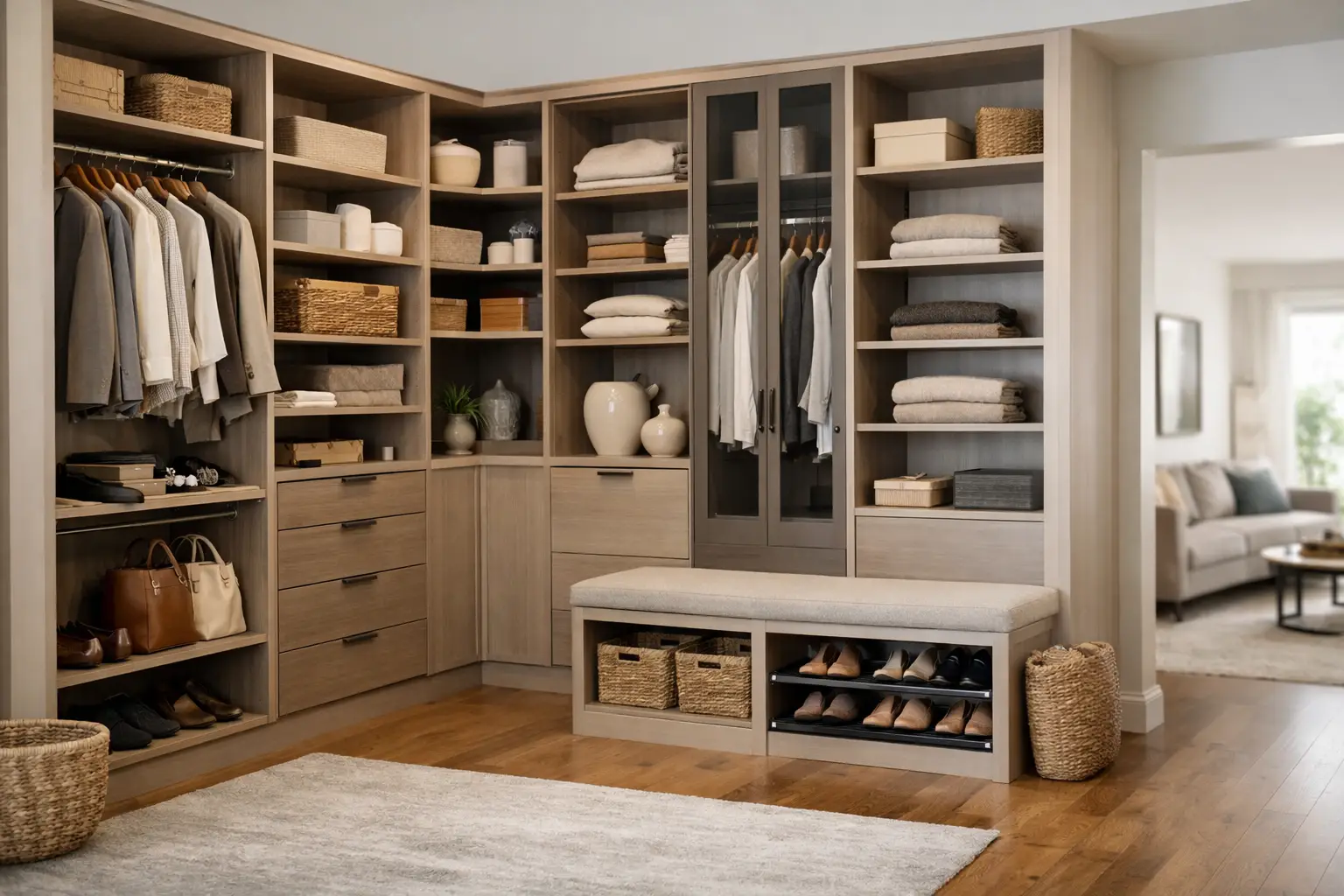
Open any bedroom with an overstuffed chest of drawers or a hallway lined with shoes, bags and coats, and one thing becomes obvious: the most useful storage is no longer the kind you simply add to a room. The strongest home storage design trends are moving towards furniture that is planned as part of the space itself – shaped around real routines, awkward layouts and the expectation that practical pieces should still look beautifully resolved.
That shift matters because homes are working harder than ever. Spare rooms are now offices, bedrooms need calmer layouts, and living spaces are expected to hide more technology, paperwork and everyday clutter than they did a decade ago. Good storage is not just about fitting more in. It is about making a room feel larger, quieter and more considered.
The home storage design trends shaping modern homes
The clearest trend is integration. Homeowners are moving away from disconnected pieces that sit awkwardly against the wall and leaving behind unusable gaps above, beside or behind furniture. In their place, fitted solutions are being used to make every inch work harder, whether that means full-height wardrobes in a compact bedroom, cabinetry built into alcoves, or understairs storage that turns dead space into something genuinely useful.
This design direction has both visual and practical appeal. Built-in storage gives a room cleaner lines and a more architectural finish, which is particularly valuable in homes where floor space is limited. At the same time, it solves the everyday frustrations freestanding furniture often creates: dust traps on top, wasted corners, drawers that never quite open comfortably, and layouts that feel compromised rather than complete.
There is also a stronger focus on longevity. Homeowners are becoming more selective about what they bring into the home, and that naturally affects storage decisions. Instead of buying temporary pieces and replacing them a few years later, many are choosing made-to-measure furniture that reflects how they actually live now and can still work well as needs change.
Fitted storage is replacing one-size-fits-all furniture
One of the most noticeable home storage design trends is the rise of furniture tailored to the room rather than forced into it. This is especially relevant in British homes, where alcoves, chimney breasts, sloping ceilings and narrow bedrooms are common. A standard wardrobe may technically fit, but it rarely uses the full footprint well.
Fitted wardrobes, alcove units and bespoke living room cabinetry answer that problem directly. They can stretch wall to wall, floor to ceiling, and include the internal arrangement that suits the household, not a generic retail template. Hanging space, drawers, shoe sections, shelving, luggage storage and concealed compartments can all be planned around the people using them.
The result feels more polished, but the real benefit is daily ease. When storage has been designed around your clothing, your work setup, your children’s belongings or the shape of the room, tidying becomes less of a battle. That is the difference between furniture that simply exists in a room and furniture that improves how the room functions.
Awkward spaces are now seen as opportunities
Areas that were once written off are now some of the most valuable parts of the home. Understairs cavities, loft rooms, bay windows and the wall around a bed all offer strong storage potential when designed properly. This is where bespoke joinery stands apart, because unusual dimensions stop being a limitation and start becoming the brief.
A sloping ceiling, for example, may rule out most freestanding options, but it can be ideal for low-level cupboards, tailored wardrobes or a combination of hanging and shelving. The same is true of alcoves in period homes. Rather than fighting asymmetry, good fitted furniture works with it and creates a balanced finish that feels intentional.
Interiors are becoming more personalised
External doors and finishes matter, but another major shift is happening inside the furniture. Homeowners are paying much closer attention to wardrobe interiors and hidden storage details, because the internal layout determines whether a design stays useful over time.
That means fewer generic rails and more mixed configurations. Double hanging may be ideal for one person, while another may need long-drop sections for dresses, pull-out trays for accessories, integrated drawers for knitwear or shelving designed around handbags and trainers. In family homes, internal storage often needs to support several routines at once, from school mornings to laundry management.
This trend reflects a broader expectation that storage should feel personal. A bespoke wardrobe is no longer judged only by its frontage. It is judged by whether it removes friction from everyday life.
Calm, understated finishes are leading the way
In terms of aesthetics, quieter finishes are proving more enduring than statement-heavy choices. Soft neutrals, warm wood effects and painted finishes with subtle texture continue to appeal because they support the room rather than dominate it. The look is refined, but not cold.
Shaker-inspired doors remain popular because they sit comfortably between classic and contemporary styles. Clean slab fronts are equally relevant in modern settings, particularly where a streamlined, handleless effect is preferred. The right answer depends on the property, the architecture and how decorative the rest of the room is.
This is where trend-chasing can become expensive. A finish that looks striking online may date quickly in a bedroom or living space used every day. The most successful designs usually combine timeless cabinetry with a few current touches, rather than trying to make the whole installation fashion-led.
Multi-functional rooms need harder-working storage
Storage design has changed because the rooms themselves have changed. Bedrooms are often expected to include dressing space, remote working functions and hidden storage for seasonal items. Living rooms may need to house books, children’s toys, entertainment systems and display pieces without looking crowded.
That has pushed media walls, fitted home office cabinetry and dual-purpose furniture into the spotlight. A media unit, for instance, is no longer just a place to put a television. It may include concealed wiring, shelving, closed cupboards, ambient lighting and a balanced composition that turns visual clutter into a clean focal point.
In smaller homes, this kind of multi-functionality is especially valuable. When one fitted design can replace several separate pieces of furniture, the room often feels larger and calmer, even before anything is put away.
Practical luxury matters more than showy design
There is a clear shift towards what could be called practical luxury. People still want beautiful interiors, but they also want durability, easy maintenance and a sense that the investment is justified by daily use. Storage has become part of that conversation.
This is why bespoke fitted furniture has grown in appeal among homeowners who want more than surface-level improvement. Well-made cabinetry can improve circulation, reduce visual noise and increase usable storage without asking the room to sacrifice style. It feels considered because it is considered.
Of course, bespoke is not always the right route for every space. If you are furnishing a short-term rental or a room that may need frequent reconfiguration, freestanding pieces can offer more flexibility. But where the goal is to maximise awkward dimensions, achieve a built-in look and create long-term order, fitted storage usually delivers far better value over time.
What to prioritise if you want storage that stays current
The smartest way to approach trends is to separate what is genuinely useful from what is simply having a moment. Start with the architecture of the room. Consider where space is being lost, what items need to be stored, and which daily frustrations are worth solving properly.
From there, think about proportion and finish. Floor-to-ceiling cabinetry can be transformative in one room and too imposing in another. Sliding doors may be ideal in a tighter bedroom, while hinged doors offer easier full-access opening if space allows. Open shelving can look elegant, but only if the contents are curated and maintained. Closed storage is usually the better choice for a calmer visual result.
It also helps to think beyond immediate needs. A wardrobe designed only for your current clothing collection may feel restrictive later. A home office setup may eventually need to become family storage or guest room cabinetry. The best bespoke designs allow for that evolution without losing their appeal.
For homeowners investing in fitted solutions, the quality of planning matters just as much as the quality of manufacture. That is where a specialist approach becomes valuable. A well-designed installation should not just fit the measurements – it should suit the property, the household and the way the space is really used.
At its best, storage design does more than hide things away. It gives a room clarity, makes everyday routines easier and turns overlooked spaces into some of the hardest-working parts of the home. Trends will keep changing, but that combination of beauty and usefulness rarely goes out of style.

