








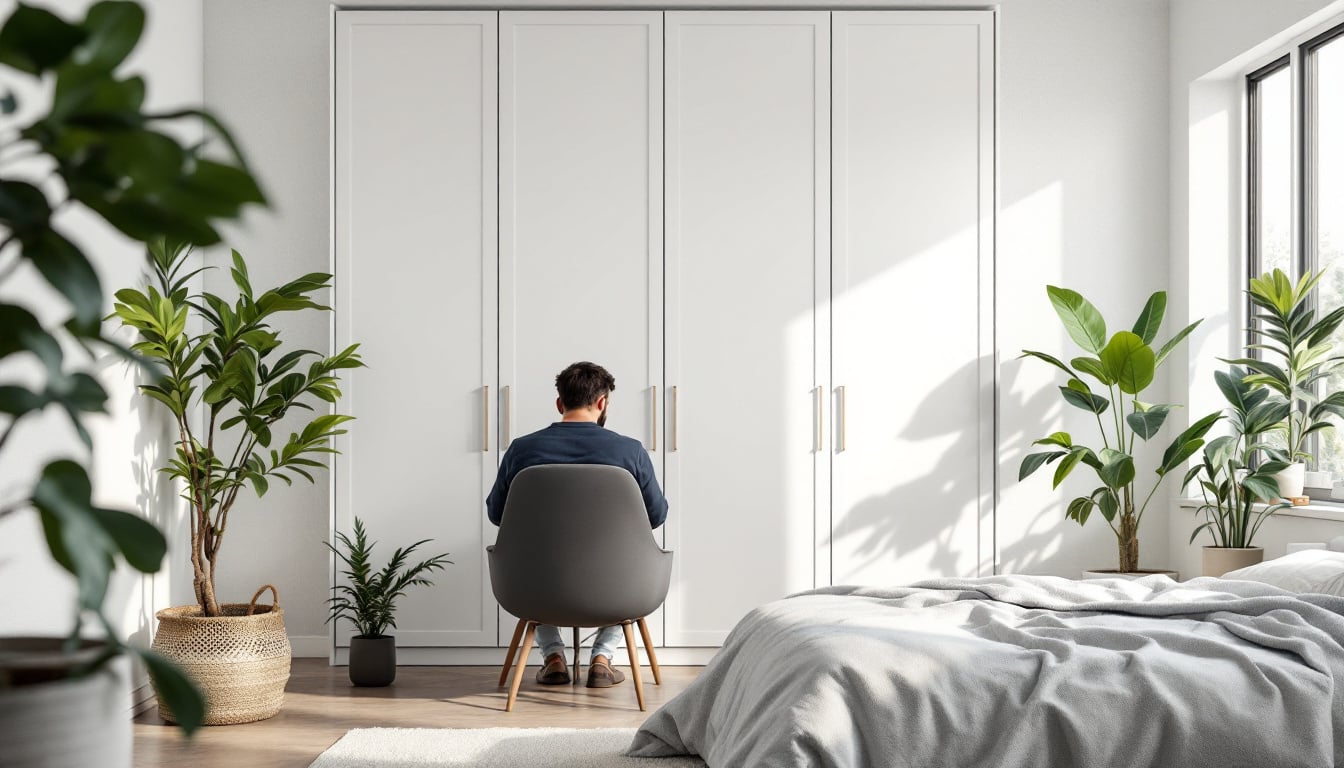
Why white wardrobes work so well
White wardrobes stay popular for a simple reason: they solve several room problems at once. They reflect light, make compact bedrooms feel less crowded, and give you a neutral base that works with changing decor. If you are comparing white wardrobes against darker finishes, the first question is usually not style but fit. In small rooms, low ceilings, or spaces with awkward corners, white often wins because it recedes visually instead of dominating the wall.
When white is the better choice
White wardrobes are strongest where natural light is limited, where the room has more than one use, or where you need the furniture to disappear rather than stand out. That makes them useful in bedrooms, loft rooms, and built-in storage runs. A practical rule is to choose white if the room already has enough contrast through flooring, soft furnishings, or wall art. If every surface is pale, though, you may need texture or profile detail so the space does not feel flat.
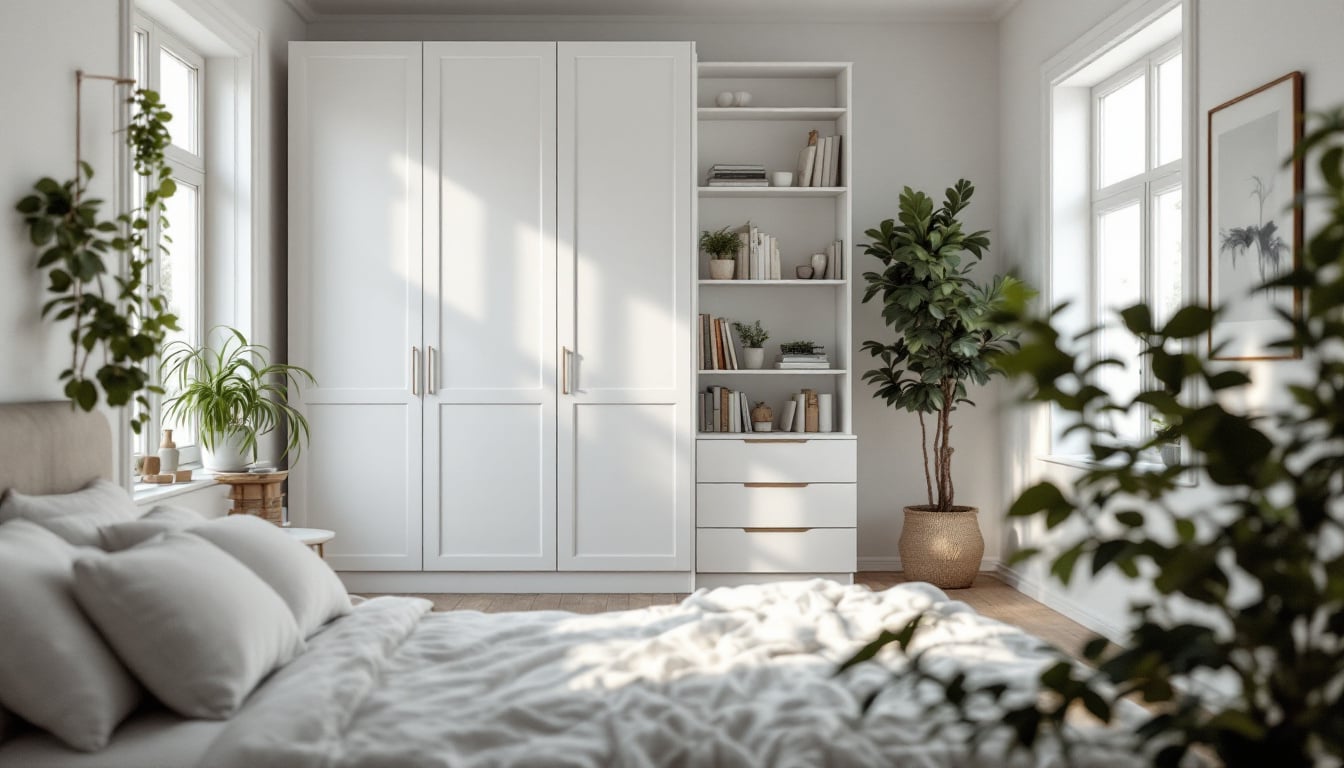
Avoiding the wrong kind of white
Not every white wardrobe looks the same in real life. Warm whites can soften a room with oak floors or cream walls, while cooler whites suit modern interiors and sharper trims. The trade-off is visual consistency versus flexibility. A bright white looks crisp but can expose poor joins, uneven walls, and filler marks, while an off-white is more forgiving. If you are planning bespoke fitted wardrobes, sample the finish in daylight and evening light before committing.
Measure the room before you choose the finish
The finish should follow the room, not the other way around. Start by measuring wall width, ceiling height, skirting depth, and any slope or boxed-in pipework. This matters because white wardrobes often sit close to the wall line, so even a small measurement error becomes visible. A useful decision rule is simple: if the room has more than one irregularity, go bespoke or at least made-to-measure instead of buying a standard unit.
What to check during measurement
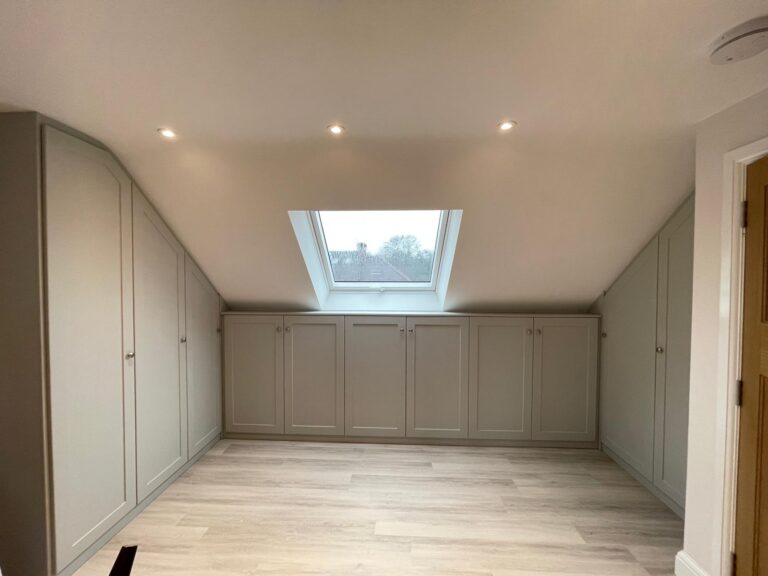
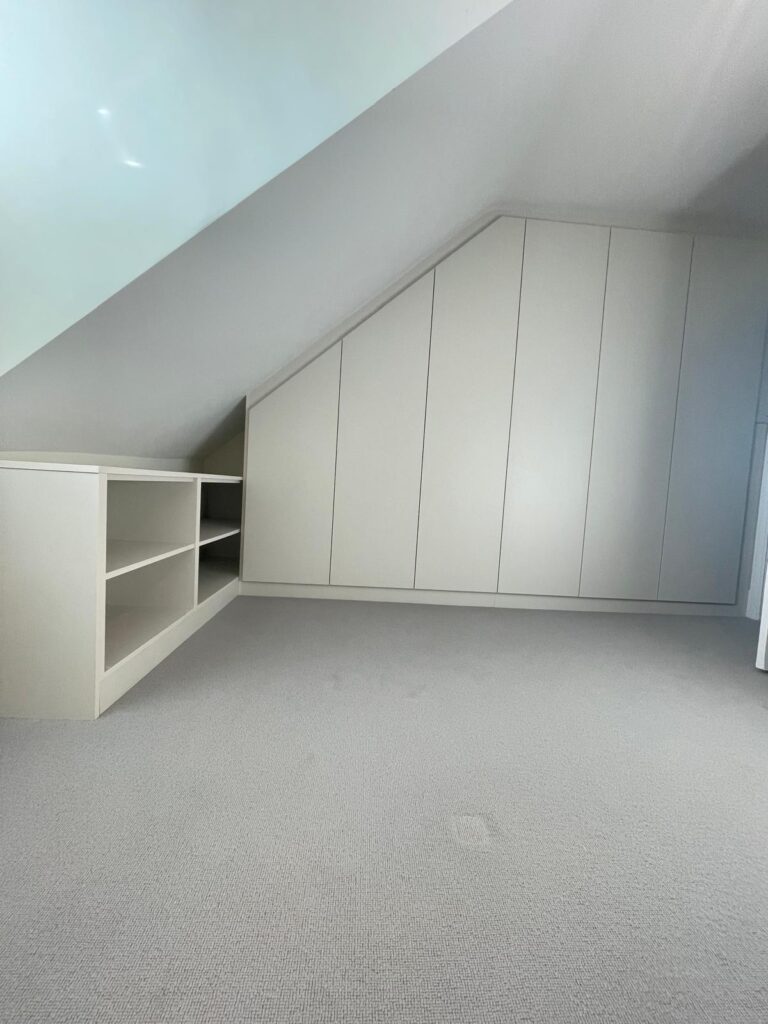
The biggest mistake is measuring only the visible span and ignoring obstacles. Check sockets, light switches, radiator clearance, and door swing before you decide on wardrobe depth. If the room has a slope, as in loft wardrobes, measure at multiple points rather than relying on one reading. A measuring guide is worth using here because white wardrobes show alignment issues quickly. The cleaner the finish, the more unforgiving the installation becomes.
Why white hides some problems and exposes others
White wardrobes can make a room feel cleaner, but they also make gaps, uneven scribe work, and mismatched handles easier to notice. That is why installation quality matters as much as material choice. If your room has old plaster or uneven floors, plan for fillers, scribed panels, or a fitted plinth. The practical trade-off is speed versus accuracy, and in a visible bedroom finish, accuracy usually pays off.
Choosing the right door style
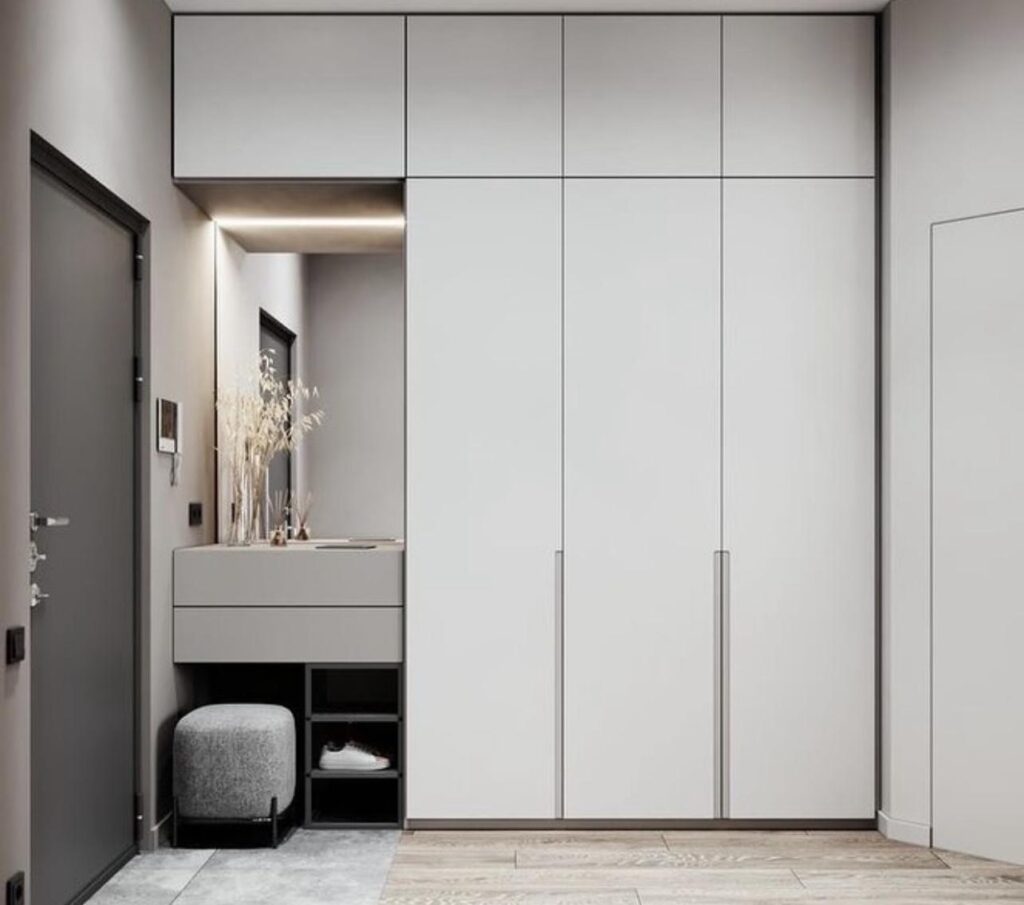
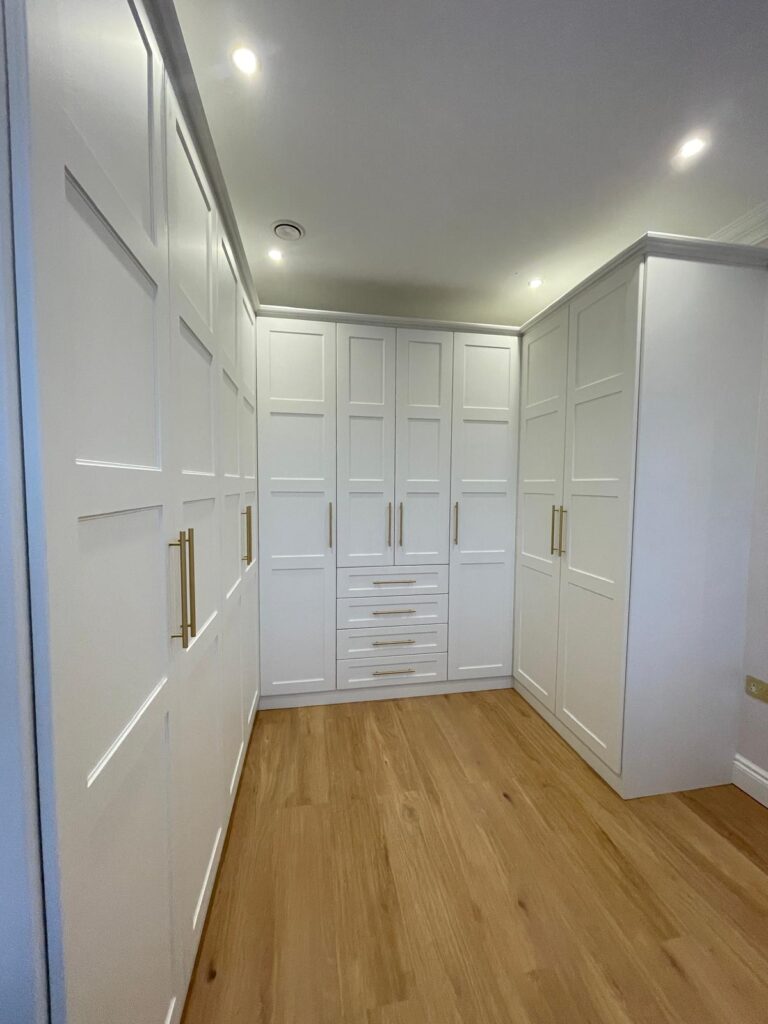
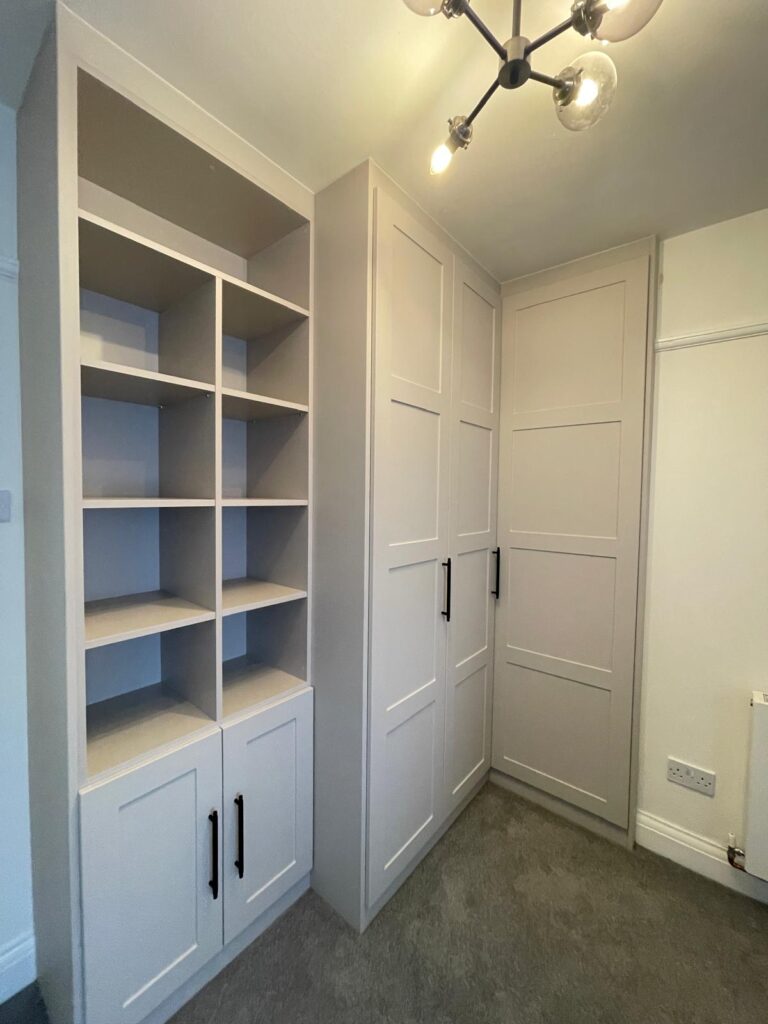
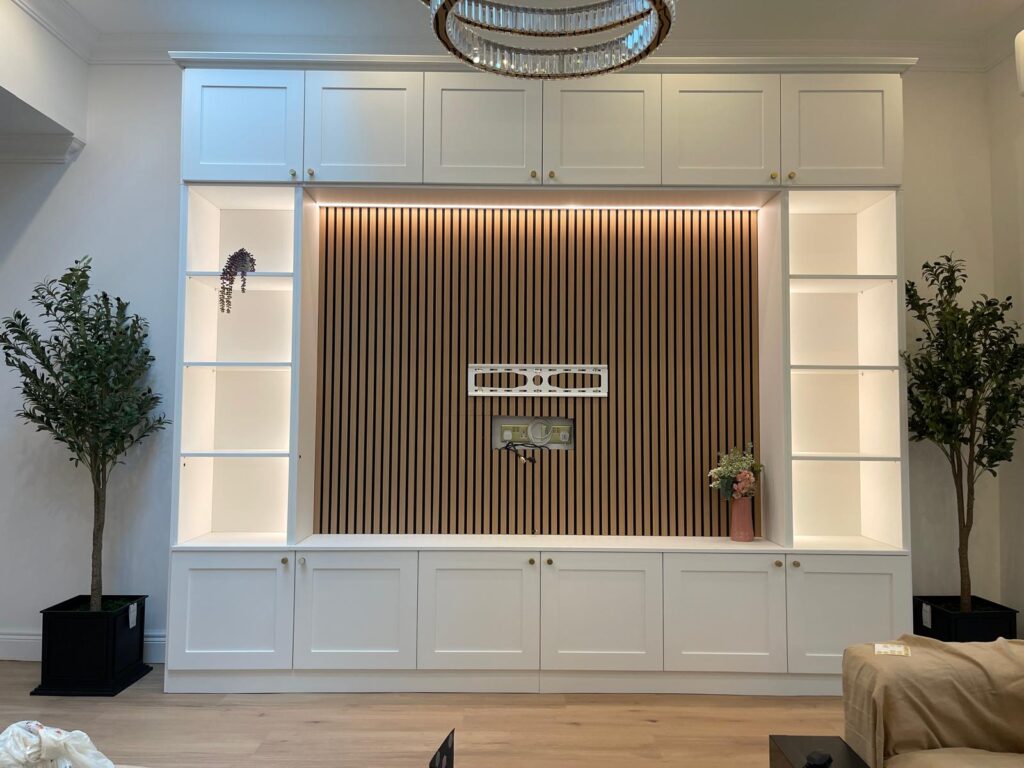
Door style changes how white wardrobes read in the room. Flat-panel doors suit modern interiors and smaller spaces because they keep the look restrained. Shaker-style doors add shadow and depth, which helps if you want the wardrobe to feel more crafted. Sliding doors save floor space, but hinged doors give you easier full access to the interior. The right choice depends on circulation, room width, and how often you need to access the storage.
Hinged, sliding, or built-in
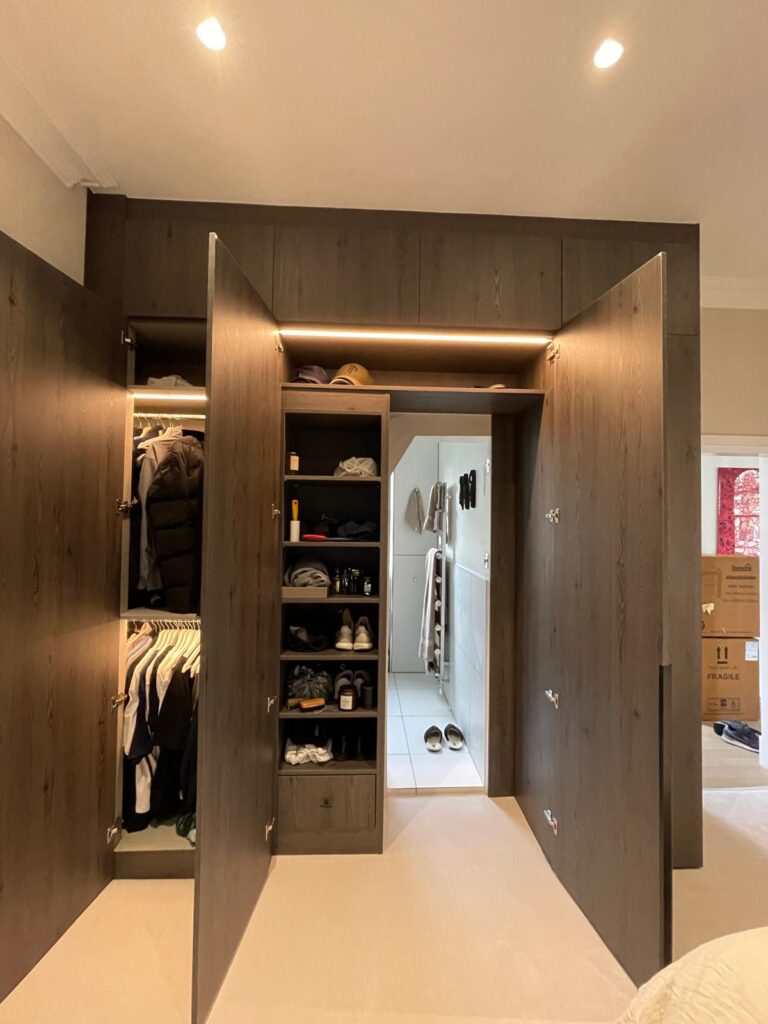
If the room is narrow, sliding doors can prevent the wardrobe from colliding with a bed or desk. If storage access matters more than footprint, hinged doors are more practical because the full opening is available at once. Built-in wardrobes work best when you want the furniture to feel integrated into the architecture. For many homes, white fitted wardrobes are the best compromise because they combine a clean look with usable internal space.
Handles, profile, and visual weight
Small details change the overall result more than many people expect. Brushed metal handles add definition, while handleless doors create a calmer, more continuous surface. If the room is already compact, simpler profiles usually work better because they keep the eye moving. A good decision framework is to ask whether you want the wardrobe to read as furniture or as part of the wall. White wardrobes can do both, but only if the detailing is consistent.
Materials and finishes that age well
The finish is only one part of the story. The core material, edge sealing, and coating determine how the wardrobe holds up in daily use. In a bedroom, fingerprints, scuffs, and UV exposure are the usual wear points. If you want white wardrobes that still look sharp after years of opening and closing, look for durable lacquer, quality foil, or well-finished MDF rather than focusing only on the colour sample.
The maintenance trade-off
Gloss white is easier to wipe clean but shows reflections, dust, and micro-scratches more quickly. Matte white hides marks better but can be harder to clean if the surface is lower quality. Satin finishes often sit in the middle and are a practical choice for family bedrooms or high-traffic rooms. If you want the easiest upkeep, choose a finish that can handle a soft cloth and mild cleaner without dulling.
Texture matters more than people expect
A plain white surface can look expensive when the texture and join lines are controlled. Subtle grain, recessed panels, or a slim frame can stop the wardrobe from looking like a blank box. This is especially useful in larger rooms where a fully flat surface may feel too stark. White wardrobes do not need ornate detail, but they do need enough structure to look intentional rather than generic.
How to plan storage inside white wardrobes
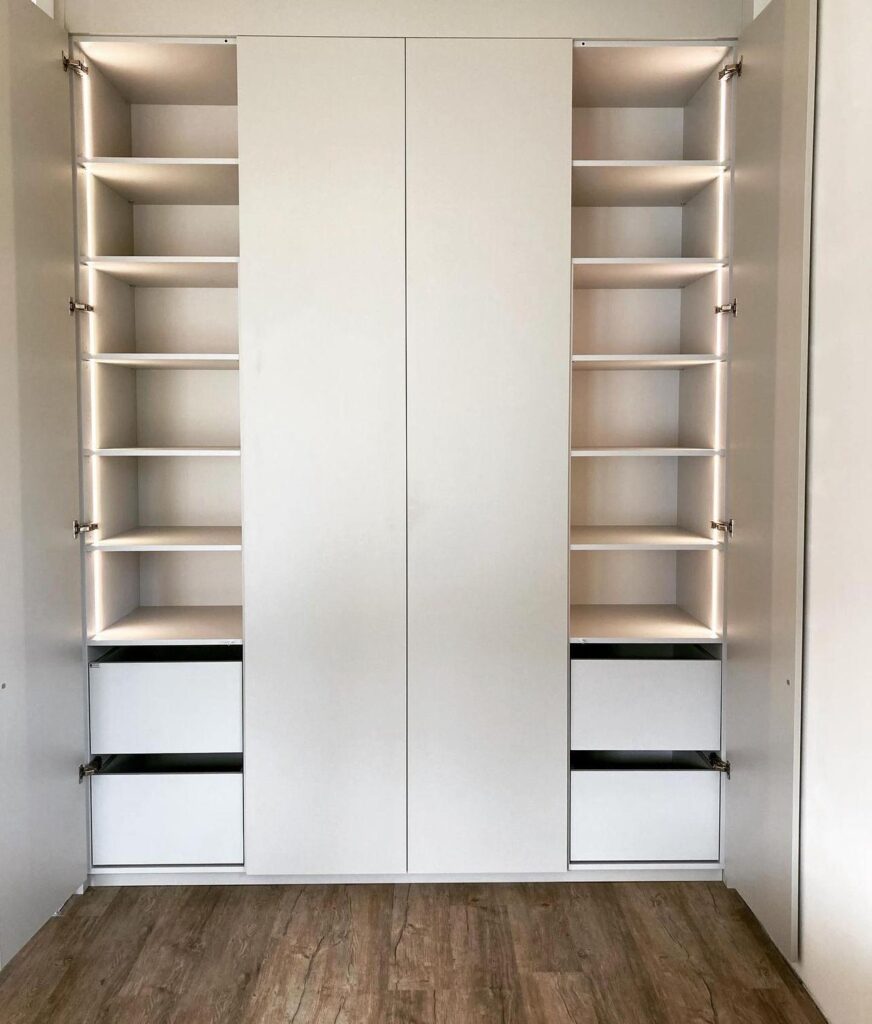
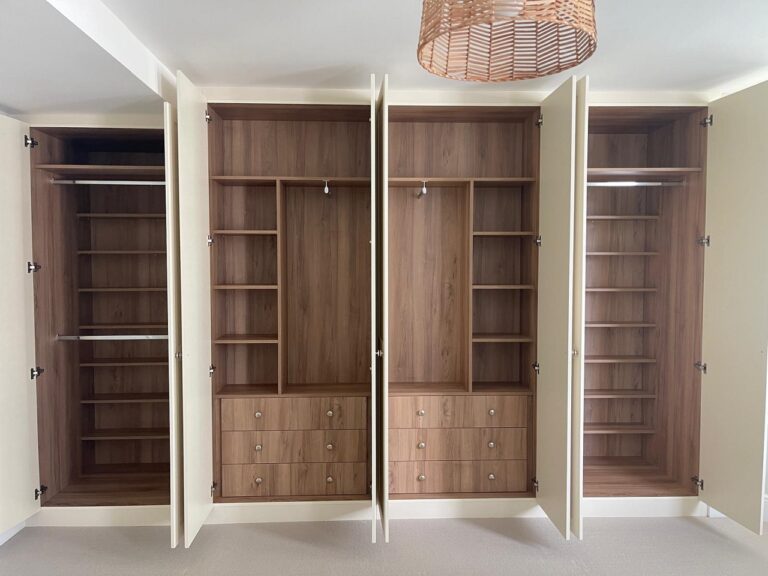
Good design starts inside the wardrobe, not with the door style. Before ordering, list what has to fit: long coats, folded knitwear, shoes, bedding, or seasonal storage. Then divide the interior by use frequency. The most efficient layouts reserve the easiest access for daily items and push rarely used storage higher up. That practical planning step often matters more than the exterior colour, because it determines whether the wardrobe works after installation.
A simple internal layout rule
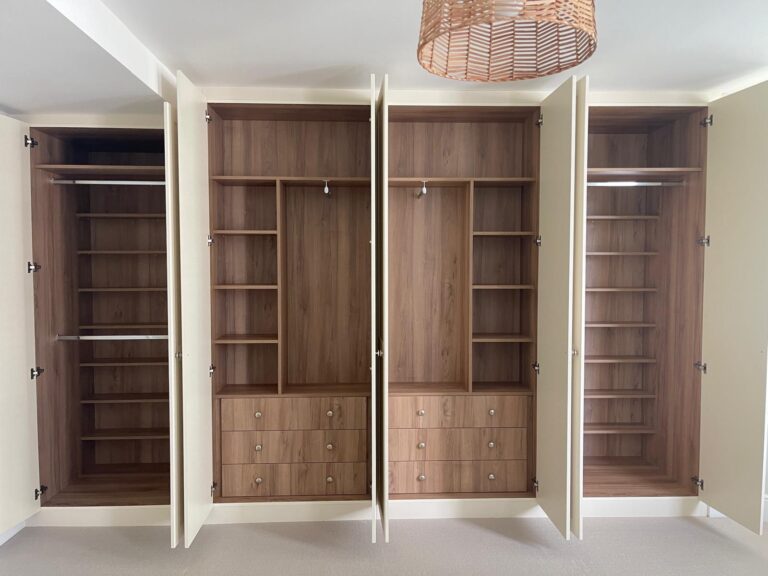
A workable layout usually includes one hanging zone, one folded zone, and one hidden storage zone. If the wardrobe is shallow, slimmer hanging rails and fewer deep shelves will make more sense than forcing standard proportions. For loft wardrobes or sloped cupboards, the upper corners are ideal for luggage or off-season bedding. The more specific the storage brief, the less wasted space you end up with.
When to use accessories
Pull-out trays, drawers, and internal dividers improve usability, but they also raise cost and complexity. Use them where access friction is highest, such as accessories, belts, or folded shirts. Do not add hardware just because it is available. A practical test is to ask whether the item needs to be seen, reached, or protected. If the answer is no, a simpler shelf or rail may be enough.
Room types where white wardrobes perform best
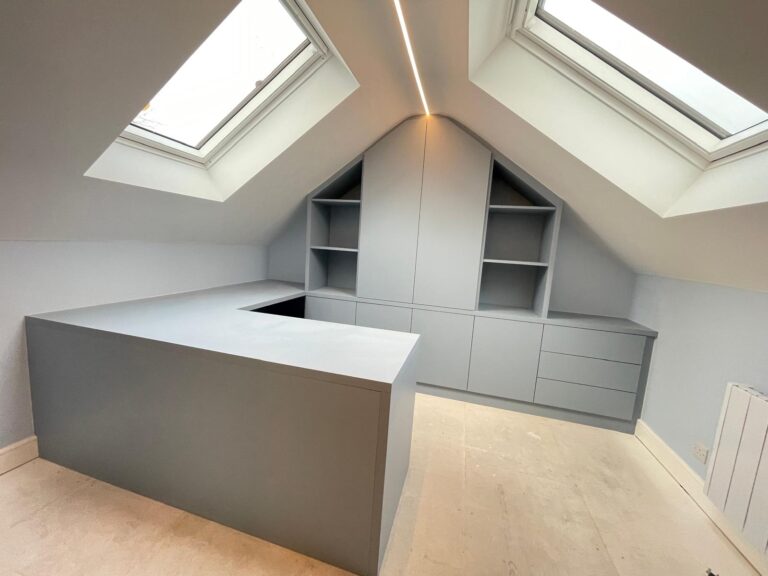
White wardrobes are not only for standard bedrooms. They work particularly well in rooms with awkward geometry, mixed functions, or tight circulation. In a guest room, they keep the storage quiet and flexible. In a loft, they can reduce the visual weight of sloping walls. In a home office, they help the furniture blend into the background so the room stays usable for more than one purpose.
Bedrooms with limited daylight
If the room gets little sun, white wardrobes can act as a light multiplier rather than a decorative feature. That said, a pale wardrobe will not fix bad lighting by itself. Combine it with the right bulb temperature and a clean wall colour so the room does not feel washed out. The best result comes when the wardrobe supports the lighting plan instead of competing with it.
Small rooms and narrow layouts
In compact rooms, the biggest risk is not colour but bulk. White wardrobes help by reducing visual mass, but the depth, door swing, and handle projection still need to be checked. If the bed sits close to the wardrobe, sliding doors or flush handles may be the better choice. A fitted solution also helps here because it can be built to the room rather than leaving dead space at the edges.
Common mistakes that weaken the result
Most disappointing white wardrobes fail for predictable reasons: the wrong tone of white, poor measurement, oversized handles, or an interior that does not match how the room is used. Another common issue is trying to make the wardrobe both decorative and invisible at the same time. Pick one lead role for the piece, then design the details to support it. Clarity usually creates a better result than trying to include every style idea.
Mistaking simple for plain
A white wardrobe does not have to be boring, but it does have to be deliberate. If the design has no panel rhythm, no material contrast, and no functional reason for its details, it can look unfinished. A simple fix is to repeat one design cue, such as handle style or door profiling, across the room. That keeps the wardrobe connected to the rest of the interior without adding unnecessary visual noise.
Overlooking installation tolerances
Because white surfaces show shadows and edges clearly, even small installation gaps become obvious. Plan for wall irregularities, uneven floors, and ceiling variation. The best fitted wardrobes are the ones that look calm because they were adjusted carefully, not because the room was perfect. If precision matters, this is where a professional measuring and fitting process is worth more than a lower upfront price.
Quick takeaways
White wardrobes work best when the room needs light, restraint, and visual order. Measure carefully, because white finishes expose alignment issues more clearly than darker ones. Choose the door style based on circulation and access, not just appearance. Match the finish to how often the wardrobe will be used and cleaned. Inside the wardrobe, plan for real storage needs first, then add accessories only where they solve a genuine access problem. In fitted projects, precision usually matters more than colour alone.
How to brief a bespoke project
If you are moving toward bespoke fitted wardrobes, the brief should be specific enough that a designer or supplier can translate it into a layout without guessing. Include room dimensions, ceiling height, wall obstacles, the items you need to store, and your preferred finish level. White wardrobes are easy to oversimplify, so the more detail you give, the more likely the final result will feel built for the room rather than dropped into it.
What to include in the brief
A useful brief names the room type, preferred wardrobe style, and any constraints such as sloped ceilings or radiator positions. It should also mention whether you want built wardrobes, sliding doors, or a walk-in wardrobe layout. If you are comparing options, ask for a measuring guide, finish samples, and a clear fitting timeline. Those three items tell you a lot about how the process is handled before installation begins.
A practical next step
If the room is complex, start with a measured consultation rather than trying to decide everything from photos. White wardrobes are easiest to get right when the plan covers proportions, access, and finish in one pass. For readers looking at bespoke fitted wardrobes, a short planning call or site measure is usually the fastest way to separate a good-looking idea from one that will actually work in daily use.
Conclusion
White wardrobes are a strong choice when you want a room to feel lighter, calmer, and more organised without overcomplicating the design. The key is to treat the finish as part of a larger system: measure the room properly, choose the right door style, match the material to the way the wardrobe will be used, and plan the interior around real storage needs. That is what turns a simple colour choice into a durable solution. If you are comparing white wardrobes for a bedroom, loft, or fitted storage project, use the room itself as the filter. Check the light, the circulation, and the clearances before you fall in love with a style sample. If you want a cleaner route, start with a measured brief and speak with a bespoke fitted wardrobes specialist who can translate the space into something practical. If this guide helped, share it with someone planning a storage update, and feel free to leave your questions or thoughts on which white finish works best in your home.
Frequently Asked Questions
Are white wardrobes a good choice for small rooms?
Yes, white wardrobes are often a smart choice for small rooms because they reflect light and reduce visual bulk. For the best result, pair them with slim profiles, fitted dimensions, and a door style that does not crowd the floor space.
What is the best finish for white wardrobes?
The best finish depends on how the room is used. Matte and satin are popular for white wardrobes because they hide marks better, while gloss can feel brighter but needs more careful upkeep.
How do I choose between fitted and freestanding white wardrobes?
Choose fitted white wardrobes if the room has awkward walls, a slope, or you want to use every centimetre efficiently. Freestanding units are easier to move, but they usually leave more wasted space at the sides and top.
Do white wardrobes show dirt easily?
White wardrobes can show marks more clearly than darker finishes, especially around handles and lower panels. A durable surface, regular dusting, and a wipeable finish will make maintenance much easier over time.
What should I include in a measuring guide for white wardrobes?
A good measuring guide should cover wall width, ceiling height, skirting depth, sockets, radiators, and any slopes or alcoves. That helps avoid the most common white wardrobes fitting problems, especially in built-in and bespoke projects.
Are white fitted wardrobes suitable for loft rooms?
Yes, white fitted wardrobes work well in loft rooms because they make sloped ceilings feel less heavy. The key is to measure at multiple points and use a layout designed for the room shape, not a standard straight unit.
How long does it take to install bespoke white wardrobes?
Installation times vary by project size and complexity, but many bespoke white wardrobes are fitted faster than people expect once the design and measurements are approved. The real schedule depends on room preparation, finish choice, and whether the layout includes extras like drawers or sliding doors.