
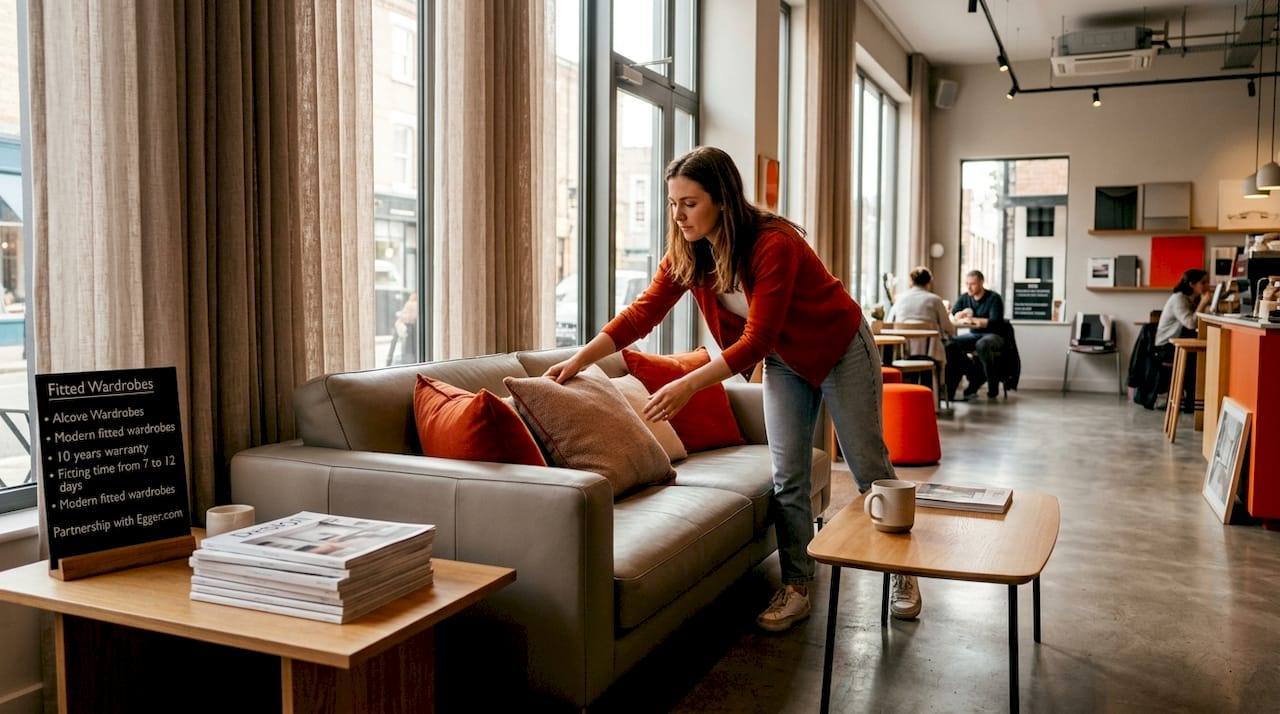
Functional furniture is defined as any piece designed to serve more than one purpose simultaneously, combining practicality with considered design to maximise space and usability in the home. In compact London properties across Richmond, Wimbledon, Putney, and Chelsea, where every square metre counts, this approach to furnishing has moved from niche to necessary. Multi-purpose pieces such as sofa beds, storage ottomans, and fold-away beds address the real challenge of modern living: homes that must work harder than ever before. Whether you are reorganising a bedroom in Fulham or rethinking a hybrid home office in Chiswick, understanding what functional furniture offers is the first step towards a genuinely organised, adaptable home.
What is functional furniture and why does it matter in 2026?
Functional furniture, also referred to in the industry as multi-functional or convertible furniture, is built on a single principle: one piece replaces several. Sofa beds and storage ottomans combine seating, sleeping, and storage within a single footprint, reducing the number of separate items a room requires. This matters enormously in 2026, when urban homes in areas like Kingston, Hammersmith, and Ealing are frequently smaller than previous generations expected, yet expected to accommodate more activities.
The shift towards hybrid working has accelerated demand for furniture that adapts to changing room functions throughout the day. A spare bedroom in Barnes or Twickenham may serve as a guest room at the weekend and a home office on weekday mornings. Rooms adapting to home offices and studies benefit most from furniture that transitions between uses without requiring a full rearrangement. Functional furniture design responds directly to this reality.
The term “space-saving furniture” is often used interchangeably with functional furniture, though there is a distinction worth noting. Space-saving furniture prioritises reducing physical footprint, while functional furniture prioritises usability across multiple roles. The best pieces achieve both. A wall bed with integrated shelving in a Brixton flat, for instance, reclaims floor space during the day while providing permanent display and storage capacity at all times.
What benefits does functional furniture provide for home organisation?
The benefits of functional furniture extend well beyond simply fitting more into a smaller room. The most significant advantages are space efficiency, improved organisation, and genuine adaptability for modern lifestyles.
Space efficiency is the most immediate gain. Murphy beds can reclaim 25 to 35 square feet of floor space when folded during the day. That is roughly the footprint of a large sofa, returned to the room every morning. In a London flat in Walton-on-Thames or New Malden, that reclaimed space transforms a cramped bedroom into a usable living area.
Organisation and decluttering follow naturally when storage is built into the furniture itself. Pieces with integrated drawers, shelves, or compartments reduce the need for additional freestanding units. This keeps surfaces clear and rooms visually calm, which has a measurable effect on how spacious a home feels.
Key benefits worth considering include:
- Dual-purpose seating: Storage ottomans and window seats with lift-up lids provide hidden storage without occupying additional floor space.
- Flexible sleeping arrangements: Sofa beds and pull-out guest beds allow a living room or study to double as a guest room without a permanent bed taking up space.
- Adaptable workspaces: Fold-down desks and convertible dining tables support home office storage options in rooms that serve multiple daily functions.
- Built-in organisation: Drawer beds and storage benches keep bedrooms tidy by integrating clothing and linen storage directly beneath sleeping areas.
Pro Tip: Before purchasing any multi-functional piece, map out how you actually use the room across a typical week. A fold-down desk is only useful if the wall space it occupies is not already serving another purpose.
The adaptability benefit is particularly relevant for households in Woking, Reading, and Guildford, where growing families often need rooms to shift function as children age. A playroom that converts into a study, or a dining room that accommodates a home office, requires furniture that supports those transitions without a complete refurnishment.
What are the main types and examples of functional furniture?
Functional furniture spans every room in the home, from the bedroom to the kitchen. Understanding the categories helps you identify which solutions suit your specific space and lifestyle.
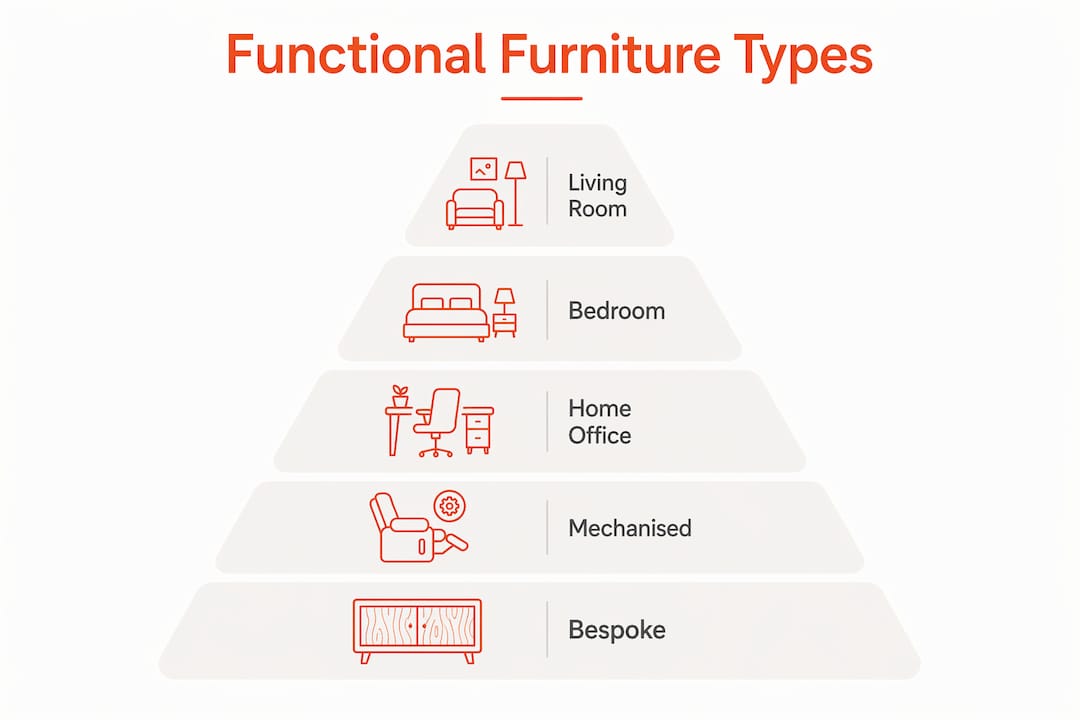
Living room pieces
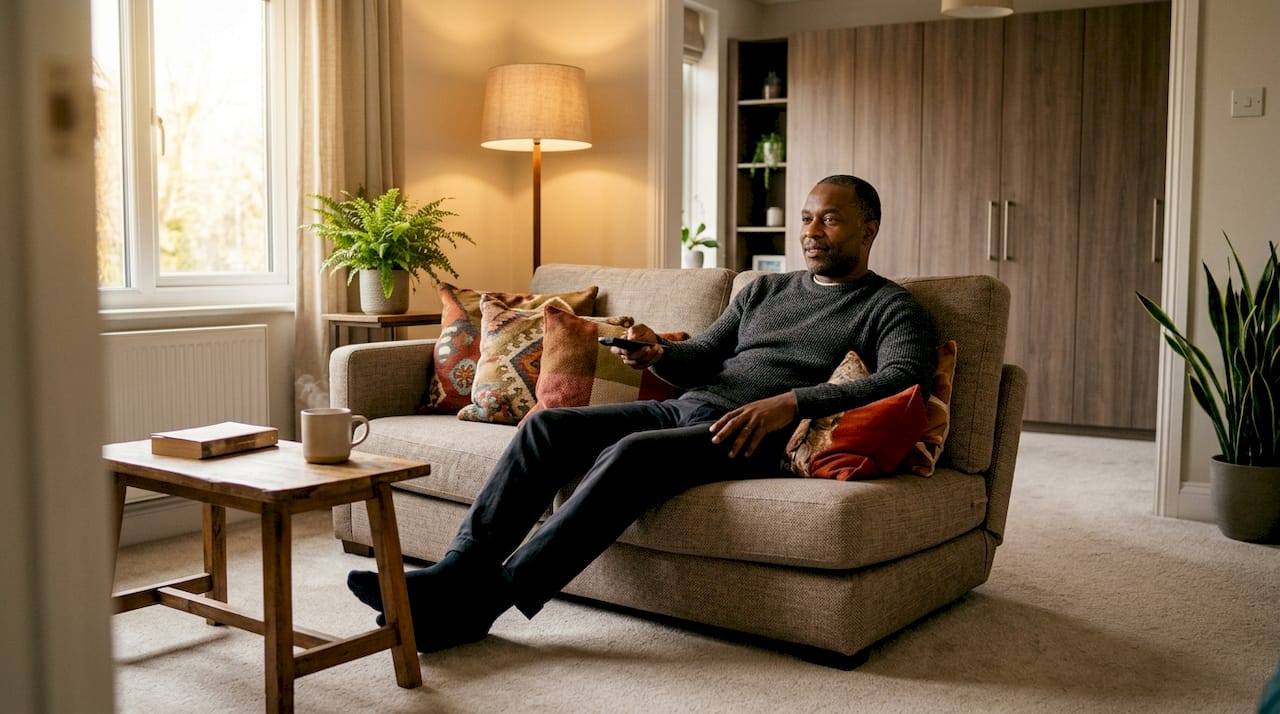
The sofa bed remains the most widely recognised example of functional furniture design. Modern versions from manufacturers such as IKEA, with models like the Friheten corner sofa bed, integrate drawer storage accessible even when the bed is extended. This solves a common frustration: storage that disappears the moment you need the sleeping surface. Storage ottomans and footstools with internal compartments serve a similar dual role, providing seating, a surface, and concealed storage in one.
Extendable dining tables are another practical example, particularly relevant for open-plan homes in Chelsea or Fulham where entertaining space must be created on demand rather than maintained permanently.
Bedroom solutions
Wall beds, commonly called Murphy beds, are experiencing a significant resurgence in polished, design-led forms. A systems approach combining transforming elements with cabinetry improves both visual coherence and usability across the bed-open and bed-closed states. When the bed folds away, the surrounding cabinetry reads as a complete wall unit rather than a gap. Drawer beds, where the entire base lifts on gas pistons to reveal a large storage compartment, are equally effective for bedrooms in Wimbledon or Richmond where wardrobe space is limited.
Home office and study furniture
Fold-down wall desks and secretary-style cabinets allow a dedicated workspace to disappear entirely when not in use. For those exploring bespoke home office furniture in hybrid-use rooms, built-in cabinetry that conceals a desk behind closed doors is among the most effective functional furniture ideas available.
The table below summarises the most common types by room and primary function:
| Room | Furniture type | Primary functions |
|---|---|---|
| Living room | Sofa bed | Seating and sleeping |
| Living room | Storage ottoman | Seating, footrest, and storage |
| Living room | Extendable dining table | Compact dining and entertaining |
| Bedroom | Wall bed with cabinetry | Sleeping and daytime living space |
| Bedroom | Drawer bed | Sleeping and linen or clothing storage |
| Home office | Fold-down wall desk | Working and wall storage when closed |
| Hallway | Storage bench | Seating and shoe or coat storage |
Mechanised and electric options
Electric motors and actuators enable effortless conversion of furniture between uses without manual effort. Micro-apartments and compact London homes benefit particularly from motorised wall beds and height-adjustable desks, where the physical effort of conversion would otherwise discourage daily use. This technology is increasingly accessible and represents the direction modern functional furniture design is heading.
How should you choose functional furniture for your home?
Choosing functional furniture well requires more than selecting a piece that looks appealing in a showroom. The decision should be grounded in how you actually live, the physical constraints of your space, and the quality of the mechanisms involved.
Follow these steps to make a considered choice:
-
Define the room’s primary and secondary functions. A bedroom that occasionally hosts guests has different requirements from a home office that doubles as a spare room every weekend. Clarity on frequency of use determines which function should be prioritised in the design.
-
Measure accurately before committing. Functional furniture often requires clearance space to operate. A wall bed needs floor space in front of it when lowered. An extendable table needs room for chairs to be pulled back. Awkward space storage solutions in London homes frequently fail because measurements were taken for the closed position only.
-
Prioritise mechanism quality above all else. Durability of mechanisms like hinges and glides is the single most important quality indicator for any piece with moving parts. A sofa bed converted twice a week will cycle through its mechanism hundreds of times per year. Cheap hinges and flimsy folds fail within months.
-
Test the piece in person where possible. Smooth operation of hinges and locking systems is a reliable sign of good build quality. If a mechanism feels stiff or requires force in the showroom, it will only worsen with repeated use at home.
-
Consider the aesthetic in both states. A wall bed that looks elegant when closed but reveals an unattractive frame when open undermines the room’s visual coherence. The best functional furniture design maintains a considered appearance in every configuration.
-
Balance storage accessibility with daily convenience. Storage must be easily accessible and integrated for functional furniture to genuinely feel space-saving. Compartments that require the bed to be folded away before you can access them are not practical for everyday use.
Pro Tip: Visit a showroom or request a home design consultation before purchasing bespoke or built-in pieces. Seeing how a mechanism operates in person, and how a piece sits within a real room, prevents costly mistakes that are difficult to reverse once installed.
What practical tips help you integrate functional furniture effectively?
Buying the right piece is only half the task. How you integrate functional furniture into your existing home determines whether it genuinely improves daily life or simply adds complexity.
The most effective approach treats functional furniture as part of a wider room system rather than a standalone purchase. Consider these practical principles:
- Coordinate with existing décor from the outset. Functional furniture that clashes with your colour palette or material choices will feel like a compromise rather than an upgrade. Choose finishes that complement your existing cabinetry, flooring, and wall colours.
- Use modular pieces to support room transitions. Modular shelving systems that can be reconfigured as your needs change offer long-term value. A modular unit in a Putney living room might serve as a media wall today and a home office surround in two years.
- Plan for the “open state” as carefully as the “closed state.” A fold-down desk or wall bed changes the room significantly when in use. Ensure there is adequate lighting, power access, and clear floor space in the open configuration, not just when the piece is tucked away.
- Incorporate built-in cabinetry around convertible pieces. Combining transforming furniture with surrounding built-ins creates visual coherence and adds storage that is always accessible regardless of the furniture’s current configuration.
- Maintain clear access routes. Functional furniture placed too close to doors or other furniture creates bottlenecks. Allow at least 90 centimetres of clear passage around any piece that requires floor space to operate.
The table below shows how different integration approaches affect room usability:
| Integration approach | Effect on usability | Best suited to |
|---|---|---|
| Standalone convertible piece | Moderate improvement, limited coherence | Rental properties or temporary arrangements |
| Convertible piece with surrounding built-ins | High improvement, strong visual coherence | Owner-occupied homes with long-term plans |
| Fully bespoke fitted system | Maximum space efficiency and aesthetic control | Compact London homes in Wimbledon, Richmond, Chelsea |
| Modular freestanding system | Flexible and reconfigurable over time | Growing families or frequently changing households |
For homes in areas like Ealing, Hammersmith, or Brixton where period properties present awkward alcoves and non-standard room dimensions, personalised furniture design offers the most reliable path to genuine space efficiency. Off-the-shelf functional furniture rarely fits these spaces as well as a bespoke solution designed around the room’s actual measurements.
Key takeaways
Functional furniture succeeds when it combines durable mechanisms, accessible storage, and considered design within a room system tailored to real daily use.
| Point | Details |
|---|---|
| Definition is clear | Functional furniture serves multiple purposes within one piece, reducing the need for separate items. |
| Mechanism quality is decisive | Hinges, glides, and locking systems must withstand repeated daily use without stiffening or failing. |
| Measure for the open state | Always account for the space a piece requires when in use, not only when folded or closed. |
| Systems approach works best | Pairing convertible furniture with surrounding built-in cabinetry improves both usability and visual coherence. |
| Bespoke suits London homes | Period properties with non-standard dimensions benefit most from fitted solutions designed to the room’s exact measurements. |
Why I think most people buy functional furniture the wrong way
There is a pattern I see repeatedly when homeowners in London approach functional furniture for the first time. They focus almost entirely on the closed state. They see a beautiful wall unit in a showroom, the bed is folded away, the cabinetry looks immaculate, and they buy it based on that image. Then they get home and discover that the open state is awkward, poorly lit, and positioned directly in front of the only power socket in the room.
Functional furniture success depends on performance in real daily use, not on how it photographs. This is a principle that good designers understand deeply, but that showroom displays are not always set up to communicate. The piece needs to work at 7am when you are half-awake and pulling out the sofa bed for a guest, not just when a stylist has arranged it perfectly under studio lighting.
My honest view is that the best functional furniture decisions come from spending time thinking about the friction points in your current home. Where do you put things temporarily and never find them again? Which room do you avoid because it feels cluttered? What task do you delay because the space does not support it? The answers to those questions point directly to where functional furniture will make a genuine difference, and where it will simply add a mechanism you never use.
The other thing worth saying plainly: durability matters more than price per feature. A sofa bed with four storage drawers, a fold-out table, and a built-in charging station sounds impressive. If the hinges fail after eighteen months, none of those features matter. Buy fewer functions executed well rather than more functions executed cheaply.
— Aureliu
Bespoke fitted storage solutions for London homes
At Finest Furniture Studio, we design and install bespoke fitted wardrobes, media walls, and storage systems tailored precisely to your home’s layout and your personal requirements. Every piece is crafted to maximise the functional potential of your space, whether that is a compact bedroom in Wimbledon, a hybrid home office in Richmond, or a living room in Chelsea that needs to work harder.
Our bespoke wardrobes for West London are designed from a free in-home consultation, fitted within seven to twelve days, and backed by a ten-year guarantee. We also remove and dispose of your existing wardrobe as part of the installation. From hinged and sliding door wardrobes from £1,800 to fully fitted media wall units from £2,000, our solutions combine considered design with practical, lasting functionality. Call us on 07468 150807 or book a free design visit to get started.
FAQ
What is functional furniture in simple terms?
Functional furniture is any piece designed to serve more than one purpose, such as a sofa bed that provides seating and sleeping, or a storage ottoman that acts as a footrest and a storage unit. The goal is to reduce the number of separate pieces a room requires while improving usability.
Is functional furniture the same as space-saving furniture?
The terms overlap but are not identical. Space-saving furniture focuses on reducing physical footprint, while functional furniture focuses on serving multiple roles. The best pieces achieve both, such as a wall bed that reclaims floor space during the day while providing permanent shelving at all times.
How do I know if a functional furniture mechanism is good quality?
Test the piece in person before buying. Smooth, effortless operation of hinges, folds, and locking systems indicates quality construction. Mechanisms that feel stiff or require force in a showroom will worsen with repeated use at home, so never assume they will loosen up over time.
What types of functional furniture work best in small bedrooms?
Drawer beds, wall beds with integrated cabinetry, and fitted wardrobes with interior organisation systems are the most effective choices for small bedrooms. For inspiration on maximising a compact space, small bedroom wardrobe ideas show how built-in storage transforms limited square footage.
Can functional furniture look stylish as well as practical?
Modern functional furniture design has closed the gap between aesthetics and practicality significantly. Bespoke fitted systems, in particular, maintain a polished appearance in every configuration because they are designed as part of the room rather than placed within it. The key is choosing pieces where both the open and closed states have been considered with equal care.