
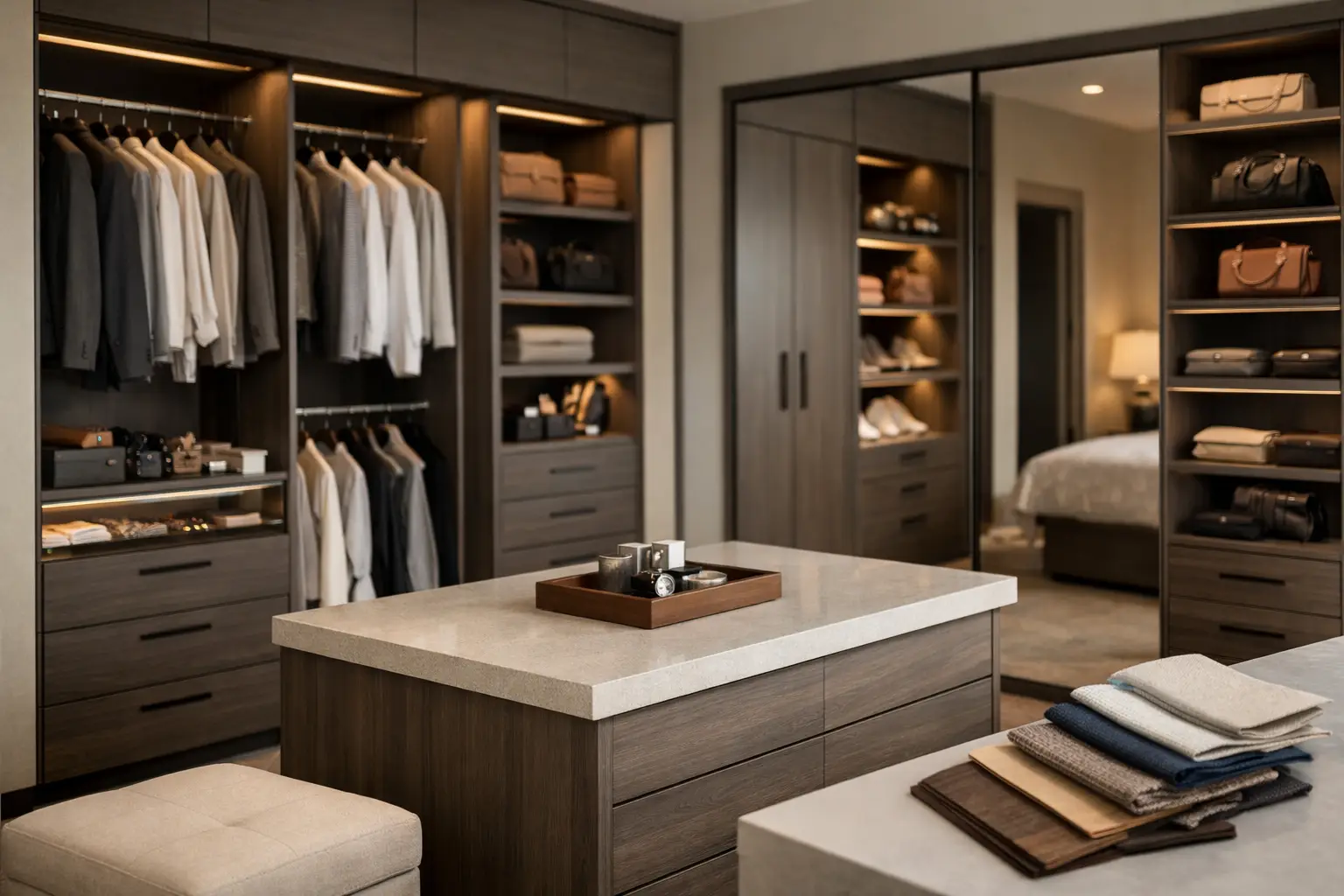
A wardrobe can look impressive on a showroom floor and still fail completely once it meets a real room. Sloping ceilings, chimney breasts, awkward alcoves, uneven walls and the simple reality of how you dress each day all change what good design looks like. That is why a proper guide to bespoke wardrobes starts with the room and the routine, not just the doors.
For many homeowners, especially after a renovation or extension, storage becomes the point where practical needs and interior design either work together or pull against each other. A bespoke wardrobe should do both jobs. It should make the room feel calmer and more refined, while also giving every coat, shoe, suitcase and folded knitwear a place that makes sense.
What this guide to bespoke wardrobes should help you decide
Bespoke wardrobes are not simply made-to-measure boxes. Done well, they are part of the architecture of the room. They can frame a bed, fill an alcove, turn an unused loft corner into valuable storage or create the quiet luxury of a walk-in dressing space.
The key decision is not whether bespoke is better than freestanding furniture in some abstract sense. It is whether your room, your storage needs and your design expectations justify a solution built around you. In many London homes, the answer is yes because standard sizes rarely make the best use of period proportions, converted lofts or compact bedrooms where every centimetre counts.
A fitted design also gives you more control over the visual finish. If you want a room to feel clean and built-in rather than pieced together over time, bespoke joinery creates that effect immediately. That matters just as much in a principal bedroom as it does in a guest room, hallway or home office.
Why bespoke wardrobes suit real homes better
The strongest argument for bespoke wardrobes is efficiency. A freestanding wardrobe leaves dead space above, beside and often behind the unit. In a room with high ceilings, alcoves or awkward corners, that wasted space adds up quickly. A fitted wardrobe can run floor to ceiling and wall to wall, making use of areas that would otherwise remain decorative but unhelpful.
There is also the question of proportion. A large room can handle bolder doors, wider panels and more substantial detailing. A smaller bedroom often benefits from slimmer framing, lighter finishes or sliding doors that do not intrude into the floor area. Bespoke design allows those choices to be tailored rather than forced.
Then there is the interior. This is where many wardrobes look good on the outside but disappoint in daily use. A beautiful set of doors will not compensate for rails placed at the wrong height, drawers that are too shallow, or shelves that become cluttered because they were never planned around real belongings.
The best designs begin with how you live
If your wardrobe needs to hold tailored workwear, long dresses, bulky winter coats and a growing shoe collection, the internal layout should reflect that. If you share a wardrobe, each side should not merely mirror the other unless your habits are genuinely similar. One person may need more hanging space, while the other needs drawers, shelving or handbag storage.
This is where bespoke work feels worthwhile. The result is not just a fitted unit, but a system that supports the way the household actually functions.
Choosing the right wardrobe type
The right format depends on your room, circulation space and the look you want to achieve.
Hinged wardrobes remain a favourite for good reason. They offer full access to the interior, suit both classic and contemporary schemes, and work beautifully in bedrooms where there is enough clearance for doors to open comfortably. They are particularly effective in period homes where panelled or shaker-style fronts can feel in keeping with the architecture.
Sliding wardrobes are often the practical answer in tighter rooms. They save floor space and can create a sleek, modern finish. Mirrored or glass panels can also help bounce light around a darker bedroom, though too much reflection can feel cold if the room is already minimal. It depends on the wider scheme.
Walk-in wardrobes are less about square footage alone and more about planning. A modest dressing room can feel more luxurious than a large, poorly organised one. The best walk-in spaces balance open display with enclosed storage, so the room feels calm rather than crowded.
A guide to bespoke wardrobes and interior planning
Interior planning is where function is won or lost. Before choosing colours and finishes, think carefully about what needs to be stored.
Long hanging is essential for coats, dresses and suits, but double hanging can make much better use of height for shirts, jackets and folded trousers. Drawers are ideal for smaller garments and accessories, while open shelving works best when it is purposeful rather than excessive. Too many shelves often become catch-all zones.
Shoe storage deserves more attention than it usually gets. Deep shelves can waste space and hide pairs at the back. Angled shelving or pull-out solutions often work better, especially if footwear is an important part of the wardrobe rather than an afterthought.
Lighting can transform usability. In a darker alcove or walk-in area, integrated lighting makes the wardrobe feel considered and easier to use, particularly in winter mornings. It is a detail that adds both atmosphere and practicality.
Do not overlook awkward spaces
Some of the most successful bespoke wardrobes are built where standard furniture simply cannot go. Loft rooms with sloping ceilings, alcoves beside chimney breasts, over-bed configurations and understairs areas all benefit from made-to-measure design. These are not compromise spaces if handled well. They often become the most satisfying because they solve a problem the room has always had.
Finishes, colours and the overall look
A wardrobe should belong to the room, not dominate it for the wrong reasons. That does not mean it must disappear. It means the finish, scale and detailing should feel intentional.
Wood effect finishes bring warmth and texture, especially in contemporary schemes that need softening. Painted shaker fronts can suit Victorian and Edwardian homes beautifully, adding structure without feeling heavy. Smooth modern finishes work well in cleaner architectural spaces, particularly where the wardrobe is part of a larger fitted bedroom design.
Colour choice depends on light, room size and mood. Pale tones can make a small room feel more open, but darker shades can add depth and sophistication when the room has enough natural light. Handles, door profiles and framing details also matter more than many homeowners expect. Small design decisions often determine whether the final result feels bespoke or merely custom-sized.
What affects the cost
Price is shaped by more than width and height. Door style, internal fittings, finish choice, lighting, installation complexity and room conditions all influence the final figure.
As a starting point, hinged door wardrobes often begin from around £1,800, walk-in wardrobes from around £1,600 and sliding door wardrobes from around £2,000. More complex projects, such as full fitted bedrooms or wardrobes designed around loft slopes and alcoves, naturally rise from there.
The useful question is not simply what it costs, but what is included. Homeowners should look for clarity on design development, manufacturing, installation and aftercare. A wardrobe that is attractively priced at first can become less appealing if key elements are treated as extras later on.
The value of a well-managed process
A bespoke wardrobe project should feel reassuring, not exhausting. The strongest results usually come from a clear process: an initial conversation, a design visit, measured plans, material choices, transparent pricing, then professional installation.
That structure matters because bespoke furniture is a service as much as a product. Good design can be weakened by poor communication, slow fitting or a rushed finish on site. Equally, a thoughtful process allows practical details to be resolved early, from skirting boards and sockets to access routes and ceiling variations.
For busy homeowners, efficient fitting is not a small bonus. It is part of the value. When a project is planned properly, installation can be completed quickly and with less disruption to the home.
Common mistakes to avoid
The most common mistake is designing for appearance alone. A wardrobe can look elegant in a drawing and still leave no room for longer garments, luggage or laundry baskets.
The second is underestimating how much storage is needed. Most households do not need less storage than they think. They need better storage. That means planning for current use with a little room for change, rather than filling every inch too tightly from the start.
The third is treating bespoke wardrobes as isolated items. In many homes, wardrobes work best as part of a wider fitted scheme, alongside bedside storage, over-bed units, media walls or a home office area. When these elements are considered together, the room feels more settled and better resolved.
Finest Furniture Studio often sees the biggest transformation when a wardrobe is viewed not as a single purchase, but as part of how a room should live and look for years to come.
The right wardrobe should make daily life easier the moment it is installed, but its real success shows up quietly over time – in a bedroom that stays calmer, a loft room that finally works, and a home that feels more finished because the storage was designed with care.

