


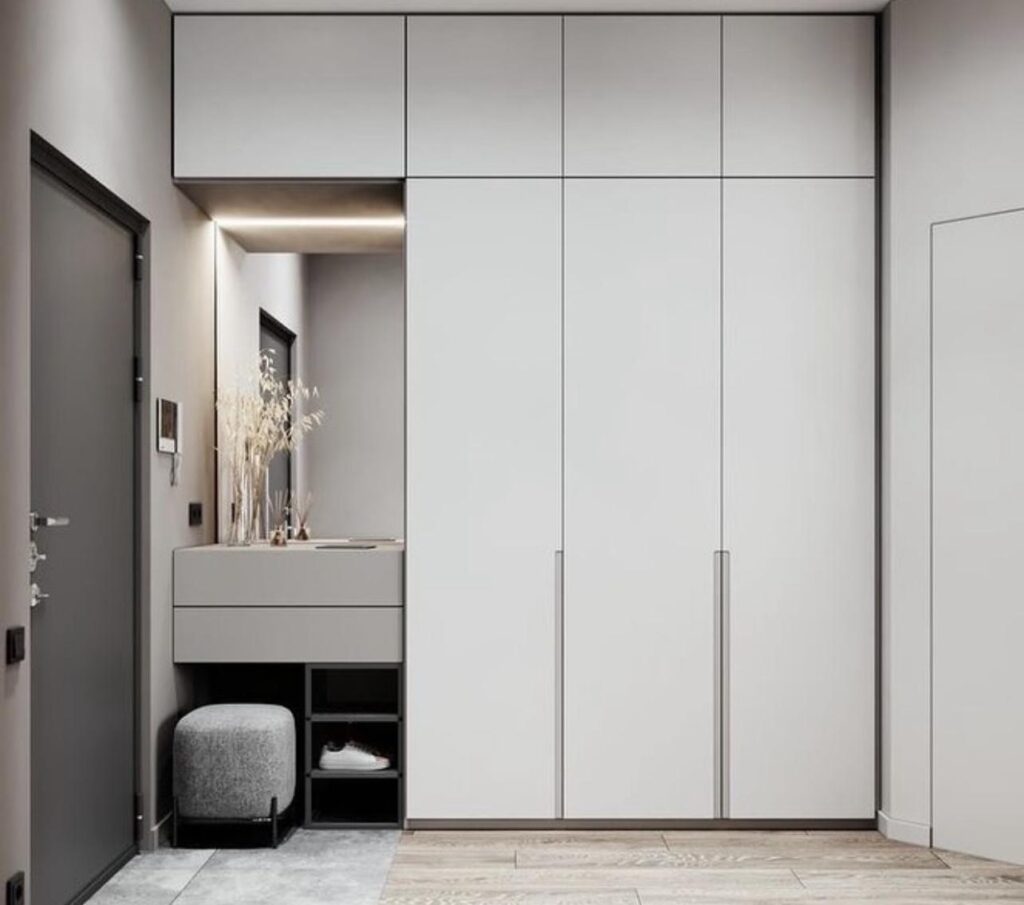
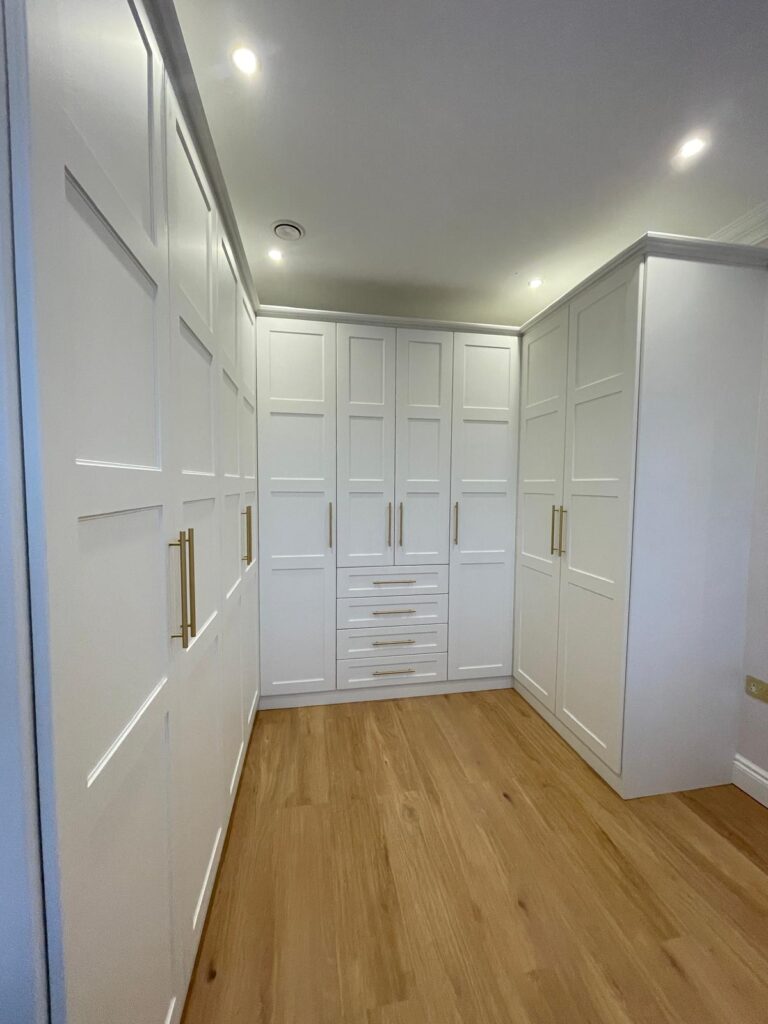
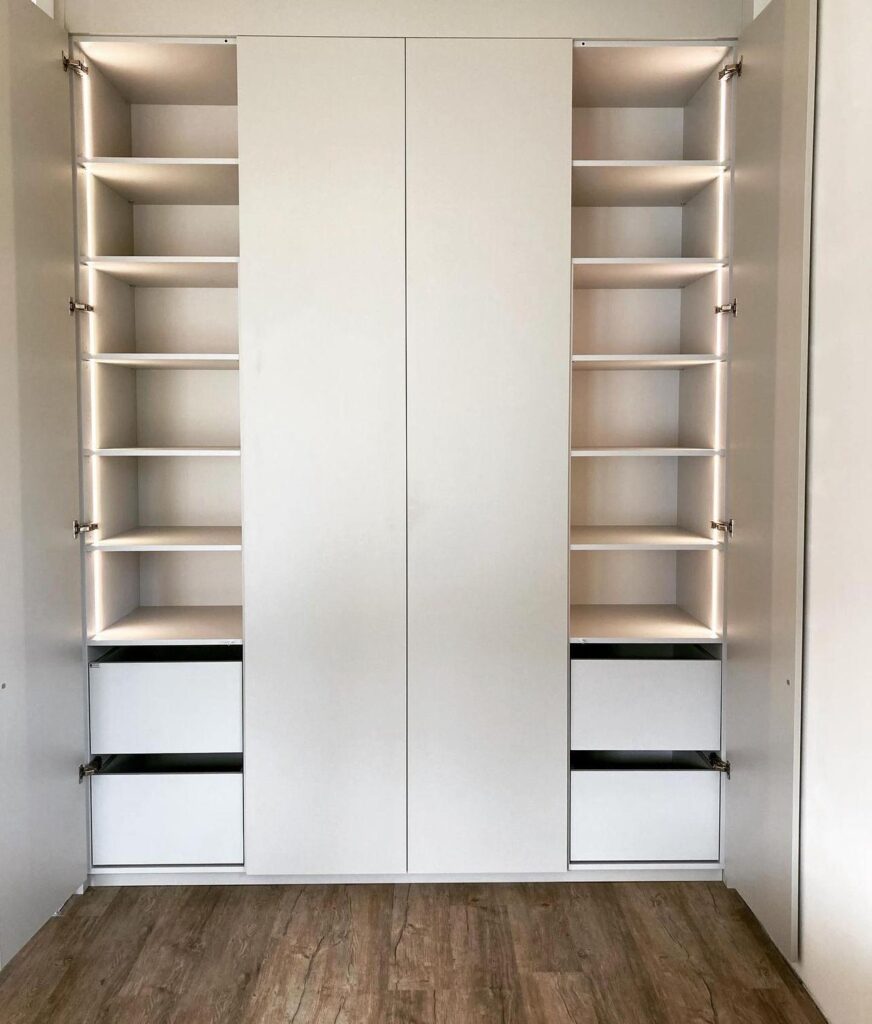

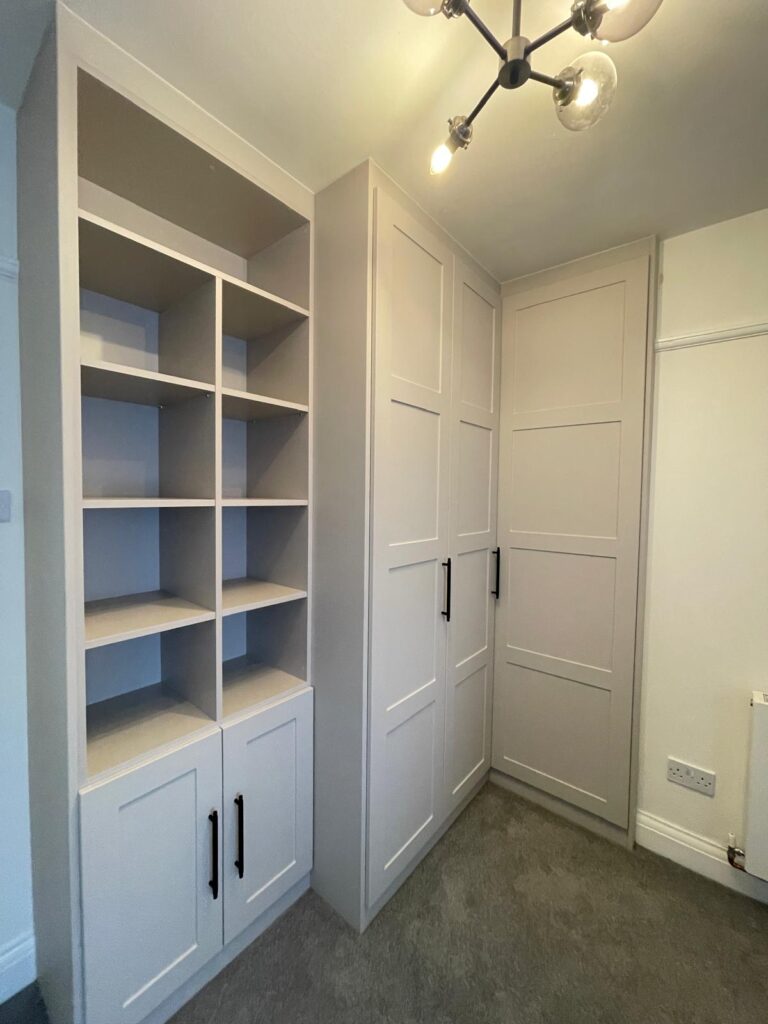
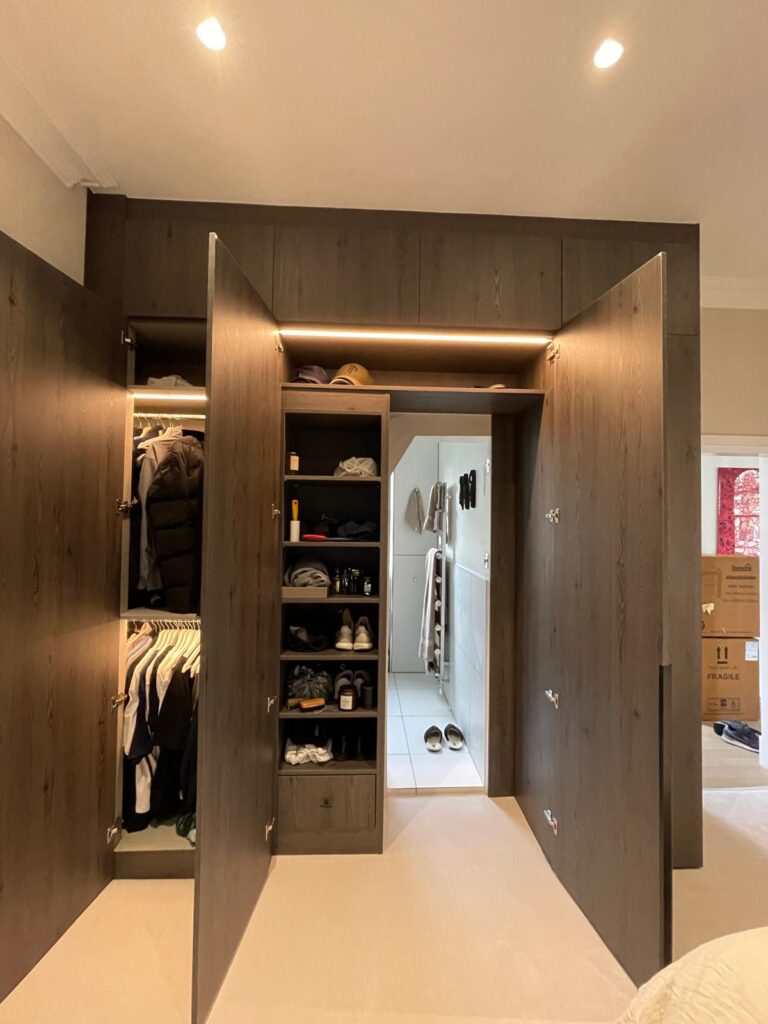

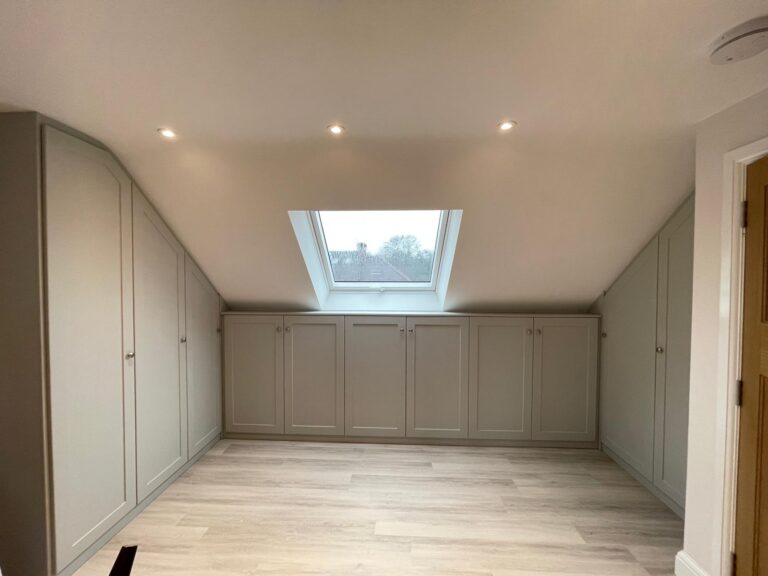

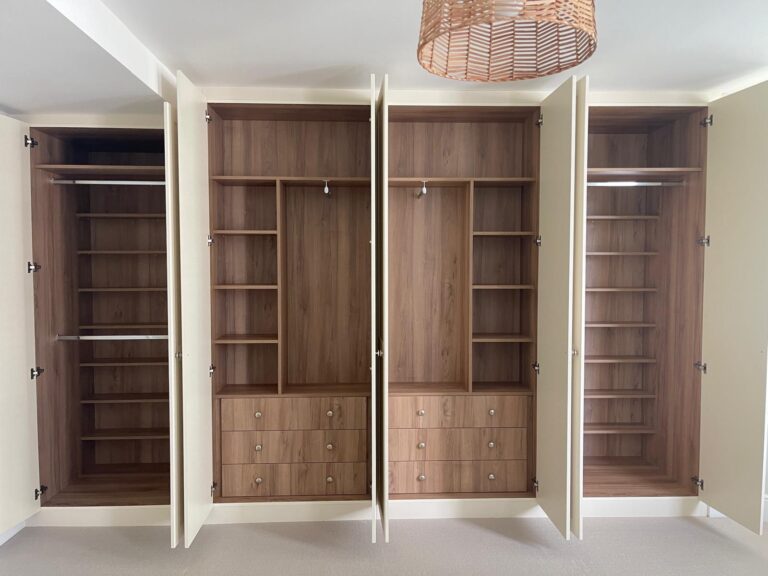
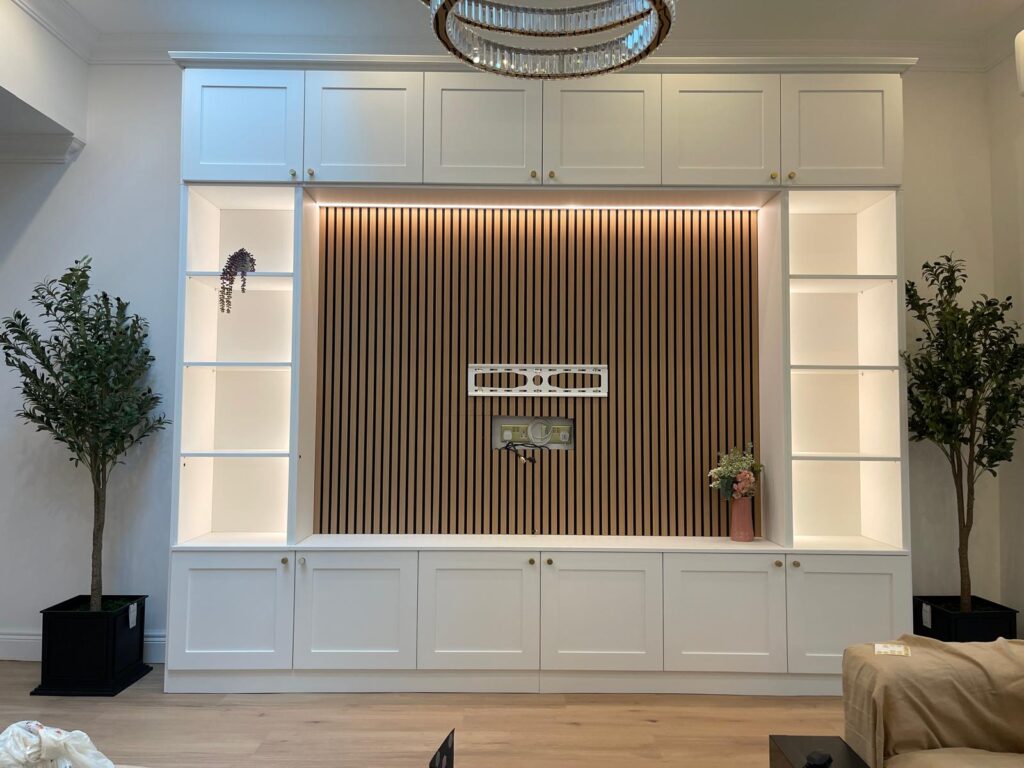

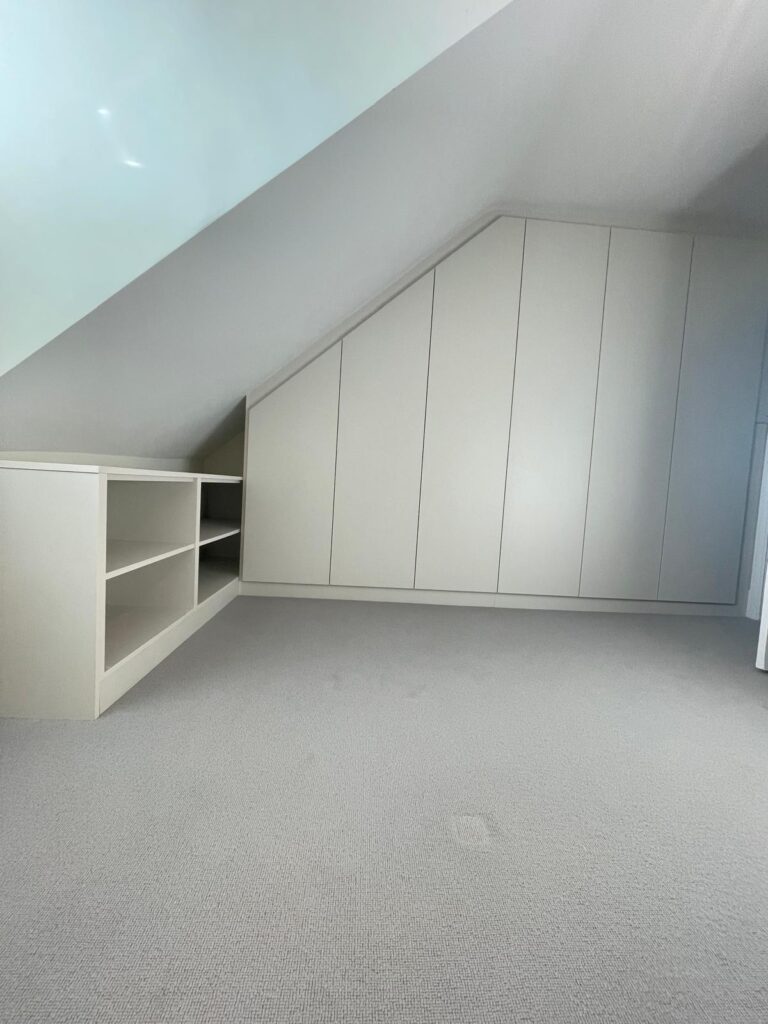

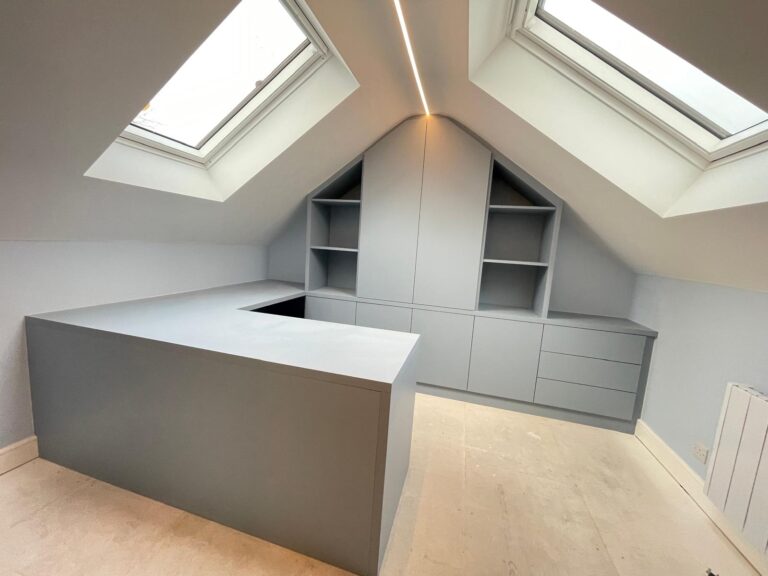
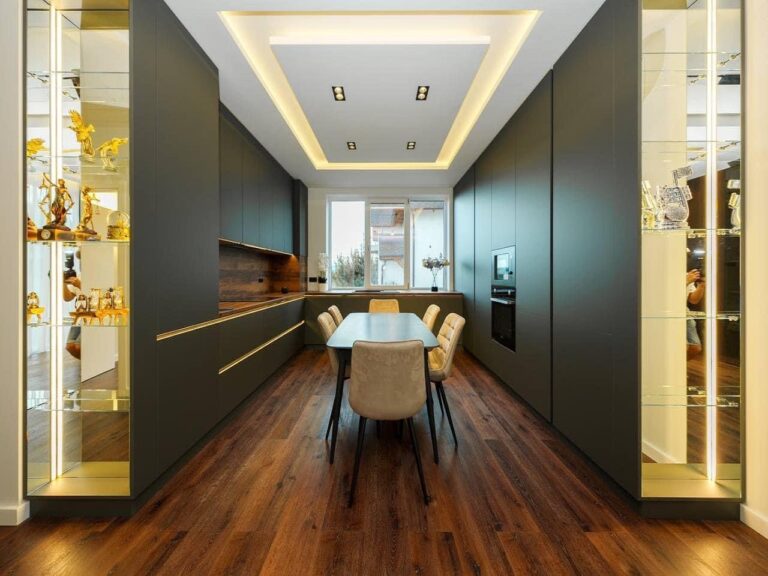
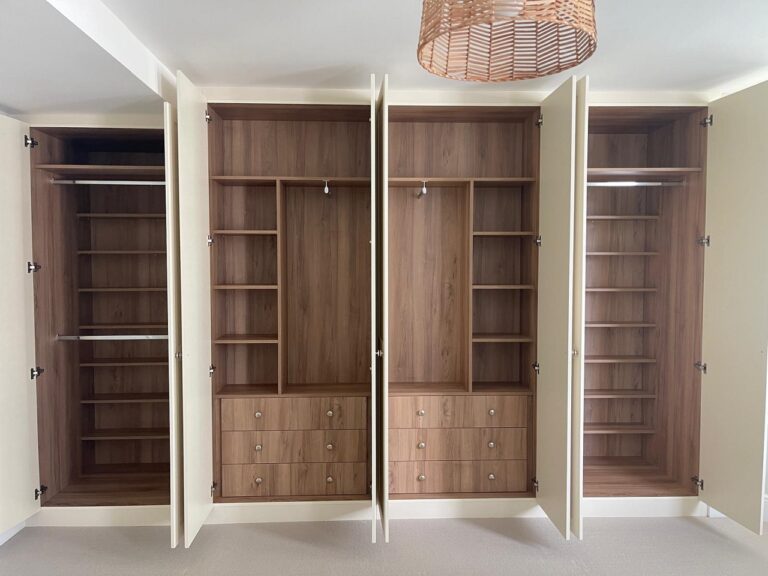

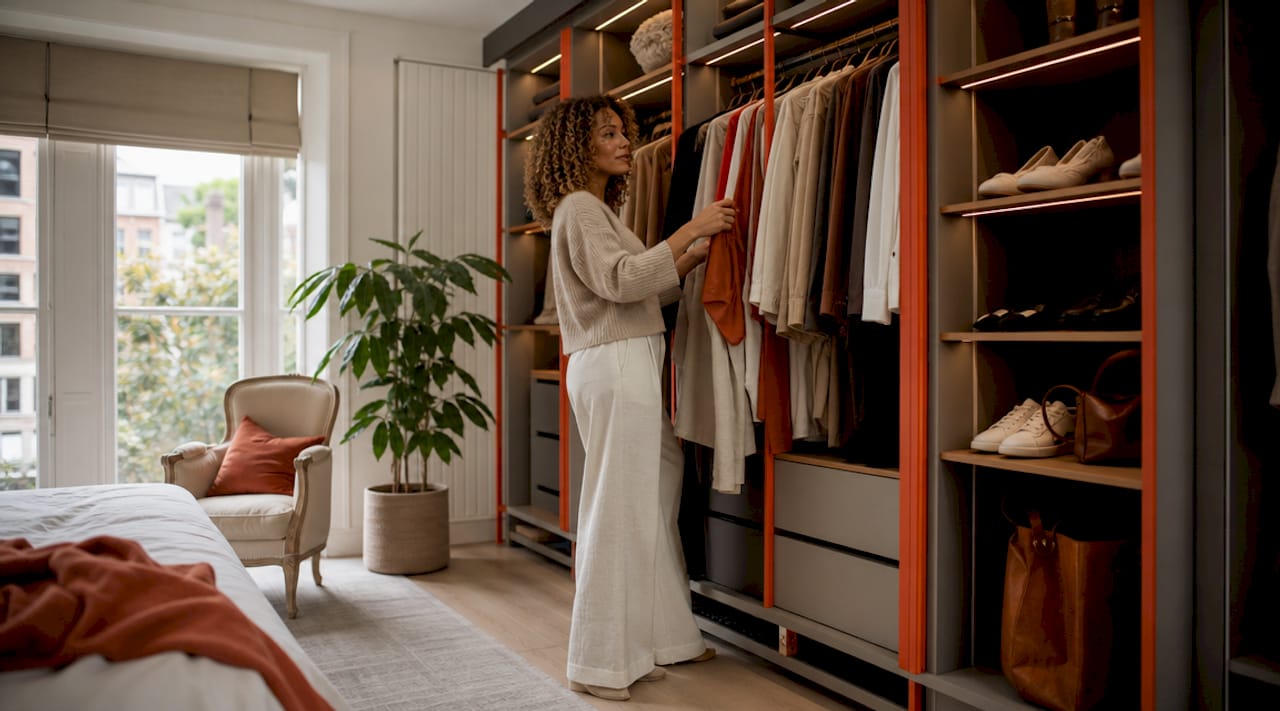
Open wardrobe design is a doorless storage system that displays clothing, shoes, and accessories openly on shelves, rails, and modules without enclosing panels or hinged fronts. Also known as an open-plan wardrobe or open closet system, this approach transforms a bedroom wall into a fully visible, accessible dressing area. The concept has gained considerable traction across London neighbourhoods including Richmond, Wimbledon, and Chelsea, where homeowners are rethinking how storage can serve both function and aesthetics. At Finest Furniture Studio, we see this shift daily: clients want storage that feels like a boutique, not a cupboard.
What is open wardrobe design and how does it differ from traditional wardrobes?
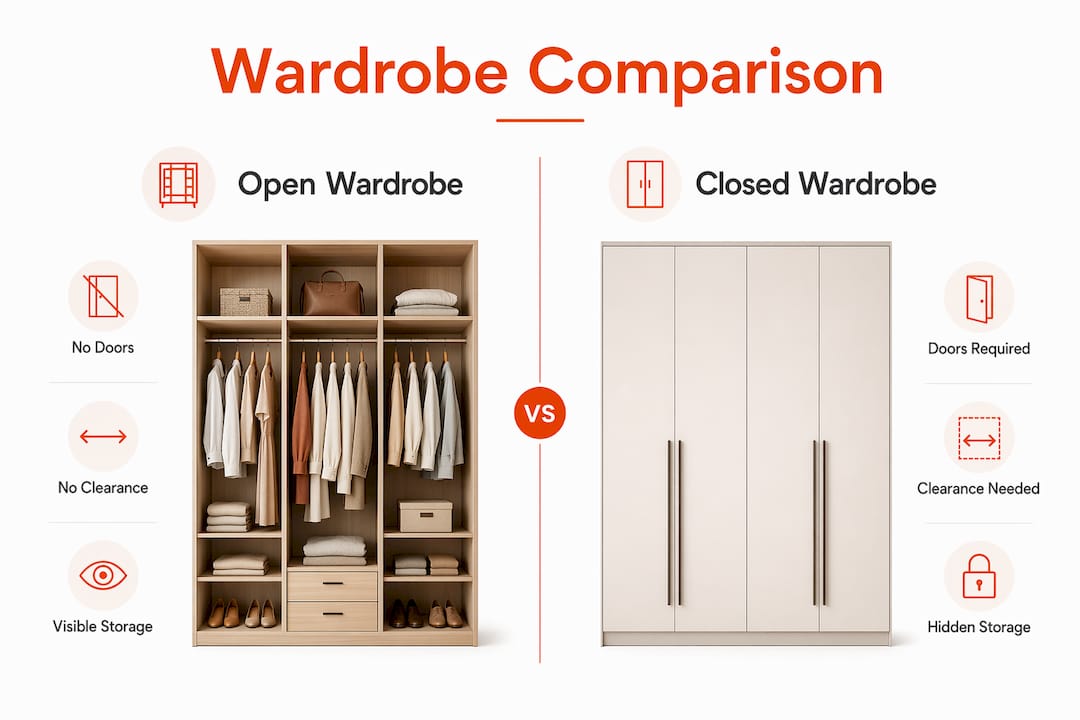
Open wardrobe design is defined by the absence of doors, meaning every garment and accessory remains visible and within reach at all times. Traditional closed wardrobes rely on hinged or sliding doors to conceal contents, which creates a tidier surface appearance but sacrifices immediate accessibility. The core distinction is not merely aesthetic. It is structural and functional.
Closed wardrobes require door clearance, whether that is a swing arc for hinged doors or a side track for sliding panels. Open wardrobes save space by eliminating this clearance entirely, which is a meaningful gain in compact London flats where every centimetre counts. A room that previously needed 60 cm of swing clearance in front of a wardrobe can reclaim that floor area for a dressing stool, a full-length mirror, or simply a more open feel.
Installation timelines also differ significantly. Modular open wardrobes install within one to two days, compared to traditional built-in carpentry which can take considerably longer. This matters for homeowners in Putney or Ealing who want minimal disruption to their daily routine.
Open vs closed wardrobe: a direct comparison
| Feature | Open wardrobe | Closed wardrobe |
|---|---|---|
| Door clearance needed | None | 50–90 cm depending on door type |
| Installation time | 1–2 days (modular) | Several days (built-in carpentry) |
| Dust exposure | Higher; regular tidying required | Lower; contents protected |
| Visual impact | Boutique-style, airy | Neat, concealed |
| Flexibility | High; modules can be reconfigured | Lower once fitted |
| Cost range | Often lower for modular | Higher for bespoke built-in |
The table above shows that neither option is universally superior. The right choice depends on your lifestyle, the room’s dimensions, and how much visual order you can maintain. For homeowners in Fulham or Chiswick who want a contemporary, gallery-like bedroom, an open wardrobe system delivers an aesthetic that a closed wardrobe simply cannot replicate.
How to plan and configure an open wardrobe for maximum space
Effective planning is what separates a functional open wardrobe from a cluttered rail of clothes. Configuration choices, dimensions, and material selections all determine whether the result feels like a luxury dressing room or an untidy storage corner.
The three most common layouts are linear, L-shaped, and U-shaped. Each suits a different room size and usage pattern:
- Linear configuration runs along a single wall and works well in narrow bedrooms or alcoves. It is the most space-efficient option for smaller rooms in areas like New Malden or Brixton, where bedroom widths are often limited.
- L-shaped configuration wraps around two adjacent walls, offering more hanging and shelving capacity without requiring a dedicated dressing room. It suits medium-sized bedrooms in homes across Twickenham and Barnes.
- U-shaped configuration creates a three-wall dressing area and is the most immersive option. A U-shaped open wardrobe requires at least 2 square metres of floor area and a 90 cm walkway for comfortable use. This layout suits larger master bedrooms in Richmond or Chelsea.
Shelf depth is a detail that many homeowners overlook until after installation. Shallow shelving of 31 to 38 cm for folded clothes maximises neatness and prevents items from tumbling forward. Deeper shelves, around 50 to 60 cm, suit hanging rails where garments need full depth to hang without creasing.
Hanging height is equally important. The reach zone concept places frequently accessed items between 70 cm and 160 cm from the floor, with longer garments requiring 150 to 170 cm of vertical clearance. Designing around these zones means you are not stretching for everyday items or crouching for shoes.
Material choices affect both durability and appearance. Steel frames with powder-coated finishes suit industrial or contemporary interiors and resist warping in humid environments. Solid wood or wood-effect boards bring warmth and suit Shaker-style or traditional interiors common in Wimbledon and Hammersmith. For a modular wardrobe system, MDF with a lacquered finish offers a clean, paintable surface that integrates with almost any décor.
Pro Tip: In small London bedrooms, use the full height of the wall rather than stopping at standard ceiling height. A floor-to-ceiling open wardrobe in a Woking or Guildford home can double usable storage without increasing the room’s footprint.
How to style an open wardrobe and keep it looking its best
Styling an open wardrobe is not optional. Because everything is visible, the wardrobe becomes part of the room’s décor. A well-styled open wardrobe reads as a design feature; a poorly maintained one reads as clutter.
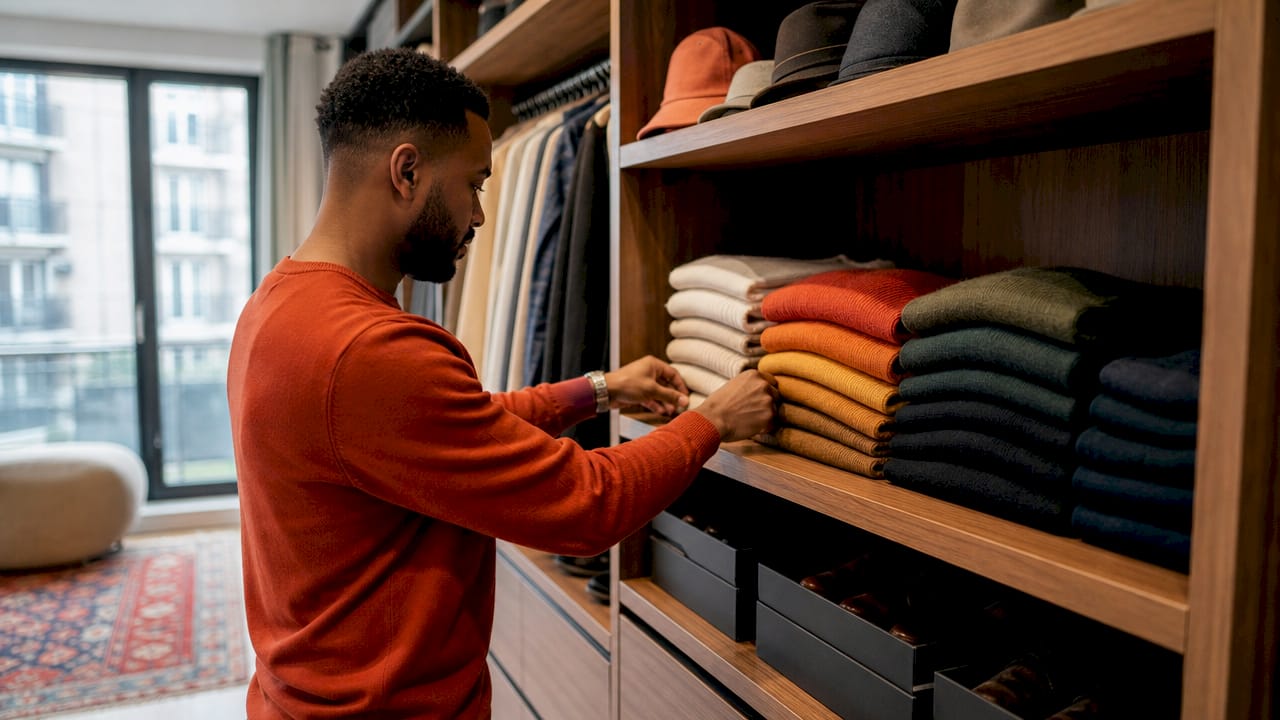
The foundation of good open wardrobe styling is consistency. Uniform hangers are critical for visual coherence. Mixed plastic, wire, and wooden hangers create a chaotic appearance that undermines even the most thoughtfully planned layout. Slim velvet hangers in a single colour are the most widely recommended choice because they save space and create a uniform line across the rail.
Colour coordination is the next layer. Grouping garments by colour, whether in a gradient from light to dark or by colour family, creates an immediate sense of order. This approach also makes it faster to find specific items, which is a practical benefit beyond aesthetics.
Lighting transforms an open wardrobe from functional to genuinely impressive. LED strip lights and spotlights add depth and elegance, creating a boutique atmosphere that makes the wardrobe feel intentional rather than improvised. LED strips fitted to the underside of shelves illuminate folded items without harsh shadows. A single spotlight directed at a display shelf of shoes or bags creates a focal point that anchors the whole design.
Accessory storage deserves its own consideration:
- Baskets and fabric bins on lower shelves contain folded items like knitwear and gym wear without exposing them to dust.
- Shoe racks and angled shelves display footwear attractively while keeping pairs together and accessible.
- Pull-out drawers integrated into the base of the wardrobe system store underwear, socks, and jewellery out of sight without requiring a separate chest of drawers.
- Hooks and pegs on side panels hold bags, belts, and scarves in a way that is both practical and decorative.
Visible storage encourages organisation by making the contents of your wardrobe impossible to ignore. When you can see everything, you are more likely to edit your collection, return items to their correct place, and maintain a wardrobe that genuinely reflects your style. For a structured approach to maintaining this, a wardrobe organisation workflow can help you build habits that keep the system working long-term.
Pro Tip: Treat the top shelf of your open wardrobe as a display area rather than overflow storage. A row of matching hat boxes, a folded cashmere throw, or a small plant creates a finished, intentional look that elevates the entire bedroom.
Who should choose an open wardrobe? Pros, cons, and lifestyle fit
An open wardrobe suits specific lifestyles and living situations well, but it is not the right choice for everyone. Understanding where it excels and where it falls short helps you make a decision you will be satisfied with for years.
Open wardrobes act like mini boutiques, encouraging careful curation and styling rather than accumulation. This makes them particularly well suited to fashion-conscious homeowners who enjoy the daily ritual of selecting outfits from a well-organised display. They also suit minimalists who maintain a capsule wardrobe, because a small, curated collection looks intentional on open shelving rather than sparse.
For homeowners in compact London flats across areas like Brixton, Ealing, or Walton-on-Thames, the space-saving benefits are tangible. Removing door clearance requirements and using small room wardrobe solutions that maximise vertical space can make a genuine difference to how a room feels and functions.
The advantages of open wardrobe design include:
- No door hardware to maintain or replace over time
- Immediate visual access to all clothing and accessories
- Faster to install, particularly with modular systems
- Creates an airy, spacious feel in the bedroom
- Easier to reconfigure as your storage needs change
The challenges are equally real. Open wardrobes are not suited for those who prefer hidden clutter or minimal maintenance. Dust settles on exposed clothing and shelving, requiring more frequent cleaning than a closed system. If you travel frequently or have a busy household, maintaining the visual order that makes an open wardrobe attractive takes consistent effort.
The most practical solution for many homeowners is a hybrid approach: combining open sections for frequently worn items with closed drawers or cabinets for seasonal storage, accessories, and items that benefit from dust protection. This is a design direction we at Finest Furniture Studio often recommend for clients in Richmond and West London who want the aesthetic of an open wardrobe without sacrificing practicality. Pairing this with personalised interior design solutions ensures the wardrobe integrates with the wider room rather than standing apart from it.
Key takeaways
Open wardrobe design works best when the layout, dimensions, and styling are planned together from the outset rather than treated as separate decisions.
| Point | Details |
|---|---|
| Definition and core benefit | An open wardrobe is a doorless storage system that saves door clearance space and improves daily accessibility. |
| Optimal dimensions | Shelves should be 31 to 38 cm deep for folded items; U-shaped layouts need at least 2 square metres of floor space. |
| Styling is non-negotiable | Uniform hangers, colour coordination, and integrated lighting are what separate a stylish open wardrobe from visual clutter. |
| Not suited to all lifestyles | Dust exposure and the need for consistent tidiness make open wardrobes a poor fit for low-maintenance households. |
| Hybrid designs offer balance | Combining open rails with closed drawers or cabinets delivers both the boutique aesthetic and practical dust protection. |
My honest view on open wardrobes in London homes
Having worked with homeowners across Richmond, Wimbledon, Chelsea, and Hammersmith, I have seen open wardrobes transform bedrooms in ways that closed fitted wardrobes simply cannot. The moment a client walks into a bedroom where the wardrobe is open, well-lit, and colour-coordinated, the room feels larger and more considered. That reaction is consistent regardless of the home’s size or budget.
What I have also observed is that the clients who struggle with open wardrobes are not those with small rooms or large wardrobes. They are the ones who underestimate the commitment to organisation. An open wardrobe is a daily discipline. If you are someone who drops clothes on a chair at the end of the day and deals with them at the weekend, an open system will frustrate you within a month.
My recommendation for most London homeowners is to start with a hybrid design. Keep the hanging rail open for daily-wear garments and invest in closed drawers or a lower cabinet section for everything else. This gives you the visual impact of an open wardrobe without the pressure of maintaining perfect order across every shelf.
One thing I would push back on is the assumption that open wardrobes are only for minimalists. Some of the most impressive open wardrobes I have seen belong to clients with extensive collections. The key is not having fewer items. It is having a system that gives every item a defined place. When the system is right, even a large wardrobe looks intentional.
— Aureliu
Bespoke open wardrobe design from Finest Furniture Studio
At Finest Furniture Studio, we design and install bespoke fitted wardrobes across London, including Richmond, Wimbledon, Chelsea, Putney, Fulham, and Chiswick. Whether you are drawn to a fully open wardrobe system or a hybrid design that combines open rails with closed storage, we build each piece to your exact room dimensions and décor preferences.
Our bespoke wardrobes for West London homes are designed during a free in-home consultation, fitted within seven to twelve days, and backed by a 10-year quality guarantee. We also take away and dispose of your old wardrobe at no extra charge. For loft wardrobes, alcove wardrobes, or awkward-space solutions across London and surrounding areas including Guildford, Reading, and Woking, contact us today.
07468 150807 or WhatsApp | 124 City Road, Kemp House, London, EC1V 2NX
FAQ
What is an open-plan wardrobe?
An open-plan wardrobe is a storage system without doors that displays clothing and accessories on open shelves, rails, and modules. It is the same concept as an open wardrobe design, emphasising visibility and accessibility over concealment.
How much space does an open wardrobe need?
A linear open wardrobe can fit along any wall with at least 50 cm depth, while a U-shaped configuration requires a minimum of 2 square metres of floor area and a 90 cm central walkway for comfortable use.
What are the main benefits of an open wardrobe?
The primary benefits are space efficiency from removing door clearance, faster access to clothing, and a boutique-style aesthetic that makes the wardrobe a design feature rather than a functional afterthought.
Are open wardrobes harder to maintain than closed wardrobes?
Open wardrobes require more frequent dusting and consistent organisation because contents are always visible and exposed to airborne dust. They suit homeowners who maintain tidy habits rather than those who prefer to conceal clutter.
Can open wardrobes work in small London bedrooms?
Open wardrobes are particularly effective in compact bedrooms because they reclaim the floor space lost to door clearance. Floor-to-ceiling open shelving in a small room maximises storage capacity without making the space feel enclosed.