
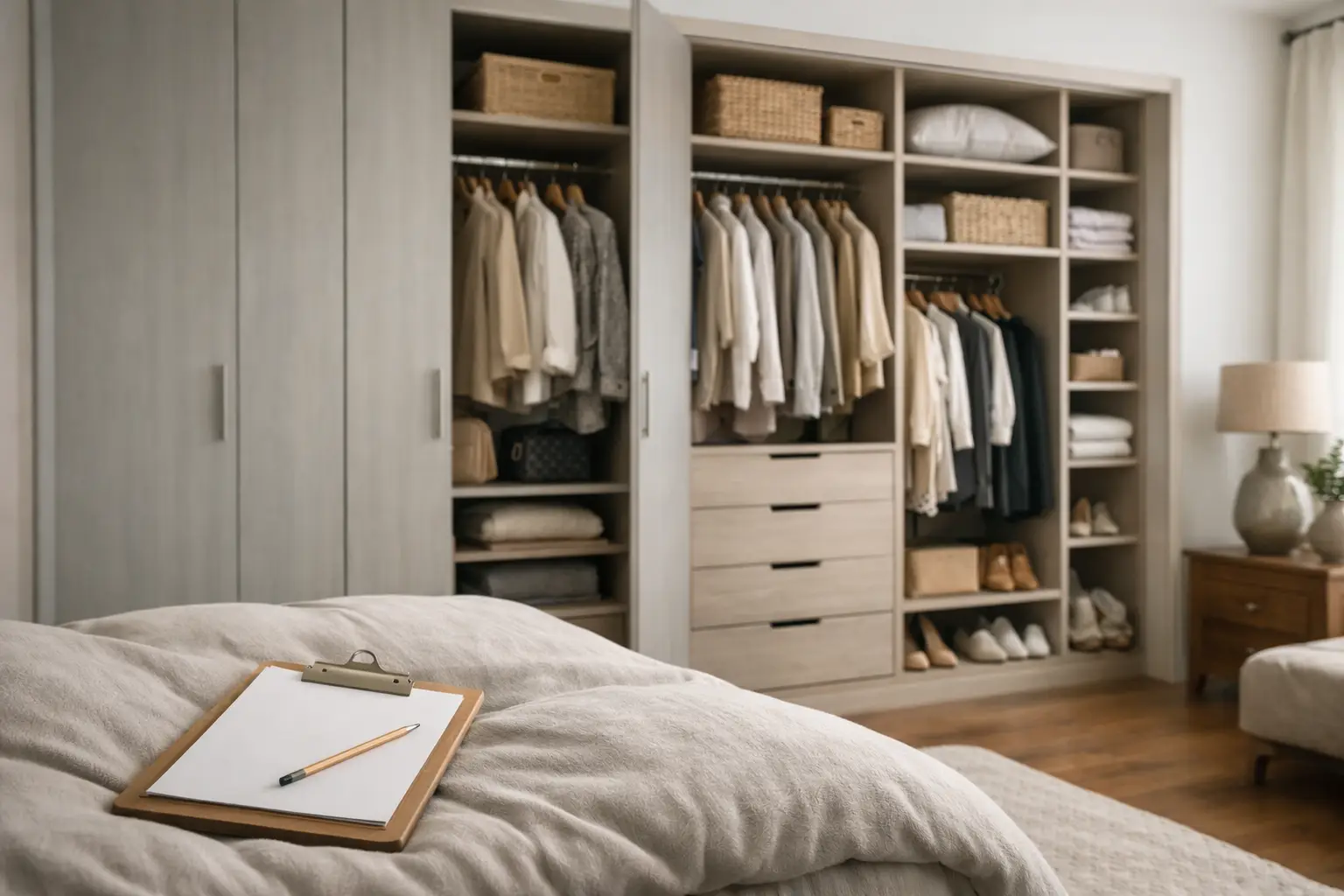
A bedroom usually tells the truth about a home. If the chair is buried under clothes, the wardrobe doors barely close, and the spare bedding lives in three different places, the room is not working hard enough. A fitted bedroom storage checklist helps you move past vague ideas and make practical design decisions that suit your space, your routine and the way you actually live.
The right fitted storage should do more than hide clutter. It should make the room feel calmer, look more considered and use every awkward inch properly – especially in homes where alcoves, chimney breasts, sloping ceilings or limited floor space make off-the-shelf furniture feel like a compromise.
What a fitted bedroom storage checklist should cover
A good checklist starts with behaviour, not just measurements. Before thinking about finishes or door styles, look at what needs to be stored and how often you use it. Everyday clothing, shoes, bags, accessories, laundry, bedding and sentimental items all need different types of storage. If everything is placed behind identical doors with no internal planning, even a beautiful wardrobe can become frustrating within weeks.
This is where fitted furniture has a clear advantage. Instead of adapting your belongings to standard units, the storage is shaped around your room and routine. That matters in smaller bedrooms, loft rooms and period properties where every centimetre counts.
1. Measure the room properly
Start with the fixed facts. Note the ceiling height, wall width, skirting boards, radiators, sockets, window positions and door swings. If your room has uneven walls or a sloping ceiling, include those details early. They will affect everything from door choice to internal depth.
It is worth measuring how much clear space you need to move comfortably around the bed and open drawers or wardrobe doors. A design that looks generous on paper can feel cramped if circulation has not been considered.
2. Audit what you own
This is the part many people skip, and it is often why storage falls short. Count long-hanging items such as dresses and coats, shorter hanging items such as shirts and jackets, folded knitwear, shoes, handbags, jewellery, watches, luggage and spare linens. Think about bulk as much as quantity. Winter coats need more room than summer tops. Bedding can take up an entire section if you want it stored neatly rather than compressed into odd gaps.
If two people share the wardrobe, divide storage needs honestly. Equal widths do not always mean equal usefulness. One person may need more hanging space, the other more shelving or drawers.
Your fitted bedroom storage checklist for layout decisions
Once you know what must be stored, you can shape the layout around it. This is where bespoke design becomes less about luxury and more about logic.
3. Decide what should hang, fold or hide away
Hanging space is essential, but too much of it can waste room. Long-hanging sections are ideal for dresses, coats and occasionwear. Double hanging can work brilliantly for shirts, blouses and trousers, especially in compact bedrooms. Folded items generally sit better on shelves or in drawers, where they stay visible and easier to maintain.
Closed storage creates a cleaner look, but not everything needs to disappear. Open shelving can work for handbags, display boxes or carefully edited accessories. The trade-off is upkeep. Open sections look elegant when styled well, but they gather dust and demand more discipline.
4. Plan drawer storage with intention
Drawers are often the hardest-working part of any fitted bedroom. They suit underwear, nightwear, knitwear, T-shirts, accessories and smaller personal items that get lost on open shelves. Shallow drawers are useful for jewellery or watches, while deeper drawers suit jumpers and jeans.
If your bedroom also functions as a dressing area, built-in drawers can reduce the need for extra furniture and keep the room visually lighter. That can make a noticeable difference in bedrooms where a freestanding chest would interrupt the flow of the space.
5. Think about shoes realistically
Shoe storage tends to be underestimated. A few open shelves may be enough for daily pairs, but households often need more capacity for seasonal footwear, boots and occasion shoes. Boots need taller compartments. Delicate heels may need flatter shelving. Trainers can be stacked more tightly.
The best solution depends on whether shoes are part of your daily dressing routine or simply need tidy, long-term storage. If you reach for them each morning, visibility matters. If not, concealed shelving may keep the room looking calmer.
6. Use awkward spaces deliberately
The strongest fitted schemes are often built around the spaces standard furniture cannot handle. Alcoves, over-bed areas, chimney breast recesses and eaves can all become valuable storage rather than dead zones. In London and surrounding areas, where bedroom proportions can be tight and every wall matters, these details often make the difference between a room that feels crowded and one that feels composed.
Over-bed storage, for example, can work beautifully in a smaller room when designed with enough breathing space around the bed. It adds volume without taking more floor area. The balance is visual weight. If the units are too deep or the finish too dark, the room may feel more enclosed.
Style choices that affect usability
A fitted bedroom storage checklist should never stop at capacity. Appearance and usability are linked. The wrong finish or door style can make even a well-planned interior less practical day to day.
7. Choose doors based on space, not trend
Hinged doors offer full access to the wardrobe interior, which is ideal if you want to see everything at once. They suit larger bedrooms with enough clearance in front. Sliding doors save space and can create a sleek, contemporary finish, but access is split between sections, so internal organisation needs careful planning.
There is no universal best option. It depends on room width, bed placement and how you use the wardrobe. In compact bedrooms, sliding doors often make movement easier. In larger rooms, hinged doors can feel more generous and classic.
8. Select finishes that suit the room
Light finishes can help a smaller bedroom feel more open. Wood-effect designs bring warmth and softness. Painted shaker styles feel timeless, while smooth modern fronts create a cleaner, more architectural look. Mirrors can make practical sense in tighter rooms, but too much reflective surface can feel cold unless balanced with texture elsewhere.
A fitted wardrobe should belong to the room, not dominate it. The best results come when cabinetry, wall colour, flooring and hardware feel considered together.
9. Add lighting where it matters
Interior wardrobe lighting sounds like a luxury until you try finding navy clothing in a dim corner on a winter morning. Lighting is particularly useful in deeper wardrobes, walk-in areas and rooms with limited natural light. It also elevates the experience of using the storage, which matters more than people expect.
That said, lighting should be purposeful. If the budget is tighter, prioritise visibility in the areas you use most rather than adding it everywhere.
Practical checks before you commit
A fitted bedroom storage checklist also needs to cover the bigger picture: timing, budget, installation and future use.
10. Set a budget around value, not just price
Bespoke storage is an investment, so it helps to think about what you are paying for – tailored design, made-to-measure production, better space efficiency, professional fitting and a more integrated finish. The cheapest route is not always the most cost-effective if it leaves wasted corners, poor-quality internals or a design you outgrow quickly.
Transparent pricing matters here. If you are comparing options, check what is included: design consultation, manufacturing, installation, finishes, internal fittings and aftercare.
11. Ask how installation will work
A well-designed wardrobe still depends on precise fitting. Ask how long installation is likely to take, what preparation is needed, and whether the room will be fully usable during the process. For many households, speed matters almost as much as appearance, especially if the bedroom is the main one in use.
Professional installation should leave the space feeling finished rather than disrupted. That reassurance is one reason many homeowners choose a specialist rather than trying to piece the project together from separate suppliers.
12. Plan for the next five years
Storage should fit your life now, but it also needs some flexibility. A young family may need more accessible drawers today and more hanging space later. A guest room may become a home office and then return to bedroom use. Good fitted furniture can adapt if the internal layout has been planned with some foresight.
This is often where expert guidance proves its value. A design visit can highlight opportunities you may not have noticed, whether that means adding over-bed units, rethinking an alcove, or creating a wardrobe interior that works much harder without making the room feel busier.
If you are working through a fitted bedroom storage checklist, the goal is not to cram in the maximum number of shelves. It is to create a bedroom that feels easier to live in every day – quieter, more organised and properly tailored to the shape of your home and the habits of the people using it. When storage is planned with that level of care, the room stops feeling like a place where things pile up and starts feeling like part of the life you want to enjoy.

