








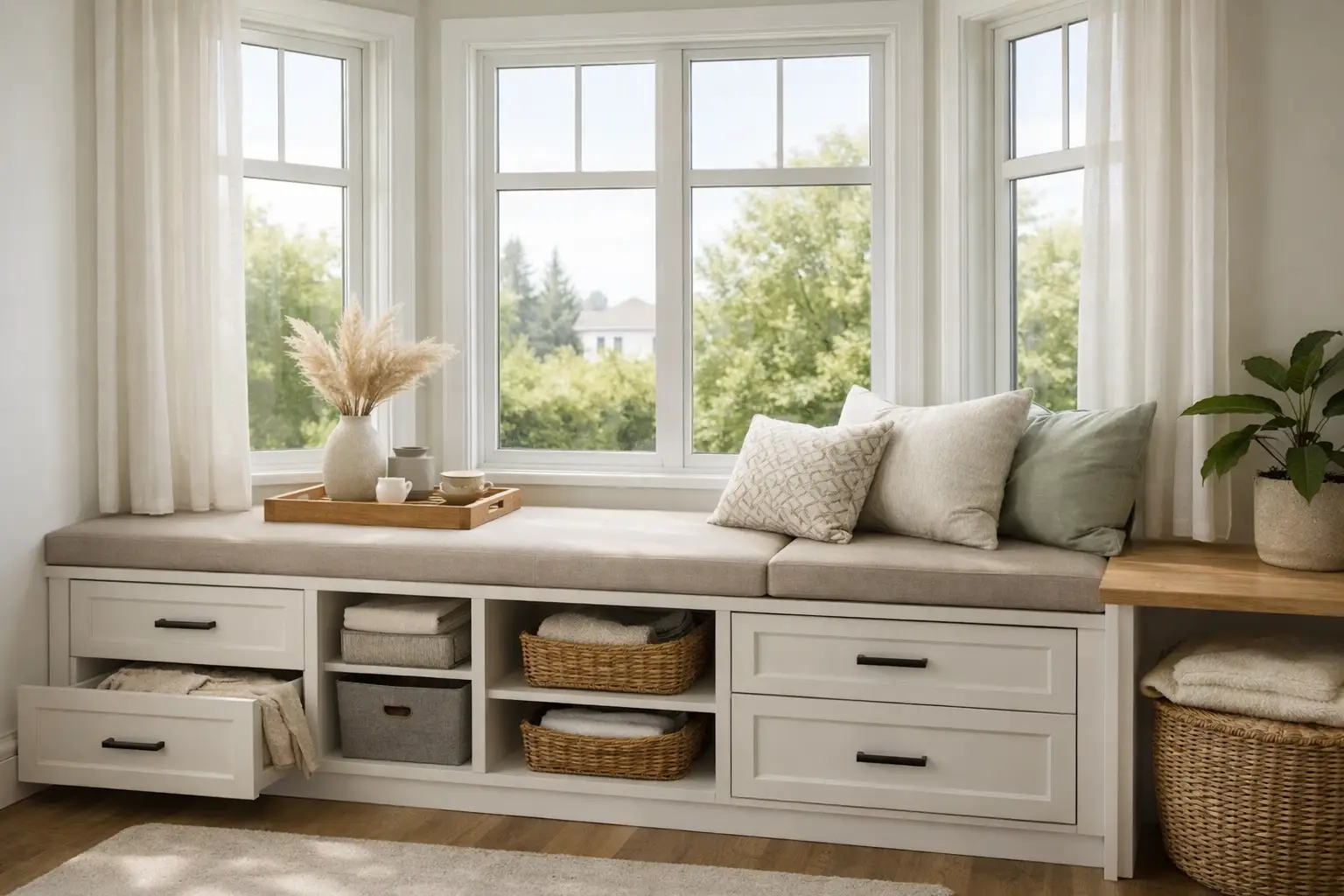
A bay window can be one of the loveliest features in a room – and one of the easiest to leave underused. If you are searching for bay window storage ideas, the goal is not simply to squeeze in more cupboards. It is to make that architectural feature work harder while still feeling light, elegant and fully in keeping with the room.
That balance matters, especially in period homes and carefully renovated interiors where a bay window often brings in the best natural light. The wrong solution can make the area feel bulky or awkward. The right one can turn dead space into a beautifully integrated part of daily life.
What makes bay window storage work
The best bay window storage starts with the shape of the room rather than a generic unit. Bays are rarely perfectly straightforward. Angles vary, skirting boards get in the way, radiators need consideration, and sill heights often dictate what is possible.
This is why fitted solutions tend to look more resolved than off-the-shelf furniture. A bespoke design can follow the exact line of the bay, sit neatly beneath the window, and include storage that feels built into the architecture rather than pushed against it. That is particularly valuable if you want the room to feel calm and considered rather than crowded.
There is also a practical question to answer first: what do you actually need to store? Blankets, books, toys, shoes, paperwork and dining essentials all need very different internal layouts. A beautiful window seat with no thought given to the contents can end up looking impressive but being surprisingly inconvenient.
Bay window storage ideas for different rooms
A fitted window seat with lift-up storage
This is the classic option for good reason. A built-in seat across the base of the bay makes the most of the footprint and creates a natural place to sit, read or enjoy the view. Underneath, lift-up lids can hide larger items such as spare cushions, throws, seasonal decorations or children’s toys.
It works especially well in living rooms and bedrooms where you want storage for softer, less frequently used items. The trade-off is access. Lift-up compartments are useful for bulkier storage, but they are not the quickest option if you need things every day. If convenience matters, drawers may be the better choice.
Deep drawers beneath the seat
Drawers give you a more practical day-to-day setup, particularly in family homes. They are excellent for keeping clutter under control without having to remove seat cushions or lift heavy lids. In a dining bay, they can hold placemats, table linen and serving pieces. In a bedroom, they are ideal for clothing, bedding or accessories.
The detail matters here. Drawer depth, handle style and runner quality will affect how refined the finished piece feels. A made-to-measure design can also divide the internals properly so the storage is not just deep, dark space where everything disappears.
Open shelving at the sides of the bay
If your bay has enough width, the side returns can become useful storage zones. Open shelves built into these areas can frame the window and keep the centre section feeling airy. This approach suits books, decorative objects and baskets, and it can make a window seat feel more substantial without boxing in the light.
It is a good solution if you want the bay to feel styled rather than heavily concealed. The downside is obvious: open shelving looks its best when it is curated. If you prefer everything hidden away, closed cabinetry is easier to live with.
Low cabinets for a cleaner look
For a more tailored appearance, low cupboards beneath the bay can offer generous hidden storage while keeping the lines of the room neat. This is often a smart choice in reception rooms or home offices where visual calm matters.
Cupboards work well for larger, less frequently used items, but the internal design should be carefully thought through. Adjustable shelves, cable access or segmented sections can make them much more useful. Without that planning, cupboards can become catch-all spaces that are hard to keep tidy.
Designing around light, heat and proportion
Keep the window as the feature
One of the biggest mistakes with bay window storage ideas is overbuilding. The bay window should still feel like a bay window when the joinery is finished. If the cabinetry rises too high or projects too far into the room, the feature can lose its elegance.
In most cases, lower-level storage is the safest and most attractive route. It preserves the glass, keeps the sense of openness and avoids cutting across sight lines. This is particularly important in front rooms where the bay is central to the character of the space.
Deal properly with radiators
Many bay windows have radiators positioned beneath them, which changes the design conversation entirely. You may be able to incorporate a radiator cover into the joinery, but it must be ventilated properly. In some homes, relocating the radiator is the smarter long-term option if you want full use of the area.
This is one of those points where bespoke planning pays off. A good design will consider heat flow, maintenance access and comfort, rather than simply hiding the radiator and hoping for the best.
Work with the room’s proportions
A generous Victorian bay can take a more substantial seat or storage base without feeling overworked. A shallower bay in a smaller bedroom needs a lighter touch. The design should relate to the scale of the room, not just the available niche.
In London homes, where every square metre matters, it can be tempting to add as much storage as possible. But if the result makes the room feel tighter or darker, it is rarely worth it. Good fitted furniture should improve the way a room feels, not only the amount it holds.
Materials and finishes that suit bay windows
Because bay windows draw the eye, the finish needs to sit comfortably with the rest of the room. Painted joinery is a popular choice because it can blend with skirting, walls and other fitted furniture. Soft neutrals keep things timeless, while a darker shade can make the window area feel grounded and architectural.
Wood-effect finishes can also work beautifully, particularly in contemporary interiors where you want warmth without a traditional look. Upholstered seat pads add comfort, though they need durable fabric if the area gets daily use or strong sunlight.
There is also the question of detailing. Shaker-style fronts feel at home in period properties, while slab doors suit cleaner, more modern schemes. Neither is automatically better – it depends on the character of the house and the rest of the fitted furniture.
Where bespoke bay window storage makes the biggest difference
Some spaces benefit more than others from a made-to-measure approach. In children’s bedrooms, a window seat with drawers can free up floor space and reduce the need for extra furniture. In living rooms, it can provide hidden storage without adding visual weight. In dining areas, it can even replace standalone sideboards.
It is especially effective in awkward bays where standard furniture never quite fits. Uneven walls, unusual angles and varying sill heights are exactly the situations where custom joinery earns its keep. Instead of wasting the corners or accepting gaps, you get a solution that feels intentional from every angle.
For homeowners renovating period houses in areas such as Wimbledon, Richmond or Fulham, that can be the difference between a room that feels finished and one that still has unresolved dead space.
Should your bay window storage be built in?
If you only need a decorative perch and a little extra storage, a freestanding bench may do the job. It is quicker, usually cheaper upfront and easier to change later. But it will almost never use the full shape of the bay well, and it can look temporary in a room where every other detail has been carefully considered.
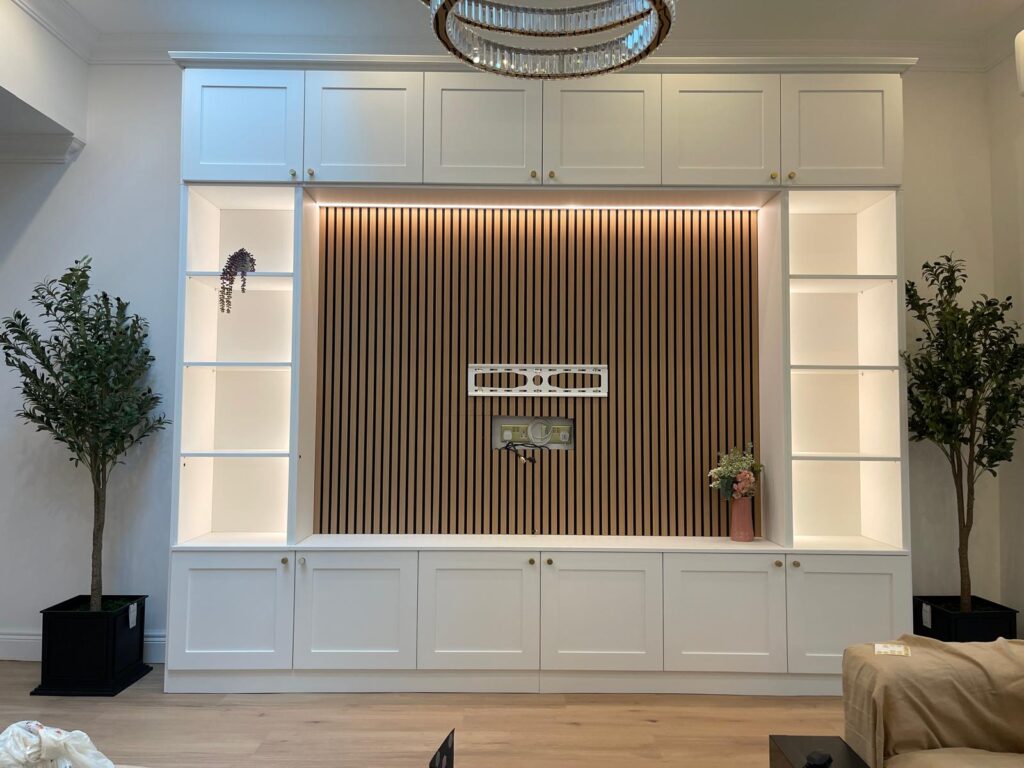
Built-in storage is the better investment when you want a precise fit, more usable capacity and a finish that complements the architecture. It also gives you more freedom to match the rest of the room, whether that means coordinating with alcove cupboards, wardrobes or a media wall.
At Finest Furniture Studio, we often find that homeowners start by wanting to fill an awkward bay and end up improving the whole room. That is the real value of bespoke storage. It does not just add places to put things away. It makes the space feel properly designed.
A final thought on choosing the right idea
The best bay window storage ideas are the ones that solve a real problem while still respecting the room. Sometimes that means a simple seat with hidden storage. Sometimes it means a fully fitted design with drawers, shelving and carefully matched finishes. If you begin with how you want to live in the room, the right solution usually becomes much clearer.