
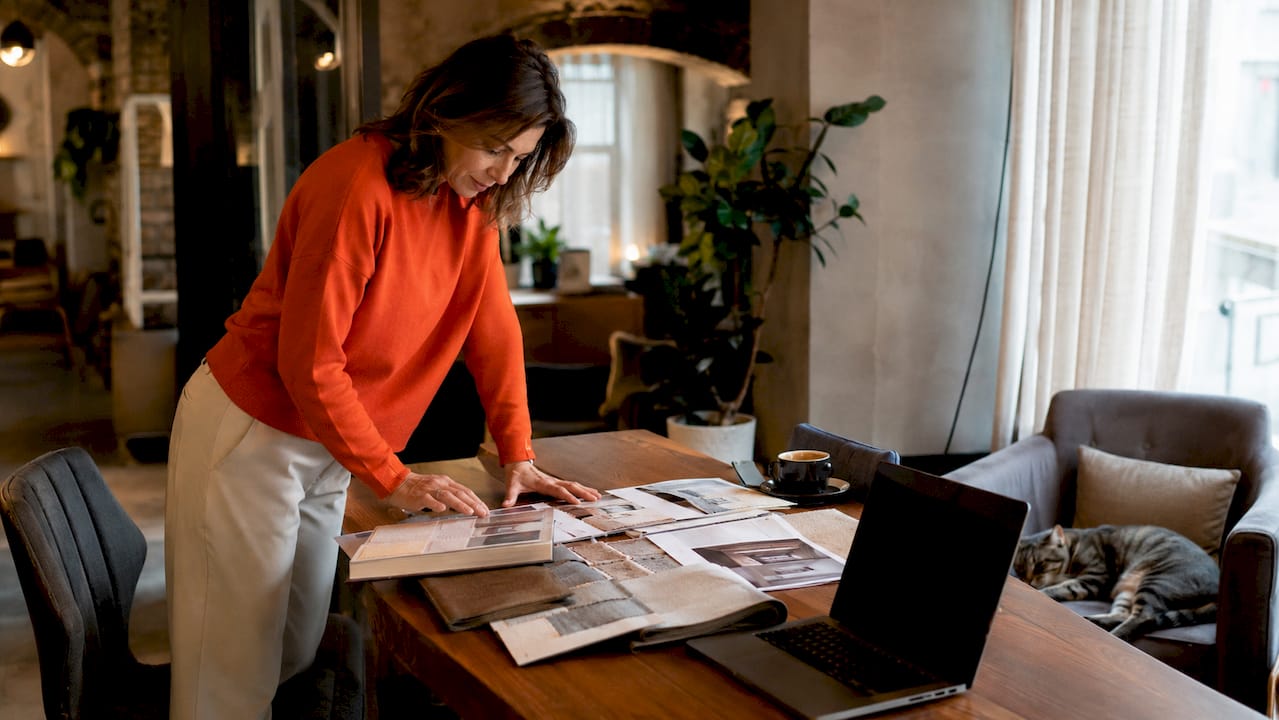
Investing in luxury furniture is defined as the deliberate choice to acquire high-quality, often bespoke pieces that deliver lasting aesthetic, functional, and financial returns rather than short-term decorative appeal. For homeowners across Richmond, Wimbledon, Chelsea, and West London, this decision carries real weight. The global luxury furniture market is projected to reach £42.7 billion within ten years, driven by a consumer shift towards craftsmanship, personalisation, and sustainability. That trajectory reflects something most experienced homeowners already sense: premium furniture is not an expense. It is a long-term asset that pays dividends in comfort, property value, and daily quality of life.
Why invest in luxury furniture: the core case
The single most persuasive reason to invest in high-end furniture is lifecycle value. Mass-market furniture requires full replacement within three to five years due to structural failure, whereas luxury pieces last fifteen to twenty-five years or more. That means a homeowner who buys a well-made bespoke fitted wardrobe in Putney today may never need to replace it. The cost-per-year calculation, once you run the numbers honestly, almost always favours the premium option.
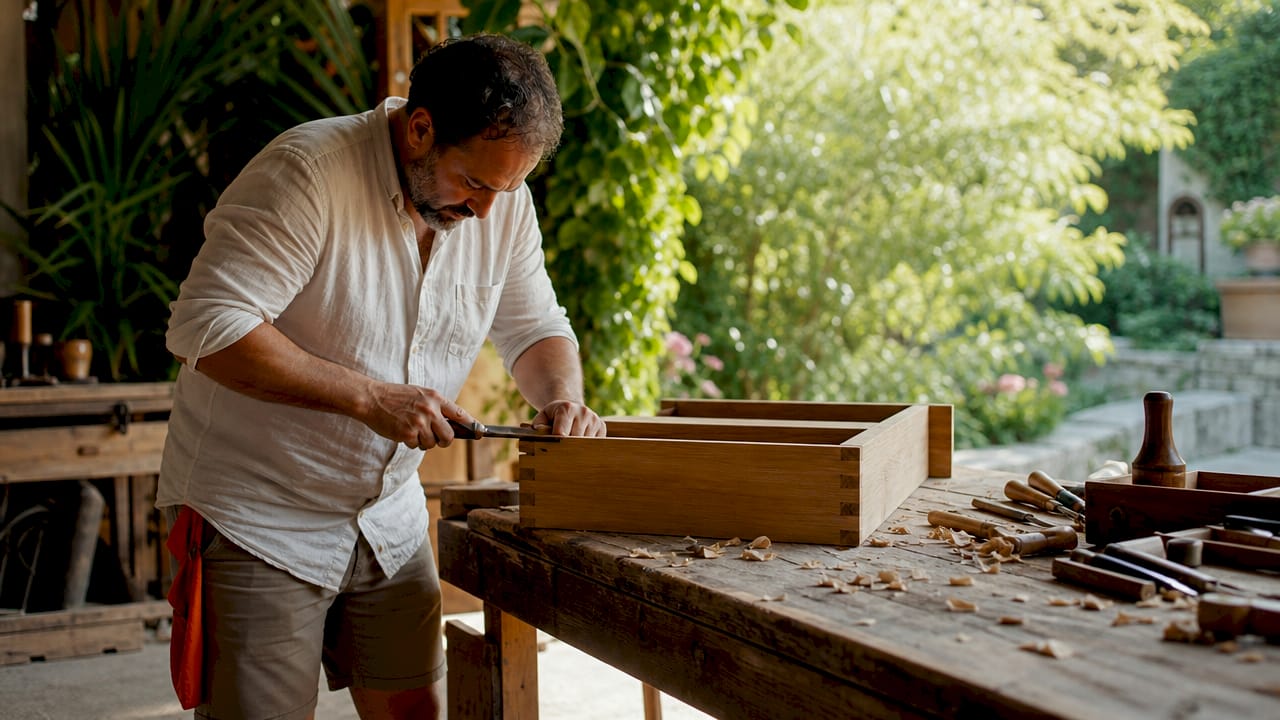
Beyond economics, luxury furniture transforms how a home feels to live in. Bespoke joinery and custom furniture design create spatial coherence that mass-produced pieces simply cannot replicate. A fitted media wall in Fulham or a built-in wardrobe in Chiswick does not just fill a room. It defines it. That distinction is the foundation of every argument for investing in premium interiors.
Luxury furniture has also evolved beyond function into something closer to investment art. Limited edition and bespoke pieces can hold cultural and financial value akin to fine art, particularly when they are crafted from rare materials or produced by recognised makers. For homeowners who view their property as a long-term financial asset, this dimension matters considerably.
What defines luxury furniture: quality, materials, and craftsmanship
True luxury furniture is not simply expensive furniture. It is furniture built to a set of structural and material standards that mass-produced alternatives consistently fail to meet. Understanding those standards helps you make better purchasing decisions and recognise genuine quality when you see it.
The key markers of quality include:
- Kiln-dried hardwood frames: Kiln drying removes moisture from timber, preventing warping and cracking over time. Structural standards like kiln-dried hardwood and eight-way hand-tied springs directly correlate with longevity and comfort. Mass-produced frames typically use green or engineered wood that degrades within a few years.
- Eight-way hand-tied springs: This upholstery technique, used in premium sofas and seating, distributes weight evenly and prevents sagging. It requires skilled labour and cannot be replicated by automated production lines.
- Hand-finished joints: Mortise-and-tenon or dovetail joinery, finished by hand, creates connections that hold under decades of use. Flat-pack furniture relies on metal cam locks that loosen and fail.
- Genuine leather and natural textiles: Premium upholstery uses full-grain leather or high-thread-count natural fabrics that age beautifully rather than peeling or pilling.
- Modular and repairable construction: Bespoke furniture is repairable and modular, enabling refinishing, reupholstering, or resizing to adapt to evolving tastes or spaces over decades. This modularity future-proofs your investment by allowing alterations instead of replacement.
The contrast with mass-market alternatives is stark. A flat-pack wardrobe from a budget retailer may cost a fraction of a bespoke fitted wardrobe in Twickenham or Barnes. But when that flat-pack unit needs replacing in four years, and its successor in another four, the cumulative cost and disruption quickly surpasses the original investment in quality.
Pro Tip: When assessing any luxury furniture piece, ask the maker or retailer specifically about the joinery method and timber drying process. A confident, detailed answer is a reliable indicator of genuine craftsmanship. Vague responses suggest mass-production dressed up in premium marketing.
How does luxury furniture add value to your home?
Professional interior design and high-end furnishings increase property value by ten to fifteen per cent on average, often exceeding the cost of the design services themselves. On a two-million-pound property in Chelsea or Wimbledon, that equates to two hundred thousand to three hundred thousand pounds in added valuation. Few home improvements deliver that kind of return with the same reliability.
The financial case for investing in luxury interiors rests on three interconnected mechanisms:
| Mechanism | How it works | Typical impact |
|---|---|---|
| Property value uplift | Premium finishes and bespoke joinery signal quality to buyers and valuers | 10–15% increase on average |
| Faster sale at asking price | Well-designed interiors reduce time on market and support full asking price | Fewer price reductions needed |
| Architectural coherence | Bespoke pieces optimise spatial flow and eliminate awkward layouts | Higher perceived square footage |
| Timeless design longevity | Classic lines remain relevant across market cycles without costly updates | Lower long-term redecoration cost |
Architectural coherence deserves particular attention. Bespoke furnishings avoid costly trial and error in home layouts, directly improving daily life quality and enhancing property value. A fitted wardrobe designed specifically for a loft conversion in Ealing or an alcove in Hammersmith does not just store clothes. It makes the room feel intentional, proportioned, and complete.
Timeless and classic luxury furniture designs maximise investment returns by remaining relevant and adaptable as trends shift. Homeowners who choose clean, classic lines in their major furniture pieces can refresh a room’s character through smaller décor updates, cushions, lighting, or artwork, without the expense of replacing core pieces. This is a significant financial advantage over trend-driven purchasing.
The aesthetic dimension is equally real. A bespoke media wall in a Fulham living room or a shaker-style fitted wardrobe in a Richmond bedroom creates a boutique-like atmosphere that photographs well, impresses visitors, and makes daily life noticeably more pleasant. These are not trivial benefits. They are the daily return on your investment.
Bespoke luxury furniture vs mass-produced: which is worth it?
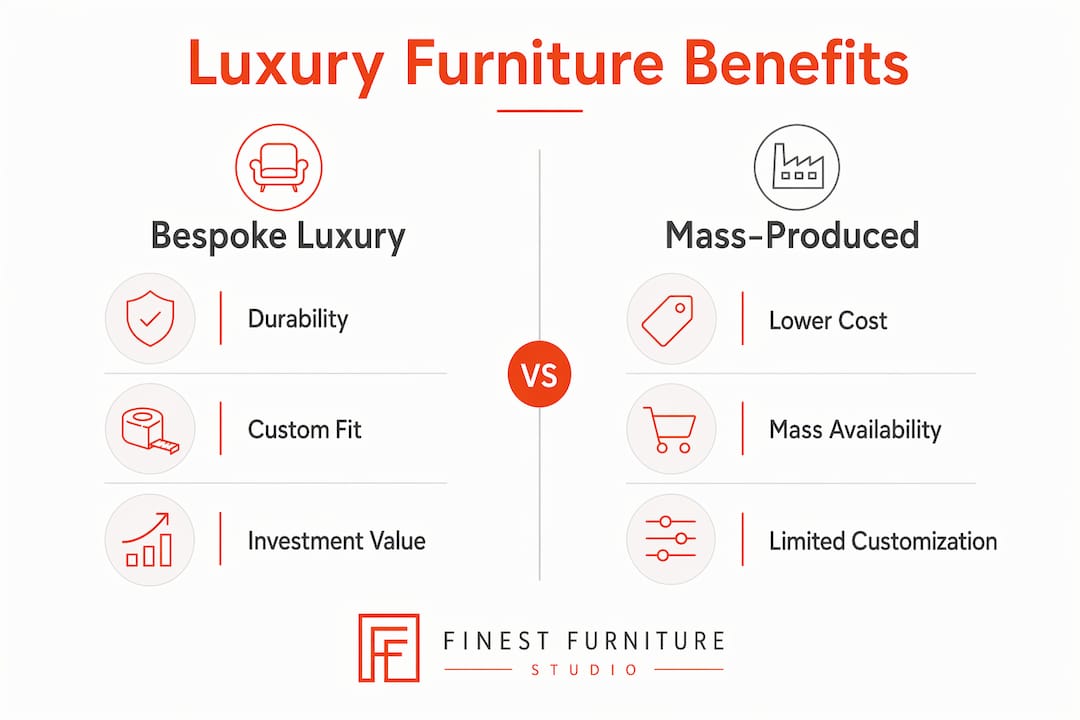
The comparison between bespoke luxury furniture and mass-produced alternatives is most honestly made over a fifteen to twenty-five year horizon, not at the point of purchase. Viewed through that lens, the economics shift decisively.
| Factor | Bespoke luxury furniture | Mass-produced furniture |
|---|---|---|
| Initial cost | Higher upfront investment | Lower purchase price |
| Lifespan | 15–25+ years with proper care | 3–5 years before structural failure |
| Repairability | Refinishable, reupholsterable, resizable | Typically non-repairable; replacement required |
| Environmental impact | Slow consumption, durable materials, less waste | Frequent replacement increases landfill contribution |
| Emotional value | Tailored to your space and taste; grows with you | Generic; no personal connection |
| Cost per year | Lower when calculated over full lifespan | Higher due to repeated replacement cycles |
High-end furniture is a defensive financial strategy: despite the higher upfront cost, the cost-per-year over a long lifespan is typically lower than replacing cheaper furniture repeatedly. This is the argument that most budget-focused buyers overlook, because the replacement cost of cheap furniture is paid in small, irregular instalments rather than one visible sum.
The environmental case for bespoke luxury furniture is also growing in relevance. Homeowners in London increasingly factor sustainability into their purchasing decisions. A single bespoke fitted wardrobe, built from sustainably sourced timber and designed to last a generation, represents a far smaller environmental footprint than three or four flat-pack replacements over the same period. For those interested in sustainable furniture choices, bespoke craftsmanship and slow consumption are natural allies.
The emotional and lifestyle benefits extend beyond economics. Furniture that was designed specifically for your home, your storage needs, and your aesthetic preferences creates a sense of ownership and satisfaction that generic pieces cannot match. Homeowners in Wimbledon and Kingston who commission bespoke wardrobes or media walls consistently report that the finished result transforms not just the room but their relationship with the space.
Pro Tip: Before comparing prices between bespoke and mass-produced options, calculate the total cost of ownership over ten years. Include replacement costs, delivery charges, and the time cost of repeated purchasing decisions. The bespoke option almost always wins on this measure.
How to invest in luxury furniture: practical steps for your home
Investing wisely in premium furniture requires more than selecting beautiful pieces from a catalogue. It demands a structured approach that begins with your space and ends with a long-term maintenance plan.
-
Assess your architecture and lifestyle needs first. Measure every room accurately and identify the specific functional problems you need to solve. A loft wardrobe in Ealing requires different thinking than a walk-in wardrobe in Chelsea. Understanding your space constraints before approaching any maker prevents costly design errors.
-
Prioritise high-impact, high-use pieces. Fitted wardrobes, bespoke media walls, and built-in storage units deliver the greatest return because they are used daily and are integral to the room’s architecture. These are the pieces where quality craftsmanship pays the most visible dividends. A bespoke media wall design in a living room, for example, consolidates storage, technology, and aesthetics into a single architectural statement.
-
Work with a bespoke furniture maker who offers design consultations. The design consultation stage is where the real value is created. A skilled maker will identify spatial opportunities you have not considered, such as under-stair storage, loft conversion wardrobes, or alcove solutions that maximise every centimetre. The role of bespoke joinery in transforming awkward spaces is consistently underestimated by homeowners approaching this process for the first time.
-
Choose timeless designs over trend-driven aesthetics. Shaker-style fitted wardrobes, clean-lined media walls, and classic wood-effect finishes remain relevant across decades. Trend-driven choices, such as highly specific colour palettes or novelty hardware, date quickly and reduce the long-term value of your investment.
-
Plan your maintenance from day one. Luxury furniture requires periodic care: conditioning leather, re-oiling timber surfaces, and checking fixings annually. This maintenance is straightforward and inexpensive, but it is what separates a piece that looks exceptional after twenty years from one that deteriorates after five.
-
Verify warranty and installation credentials. A reputable bespoke furniture maker will offer a substantial quality guarantee and a clear installation timeline. These commitments are indicators of confidence in the product and protect your investment over the long term.
Key takeaways
Luxury furniture delivers its greatest value when chosen for craftsmanship, spatial fit, and timeless design rather than brand recognition or trend appeal alone.
| Point | Details |
|---|---|
| Lifecycle cost wins | Luxury pieces last 15–25 years, making cost-per-year lower than repeated mass-market replacements. |
| Property value uplift | High-end furnishings increase property value by 10–15%, often exceeding the original investment cost. |
| Bespoke beats generic | Custom-designed pieces optimise spatial flow, maximise storage, and create architectural coherence. |
| Timeless design pays | Classic lines and quality materials remain relevant across decades, reducing long-term redecoration costs. |
| Repairability matters | Bespoke furniture can be refinished, reupholstered, or resized, preserving value as needs evolve. |
Why I think most homeowners underestimate this investment
I have worked with homeowners across Richmond, Wimbledon, Fulham, and Chiswick who initially approached bespoke furniture with hesitation. The upfront cost felt significant. The alternative, a flat-pack wardrobe or a standard media unit from a high-street retailer, felt like the sensible, cautious choice.
What I have observed consistently is that the hesitation dissolves the moment a bespoke piece is installed. The room changes. The proportions feel right. The storage works exactly as intended. And within a year or two, the homeowner cannot imagine the space any other way.
The misconception I encounter most often is that luxury furniture is about status rather than substance. In reality, the strongest argument for premium craftsmanship is entirely practical. A fitted wardrobe built to your exact ceiling height and room dimensions stores more, looks better, and lasts longer than any off-the-shelf alternative. That is not a luxury. That is good sense.
I also think the London market context matters here. Properties in Chelsea, Wimbledon, and Richmond are significant financial assets. The interior specification of those properties directly influences their market value and their daily liveability. Treating furniture as a disposable commodity in a property worth several million pounds is, frankly, a false economy.
The homeowners I respect most in this space treat their furniture choices the way they treat their property choices: with patience, research, and a long-term perspective. They commission pieces that will outlast trends, serve their family for decades, and add genuine value to their home. That is what investing in luxury interiors actually means in practice.
— Aureliu
Transform your home with Finest Furniture Studio’s bespoke fitted furniture
Finest Furniture Studio designs and installs bespoke fitted wardrobes, TV media walls, and built-in storage solutions for homeowners across Richmond, Wimbledon, Putney, Chelsea, Fulham, and surrounding West London areas. Every piece is crafted to your exact space and specification, with fitting completed within seven to twelve days and backed by a ten-year quality guarantee.
We also remove and dispose of your old wardrobe as part of the installation service, so the transition is completely hassle-free. Whether you need a bespoke fitted wardrobe in Richmond or a custom media wall with storage in West London, our team is ready to help you make the most of your space. Contact us for a free design visit. Call or WhatsApp us on 07468 150807, or visit us at 124 City Road, Kemp House, London, EC1V 2NX.
FAQ
Is luxury furniture worth the higher upfront cost?
Yes. Luxury furniture lasts fifteen to twenty-five years or more, making the cost-per-year significantly lower than replacing mass-market alternatives every three to five years. The financial case is strongest when you calculate total ownership cost rather than purchase price alone.
Does luxury furniture increase property value?
High-end furnishings increase property value by ten to fifteen per cent on average, which on a typical London property represents a substantial return. Bespoke fitted wardrobes and media walls are particularly effective because they are integral to the room’s architecture and appeal directly to buyers.
What is the difference between bespoke and luxury furniture?
Bespoke furniture is designed and built to your exact specifications and space dimensions, while luxury furniture refers broadly to pieces made with premium materials and craftsmanship. The two overlap significantly: the best bespoke furniture is also luxury furniture, combining tailored fit with exceptional build quality.
How long does bespoke fitted furniture take to install?
At Finest Furniture Studio, bespoke fitted wardrobes and media walls are installed within seven to twelve days of the design being finalised. This includes removal and disposal of any existing furniture being replaced, making the process straightforward for homeowners.
Which rooms benefit most from bespoke luxury furniture?
Bedrooms, living rooms, and loft conversions deliver the highest return from bespoke investment. Fitted wardrobes maximise bedroom storage and visual space, bespoke media walls transform living rooms, and loft wardrobe solutions make previously awkward spaces fully functional. These are the rooms where quality craftsmanship is most visible and most valued by future buyers.