








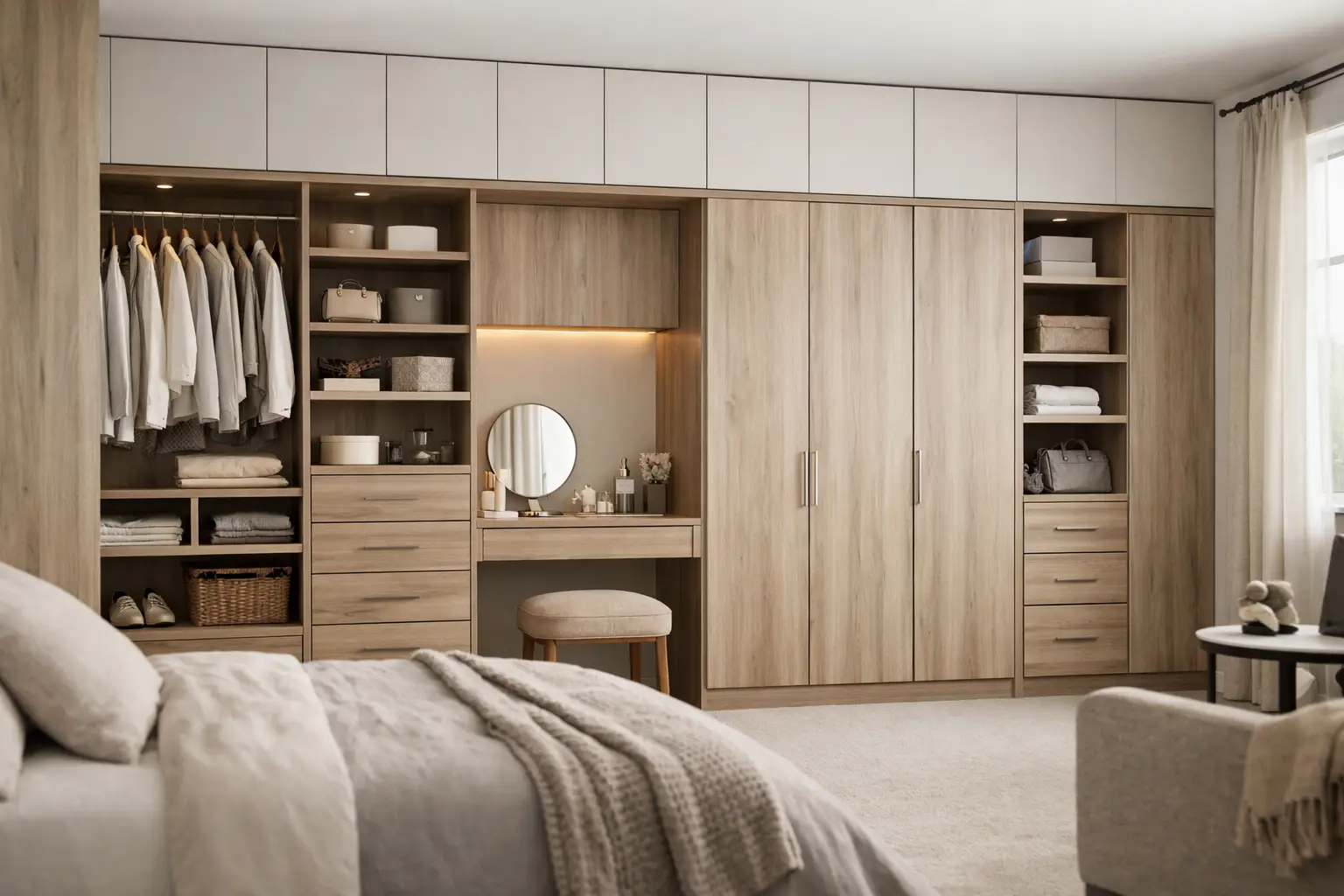
A well-designed bedroom rarely feels crowded, even when every inch is being used. That is the real appeal of fitted wardrobes. They do more than store clothes – they shape the room, tidy awkward corners, and make everyday routines feel easier.
For many homeowners, the turning point comes after an extension, loft conversion or long-awaited renovation. The shell of the room is finished, but something still feels unresolved. Freestanding furniture often leaves wasted gaps, blocks natural lines, and never quite looks part of the architecture. Fitted wardrobes solve that problem by turning storage into a considered part of the design.
Why fitted wardrobes work so well
The biggest advantage is simple: they are made for the room you actually have, not the room a furniture retailer assumes you have. In period homes, alcoves can be uneven, chimney breasts interrupt useful wall space, and ceilings may slope. In newer properties, the challenge is often different – tighter bedrooms, cleaner lines, and a need to keep everything calm and uncluttered.
A fitted solution makes use of full height and full width, which means less dead space above, beside and behind the wardrobe. That extra capacity matters more than many people expect. It can be the difference between storing only hanging clothes and creating room for drawers, shoe shelving, pull-out accessories, luggage storage and concealed laundry baskets.
There is also the visual benefit. Because the wardrobe is designed around the proportions of the room, it feels integrated rather than added in later. That gives a bedroom a more polished look and often makes the space feel larger, not smaller.
Fitted wardrobes for modern homes and period properties
Not all fitted wardrobes should look the same. The best results come when the style suits both the property and the way the room is used.
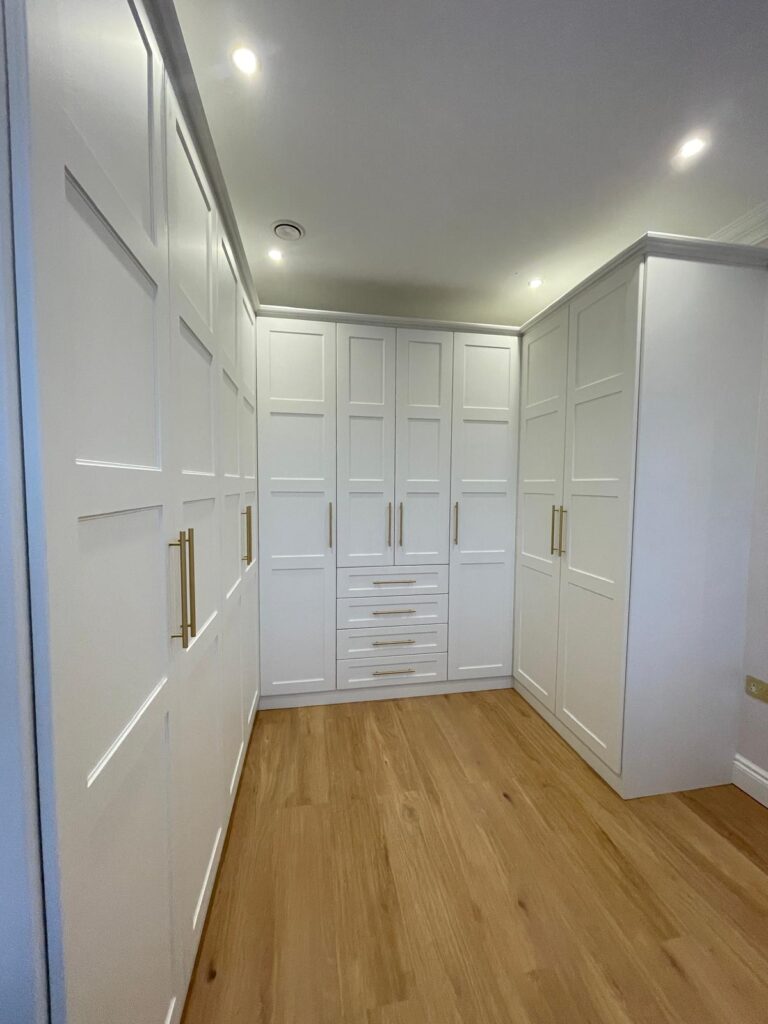
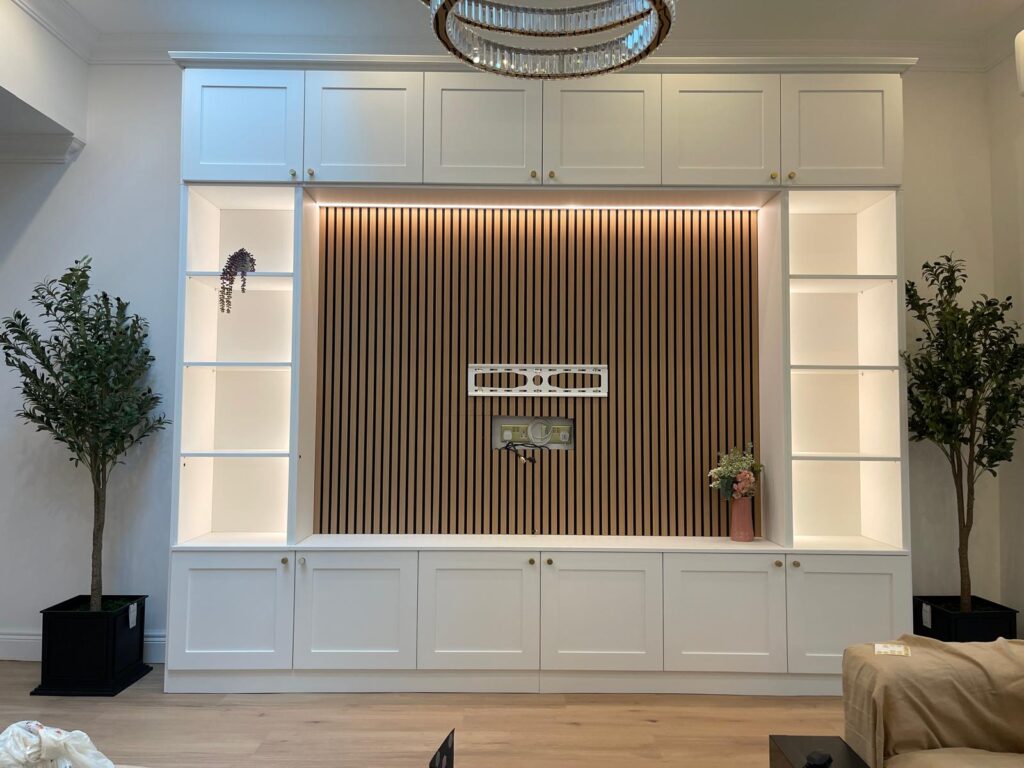
In Victorian and Edwardian homes, shaker fitted wardrobes are often a natural choice. Their framed doors sit comfortably alongside original cornicing, higher ceilings and traditional proportions. They can be painted in soft neutrals for a classic finish or deeper tones for more contrast and character.
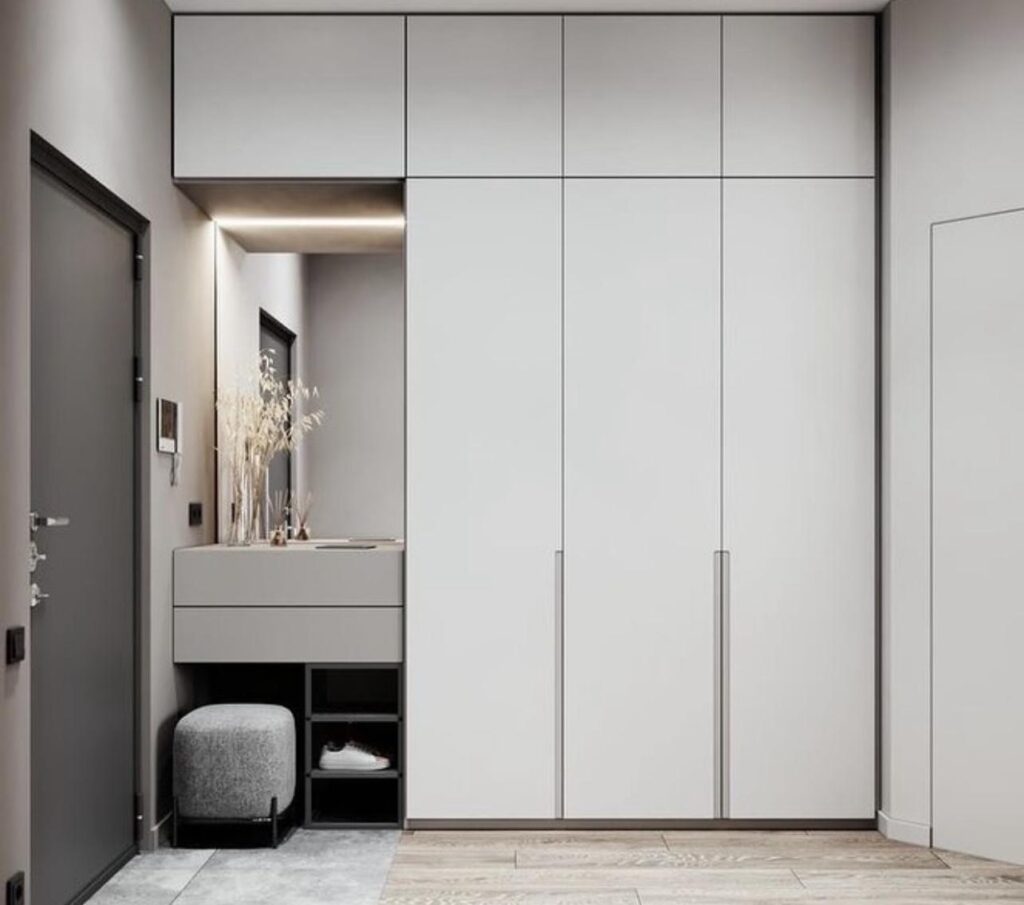
In contemporary homes, modern fitted wardrobes tend to work best when the detailing is quieter. Flat panel doors, slim shadow gaps, wood effect finishes and mirrored sliding doors can all create a cleaner, more architectural look. Where floor space is limited, sliding wardrobes are especially useful because they remove the clearance needed for hinged doors.
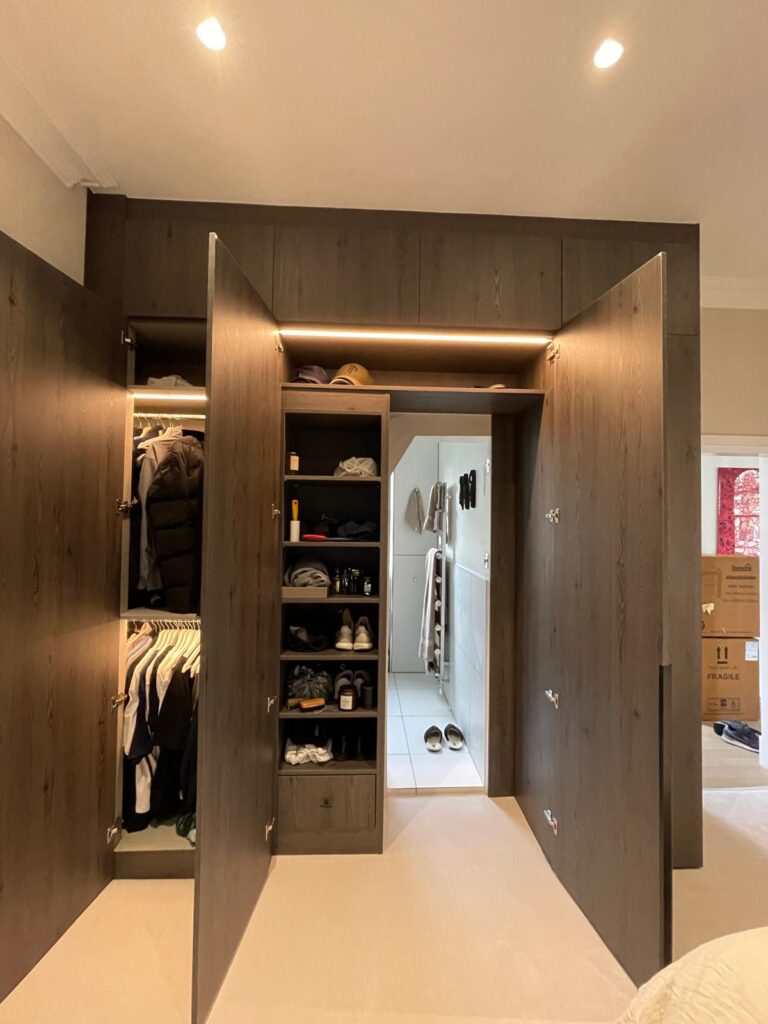
The right answer depends on the room. A compact bedroom may benefit from sliding fronts and a lighter finish to keep the space open. A principal suite with more width may suit hinged doors, internal lighting and a more detailed interior layout.
Making awkward spaces useful
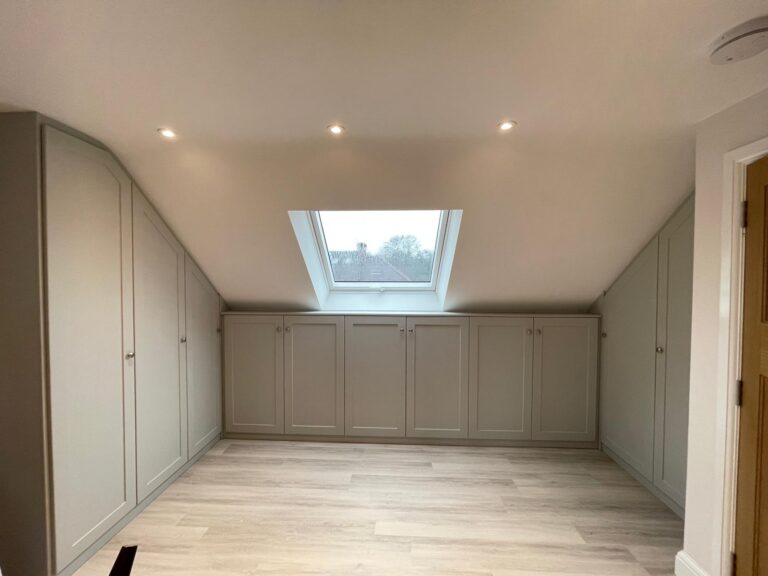
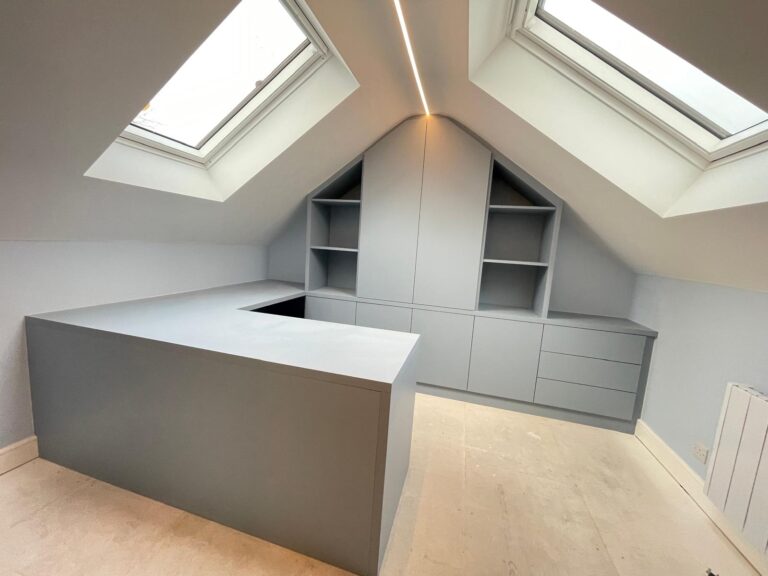
Some of the most successful projects begin with spaces that seem difficult to furnish. Loft bedrooms, alcoves, sloping ceilings and eaves are good examples. These are the areas where fitted wardrobes deliver real value because standard furniture usually wastes the best storage potential.
Loft fitted wardrobes
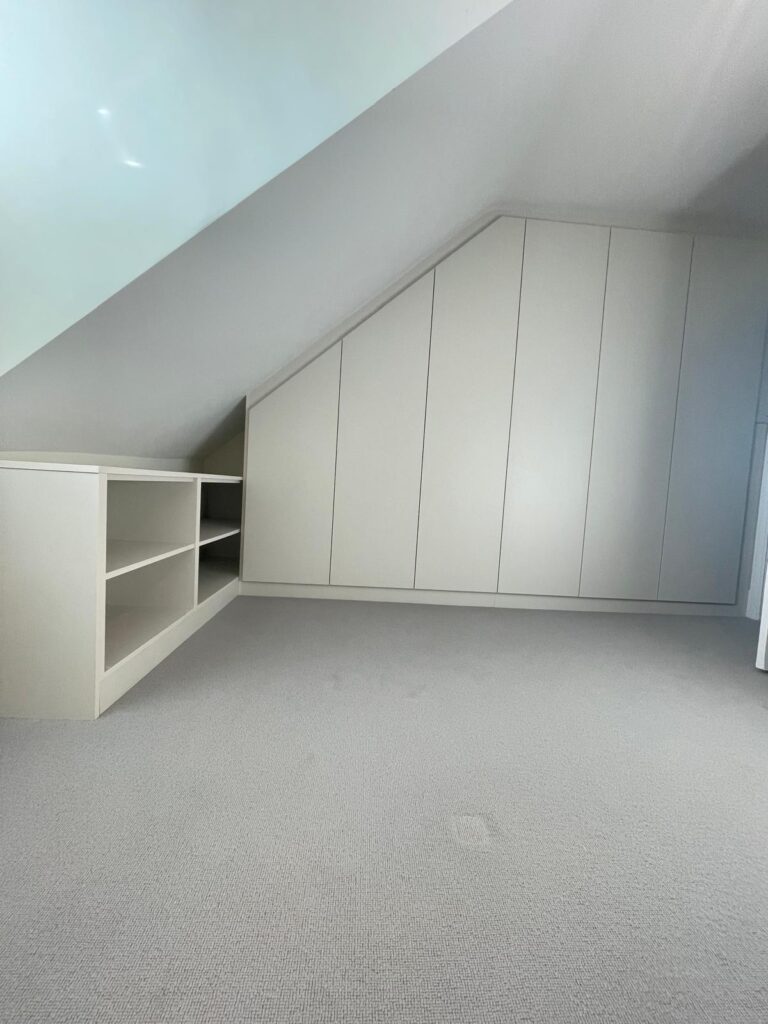
Loft rooms can be beautiful, but they often come with reduced head height and sharp rooflines. A bespoke wardrobe can follow the slope precisely, creating practical storage where freestanding pieces would leave unusable voids. This is particularly useful for folded clothing, seasonal items and lower-level drawers.
Alcove wardrobes
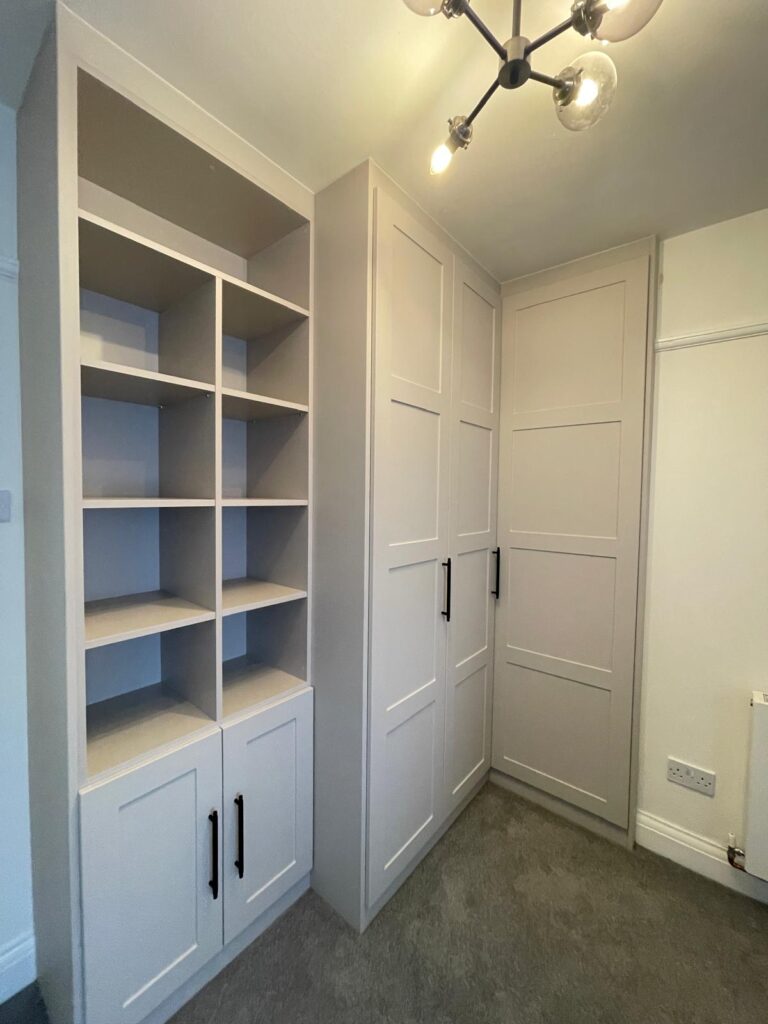
Alcoves are often too narrow for off-the-shelf wardrobes and too valuable to ignore. Bespoke alcove wardrobes allow both sides of a chimney breast to work harder while keeping the overall room balanced. In bedrooms, this can create a built-in look that feels original to the house.
Wardrobes for small bedrooms
A small room needs discipline. That usually means choosing a layout that avoids visual clutter and prioritises the right mix of hanging, shelving and drawers. Floor-to-ceiling fitted wardrobes with carefully planned interiors can hold far more than people expect, especially when every section has a purpose.
What matters inside a wardrobe
Beautiful doors matter, but the interior is what you live with every day. This is where many wardrobes succeed or fail.
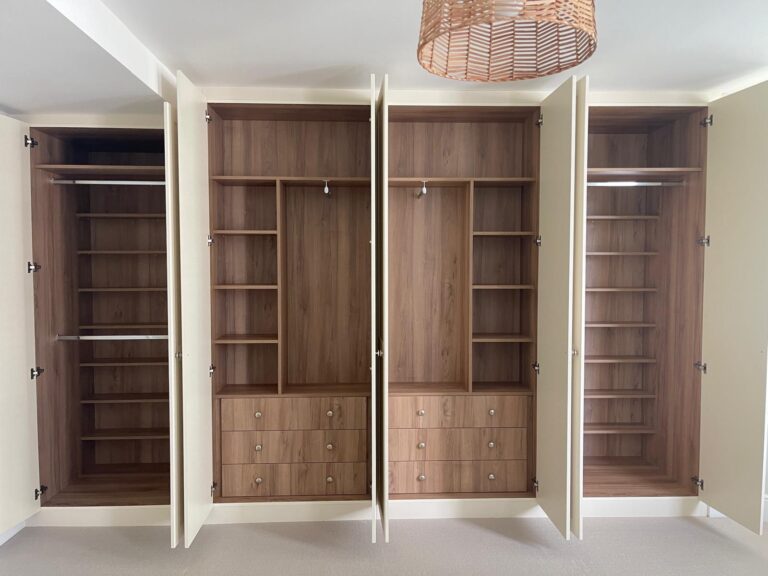
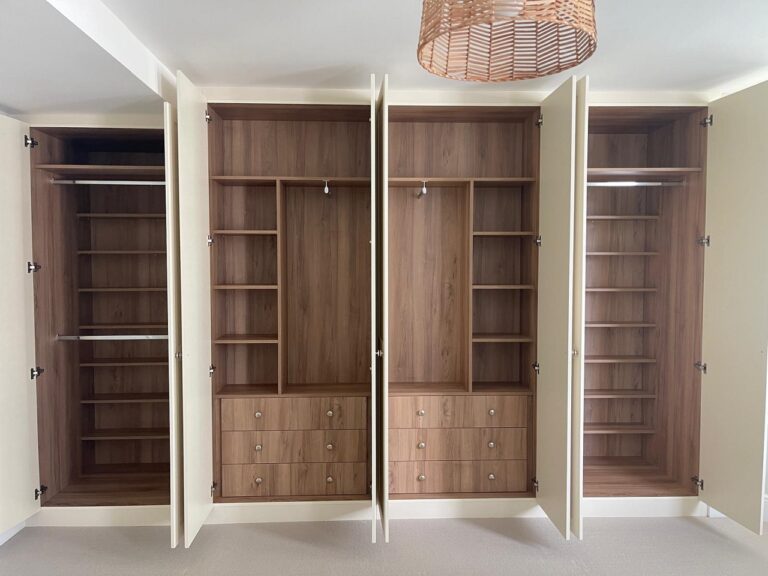
A good internal layout starts with honest habits. If you own long dresses, they need full hanging height. If you wear knitwear and denim most days, generous shelving and drawers may be more useful than extra rails. If accessories tend to disappear, divided drawers or pull-out trays can make a noticeable difference.
Wardrobe interior ideas should always follow lifestyle, not trends. Couples often need different combinations on each side. One person may need more double hanging for workwear and shirts, while the other needs longer hanging and additional drawers. Children’s rooms, guest bedrooms and dressing rooms all require different priorities too.
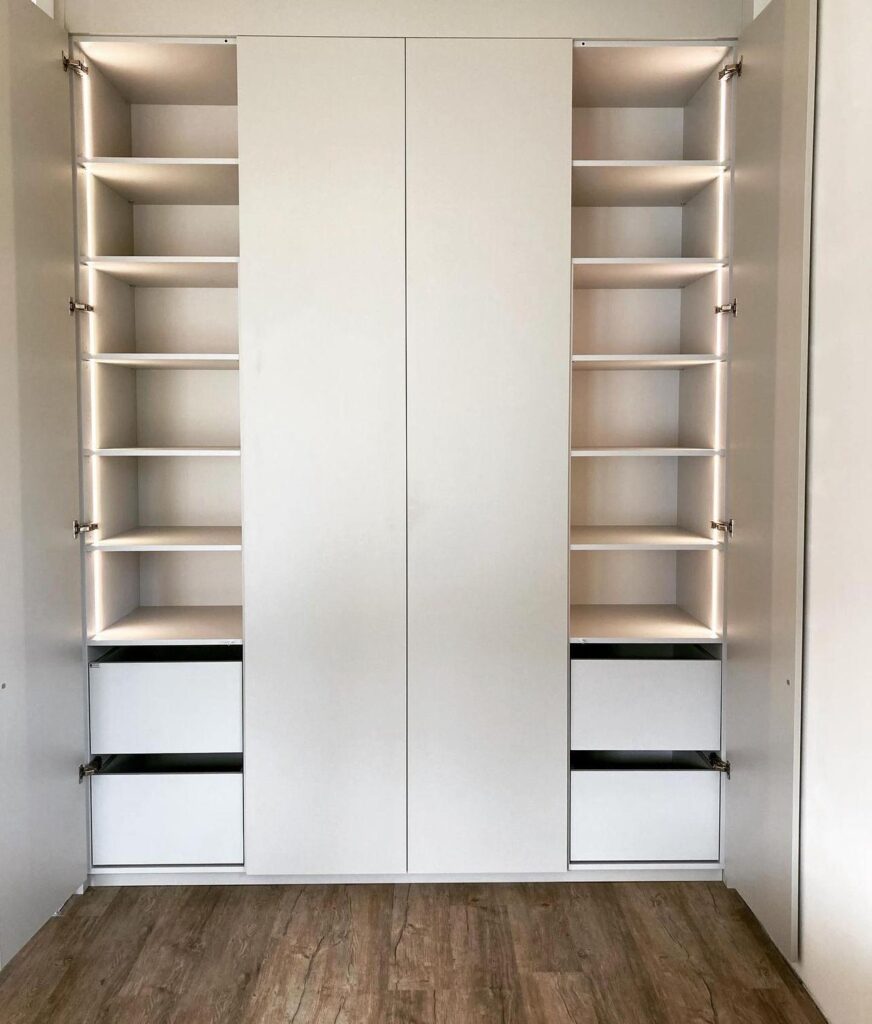
Lighting can also elevate the experience. Integrated lighting is not just decorative. In deeper or darker wardrobes, it makes contents easier to see and gives the furniture a more refined finish. The same is true of details such as soft-close hinges, quality drawer runners and durable internal finishes. They are not the most visible features, but they affect how the wardrobe feels to use over time.
Fitted wardrobes and budget – where value really sits
There is a common assumption that bespoke always means extravagant. In practice, it depends on the scope, finish and internal specification.
A straightforward hinged door wardrobe can start from a relatively accessible level, while larger walk-in wardrobes, full fitted bedrooms or more architectural designs will naturally cost more. The most useful way to think about budget is not only in terms of price per unit, but in terms of what the furniture replaces. A fitted wardrobe often removes the need for separate chests of drawers, extra shelving and storage furniture that would otherwise compete for space.
It also tends to be a longer-term investment. When made properly, fitted wardrobes are designed around the room and the household, so they are less likely to be replaced after a few years. For homeowners improving a forever home, that durability often matters more than chasing the lowest quote.
Transparent pricing is important here. Clients should understand what is included, where upgrades affect cost, and how materials, door style and interiors change the final figure. That clarity makes it far easier to balance aesthetics with practicality.
The process should feel straightforward
The design itself matters, but so does the experience around it. A good fitted wardrobe project should not feel like a guessing game.
It usually begins with a design conversation about how the room is used, what needs to be stored, and what sort of finish suits the home. Accurate measuring follows, particularly in older properties where walls, floors and ceilings may not be perfectly level. From there, the design is refined into a layout that works visually and practically.
Professional installation is where the concept becomes real. This stage should be efficient, tidy and well planned. For many homeowners, one of the greatest reassurances is knowing the fitting timeline in advance and understanding how the work will be managed in the home.
For clients in London and the surrounding areas, this matters even more. Renovation schedules are often tight, and storage joinery needs to coordinate with decorating, flooring and final styling. A company that can design, manufacture and install with clear communication removes a great deal of stress from the process.
Choosing fitted wardrobes that still feel right years later
The safest design is not always the best one, but wardrobes should age well. That usually means choosing proportions, finishes and detailing with enough character to feel special, without relying on short-lived trends.
Neutral tones, timber effects and classic panelled doors tend to have lasting appeal. Mirrored or glass elements can be effective too, especially in smaller or darker rooms, but they need to suit the architecture and the client’s taste. Handle choice, door profile and interior configuration all contribute to whether a wardrobe feels quietly luxurious or overly fussy.
The strongest projects often balance beauty with restraint. They solve the storage problem fully, but they also make the room calmer, more cohesive and easier to live in.
At Finest Furniture Studio, that is the standard worth aiming for – fitted wardrobes that look elegant on day one and continue to earn their place every single day after. If a room has potential but still feels unfinished, the right storage is often the missing piece.