
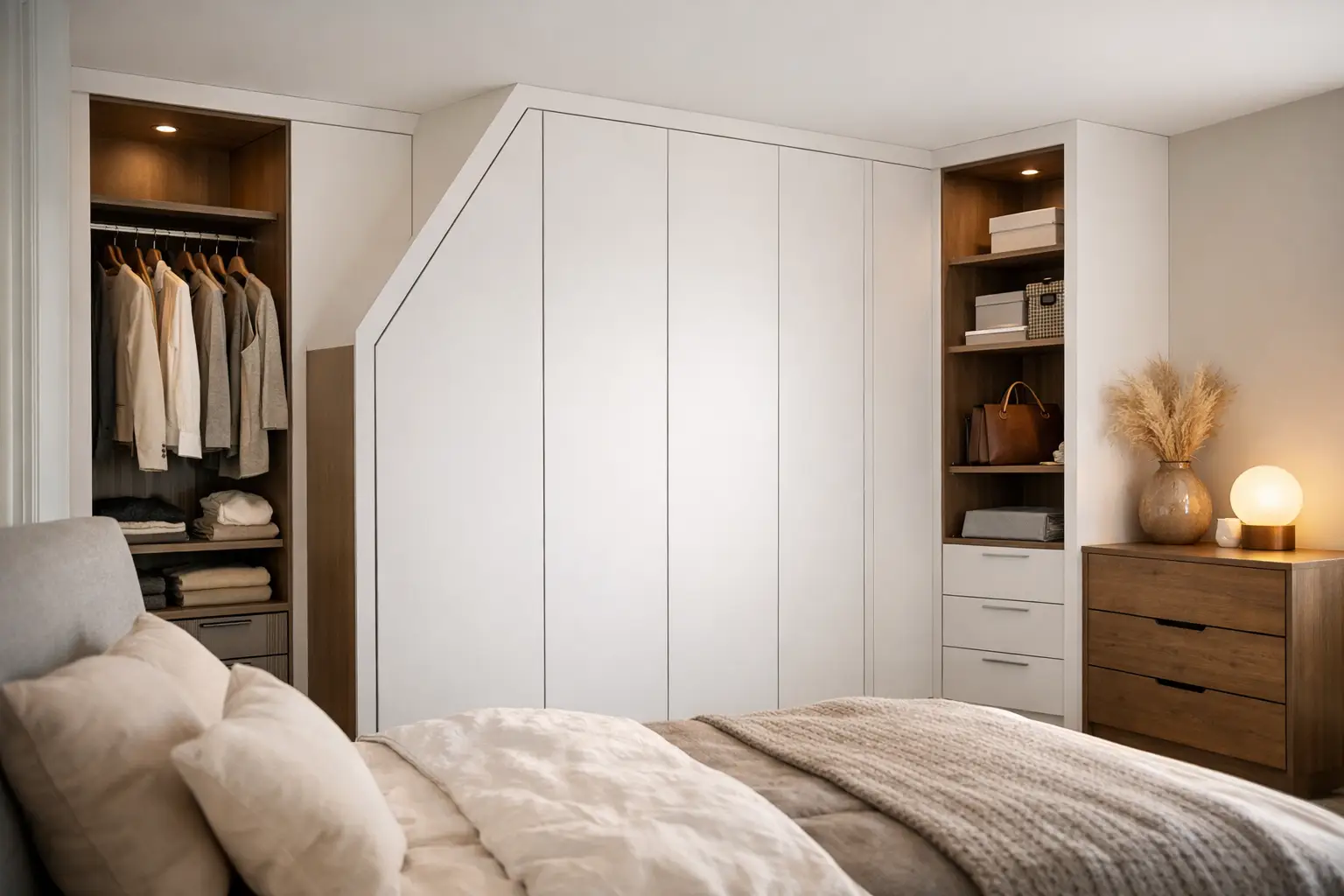
A wardrobe that leaves a gap at the ceiling, wastes the alcove, or blocks the best part of the room never quite feels right. Built in wardrobes solve that problem properly. They are designed around the architecture of your home, the way you dress, and the amount of storage you actually need, so the result feels considered rather than squeezed in.
For many homeowners, that difference is not just visual. It changes how a bedroom works day to day. Clothes are easier to organise, bulkier items stop drifting into spare rooms, and awkward corners become useful. When the design is handled well, the wardrobe stops feeling like an extra piece of furniture and starts feeling like part of the room.
Why built in wardrobes work so well
The main strength of built in wardrobes is simple – they use space that freestanding furniture cannot. In period homes, that might mean making full use of chimney breast alcoves. In loft conversions, it often means turning sloping ceilings into practical storage. In newer properties, it can mean creating a clean wall of storage without the visual clutter of mismatched units.
That extra efficiency matters more than many people expect. A wardrobe fitted floor to ceiling gives you room for higher shelving, seasonal storage, luggage and less-used items that would otherwise end up in the loft or under the bed. At eye level and below, the layout can then be shaped around everyday use, with hanging rails, drawers, pull-out accessories and shelving placed where they are most practical.
There is also a design advantage. Because everything is made to measure, the finish can be tailored to the room rather than chosen from a limited range. Shaker doors suit many Victorian and Edwardian homes beautifully, while smooth slab fronts or mirrored sliding doors can feel right in contemporary interiors. The point is not to force a style onto the room, but to make the storage belong there.
Built in wardrobes for awkward spaces
The rooms that benefit most from bespoke storage are often the ones that are hardest to furnish. Alcoves, eaves, low ceilings and narrow box rooms tend to expose the limitations of standard wardrobes very quickly. A good fitted design turns those supposed problems into the reason the furniture works so well.
Alcoves and chimney breast layouts
Alcove wardrobes are one of the most effective ways to bring balance to a bedroom. They frame the chimney breast neatly and give each side of the room a built-in sense of order. This works particularly well where one side needs full hanging and the other can be used for drawers, shelves or a dressing area.
Loft rooms and sloping ceilings
Loft fitted wardrobes need more thought than a standard run of cabinetry, but the results can be excellent. Instead of wasting the low part of the ceiling, bespoke units can step down with the roofline and still provide useful storage. The lower sections are ideal for drawers, shelves, shoe storage or folded clothes, while taller sections can be reserved for hanging.
Small bedrooms
In smaller bedrooms, scale matters. Bulky freestanding pieces can make the room feel tighter than it is. Built in wardrobes can be designed with shallower sections where needed, carefully placed doors, and interior layouts that reduce the need for additional chests or bedside storage. That usually creates a calmer room, not a fuller one.
Choosing the right door style
Door design affects both appearance and practicality. Hinged doors often suit classic interiors and give full access to the wardrobe interior. They are a strong choice where there is enough clearance in the room and where details such as framing, handles and painted finishes are part of the overall look.
Sliding doors are often the smarter option where space is tighter or a more contemporary style is wanted. They remove the issue of door swing and can make a room feel more streamlined. Mirrored panels can also help bounce light around darker bedrooms, though they are not for everyone. Some homeowners prefer a warmer, more understated finish such as wood effect or painted matt panels.
There is no universally better option here. It depends on room size, furniture layout and the visual direction of the scheme. The best choice is usually the one that suits the room first and the trend second.
The inside matters as much as the outside
A wardrobe can look beautiful on the outside and still be frustrating to use if the interior has not been planned properly. This is where bespoke design earns its value. Good wardrobe interiors are based on habits, not guesswork.
If you own mostly long dresses and coats, double hanging will not be as useful as full-height sections. If you fold knitwear, shelves may matter more than extra rails. If two people are sharing one wall of storage, it helps to divide the internal layout in a way that feels fair and intuitive from the start.
Drawers for smaller items, dedicated shelves for handbags, pull-out trays for accessories and concealed compartments for less-used items can all make daily routines easier. Even details such as where the top shelf sits can make a difference. Too high and it becomes dead space. Too low and the hanging area suffers.
Design choices that lift the whole room
The best built in wardrobes do more than store clothing. They improve the overall feel of the bedroom. Clean lines can make a room feel taller. A carefully chosen paint colour can soften a large run of cabinetry. Handles, panel details and integrated lighting can turn a practical installation into one of the most finished features in the home.
This is especially relevant in bedrooms where the wardrobe takes up a full wall. At that scale, it becomes part storage and part interior architecture. A bespoke approach allows for details such as bridging units over the bed, integrated dressing tables, bedside niches or a combination of wardrobe and media wall elements where the room needs to work harder.
That said, restraint matters. Not every room benefits from maximum detail. In some spaces, a simpler front with a refined finish will feel more expensive than something overly decorated.
What to expect from the process
Commissioning fitted furniture should feel reassuring, not complicated. A good process starts with understanding the room and how you live in it. Measurements are only part of the picture. The conversation should also cover what needs storing, which finishes suit the property, and how the wardrobe can sit naturally within the rest of the interior.
From there, the design phase should make practical decisions clear. You should know what is included, how the internals are arranged, what the finish will look like, and how installation will be handled. Transparent pricing matters here. Bespoke does not mean vague, and a well-managed project should give you confidence before manufacturing begins.
Installation is where experience really shows. A fitted wardrobe should look precise, with clean scribing to walls and ceilings, well-aligned doors and a finish that feels intentional from every angle. When a company manufactures and installs with care, the result is not just attractive on handover day – it continues to perform well in everyday use. At Finest Furniture Studio, that made-to-measure approach is paired with clear pricing, a 10-year guarantee and fitting timelines designed to keep disruption to a minimum.
Are built in wardrobes worth it?
If you plan to stay in your home and want storage that genuinely improves the way the room functions, built in wardrobes are often worth the investment. They make better use of the footprint, reduce visual clutter and can add a level of polish that freestanding furniture rarely achieves.
The trade-off is flexibility. You cannot move them to another property, and because they are made for the room, thoughtful planning matters more at the start. But for most homeowners, especially those renovating or refining a long-term home, that permanence is part of the appeal. The wardrobe is not there to get you by for a few years. It is there to solve the room properly.
The most successful projects usually begin with a clear idea of how you want the space to feel, not just what you want to fit inside it. Storage is practical, of course, but it is also part of how a home supports daily life. When a wardrobe is designed around both beauty and use, the bedroom becomes calmer, more spacious and much easier to live with.
If you are considering fitted storage, start by looking at the room honestly. Notice the wasted corners, the clutter hotspots, the places where standard furniture falls short. That is usually where the right design begins.