
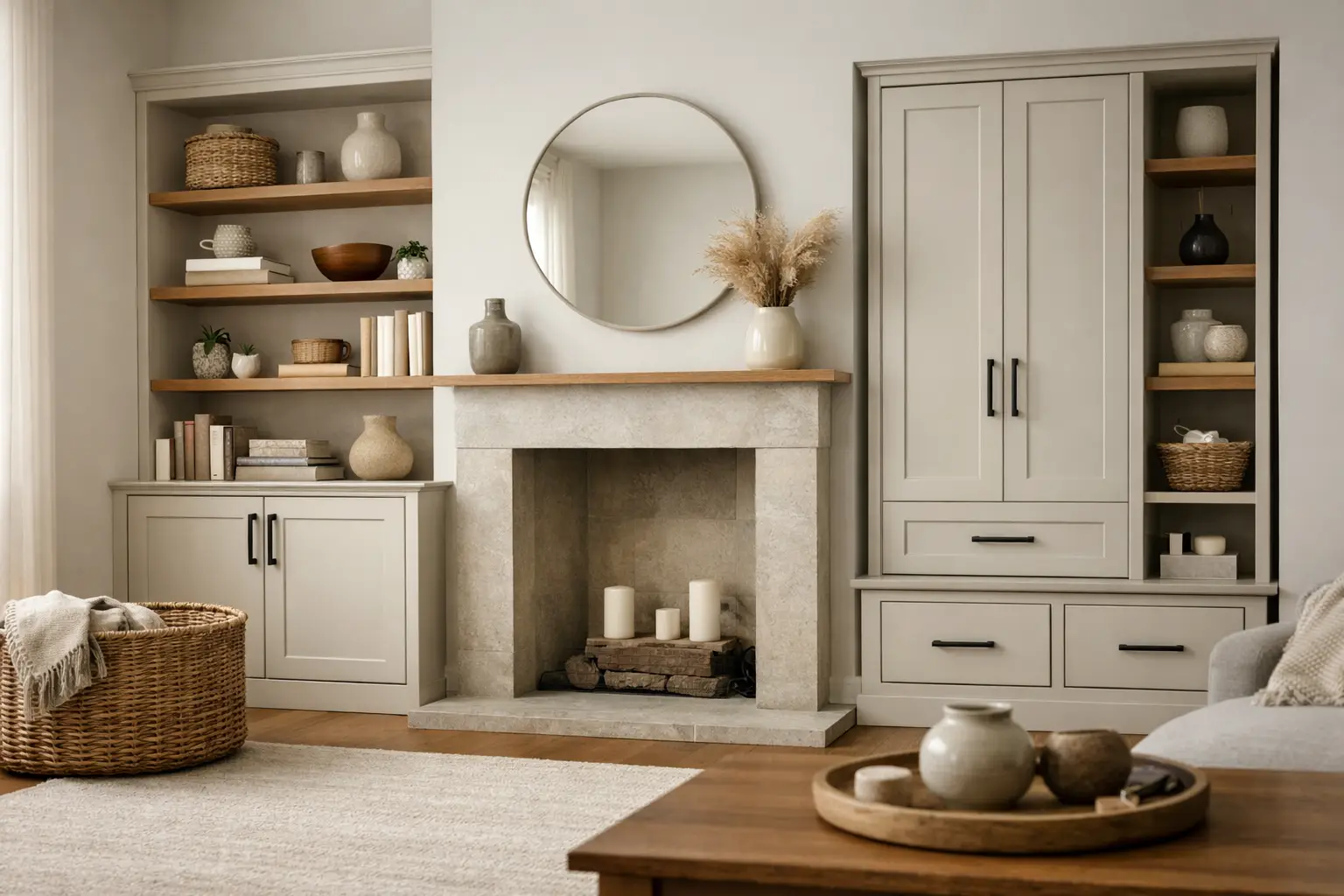
An alcove can either become the hardest-working part of a room or a place where clutter quietly gathers behind a chair. If you are wondering how to maximise alcove storage, the answer is rarely to simply add a few shelves and hope for the best. The most successful alcove designs treat every centimetre with purpose, balancing storage capacity, proportions and the way the room is actually used.
In many London homes, alcoves are full of potential. Victorian and Edwardian properties often come with chimney breasts that create natural recesses in bedrooms, lounges and dining spaces, while newer homes can have awkward niches that never quite suit standard furniture. In both cases, alcove storage works best when it is designed around the architecture rather than forced into it.
How to maximise alcove storage without losing style
The first mistake people make is thinking only about volume. More shelves do not always mean better storage. If the layout is too shallow, too tall or too open, the alcove starts to feel busy and the room feels smaller. Good storage is not just about fitting more in. It is about making the space easier to use every day.
A better starting point is to decide what the alcove needs to do. In a sitting room, that might mean concealed cupboards below and lighter display shelving above. In a bedroom, it could mean a full-height fitted wardrobe with hanging rails, drawers and top cupboards. In a home office, the alcove may need to support a desk, printer storage and paperwork without making the room feel too corporate.
This is where bespoke joinery tends to outperform freestanding pieces. Standard units often leave dead gaps at the sides, above or behind, which is wasted space in a room that may already feel tight. Made-to-measure furniture uses the full width and height of the recess and can be tailored around skirting boards, cornicing, sockets and uneven walls.
Start with the room, not the alcove
The alcove should support the room, not dominate it. That sounds obvious, but it changes the whole design approach. Before choosing doors, finishes or internal fittings, think about the room’s wider purpose.
If the alcove sits either side of a chimney breast in a reception room, symmetry often creates a calm, architectural look. Matching cabinets can frame the fireplace beautifully, especially when the proportions are carefully judged. But symmetry is not always the right answer. If one side needs to house a television and the other is better suited to books or bar storage, the design can still feel balanced without being identical.
In bedrooms, the priority is usually practicality. Alcoves beside a chimney breast are often too narrow for standard wardrobes, yet they can be ideal for fitted storage designed around your clothes, shoes and accessories. Even a shallow alcove can work hard if the interior is planned properly, with double hanging where ceiling height allows, drawers for smaller items and shelving that is spaced for real belongings rather than generic dimensions.
Use height properly
One of the simplest answers to how to maximise alcove storage is to look up. Many alcoves are underused because the top section is left empty or filled with a single shelf that ends up holding little more than forgotten boxes.
Full-height cabinetry makes a room feel more intentional and usually delivers far more usable storage than a lower unit with exposed wall above. High-level cupboards are particularly useful for items you do not need every day – spare bedding, seasonal clothing, luggage, Christmas decorations or paperwork that must be kept but does not need to be on display.
There is a balance to strike, though. In a smaller room, full-height units in a dark finish can feel heavy if the proportions are wrong. Sometimes the best solution is visual contrast: solid storage at the bottom, open shelving in the middle, and closed cupboards above. That keeps the design practical while preserving a sense of lightness.
Closed storage usually works harder than open shelving
Open shelving has its place. It can soften a fitted design, create room for books and decorative objects, and stop an alcove from feeling too built-in. But open storage demands discipline. If you need somewhere to hide cables, board games, toys, paperwork or everyday mess, cupboards and drawers will do a better job.
For most households, a combination works best. Closed storage below eye level keeps the room tidy and easier to maintain, while a smaller amount of open shelving above gives the alcove personality. This is especially effective in family living spaces where there is always more to store than you first expect.
Choose the right depth
Depth matters more than many people realise. Too shallow, and the storage becomes restrictive. Too deep, and items disappear into the back, creating another form of wasted space.
For bookshelves, a shallower depth is often enough and keeps the profile elegant. For wardrobes, the depth must accommodate hangers comfortably or the doors will become a daily frustration. For media units, you need to account for equipment, ventilation and cable access, not just the screen itself.
This is why bespoke design is so valuable in alcoves. Different rooms need different depths, and sometimes the best result is a stepped arrangement rather than one flat front. A cabinet can project slightly where the room allows, while shelving above sits back for a lighter finish.
Make the inside work as hard as the outside
A beautifully finished alcove is only half the job. The internal layout is what determines whether the furniture stays useful over time.
Drawers are often more practical than deep shelves for smaller items because they bring everything forward into view. Adjustable shelves offer flexibility, but fixed shelves can look cleaner and feel sturdier in spaces designed for books or display pieces. In wardrobes, a mix of hanging, shelving and drawers is usually more useful than dedicating the whole alcove to one function.
Think honestly about what you own. If you mostly hang dresses, coats or suits, your rail space matters more than extra shelving. If you fold knitwear and keep shoes in boxes, the configuration should reflect that. The same principle applies in living rooms. A family that wants hidden toy storage will need something very different from a couple looking for a refined home bar and display cabinet.
Details that make alcove storage feel bespoke
The difference between a basic fitted unit and a truly integrated piece often comes down to details. Doors aligned with the room’s proportions, shadow gaps that look deliberate, carefully chosen handles, and finishes that complement the rest of the interior all matter.
Painted finishes are popular in alcoves because they can blend with the walls and make the joinery feel part of the room’s architecture. Wood-effect finishes bring warmth and texture, especially in more contemporary schemes. Shaker-style fronts suit period homes beautifully, while slab doors can look sharper in newer properties or minimalist extensions.
Lighting can also change the result. Integrated shelf lighting adds atmosphere in a living room, while internal wardrobe lighting is practical in darker recesses. These details are not just decorative. They make the storage easier and more pleasant to use.
Consider the trade-offs before you build
Not every alcove needs a full bespoke fit-out. If the room may change function soon, a simpler arrangement could be the wiser investment. Equally, if you are renovating a long-term home and want every inch to work beautifully, fitted furniture often gives better value over time than replacing stop-gap pieces every few years.
There are also practical site considerations. Older houses can have uneven walls, sloping floors and chimney breasts that are not perfectly centred. Those quirks are exactly why made-to-measure furniture is so effective, but they do need to be measured and planned carefully. Ventilation, radiators, plug sockets and cable management should all be resolved before the design is finalised.
Budget matters too. The cheapest option upfront is not always the most efficient once you factor in wasted space, lower-quality materials or the need to adapt the room later. Well-designed alcove furniture should feel tailored to your life, not simply built into a gap.
Where bespoke alcove storage makes the biggest difference
In reception rooms, bespoke alcove cabinets can turn two awkward recesses into a cohesive focal point around the chimney breast. In bedrooms, they can create wardrobe space where freestanding furniture would leave unusable gaps. In lofts, studies and extensions, they can tame irregular layouts that would otherwise remain underused.
This is particularly valuable in homes where every room needs to work harder, whether that means accommodating family life, hybrid working or simply a preference for calmer, more organised interiors. A well-planned alcove does not just add storage. It improves the way the whole room functions.
At Finest Furniture Studio, we often see that the best alcove solutions come from combining practical thinking with a strong design eye. The furniture should solve a problem, but it should also look as though it was always meant to be there.
If you are planning your own space, begin with how you live rather than what looks good in isolation. The right alcove storage should hold the things you need, hide the things you do not want on show, and make the room feel more composed the moment you walk in. That is when an alcove stops being an awkward recess and starts earning its place in the home.