
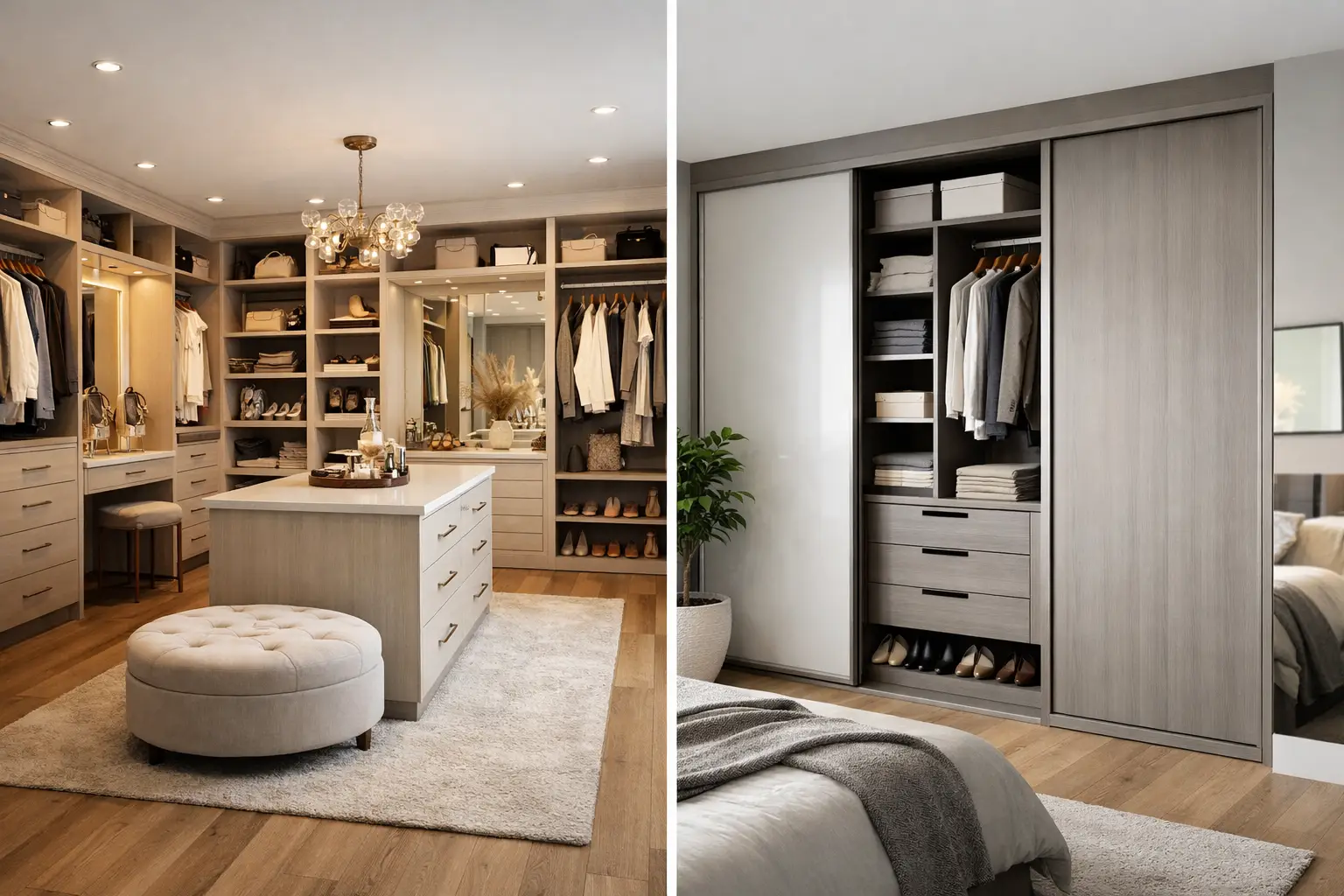
The spare room looks tempting until you realise it also needs to be a study, a guest room, and somewhere to hide the ironing board. That is usually the real starting point for the walk in wardrobe vs fitted wardrobe decision – not Pinterest, but the shape of your home, the pace of your mornings, and how much hidden storage you actually need.
Both options can transform a bedroom, and both can be designed beautifully. The right choice depends less on trends and more on how you live. A walk-in wardrobe offers a dedicated dressing space and a boutique feel. A fitted wardrobe uses every available inch within the room you already have. Neither is automatically better. One simply tends to suit your layout and routine more naturally.
Walk in wardrobe vs fitted wardrobe: what is the difference?
A walk-in wardrobe is a separate storage area large enough to step into, dress in, and move around comfortably. It may sit behind the bed, within a converted box room, inside an alcove arrangement, or in a dedicated dressing room. Its appeal is obvious – everything has a place, clothes are easier to see, and the bedroom itself can feel calmer.
A fitted wardrobe is built into the room itself, made to measure around the dimensions of the space. It can run wall to wall, floor to ceiling, fit neatly into alcoves, work around chimney breasts, or solve awkward angles in loft rooms and under sloping ceilings. It gives you a clean, integrated finish without asking for a separate room.
That distinction matters because most homeowners are not simply choosing a style. They are deciding how to allocate space in the home. A fitted wardrobe works within the bedroom. A walk-in wardrobe asks for a zone of its own.
When a walk-in wardrobe makes sense
If you have a spare room, a generous main bedroom, or an underused adjoining space, a walk-in wardrobe can feel like a real upgrade rather than an indulgence. It creates a sense of separation between sleeping and dressing, which many people love. Clothes, shoes, bags and accessories can all be organised in a way that is visible, accessible and easy to maintain.
For couples, this can be especially useful. A well-planned walk-in layout allows each person to have their own section, with hanging, shelving and drawers tailored to different habits. If one person folds knitwear and the other owns more suits, dresses or long coats, the internal design can reflect that. Good bespoke design makes the space work harder than a standard dressing room ever could.
There is also a lifestyle benefit. Getting dressed becomes easier when everything is laid out clearly. You can include mirrors, lighting, a dressing table, even seating if the room allows. That said, a walk-in wardrobe only feels luxurious when it has enough breathing space. If it is too tight, it can end up behaving like a cramped cupboard with ambitions.
When a fitted wardrobe is the smarter choice
For many homes, especially in London and South West London where space is valuable, fitted wardrobes are often the more intelligent investment. They maximise storage without stealing a whole room. A bespoke fitted design can use full ceiling height, awkward corners, recesses and narrow walls that freestanding furniture simply wastes.
This is where fitted wardrobes tend to outperform. In a compact bedroom, they make the room feel more ordered because they remove visual clutter and create one coherent feature rather than several mismatched pieces. Sliding doors can help where circulation space is tight. Hinged doors can offer a more classic look and easier full access to the interior. Either way, the result is purposeful and tailored.
A fitted wardrobe also suits the reality of many family homes. You may not have a spare room to dedicate to clothing, but you still need serious storage. By combining double hanging, long hanging, drawers, shoe shelves, overhead compartments and clever internal accessories, a fitted wardrobe can hold far more than people expect.
Space is the deciding factor more often than budget
People often assume the walk in wardrobe vs fitted wardrobe question is mainly about price. In practice, space tends to be the first filter. If carving out a walk-in area means sacrificing a home office or making a bedroom feel compromised, it may not be the best use of square footage.
A fitted wardrobe usually delivers stronger storage density. Because it is built to the exact dimensions of the room, there is very little dead space at the sides, above, or below. A walk-in wardrobe can offer more total storage in a larger room, but only if the room is genuinely generous. You need circulation space as well as storage walls, otherwise the footprint is not working efficiently.
That is why a design visit matters. What looks possible on a floor plan does not always work in reality. Door swings, window placement, sloping ceilings and chimney breasts can all shift the best option one way or the other.
Style and feel: boutique room or integrated finish?
A walk-in wardrobe is about experience as much as storage. It feels private, considered and a little more indulgent. If you enjoy seeing your wardrobe displayed and want a dressing-room atmosphere, this approach has obvious appeal. Open shelving, glass-fronted sections and layered lighting can make it feel polished rather than purely practical.
A fitted wardrobe, by contrast, tends to create visual calm. It becomes part of the architecture of the room. This suits homeowners who want the bedroom to feel serene, streamlined and uncluttered. Shaker-style doors can bring softness and character, while more minimal finishes create a contemporary look. Wood effects, painted finishes and carefully chosen handles can tie the wardrobe into the rest of the interior rather than dominate it.
Neither option is more stylish by default. The better question is how visible you want your storage to be. Some people love a dedicated dressing area. Others want everything tucked away behind elegant doors.
Storage performance in everyday life
The best wardrobe is not the one that photographs well. It is the one that still works on a rushed Tuesday morning.
Walk-in wardrobes excel when you want categories clearly separated. Shoes can live in one zone, bags in another, folded items in drawers, occasionwear in longer hanging sections. Visibility is better, and that can help people maintain order. If you have a broad wardrobe, seasonal clothing, or simply enjoy being able to see options at a glance, this format is satisfying to use.
Fitted wardrobes are often better at hiding life neatly. They can absorb clothing, luggage, linen, spare duvets and all the extra items that tend to drift around a bedroom. Because the design is enclosed, the room remains tidy even when the interior is working hard. For busy households, that matters.
Good internal planning is what makes either option successful. There is no value in a glamorous exterior if the inside is awkward, shallow, or full of shelves you never use. The most effective designs are shaped around real habits, not showroom assumptions.
Cost, value and what you are really paying for
A bespoke walk-in wardrobe can start from a surprisingly accessible level, but cost rises with room size, materials, internal features and finish details. A fitted wardrobe also varies according to dimensions, door style and interior complexity. What matters is not simply the entry price, but the value of the finished result in your specific home.
If a walk-in wardrobe uses a room that could serve another essential purpose, the hidden cost may be higher than expected. If a fitted wardrobe turns an awkward wall into high-performing storage and improves the feel of the bedroom at the same time, its value can be excellent.
This is why bespoke design remains so effective. It avoids paying for generic solutions that never quite fit. Companies such as Finest Furniture Studio build around the way a room actually behaves, which tends to produce a better long-term result than forcing a standard wardrobe into an irregular space.
Which should you choose?
Choose a walk-in wardrobe if you have the room to spare, want a more dedicated dressing experience, and would genuinely benefit from separating clothing storage from the bedroom. It suits homes where luxury and routine go hand in hand, and where a dressing area can be created without compromise.
Choose a fitted wardrobe if you want to maximise every inch, keep the bedroom visually calm, and achieve substantial storage within the footprint you already have. It is often the stronger option for compact rooms, awkward layouts and homes where practicality needs to look beautiful too.
The best storage should feel effortless once it is installed. If you are deciding between the two, think less about what sounds aspirational and more about what will make daily life easier, calmer and better organised for years to come.

