
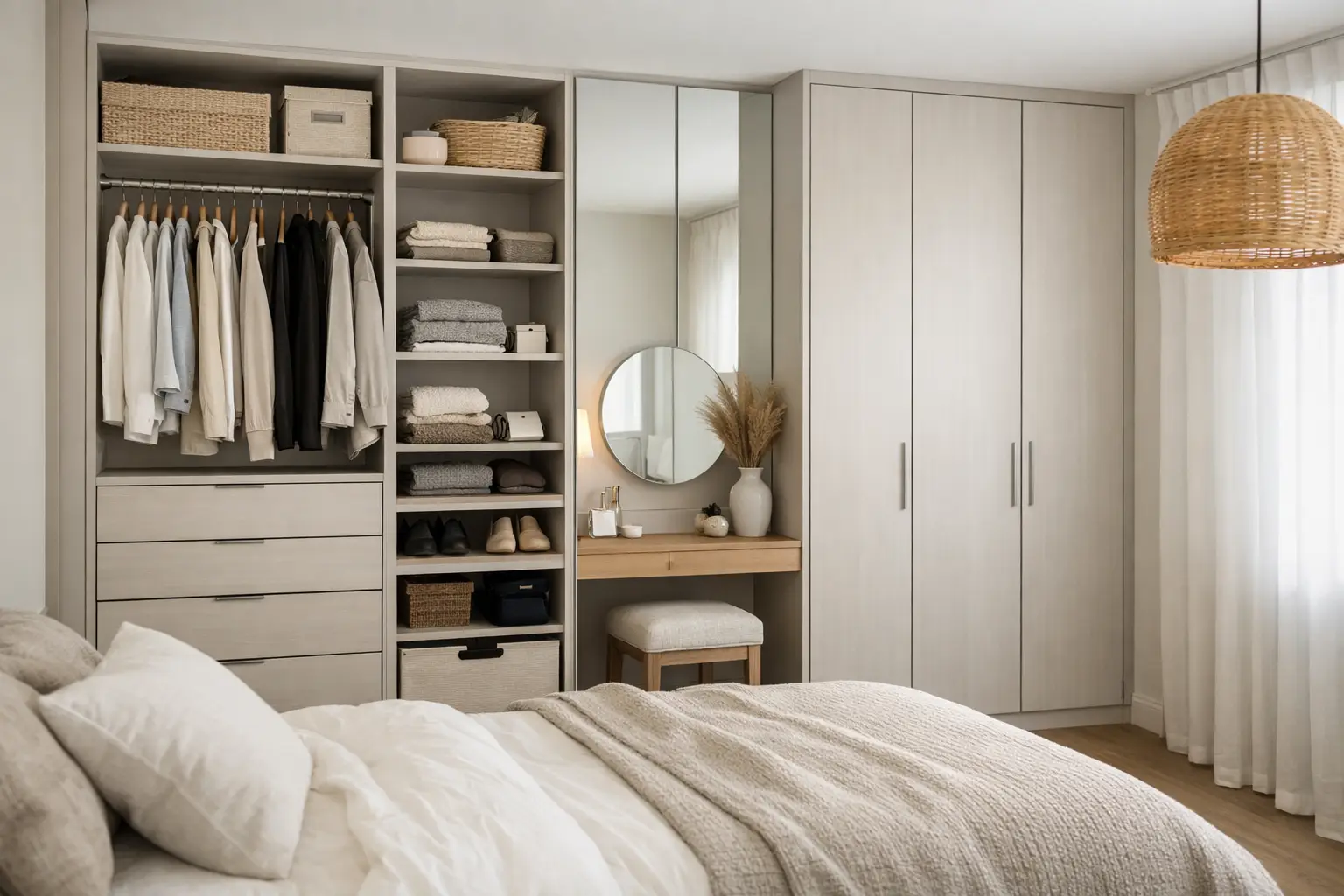
A small bedroom usually shows its limits at the worst possible moment – when doors won’t open properly, winter coats take over a chair, and the room starts to feel more like storage than somewhere restful. Good wardrobe storage for small bedrooms changes that completely. The right design does more than hold clothes; it gives the room back its proportions, improves how you move through the space, and makes daily routines feel calmer.
The mistake many homeowners make is treating the wardrobe as a single item of furniture rather than part of the room’s architecture. In compact bedrooms, every centimetre matters. A wardrobe that is too deep, too low, or poorly arranged inside can waste more space than it saves. By contrast, a fitted solution can turn alcoves, chimney breast recesses, corners, loft angles and full-height walls into elegant storage that feels built into the room rather than squeezed into it.
What small bedrooms really need from wardrobe storage
In a larger room, storage can be generous without being especially clever. In a smaller bedroom, the wardrobe has to work much harder. It needs to provide enough hanging space, useful shelving, room for shoes or accessories, and often a place for bulkier seasonal items – all without making the room feel boxed in.
That balance comes from proportion. A wardrobe should suit the scale of the room and the way you actually live. If you mostly hang shirts, dresses and jackets, you need more hanging sections and fewer broad shelves. If you prefer folded knitwear, handbags and neatly boxed accessories, the interior should reflect that. There is no single correct layout, which is why made-to-measure storage tends to outperform off-the-shelf pieces in tighter spaces.
This is especially true in period homes and loft conversions, where walls are rarely straightforward. Slightly uneven ceilings, chimney breasts, alcoves and sloping lines can make standard wardrobes look awkward or leave frustrating dead gaps. Bespoke fitted wardrobes solve that problem neatly because they are designed around the room rather than forcing the room to work around the furniture.
The best wardrobe storage for small bedrooms starts with the room layout
Before choosing finishes or door styles, it helps to look honestly at how the bedroom functions. A wardrobe should not dominate the route from the door to the bed, interrupt natural light, or make bedside furniture impractical. In compact rooms, the placement often matters as much as the wardrobe itself.
A full wall of storage can be remarkably effective when designed well. Instead of several smaller units scattered around the room, one continuous fitted run creates a cleaner visual line and often makes the space feel larger. The eye reads it as intentional architecture rather than clutter. Floor-to-ceiling designs are particularly useful because they shift less-used items to the top while keeping everyday essentials at eye level.
Alcoves are another strong opportunity. In many London homes, alcoves sit underused while freestanding furniture crowds the main part of the room. Turning those recesses into fitted wardrobes or combining them with bridging units above the bed can free significant floor area. The result often feels far more polished than trying to mix separate pieces together.
Where floor clearance is tight, sliding doors can be a smart choice. They remove the need for door swing space, which matters in bedrooms where the bed sits close to the wardrobe front. That said, hinged doors still have advantages. They allow full access to the interior at once and can suit classic schemes beautifully. The best option depends on the room dimensions, the style of the property and how you prefer to use the wardrobe day to day.
Wardrobe interiors matter more than most people expect
Beautiful doors and finishes create the first impression, but the real success of wardrobe storage for small bedrooms lies inside. If the internal layout is wrong, even the most attractive wardrobe will become difficult to use within weeks.
A practical interior should separate daily storage from occasional storage. Everyday clothing needs to be easy to reach and easy to put away. That usually means well-positioned hanging rails, shallow shelves for folded items, drawers for smaller pieces, and dedicated areas for shoes or bags. Higher shelving can then take suitcases, spare bedding or out-of-season clothing.
Double hanging can be extremely efficient in smaller rooms, especially for shirts, blouses, skirts and children’s clothing. Long hanging is still important, but too much of it can waste vertical space if you only own a few full-length garments. Internal drawers often work better inside the wardrobe than as separate bedroom furniture, because they reduce the need for an additional chest of drawers and keep the room visually quieter.
There is also a strong case for including details that improve everyday use: pull-out rails, integrated laundry sections, jewellery trays, soft-close drawers and carefully planned lighting. These elements are not simply luxuries. In a compact room, they reduce friction and help everything stay organised with less effort.
How to make a small bedroom feel bigger with fitted wardrobes
Storage should solve a space problem, not create a visual one. The finish and design language of the wardrobe have a real impact on how large the room feels.
Lighter colours generally help bounce light around the room, especially in north-facing bedrooms or spaces with smaller windows. Soft whites, warm neutrals and understated wood effects tend to feel calm and timeless. Mirrored panels can also work well, particularly where they reflect natural light and remove the need for a separate dressing mirror. Still, they are not right for every scheme. In some interiors, a more understated painted or textured finish creates a richer, more considered result.
Minimal detailing often suits small bedrooms because it keeps the elevation clean. Flush fronts, slim frames and discreet handles can prevent the wardrobe from feeling heavy. In more traditional homes, shaker-style doors bring character without overwhelming the room, provided the proportions remain refined.
Another useful approach is to blend the wardrobe into the architecture. When fitted wardrobes run neatly wall to wall and floor to ceiling, they can make the room feel more structured and less crowded. Custom scribing around skirting, coving and ceiling lines helps achieve that tailored finish. It is a small detail, but it makes a significant difference to the final appearance.
When freestanding wardrobes fall short
Freestanding wardrobes can be useful in some situations, particularly if flexibility is the priority or the room is temporary. They are often quicker to buy and may appear more budget-friendly at first glance. But in small bedrooms, the compromises are usually quite visible.
They rarely use the full height of the room, so dust-collecting voids are left above. Gaps at the sides waste valuable width. Standard depths can feel bulky, and interiors are often generic rather than tailored to your clothing. Once you add extra drawers, shoe storage or shelving elsewhere in the room, the overall result can feel more crowded and less cohesive.
Fitted wardrobes tend to be better value in the long term when the goal is to maximise every inch and create a more finished interior. For homeowners investing in a renovation, extension or loft conversion, bespoke storage also supports the wider design of the property. It becomes part of the home rather than another piece to work around.
Choosing wardrobe storage for small bedrooms with budget in mind
Budget matters, even in high-end interiors, and a thoughtful design should respect that. The good news is that bespoke does not have to mean excessive. A well-planned fitted wardrobe can be tailored to the room and still remain cost-conscious by focusing spending where it has the greatest impact.
For example, a simpler internal arrangement with excellent proportions often works better than filling the wardrobe with accessories you may not need. Equally, investing in quality doors, reliable mechanisms and a durable finish tends to pay off more than chasing novelty. The best storage feels effortless for years, not just impressive on installation day.
It is also worth thinking about installation efficiency. Experienced fitted furniture specialists can usually complete the process far faster and more neatly than many homeowners expect, which is particularly valuable when bedroom disruption needs to be kept to a minimum. In homes where multiple awkward areas need attention – alcoves, loft eaves, over-bed storage or media wall joinery in adjoining spaces – a joined-up design approach often creates the smartest outcome.
For clients who want a bedroom to feel elegant rather than overfilled, the aim is not to add more furniture. It is to make the room work beautifully with less visual noise. That is where bespoke craftsmanship earns its place.
If you are planning wardrobe storage for a small bedroom, start with how you want the room to feel when everything is put away. Calm, spacious, tailored and easy to live with – that is usually the right brief, and the right wardrobe should be built around it.