
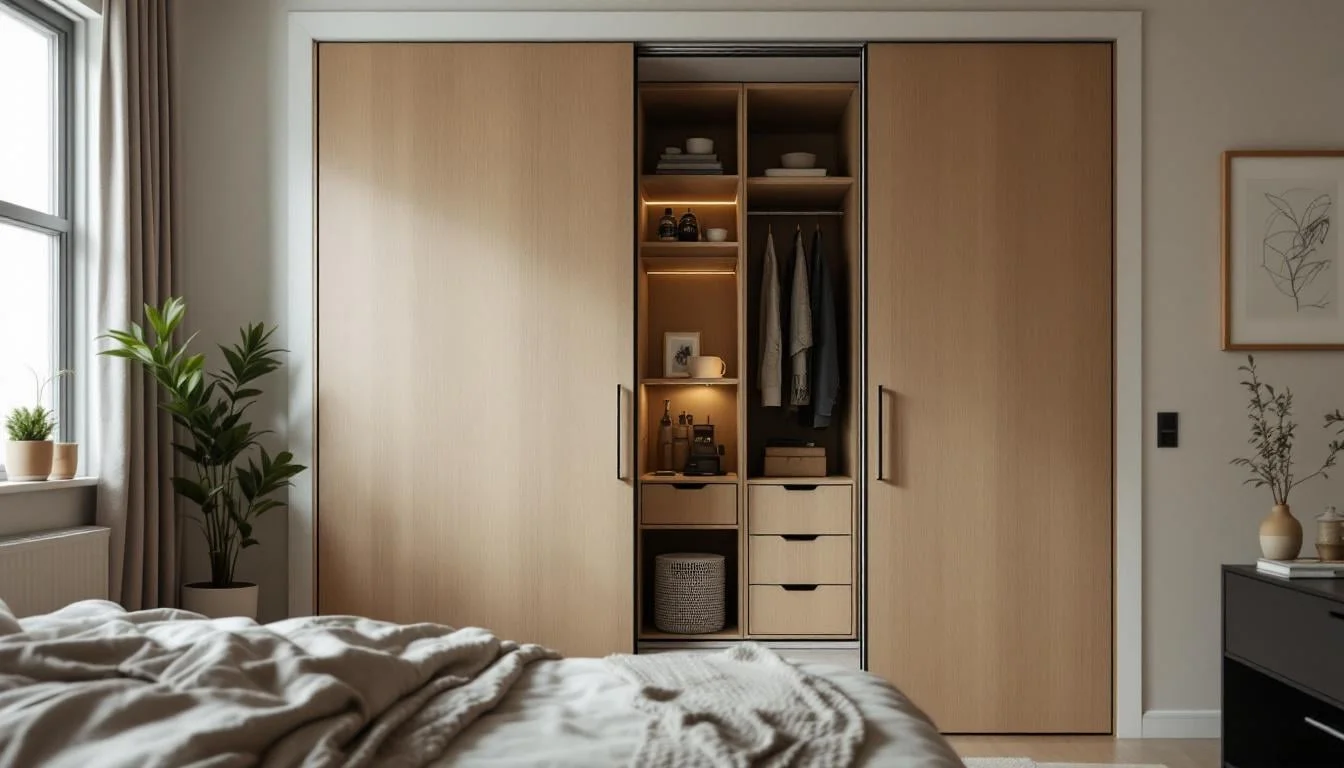
Why sliding doors earn their keep
Sliding doors are worth paying attention to when space, access, and visual simplicity all matter at once. In fitted furniture, they solve a real problem: you get full-height storage without needing the swing clearance that hinged doors demand. That makes them especially useful in bedrooms, loft rooms, narrow hallways, and compact dressing areas. If you are comparing fitted wardrobes, the question is not whether sliding doors look good, but where the space-saving benefit justifies the build precision and hardware cost. The best results come when the room layout, door width, and storage use case are planned together from the start.
What ranking pages tend to cover
Across the pages that rank for sliding doors, the same themes appear repeatedly: space-saving benefits, wardrobe applications, style options, track systems, and basic buying guidance. The strongest pages usually explain when sliding doors outperform hinged doors, while weaker pages stay stuck on surface-level design talk. That gap matters for search intent. People are not only asking what sliding doors are, they want to know whether they fit a bedroom wall, how much opening access they lose, and what compromises are hidden in the spec. A useful article should answer those questions in the same pass.
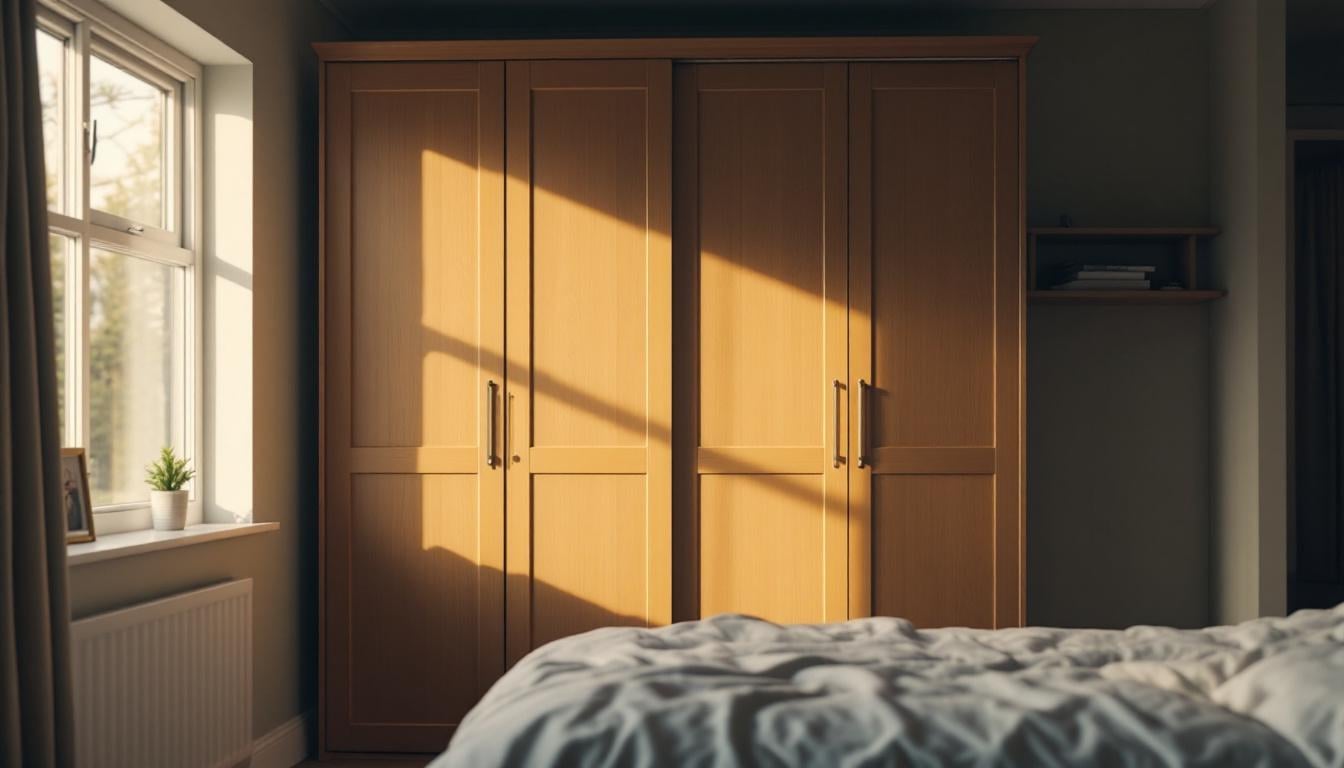
Best-fit keyword and intent map
The main keyword is sliding doors, but the supporting intent is broader: fitted wardrobes with sliding doors, bespoke sliding wardrobe doors, space-saving bedroom storage, mirrored sliding doors, and made-to-measure wardrobe doors. Related terms worth folding in naturally include wardrobe tracks, soft-close mechanism, internal storage layout, alcove wardrobe, loft wardrobe, and bespoke fitted furniture. These terms help the article match both high-level browsers and buyers who are already comparing specifications. For traffic, that mix matters more than repeating the keyword alone.
When sliding doors beat hinged doors
Sliding doors pay off most clearly when the front of the wardrobe is close to a bed, radiator, desk, or doorway. The decision rule is simple: if a hinged door would need 500 mm to 600 mm of clear swing space that you do not really have, sliding doors become the practical choice. They are also useful when the room benefits from a calmer visual line, because long, uninterrupted door runs can make a space feel more composed. The trade-off is access, since you can only expose part of the wardrobe at a time.
Where they are most effective in the home
In bedrooms, sliding doors make the most obvious difference because storage often competes with circulation space. In loft rooms, they also help when sloped ceilings limit how far doors can open. In alcoves and media walls, they can conceal clutter without creating bulky outward movement. A useful planning metric is clearance around the front edge of the furniture: if you regularly walk past the unit, or if the room already feels tight at the foot of the bed, sliding doors are usually the cleaner solution. If the room is large and access matters more than compactness, hinged doors may still be the better fit.
The practical layout test
Before choosing sliding doors, map the room in three zones: approach, opening, and storage. The approach zone is the space you need to stand and use the wardrobe comfortably. The opening zone is the area that would be blocked by a hinged leaf. The storage zone is what you can actually access once the doors overlap. This is where many projects go wrong. People focus on the exterior look and forget that internal drawer placement, hanging depth, and shelf spacing must all work with partial access. A fitted design should make the opening sequence feel natural, not cramped.
Design choices that affect daily use
The material and finish choices on sliding doors do more than set the style. They affect reflected light, fingerprint visibility, and how large the room feels. Mirrored sliding doors can visually widen a smaller bedroom, but they are not ideal if the room already feels busy or if the client dislikes constant cleaning. Matte panels feel calmer and are easier to live with, while gloss can brighten darker spaces but shows marks faster. For bespoke wardrobe doors, the real design question is not which finish is trending, but which one will still feel usable after two years of daily use.
Track systems, soft-close, and what to check
A sliding door is only as good as its hardware. Track alignment, roller quality, and soft-close performance determine whether the furniture feels premium or irritating. The practical check is simple: the doors should glide without wobble, stop cleanly, and never require a second push to sit correctly. A soft-close mechanism is worth the extra spend in bedrooms because it protects the door edges and reduces noise, especially in shared homes. The common pitfall is buying on appearance alone and treating the track as an afterthought. In fitted furniture, the hardware is part of the user experience.
How to plan internal storage around partial access
Sliding doors change how you should lay out the inside of the wardrobe. Because only one section is open at a time, high-frequency items belong in the most accessible bays. Hanging rails, everyday drawers, and open shelves should sit where the door travel exposes them quickly, while bulk storage can move to the deeper or less active side. One practical rule is to group items by use frequency, not just by type. That means storing daily clothes, accessories, and shoes in the easiest-opened zone, then using the far side for seasonal items, spare bedding, or long-hang garments.
A mini-case from a compact bedroom
A compact bedroom with a bed pushed close to the wardrobe wall is a classic sliding door scenario. In one anonymous project, the owner had roughly 650 mm of clear aisle space, which was enough to walk through but too tight for hinged doors to open comfortably. The switch to sliding doors removed the clearance problem and made the room feel less cluttered. The trade-off was access, so the internal layout was adjusted with more shallow shelving on the exposed side and daily-use hanging on the centre run. The result was not just better storage, but better room flow.
What to watch during measurement and installation
Measurement mistakes are the fastest way to ruin sliding doors. You need to check floor level, ceiling height, wall plumb, skirting depth, and any obstructions such as sockets or coving before final fabrication. Even a small variance can affect the track line and the clean overlap of the panels. The useful workflow is measure, template, confirm, then manufacture. That sequence reduces rework and avoids the common mistake of assuming the room is square when it is not. For fitted wardrobes with sliding doors, a precise site survey is not a nice-to-have, it is the foundation of the finish.
Where bespoke design creates the biggest return
Bespoke sliding doors create the biggest return where standard furniture wastes awkward space. That includes alcoves, sloped ceilings, chimney-breast recesses, and full-wall storage runs. In these situations, the value is not only the door system itself, but the way the front fascia is tailored to the room. A bespoke layout can turn irregular measurements into a visually unified wall of storage. This is one reason premium fitted furniture providers stand apart from flat-pack alternatives. The extra design effort pays off when the furniture disappears into the architecture instead of fighting it.
How sliding doors compare on access and capacity
Sliding doors are not the right answer for every room because they trade full access for space efficiency. If the wardrobe needs frequent wide-open access, hinged doors are easier. If the room is tight, sliding doors are cleaner. A useful decision framework is to score the room on three points: clearance, frequency of access, and visual priority. If two of the three favour compactness, sliding doors usually win. If the client wants maximum openness and the room has ample space, a hinged or mixed-door layout may be more practical. Good design starts with that trade-off, not with the finish sample.
Mini-case: a loft room that needed a cleaner profile
A loft room with a sloped ceiling often forces compromises, but sliding doors can reduce the visual pressure. In one anonymous example, the furniture line had to sit under a ceiling slope that left limited vertical freedom. Sliding doors allowed the wardrobe face to stay flat and tidy, while the internals were stepped to suit the roof line. The assumption here is that the room already had enough depth for the tracks and door overlap. In return, the owner gained usable storage that did not dominate the room, which is often the real goal in loft furniture.
What the warranty and fitting timeline tell you
For buyers comparing bespoke sliding doors, warranty and installation timing are useful quality signals. A longer warranty suggests the business is prepared to stand behind hardware, fit, and finish. A short fitting window can be attractive, but only if it does not hide rushed preparation. The practical question is whether the supplier can manage both speed and precision. In a market where many competitors lean heavily on glossy imagery, a company that also promises a 10-year warranty and fitting in 7-10 days is signalling confidence in the process as well as the product.
How to use sliding doors to improve search and sales pages
If you are building content around sliding doors, the strongest pages do more than describe the product. They answer real buyer questions, show room-specific use cases, and guide the reader toward a next step. That means using terms like bespoke sliding wardrobe doors, mirrored sliding doors, and fitted wardrobes with sliding doors in a way that matches the room scenario. For traffic growth, this is where the article can support the broader site. A practical next step is to link readers into a relevant service page, such as Bespoke Wardobes Lomdon, when they are ready to move from research to enquiry.
Quick takeaways
Sliding doors pay off most when room clearance is tight and outward door swing would block movement. They work especially well in bedrooms, lofts, alcoves, and full-wall fitted furniture runs. The trade-off is partial access, so internal storage has to be planned around how the doors open. Hardware quality matters as much as finish, because track performance shapes the user experience every day. Bespoke design creates the biggest return in awkward or irregular rooms, where standard furniture wastes space. If you want the storage to feel integrated rather than added on, sliding doors are often the most efficient route.
How to decide whether they are right for your room
The fastest way to decide is to compare the room against three practical questions. First, do you need to preserve floor space in front of the furniture? Second, will you open the wardrobe in short, frequent sessions rather than wide, occasional ones? Third, is the visual goal to calm the room rather than emphasize the doors themselves? If the answer is yes to at least two, sliding doors are probably worth the effort. That decision framework keeps the focus on how the room works, not just on how the front elevation looks in a photo.
Frequently Asked Questions
The questions below cover the most common search intent around sliding doors, fitted wardrobe planning, and bespoke furniture choices. They are written to help readers compare options quickly and understand where sliding doors are most effective.
Frequently Asked Questions
Are sliding doors better than hinged doors for wardrobes?
Sliding doors are usually better when clearance is limited and you want a cleaner room layout. Hinged doors still win if you need full open access to the entire wardrobe at once. For fitted wardrobes with sliding doors, the best choice depends on room size, access habits, and whether space-saving is a top priority.
Where do sliding doors work best in the home?
Sliding doors work best in bedrooms, loft rooms, alcoves, and narrow spaces where door swing would be awkward. They are also useful for bespoke sliding wardrobe doors and full-wall storage runs. If the room benefits from tighter circulation and a calmer visual line, they are usually a strong fit.https://www.hafele.co.uk/en/info/inspiration/hafele-blog/interior-design-hub/sliding-doors-the-unsung-heroes-of-modern-design/268643/
Do sliding doors reduce wardrobe storage capacity?
They do not usually reduce the internal volume, but they do change how much of the wardrobe you can access at one time. That is why internal storage layout matters so much for space-saving bedroom storage. Grouping everyday items in the most accessible bays helps avoid frustration.
What should I check before choosing sliding doors?
Measure clearance, wall straightness, floor level, and any obstructions such as sockets or skirting. These checks are essential for made-to-measure wardrobe doors and fitted furniture. If the room is not square, a bespoke design usually gives a cleaner and more reliable result.
Are mirrored sliding doors a good idea?
Mirrored sliding doors can make a room feel larger and brighter, especially in smaller bedrooms. The trade-off is maintenance, since fingerprints and dust are more visible. They are a strong option if your priority is light and visual expansion rather than a softer, more minimal finish.
How quickly can sliding doors be fitted?
Fitting times vary by project, but a supplier may mention a 7-10 day fitting window once the design is approved. The key is not speed alone, but whether the survey, manufacturing, and installation steps are all properly controlled. For bespoke fitted furniture, accuracy should always come before a rushed schedule.
Can sliding doors be used in bespoke furniture projects?
Yes, sliding doors are commonly used in bespoke fitted furniture because they adapt well to awkward room layouts. They are especially effective for alcove wardrobes, loft wardrobes, and built-in cupboard solutions. A custom design lets you balance access, finish, and storage capacity more carefully than standard furniture.https://www.sunseekerdoors.co.uk/guides/pros-and-cons-of-sliding-doors/

