
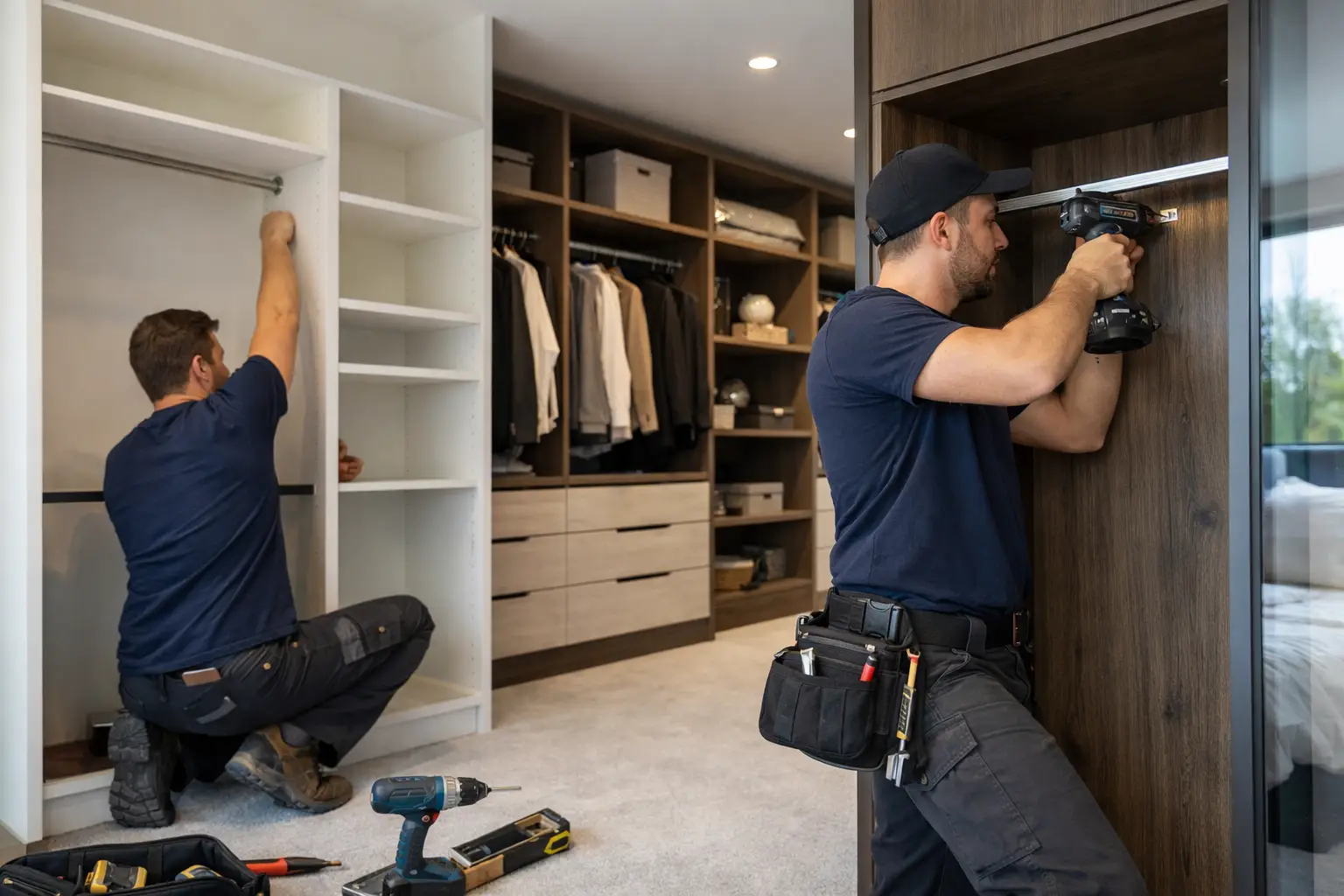
A well-designed wardrobe can change the feel of a room more than most homeowners expect. In London, where alcoves are uneven, ceilings slope, and every square metre matters, wardrobe installation London is rarely just about adding storage. It is about making the room work properly, look considered, and feel calmer every day.
If you are renovating a Victorian terrace in Wimbledon, updating a Chelsea flat, or finishing a loft conversion in Richmond, the difference between a wardrobe that simply fits and one that genuinely improves the space comes down to design, preparation and installation quality. The wardrobe itself matters, of course, but so does the way it is measured, built and fitted into the realities of your home.
Why wardrobe installation in London needs a bespoke approach
London homes are full of character, but that character often creates practical challenges. Chimney breasts, out-of-plumb walls, uneven floors and awkward corners can make off-the-shelf furniture look temporary or waste valuable storage. A fitted solution deals with those quirks rather than fighting them.
That is why wardrobe installation London tends to suit bespoke furniture particularly well. A made-to-measure wardrobe can run wall to wall, floor to ceiling, or neatly around a bulkhead without leaving dead gaps above or beside the unit. It gives the room a more architectural finish and usually delivers more usable internal storage than freestanding pieces.
There is also an aesthetic benefit. In a carefully designed bedroom, walk-in dressing room or integrated living space, wardrobes should feel part of the home rather than an afterthought. Clean lines, balanced proportions and finishes that work with the rest of the interior make a noticeable difference.
What a good wardrobe installation London service should include
The best results do not start on fitting day. They start much earlier, with a proper understanding of the room, your storage habits and the finish you want.
A strong installation service usually begins with a design visit and precise site survey. This is where measurements are taken properly, awkward details are spotted, and practical questions are answered before manufacturing begins. If you need long hanging space for dresses, integrated drawers for smaller items, shelving for handbags, or a dressing table built into the layout, those details should be resolved at design stage rather than improvised later.
Manufacturing is the next important step. Bespoke wardrobes should be produced to the agreed dimensions and specification, not adjusted on site to make a standard carcass work. That gives a cleaner fit, tighter tolerances and a more premium appearance.
Finally, installation itself should be efficient, tidy and professionally managed. In most homes, the aim is not simply to get the wardrobe into place but to minimise disruption while delivering a polished finish. For many clients, that peace of mind matters almost as much as the design.
What affects the final result
Even with an excellent design, wardrobe installation can vary in quality. The details are what separate a respectable job from one that feels properly finished.
The first factor is the condition of the room. Freshly plastered walls, recently laid flooring and completed electrics create a smoother fitting process. If other trades are still working around the space, timings can slip and finishes can suffer. It is often worth coordinating wardrobe installation towards the end of a renovation, once the room is dry, decorated and stable.
The second factor is access. A top-floor flat in a period building with narrow stairs presents different logistical demands from a modern house with easy parking and wide hallways. This does not prevent a bespoke installation, but it can affect planning, labour and timing.
The third is material and door choice. Sliding wardrobes are ideal where circulation space is tight, but they need careful alignment and a well-considered internal layout. Hinged wardrobes allow full access and can suit more traditional interiors beautifully, especially in shaker or panelled designs. Walk-in wardrobes create a luxurious dressing experience, but only when the proportions are right. In a room that is too compact, they can feel compromised.
Cost expectations without the guesswork
One of the biggest concerns for homeowners is price, and fairly so. Wardrobe installation costs depend on size, configuration, materials, internals and the complexity of the room. A simple run of hinged wardrobes in a straightforward space will cost less than a fully fitted wall of sliding doors with drawers, lighting and tailored storage behind.
At the same time, the cheapest quote rarely gives the best value. If pricing looks unusually low, it is worth asking what is actually included. Are surveying, manufacturing and installation all covered? Are fillers, scribing and internal fittings part of the specification? What about guarantees?
Transparent pricing matters because bespoke furniture is not a like-for-like purchase. Two wardrobes may appear similar in photographs and be priced very differently because one is built around proper cabinetry, durable hardware and a carefully managed fitting process, while the other relies on lower-grade components and more visible compromises.
For many London homeowners, the priority is not finding the lowest possible cost but balancing quality, appearance and longevity with a sensible budget. That is where clear design advice becomes valuable.
Timings and how to plan around them
A common question is how long wardrobe installation takes. The answer depends on the scale of the project, but fitting is usually only one part of the overall timeline. Design development, site measuring, manufacturing and scheduling all happen before the first panel enters the room.
For a standard fitted wardrobe, installation itself may be completed within a few days. Larger projects, such as a complete fitted bedroom or a walk-in wardrobe with more intricate internal features, can take longer. Some bespoke providers work to fitting timelines of around 7 to 10 days for broader furniture projects, which is helpful for households managing decorators, flooring or a wider refurbishment.
The key is to plan the wardrobe as part of the overall room design rather than leaving it until the end. Electrical points, media wall positions, skirting details and flooring finishes can all influence the final design. Early planning usually means fewer compromises later.
Design choices that are worth getting right
A wardrobe should look beautiful, but it also needs to suit the way you live. That is where thoughtful design often matters more than extra features.
Internal layout is a good example. Some clients want more shelving, only to realise later that hanging space is the real priority. Others request large drawers but then need easier access to shoes, knitwear or luggage. A tailored interior solves that problem by matching the storage to your wardrobe habits rather than a standard template.
Door finish is another decision with a big visual effect. Mirror panels can make a bedroom feel brighter and larger, particularly in smaller London properties. Wood-effect finishes add warmth, while painted shaker doors suit period homes especially well. Sleek modern fronts tend to work beautifully in newer extensions and minimalist interiors.
Then there is the question of whether to make the wardrobe blend in or stand out. In some rooms, a colour-matched built-in wardrobe creates a calm backdrop. In others, a stronger contrast gives the joinery more presence. Neither is universally right. It depends on the architecture of the room and the atmosphere you want.
Why installation quality matters just as much as design
Beautiful drawings are easy to approve. Beautiful fitted furniture is harder to deliver. That is why installation should never be treated as the final minor step.
A skilled fitter understands how to scribe neatly to uneven walls, align doors accurately, adjust moving parts properly and create clean finishing lines that look intentional. Poor fitting shows up quickly in uneven reveals, awkward gaps, stiff doors and an overall sense that the wardrobe was forced into the room rather than made for it.
This matters even more in premium homes, where every detail is more visible. If you have invested in decorating, flooring and lighting, substandard joinery will stand out immediately. On the other hand, well-installed fitted wardrobes can make the whole room feel more expensive and more complete.
That is one reason many homeowners choose a specialist rather than trying to manage separate designer, supplier and installer teams. A single process tends to create better accountability from concept to completion.
Is fitted always the right choice?
Not always, and that is worth saying plainly. If you are furnishing a short-term rental, expect to move soon, or need a quick low-cost solution, freestanding wardrobes may be more practical. They offer flexibility and faster purchase decisions.
But if you are improving a long-term home, especially one with awkward architecture or limited storage, fitted wardrobes usually offer better use of space and a more refined result. They can also add to the sense of permanence and quality buyers notice when viewing a property.
For bedrooms, dressing rooms, loft spaces and alcoves, bespoke installation often turns difficult layouts into the most useful parts of the house. That is where the investment tends to feel worthwhile.
A good wardrobe should do more than store clothes. It should make mornings easier, rooms calmer and space work harder without looking busy. If you are planning wardrobe installation London, the smartest move is to think beyond doors and shelves and focus on how the finished piece will live with your home for years to come. That is where thoughtful design and careful fitting earn their value.