
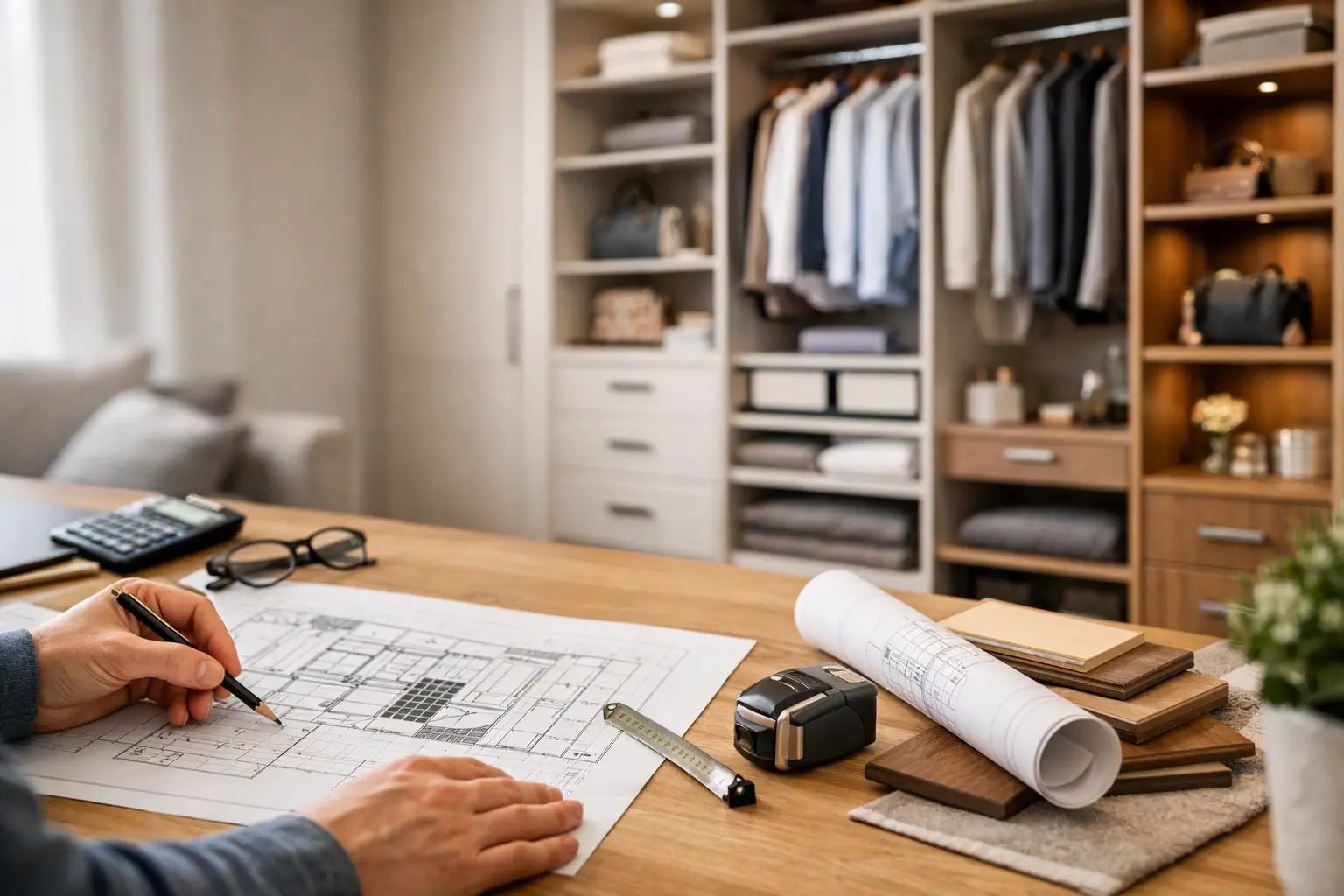
The difference between a fitted wardrobe that looks beautiful and one that genuinely improves daily life usually comes down to planning. If you are wondering how to plan fitted wardrobes, the real question is not simply how wide they should be or which doors to choose. It is how the wardrobe will work for your room, your routine and the way you want your home to feel.
A well-planned wardrobe should do more than fill a wall. It should make awkward corners useful, calm visual clutter and give every item a logical place. That is where bespoke design earns its value – not in adding more cupboards for the sake of it, but in creating storage that feels considered from the first sketch to the final fitting.
How to plan fitted wardrobes around the room
The room should always lead the design. Before choosing finishes or internal accessories, look closely at the architecture. Ceiling height, chimney breasts, alcoves, window placement, radiators and door swings all affect what will feel balanced and what will feel forced.
In a straightforward rectangular bedroom, a full wall of wardrobes can create a clean, tailored look. In more awkward spaces, such as loft rooms or bedrooms with sloping ceilings, the best solution is often to work with the room rather than against it. A wardrobe that follows the ceiling line can look far more elegant than trying to impose a standard box shape into a difficult space.
It also helps to think about visual weight. Floor-to-ceiling storage maximises capacity, but in a smaller bedroom it needs careful detailing to avoid feeling heavy. Lighter finishes, integrated handles and a well-proportioned layout can keep the design feeling calm and spacious.
Start with what you need to store
The most common planning mistake is designing around a generic idea of storage instead of actual belongings. A wardrobe should be built around your clothing and habits, not someone else’s checklist.
Take stock of what needs to live inside. Long dresses and coats require different hanging heights from shirts and jackets. Knitwear, denim and t-shirts are usually better folded on shelves or stored in drawers. Shoes, handbags, luggage, jewellery and bedding all need their own consideration too.
For couples, separate zones often make the wardrobe work better in practice. That does not mean splitting everything exactly down the middle. One person may need far more hanging space, while the other needs more drawers or shelving. The best interiors are rarely symmetrical for the sake of appearance alone – they are balanced around real use.
If you are planning for a family home, think beyond current needs. A wardrobe that works beautifully now should still feel useful in five years. Extra upper storage for seasonal items, adaptable shelving and a layout with some flexibility can prevent the design from becoming limiting too quickly.
Choosing the right internal layout
Once you know what needs to be stored, the interior layout becomes much easier to define. This is the part of the process that determines whether the wardrobe feels effortless to use or quietly frustrating every day.
Double hanging can be excellent for shirts, blouses, trousers and shorter garments because it makes efficient use of height. Full-length hanging is essential, but most people need less of it than they think. Drawers are ideal for smaller items that would otherwise become untidy on shelves, while shelves are useful for knitwear, bags and storage boxes.
There is always a balance to strike. Too many shelves can make a wardrobe feel busy and difficult to keep neat. Too many drawers can add cost and reduce flexibility. Accessories such as pull-out rails, internal mirrors, trouser racks or jewellery trays can be worthwhile, but only if they support how you actually live. Good fitted furniture should feel refined, not over-engineered.
How to plan fitted wardrobes for daily ease
The most successful layouts are the ones that reduce small daily irritations. Frequently used items should sit at comfortable reach, while occasional items can go higher up. If one side of the wardrobe is hard to access because of the bed position or a narrow walkway, that section may be better used for less frequently needed storage.
Lighting matters here too. In darker corners or walk-in wardrobes, integrated lighting can transform usability. It is not just a luxury feature. It helps you see colours properly, find items quickly and maintain the sense of a well-finished space.
Doors, style and the look of the room
Externally, the wardrobe should feel like part of the architecture, not a bulky addition. Door style plays a major role in that.
Hinged doors often suit larger rooms where there is enough clearance to open them comfortably. They provide full access to each section and can work beautifully in classic, shaker or contemporary designs. Sliding doors are often the practical choice in tighter bedrooms because they save space and can create a sleek, modern line across the wall.
The finish should connect with the wider room. Wood-effect wardrobes can bring warmth and texture, while painted finishes tend to feel lighter and more tailored. Mirror panels can help bounce light around a room, but they are not always the right answer. In some bedrooms they can feel useful and spacious, while in others they can dominate the design too much. It depends on the room, the available light and your personal preference.
Handles, panel detailing and colour all deserve the same attention. These details influence whether the wardrobe feels timeless or quickly dated. A calmer, well-proportioned design usually ages better than one built around passing trends.
Measurements matter more than most people expect
Accurate measuring is fundamental, but good planning goes beyond simply noting wall width and ceiling height. You need to consider skirting boards, cornices, uneven walls, plug sockets, switches and any feature that affects how the fitted furniture will sit.
Older properties in particular rarely offer perfectly straight lines. Bespoke wardrobes are valuable because they can be made to suit these realities rather than exposing every imperfection. This is one reason why fitted furniture tends to look so much more resolved than freestanding alternatives in period homes or converted lofts.
If you are still at an early stage, treat your own measurements as a planning guide rather than a manufacturing guide. Professional surveying ensures the final design accounts for all the small details that make the difference between a neat fit and a compromised one.
How to plan fitted wardrobes with a realistic budget
Budget should shape the brief from the start, not appear halfway through the design process. The main variables are size, internal complexity, door style, finish and installation requirements. A simple hinged wardrobe with a thoughtful internal layout can often offer better long-term value than a larger design packed with unnecessary extras.
It is also worth considering what you are buying beyond the visible furniture. Tailored design, made-to-measure manufacturing, professional installation and a guarantee all contribute to peace of mind. For many homeowners, that reassurance matters as much as the wardrobe itself, especially when the goal is a fully integrated finish that should last for years.
Transparent pricing helps avoid the familiar problem of a seemingly affordable quote becoming expensive once internals, finishing panels or fitting are added. A well-structured design process usually saves money in the long run because decisions are made clearly and early.
Think about installation from the beginning
A fitted wardrobe project is easier when installation has been considered before the design is finalised. Access routes, room decoration, flooring and electrics can all affect the timing and finish.
If the bedroom is also being redecorated, the order of works matters. In some cases it makes sense to fit the wardrobe before the final paint finish. In others, particularly where flooring runs wall to wall, you may want to plan the wardrobe position alongside the flooring layout. Small sequencing decisions can have a big effect on the final result.
For clients across London and the surrounding areas, where bedroom sizes and property styles vary widely, this practical side of planning is often what turns a good idea into a smooth project. Finest Furniture Studio approaches this stage with the same care as the design itself, because the experience should feel considered from consultation through to fitting.
The best wardrobe plans leave room for real life
Perfection on paper is not the goal. The right fitted wardrobe should make the room feel more generous, your belongings easier to manage and the day-to-day rhythm of the home a little calmer. Plan for what you own, how you live and what the room can honestly accommodate, and the finished result will feel elegant for all the right reasons.

