
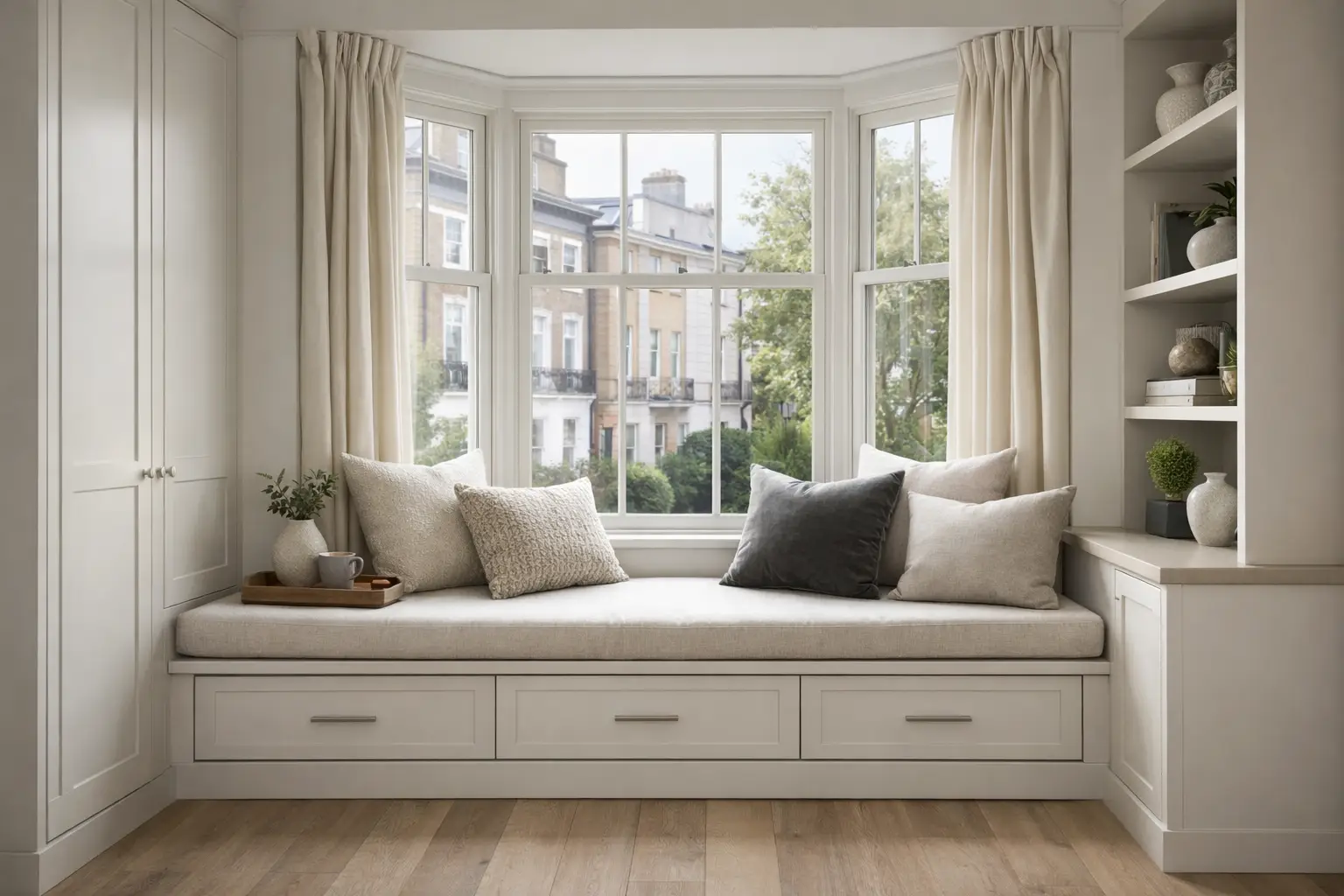
A bay window can be one of the best features in a Chelsea home, but it is often the least practical. The light is beautiful, the architecture has character, and yet the space beneath the window is left empty or filled with furniture that never quite fits. That is exactly why bay window storage Chelsea homeowners invest in tends to work so well – it respects the period detail while turning wasted square metres into something useful every day.
In London homes, especially Victorian and Edwardian properties, every inch matters. A bay window is rarely just a decorative feature. It can become a reading seat, a place to store toys, a discreet home for shoes and blankets, or a built-in bench that makes the whole room feel more finished. The difference lies in whether it is designed as furniture for your room, rather than furniture pushed into it.
Why bay windows are harder to furnish than they look
A bay window appears simple until you try to use it properly. Angles vary from property to property, sills sit at different heights, skirting boards interrupt straight lines, and radiators are often positioned in the most awkward place possible. Standard storage units do not account for any of that, which is why they tend to leave gaps, block light, or make the room feel cluttered.
There is also a design issue. In a well-finished home, a bay should look integrated with the rest of the room. Freestanding benches and off-the-shelf cabinets often feel temporary, especially in homes with original cornicing, panelling or carefully chosen flooring. Bespoke furniture allows the bay to feel intentional, not improvised.
What good bay window storage in Chelsea should achieve
The most successful designs do more than hide clutter. They improve how the room works and how it feels. In practical terms, that usually means creating useful storage without making the window heavier or darker.
A well-designed unit should sit comfortably within the architecture of the bay, preserve natural light, and give you storage that suits the way you actually live. In a sitting room, that may mean deeper compartments for throws, books or children’s games. In a bedroom, it may be a window seat with space for spare bedding. In a dining area, it could be a low run of cupboards that adds character without competing with the rest of the joinery.
That is where a made-to-measure approach matters. The dimensions are one part of it, but the bigger advantage is personalisation. You can decide whether access should be from lift-up lids, drawer fronts, or doors. You can build around radiator ventilation. You can match the finish to wardrobes, alcove units or other fitted pieces in the home.
Bay window storage Chelsea design ideas that work
Not every bay window should be treated the same way. The right solution depends on the room, the depth of the bay, and what you want the furniture to do.
Window seats with hidden storage
This is the classic choice, and for good reason. A fitted seat softens the room and makes the window useful rather than purely decorative. Hidden storage beneath keeps visual clutter out of sight, which matters in rooms where you want a calm, considered look.
Lift-up lids create generous, uninterrupted internal space, which is ideal for bulkier items. Drawers are easier for daily access and suit families who want everything organised and reachable. Neither is better in every case. It depends on what you are storing and how often you need it.
Low cupboards for formal living spaces
In reception rooms or more polished open-plan spaces, low cupboards can look neater than a bench seat. They offer a cleaner fitted appearance and can be detailed to suit traditional or contemporary interiors. Shaker-style fronts work beautifully in period properties, while slab or handleless designs feel more architectural in renovated flats and modern homes.
This option is especially effective when the bay is part of a wider storage scheme. If the room also has alcove cabinetry or shelving, matching the detailing creates a more complete result.
Bedroom bay storage
A bedroom bay is often underused because homeowners are wary of making the room feel busy. In reality, fitted low-level storage can help a bedroom feel calmer. It removes the need for extra chests or boxes elsewhere and keeps the footprint open.
The key is restraint. In bedrooms, lower profiles and softer finishes tend to work best. You want the storage to support the room, not dominate it.
The trade-offs worth thinking about first
Bespoke storage gives you far more control, but there are still decisions to get right. One is seating comfort versus storage capacity. A deeper bench may provide more internal room, but if it projects too far into the space it can interrupt circulation and feel bulky.
Another is access. Lift-up tops are tidy and generous inside, but not always ideal if the seat is used constantly or styled with cushions. Drawers are more convenient for regular use, though they require enough clearance to open properly.
Radiators are another common consideration. In many Chelsea homes, the radiator sits within the bay. It can usually be incorporated, but this needs careful planning. Ventilation must be handled properly, and the design should not trap heat or reduce performance. This is one of those details that separates fitted furniture that looks good from fitted furniture that works properly.
There is also the question of finish. Painted cabinetry can be timeless and elegant, especially in period homes, but it may show knocks more easily in busy family spaces. Wood-effect finishes bring warmth and durability, though they suit some interiors better than others. The best choice is rarely about trends. It is about how the room is used and what already exists in the property.
Why bespoke is usually the smarter investment
For homeowners renovating or refining a well-designed home, bespoke furniture tends to make more sense than trying to patch together an off-the-shelf answer. It uses awkward geometry properly, it looks cleaner, and it often replaces the need for additional storage elsewhere in the room.
There is also a value argument. Good fitted furniture can improve the usability of a room in a way that loose furniture cannot. It makes the space feel planned, considered and better resolved. In homes where architecture and finish matter, that has a visible impact.
Budget still matters, of course. Bespoke does not mean unlimited spend. The real advantage is that the design can be tailored to priorities. Some clients want intricate detailing and premium finishes. Others want a simpler build that still looks refined and performs beautifully. A transparent design process helps you understand where to invest and where to keep things straightforward.
How the design process should feel
A bay window project should not begin with catalogue choices. It should begin with the room. The shape of the bay, the way the light moves through the space, your storage habits, and the style of the property all matter.
That is why a design visit is so useful. It allows the furniture to be planned around real measurements and practical requirements, rather than guesswork. It is also the moment to consider the room as a whole. If you are already planning wardrobes, alcove units or a media wall elsewhere in the home, there may be an opportunity to create continuity in materials and detailing.
For many clients, reassurance matters as much as design. Clear pricing, realistic lead times and experienced installation make the process easier. At Finest Furniture Studio, that practical side is part of the appeal – beautifully made fitted furniture, designed around the home and installed with care.
Getting the proportions right
The best bay window storage rarely shouts for attention. It feels as though it belongs there. That comes down to proportion. The height should sit comfortably beneath the window line. The depth should be useful without crowding the room. The panel design should echo the character of the home rather than fight it.
This is especially important in Chelsea properties, where period details and modern updates often sit side by side. A successful design respects both. It can be elegant without being ornate, practical without looking overly built-in, and detailed enough to feel luxurious without becoming fussy.
When those proportions are right, the whole room benefits. The bay becomes a feature you use, not just admire from a distance.
If you are looking at an awkward window area and wondering whether it is worth doing properly, it usually is. The right fitted solution does not just add storage – it gives the room a calmer, more complete feel that you notice every single day.