
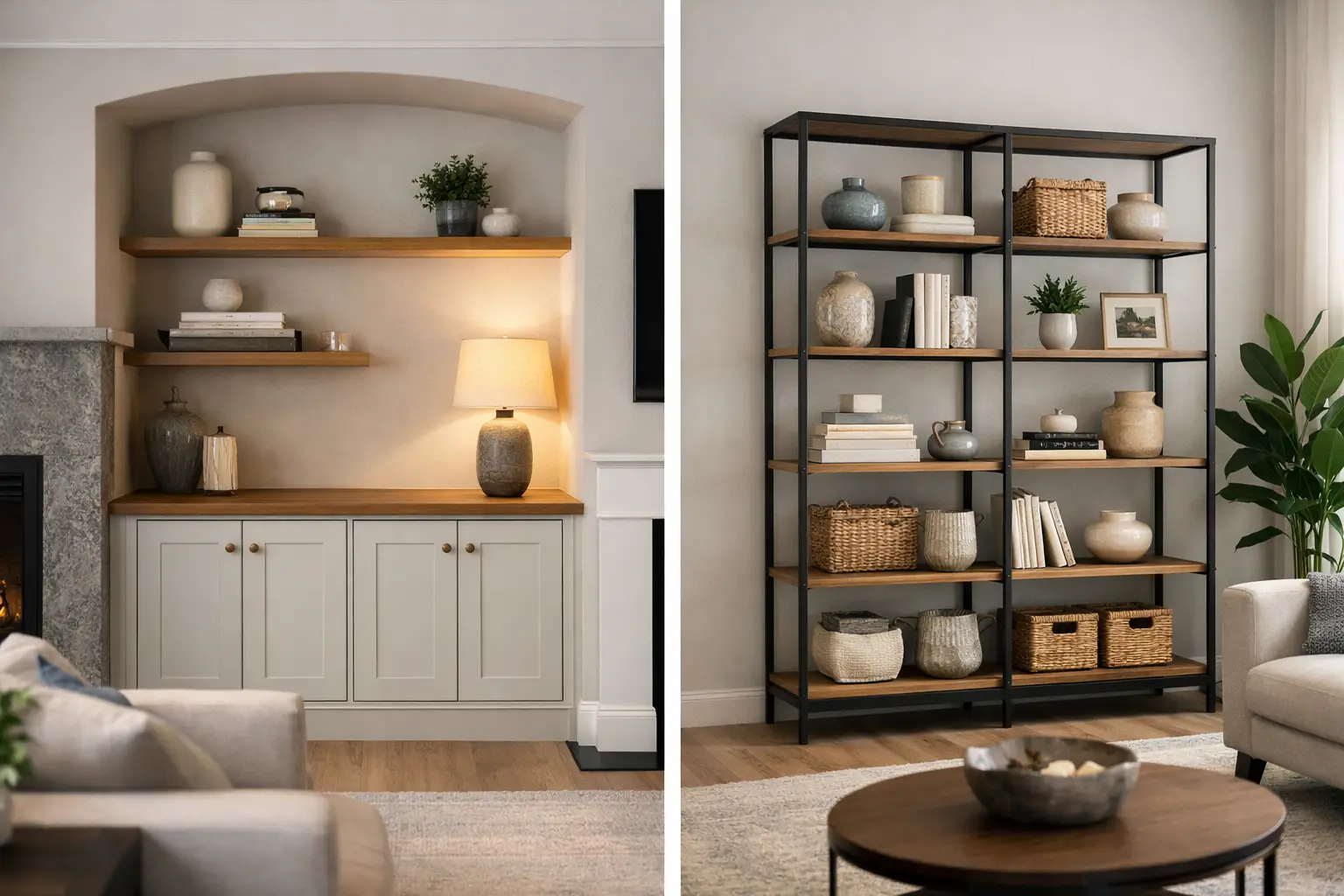
A pair of alcoves can make a room feel either beautifully resolved or permanently unfinished. That is why the choice between alcove cabinets vs shelving units matters more than many homeowners expect. In period homes, new extensions and modern flats alike, these recessed spaces can become elegant storage, a display feature, or an awkward compromise depending on how they are planned.
If you are renovating a living room, bedroom or home office, the right answer is rarely about what looks best in isolation. It comes down to how you live, what you need to store, and whether you want the alcoves to fade quietly into the architecture or play a more decorative role.
Alcove cabinets vs shelving units: the real difference
At first glance, the difference seems obvious. Cabinets hide things behind doors. Shelving leaves everything visible. But in practice, the decision affects the whole feel of a room.
Alcove cabinets tend to create a calmer, more tailored look. They sit neatly within the recess, often below a chimney breast or across the full height, and they are excellent at concealing the practical side of daily life – cables, board games, paperwork, children’s toys, spare throws, speakers and all the bits that never look quite as tidy as you hoped.
Shelving units, by contrast, feel lighter and more open. They can showcase books, ceramics, framed art and collected objects, and they often suit homeowners who want character rather than complete concealment. Open shelves can also make a room feel less built-in and less formal, particularly in smaller spaces.
Neither option is automatically better. The stronger choice depends on whether your priority is visual order, display, budget, flexibility or architectural finish.
When alcove cabinets are the better choice
Cabinets usually win when the room has to work hard. In family living rooms, multifunctional spaces and busy bedrooms, hidden storage is often what keeps the room feeling polished once real life starts happening in it.
A fitted alcove cabinet can make use of the full width, depth and height of the recess, including awkward corners, skirting details and uneven walls that freestanding furniture cannot deal with gracefully. That matters in older London properties, where alcoves are often charming but far from perfectly square. Bespoke cabinetry can be scribed neatly to the walls, creating a finish that looks intentional rather than squeezed in.
There is also a visual advantage. Lower alcove cabinets topped with a painted or timber surface can anchor the room on either side of a chimney breast. The effect is balanced, architectural and usually more luxurious than placing separate furniture pieces into the recesses. If you want your room to feel designed rather than simply furnished, cabinets often achieve that more convincingly.
Cabinets are particularly strong for concealed storage
This is where they justify the investment. If you need somewhere for routers, chargers, office supplies, children’s craft materials or anything else that makes a room look busy, doors are your friend. Even beautifully styled shelves struggle once everyday clutter starts spreading across them.
Cabinets also help when you want a cleaner backdrop for a media wall, fireplace or statement artwork. The eye is not competing with lots of visible items, so the room feels calmer and more spacious.
They usually add more long-term value
Well-designed fitted cabinetry can feel like part of the property itself. For homeowners upgrading a Victorian terrace, Edwardian semi or a carefully renovated flat, that permanence is often a positive. It gives the room a bespoke quality and can make awkward recesses feel fully resolved.
That said, cabinets are not always the right answer if you want complete flexibility. Once fitted, they are part of the room. If you frequently change layouts or prefer a more relaxed, evolving look, shelving may suit you better.
When shelving units make more sense
Shelving units earn their place when display matters as much as storage. If you have attractive hardbacks, collected glassware, plants or artwork you genuinely want to see every day, open shelving can bring personality into a room in a way closed cabinetry cannot.
They can also be a sensible option when you want to keep the alcove feeling airy. In compact rooms, full-height shelving with open backs or slimmer side profiles can feel less visually heavy than banked cabinetry, especially if the rest of the room already includes substantial furniture.
There is often a budget consideration too. Simple shelving is usually less expensive than made-to-measure cabinets with doors, hinges, internal shelving and painted finishes. For homeowners who want to improve an alcove quickly without committing to full fitted joinery, shelving can be an effective middle ground.
Open storage needs discipline
This is the part people tend to underestimate. Shelves can look beautiful in a photograph, but they ask more of you day to day. They need editing, spacing and a degree of restraint. If every shelf becomes overfilled with mixed objects, the whole room starts to feel noisier.
They are also less forgiving in homes with children, in rooms that collect dust quickly, or in spaces where you need proper hidden storage rather than styling opportunities. So while shelving can look effortless, it often works best when the practical storage has been solved elsewhere.
Style, architecture and how the room should feel
The architecture of your home should influence the choice. In period properties with chimney breasts, picture rails and original mouldings, alcove cabinets can be designed to sit beautifully within the existing character. Shaker-style fronts, heritage colours and carefully proportioned shelving above cabinets often feel especially at home here.
In more contemporary spaces, shelving can create a lighter, gallery-like effect. Clean lines, slimmer profiles and open composition can suit modern flats or extended kitchens where you do not want every storage element to feel heavy or traditional.
A combination often works best. Lower cabinets with open shelving above give you the best of both approaches – concealed storage where you need it, and room to display books or objects without letting the alcove become visually chaotic. For many homes, this is the sweet spot.
Budget, practicality and installation
If you are comparing alcove cabinets vs shelving units purely on cost, shelving will usually appear more affordable at the start. There is less material, less hardware and generally a simpler installation. But upfront cost is only one part of the picture.
If shelving leaves you short on usable storage, you may end up buying additional furniture elsewhere in the room. That can eat into the apparent saving and leave the overall layout feeling less cohesive. Cabinets cost more because they do more. They hide, organise and maximise the recess in a way open shelves cannot.
Installation is also worth thinking about properly. Alcoves are rarely straightforward. Floors slope, plaster bows and chimney breast dimensions vary from side to side. Bespoke fitted furniture deals with those imperfections neatly, which is one reason it tends to look more refined than off-the-shelf options.
For homeowners who want premium results without wasting space, a tailored solution often proves better value over time than trying to adapt standard units to an irregular alcove.
Which option suits each room?
In living rooms, cabinets are usually the stronger practical choice, especially if the space needs to store media equipment, family essentials or anything you do not want on display. Shelving can still work well above or beside them, especially for books and styling.
In bedrooms, alcove cabinets can create much-needed hidden storage for folded clothes, accessories or linens, particularly where floor space is limited. Open shelving in bedrooms tends to work best when it is used sparingly and kept decorative.
In home offices, the answer depends on your working style. If you want a clean backdrop and somewhere to hide paperwork, cabinets are ideal. If you prefer reference books and objects within easy reach, shelving can be useful, though many people benefit from a combination of both.
So, should you choose cabinets or shelving?
Choose alcove cabinets if you want the room to feel tailored, calm and highly functional. They are the better investment when you need proper storage, want to make the most of awkward recesses and prefer a polished finish that complements the architecture of the space.
Choose shelving units if display is the priority, your storage needs are lighter, or you want a more open and flexible look. They can be very effective, but they work best when they are curated rather than overburdened.
For many homes, the smartest solution is not one or the other. It is a bespoke mix of closed storage below and open shelving above, designed around the proportions of the room and the way you actually use it. That is often where an alcove stops being an afterthought and starts becoming one of the best features in the house.
If you are planning around uneven walls, a chimney breast or a room that needs to look elegant and work hard every day, it is worth treating the alcove as part of the architecture rather than a gap to fill.