








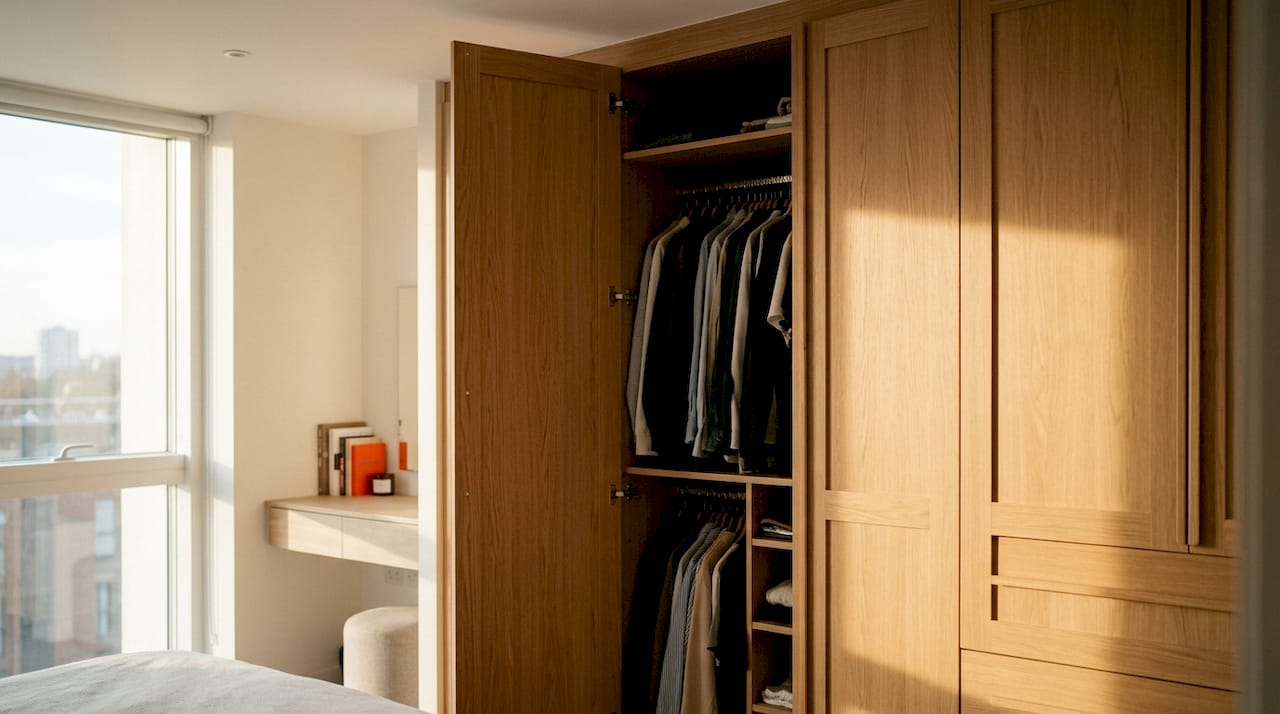
Custom storage is defined as bespoke, built-in furniture designed to fit a specific room’s exact dimensions, layout, and lifestyle needs. Unlike mass-produced flat-pack units, tailored storage designs use every available centimetre, including alcoves, sloped ceilings, under-stair voids, and loft spaces. The role of custom storage in homes goes well beyond tidiness. It shapes how a space feels, how efficiently you move through it, and what a buyer will pay for it. Buyers may pay up to £12,000 more for a property with well-planned storage. That figure alone reframes bespoke joinery as an investment rather than a luxury. At Finest Furniture Studio, we work with homeowners across Richmond, Wimbledon, Putney, Fulham, Chelsea, and beyond to turn underused spaces into fitted wardrobes, TV media walls, and loft storage that genuinely improve daily life.
What are the main benefits of custom storage in homes?
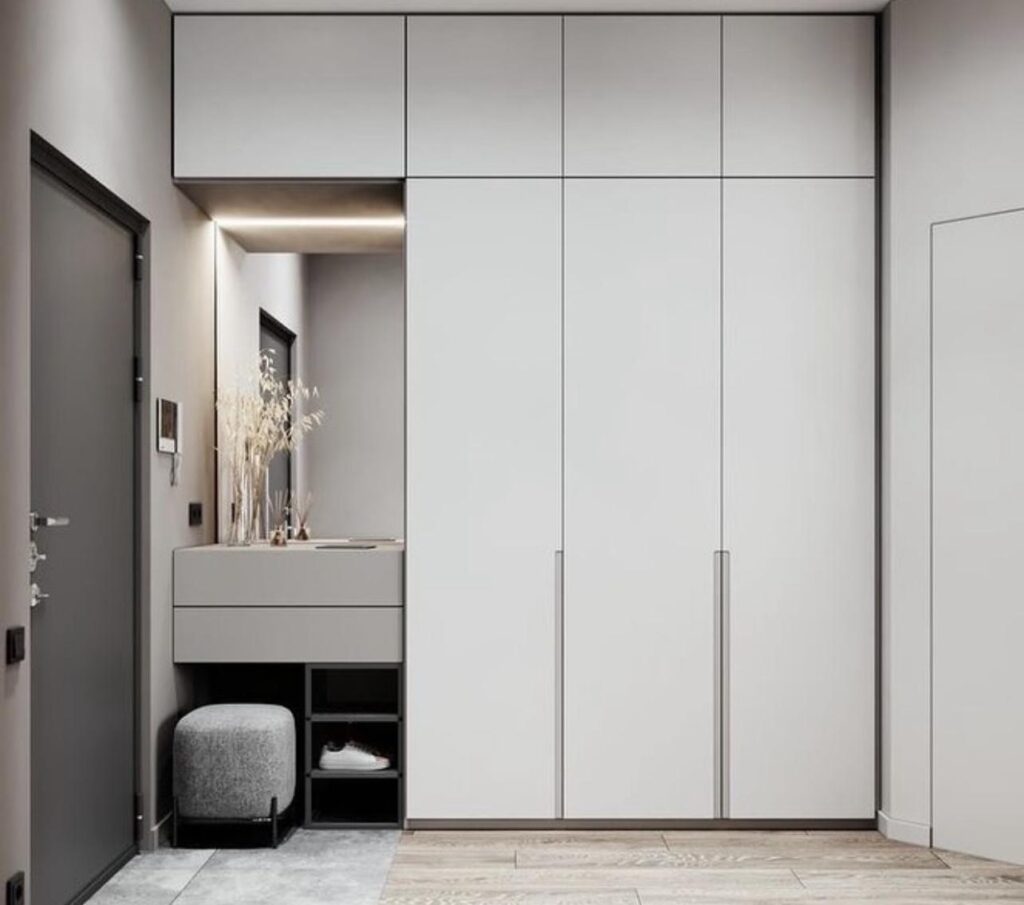
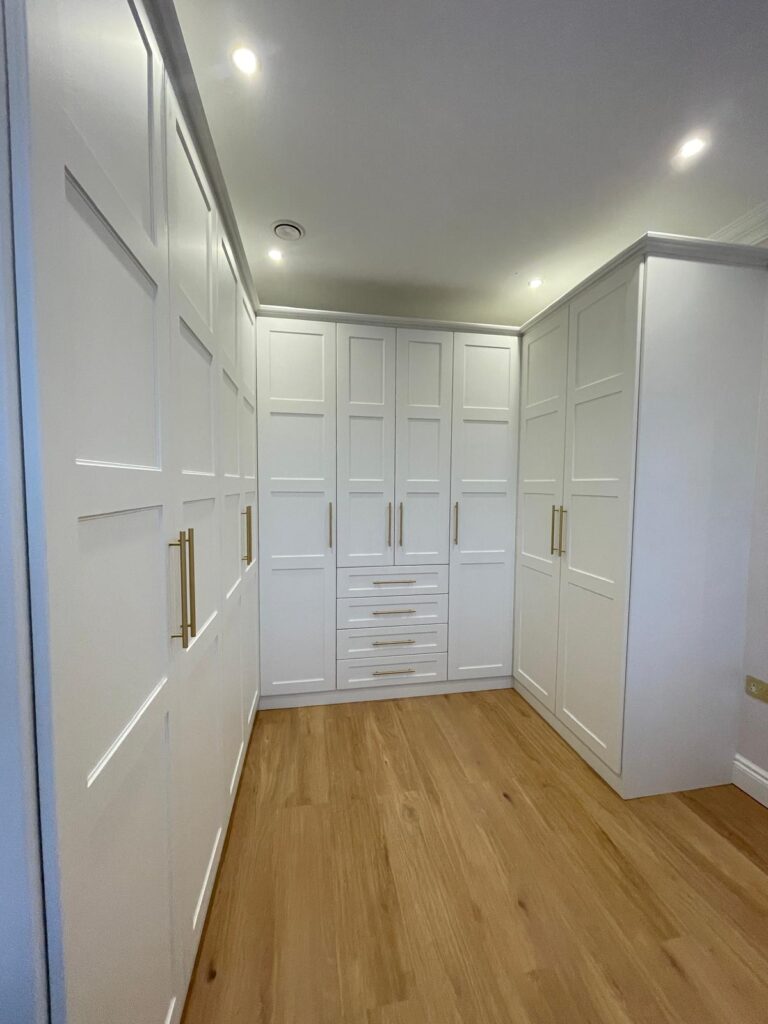
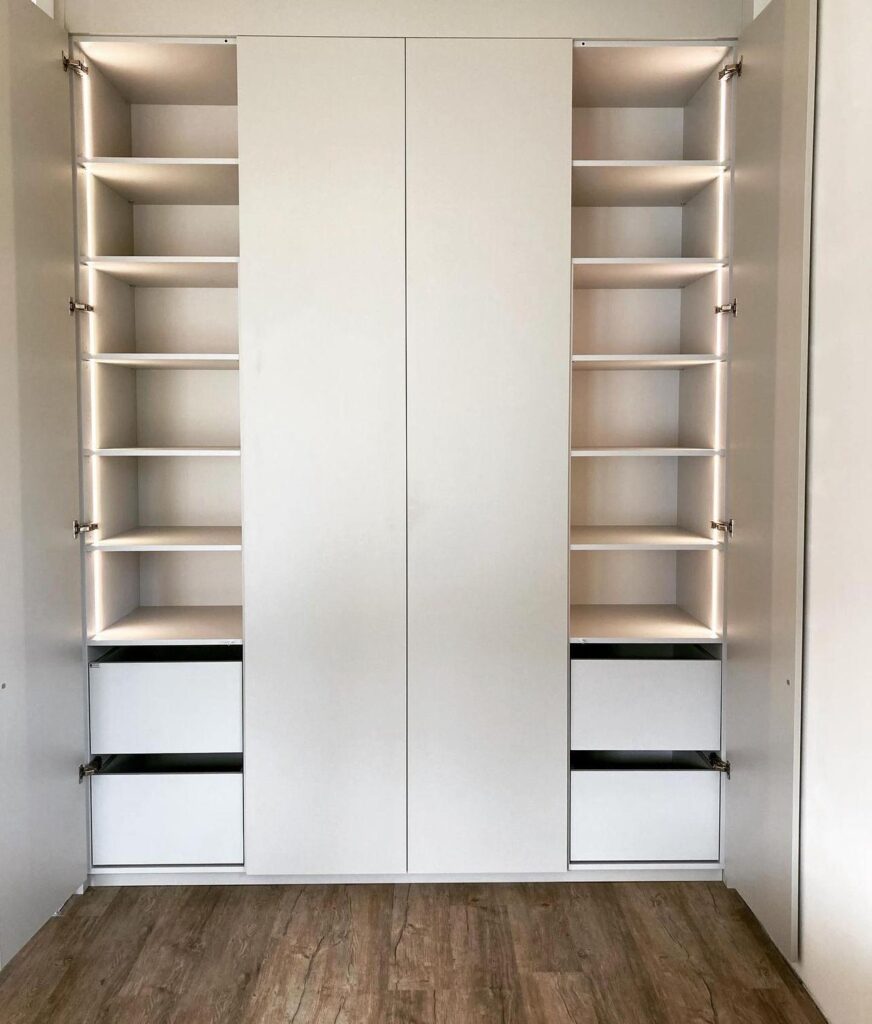
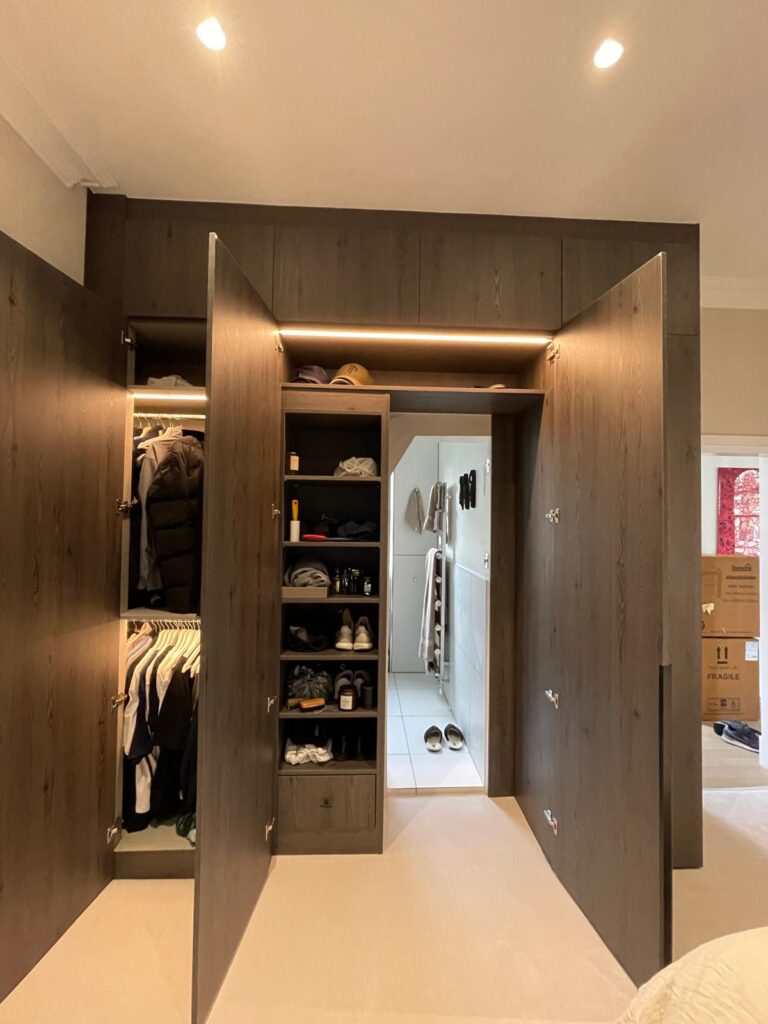
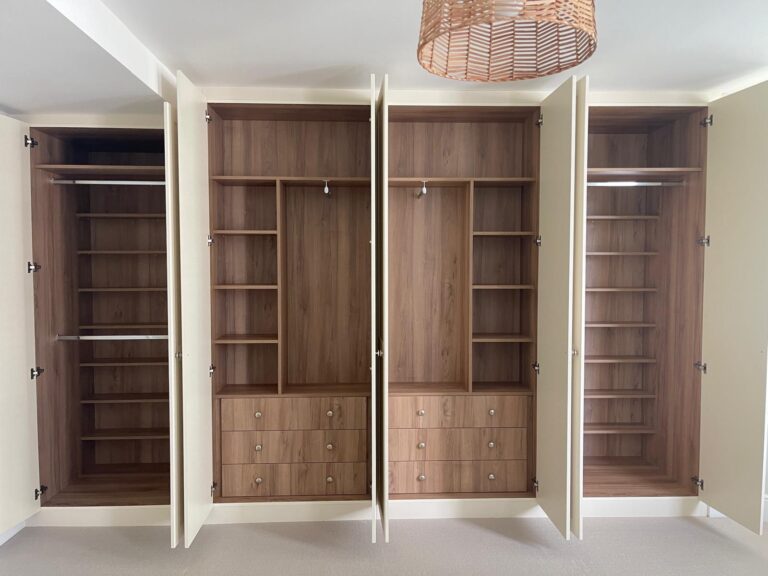
Bespoke storage solves problems that off-the-shelf furniture cannot. A standard wardrobe leaves gaps at the ceiling, wastes corner space, and rarely matches the room’s proportions. A fitted wardrobe runs floor to ceiling, eliminating the dust-collecting void above and making the room appear taller and more ordered.
Space that would otherwise be wasted
Custom joinery converts sloped ceilings, alcoves, and awkward corners into functional storage without leaving dead space. A chimney breast alcove in a Victorian terrace, for example, becomes a pair of deep shelving units with integrated lighting. The room gains storage without losing floor area. That matters enormously in the compact homes typical of London and the surrounding commuter belt.
- Alcove wardrobes use recessed wall space that flat-pack units cannot reach.
- Under-stair storage converts a triangular void into drawers, shelving, or a home office nook.
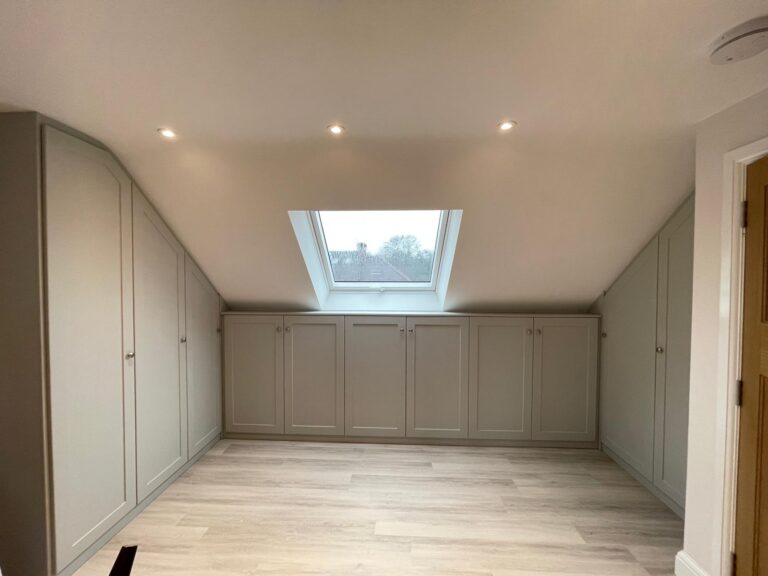
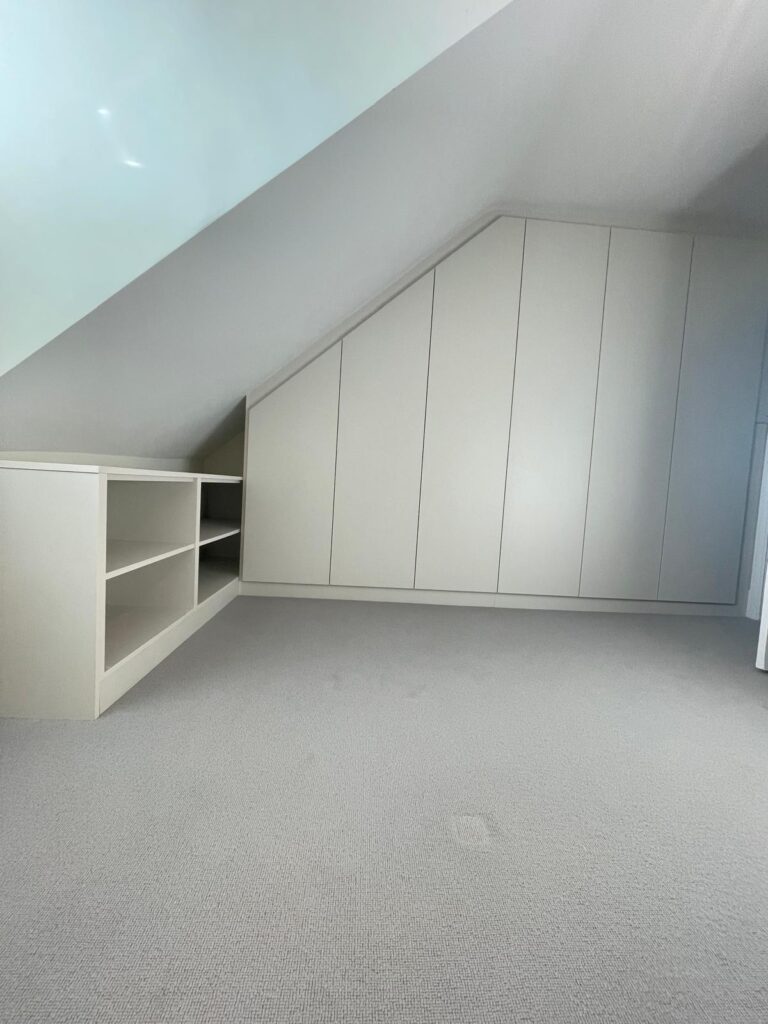
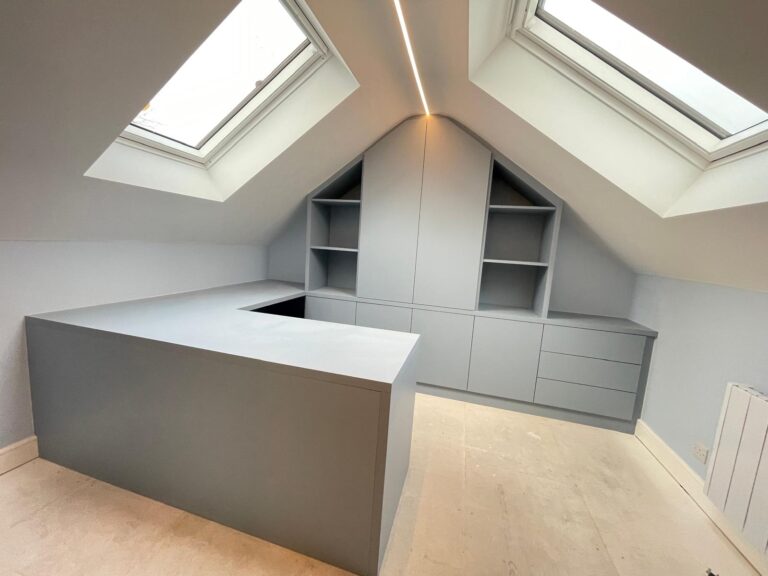
- Loft fitted wardrobes follow the roofline precisely, making sloped rooms fully usable.
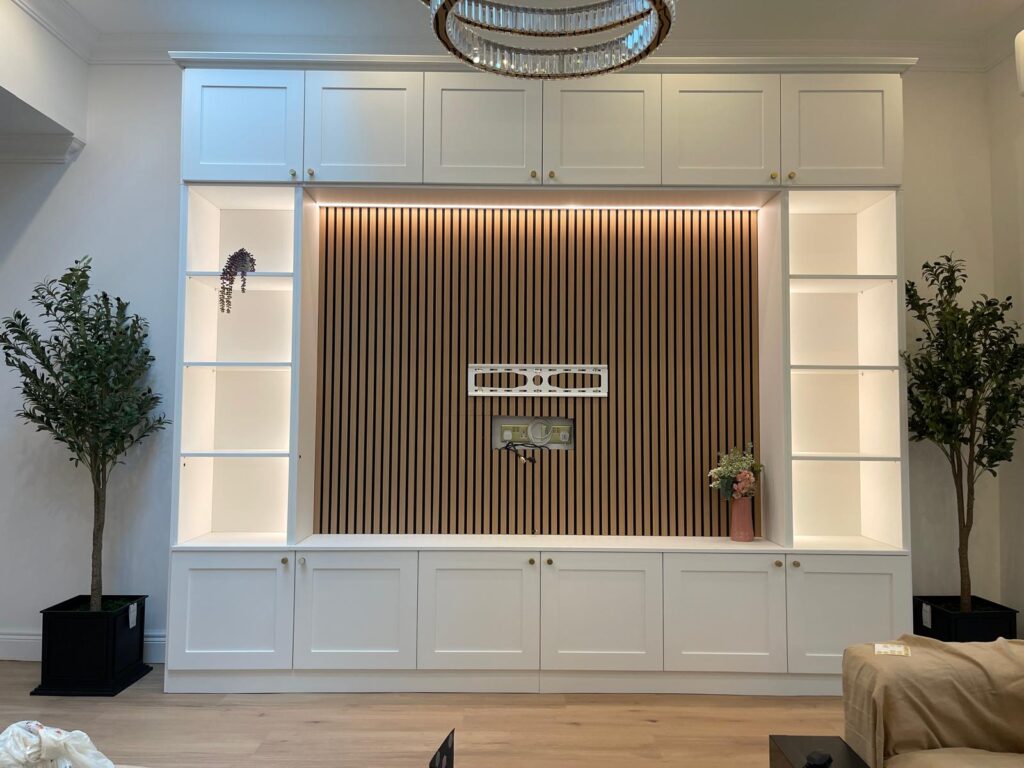
- Media walls with integrated cabinetry replace freestanding units and hide cables, consoles, and speakers behind clean panel fronts.
Under-stairs storage costs between £800 and £3,500 depending on complexity. That range reflects the difference between a simple set of pull-out drawers and a fully fitted unit with lighting, a desk, and bespoke shelving. Either option delivers a return that generic furniture cannot match.
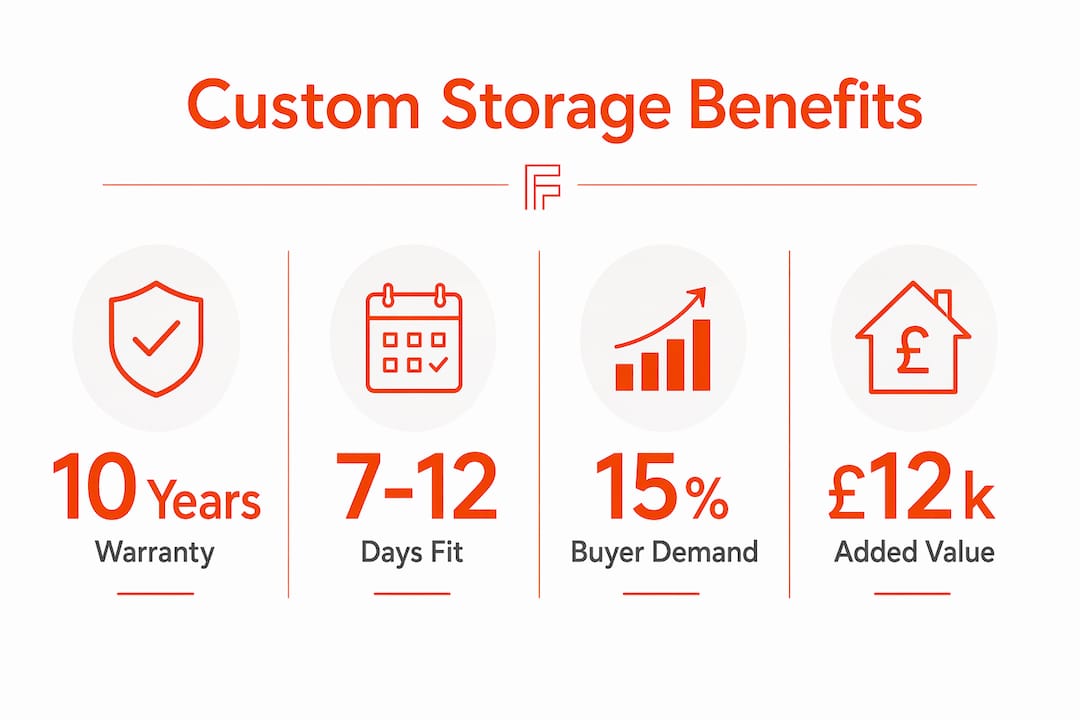
Built-in storage can deliver 150–200% ROI, making it one of the highest-returning home improvements available to UK homeowners.
Pro Tip: Measure the full height of your room before specifying any fitted wardrobe. A floor-to-ceiling design in a standard 2.4-metre room adds roughly 30% more hanging and shelf space compared with a standard 2-metre unit.
Wellbeing and daily routine
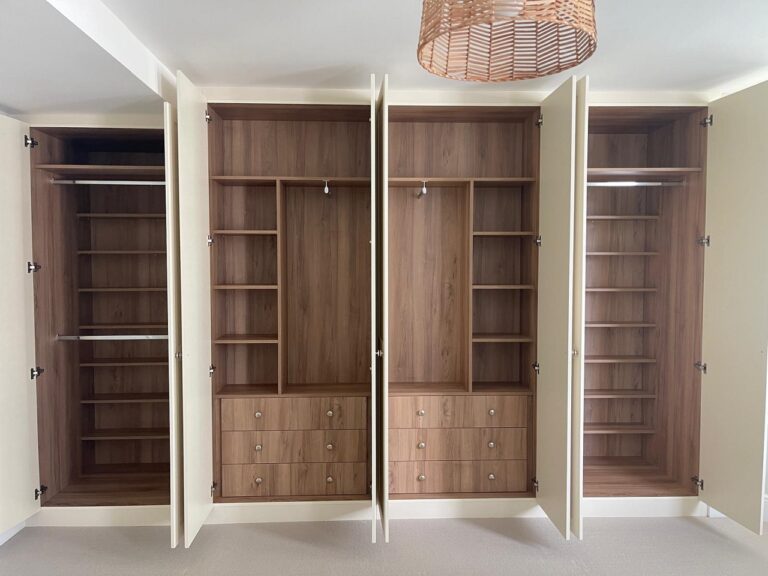
Fitted wardrobes and bespoke furniture reduce clutter and improve daily routines by providing layouts designed around how you actually live. A wardrobe with a dedicated shoe rack, double-hanging rail, and pull-out trouser press is faster to use every morning than a generic unit where everything competes for space. Less clutter means less visual noise, and research consistently links tidy environments to lower stress levels.
Clever storage solutions make small rooms feel larger and more open, improving the overall home experience. Utilising under-bed, over-bed, and built-in shelving keeps belongings out of sight and maximises floor space. That effect is particularly valuable in one and two-bedroom flats across Central London, Brixton, and Hammersmith, where every square metre counts.
Financial return and resale value
15% of British buyers prioritise homes with ample storage over those with gardens. That statistic shows storage is no longer a secondary consideration for buyers. It is a deciding factor. A home in Wimbledon or Kingston with well-fitted wardrobes, a media wall, and organised loft space stands out in a competitive market.
Which types of custom storage solutions are commonly used in UK homes?
The most popular categories of bespoke storage each serve a distinct purpose. Choosing the right type depends on your room layout, lifestyle, and budget.
Fitted wardrobes and alcove shelving
Fitted wardrobes are the most requested bespoke storage product in UK homes. They are built directly into the room structure, running wall to wall and floor to ceiling. Shaker-style doors suit period properties in Barnes and Chiswick. Handleless, high-gloss panels suit modern apartments in Fulham and Chelsea. Wood-effect finishes offer warmth without the cost of solid timber.
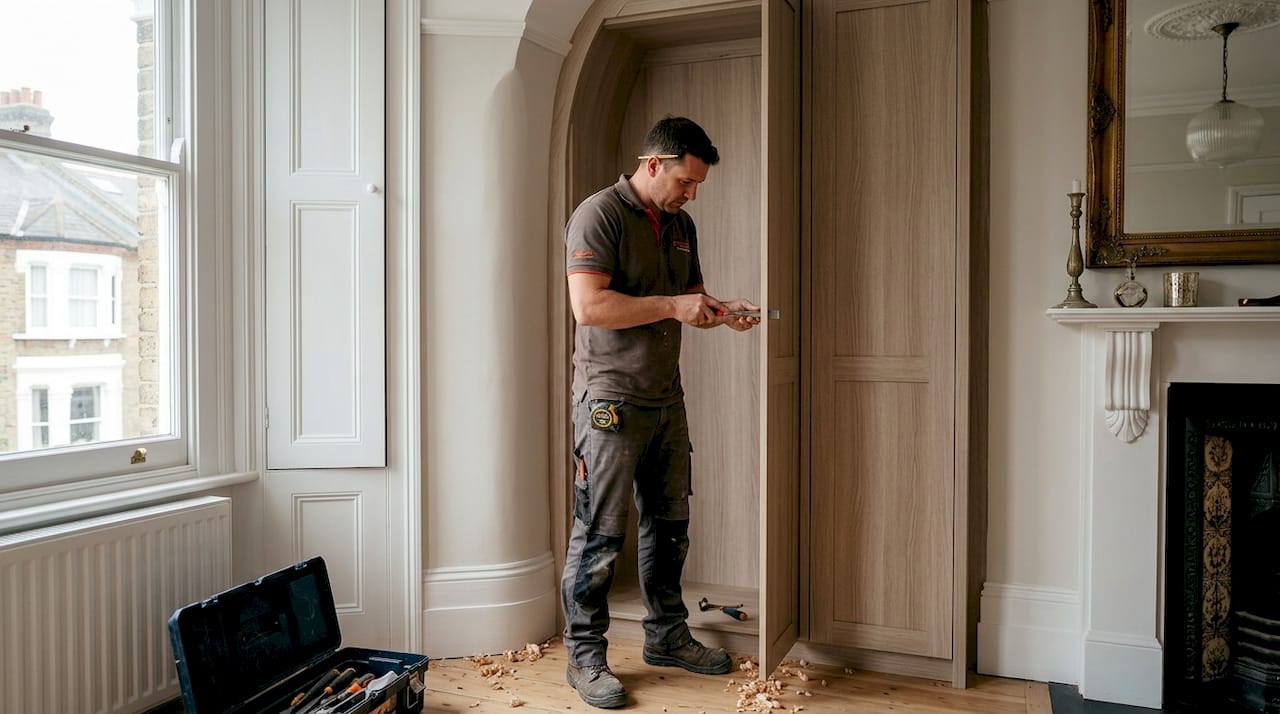
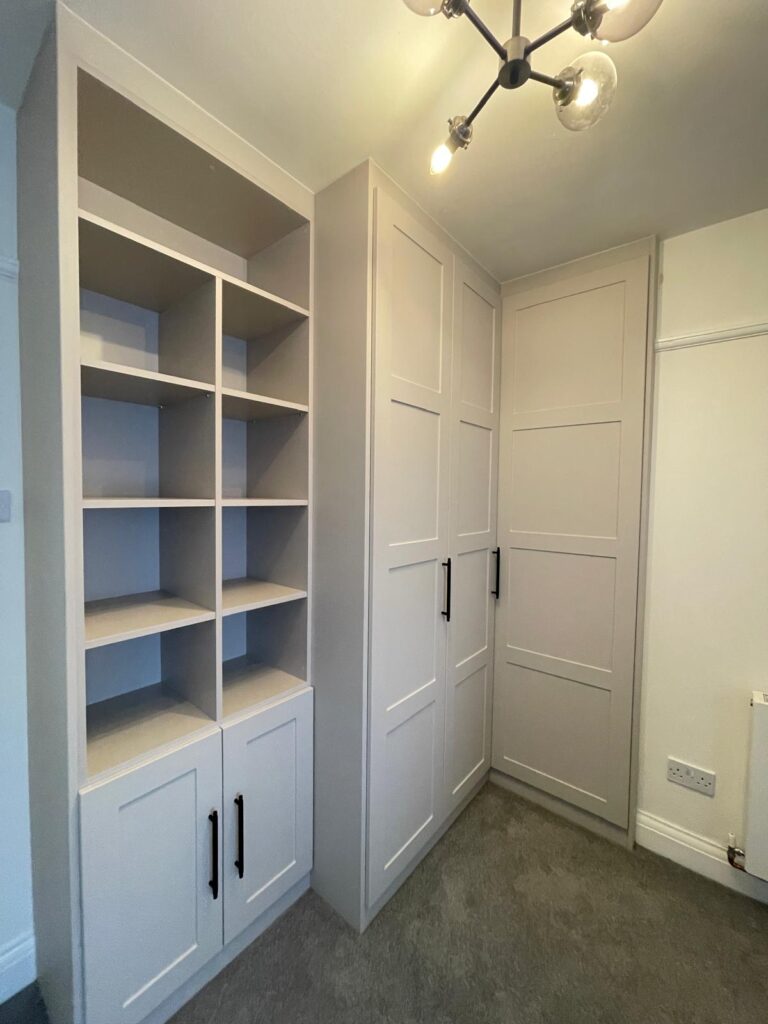
Alcove storage works particularly well in Victorian and Edwardian homes, where chimney breast recesses create natural cavities on either side of a fireplace. A pair of fitted alcove units with open shelving above and closed cabinetry below provides both display space and concealed storage in a single design.
Pro Tip: For alcove wardrobes in period properties, match the door profile to existing architrave details. That one decision makes a bespoke unit look as though it has always been part of the house.
Under-stair storage and loft solutions
Under-stair voids are among the most underused spaces in UK homes. A well-designed under-stair storage unit can hold coats, shoes, a vacuum cleaner, and a charging station, all behind a flush door that disappears into the hallway. Loft boarding with fitted wardrobes following the roofline is equally effective. Loft boarding costs £1,000–£2,500 and is a cost-effective storage expansion in typical semi-detached UK homes. Pairing boarding with fitted loft wardrobes turns a dusty attic into a usable dressing room or home office.
Custom media walls and integrated cabinetry
A TV media wall is no longer just a place to mount a screen. Modern media walls integrate open shelving, closed cabinetry, ambient lighting, and cable management into a single architectural feature. In living rooms across Twickenham, Ealing, and Walton-on-Thames, a well-designed media wall replaces a cluster of freestanding units and gives the room a clear focal point.
| Storage type | Best suited to | Key design feature |
|---|---|---|
| Fitted wardrobes | Bedrooms of all sizes | Floor-to-ceiling, bespoke interior layout |
| Alcove shelving | Victorian and Edwardian rooms | Matches existing architecture |
| Under-stair units | Hallways and ground floors | Flush doors, pull-out drawers |
| Loft fitted wardrobes | Loft conversions | Follows roofline, no wasted angles |
| Media walls | Living rooms and reception rooms | Integrated lighting and cable management |
Tailored kitchen storage
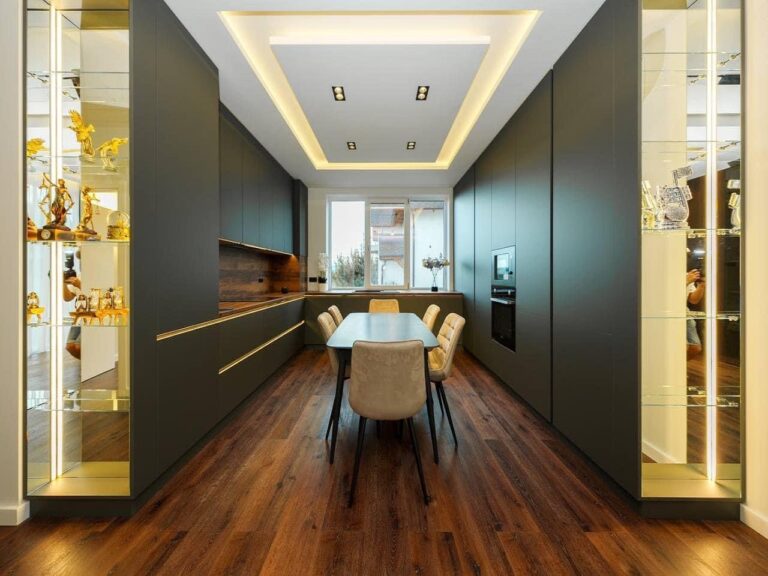
60% of new kitchen storage now uses handleless push-to-open mechanisms. That shift reflects a preference for clean lines and minimal visual clutter in kitchen design. Handleless cabinetry with internal pull-out organisers, deep pan drawers, and integrated bin units turns a standard kitchen into a highly efficient workspace. Bespoke kitchen storage is particularly effective in galley layouts and open-plan spaces where every cabinet must earn its place.
How to plan and implement custom storage for maximum impact
Planning bespoke storage well before ordering saves time, money, and disappointment. A clear process produces better results than making decisions on the fly.
-
Assess your layout and storage needs. Walk through each room and note what you currently store, where you store it, and what frustrates you. Identify underused spaces: the alcove beside the chimney breast, the void under the stairs, the sloped ceiling in the loft. Write down dimensions, including ceiling height, as this single measurement often determines which storage type is feasible.
-
Choose materials and finishes that suit your décor. Shaker doors in a painted finish work in period homes. Handleless slab doors in matt lacquer suit contemporary interiors. Wood-effect foils offer durability and warmth at a lower cost than solid timber. The finish you choose affects both the look and the long-term maintenance of the unit.
-
Work with a specialist from the start. A bespoke joinery specialist measures your space precisely and produces a design that accounts for skirting boards, ceiling cornices, and structural walls. Bespoke joinery produces durable, stylish storage that blends with your home’s design and lasts far longer than mass-produced alternatives. At Finest Furniture Studio, every project begins with a free design visit, so you see exactly what you are getting before any commitment is made.
-
Set a realistic budget and understand cost ranges. Under-stair storage starts at around £800. A full fitted wardrobe for a double bedroom typically costs more, depending on size, materials, and internal fittings. Loft boarding with fitted storage sits in the £1,000–£2,500 range. Working with a specialist who offers a fixed quote prevents budget surprises. For homeowners managing a broader property upgrade, consulting a property asset management adviser can help prioritise which improvements deliver the strongest return.
-
Plan for maintenance and long-term value. Bespoke joinery built from quality materials requires minimal maintenance. Soft-close hinges and drawer runners last for years without adjustment. A 10-year guarantee, such as the one offered by Finest Furniture Studio, gives you confidence that the investment holds its value.
Pro Tip: Always request a physical sample of your chosen door finish before signing off on a design. Colours and textures look different under showroom lighting than they do in your home.
What are the latest trends shaping custom storage design in 2026?
The bespoke storage market is growing quickly. Demand for bespoke joinery services increased by 34% between 2022 and early 2026. That growth reflects a clear shift away from flat-pack solutions toward craftsmanship that fits unique UK home layouts.
The key trends defining 2026 are:
- Bespoke joinery over flat-pack. Homeowners across Richmond, Wimbledon, and Kingston are choosing fitted furniture that lasts decades over units that need replacing every few years. The quality gap between the two is now widely understood.
- Handleless and push-to-open mechanisms. Clean, handle-free fronts dominate new wardrobe and kitchen installations. They suit both contemporary and transitional interiors and are easier to wipe clean.
- Sustainable materials. FSC-certified timber, low-VOC lacquers, and recycled board cores are increasingly requested by homeowners who want storage that aligns with their environmental values.
- Home-working integration. Since remote working became standard for many households, fitted storage that incorporates a concealed desk, monitor shelf, or cable management system has become a priority. A media wall with a fold-out desk is now a common request in flats across Hammersmith and Brixton.
- Loft conversion storage. As homeowners extend upward rather than outward, loft wardrobe ideas that follow sloped ceilings precisely are among the most requested designs. A fitted loft wardrobe turns an otherwise awkward space into a fully functional dressing room.
Bespoke joinery enquiries increased by over one third as homeowners prefer craftsmanship that fits unique UK home layouts. That trend shows no sign of slowing. The combination of rising property prices and limited space in London and the surrounding commuter belt makes every square metre worth designing properly.
Key takeaways
Custom storage is the single most effective way to maximise space, reduce clutter, and add measurable financial value to a UK home.
| Point | Details |
|---|---|
| Financial return | Built-in storage delivers 150–200% ROI and can add up to £12,000 to a property’s value. |
| Space efficiency | Bespoke joinery converts alcoves, loft angles, and under-stair voids into fully functional storage. |
| Buyer appeal | 15% of British buyers prioritise storage over gardens, making fitted solutions a strong resale asset. |
| Design flexibility | Custom storage matches any room style, from Shaker period finishes to handleless contemporary panels. |
| Planning process | Start with a free design visit, set a clear budget, and choose a specialist who offers a long-term guarantee. |
Why I think most homeowners underestimate storage until it’s too late
Working with clients across London and the surrounding areas, I have noticed a consistent pattern. Homeowners invest in kitchens, bathrooms, and décor, but treat storage as an afterthought. They buy a flat-pack wardrobe, fill it within six months, and then wonder why the bedroom still feels cluttered.
The truth is that storage shapes how a home feels more than almost any other single element. A bedroom with a well-fitted wardrobe running the full width of one wall feels calm and ordered. The same room with a freestanding unit and clothes piled on a chair feels chaotic, regardless of how nice the bedding is.
What I find most striking is how often clients in Putney, Chiswick, and Barnes tell me they wish they had done it sooner. The fitting takes 7–12 days. The result lasts decades. The hesitation, in most cases, comes from not knowing what to ask for or what it will cost. A free design visit removes both of those barriers immediately.
Storage is not furniture. It is architecture. When you treat it that way, every decision, from the door profile to the internal layout, becomes part of a coherent plan rather than a series of compromises. That shift in thinking is what separates a home that works from one that merely looks acceptable.
— Aureliu
Bespoke storage solutions from Finest Furniture Studio
Finest Furniture Studio designs and installs fitted wardrobes, TV media walls, loft storage, and alcove cabinetry across West London and the surrounding areas, including Richmond, Wimbledon, Putney, Fulham, Chelsea, Chiswick, Kingston, and Twickenham.
Every project begins with a free design visit at your home. We measure precisely, discuss your layout and lifestyle, and produce a design that fits your space and your budget. Installation takes 7–12 days, and we remove and dispose of your old wardrobe at no extra charge. All work carries a 10-year quality guarantee. Whether you need a bespoke fitted wardrobe in West London or a full media wall with integrated storage, our team is ready to help. Call us on 07468 150807, message us on WhatsApp, or visit us at 124 City Road, Kemp House, London, EC1V 2NX to arrange your free consultation.
FAQ
What is the role of custom storage in a home?
Custom storage is built to fit a specific room’s exact dimensions, converting underused spaces into organised, functional areas. It reduces clutter, improves daily routines, and increases a property’s resale value.
How much does bespoke fitted storage cost in the UK?
Under-stair storage typically costs £800–£3,500, and loft boarding with fitted storage costs £1,000–£2,500. Fitted wardrobe costs vary by size, materials, and internal fittings.
Does custom storage add value to a property?
Buyers may pay up to £12,000 more for a home with well-planned storage, and 15% of British buyers prioritise storage over gardens when choosing a property.
How long does fitted wardrobe installation take?
Finest Furniture Studio completes most fitted wardrobe installations within 7–12 days, including removal and disposal of any existing wardrobe.
Which rooms benefit most from bespoke storage solutions?
Bedrooms, hallways, loft conversions, and living rooms benefit most. Fitted wardrobes, under-stair units, loft storage, and media walls each address specific layout challenges that standard furniture cannot solve.