


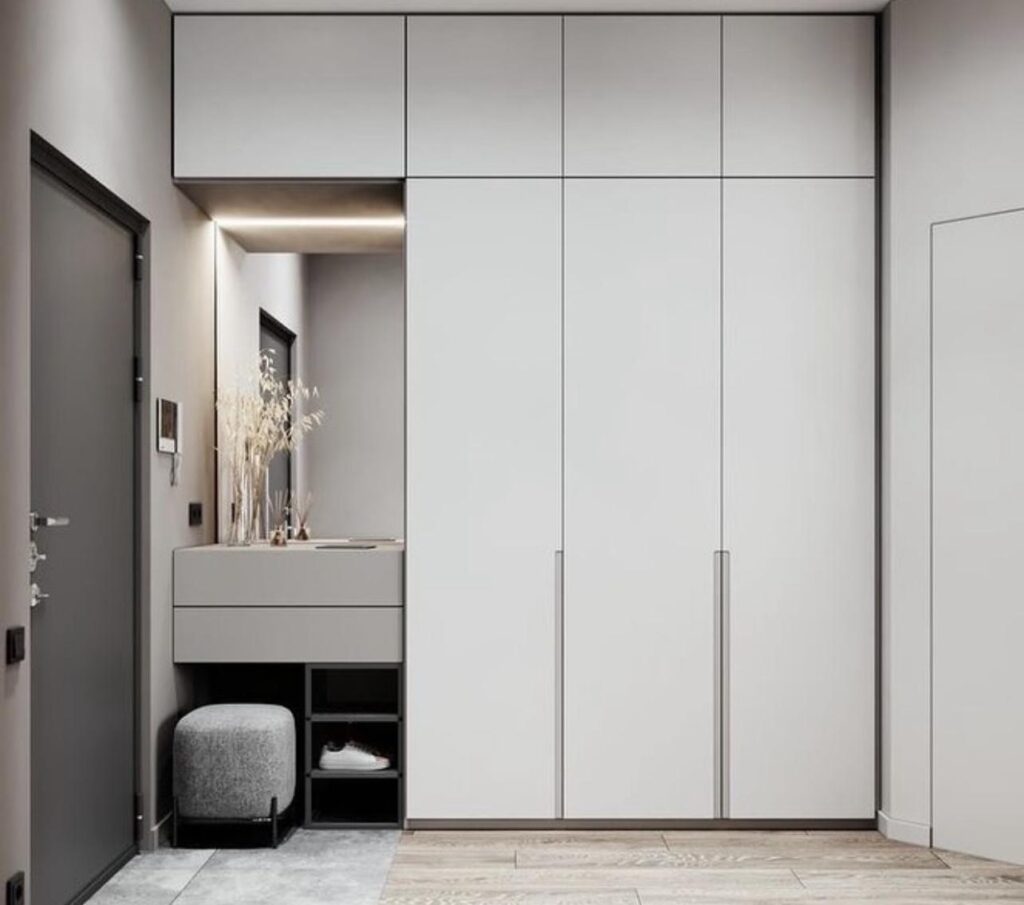
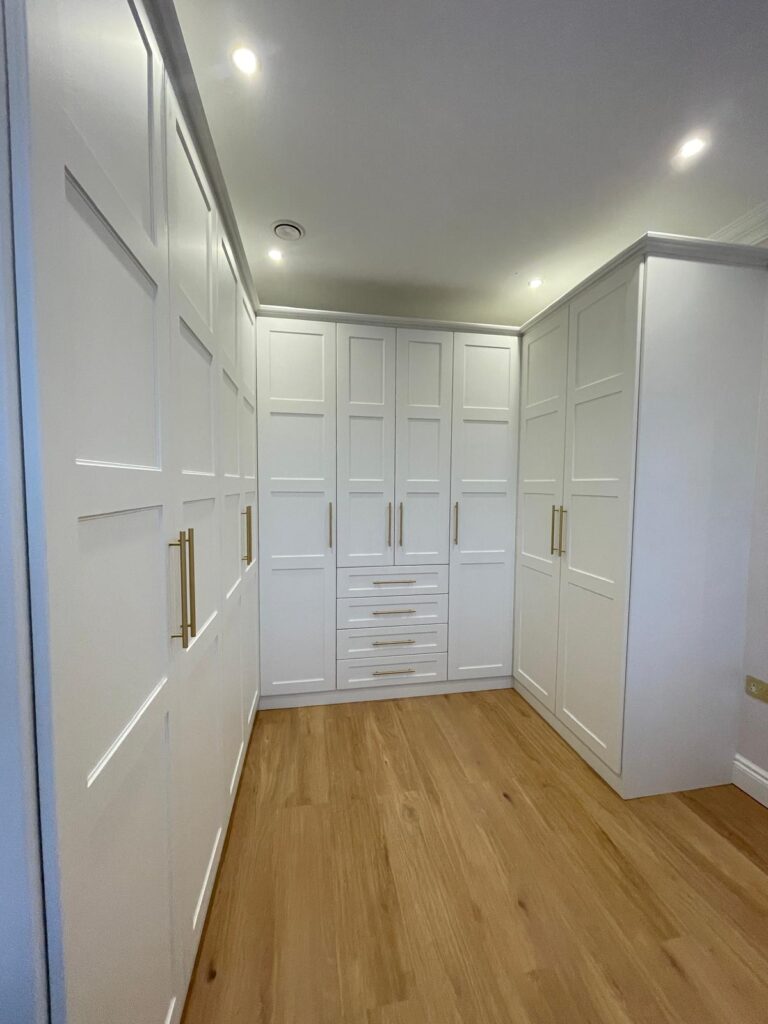
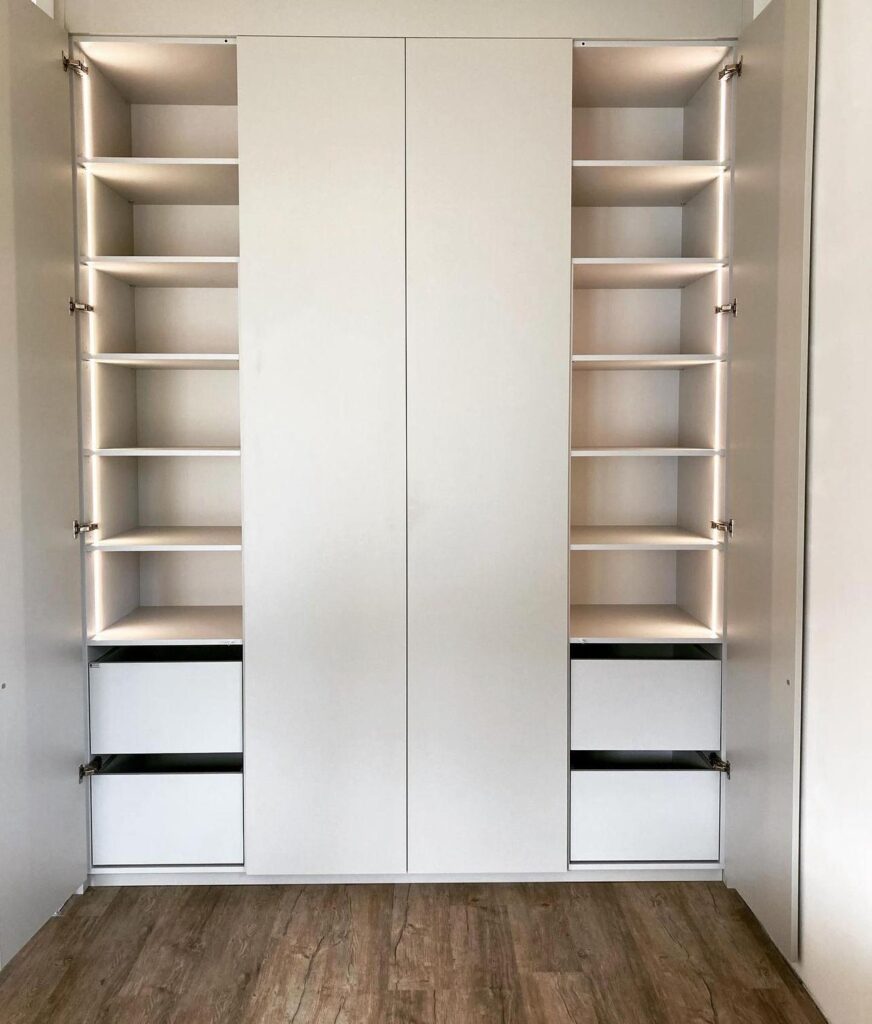

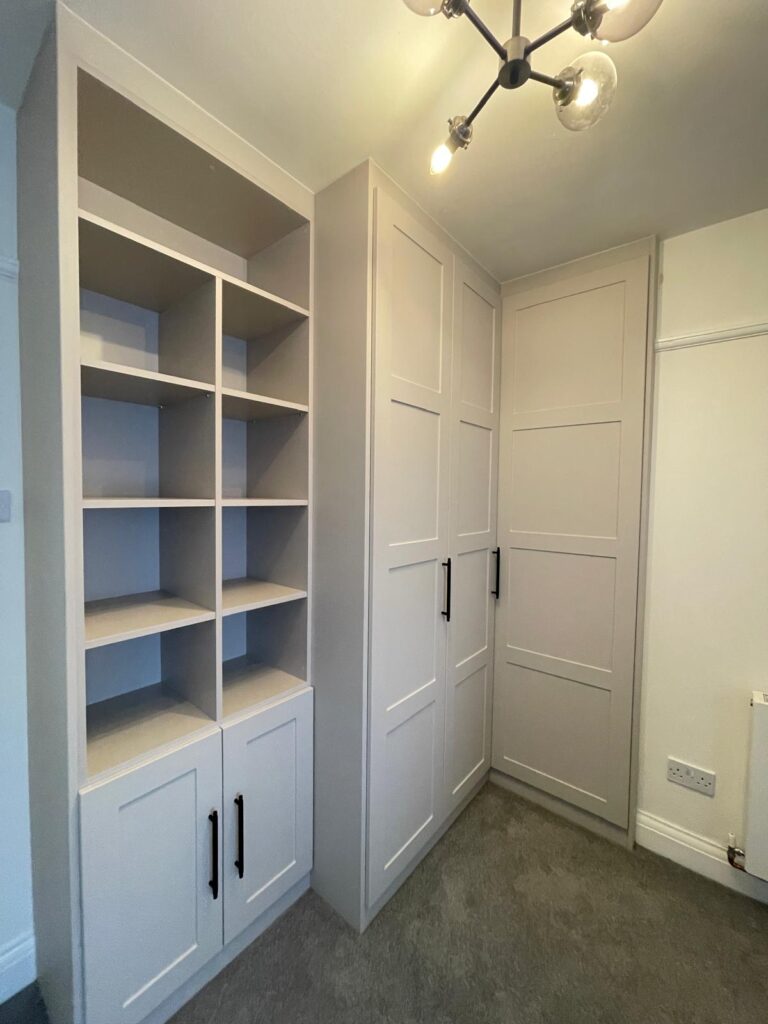



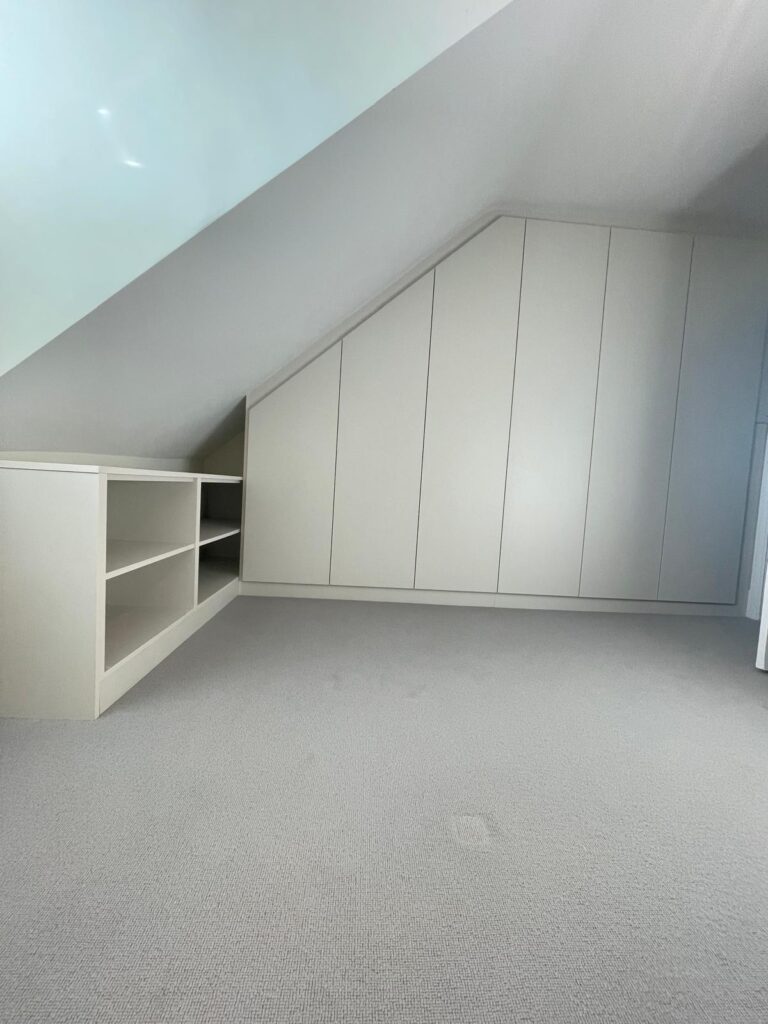

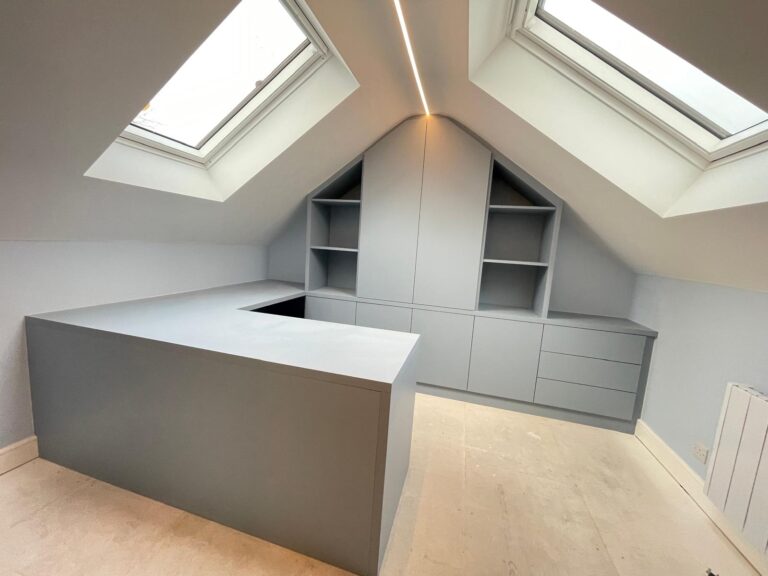
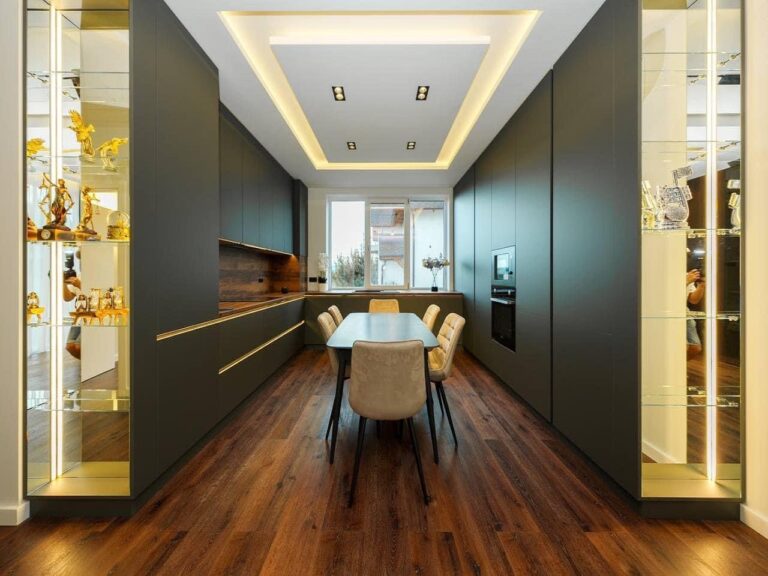
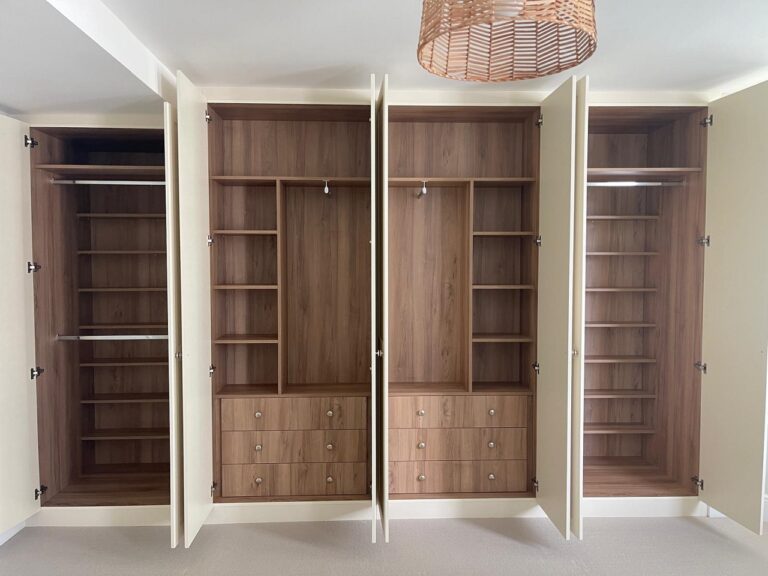

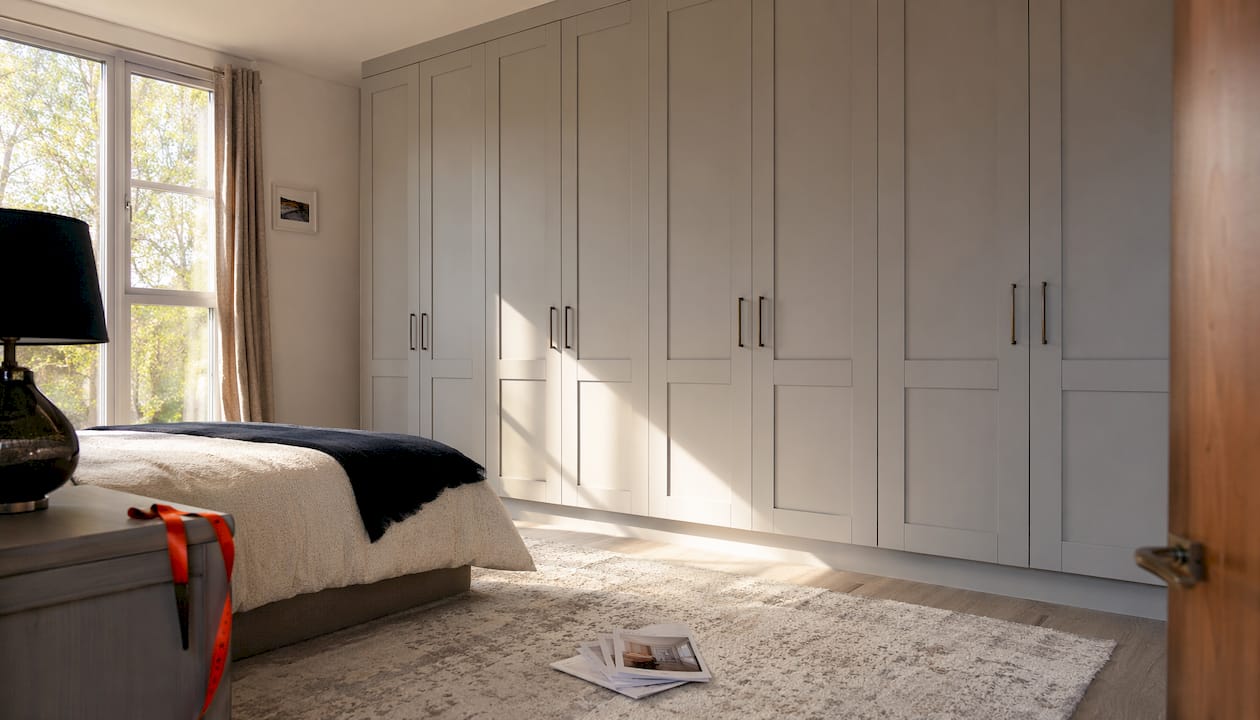
Testimonials are defined as authentic, first-hand endorsements from real customers that directly influence furniture purchase decisions by providing social proof and emotional reassurance. The role of testimonials in furniture buying is not decorative. It is structural. According to 2023 Trustpilot data, 89% of UK consumers check reviews before purchases over £100, rising to 94% for first-time service users. That figure tells you something important: when a homeowner is choosing a bespoke fitted wardrobe for their Richmond or Wimbledon home, they are almost certainly reading what previous buyers have said before they ever pick up the phone. A 2026 study found that 87% of shoppers say brand trust influences their decision to buy high-value home items, and 66% admit a wrong decision affects their daily life. Testimonials are the primary tool buyers use to manage that risk.
How do testimonials build trust in bespoke furniture purchases?
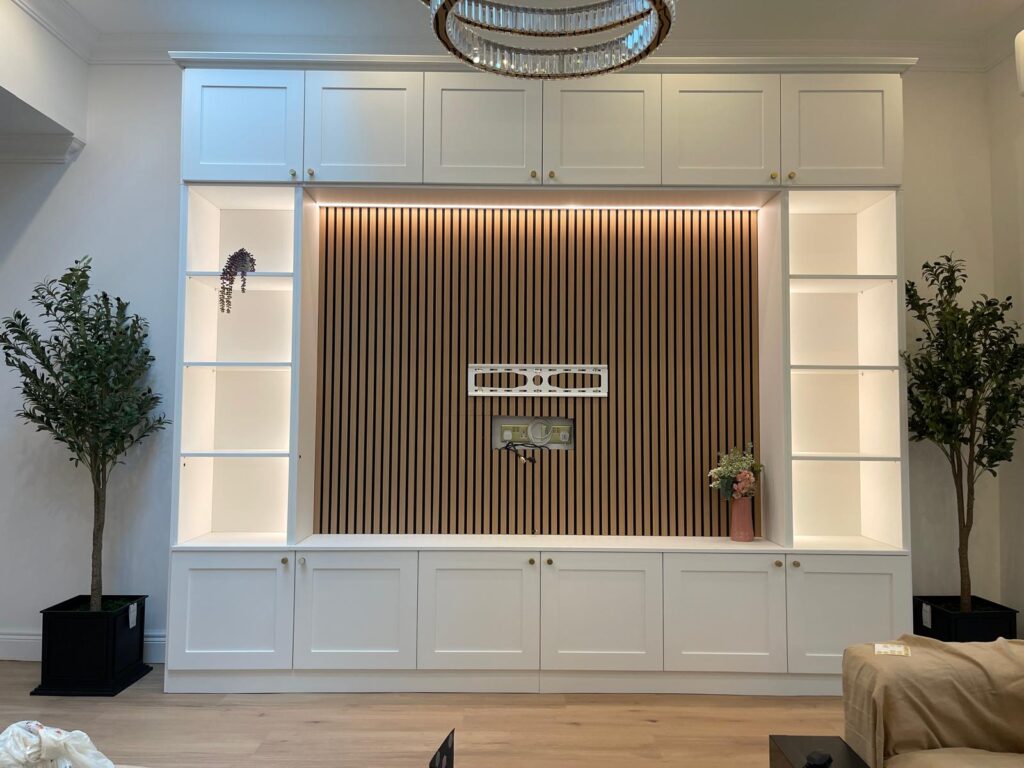
Trust in bespoke and fitted furniture is built differently from trust in off-the-shelf products. When you commission a custom wardrobe or a fitted media wall, you are making a decision based on something that does not yet exist. You cannot sit in it, open its doors, or see how it fits your specific alcove. Testimonials fill that gap.
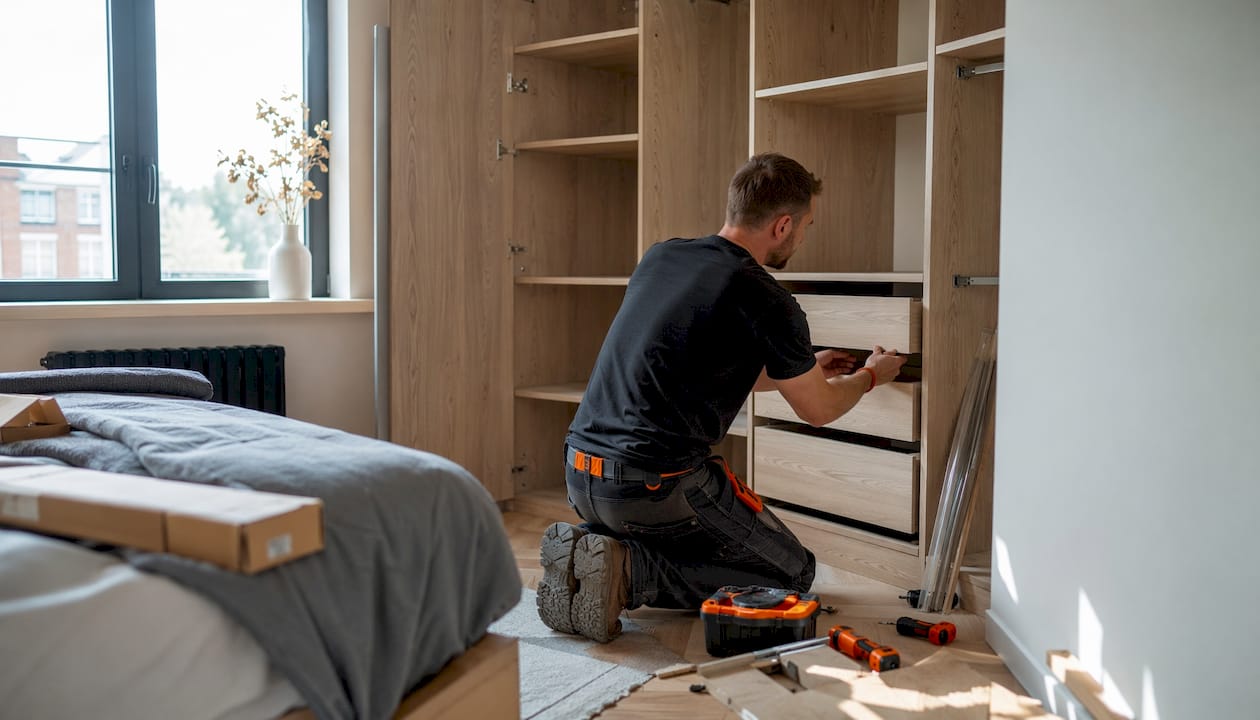
Psychologists describe this behaviour as managing “intolerance of uncertainty.” Reading multiple reviews before a costly purchase is not indecision. It is a rational strategy for reducing anxiety when the stakes are high. Each positive, detailed testimonial acts as a small confirmation that the outcome is likely to be good.
Emotional reassurance matters as much as factual data in this category. A 2026 report found that brand value alignment, what researchers call “brand fit,” significantly influences credibility, particularly among younger homeowners investing in their first property. A testimonial that describes how a wardrobe changed the feel of a bedroom speaks to that emotional dimension in a way that a specification sheet never can.
Video testimonials carry this effect furthest. 79% of consumers say user-generated video content highly impacts their purchasing decisions, even when filmed on a smartphone. That is because video captures tone, enthusiasm, and real-room context simultaneously. A homeowner in Putney watching a 90-second clip of a neighbour’s new walk-in wardrobe gains more confidence than from reading ten bullet points about materials and finishes.
What makes a testimonial genuinely trustworthy?
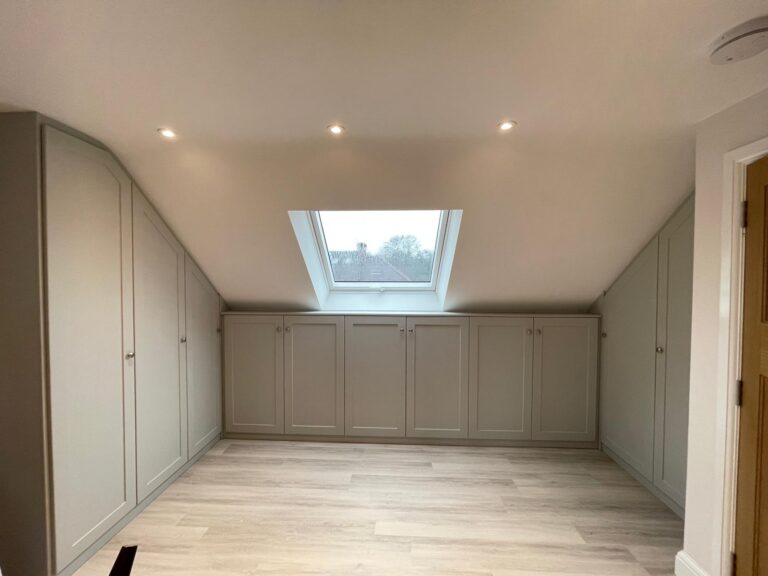
- Specificity. “The team measured our loft conversion twice and the sloped wardrobe fits perfectly” is far more credible than “great service.”
- Named location or context. A review from a Chiswick homeowner with a Victorian terrace resonates with buyers in similar properties.
- Mention of aftercare. References to how a company handled a query six months after installation reveal long-term reliability.
- Balanced tone. A review that mentions one small delay but praises the resolution reads as honest, not promotional.
Pro Tip: When reading testimonials for bespoke furniture, prioritise reviews that mention the consultation process, not just the finished product. The quality of the design visit predicts the quality of the installation.
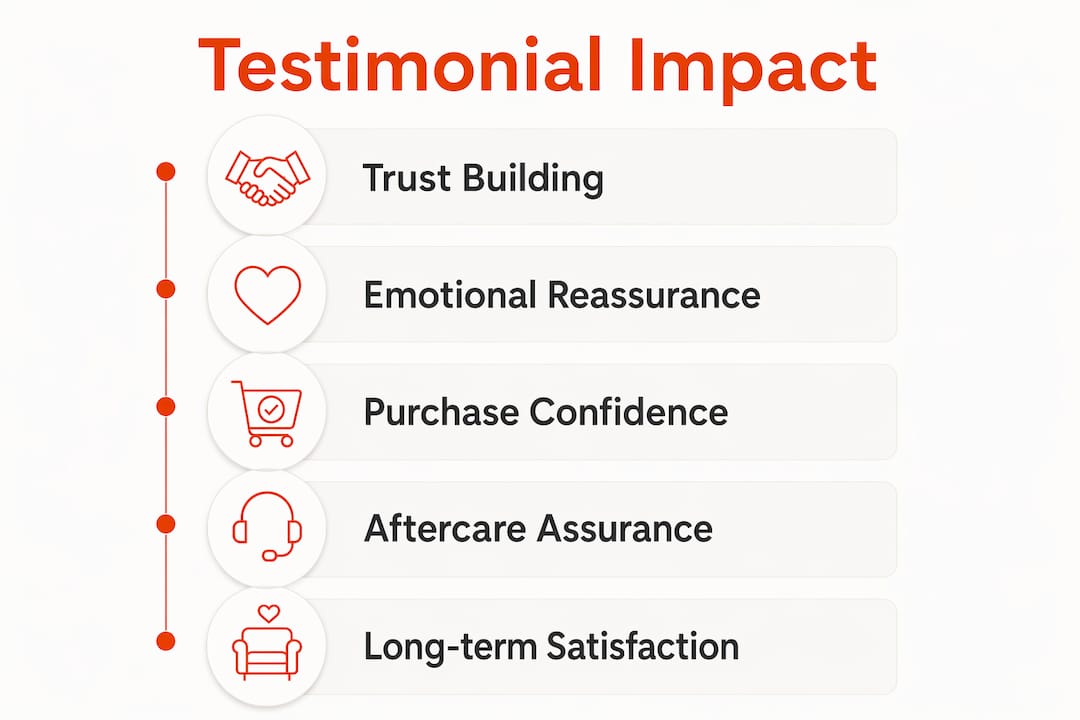
What types of testimonials are most effective for furniture buyers?
Not all testimonials carry equal weight. The format, timing, and source of a review each affect how much confidence it should give you.
Post-sale platform reviews versus independent long-term reviews
Post-sale reviews, collected automatically after delivery via platforms like Trustpilot, capture the showroom and installation experience while it is fresh. They tend to be positive because the customer is still in the excitement of a new purchase. Independent review sites, by contrast, attract customers who return months or years later, often to report durability issues, aftercare disputes, or sagging and finish problems that only emerge over time. Both types are useful. They answer different questions.
| Testimonial type | What it reveals | Best used for |
|---|---|---|
| Post-sale platform review | Showroom experience, delivery, installation quality | Assessing first impressions and service |
| Independent long-term review | Durability, aftercare, finish over time | Evaluating build quality and warranty support |
| User-generated photo or video | Real-room scale, colour accuracy, finish in natural light | Visualising the product in a home like yours |
| Case study or before/after story | Full project scope, problem-solving, design process | Understanding bespoke capability and fit |
The power of user-generated visual content
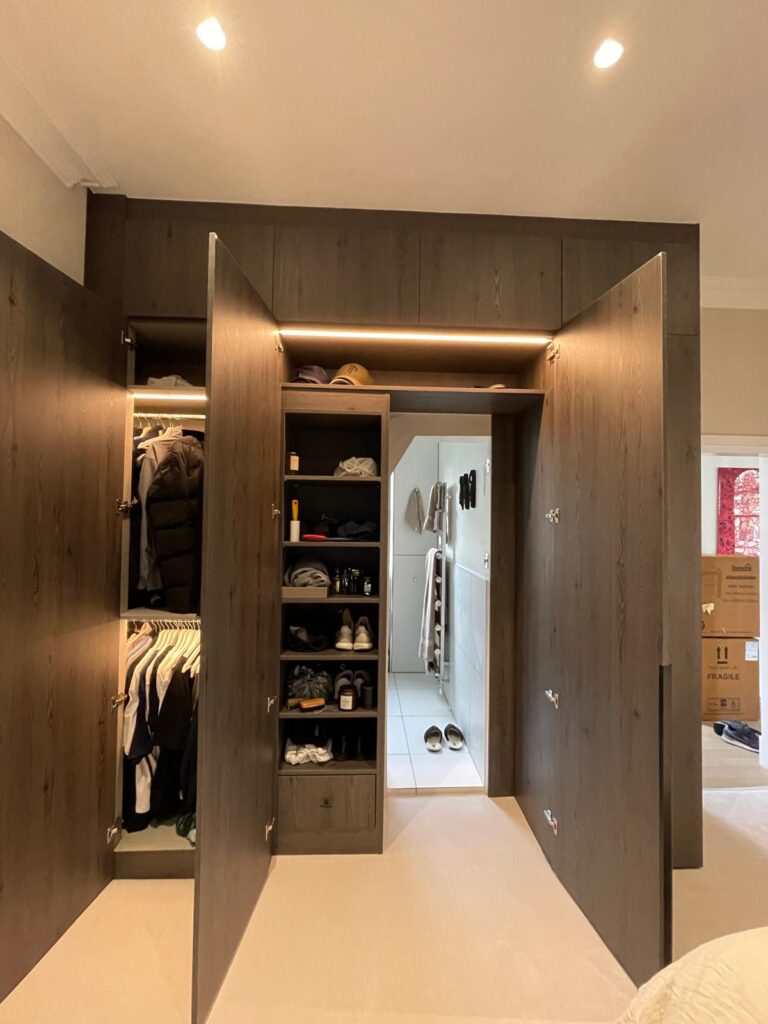
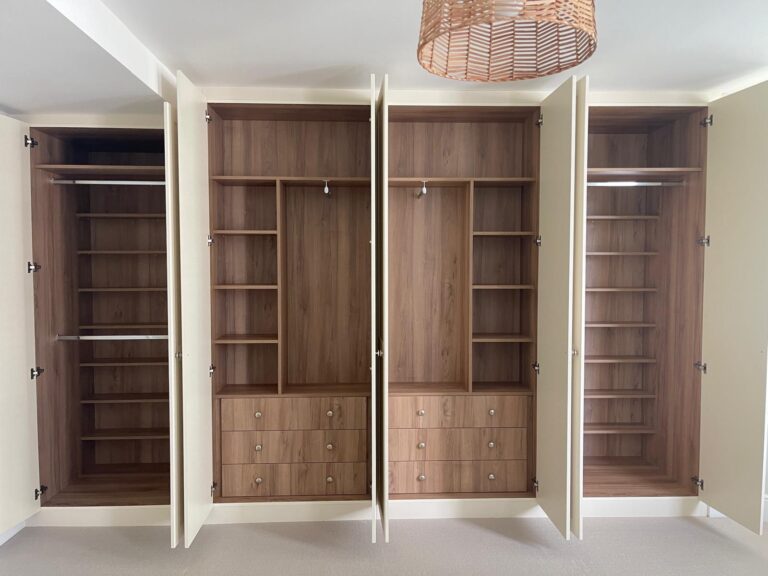
Polished marketing images are consistently rated as less trustworthy than honest, slightly imperfect photos taken by real customers in their own homes. This is not a minor preference. It reflects a fundamental shift in how buyers assess credibility. A photo of a fitted wardrobe taken in a Twickenham bedroom, with natural light and everyday items visible, tells you more about colour accuracy and scale than any studio shot.
Visual dimension references in real-room photos significantly reduce the “not what I expected” problem that drives returns and dissatisfaction. When you can see a wardrobe next to a standard door or a bed, you can judge its proportions far more accurately than from written measurements alone.
How transparency around negative reviews builds credibility
53% of buyers actively seek negative reviews during their evaluation process. They are not looking for reasons to walk away. They are testing whether a company is honest. A business that responds publicly and constructively to a critical review demonstrates accountability. A business with no negative reviews at all, or that ignores critical feedback, raises a different kind of concern entirely.
Pro Tip: Search for a company’s name alongside the word “complaint” or “issue” on independent forums before committing to a bespoke order. How a business responds to problems tells you more than how it presents its successes.
How do consumers use testimonials during their furniture decision-making process?
The furniture buying process for homeowners is rarely linear. Most buyers move between browsing, researching, and reconsidering several times before committing, particularly for high-value bespoke pieces like fitted wardrobes, alcove cupboards, or media walls.
Testimonials appear at multiple points in that process, and buyers use them differently at each stage.
-
Early browsing. Homeowners encounter star ratings and headline review counts on Google and Trustpilot. These act as a first filter. A business with fewer than four stars rarely makes it to the shortlist.
-
Active research. Once a shortlist exists, buyers read individual reviews in detail. They look for mentions of their specific situation: a loft conversion, an awkward alcove, a tight installation window. A review from a Wimbledon homeowner describing a sloped wardrobe installation carries direct relevance for another buyer with the same challenge.
-
Seeking negative feedback. As noted, the majority of buyers deliberately look for critical reviews. They want to know what went wrong and whether it was resolved. A company that handles a complaint well in a public forum gains trust rather than losing it.
-
Evaluating comfort, durability, and aftercare. Testimonials that mention how a wardrobe looks and functions six months or a year after installation are particularly valuable. They answer the question that no showroom visit can: does this hold up?
-
Final reassurance before committing. Many buyers return to testimonials one last time immediately before placing an order or booking a design visit. This is the “intolerance of uncertainty” mechanism at work again. One well-written, specific review can be the deciding factor.
The role of client testimonials in furniture business decisions is therefore not passive. Buyers actively use them as a research tool, a risk-management strategy, and an emotional anchor throughout the entire process. Understanding this changes how you read reviews. You are not just looking for a verdict. You are building a picture of what ownership actually feels like.
Pro Tip: When you find a testimonial that closely matches your situation, look at the reviewer’s other activity on that platform. A reviewer with a history of thoughtful, detailed reviews across multiple categories is a more reliable source than a single-review account.
How to evaluate furniture testimonials when buying bespoke wardrobes
Reading testimonials well is a skill. These practical steps help you extract genuine insight from customer feedback, particularly when researching fitted wardrobes and bespoke storage in London areas like Richmond, Putney, and Ealing.
-
Weight long-term reviews heavily. A review written twelve months after installation reveals far more about durability, finish quality, and aftercare than one written the week the wardrobe was fitted. Look for the date of the review alongside the date of purchase where platforms display both.
-
Prioritise real-room photos over studio imagery. User-generated content is the critical evidence layer that converts hesitation into confidence. A photo taken in a real Chiswick bedroom, with natural light and actual proportions visible, is worth more than a dozen professional renders.
-
Cross-reference platforms. Check Google Reviews, Trustpilot, and independent forums separately. Each captures a different stage of the ownership experience. A company that performs well across all three is demonstrating consistent quality rather than managing a single channel.
-
Look for testimonials that mention your specific product type. If you are considering a walk-in wardrobe design, find reviews that specifically describe that product. General praise for a company’s fitted wardrobes tells you less about their walk-in capability.
-
Assess how the company responds to criticism. A public, constructive response to a negative review is a strong positive signal. Silence or defensiveness is not.
-
Be cautious of testimonial clusters. A sudden burst of five-star reviews over a short period, particularly with generic language, can indicate managed or incentivised feedback. Authentic testimonials tend to be spread over time and vary in tone and detail.
-
Consider local context. Testimonials from homeowners in similar London properties, Victorian terraces in Twickenham, period conversions in Hammersmith, or new builds in Wandsworth, carry more relevance than reviews from entirely different property types. The challenges of fitting bespoke furniture in a period property are genuinely different from those in a modern flat.
Understanding how furniture placement and authentic home presentation affect buyer confidence reinforces why real-room testimonials matter so much. Buyers are not just assessing a product. They are imagining their own home.
Pro Tip: Ask the company directly for references from customers with a similar property type or project scope. A reputable bespoke furniture maker will be comfortable connecting you with past clients in comparable situations.
Key takeaways
Testimonials are the most reliable tool a homeowner has for assessing bespoke furniture quality, aftercare, and long-term satisfaction before committing to a high-value purchase.
| Point | Details |
|---|---|
| First-time buyers rely on reviews | 94% of first-time service buyers check reviews before purchasing, making testimonials the primary trust signal. |
| Long-term reviews reveal durability | Post-sale reviews capture installation; independent reviews written months later reveal build quality and aftercare. |
| Visual testimonials reduce uncertainty | Real-room photos and video content give accurate scale, colour, and finish context that text alone cannot provide. |
| Negative review response signals integrity | A company that responds constructively to criticism publicly demonstrates accountability and long-term reliability. |
| Local context increases relevance | Testimonials from homeowners with similar London property types carry more practical weight than generic praise. |
Why testimonials matter even more for London bespoke furniture buyers
I have seen a consistent pattern among homeowners researching bespoke wardrobes and fitted furniture across London. The buyers who make the most confident decisions are not the ones who spend the most time on showroom floors. They are the ones who invest time in reading detailed, independent testimonials from customers with comparable projects.
The gap between browsing and buying in this category is almost always an emotional one. Traffic does not equal conversion. Trust intelligence, built through transparent communication and independent validation, is what closes that gap. A homeowner in Richmond who reads three detailed testimonials from other Richmond clients describing a smooth consultation, a seven-day installation, and a wardrobe that still looks perfect two years later, is far more likely to book a design visit than one who has only seen polished marketing content.
What I find most telling is the role of aftercare mentions in testimonials. Buyers rarely think to ask about aftercare during a consultation. But when they read a review that says “they came back six months later to adjust a shelf at no charge,” that detail does more for trust than any guarantee certificate. It shows the relationship does not end at installation.
The role of testimonials in interior design and furniture decisions will only grow. Buyers are more informed, more sceptical, and more capable of cross-referencing sources than ever before. For homeowners in Wimbledon, Putney, or Chiswick investing in bespoke fitted furniture, the testimonial is not a nice addition to the buying process. It is the backbone of it. Read them carefully, read them critically, and let the detail guide you.
— Aureliu
Finest Furniture Studio: bespoke wardrobes backed by real client results
At Finest Furniture Studio, client testimonials are not a marketing afterthought. They are the direct result of a process built around personalised design visits, precise installation, and a 10-year guarantee that stands behind every piece we make. Homeowners across Richmond, Putney, Wimbledon, and Chiswick have shared detailed feedback on their fitted wardrobes, walk-in wardrobes, and alcove solutions, and that feedback shapes how we work.
We install within 7–12 days and remove and dispose of your old wardrobe at no extra charge. If you are ready to see what bespoke fitted furniture looks like in a home like yours, our bespoke fitted wardrobes in Richmond page shows real client results with full project detail. Book a free design visit today. Call or WhatsApp us on 07468 150807, or visit us at 124 City Road, Kemp House, London, EC1V 2NX.
FAQ
Why do testimonials matter so much for furniture purchases?
Testimonials provide real-world evidence of quality, fit, and aftercare that no product description can replicate. 89% of UK consumers check reviews before purchases over £100, making them the primary trust signal for high-value furniture decisions.
What makes a furniture testimonial credible?
A credible testimonial is specific, mentions the type of product and property, and references the experience over time rather than just at delivery. Reviews that include real-room photos or video content carry significantly more weight than text alone.
Should I read negative reviews before buying bespoke furniture?
Yes. 53% of buyers actively seek negative reviews during evaluation. A company that responds constructively to criticism in public demonstrates accountability, which is a stronger trust signal than a perfect score with no critical feedback.
Where is the best place to find authentic furniture testimonials?
Cross-reference Google Reviews, Trustpilot, and independent forums separately. Each platform captures a different stage of ownership. Long-term independent reviews are the most reliable source for durability and aftercare insights.
How do testimonials help with bespoke wardrobe decisions specifically?
Testimonials from homeowners with similar property types and project scopes, such as loft conversions in Twickenham or alcove wardrobes in Chiswick, give you directly relevant evidence about fit, finish, and the installation process that generic product information cannot provide.