
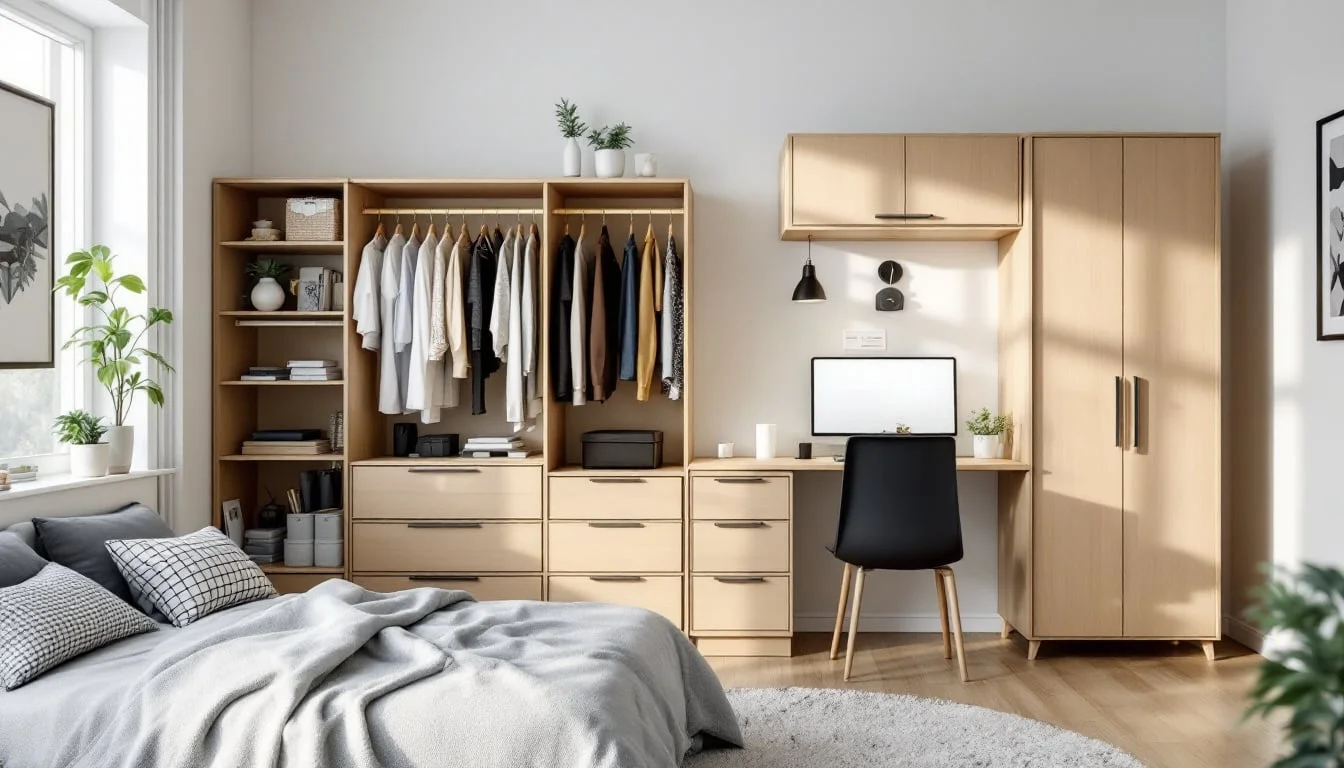
What Teen Wardrobes Need to Do
Teen wardrobes have a different job from a standard bedroom cupboard. They need to handle fast-changing clothing sizes, sports kit, school uniforms, shoes, bags, and the clutter that comes with a busy routine. If the wardrobe only looks good for a year but quickly runs out of space, it is not doing its job. The real question is not just style, it is whether the storage will still work when the room, habits, and needs change over the next few years. That is why the bespoke versus flat-pack decision matters so much for teen wardrobes.
How to Judge the Real Fit of the Room
Before comparing materials or finishes, measure the room properly. In teen wardrobes, the practical test is simple: do you have a straight wall, a tricky alcove, a sloped ceiling, or a narrow floor area that limits door swing? Flat-pack works best when dimensions are standard and the room is forgiving. Bespoke wins when every centimetre counts, especially in loft rooms, box rooms, or awkward layouts. A useful rule is to map the room first, then mark the storage needs second, because a wardrobe that fits the plan but not the space will be hard to use every day.
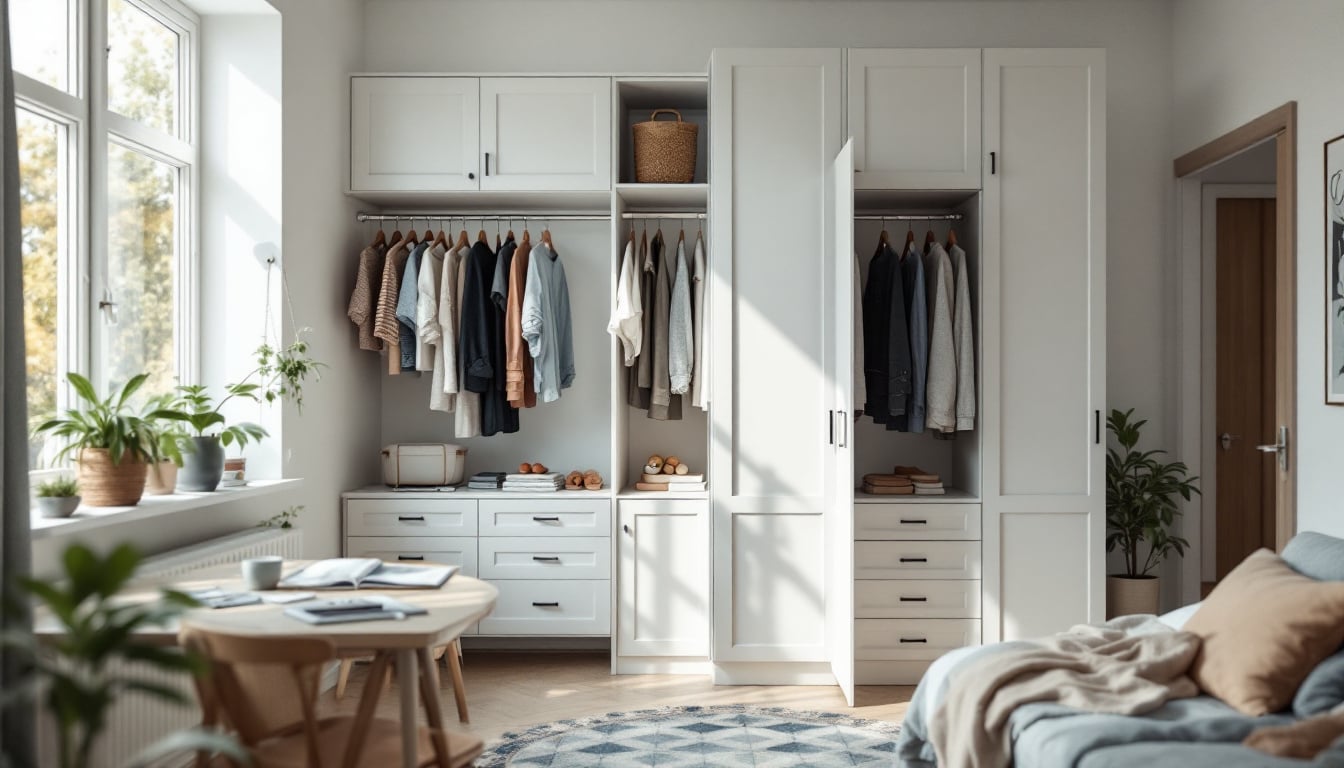
Bespoke Teen Wardrobes Explained
Bespoke teen wardrobes are built around the room rather than forced into it. That means they can include full-height hanging, shelving for folded clothes, drawers for smaller items, and awkward-fill panels that remove wasted gaps. For teen wardrobes, this is often the strongest option when storage needs are mixed and the layout is tight. It also lets you decide where the practical compromises should be, such as choosing fewer hanging rails in exchange for deeper drawers or adding a section for school bags and trainers.
Where Bespoke Usually Pays Off
Bespoke makes sense when the room has constraints that flat-pack cannot solve neatly. That includes sloping ceilings, chimney breasts, uneven walls, and very small bedrooms where a few missing centimetres matter. It also helps when teen wardrobes need to serve more than one function, such as clothing storage plus homework supplies or seasonal items. The hidden benefit is organisation: when every shelf and drawer has a purpose, the wardrobe is easier to keep tidy. If the bedroom is likely to be used for several years, bespoke often ages better because it grows with the user instead of being replaced early.
Flat-Pack Teen Wardrobes Explained
Flat-pack teen wardrobes are the faster, more standardised option. They are usually cheaper up front, easier to source, and available in familiar sizes and finishes. For a regular bedroom with enough wall space, a flat-pack unit can be a perfectly sensible choice, especially if the priority is to get storage in place quickly. The trade-off is flexibility. You are working with fixed dimensions, fixed internal layouts, and fixed materials, so the unit may not use the room as efficiently as a made-to-measure solution.
Where Flat-Pack Wins
Flat-pack is strongest when the room is standard, the budget is tight, and the need is straightforward. If the wardrobe only has to hold hanging clothes, a few shelves, and everyday items, there is no need to overcomplicate the decision. Flat-pack teen wardrobes can also suit families who expect to move house soon, because they are easier to relocate than fully fitted joinery. The main pitfall is buying a size that looks right online but leaves poor circulation space, blocked sockets, or an awkward gap beside the bed. Measure the usable wall, not just the wall length.
Cost: What You Are Really Paying For
The price gap between bespoke and flat-pack is not only about materials. You are also paying for design time, installation precision, and how much of the room gets used effectively. Flat-pack usually has the lower entry cost, but it can become less economical if you need extra fillers, a second unit, or later upgrades to solve storage problems. Bespoke teen wardrobes cost more initially, yet they may eliminate the need for multiple separate pieces of furniture. A practical way to compare them is to think in terms of cost per usable storage zone, not just the sticker price.
A Better Way to Compare Budget
Use three questions before choosing. First, how long do you need the wardrobe to last in this room? Second, how much of the available wall space must be used? Third, how much tolerance do you have for visible gaps or wasted corners? If the answer to all three is high, bespoke is usually the stronger investment. If the room is simple and the need is temporary, flat-pack often makes more sense. This decision framework is more reliable than chasing the cheapest quote, because teen wardrobes tend to fail when they are undersized rather than when they are expensive.
Storage Layout That Actually Works for Teens
The best teen wardrobes are not just large, they are organised around real usage. A good internal layout usually includes one hanging section for school clothes, one lower zone for folded items, drawers for socks and underwear, and a top area for seasonal storage. If there are sports kits, bags, or hobby equipment, that needs a defined place too. The aim is to reduce daily friction. If a teenager can put things away in under 30 seconds, the wardrobe is more likely to stay in use instead of turning into a dumping ground.
Zones Beat One Big Cavern
One of the most useful design insights for teen wardrobes is to divide storage by routine, not by category alone. Schoolwear should be easy to reach on busy mornings, while occasional items can go higher up. Deep shelves sound efficient, but they often become messy because small items disappear at the back. Shallow drawers and clearly defined hanging zones usually work better. In bespoke wardrobes, you can tune these proportions exactly. In flat-pack units, you may need to add boxes or organisers to create the same effect.
Durability and Wear Over Time
Teen wardrobes take more wear than many people expect. Doors are opened quickly, drawers are overloaded, and shelves may hold heavier items than intended. That means durability is not a nice-to-have, it is part of the decision. Bespoke options often use stronger fixings and can be designed around the actual load the wardrobe will carry. Flat-pack can still be durable, but the quality varies more widely, so hinge strength, board thickness, and drawer runner quality matter a lot. If the wardrobe will be used daily for several years, weak hardware becomes the first point of failure, not the frame itself.
What to Check Before You Buy
Look at how the wardrobe is assembled, not just how it looks. For teen wardrobes, soft-close hinges, reliable runners, and secure wall fixing are worth paying attention to because they reduce wear from repeated use. If a flat-pack wardrobe relies on thin back panels or lightweight fittings, it may wobble sooner than expected. Bespoke joinery gives more control over construction, but the installation quality still matters. Ask how the unit will be anchored, how the doors will align, and whether adjustments can be made after fitting if the room settles or the walls are uneven.
When a Teen’s Needs Are Likely to Change
Teen wardrobes should account for change, because a 13-year-old’s storage habits are not the same as an 18-year-old’s. Hanging space may become less important, while drawer storage, wider shelving, or space for longer coats may matter more. Bespoke wardrobes are easier to adapt at the design stage, which makes them useful if the room needs to support several phases of growing up. Flat-pack is more rigid, but it can work if you expect to replace or reposition it later. The key is to choose the option that matches the likely timeline, not just the current week.
The Growth-Test for Teen Wardrobes
Before choosing, imagine the wardrobe two years from now. Will there still be enough room for longer clothing, school gear, or seasonal items? Will the internal layout still make sense if habits change? If the answer is uncertain, bespoke teen wardrobes offer more resilience because the design can anticipate future use. If the answer is clear and simple, a flat-pack unit may be sufficient. This is where many buyers overbuy on size and underbuy on usability. A wardrobe that supports one routine well is better than a larger wardrobe that no one uses properly.
Installation, Speed, and Disruption
Installation is another point where the two options differ sharply. Flat-pack usually arrives faster and can often be assembled quickly, but the result depends heavily on assembly accuracy and wall conditions. Bespoke teen wardrobes normally take longer to design and fit, yet the installation is more controlled and the final result is usually cleaner around the edges. If the room is being used every day, disruption matters. A quick install is useful, but a rushed fit that leaves gaps, rubbing doors, or uneven shelving will create more problems later.
How to Avoid the Common Fit Mistakes
The biggest mistake is assuming every wall is straight and every floor is level. In reality, even small variations affect door alignment and shelf stability. With teen wardrobes, check skirting boards, socket positions, radiator clearance, and any ceiling slopes before ordering. For flat-pack, leave room for opening doors fully and for safe circulation in the bedroom. For bespoke, confirm the exact internal layout before manufacturing begins. A little extra planning at the start prevents the classic problem of a wardrobe that technically fits but is awkward to use every day.
Best Choice by Bedroom Type
The right choice depends on the room, not just the wardrobe itself. In a standard box room, flat-pack teen wardrobes can be perfectly adequate if the storage needs are simple. In a loft bedroom, alcove, or compact room with unusual proportions, bespoke is usually the better fit because it turns difficult space into usable storage. The same logic applies if the bedroom must also hold study space or shared storage. Once furniture starts competing for the same floor area, custom planning becomes more valuable than saving a few centimetres on the unit size.
A Quick Decision Rule
Choose flat-pack if the room is regular, the budget is fixed, and you want a straightforward installation. Choose bespoke if the room is awkward, storage needs are layered, or you want the wardrobe to last through several years of change. That rule holds up well for teen wardrobes because it separates temporary convenience from long-term usefulness. It also stops the decision getting stuck on style alone. Good-looking furniture is useful only when it fits the room and the routine behind it.
How Bespoke Furniture Can Support the Whole Room
In some bedrooms, the wardrobe is only part of the storage problem. Shelving around the bed, under-eaves cupboards, or a fitted desk can reduce clutter and make the room feel calmer. That is where bespoke furniture has an advantage beyond the wardrobe itself. It can be planned as one system rather than a collection of separate pieces. For families comparing teen wardrobes with other storage options, this is often the deciding factor. If one fitted solution can replace two or three standalone units, the room usually becomes easier to live in and easier to keep tidy.
Quick Takeaways
Teen wardrobes should be judged on fit, storage layout, and long-term usefulness, not appearance alone. Bespoke works best in awkward rooms, tight spaces, or bedrooms that need storage to do more than one job. Flat-pack is a sensible choice for standard rooms, simpler needs, and tighter budgets. The strongest wardrobe layouts separate daily-use clothing from seasonal and occasional items. Durability matters because teen wardrobes get heavy daily use, so check fixings, hinges, and runners carefully. If you expect the room or storage needs to change, bespoke usually gives you more flexibility and a cleaner finish.
Getting the Right Next Step
If you are still deciding between bespoke and flat-pack teen wardrobes, start with a room measurement, a rough storage list, and a quick look at how the bedroom is used day to day. That small exercise usually makes the answer clearer than browsing style images does. If the layout is awkward or you want a neater built-in result, bespoke fitted wardrobes are worth exploring. If the room is simple and you need a practical fix now, flat-pack can still do the job well. For a more tailored approach, it is worth looking at bespoke fitted wardrobes, built wardrobes, or walk wardrobes options that match the room rather than forcing the room to match the furniture.
Frequently Asked Questions
Are teen wardrobes better as bespoke or flat-pack?
It depends on the room and how the wardrobe will be used. Bespoke teen wardrobes usually fit awkward spaces better and make storage easier to organise, while flat-pack is often the better choice for standard rooms and tighter budgets.
What should I check before buying teen wardrobes?
Start with room measurements, door clearance, wall sockets, and skirting boards. Then check whether you need more hanging space, drawer storage, or shelving, because the best teen wardrobe layout depends on daily use, not just size.
Do bespoke teen wardrobes last longer than flat-pack?
They often do, mainly because they can be built around the room and fitted more precisely. That said, the quality of materials and hardware still matters, so a well-made flat-pack wardrobe can outperform a poorly fitted bespoke one.
How do I choose the right teen wardrobe layout?
Use a simple storage workflow: daily clothes at eye level, folded items in drawers or shelves, and seasonal items higher up. This is the easiest way to build a functional teen wardrobe layout that stays usable as habits change.
Are flat-pack teen wardrobes good for small bedrooms?
They can be, if the room is square and the dimensions are easy to work with. In very small or awkward rooms, bespoke teen wardrobes usually make better use of the available space because they remove wasted gaps and can be designed around obstacles.
What is the main disadvantage of bespoke teen wardrobes?
The biggest drawback is cost and lead time. Bespoke fitted wardrobes usually take longer to plan and install than flat-pack options, so they are best when you want a long-term solution rather than a quick storage fix.
Can teen wardrobes include extra storage for school and sports gear?
Yes, and this is where custom wardrobe design can be especially useful. A bespoke layout can add shelves, drawers, and dedicated zones for bags, trainers, and equipment, which helps keep the room organised.

