


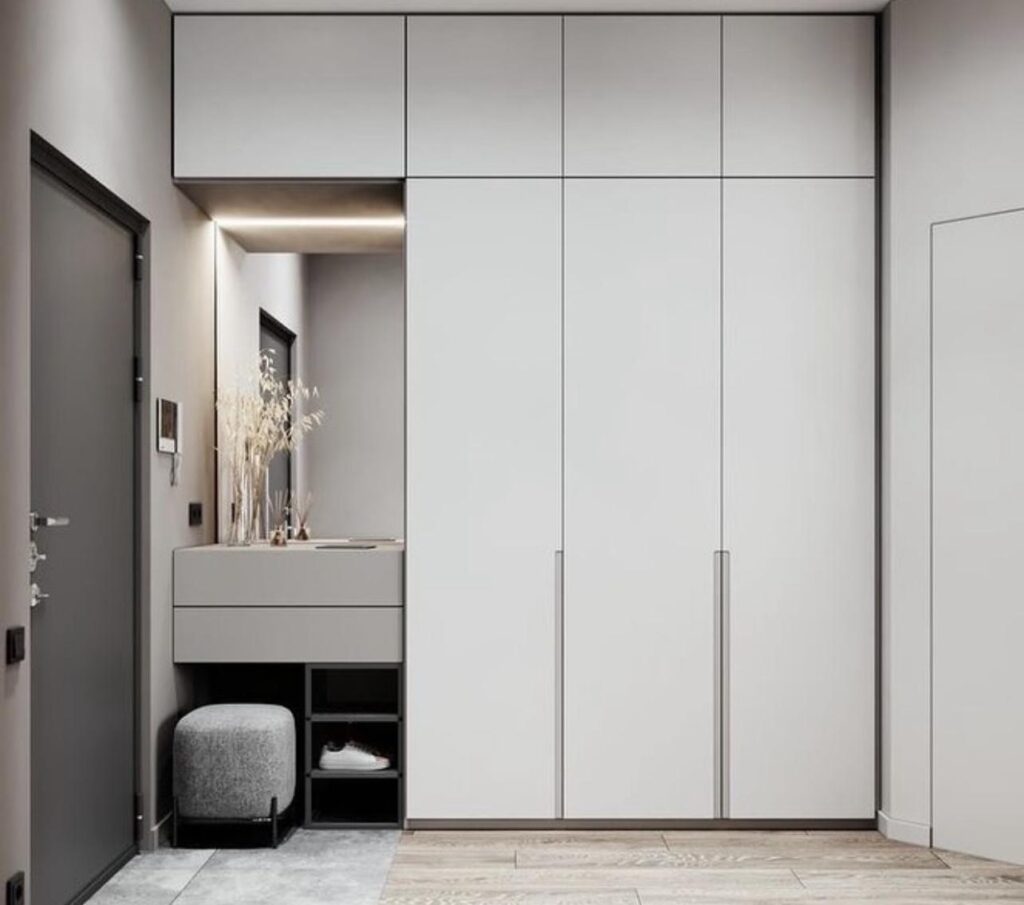
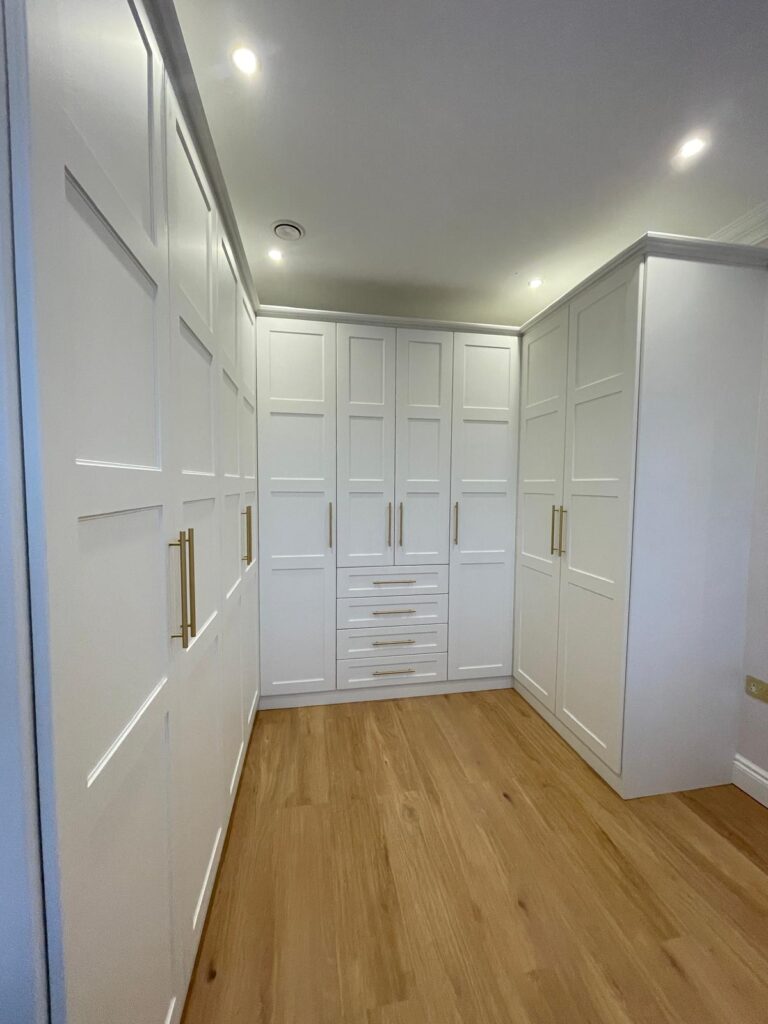
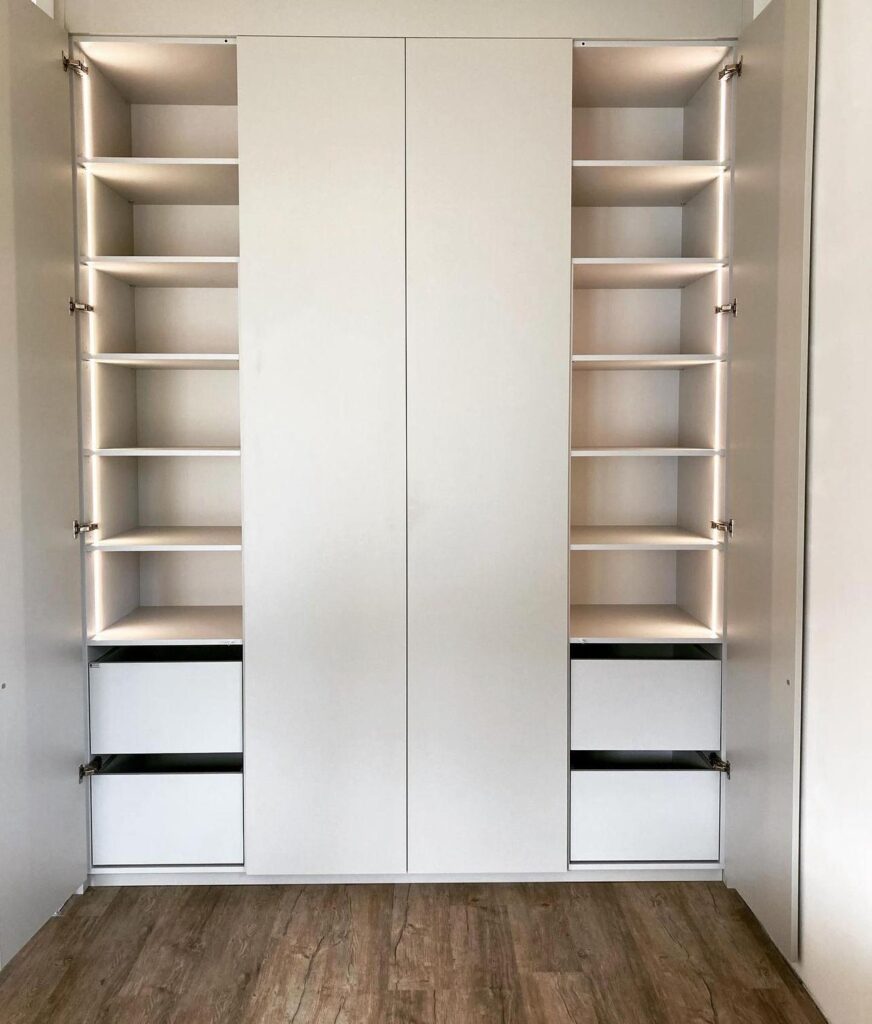

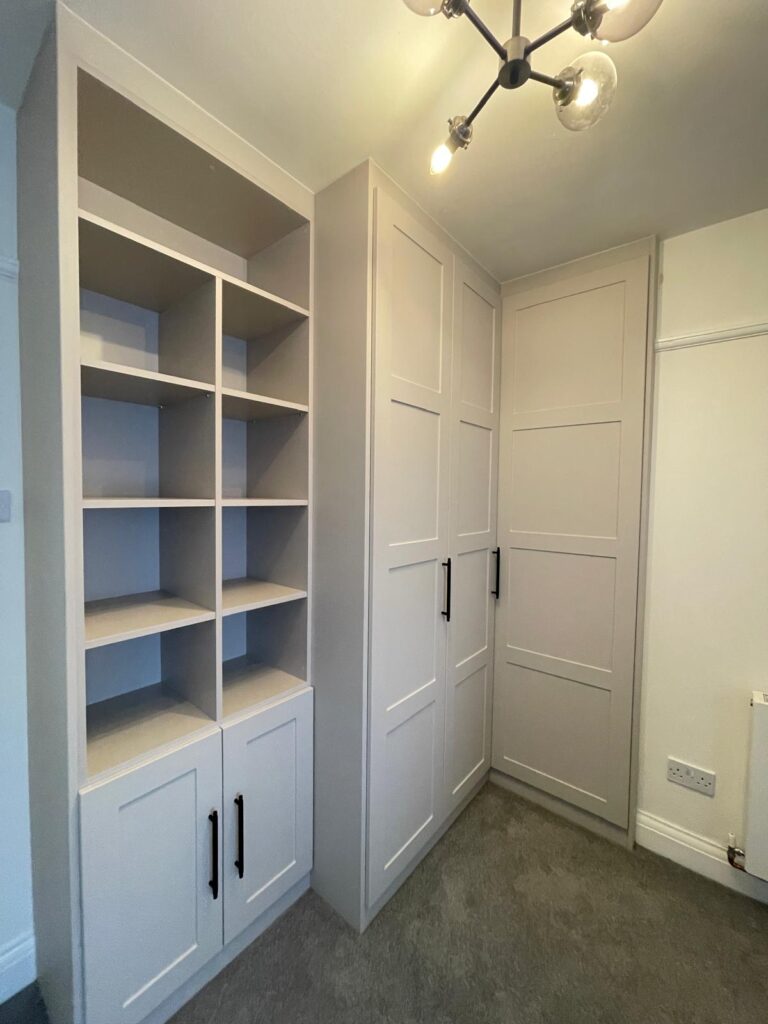





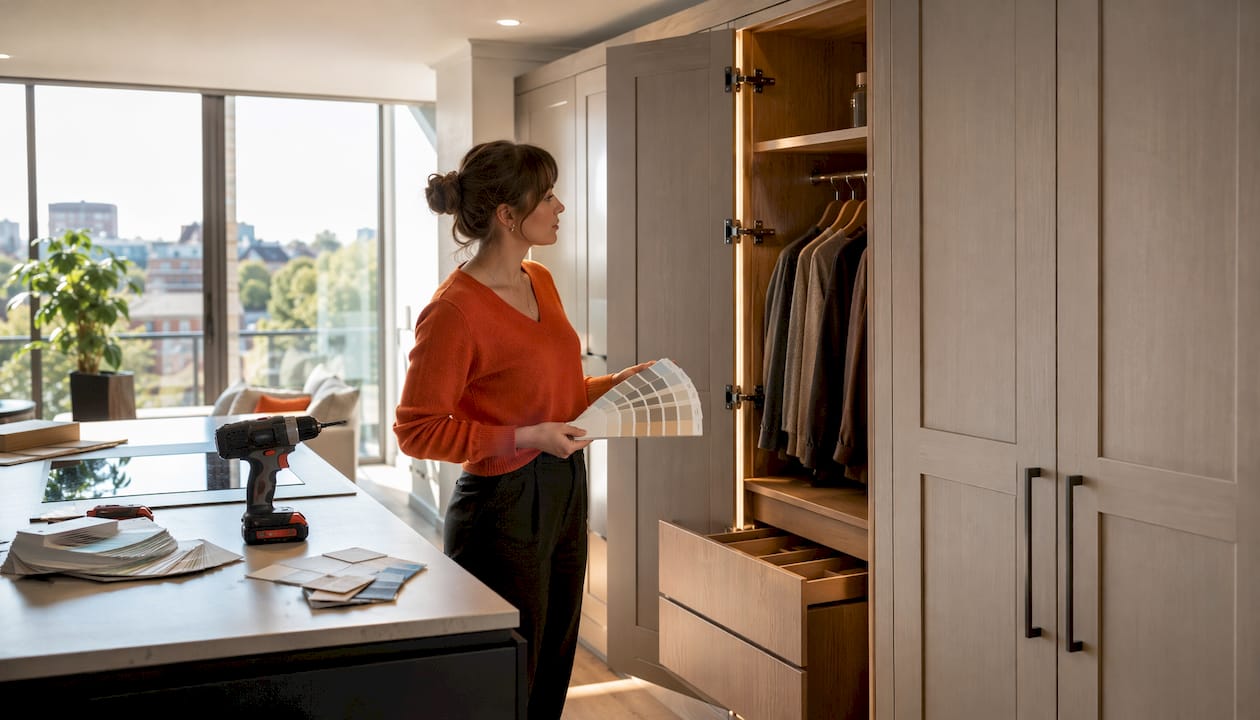
Well-executed interior design that improves function, layout, and perceived finish measurably increases saleability and strengthens buyer offers — particularly when it solves storage problems. In London, where minimum internal space standards set one-bedroom flats at just 50 m² and two-bedroom flats at 61 m², the role of interior design in home value is amplified by the simple reality that buyers are paying premium prices for compact spaces. The size of any uplift depends on room type, buyer demographic, and how closely the design aligns with broad buyer tastes rather than personal preference. Finest Furniture Studio works with homeowners across Richmond, Wimbledon, Putney, Chelsea, and Chiswick to deliver bespoke storage that addresses exactly this challenge.
Table of Contents
- 1. How interior design changes buyer perception and market value
- 2. Which improvements deliver the best ROI in London homes?
- 3. Why bespoke wardrobes and fitted storage matter for London homes
- 4. Design decisions that increase value — and mistakes that reduce it
- 5. Typical costs, installation timelines, and guarantees to expect
- 6. How to brief a designer: what to prepare before the consultation
- 7. A small London flat transformed with bespoke storage
- Key takeaways
- The case for getting it right the first time
- Finest Furniture Studio: bespoke storage for London homes
- Useful sources
- FAQ
1. How interior design changes buyer perception and market value
Layout and storage change how buyers perceive usable space — that is the primary mechanism. A bedroom with floor-to-ceiling fitted wardrobes reads as larger and more considered than the same room with a freestanding wardrobe pushed against one wall. A clutter-free hallway with integrated coat storage sells more easily than one packed with standalone units. These are not cosmetic differences; they alter the mental calculation buyers make about whether a home works for their life.
Three channels drive the impact of interior design on property value:
- Perceived space and flow: Good circulation, natural light, and unobstructed sightlines make rooms feel larger. Fitted joinery that sits flush with walls removes visual clutter and improves the sense of proportion.
- Functional value: Storage that works — wardrobes with proper hanging heights, kitchen pantry pull-outs, under-stairs cupboards — signals that the home has been designed rather than assembled. Buyers pay for ease.
- Finish and quality signalling: Materials and hardware communicate care. Solid-core doors, quality drawer runners, and consistent finishes tell a buyer the home has been maintained to a high standard.
London buyer demographics sharpen this further:
- Young professionals in areas like Fulham and Hammersmith prioritise neutral finishes and flexible storage they can adapt.
- Families in Wimbledon and Richmond want maximum capacity, integrated lighting, and layouts that accommodate growing wardrobes.
- Long-term owners in Chiswick and Barnes value durability and craftsmanship that reduces replacement cycles.
Bespoke furniture increases buyer appeal and perceived finish, even when it does not translate directly to a fixed percentage uplift in sale price. Buyers pay for a sense that the home has been cared for.
2. Which improvements deliver the best ROI in London homes?
Kitchens and well-planned storage tend to give the clearest market returns. Bespoke storage usually improves marketability rather than guaranteeing a fixed percentage uplift — the return depends on property tier, neighbourhood, and how well the finish matches buyer expectations.
| Storage type | Typical cost band | Likely buyer impact |
|---|---|---|
| Entry fitted range (standard sizes) | — | Low to medium — improves tidiness, limited wow factor |
| Mid bespoke (made-to-measure, standard finishes) | £3,000–£3,000 | Medium to high — solves awkward geometry, improves staging |
| High-end bespoke (full-wall, integrated lighting, premium hardware) | £6,000 and above | High — strong finish signal in prime postcodes |
Bespoke joinery may cost two to several times a quality fitted range depending on scope, and estate agents often cite high-quality joinery as a feature buyers notice in prime London postcodes such as Chelsea and Kensington.
London-specific context matters here. Compact flats built to the 50 m² and 61 m² thresholds make storage improvements relatively more valuable than in larger regional homes, where buyers can simply use a spare room. The UK self-storage industry expanded from around 975 facilities in 2014 to nearly 2,900 — a clear signal that Londoners are running out of room at home and will pay to solve it.
Key points for ROI planning:
- Returns are strongest in properties where storage is currently inadequate or where awkward geometry wastes usable volume.
- Over-specifying for ultra-luxury in a mid-market property reduces ROI through buyer mismatch.
- Neutral, timeless finishes preserve resale appeal better than trend-led choices.
3. Why bespoke wardrobes and fitted storage matter for London homes
Bespoke storage recovers otherwise wasted volume and solves awkward geometry that freestanding furniture simply cannot. A standard wardrobe leaves a gap above it, wastes the space beside a chimney breast, and cannot follow a sloped loft ceiling. Made-to-measure solutions eliminate all three problems.
Common bespoke types that work particularly well in London homes:
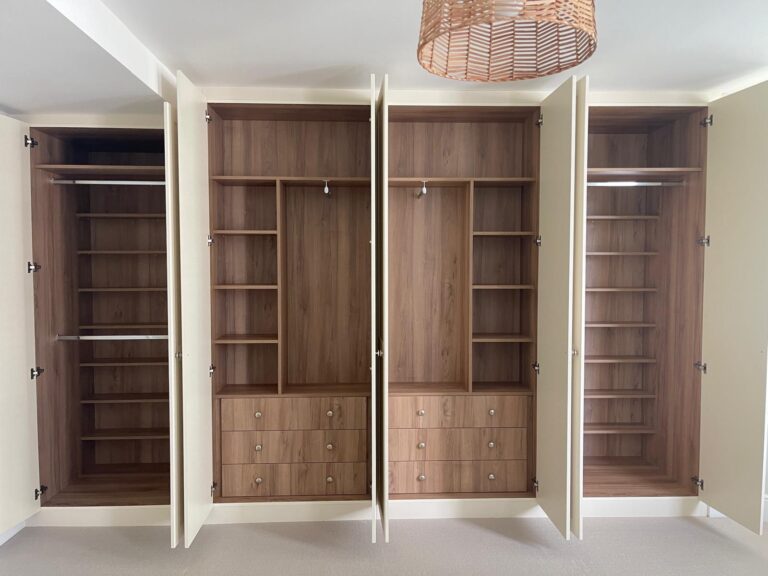
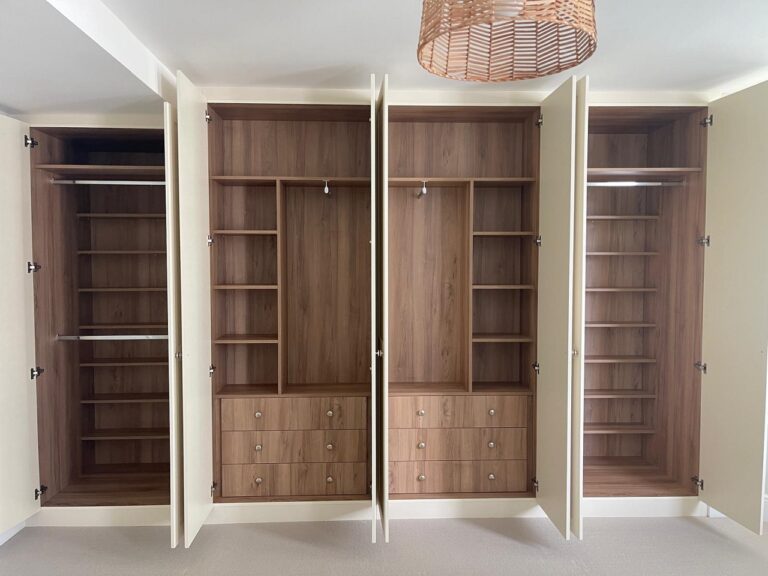
- Alcove wardrobes: Built around chimney breasts in Victorian and Edwardian terraces across Putney, Ealing, and Twickenham — they use space that would otherwise hold a freestanding unit half the capacity.
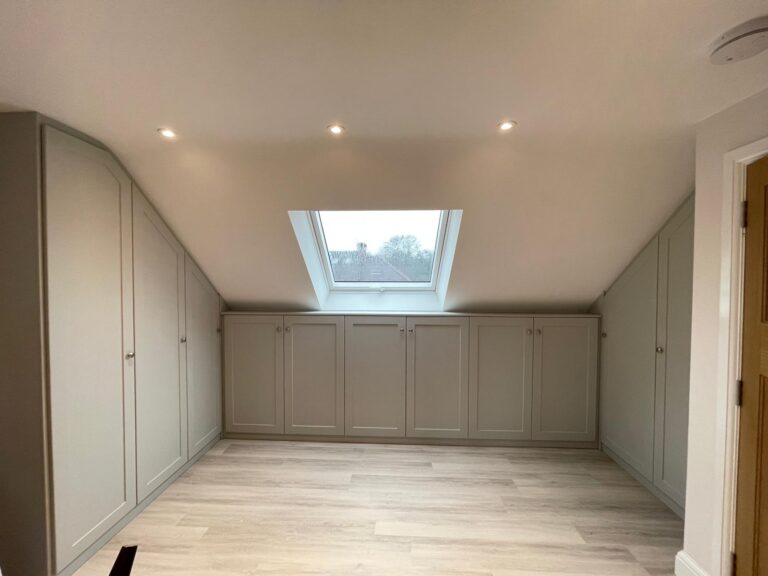
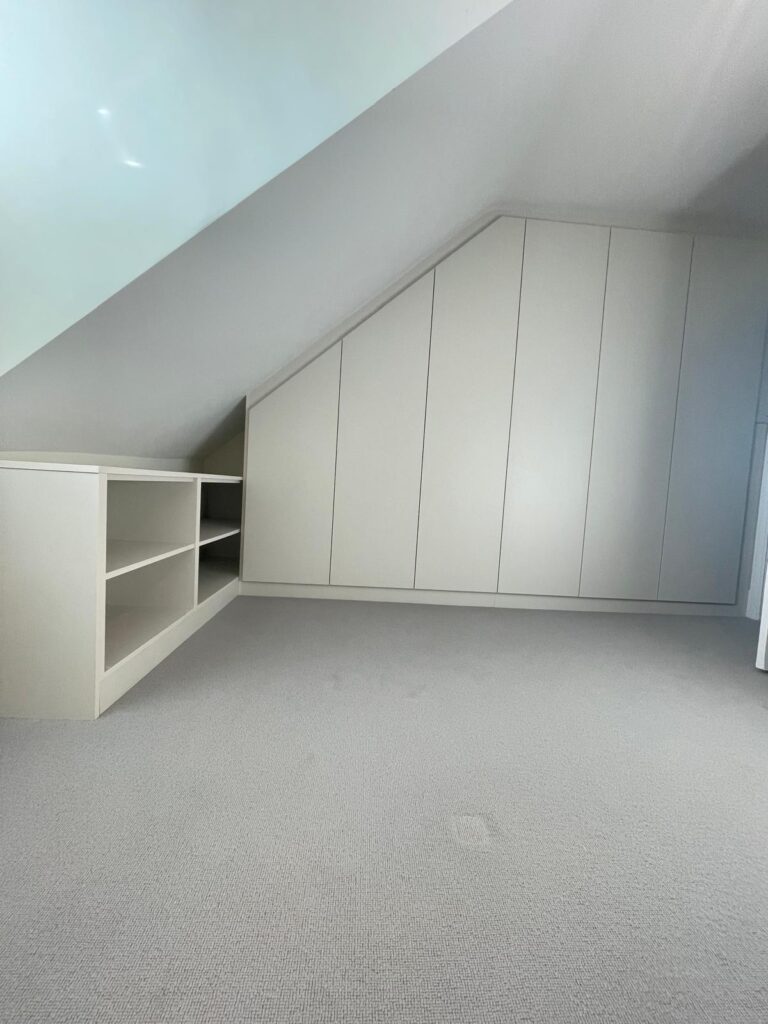
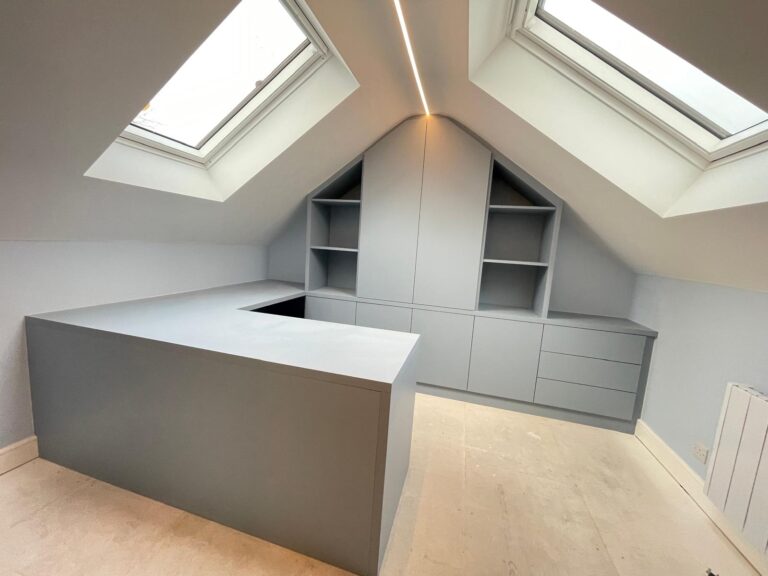
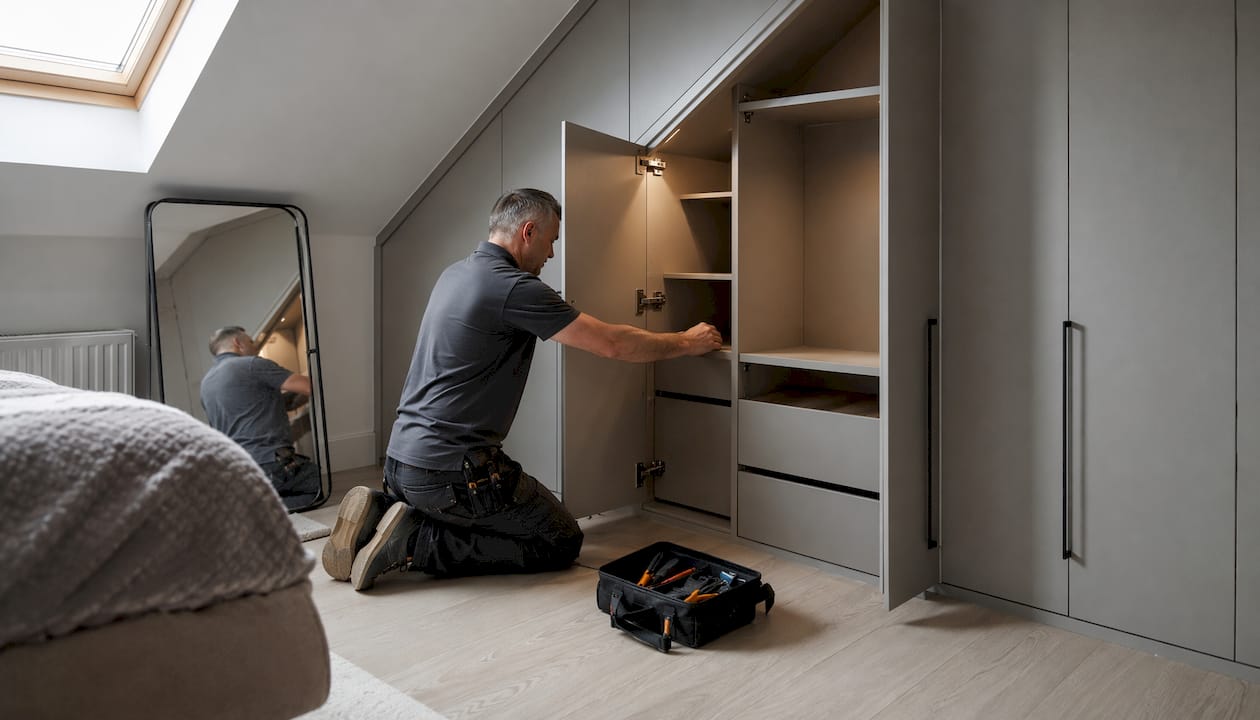
- Sloped and loft wardrobes: Loft conversions in Barnes and Hammersmith benefit from wardrobes that follow the roofline exactly, recovering volume that standard furniture ignores.
- Under-stairs storage: Under-stairs cupboards and shelving turn dead hallway space into practical storage for coats, shoes, and household essentials.
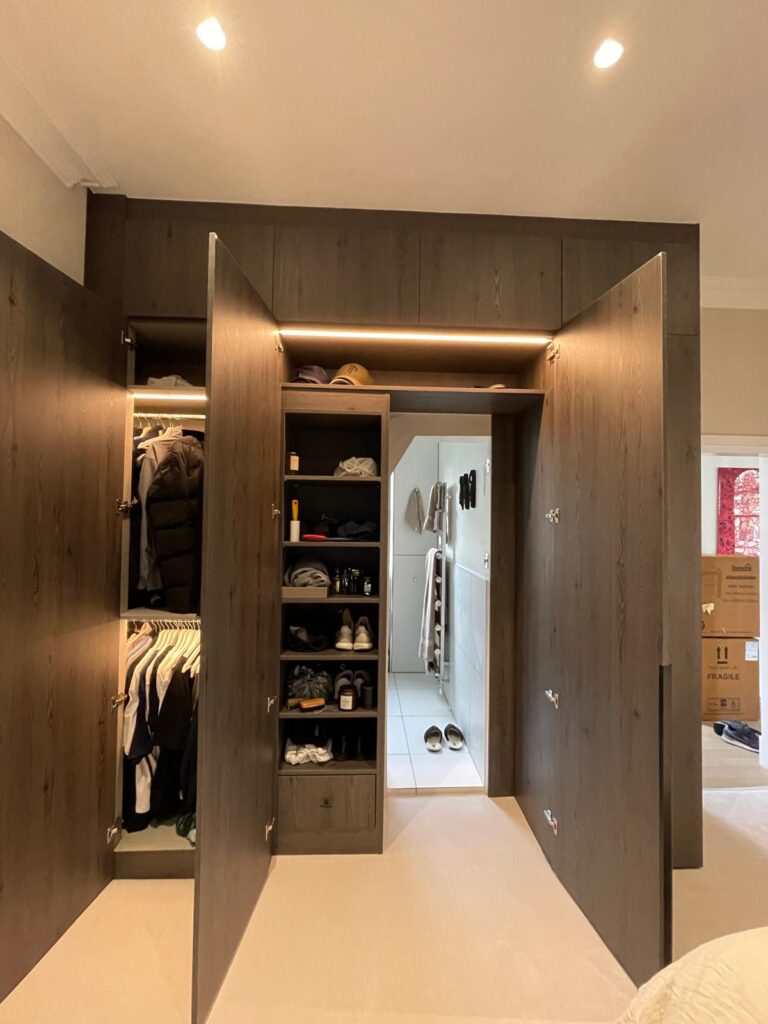
- Walk-in and dressing-wall systems: For larger bedrooms in Richmond and Chelsea, a walk-in wardrobe with custom shelving, hanging rails, and LED lighting creates a boutique-like atmosphere that buyers remember.
- L-shaped and corner solutions: Corner spaces in open-plan flats are often wasted; L-shaped fitted units make them genuinely functional.
Pro Tip: When specifying bespoke storage with resale in mind, choose neutral painted or wood-effect finishes over bold colours or highly decorative hardware. Shaker-style doors in white or warm grey appeal to the widest buyer pool across London’s varied property types.
Bespoke is most valuable in small flats, rooms with alcoves or chimney breasts, and loft conversions. For secondary bedrooms or short-term rental properties, a quality fitted range often suffices. You can find small bedroom wardrobe ideas tailored to London layouts on the Finest Furniture Studio site.
4. Design decisions that increase value — and mistakes that reduce it
Choose timeless, neutral, high-quality details that improve function and appeal to the widest buyer pool. That single principle covers most of the decisions you will face.
Do this:
- Muted palettes — warm whites, soft greys, and natural wood effects — photograph well and age gracefully.
- Full-height cabinetry that runs to the ceiling recovers vertical volume and looks considered.
- Robust drawer runners and soft-close mechanisms signal quality without requiring a buyer to open every drawer.
- Integrated task lighting inside wardrobes and above worktops improves usability and staging photography.
- Interior door quality and joinery consistency across a floor reinforce the sense of a well-finished home.
Avoid this:
- Over-personalised colours or finishes that narrow the buyer pool — a deep navy wardrobe may suit your taste but will require repainting before sale.
- Poor hardware: cheap handles and flimsy runners undermine even well-made carcasses.
- Awkward internal layouts that prioritise aesthetics over daily use — a wardrobe with no hanging space is a liability, not an asset.
- Ultra-luxury specification in a mid-market property, where the cost cannot be recovered through the sale price.
Highly personalised, trend-led finishes often reduce the buyer pool; for resale-minded clients, neutral and timeless materials consistently outperform statement choices. Installation quality matters equally — poor fitting erodes perceived value even when design and materials are excellent, which is why a single supplier managing design, manufacture, and installation produces the most consistent result.
5. Typical costs, installation timelines, and guarantees to expect
Bespoke installations cost more upfront than off-the-shelf ranges but generally provide faster, cleaner installation and valuable guarantees. Expect a range rather than a single figure, and budget for the full scope: survey, manufacture, delivery, installation, and disposal of old units.
- Initial design visit: A professional measures the space, discusses your brief, and produces a design proposal. This visit is free with Finest Furniture Studio.
- Manufacture lead time: Custom production typically takes two to four weeks after design sign-off, depending on specification and finish.
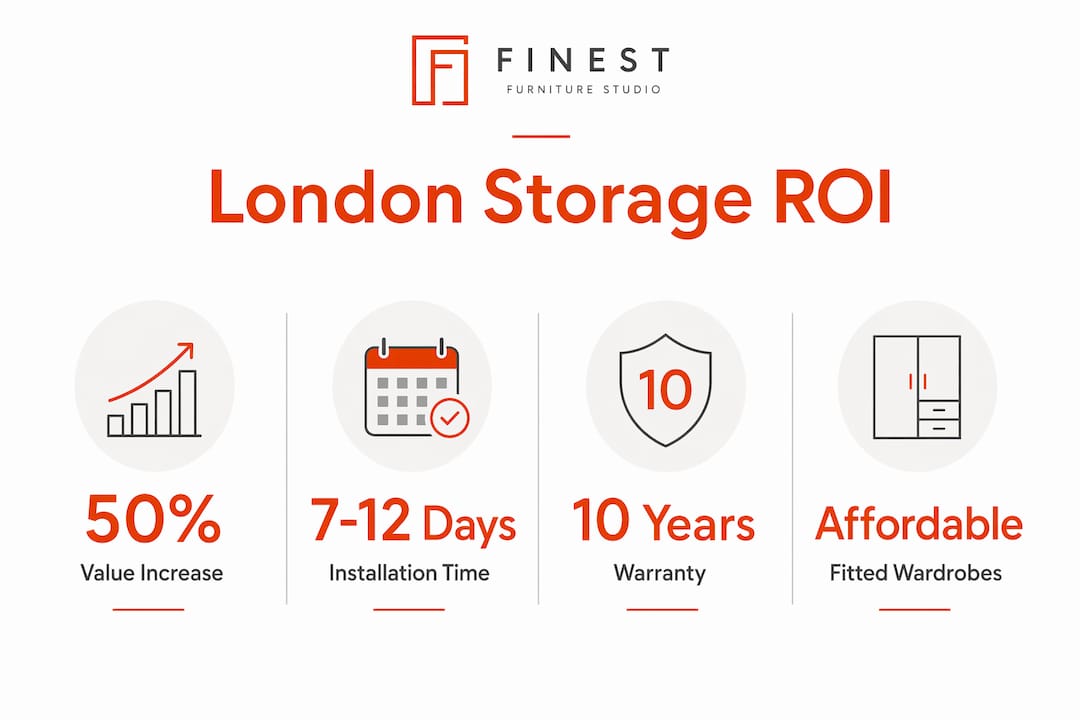
- On-site installation: Finest Furniture Studio completes most installations within 7–12 days, which is notably faster than many bespoke suppliers who quote multi-month programmes.
- Disposal of old units: Finest Furniture Studio removes and disposes of your existing wardrobe as part of the service — a practical detail that saves you a separate skip hire or collection.
- Guarantee: A 10-year quality guarantee covers workmanship and materials, which is rare in the bespoke furniture sector and provides genuine long-term reassurance.
Cost reference points drawn from industry data:
- Small bespoke installations often start from around £3,000.
- Full bespoke wardrobe walls with integrated lighting and premium hardware can reach into five-figure sums depending on specification.
Plan for site access, accurate measurements, and any electrical integrations (LED lighting circuits) before the installation date to avoid delays.
6. How to brief a designer: what to prepare before the consultation
Come to the consultation with your priorities clear — storage needs, budget, timeline, and a short list of non-negotiables. A well-prepared brief produces a more accurate quote and a faster design process.
Before the meeting, prepare:
- Room measurements and photographs (including ceiling height and any alcoves, slopes, or chimney breasts).
- A list of what you need to store: hanging clothes, folded items, shoes, accessories, bedding.
- Your preferred finish direction: painted, wood effect, Shaker, modern handleless.
- Budget band and timeline.
- Any access constraints: narrow staircase, parking restrictions, or building management rules.
Questions to ask the designer:
- Can you show me similar projects completed in London?
- What materials and hardware are included in this specification?
- What is the lead time from sign-off to installation?
- What does the guarantee cover, and for how long?
- Do you remove and dispose of the existing wardrobe?
Red flags to watch for:
- Vague materials specification with no named board, veneer, or finish standard.
- No site survey before quoting — a quote without measurements is unreliable.
- Multi-month installation timelines with no clear explanation.
- Absence of a written guarantee.
Ask for an itemised quote, request photographs of comparable installs in areas like Richmond or Wimbledon, and confirm the final on-site measurement policy before signing. You can review bespoke wardrobe design principles to sharpen your brief further.
7. A small London flat transformed with bespoke storage
A one-bedroom flat in Putney gained usable floor area and a noticeably more spacious feel after alcove wardrobes and a TV media wall were installed — changes that directly improved its staging and buyer appeal.
Before:
- Two freestanding wardrobes occupied the bedroom floor, leaving little circulation space.
- The chimney breast alcoves were unused, adding visual clutter.
- The living room had no integrated media storage; cables and equipment were visible.
After:
- Bespoke alcove wardrobes fitted either side of the chimney breast, with integrated drawers below and full-height doors above, recovered the floor space entirely.
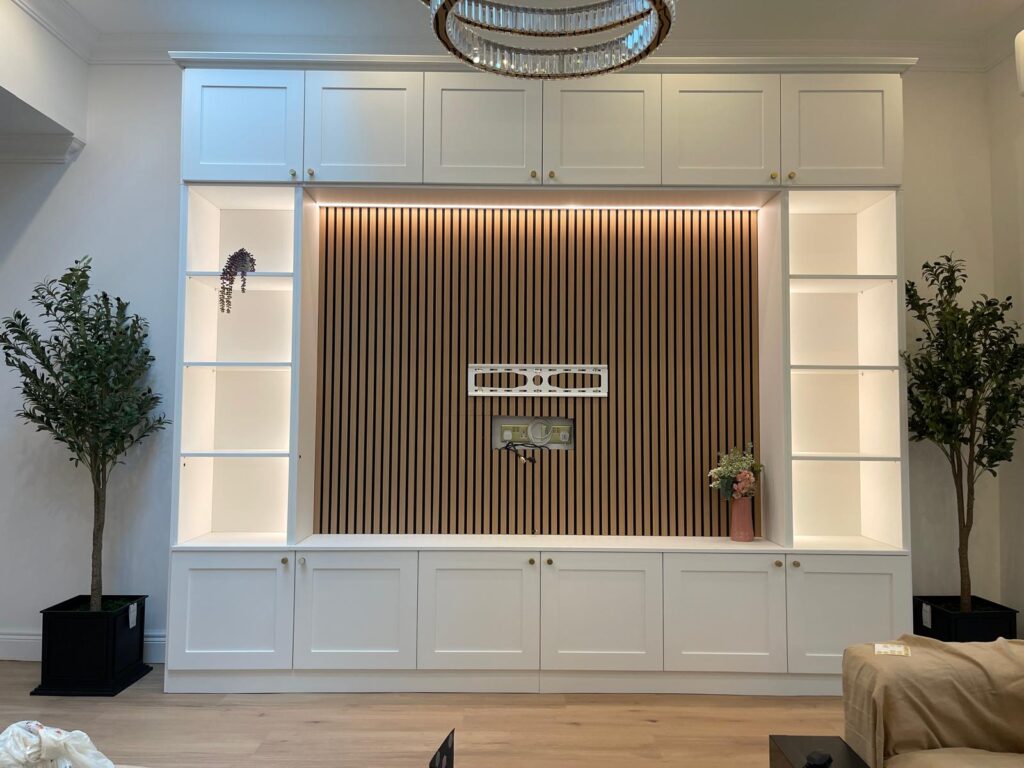
- A fitted TV media wall with concealed cable management and shelving replaced the freestanding unit in the living room.
- The bedroom felt larger, the living room looked considered, and both rooms photographed significantly better for the sales listing.
Timeline: Design visit to completed installation within the 7–12 day window. The old wardrobes were removed and disposed of by the installation team. The 10-year guarantee was issued on completion.
The property was listed shortly after completion. The improved staging and storage presentation contributed to stronger initial viewings and a faster sale process — a pattern consistent with what well-planned fitted interiors deliver in London’s competitive market.
Key takeaways
Bespoke storage that solves real spatial problems in London homes improves saleability, buyer perception, and long-term liveability — making it one of the most practical interior design investments available to London homeowners.
| Point | Details |
|---|---|
| Storage drives perceived value | Fitted wardrobes and built-in storage make compact London flats feel larger and more functional to buyers. |
| Neutral finishes preserve resale appeal | Timeless, muted finishes appeal to the widest buyer pool; highly personalised choices narrow it. |
| Bespoke starts from around £3,000 | Small bespoke installations typically start from around £3,000; full-wall solutions with lighting can reach into five-figure sums depending on specification. |
| Installation can be fast | Finest Furniture Studio completes most installations within 7–12 days, with a 10-year guarantee and old wardrobe disposal included. |
| Brief clearly for best results | Arrive at consultation with measurements, storage needs, finish preferences, and a realistic budget band. |
The case for getting it right the first time
There is a version of this conversation that focuses entirely on percentages — how much does a fitted wardrobe add to your sale price? The honest answer is that no single figure applies universally. What we see consistently, across projects in Wimbledon, Richmond, Chiswick, and Putney, is that homes with well-designed, well-installed storage present better, photograph better, and attract more confident buyers. The design choices that hold their value are almost always the quieter ones: neutral finishes, quality hardware, full-height cabinetry, and layouts that actually work for daily life.
The mistake we see most often is over-personalisation. A bespoke wardrobe in a bold finish is a pleasure to own and a liability to sell. If resale is anywhere on your horizon, choose materials and colours that a buyer can picture themselves living with. The craftsmanship and the space gain will do the rest.
Finest Furniture Studio: bespoke storage for London homes
London homeowners in Richmond, Wimbledon, Putney, Chelsea, Fulham, and across West and Central London get a genuinely different result with Finest Furniture Studio: custom-built wardrobes, TV media walls, walk-in closets, under-stairs storage, and fitted bedrooms designed to your exact layout, manufactured to order, and installed within 7–12 days. We remove and dispose of your old wardrobe at no extra hassle to you, and every installation carries a 10-year guarantee.
The process starts with a free in-home design visit — we measure, discuss your brief, and produce a detailed proposal. No obligation, no vague estimates. For homeowners preparing to sell or renovate in areas like Twickenham, Ealing, Barnes, or Hammersmith, our bespoke wardrobes for West London page shows the full range of what is possible.
Call or WhatsApp us on 07468 150807, or visit our studio at 124 City Road, Kemp House, London, EC1V 2NX. Book your free design visit today.
Useful sources
- London Plan minimum internal space standards — London Loves Property: supports the 50 m² and 61 m² flat size thresholds and the storage demand context.
- Are fitted wardrobes worth the investment? — Jax Bespoke: source for functional benefits of fitted wardrobes and the £3,000 starting cost figure.
- Can bespoke furniture add value to a home? — Anscombs: commentary on buyer perception, installation quality, and the limits of fixed-percentage uplift claims.
- Bespoke joinery vs fitted furniture — Oraanj Interiors: cost comparison and estate agent commentary on prime London postcodes.
- Is bespoke furniture always worth the investment? — Khristians: guidance on personalisation risk and neutral finish recommendations.
- Finest Furniture Studio: primary source for installation timelines (7–12 days) and the 10-year guarantee.
FAQ
Does interior design affect a home’s sale price in London?
Yes. Well-planned interior design — particularly fitted storage and quality joinery — improves buyer perception and saleability, though the uplift varies by property tier, neighbourhood, and finish quality rather than following a fixed percentage.
Are bespoke wardrobes worth the cost for a London flat?
For compact flats built to London Plan minimum space standards, bespoke wardrobes recover wasted volume and solve awkward geometry that standard furniture cannot, making them a practical investment with clear staging and marketability benefits.
How long does a bespoke wardrobe installation take?
Finest Furniture Studio completes most installations within 7–12 days from start to finish, which is faster than many bespoke suppliers. The team also removes and disposes of your existing wardrobe as part of the service.
What finishes hold their value best for resale?
Neutral, timeless finishes — warm whites, soft greys, and natural wood effects — appeal to the widest buyer pool. Highly personalised or trend-led colours tend to reduce buyer interest and may require repainting before sale.
What should I ask a designer before commissioning bespoke storage?
Ask to see comparable London projects, confirm the materials and hardware specification, clarify the lead time and installation process, and request a written 10-year guarantee. An itemised quote and a confirmed on-site measurement policy before sign-off are also worth insisting on.