

Table of Contents
- How to Organize Cluttered Wardrobes: The Complete Process
- Step 1: Empty Your Wardrobe and Create Sorting Piles
- Step 2: Wardrobe Decluttering Tips for Letting Go
- Step 3: Sort by Category and Conduct a Joy Check
- Step 4: Small Wardrobe Organisation Ideas for Maximum Space
- Step 5: Wardrobe Storage Solutions and Styling
- Step 6: How to Fold Clothes for Wardrobe Storage
- Step 7: Maintenance Habits to Keep Your Wardrobe Organized
Last Updated: July 29, 2026
How to Organize Cluttered Wardrobes: The Complete Process
Learning how to organize cluttered wardrobes transforms more than just your bedroom, it simplifies your daily routine and reduces decision fatigue. At Finest Furniture Studio, we’ve helped countless homeowners tackle overflowing closets by breaking the process into manageable steps. The real challenge isn’t sorting clothes; it’s creating a system that sticks. The difference between temporary fixes and lasting change comes down to three things: removing items that don’t serve you, storing what remains strategically, and building habits that prevent re-cluttering.
What You’ll Need Before You Start
Gather sturdy hangers (wooden or velvet work better than wire), clear storage boxes for off-season items, drawer dividers, shelf risers, and labels. Have garbage bags ready for donations and textile recycling. Clear a large space where you can sort items into at least four distinct piles: keep, donate, sell, and discard. Set aside a full day for this project.
Step 1: Empty Your Wardrobe and Create Sorting Piles
Remove every single item from your wardrobe. This forces honest decisions about each piece. Create four sorting piles: clothes you wear regularly and love, items that fit well, pieces you’re unsure about, and obvious rejects (damaged items, things that don’t fit, pieces never worn).
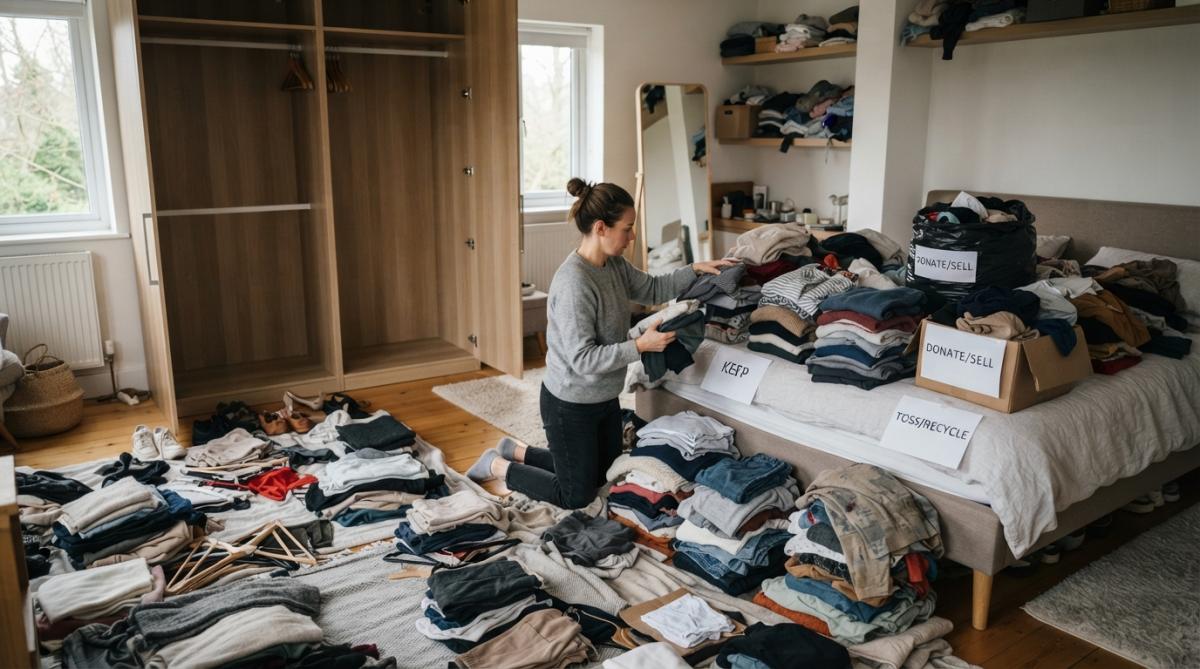
This physical process matters. Holding each item forces a decision rather than letting clothes hide in the back. Many people discover they own multiple versions of the same basic item and realize they only need one or two.
Handle each item only once during this initial sort. [Make a](/custom-storage-solutions-for-families-a-2026-guide/) quick decision and move it to its pile.
Step 2: Wardrobe Decluttering Tips for Letting Go
Start with obvious rejects: damaged items, clothes with stains, pieces with broken zippers. Items that don’t fit belong in the discard pile unless you’re genuinely altering them within a month. If you haven’t worn something in a year and it’s not seasonal, it’s a candidate for donation.
Consider your lifestyle honestly. If you work from home, formal business suits are clutter. If you live somewhere warm, heavy winter coats take up space you could use for pieces you actually wear. Align your wardrobe with how you actually live.
Overcoming Psychological Barriers to Decluttering
Most people struggle with letting go because of guilt, "what if" thinking, or attachment to expensive items. Address guilt head-on: keeping unworn clothes doesn’t recover the money spent; it just wastes space. That cost is already gone.
The "what if" thinking is equally problematic. Keeping your entire wardrobe based on hypothetical futures leaves no room for your actual present. Keep one or two aspirational items if they genuinely motivate you. Discard the rest.
Keeping clothes “just in case” is a primary driver of wardrobe clutter. Every item you keep “just in case” takes space from pieces you actually wear.
Sustainable Disposal Methods for Unwanted Clothes
Donation is the easiest option for items in good condition. Charity shops, clothing banks, and organizations supporting specific communities all need donations. For items in excellent condition with brand recognition, consider selling them online. Textile recycling is the responsible option for damaged items unsuitable for donation or sale.
Research from the Ellen MacArthur Foundation’s textile waste analysis shows that textile waste is a significant environmental issue, with most discarded clothing ending up in landfills. Choosing to donate, sell, or recycle extends their life and reduces environmental impact.
Step 3: Sort by Category and Conduct a Joy Check
Organize remaining items by category: tops, bottoms, dresses, outerwear, underwear, accessories. This reveals patterns you might miss otherwise. Conduct a "joy check" by holding each item and asking whether it sparks genuine happiness or confidence.
Pick up each item and notice your immediate reaction. Do you feel excited about wearing it? Does it fit well and flatter your body? Does the color suit your skin tone? Is it comfortable enough to wear all day? If the answer to these questions is mostly yes, keep it. If you’re equivocating, it’s probably a candidate for donation.
The joy check isn’t sentimental; it’s practical. Keeping only clothes that make you feel confident means you’ll actually wear everything in your wardrobe.
Step 4: Small Wardrobe Organisation Ideas for Maximum Space
Smart organization is essential in limited space. Many people think they need fewer clothes, but the real solution is organizing what they have more efficiently. Finest Furniture Studio specializes in custom storage solutions that maximize awkward spaces, but even without bespoke furniture, you can dramatically improve organization with strategic techniques.
Remove anything currently using your wardrobe space that doesn’t belong there. Off-season clothes, items stored temporarily, or things migrated from other rooms all reduce space for your actual wardrobe.
Vertical Storage and Space-Saving Techniques
Vertical storage is your best friend in small spaces. Use hangers and hang items vertically instead of folding and stacking horizontally. Invest in slim hangers; they take up significantly less space than wooden or plastic hangers. Velvet hangers grip fabric better and are thinner than most alternatives.
Shelf risers create additional shelf space without adding furniture. Over-door organizers add storage without taking up floor or wall space. Wall-mounted hooks provide additional hanging space for frequently worn items or accessories.
For drawers, use dividers to create compartments. This prevents the "jumbled pile" problem where you can’t find anything without disturbing everything else.
Digital Wardrobe Inventory: Modern Organization
A digital inventory transforms how you manage your wardrobe. Take photos of each item and create a digital catalog. This prevents buying duplicates and helps you see outfit combinations you might not notice otherwise.
A digital inventory also documents your wardrobe’s contents for insurance purposes. If you experience theft or damage, having photos of everything you owned is valuable documentation.
Research from the Journal of Consumer Psychology indicates that visual organization systems lead to better decision-making and higher satisfaction with choices.
Step 5: Wardrobe Storage Solutions and Styling
With items sorted and edited, organize them strategically. Place your most-worn items at eye level and within easy reach. Seasonal items can go higher or lower.
Hangers, Bins, Shelves and Drawer Dividers
Choose a consistent hanger style; mixing types looks chaotic and wastes space. Organize hanging items by category, then by color within each category. This makes finding specific pieces fast.
Use clear bins for off-season clothes so you can see contents without opening them. Label everything clearly. Shelves work for folded items, bags, and shoes. Use shelf risers to create additional shelf space. Fold items consistently so they stack neatly. The KonMari method of vertical folding, standing items upright rather than stacking flat, works well because you can see everything without disturbing other items.
Drawer dividers transform messy drawers into organized compartments.
Color-Coded Organisation and Seasonal Rotation
Color-coding your wardrobe makes getting dressed faster. Organize hanging items by color, all whites together, all blacks together, all blues together. Within each color group, organize by category.
Seasonal rotation keeps your wardrobe manageable. Store winter coats, heavy sweaters, and boots away during summer. Store summer dresses and light layers away during winter. Rotate seasonally at the change of seasons, reassessing what you actually wore last season. If you didn’t wear something during an entire season, it’s probably not worth keeping.
Store off-season items in breathable bags or boxes in a cool, dry place. Cedar blocks or lavender sachets protect against moths naturally.
Color-coded organization takes an hour to set up but saves time every single day. You’ll get dressed faster and wear more of your wardrobe because everything is visible and accessible.
Step 6: How to Fold Clothes for Wardrobe Storage
The KonMari method of vertical folding is ideal for most situations. Instead of stacking clothes flat, fold them into rectangular shapes and stand them upright in drawers or on shelves. This lets you see every item without disturbing others, maximizes space, and keeps clothes fresher.
For basic items like t-shirts and trousers, fold once lengthwise, then fold into thirds widthwise. For sweaters, fold in thirds lengthwise, then fold in half widthwise. Delicate items like silk blouses should be folded loosely or rolled to prevent creasing. Heavy items like jeans can be folded tightly without damage.
Store folded items so you can see the front of each piece. This visibility is crucial for actually wearing everything you own.
Step 7: Maintenance Habits to Keep Your Wardrobe Organized
Organization is temporary without habits that maintain it. The most important habit is the "one in, one out" rule. When you buy a new item, remove something old. This keeps your wardrobe from expanding indefinitely and forces intentional purchasing.
Return items to their designated spot immediately after wearing them. The few seconds it takes to hang or fold something immediately prevents chaos that builds when items accumulate.
Deep Clean and Weekly Tidying Routines
Conduct a deep clean of your wardrobe seasonally, when rotating seasonal items is ideal. Weekly tidying takes 10-15 minutes: straighten hanging items, refold shifted items, and return anything in the wrong spot.
Monthly, assess what you’ve actually worn. Items you haven’t touched in a month might be candidates for donation. Inspect items regularly for damage. A small stain addressed immediately is easier to remove than one that’s set.
The Minimalists’ guide to wardrobe maintenance emphasizes that an organized wardrobe requires ongoing attention, not just initial effort.
The difference between people with organized wardrobes and those with cluttered ones isn’t the amount of clothing they own; it’s the habits they practice. Spend 10 minutes weekly maintaining your system, and it will remain organized indefinitely.
| Maintenance Task | Frequency | Time Required | Impact |
|---|---|---|---|
| Return items to designated spots | Daily | 2-3 minutes | Prevents accumulation of displaced items |
| Straighten and refold items | Weekly | 10-15 minutes | Keeps wardrobe visually organized and accessible |
| Assess worn items for damage | Monthly | 15 minutes | Catches issues before they worsen |
| Seasonal deep clean and rotation | Quarterly | 2-3 hours | Refreshes space and reassesses wardrobe needs |
| Full wardrobe audit | Annually | 4-6 hours | Removes items no longer serving you |
An organized wardrobe eliminates daily frustration and saves time every morning. If you’re working with limited space or awkward configurations, professional storage solutions make a significant difference. Finest Furniture Studio designs custom fitted wardrobes that maximize every inch, even in challenging spaces like understairs storage or rooms with sloping ceilings. With a 10-year warranty, transparent pricing, and a 7-day fitting service, they transform cluttered spaces into functional storage that actually works. Book a free design visit to see how a bespoke wardrobe solution could transform your space.
Frequently Asked Questions
How do I start decluttering a messy wardrobe without feeling overwhelmed?
Begin by setting a realistic timeline, aim for 1-2 hours per session rather than an all-day marathon. Empty one category at a time (e.g., tops only), create distinct sorting piles for keep, donate, and discard, and use the joy check method: hold each item and ask if it makes you feel confident or happy. This approach to wardrobe decluttering tips prevents decision fatigue and makes the process manageable.
What's the best way to organize clothes in a small wardrobe?
Small wardrobe organisation ideas include using vertical storage with tall shelves, installing a clothing rack for frequently worn items, and employing drawer dividers to maximize every inch. Sort by category first, then by colour within each category. Consider a capsule wardrobe approach, keeping only versatile, multi-purpose pieces that coordinate easily. Digital inventory apps can also help you track what you own without physical clutter.
What sustainable disposal methods should I use for clothes I'm getting rid of?
Donate wearable items to UK charities like Oxfam, British Heart Foundation, or local community centres. For damaged textiles, use textile recycling schemes, many high street retailers now offer in-store collection points. Online platforms like Vinted or Depop let you sell items directly. For truly unusable pieces, check if your local council offers textile waste collection. Textile recycling keeps unwanted clothes out of landfill whilst supporting circular fashion.
How do I keep my wardrobe organized long-term after the initial decluttering?
Establish a weekly 15-minute tidying routine to return items to their designated spots. Conduct a seasonal rotation every 3 months, storing off-season clothes in bins or a secondary space. Use the one-in-one-out rule: when you buy something new, remove an item you no longer wear. Maintain your digital inventory if you've created one, and schedule a deep clean every 6 months. These maintenance habits prevent clutter from accumulating again.
This article was written using GrandRanker


One Response