

Table of Contents
- What Is Covered Under Fitted Wardrobe Warranty
- Duration of Your Warranty and What Changes Over Time
- Wardrobe Sliding Door Mechanism Warranty and Moving Parts
- What Is Excluded: Wear and Tear vs. Defects
- Fitted Wardrobe Maintenance Tips to Preserve Your Warranty
- Your Rights Under the Consumer Rights Act 2015 for Furniture
- How to Make a Warranty Claim on Your Bespoke Furniture
- Conclusion
Last Updated: August 20, 2026
What Is Covered Under Fitted Wardrobe Warranty
A fitted wardrobe warranty is a contractual guarantee protecting you against manufacturing defects and faulty workmanship for a defined period after installation. It’s an additional layer of protection beyond statutory consumer law. Understanding what falls within coverage is crucial, as the difference between a covered defect and excluded wear-and-tear determines whether you or the manufacturer pays for repairs.
Most fitted wardrobe warranties cover the cabinet carcass, internal components, and installation workmanship, though scope varies by provider. At Finest Furniture Studio, our 10-year warranty on wardrobes reflects a commitment to durability and customer confidence, covering manufacturing defects across the entire bespoke structure.
Read the terms and conditions carefully before signing. Many homeowners assume complete coverage, only to discover later that certain components or damage types are explicitly excluded.
Manufacturing defects and material integrity
Manufacturing defects are flaws occurring during production, not from normal use: warped panels, faulty joinery, delamination of veneer or vinyl wrapping, structural cracks, and defective hardware. Material integrity refers to whether materials meet industry standards and perform adequately under normal domestic use. Vinyl wrapped doors that peel or bubble due to poor adhesion, paint that chips prematurely, and structural components failing from substandard materials all fall under this coverage.
Manufacturers often argue that material failure resulted from humidity, temperature fluctuation, or improper maintenance rather than defective materials. Keep records of installation date, environmental conditions, and photographs of damage. If you can demonstrate failure under normal domestic conditions, the burden shifts to the manufacturer to prove otherwise.
Installation workmanship guarantee
The installation workmanship guarantee covers defects in how the wardrobe was fitted: misaligned doors, uneven shelving, incorrectly installed hinges, drawer runners that don’t operate smoothly, and gaps exceeding acceptable tolerances. Most warranties require workmanship defects to be reported within 30 days of installation, allowing time for minor settling and installer adjustments.
The 7-day fitting service that Finest Furniture Studio offers includes a final inspection to catch workmanship issues immediately, reducing disputes. Professional installation is critical because DIY installation or poor workmanship voids many warranties entirely.
Duration of Your Warranty and What Changes Over Time
Warranty length determines your protection period. A 10-year fitted wardrobe warranty is comprehensive, though some providers offer 5 years or up to 15 years. Coverage often changes over time: some warranties provide full coverage for the first 2 years, then reduced coverage (parts-only, no labour) for the remainder. You need to know exactly when coverage changes and what that means for repair costs.
The warranty period typically begins on the installation date, not the purchase date. Some warranties include a 30-day defects liability period during which the installer corrects any issues identified at handover. After this expires, you’re reliant on the manufacturer’s warranty.
Transferability matters significantly. A transferable warranty remains valid if you sell the property; a non-transferable warranty expires if you move house. Always check whether your warranty transfers with the property.
Wardrobe Sliding Door Mechanism Warranty and Moving Parts
The sliding door mechanism, including hinges, drawer runners, and track systems, represents the most frequently repaired components. These moving parts experience constant use and are more prone to failure than static components.
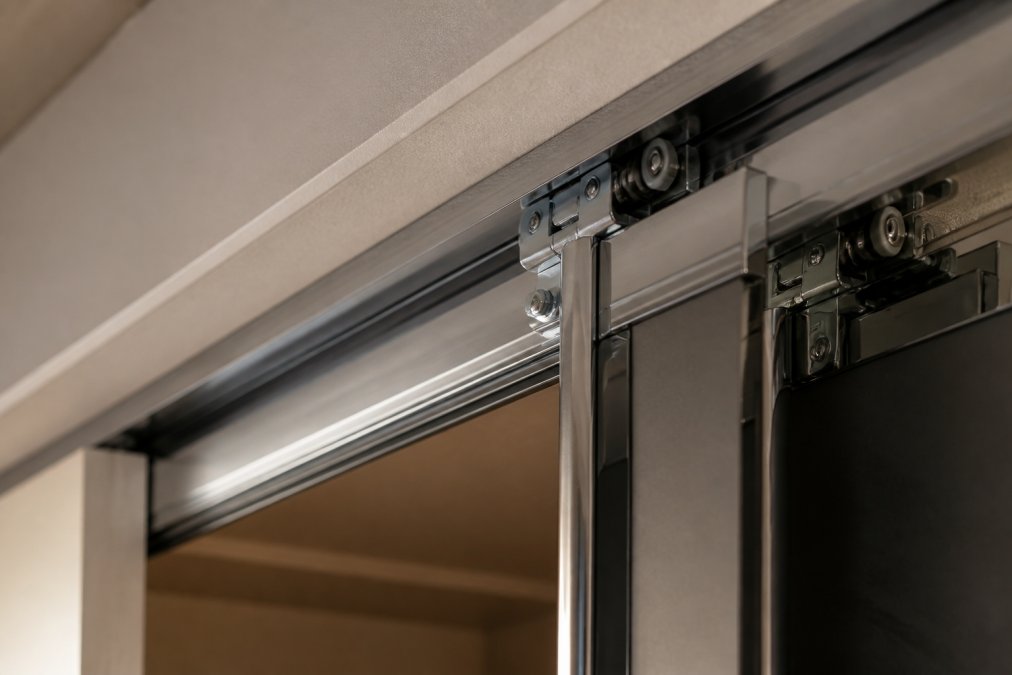
Hinges, drawer runners, and track systems
Hinges and drawer runners are precision components that must operate smoothly hundreds of times yearly. Quality hinges allow silent operation without sagging or binding. When they fail, doors no longer close properly, creating visible gaps and compromising function.
Drawer runners allow smooth sliding. Poor-quality runners can stick, jam, or derail. Many warranties cover runners only if they fail due to manufacturing defect, not if they jam from debris or overloading. Track systems for sliding doors must be perfectly aligned and obstruction-free. If the track warps, doors bind; if poorly installed, they won’t slide smoothly from day one. Most warranties cover manufacturing defects in the track itself but may exclude coverage if misalignment results from poor installation or subsequent damage.
The key distinction is between component failure (the hinge breaks) and operational failure (the hinge works but the door doesn’t close smoothly due to building settlement). Professional installation accounts for minor wall imperfections and adjusts accordingly.
Door warping and vinyl wrapped doors
Door warping occurs when panels absorb moisture unevenly, causing bending. This is particularly common in bathrooms or kitchens. Vinyl wrapped doors are more prone to warping than solid wood because vinyl can trap moisture on one side, causing uneven swelling.
Most warranties exclude warping caused by excessive humidity or temperature fluctuation. However, if a door warps within the first year under normal domestic conditions, it’s often considered a manufacturing defect. Vinyl wrapped doors can develop bubbles, peeling, or separation. If this occurs within the warranty period and the wardrobe has been properly maintained, it’s typically covered as a manufacturing defect. If peeling results from impact damage or excessive moisture exposure, it’s usually excluded.
Inform the installer before fitting if your home experiences unusual humidity levels. Some manufacturers will exclude humidity-related damage if aware beforehand, while others may recommend alternative materials or protective measures.
What Is Excluded: Wear and Tear vs. Defects
Understanding exclusions is as important as understanding coverage. The line between wear and tear and manufacturing defect is where most disputes occur.
Wear and tear includes damage from normal use over time: slightly loose hinges after years of use, minor paint scratches, worn handles. These are expected outcomes and not covered by any warranty. Manufacturing defects occur prematurely, within the expected component lifespan. If a hinge fails after three months of normal use, that’s a defect; after ten years, that’s wear and tear.
Common exclusions include impact or misuse damage, post-installation modifications, environmental extremes, failure to perform required maintenance, and damage from improper cleaning or chemical exposure. Accidental damage is almost never covered by standard warranties, though some manufacturers offer optional accidental damage protection for additional cost.
Fitted Wardrobe Maintenance Tips to Preserve Your Warranty
Your warranty remains valid only if you maintain the wardrobe according to manufacturer specifications. Failure to perform required maintenance can void coverage.
Regular cleaning is essential. Use a soft, dry cloth to wipe panels and handles. For vinyl wrapped doors, use a slightly damp cloth if needed, but avoid excessive moisture. Never use abrasive cleaners, solvents, or harsh chemicals. Follow the manufacturer’s approved cleaning products.
Check hinges and drawer runners periodically and tighten loose screws. Most hinges include adjustment screws for fine-tuning door alignment if it shifts. Learning these minor adjustments prevents small issues from becoming warranty claims. Attempting to adjust a genuinely faulty component doesn’t void your warranty; only failure to maintain does.
Avoid extreme conditions. Keep temperature and humidity within normal ranges. Avoid direct sunlight, which can fade finishes. Don’t exceed manufacturer load limits on shelves.
Document any maintenance performed. Keep receipts for approved cleaning products and records of adjustments or repairs. If you file a warranty claim, you’ll need to demonstrate proper maintenance. This documentation protects you if disputes arise about whether maintenance failure caused damage.
Your Rights Under the Consumer Rights Act 2015 for Furniture
The Consumer Rights Act 2015 provides statutory protection independent of any manufacturer warranty. Even if the manufacturer’s warranty has expired or doesn’t cover a defect, you may still have statutory rights.
Statutory rights versus contractual warranty
Under the Consumer Rights Act 2015, goods must be of satisfactory quality, fit for purpose, and as described. For fitted wardrobes, satisfactory quality means the wardrobe must be safe, durable, and function as a reasonable person would expect. If a wardrobe fails to meet these standards within a reasonable time, you have the right to reject it, request repair or replacement, or claim a price reduction.
The Act defines a reasonable time as typically six years from purchase (five years in Scotland). However, the burden of proof shifts after six months. If a defect appears within six months, the law presumes it existed at purchase, and the seller must prove otherwise. After six months, you must prove the defect existed at purchase.
This significantly extends most manufacturer warranties. If your 10-year warranty expires in year 11 and a structural defect appears in year 12, you may still have statutory rights if you can demonstrate the defect existed at purchase. Statutory rights cannot be waived by the manufacturer. The warranty is additional protection, not a replacement for statutory rights.
What to do if your claim is disputed
If the manufacturer disputes your warranty claim, review the warranty terms and gather documentation: proof of purchase, installation records, photographs, maintenance records, and correspondence. Contact the manufacturer in writing, setting out the defect, when it appeared, how you’ve maintained the wardrobe, and what resolution you’re seeking. Keep copies of all correspondence.
If the manufacturer refuses to acknowledge or disputes the claim, request a detailed explanation of why they believe the defect falls outside coverage. If you cannot reach agreement, you can file a complaint with the relevant consumer protection body, seek legal advice about pursuing a claim under the Consumer Rights Act 2015, or attempt mediation through a third party.
Document every step of the dispute process. A paper trail demonstrating good faith effort on your part strengthens your position significantly.
How to Make a Warranty Claim on Your Bespoke Furniture
Filing a warranty claim correctly increases approval likelihood and speeds resolution. Understanding required steps and documentation helps you navigate this process smoothly.

Proof of purchase and documentation requirements
Your proof of purchase is the foundation of any warranty claim: the original invoice, receipt, or order confirmation showing purchase date, wardrobe specifications, and price. Keep these documents safely, preferably in both physical and digital copies.
The warranty certificate outlines coverage period, inclusions and exclusions, and the claim process. If lost, contact the manufacturer or installer for a replacement. Photographs are critical evidence. Take clear, well-lit photos of the defect from multiple angles. These images provide objective evidence and help the manufacturer assess whether it falls within coverage.
Maintenance records demonstrate proper care. Keep receipts for approved cleaning products, records of adjustments or repairs, and notes on environmental conditions. If the manufacturer claims the defect resulted from poor maintenance, your records prove otherwise.
On-site repair versus replacement parts
When you file a claim, the manufacturer typically offers either on-site repair or replacement parts. On-site repair means a technician visits your home; replacement parts means you receive the faulty component and must install it yourself or arrange professional installation.
On-site repair is generally preferable because the manufacturer’s technician ensures correct work to warranty standards. However, it requires scheduling and may disrupt your home. Replacement parts dispatch faster but require you to install them or pay for installation. If you install incorrectly and cause further damage, the manufacturer may refuse to cover that subsequent damage.
Clarify with the manufacturer which option they’re offering, timelines, whether they’ll cover labour costs, and what happens if the replacement part doesn’t resolve the issue. A reputable manufacturer will be transparent about these details and work with you to find a practical solution.
The fitted wardrobe warranty is your protection against manufacturing defects and poor workmanship, but only if you understand what it covers and how to use it. The Consumer Rights Act 2015 provides additional statutory protection extending beyond the warranty period. Before purchasing a fitted wardrobe, read the warranty terms carefully, ask questions about exclusions and maintenance requirements, and ensure you understand the claim process. When a defect occurs, document it thoroughly, contact the manufacturer promptly, and keep detailed records throughout resolution. At Finest Furniture Studio, our 10-year warranty reflects our confidence in the durability of our bespoke wardrobes, and our transparent approach to coverage means you’ll know exactly what’s protected. Book a free design visit to discuss warranty coverage and how our fitted wardrobes can transform your space.
Frequently Asked Questions
What does a fitted wardrobe warranty typically not cover?
Fitted wardrobe warranties exclude normal wear and tear, damage from misuse or accidents, modifications made by the customer, and cosmetic issues that don't affect function. Most warranties also don't cover environmental damage from extreme humidity, temperature fluctuations, or poor maintenance. Check your specific terms and conditions, as exclusions vary between providers. Damage caused by DIY alterations or professional installation by unauthorised contractors is typically excluded.
How long does a fitted wardrobe warranty last and what happens after?
Many quality fitted wardrobes come with a 10-year structural warranty covering the cabinet carcass and major components. After this period, you lose contractual warranty protection, but your statutory rights under the Consumer Rights Act 2015 may still apply if defects are proven to have existed at purchase. Some providers offer extended warranties for additional cost. Always check your guarantee period documentation before purchase.
Does my fitted wardrobe warranty cover sliding doors and hinges?
Yes, most fitted wardrobe warranties cover sliding door mechanisms, hinges, and drawer runners as manufacturing defects. However, coverage typically applies for a specific period (often 5-7 years for moving parts versus 10 years for the carcass). Hinge failure, door warping, and track misalignment caused by manufacturing defects are usually covered, but damage from improper use or lack of maintenance may be excluded. Always verify the specific coverage period for moving parts in your warranty terms.
What are my rights if a fitted wardrobe defect appears and the company disputes my claim?
Under the Consumer Rights Act 2015, you have statutory rights to goods of satisfactory quality and fit for purpose. If a dispute arises, you can contact Citizens Advice Consumer Service or escalate through the provider's complaints procedure. Most disputes involve determining whether an issue is a manufacturing defect (covered) or wear and tear (excluded). Document the problem with photographs and keep all proof of purchase. If unresolved, you may pursue small claims court action or alternative dispute resolution services.
This article was written using GrandRanker