
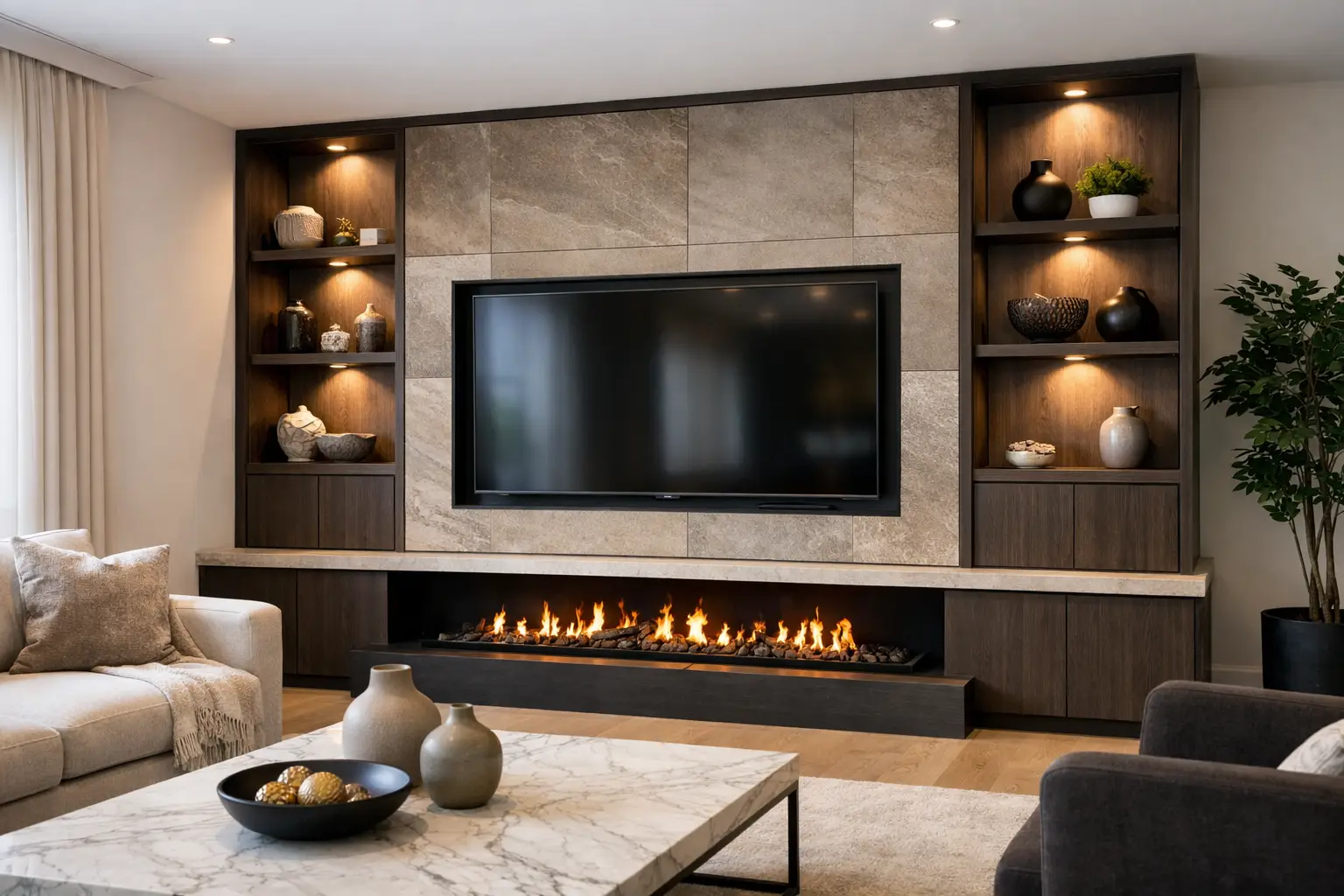
A media wall can make a room feel finished – or make it feel fussy, oversized and dated before the paint has even dried. That is why the best media wall designs are never just about where the television sits. They are about proportion, storage, lighting, wiring, and how the whole wall supports the way you actually live.
For homeowners renovating a period house, extending at the rear, or refining a newer property, the media wall often becomes the visual anchor of the living space. It needs to look elegant when the screen is off, practical when everything is in use, and tailored enough to feel like part of the architecture rather than an afterthought. Bespoke fitted furniture is usually what makes that difference.
What the best media wall designs get right
The most successful media walls do three things at once. They frame the television properly, give clutter a place to disappear, and add character without dominating the room. That sounds simple, but it is where many off-the-shelf solutions fall short.
A room with high ceilings in a Victorian or Edwardian home will need a different approach from an open-plan extension with low visual clutter and large glazing. The scale of shelving, the thickness of framing panels, and the balance between open display and closed storage all need to respond to the space. Good design looks effortless, but it is usually the result of careful measuring and restraint.
There is also a practical layer that matters just as much. Cables, gaming consoles, routers, soundbars and sockets need proper planning from the start. A beautiful media wall with visible wires and overheating equipment will not feel luxurious for long.
Best media wall designs for different interiors
1. The built-in fireplace media wall
This is one of the most requested layouts, and for good reason. A television above a sleek inset electric fireplace creates a strong focal point and gives the wall a clear vertical composition. It works especially well in reception rooms where a chimney breast once existed, or where you want to recreate that sense of structure in a newer extension.
The trade-off is proportion. If the television sits too high, comfort suffers. The fireplace also needs to feel in scale with the room, rather than like a feature squeezed in because it looked appealing online. When designed properly, this style feels polished and architectural.
2. The full-width storage wall
For households that want the room to stay calm and tidy, a full-width media wall is often the smartest option. This design stretches across the wall with a central television section and generous cabinetry around it. Closed cupboards below can hide devices, toys, manuals and everyday clutter, while shelving adds display space for books and decorative pieces.
This approach suits family homes particularly well because it does more than showcase a screen. It turns one wall into hard-working storage without making the room feel overfurnished.
3. The alcove media wall
In many London homes, alcoves are wasted or handled unevenly. A bespoke media wall design can use both sides of a chimney breast for cabinetry and shelving, while placing the television centrally or integrating it into one side depending on the room layout.
This is often one of the most elegant ways to work with period architecture because it respects the original shape of the room. It also avoids the heavy, boxed-in look that some full feature walls create.
4. The floating media wall
A floating design uses wall-mounted cabinetry with open floor space beneath, often combined with subtle LED lighting. The overall look is lighter, cleaner and more contemporary. It suits modern flats and minimalist extensions where visual simplicity matters.
That said, floating units require discipline. Too many materials, too much lighting, or too much contrast can quickly tip the design into something that feels cold rather than refined. The best versions keep the palette controlled and the detailing precise.
5. The wood-effect statement wall
Wood-effect finishes add warmth that many modern living rooms need. Whether used as slatted panels, textured backing boards or full fitted cabinetry, timber tones soften the black rectangle of the television and help the wall blend more naturally into the room.
This style works particularly well when the rest of the interior feels crisp or neutral. If your flooring, dining furniture or kitchen joinery already include timber notes, a wood-effect media wall can tie the wider scheme together beautifully.
6. The painted shaker media wall
For homes with classic detailing, shaker-style fitted furniture offers a timeless alternative to sleek gloss finishes. Framed doors, painted cabinetry and neat symmetry can give a media wall more presence without feeling flashy. In family houses, this often feels more at home than a highly modern unit.
The colour choice matters here. Soft taupe, warm white, muted green and deep navy can all work well, depending on the room and natural light. A darker shade adds drama, but in a smaller room it needs careful balancing.
7. The hidden TV design
Not every client wants the television to dominate the room. One of the best media wall designs for more formal lounges or design-led spaces is a concealed layout, where the screen sits behind sliding panels, pocket doors or a carefully integrated finish.
This is ideal when the room needs to perform multiple roles, such as entertaining, reading and relaxed family viewing. It is not the cheapest route, but it can produce a far more elegant result if you dislike the look of a visible screen.
8. The media wall with library shelving
For readers, collectors and anyone who wants a room to feel layered rather than purely screen-led, combining a media unit with book storage is a strong choice. Open shelving around the television creates a softer, lived-in look and gives the wall genuine personality.
The key is balance. Too many small items can look busy, while shelves that are too shallow or too widely spaced can look awkward. Bespoke joinery solves that by tailoring shelf heights and widths to what you actually own.
9. The corner media wall
Corner layouts are often overlooked, but they can work well in rooms where the fireplace, glazing or circulation makes a central wall impractical. A fitted corner media wall can make use of difficult layouts without forcing the furniture plan.
This is one of those cases where custom design matters most. Corners can become clumsy very quickly if the unit is too bulky or the viewing angle is wrong. Done well, it can make an awkward room feel resolved.
10. The low-profile media wall
Sometimes the best answer is the least theatrical one. A low-profile media wall uses a wider, lower composition with understated cabinetry, a neatly mounted television and minimal upper shelving. It feels calm, contemporary and less dominant in open-plan spaces.
This approach is especially useful if the room already has strong architectural features, large artworks or glazing that should remain the focus.
11. The bedroom media wall
Media walls are not only for reception rooms. In larger bedrooms, fitted media furniture can combine a television area with wardrobes, drawers and display shelving. This creates a cleaner, more integrated result than mixing freestanding furniture pieces.
The main difference in a bedroom is mood. The design should feel quieter and less feature-heavy, with storage doing more of the work than statement finishes.
12. The mixed-material media wall
Combining painted joinery with wood textures, stone-effect panels or ribbed detailing can create a premium look with more depth. This is often where bespoke furniture feels most individual. The mix of finishes needs a confident hand, though. Too many competing textures can date quickly.
Usually, two materials are enough. One should lead, and the other should support.
How to choose the right media wall design
The right design depends less on trends and more on how the room functions. Start with viewing height, storage requirements and the architectural shape of the wall. Then consider how much of a statement you actually want.
If you have children, regular guests, or an open-plan family room, generous closed storage usually earns its keep. If the room is used more selectively, open shelving and lighter detailing may be enough. If the property has strong original features, the media wall should complement them rather than compete.
Budget also matters, but not just in the obvious way. A simpler bespoke design in the right materials often looks more expensive than an overcomplicated layout trying to imitate luxury. Careful proportions, quality finishes and neat installation usually have more impact than extra features.
Best media wall designs are built around the room, not just the screen
A media wall should belong to the house. It should feel considered in the same way a fitted wardrobe, alcove cabinet or window seat feels considered – shaped around the room, useful every day, and visually calm.
At Finest Furniture Studio, we often see the biggest difference when homeowners stop thinking of the media wall as a single feature and start treating it as part of a wider fitted furniture scheme. That is when the room begins to feel complete rather than decorated.
The best result is rarely the most elaborate option. It is the one that fits your layout, suits your style, and still looks right long after the renovation dust has settled.

