
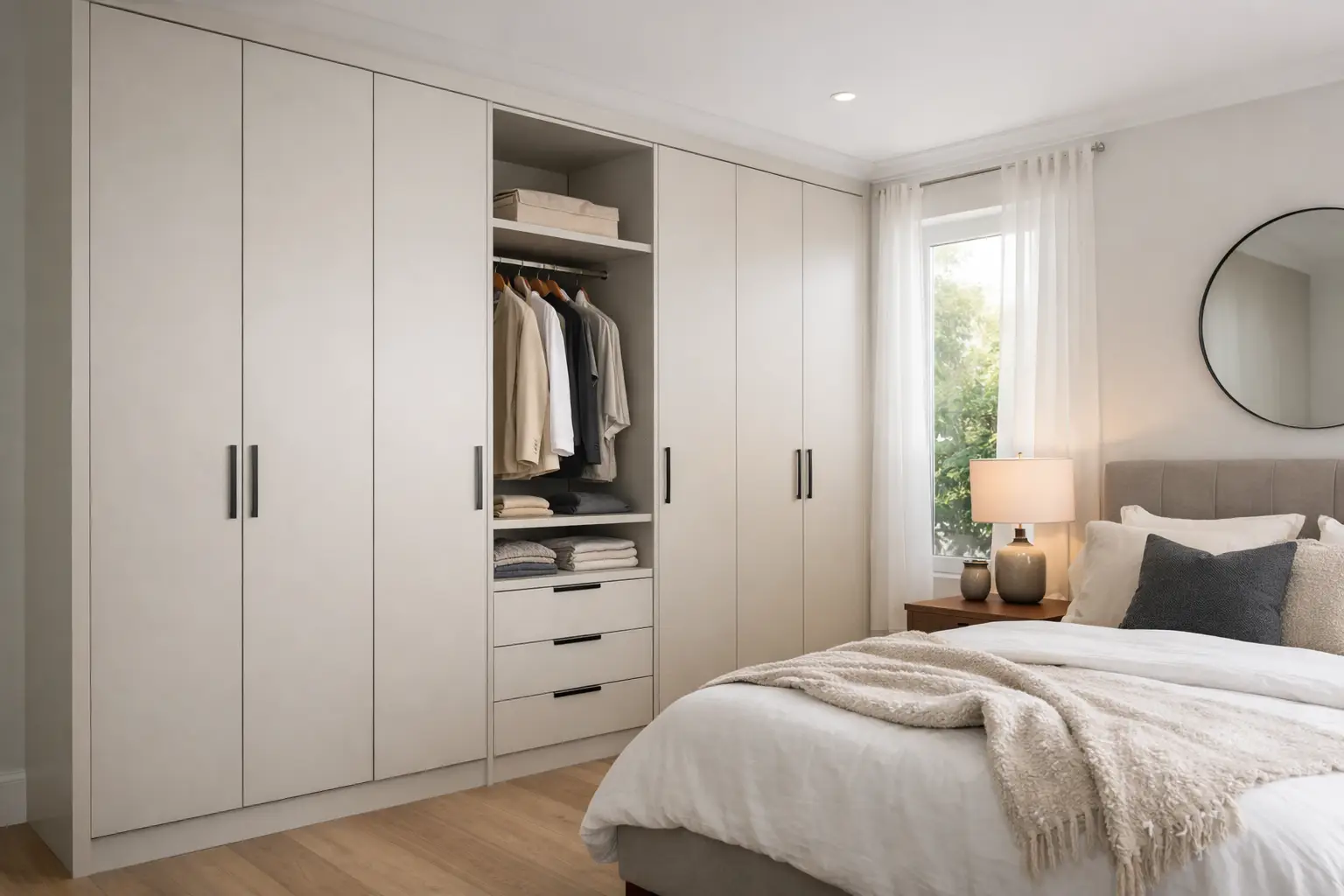
Space in Putney homes is rarely the issue. Awkward space is. Alcoves that never quite work, sloping ceilings in loft rooms, chimney breasts that interrupt furniture layouts, and bedrooms where every centimetre matters can all make storage feel like a compromise. That is exactly why fitted wardrobes Putney homeowners choose tend to outperform freestanding furniture – they are designed around the room, not forced into it.
A well-made fitted wardrobe does more than hide clothes. It improves how a bedroom works day to day, brings order to busy routines, and gives the room a more considered finish. In homes where renovation budgets are already stretched across kitchens, bathrooms and flooring, that combination of practicality and visual calm matters more than ever.
Why fitted wardrobes make sense in Putney
Putney has a mix of period houses, smart flats and renovated family homes, and each comes with its own storage challenges. Victorian and Edwardian properties often have beautiful proportions but uneven walls, alcoves and chimney breasts. Newer homes can be more streamlined, yet still lack the internal storage needed for real life. A fitted wardrobe solves both problems because it is made to the exact dimensions of the room.
That precision changes the result completely. Instead of losing space above a wardrobe or leaving dead gaps at the sides, the storage runs floor to ceiling and wall to wall if needed. The room feels cleaner, and the wardrobe feels built into the home rather than added as an afterthought.
There is also the question of value. While bespoke furniture costs more upfront than an off-the-shelf unit, it tends to earn its keep over time. Better use of space, stronger materials, and a design tailored to your routine usually mean fewer compromises and a longer lifespan. For homeowners investing in a high-quality interior, that trade-off often makes sense.
Fitted wardrobes Putney projects should get right first time
The best wardrobes are not only attractive from the outside. They are planned around the way you live. That means the interior matters just as much as the doors, finish and handles.
For one client, that may mean generous hanging space for dresses and coats, with upper cupboards for suitcases and seasonal bedding. For another, it may be drawers for knitwear, pull-out shelves for shoes, jewellery organisers and concealed lighting. Couples often need very different storage allocations, and children’s rooms demand flexibility as needs change.
This is where bespoke design justifies itself. A wardrobe that looks elegant but fails to accommodate your daily routine will start to frustrate quickly. The right design balances aesthetics with usability, giving each item a proper place without making the room feel crowded.
Hinged, sliding or walk-in?
This depends on the room and on personal preference. Hinged wardrobes suit many period homes because they offer full access to the interior and work beautifully with classic shaker-style fronts or more contemporary panel designs. If there is enough clearance in the room, they are often the most versatile option.
Sliding wardrobes are ideal where floor space is tighter. They keep circulation areas clear and lend themselves to a cleaner, more modern look. Mirrored or glass-effect panels can also help a room feel brighter, although some clients prefer a softer painted or wood-effect finish for a more timeless result.
Walk-in wardrobes are different again. They need enough space to feel comfortable rather than squeezed in, but when the layout allows, they create a strong sense of luxury and routine. A dressing room or a carefully planned section of a main bedroom can turn storage into one of the most enjoyable parts of the home.
The inside should work harder than the outside
It is easy to focus on door styles and colours first, but interior planning is where a wardrobe succeeds or fails. Long hanging, double hanging, drawers, shelves, pull-out rails and top boxes all need to be arranged around what you actually own.
Too many shelves and you waste vertical space. Too much hanging and you lose the chance to keep smaller items organised. There is no universal formula. A wardrobe for a compact guest room will be very different from one designed for a principal bedroom in a family house.
The most successful interiors also allow for change. Extra adjustable shelving, drawers that can be repurposed, or sections that can shift from children’s use to teenage storage all help the furniture stay relevant for longer.
Design details that lift the whole bedroom
A fitted wardrobe should feel connected to the architecture of the room. In a period property, that may mean echoing original features with framed doors, subtle cornicing or painted finishes that sit comfortably with the rest of the house. In a more modern home, it may be about flush lines, handleless fronts and a restrained palette.
Colour choice makes a noticeable difference. Soft neutrals remain popular because they create a calm backdrop and work across changing interiors, but deeper tones can be very effective in larger bedrooms with good natural light. Wood-effect finishes add warmth, while matt painted surfaces tend to feel more tailored and architectural.
Handles are often underestimated. The wrong handle can make a wardrobe feel generic. The right one can quietly reinforce the style of the room, whether that is polished and contemporary or more classic and decorative.
Lighting is another worthwhile consideration. Integrated lighting inside wardrobes is practical, especially in darker corners or early morning routines, but it also gives the furniture a more premium feel. It is a small detail that makes daily use noticeably better.
Making awkward rooms feel intentional
Some of the most rewarding fitted wardrobes Putney homes benefit from are built into spaces that seemed difficult at first. Loft rooms with sloping ceilings, alcoves either side of a chimney breast, recesses in converted flats, and compact bedrooms can all be transformed with bespoke joinery.
These are the rooms where freestanding furniture usually looks least convincing. Gaps collect dust, doors do not open fully, and the room feels compromised. A made-to-measure wardrobe resolves those issues by following the line of the architecture. Instead of fighting the room, it completes it.
This approach can be especially useful in homes where every room needs to work harder. A guest bedroom may also need to house household storage. A main bedroom may need a fitted dressing area and a media wall. A loft conversion may need wardrobes built around eaves while still preserving openness. Good bespoke design finds a balance between storage capacity and visual lightness.
Budget, timelines and what to expect
Luxury does not have to mean vague pricing or an endless programme of works. In fact, the better the service, the clearer the process should be. Homeowners typically want to know three things early on: what it will cost, how long it will take, and how disruptive installation will be.
Costs vary depending on size, internal specification, materials and door style. A simpler hinged wardrobe in a straightforward room will naturally sit lower than a larger walk-in or a sliding system with premium finishes. What matters is transparency. Clear pricing makes design decisions easier because you can see where the investment is going.
Lead times also matter, particularly if the wardrobe is part of a wider renovation. A fitting timeline of around 7 to 10 days can be very attractive for clients who want a finished result without prolonged disruption, but this still depends on complexity and site readiness. Bespoke work is efficient when surveying, design and manufacturing have been handled properly from the start.
Installation quality should never be treated as an afterthought. Even the best design can be undermined by poor fitting. Clean lines, precise scribing to uneven walls, consistent gaps and a refined finish are what make fitted furniture feel genuinely bespoke.
Choosing a company for fitted wardrobes in Putney
Look beyond glossy images and ask how the process actually works. A strong specialist should offer a proper design conversation, not a one-size-fits-all package. They should be comfortable designing for awkward spaces, open about costs, and able to explain the pros and cons of different finishes and configurations.
It also helps to choose a company that understands London homes well. Period properties and renovated family houses often require more than standard dimensions and standard assumptions. Attention to detail, careful surveying and experienced installation are what keep bespoke projects feeling smooth rather than stressful.
At Finest Furniture Studio, that balance of tailored design, craftsmanship and practical delivery sits at the centre of the service. Clients are not simply buying wardrobes. They are investing in a better way to use their home.
If you are planning fitted wardrobes for a Putney property, the best place to start is not with a style board but with the room itself – how it is shaped, how you live in it, and what would make it feel easier every day. When storage is designed that thoughtfully, it stops being background furniture and becomes part of what makes the home work beautifully.

