
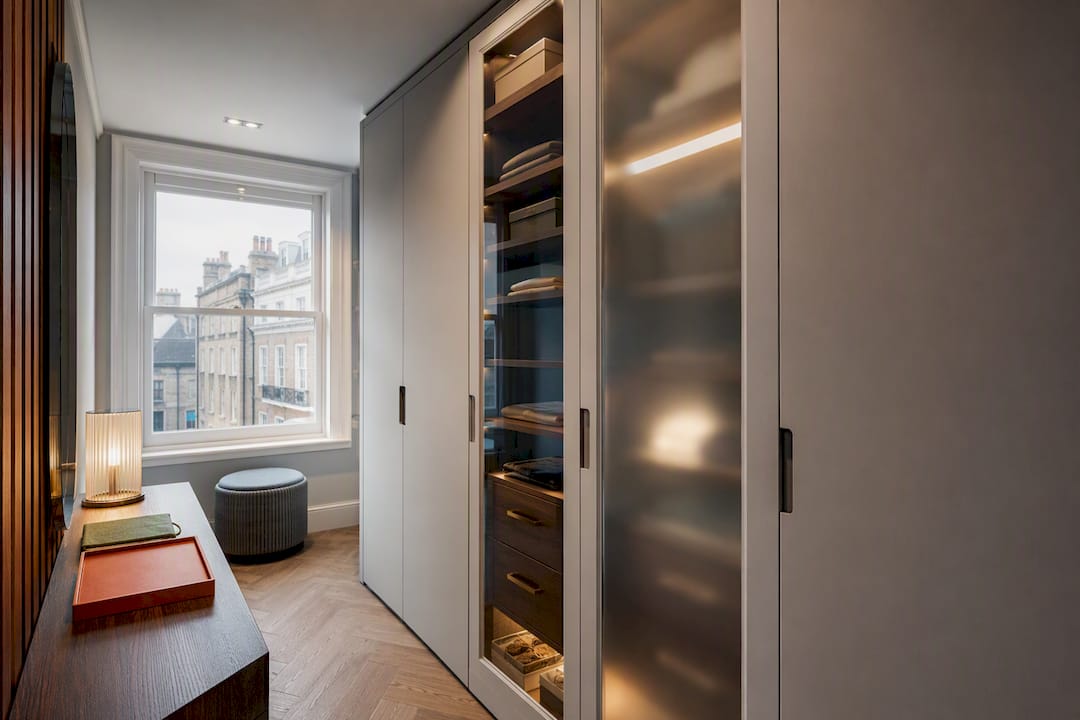
Clear glass wins when you want maximum daylight and a sense of openness; frosted glass wins when privacy or hiding clutter matters more than visibility. Neither is objectively “better” as most bathrooms, wardrobes and internal doors actually benefit from a mix of the two, using frosted bands or panels only where a sightline genuinely needs blocking.
TL;DR:
- Clear glass offers high visibility and maximum light transmission but shows fingerprints, water splashes, and dust more readily, requiring frequent cleaning.
- Frosted glass diffuses light and obscures details, making it ideal for bathrooms and storage, but it is more expensive and less resistant to scratches than film alternatives.
- The best choice depends on room function: frosted panels suit privacy needs in bathrooms and wardrobes, while clear glass enhances openness and display areas.
- Tempered glass is essential for safety in high-traffic areas and near circulation zones, especially for wardrobe doors and internal partitions.
- Combining frosted and clear glass in a hybrid design often creates the right balance of privacy, light, and visual appeal in bespoke wardrobes and internal spaces.
Table of Contents
- What is clear glass and how does it behave in a home?
- What is frosted glass and how is it made?
- Frosted vs clear glass: comparing the details that matter
- Where does each glass work best in a home?
- How to choose: a checklist before you order
- How glass choices shape bespoke wardrobes and fitted joinery
- Design perspective: restraint beats wall-to-wall glass
- Bring your glass decision into a bespoke fitted wardrobe
- Sources
- FAQ
What is clear glass and how does it behave in a home?
Clear glass, sometimes called float glass, is the untreated standard you’ll find in most windows and doors. Low-iron variants strip out the faint green tint ordinary float glass carries, giving a slightly whiter, brighter appearance. Toughened (tempered) versions are stronger and safer, and matter far more than finish choice for anywhere people walk into or lean against.
Clear glass gives full visibility and the highest possible light transmission, which is why it makes small rooms feel bigger and hallways feel less boxed in. That same transparency has a maintenance cost.
- Fingerprints, water splashes and dust show up immediately on clear surfaces
- Reflections can bounce glare from windows or lamps at certain angles
- Regular wiping is needed to keep panels looking sharp, especially near sinks or wardrobes handled daily
- Clear glass shows marks more readily than any frosted alternative, so it is best suited for lower-traffic spots
- Always specify tempered glass for doors or wardrobe fronts near circulation areas, for safety reasons
What is frosted glass and how is it made?
Frosted glass gets its cloudy, diffused surface through one of two permanent processes, acid-etching or sandblasting, both of which physically alter the glass surface so light scatters instead of passing straight through. Frosted glass diffuses light while obscuring detail, which is exactly why it’s the default choice for bathrooms and cluttered storage.
A cheaper, non-permanent route exists too: frosted film, applied like a sticker over existing clear glass.
- Acid-etch and sandblasting are permanent, scratch-resistant and hold up for decades
- Frosted film costs less upfront and suits rented properties or short-term fixes
- Film tends to peel or bubble in wet or high-touch areas, making it a poor match for bathrooms or daily-use wardrobe doors
- For bespoke joinery you plan to keep long-term, permanent etching is the sturdier investment
Frosted vs clear glass: comparing the details that matter
The two finishes diverge on light behaviour first. Clear glass transmits light directly and undistorted; frosted glass still lets daylight through, but scatters it into a softer, less directional glow rather than blocking it outright. A frosted bathroom window won’t leave the room dim, it just loses the sharp shadows and direct sightline.
Privacy is where frosted glass earns its keep. At night, with a light on behind it, frosted glass still lets silhouettes and movement show through, so it isn’t a total privacy solution once someone flicks the interior lights on. Clear glass, obviously, offers none of that protection at any hour.
- Cleaning: clear glass shows fingerprints and watermarks fast; frosted surfaces hide light smudges but trap dust in the textured finish
- Scratch resistance: etched and sandblasted frosting is durable; film scratches more easily and can’t be buffed out
- Cost: frosted glass typically costs modestly more than clear because of the extra processing involved, though film undercuts both
- Style fit: clear glass reads contemporary and open plan; frosted suits minimalist or traditional joinery where you want texture without pattern
Pro Tip: Test any glass sample against the actual light in your room at the time of day you’ll use it most. A frosted panel that looks perfectly soft at 2pm can throw a completely different glow under evening lamplight.
Tinted glass sits as a third option worth knowing about, since it cuts glare and adds colour without the fully diffused look of frosting, but it doesn’t solve privacy the way frosted glass does.

Where does each glass work best in a home?
The right finish depends entirely on the room and what you’re trying to hide or show off.
- Bathrooms and showers. A fully frosted or heavily etched panel is the standard choice here, and always specify tempered glass given the wet, high-traffic setting.
- Wardrobes and display cabinets. Choose clear glass if you want to show off neatly arranged clothing or accessories as a feature; choose frosted if the shelves behind tend to look lived-in rather than styled.
- Doors and internal partitions. Partial frosting, a horizontal band at eye level, or a gradient fade lets borrowed light through the top of a door while blocking the direct sightline where people actually look.
- Reeded or ribbed glass. Worth considering as an alternative to flat frosting when you want a decorative, slightly retro texture that still diffuses light unevenly rather than uniformly.
How to choose: a checklist before you order
Before signing off on any glass order, work through a short list of practical questions rather than picking on appearance alone.
- How much privacy do you actually need, and does that change once the interior light is on at night?
- Have you checked the panel in daylight and again with lamps on, since frosted glass behaves differently under each?
- Is the glass going somewhere that demands tempered safety glass by default (doors, low panels, high-traffic zones)?
- What’s your realistic cleaning tolerance, clear glass needs more frequent wiping than frosted?
- Does the frost level match the finish and hardware elsewhere in the room?
Ask your installer directly about glass thickness, whether it’s tempered, which frosting method they use (etched, sandblasted or film), what warranty covers the glass itself, and who actually supplies it, the joinery maker or a separate glazier. Measure and order glass only after the cabinet carcass is installed, since tolerances shift once the frame is fixed in place. Film is acceptable for a quick, low-budget refresh; permanent etching is worth the extra outlay for anything built to last.
How glass choices shape bespoke wardrobes and fitted joinery
Wardrobe doors sit closer to daily hands and eyes than almost any other glass in the house, so the decision carries more weight than it first appears. Finest Furniture Studio generally recommends frosted panels for wardrobe doors where the interior tends toward lived-in storage, and clear glass where a client wants to showcase an organised, styled hanging space.
- Tempered glass is standard on every fitted wardrobe door we install, non-negotiable near bedrooms and hallways
- Rubber bumpers reduce noise and prevent glass-on-frame contact over years of daily opening
- Mixing glass with solid panels, rather than glazing an entire run, keeps a wardrobe from feeling clinical
- Interior LED lighting pairs particularly well with frosted doors, since it lifts the softened glow rather than leaving it flat
- Every installation carries our 10-year guarantee on quality, covering both the joinery and the glazing
Design perspective: restraint beats wall-to-wall glass
Frosted glass at eye level, not floor to ceiling, solves most privacy problems without shutting a room down. Full glazing across an entire wardrobe or partition tends to feel exposed by day and clinical by night. Designers commonly favour hybrid panels, clear above, frosted below, for exactly this reason. Always view a sample with the lights both on and off before committing.
— Aureliu
Bring your glass decision into a bespoke fitted wardrobe
Finest Furniture Studio is the alternative to guessing at glass samples alone. We build the frosted or clear panel decision straight into your bespoke wardrobe design, showing you both finishes fitted against your actual bedroom lighting before anything goes into production.

Every fitted wardrobe comes with a 10-year guarantee on quality and typical installation within 7 to 12 days, and we’ll take away and dispose of your old wardrobe as part of the job. We serve multiple London areas and select nearby towns. If you’re weighing up glass finishes for a wardrobe, walk-in closet, or awkward alcove space, our bespoke wardrobes guide covers the full design process. For homeowners who’d rather solve privacy without glass at all, shutters or blinds are worth a look too. Contact us for a free design visit, call or WhatsApp 07468 150807, or visit us at 124 City Road, Kemp House, London, EC1V 2NX to get your fitted wardrobe quote started.
Sources
- Frosted Vs. Clear Glass: Which Is Right For Your Home? – UKO Glass
- How to choose between clear, frosted and tinted glass for your home – Glass Help Ltd
- Frosted vs Clear vs Tinted Glass Indoors: What to Choose – Intrinsic Glass
FAQ
Is frosted glass better than clear glass?
Neither is universally better. Frosted glass wins for privacy and hiding clutter; clear glass wins for daylight and making rooms feel open, and most homes benefit from using both in different spots.
What are the downsides of frosted glass?
It costs somewhat more than clear glass due to the etching or sandblasting process, and frosted film alternatives can peel or bubble in wet or high-touch areas like bathrooms and daily-use wardrobe doors.
Is frosted glass outdated?
No. Frosted glass remains standard in bathrooms and is widely used in contemporary wardrobe and partition design, particularly in hybrid forms like eye-level bands rather than full panels.
Can you see through frosted glass at night?
Frosted glass still lets silhouettes and movement show through once a light is switched on behind it, so it isn’t a complete privacy solution after dark the way some homeowners expect.

